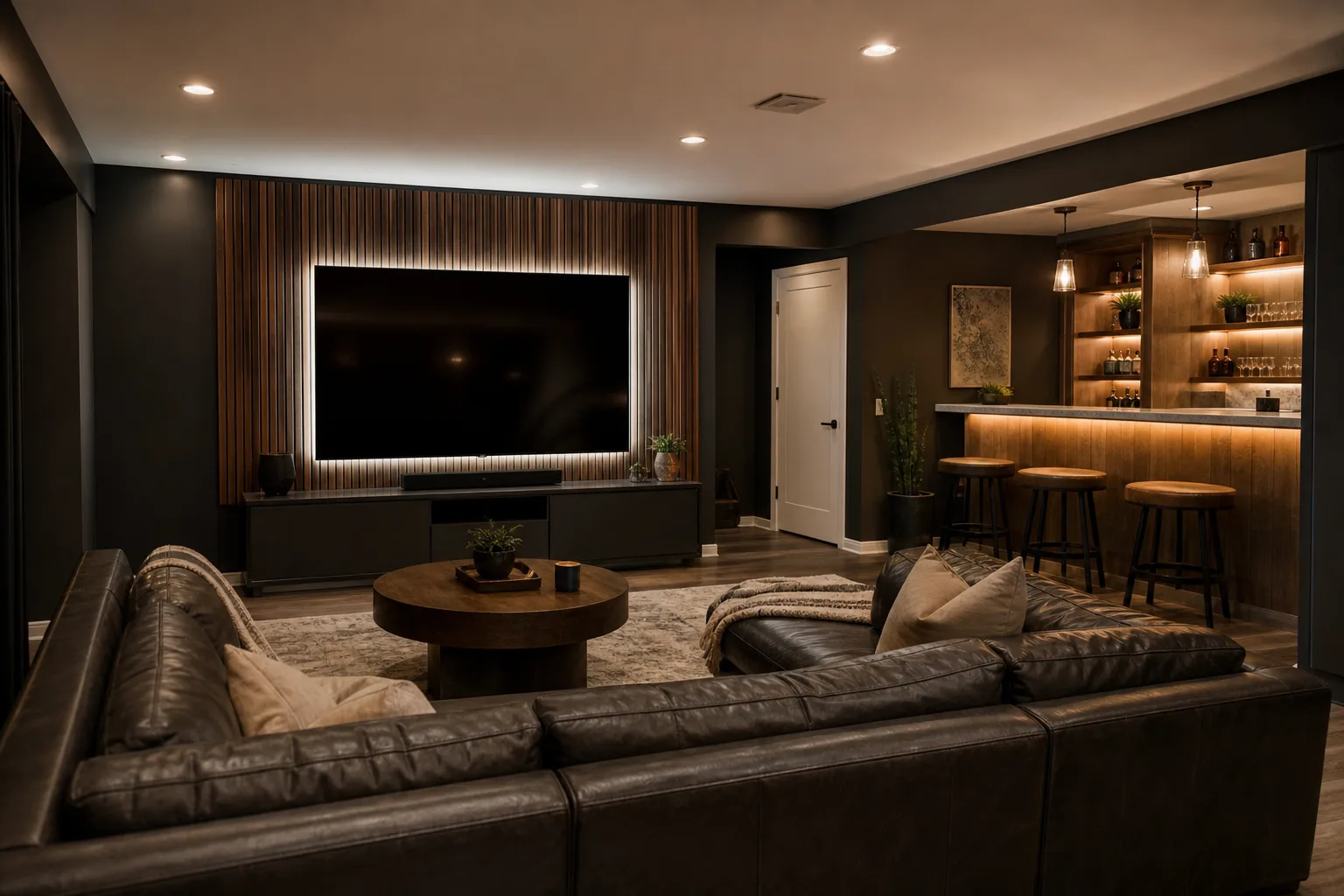
Man Cave Ideas: Layouts, Must-Haves and How to Build One in a Basement, Garage, Spare Room or Shed
How to plan a man cave: where to put it, themes, layout zones and measurements, build basics and what to put in it, for any basement, garage or room.
A good man cave is more than a recliner and a mini fridge in the corner of the garage. It's a room built around what you actually do there: watch the game, play pool or darts, game, host poker night, work on a hobby or just sit somewhere quiet. The best ones feel planned. The seating faces the screen at the right distance, the bar has room for stools, the dartboard isn't next to the door, and the room stays warm, dry and quiet enough to use year-round.
This guide covers where to put a man cave, how to pick a theme and lay out the zones, the measurements that matter, the build basics to handle before decorating, and a practical list of what to put in it, from must-haves to nice extras. It works for a basement, a garage, a spare bedroom or a backyard shed.
As an Amazon Associate, Best Utah Real Estate earns from qualifying purchases.
The short version
- Know why you want it first. A room for watching sports, a room for hosting and a quiet hobby room need different layouts. Build around your real use, not a photo.
- Pick a spot that's private but close. Basements and garages give the most space and separation; a spare room or shed works too.
- Plan zones before buying furniture. Place the big pieces first (TV wall, seating, bar, game table), then fill in.
- Handle the boring stuff early. Outlets, heat and cooling, moisture, insulation and sound are far easier before the walls are finished.
- Spend on comfort and function first, decor last. Start simple and add pieces over time.
Where to put a man cave
The best location is private enough to make noise and close enough that you'll actually use it. A room at the far end of the property tends to become storage. One in the middle of the house isn't much of an escape.
| Space | Why it works | Watch out for | Best for |
|---|---|---|---|
| Basement | Most square footage, separated from the main living areas, naturally cool and quiet, easy to make dark | Moisture, low ceilings and ductwork, radon, egress if it may ever be a bedroom | Home theater, pool table, full bar |
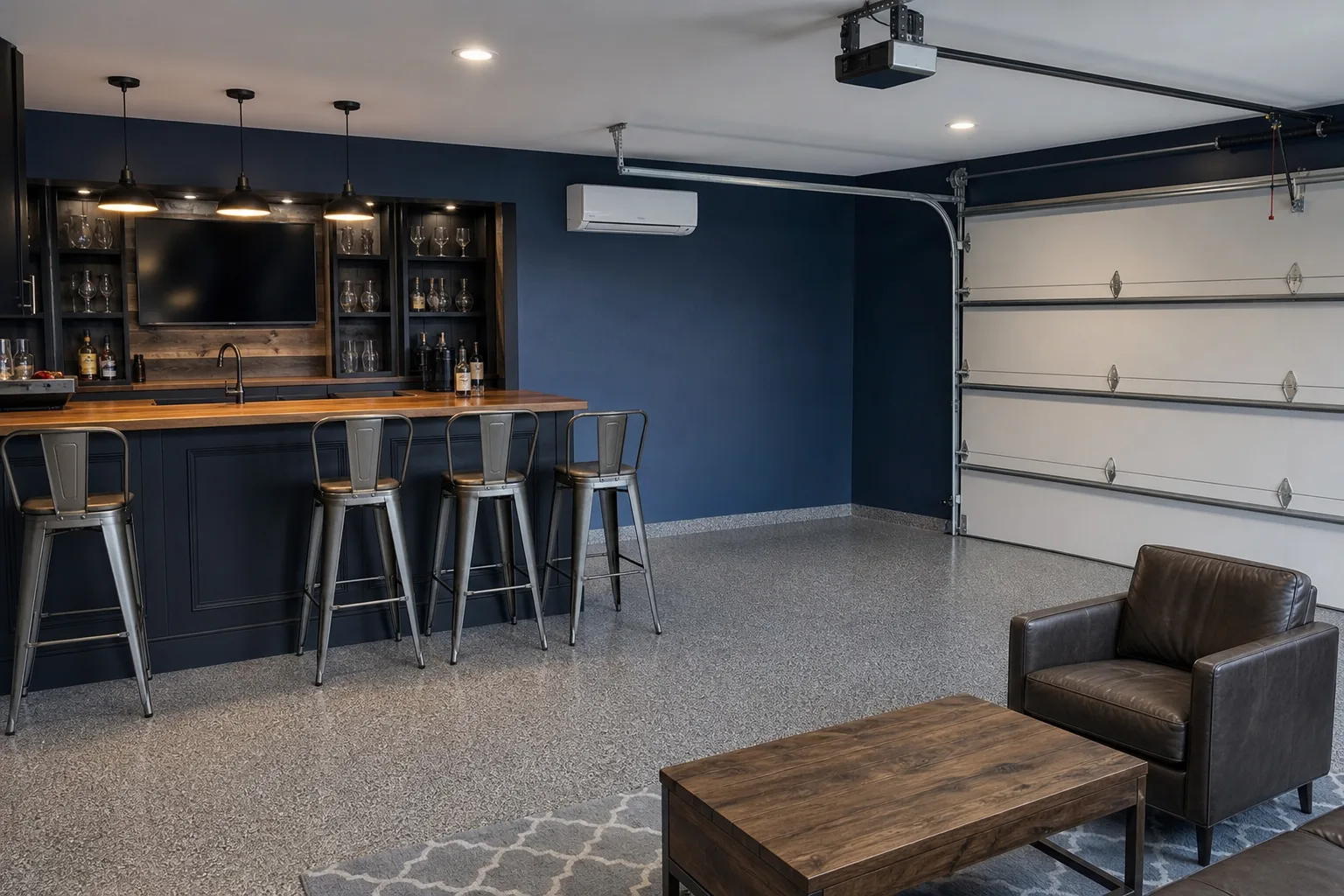
| Garage | Big open floor, concrete that handles spills, room for a bar and games, easy to get to from outside | Heat and cold, an uninsulated door, losing parking, permits for a full conversion | Sports bar, workshop, car and hobby space |
| Spare bedroom | Already finished, heated and wired; nothing to build | Limited space, noise through shared walls | Gaming, a TV room, a small bar and darts |
| Backyard shed | Total separation from the house | Needs power, insulation and heat; permits and setbacks | A quiet retreat, a pub shed, a hobby room |
No basement or extra room? A corner of a bonus room, office or loft can work with the right layout: one good chair, a wall-mounted TV and a compact fridge. For a bit of fun, a hidden entrance, such as a bookshelf door or a panel that blends into the wall, makes even a small room feel special. If you use a surface-mount hidden door, finish the drywall, paint and trim first so no raw edges show.
Pick a theme you'll still like in five years
A theme is what separates a man cave from a basement with a couch in it. The most common mistake is copying a trend or treating the room like a checklist. Start with what you'll actually do in the room, and let the theme grow out of your hobbies and the things you already own: a jersey, a signed ball, old records, a vintage sign.
- Sports bar. Big TV, bar seating, jerseys and memorabilia on the walls, maybe a pool table or a putting green.
- Home theater or media room. A large TV or projector, surround sound, recliners, dark walls and blackout control. See the guide to converting any room into a home theater for the screen and sound details.
- Gaming room. Multiple screens or a big monitor, good gaming chairs, color-changing LED lighting and surround sound.
- Game room or pub. Pool, darts, foosball, shuffleboard or air hockey, plus a bar and stools.
- Poker room. A real poker table or a folding top, comfortable chairs, good overhead light and a bar cart.
- Retro arcade. Arcade cabinets and pinball machines with vintage decor.
- Workshop or hobby den. A workbench and countertop for projects, storage, and a comfortable chair for the end of the day.
Blending two themes is fine (an arcade poker room with a bar, or a theater with a workbench in the corner), as long as the room still feels like one space. Make a simple mood board with the colors, materials and furniture you like before buying anything. It's the easiest way to keep the room cohesive.
Plan the layout in zones
Before picking furniture, decide which zones the room needs and how they fit together. Most man caves combine two to four of these:
- Watch zone: seating facing the TV, with a coffee table or side tables.
- Bar zone: a counter or bar cart, a drink fridge and stools.
- Game zone: a pool table, dartboard, poker table or arcade machines.
- Hobby or work zone: a desk, gaming station or workbench.
Measure the room and draw it to scale on graph paper or in a free room planner. Place the largest pieces first: the TV wall and main seating, then the bar, then any game table. Keep walkways clear from the door to each zone, keep the screen away from glare from windows and overhead lights, and never block vents, the electrical panel, windows or exits. Rugs, a change in lighting or a half wall can separate zones without closing them off.
Think about who will use the room. If it's usually you and a friend or two, two recliners may be plenty. If you host game days, you need a sectional plus bar stools, and enough floor space that people can move around without stepping over each other.
The measurements that matter
| Feature | Space or height to plan for |
|---|---|
| TV viewing distance | About 1.2 to 1.6 times the screen diagonal for a 4K TV: a 65-inch screen works from roughly 6.5 to 8.5 feet, a 75-inch from about 7.5 to 10 feet |
| TV height | The center of the screen near seated eye level, around 42 inches off the floor; a tilting mount helps if it has to go higher |
| Main walkways | About 36 inches wide |
| Sofa to coffee table | About 16 to 18 inches |
| Bar or counter seating | 30-inch stools for a 42-inch bar, 24- to 26-inch stools for a 36-inch counter; about 24 inches of counter per stool |
| Poker or card table | About 36 inches behind each chair so players can get in and out |
| Dartboard | Bullseye 5 ft 8 in off the floor; steel-tip throw line 7 ft 9¼ in from the face of the board (8 ft for soft tip) |
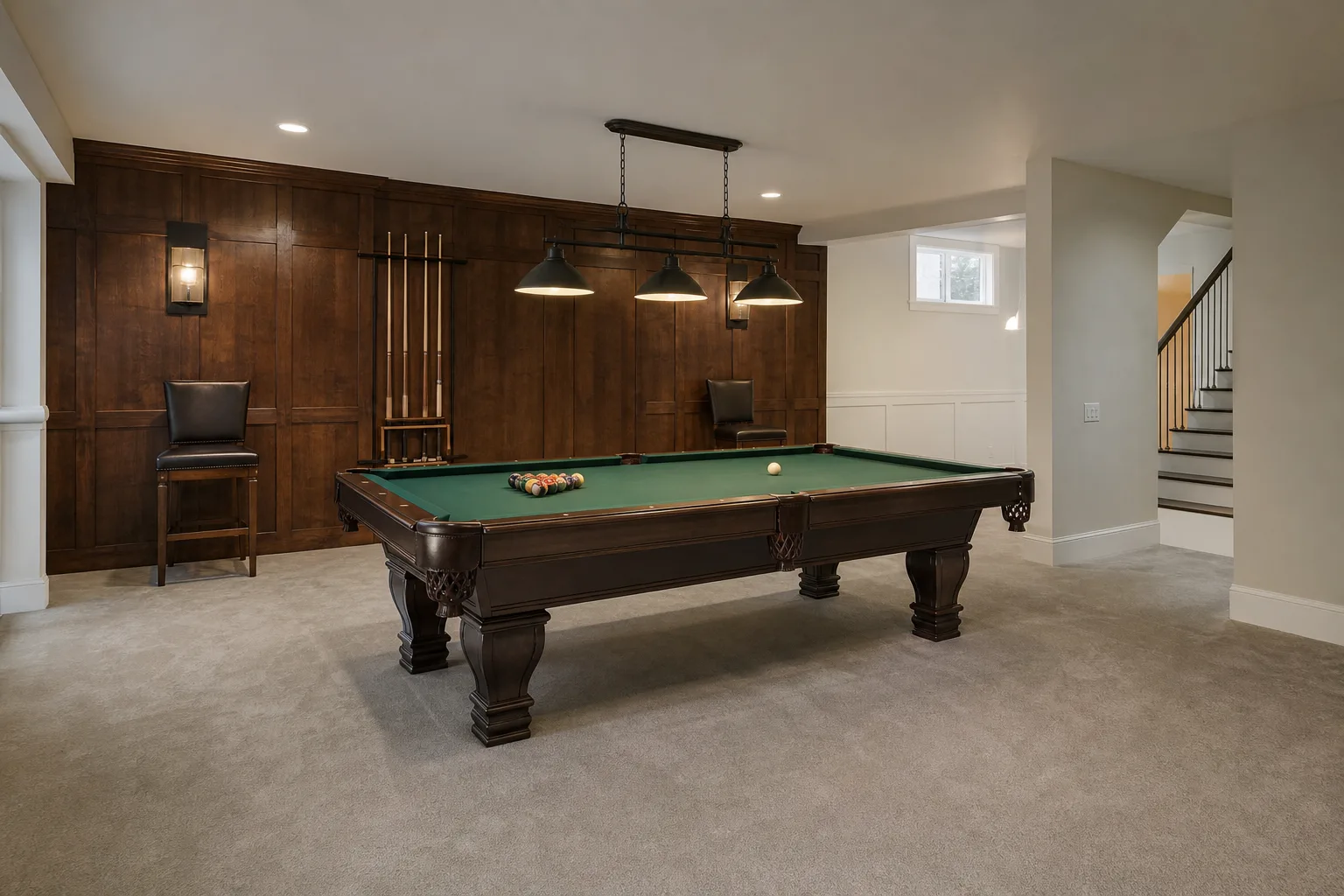
| 8-foot pool table | About 13 by 17 feet of room with standard 58-inch cues; about 12 by 15.5 feet with 52-inch cues |
A pool table is the piece that most often doesn't fit. Check the full room size with cues before you buy, and remember that posts, a bar or a sofa against the wall eat into the space. Brunswick publishes a room size chart for every table size. If the room is a little short, shorter cues for tight shots help. If it's far too short, a dartboard, foosball or a poker table gives you the game room without the squeeze. Put the dartboard on a wall away from the door and walkways, and use a cabinet or backboard so missed darts don't chew up the wall.
Build basics to handle before decorating
Power and internet
A man cave uses a lot of power: a TV, a sound system, game consoles, a drink fridge, maybe an ice maker or a heater. Add more outlets than you think you need, including one behind the TV for a clean, wall-mounted look, and run power to where the bar will go. A fridge, ice maker or space heater is best on its own circuit, and an electrician can tell you whether the panel has room for new ones. Outlets in garages and unfinished basements generally need GFCI protection under the electrical code, and new wiring usually needs a permit. Don't run a space heater or fridge on a power strip or extension cord.
Streaming and online gaming need a strong signal. A basement or detached room is often a Wi-Fi dead spot; the mesh Wi-Fi guide covers how to reach it, or run an Ethernet cable while the walls are open.
Heat, cooling and insulation
A garage or shed that's freezing in January and stuffy in July won't get used. Insulate the walls and ceiling before finishing them, add an insulation kit to the garage door, and seal gaps around the door. A ductless mini-split is the most common way to heat and cool a garage or shed, since it handles both and doesn't tie into the house's system. A wall heater or a safe space heater can cover a small room in winter.
Moisture and air (basements)
Fix any water problems before finishing a basement. Check that gutters and grading move water away from the house, keep the sump pump working, and run a dehumidifier to keep humidity around 50 percent; the dehumidifier sizing guide covers what size you need. The EPA recommends testing every home for radon, and the basement is where levels tend to be highest, so test before you start spending time down there. If the room might ever be used as a bedroom, building codes require an egress window.
Ceilings, ducts and pipes
Basements usually have ductwork and pipes running below the joists. Rather than lowering the whole ceiling, box them in with a dropped soffit and finish the rest at full height. Leave an access panel anywhere you cover a shutoff valve, cleanout or junction box. A dark painted ceiling, black or charcoal, makes ducts and joists fade from view and gives you more control over the light, which helps for movies.
Sound
Two different problems get called "soundproofing." Keeping noise from reaching the rest of the house takes mass and sealing: insulation in the walls and ceiling, a solid-core door with weatherstripping, and in a serious theater, an extra layer of drywall. Making the room itself sound better is about absorbing echo with rugs, upholstered furniture, curtains and acoustic panels. Foam panels alone won't stop noise from leaving the room. The home podcast studio guide explains acoustic treatment in more detail.
Flooring
- Garage: an epoxy or polyaspartic coating handles spills and looks finished; interlocking tiles are easier to install and can come with you. For a quick fix on a rough floor, outdoor carpet rolls out over the concrete in an afternoon. Add rugs in the seating area for warmth.
- Basement: luxury vinyl plank stands up to occasional moisture; carpet tiles are warm and can be replaced one at a time.
- Bar area: a hard floor that's easy to mop.
- Under a pool table: a level floor matters more than the material; carpet or vinyl both work.
Lighting, color and comfort
Dark, muted colors such as charcoal, navy, deep green or brown make the room feel cozy and enclosed, and they reduce glare on the screen. A bold color like red or orange adds energy; balance it with neutrals so the room isn't overwhelming. Wood paneling, such as tongue-and-groove pine on one wall, adds warmth in a rustic room.
Avoid relying only on overhead lights. Use layers: dimmable ceiling lights for cleaning and parties, sconces or floor lamps for evenings, a pendant over the bar or game table, and bias lighting behind the TV, which eases eye strain and makes the picture look better. The TV backlight guide covers sync boxes that match the light to the screen, and smart bulbs and switches let you set scenes, such as a dim movie scene and a bright clean-up scene, with one tap. Color-changing LED strips are a classic for gaming rooms. Last, a small detail people notice: the room should smell good. A diffuser or candle helps a basement or garage feel like a real room.
What to put in a man cave
The must-haves
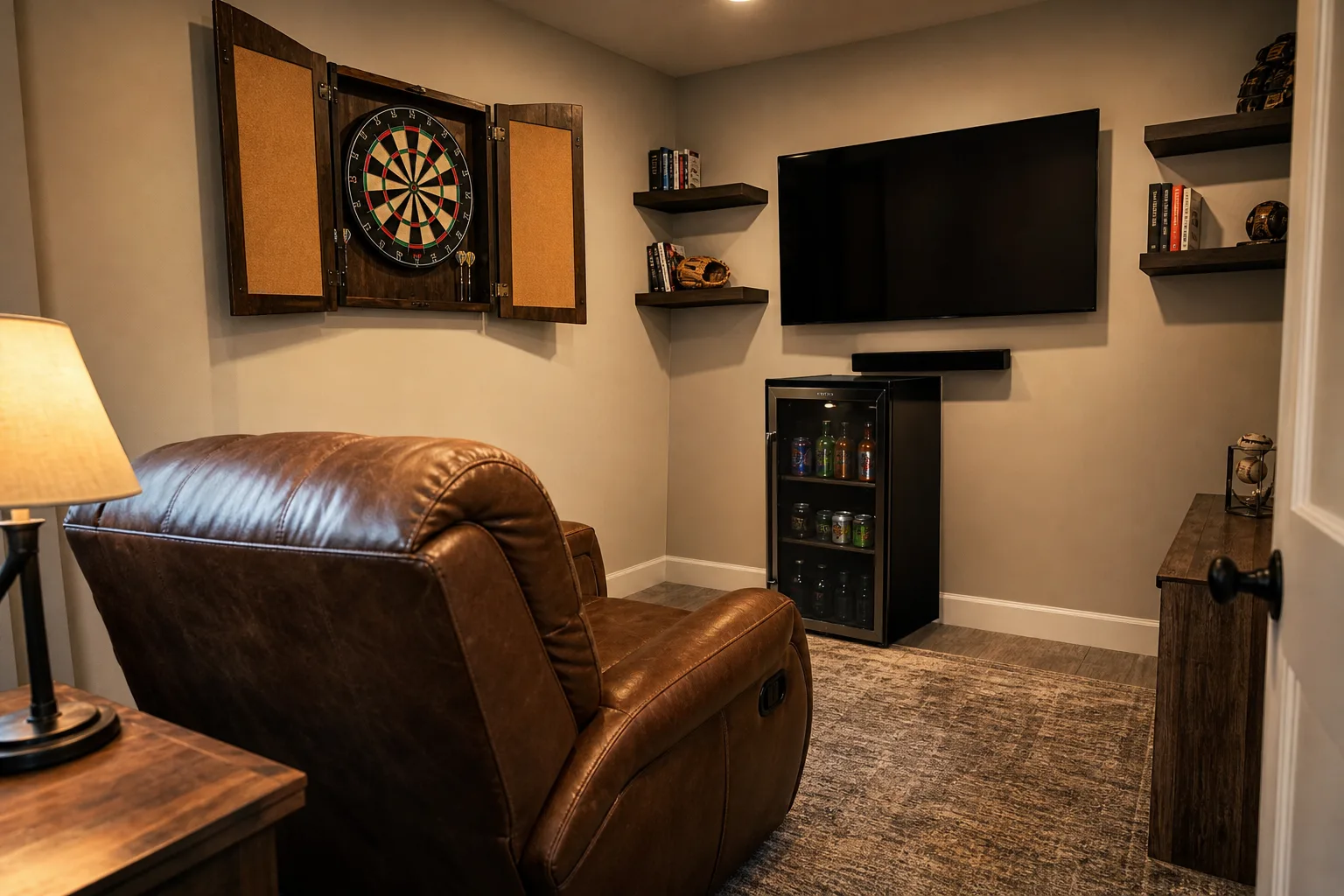
- Comfortable seating. A sectional, recliners or a reclining sofa with cup holders. Leather and performance fabrics wipe clean. A couch that pulls out into a bed makes the room double as guest space.
- A big screen. A large TV, or a projector in a room you can make dark. Size it to the seating distance in the table above. The OLED TV comparison covers the best picture for dark rooms.
- Sound. A soundbar with a subwoofer is the simple choice; a surround system suits a dedicated theater.
- A drink fridge. A glass-door beverage fridge keeps drinks visible and cold. Freestanding models need open space around the back for air, so don't box one into a cabinet unless it's made to be built in.
- A sturdy coffee table or side tables at a height that works for drinks, snacks and feet.
- Good lighting and power, as covered above.
The bar
Decide early between a dry bar, a counter with a fridge and storage but no water, and a wet bar with a sink, which needs plumbing and a drain. A dry bar can go almost anywhere with an outlet. Add bar stools at the right height, open shelves or a lit cabinet for glasses, and a countertop ice maker if you host often; the countertop ice maker comparison covers which make the best ice. A bar cart is the low-commitment version for a small room. If the room shares a wall with the kitchen, a pass-through window makes it easy to hand food in.
Building a simple bar yourself
A seven- or eight-foot bar is the focal point of a garage or basement man cave, and a ready-made one that size is expensive. A basic bar is a manageable first woodworking project, even for someone whose experience stops at flat-pack furniture:
- Sketch the room first. Decide where the bar goes, where a TV goes behind it, and where the lounge seating sits, then work out how many 2x4s and 2x6s you need.
- Build two levels. A lower work surface on the bartender's side, at counter height, is for mixing drinks; a raised top on the guest side sits at the standard 42-inch bar height. Framing the base to about 35 inches and adding the top gets you there.
- Join the frame with pocket screws. A pocket-hole jig makes strong, hidden joints in 2x4 frames, and a few online tutorials cover how to use one. Add center supports so the top doesn't sag, and a bottom shelf just off the floor for storage.
- Measure the fridge before you build. Leave an opening that fits your mini fridge with room to breathe, and check its noise rating; some compact fridges hum loudly enough to notice in a quiet room.
- Finish it simply. A dark painted base with a stained wood top gives contrast without much skill, and an LED strip under the bar top lights the shelves and the floor.
- Add the bar details: a wall-mounted bottle opener with a cap catcher, a small shelf for bottles, and a framed drink menu.
Games
- Pool table for a large room; slate beds play truest.
- Dartboard in a cabinet, which takes almost no floor space and protects the wall.
- Poker or card table, or a folding poker top that turns any table into a card table and stores flat.
- Foosball, air hockey, shuffleboard or a folding ping pong table.
- Arcade cabinets or pinball machines for a retro theme.
- A gaming setup: consoles or a PC, a big monitor or two and good chairs.
Personal touches
- Memorabilia and wall art. Framed jerseys, signed balls, movie posters on wood backing rather than thin paper, records, vintage signs.
- Display shelves. Built-in shelves save floor space; add a locked cabinet for anything valuable.
- A light-up or neon-style sign for a bar feel.
Example man cave picks on Amazon
The example picks are chosen from Amazon listings by their specs, stock and customer ratings. They are not the exact pieces from the setups described here, so check sizes before ordering.
Seating and screen
A single recliner for a small room. A wipe-clean faux leather recliner that leans back from 90 to 160 degrees, with a padded footrest on a steel frame. One good chair like this suits a 10-by-10 room better than a cramped sofa.
 Homall Faux Leather ReclinerCheck today’s price on Amazon


 Buy on Amazon →
A full-motion TV mount. Fits most 32- to 70-inch TVs up to 110 pounds. It swivels to face the bar or the sofa and tilts down 15 degrees to cut glare when the TV has to go higher than eye level.
 Mounting Dream Full Motion TV MountCheck today’s price on Amazon


 Buy on Amazon →
A soundbar with a subwoofer. A 5.1-channel Dolby Atmos soundbar system with a wired wood subwoofer and a voice-clarity mode, a big step up from TV speakers without running wires for a full surround setup.
 ULTIMEA 5.1 Soundbar with SubwooferCheck today’s price on Amazon


 Buy on Amazon →
Blackout curtains. A pair of 42-by-63-inch black grommet panels that block most daylight, so a projector or TV doesn't wash out in a room with windows.
 NICETOWN Blackout CurtainsCheck today’s price on Amazon


 Buy on Amazon →
The bar
A glass-door drink fridge. A 3.2 cubic foot fridge holds about 130 cans on five removable shelves, with a digital thermostat from 37 to 61°F. It stands about 31 inches tall, so it fits beside a sofa or at the end of a counter. It's a freestanding unit, so leave space around it for air.
 EUHOMY 130-Can Beverage FridgeCheck today’s price on Amazon


 Buy on Amazon →
Counter stools. A set of two solid-wood saddle-seat stools with a 24-inch seat and a footrest, sized for counters 36 to 39 inches high. For a 42-inch bar, look for 30-inch stools instead.
 Amazon Basics Saddle-Seat Counter StoolsCheck today’s price on Amazon


 Buy on Amazon →
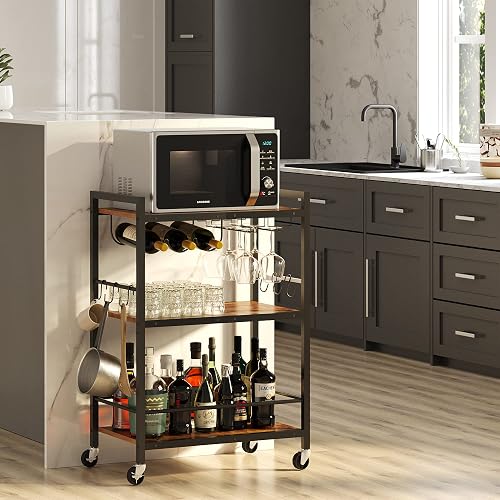
A bar cart. The no-build bar: a rolling cart about 24 inches wide with a wine rack, a glass holder and locking casters, easy to tuck into a corner of a small room.
 TUTOTAK Bar Cart with Wine RackCheck today’s price on Amazon

 Buy on Amazon →
Games
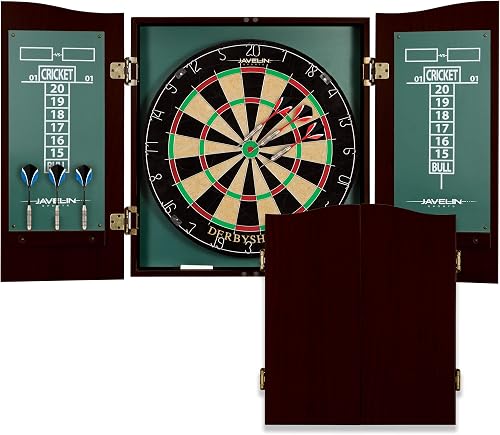
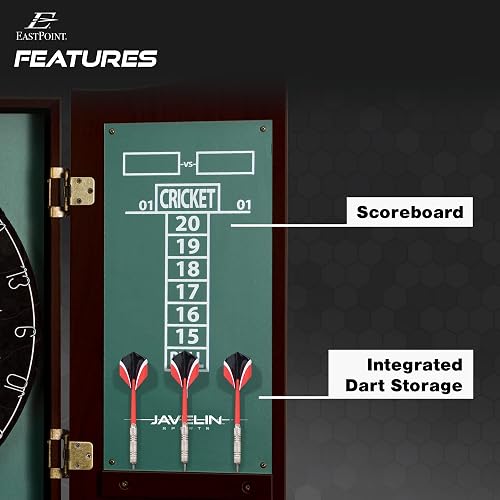
A dartboard cabinet. A wood cabinet with an official 18-inch bristle board, six steel-tip darts and two chalk scoreboards in the doors. Closed, it looks like a cabinet; open, the doors protect the wall from stray darts.
 EastPoint Belmont Dartboard CabinetCheck today’s price on Amazon


 Buy on Amazon →
A folding poker top. A 48-inch, eight-player felt top that sits on a dining or card table and folds to store in a closet: poker night without giving up floor space.
 48-Inch Folding Poker Table TopCheck today’s price on Amazon


 Buy on Amazon →
A foosball table. A 48-inch table is the compact home size, small enough for a spare room or a corner of the garage.
 GoSports 48-Inch Foosball TableCheck today’s price on Amazon


 Buy on Amazon →
An air hockey table. A 48-inch table with a plug-in blower, sized for a game room or garage rather than a full arcade footprint.
 GoSports 48-Inch Air Hockey TableCheck today’s price on Amazon


 Buy on Amazon →
Lighting, sound and walls
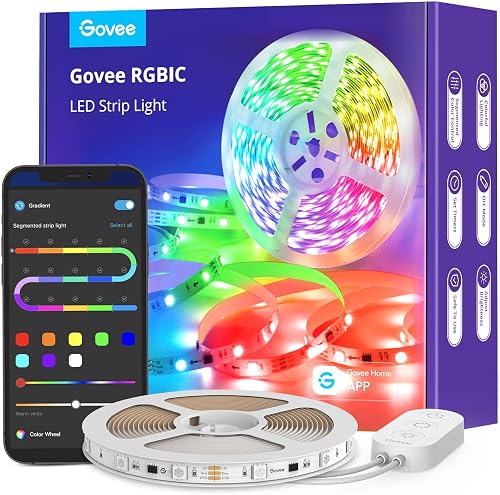
Color-changing LED strips. A 16.4-foot RGBIC strip that shows several colors at once in 15 segments, controlled from an app. Run it behind the TV, under the bar or along the ceiling for a gaming-room glow.
 Govee H6125 RGBIC LED Strip LightsCheck today’s price on Amazon


 Buy on Amazon →
Acoustic panels. A four-pack of large 46-by-23-inch fabric panels that absorb echo far better than thin foam. They make the room sound better; they don't stop sound from leaving it.
 Acoustic Panels 4-Pack Room Kit, 46 x 23 inCheck today’s price on Amazon


 Buy on Amazon →
A jersey display case. A wood shadow-box frame with a shatterproof acrylic front and three ways to hang the jersey, so a favorite shirt becomes wall art instead of a folded keepsake.
 IHEIPYE Jersey Display Frame CaseCheck today’s price on Amazon


 Buy on Amazon →
For the floor, browse interlocking garage floor tiles or browse carpet tiles.
Small man cave ideas
A 10-by-10 room is enough for a great man cave if every inch is planned.
- Build in instead of buying furniture. Built-in shelving and a closet recessed into the wall free up floor space. If you're framing a new non-load-bearing partition wall, 2x4s ripped in half lengthwise make a thinner wall and give back a few inches; check local code first.
- Put everything on the walls. Wall-mount the TV, use floating shelves, and put the dartboard in a cabinet.
- Make the counter do double duty. A wall-to-wall countertop works as a desk, a gaming station, a project bench and a bar. Wood glued up from boards and sealed with a few coats of polyurethane is durable and inexpensive.
- Pick one great chair. A single recliner, or a loveseat, beats a cramped sectional.
- Go compact on the bar. A small glass-door fridge and a shelf for glasses are enough.
- Paint the ceiling dark and use color-changing LED strips to set the mood without lamps taking up floor space.
- Use games that fold or hang: a dartboard cabinet, a folding poker top, a wall-mounted foosball table.
Garage man cave ideas
- Decide whether it's still a garage. If you need to park there, keep the furniture on one side or on casters and leave the floor clear. A full conversion to living space usually needs a permit, and some cities require replacement parking.
- Insulate the door and walls first, then add a mini-split for comfort year-round.
- Coat the floor with epoxy or lay interlocking tiles, with rugs in the lounge zone.
- Put the bar against the back wall, away from the big door, with pendant lights overhead and a TV behind it.
- Add a second screen. A smaller TV over the lounge area, fed from the same streaming stick through an HDMI splitter, shows the same game at the bar and on the couch.
- Don't run an engine inside while people are in the room, and keep a working CO alarm in any garage space that shares air with a hangout.
- Combining it with a workout area? See how to turn a garage into a home gym for flooring and layout.
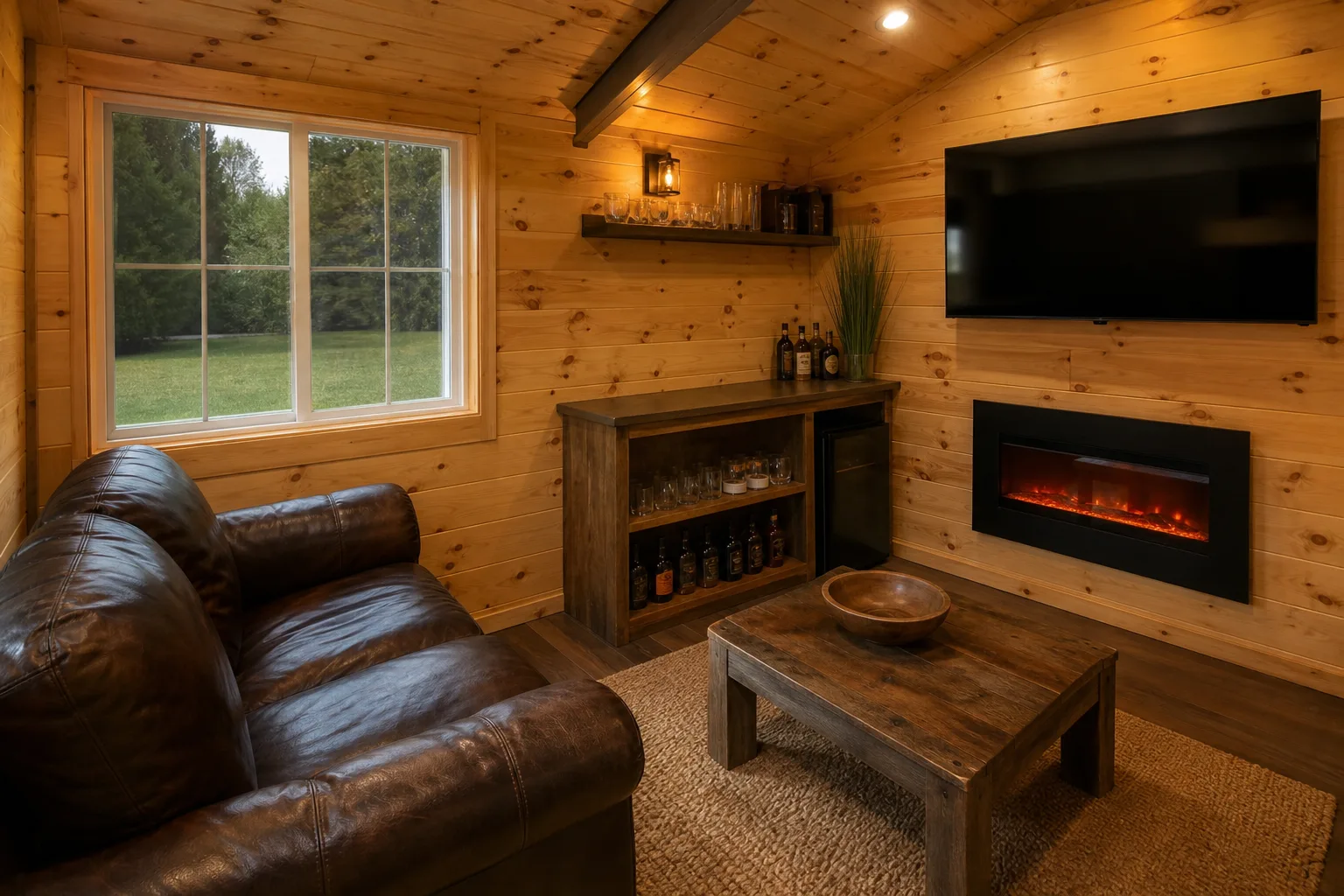
Shed man cave ideas
- Check the rules first. Many cities skip a building permit for small sheds under a set size, but setbacks still apply, and running electricity to a shed almost always needs a permit and an electrician.
- Get power out properly with a buried, code-rated line to a small subpanel, not an extension cord.
- Insulate, then finish with paneling such as knotty pine, which is quick to install and suits the cabin feel.
- Plan heat and air: a mini-split or a wall heater for winter, a window and a vent for summer.
- Keep it small and cozy: a loveseat, a wall TV, a compact fridge and a bar shelf.
Budget: start simple and level up
A man cave in an existing finished room can be little more than seating, a TV, a fridge and lighting. Finishing a basement or building out a shed or garage costs many times more because of framing, insulation, electrical, flooring and heating. Set a budget, spend first on the things you'll use every day (seating, screen, sound, comfort), and add the bar upgrades, game tables and decor over time. Used furniture and secondhand game tables are a good way to stretch the budget. The room doesn't have to be finished on day one.
Common man cave mistakes
- Losing sight of the purpose. Decorating with whatever you like, piece by piece, ends in a mishmash. Decide whether the room is for watching, gaming, hosting or hiding out, and let that drive every choice.
- Overcrowding. A sofa, a bar, darts, an arcade machine and a full-size pool table don't all fit in a one-car garage. Treat open floor as part of the design, and if the pool table doesn't fit, leave it out or go smaller.
- Buying furniture before measuring. Draw the room, place the big pieces, then shop.
- Office lighting. Bright fluorescent strip fixtures light the room but make it feel like a workplace. Use warm main lights plus accent, back and wall lighting, and keep one bright white task light for cleaning or projects.
- Pieces that fight the theme. One loud object that doesn't belong stands out. If something has to stay, such as a guitar in a pub-themed room, pick a color that blends in.
- Forgetting about echo. Wipe-clean tile walls and hard floors make sense for a bar, but they make music and TV sound harsh. Balance them with rugs, upholstered seating, curtains and acoustic panels.
- Poor ventilation. A windowless garage or basement gets stuffy and humid, and condensation leads to mold. Plan for a vent, a fan, air conditioning or a dehumidifier.
- Too few outlets. Put outlets everywhere: behind the TV, under the bar, inside cabinets and in corners where a lamp might go. An extra outlet costs little during the build; tangled extension cords look bad and trip people.
- Boxing things in for good. When you hide pipes, a shutoff valve, a junction box or a network switch behind a wall or soffit, add an access panel so you can reach it later without cutting into the finished wall.
- Skipping smart scenes. With several kinds of lights, set scenes: a dim "game night" scene with music and a bright "clean-up" scene, or lights that come on when the door opens. A smart speaker or hub handles it without a complicated setup.
- Forgetting comfort. If the chair is bad, the fridge is empty or the room is freezing, you won't use it. Start with your most comfortable seat and build around it, and rank your must-haves so the top ones get the space.
- Skipping insulation and heat in a garage or shed, or finishing a damp basement without fixing the water first.
- Skipping permits for electrical, plumbing or structural work, which can cause trouble at inspection or when you sell.
Posted by Kristopher Larson
Frequently asked questions
What should I put in a man cave?
Start with the essentials: comfortable seating, a big TV or projector, a soundbar or surround sound, a drink fridge, good layered lighting and plenty of outlets. Then add what fits your hobbies: a bar with stools, a dartboard, a pool or poker table, a gaming setup, and memorabilia or wall art that makes the room yours.
How big does a man cave need to be?
There's no minimum. A 10-by-10 spare room works with one recliner, a wall-mounted TV, a compact fridge and built-in shelves. A pool table is what drives the size up: an 8-foot table needs roughly 13 by 17 feet with standard 58-inch cues, before you add seating or a bar.
How do I lay out a man cave?
Decide on your zones first, such as a watch zone, a bar zone and a game zone. Then measure the room, draw it to scale and place the largest pieces first: the TV wall and main seating, then the bar, then any game table. Keep about 36 inches for main walkways, keep the screen out of window glare, and leave clear access to vents, the electrical panel and exits.
How far should the couch be from the TV?
For a 4K TV, about 1.2 to 1.6 times the screen's diagonal. That's roughly 6.5 to 8.5 feet for a 65-inch TV and 7.5 to 10 feet for a 75-inch. Mount the TV so the center of the screen sits near seated eye level, around 42 inches off the floor.
Is a garage or basement better for a man cave?
A basement usually gives more space, more privacy and a quieter, more comfortable room, as long as it's dry and tested for radon. A garage is easier to reach from outside and handles spills and games well, but it needs insulation, a sealed door and a heating and cooling source, and you may lose parking. Check local rules before converting a garage into finished living space.
How do I make a man cave on a budget?
Use a room that's already finished, and spend first on what you'll use every day: seating, the screen, sound and lighting. Buy used furniture and game tables, use a bar cart instead of a built-in bar, choose games that fold or hang on the wall, and build around things you already own, like jerseys or signs. Add upgrades over time.
Keep reading
More from the blog
Best Inverter Generator: Honda EU2200i vs GENMAX 2200W
Best Massage Gun: Theragun vs Ekrin vs Bob and Brad Mini Guns
Best TV Backlight: FancyLEDs vs. Govee vs. Philips Hue Sync