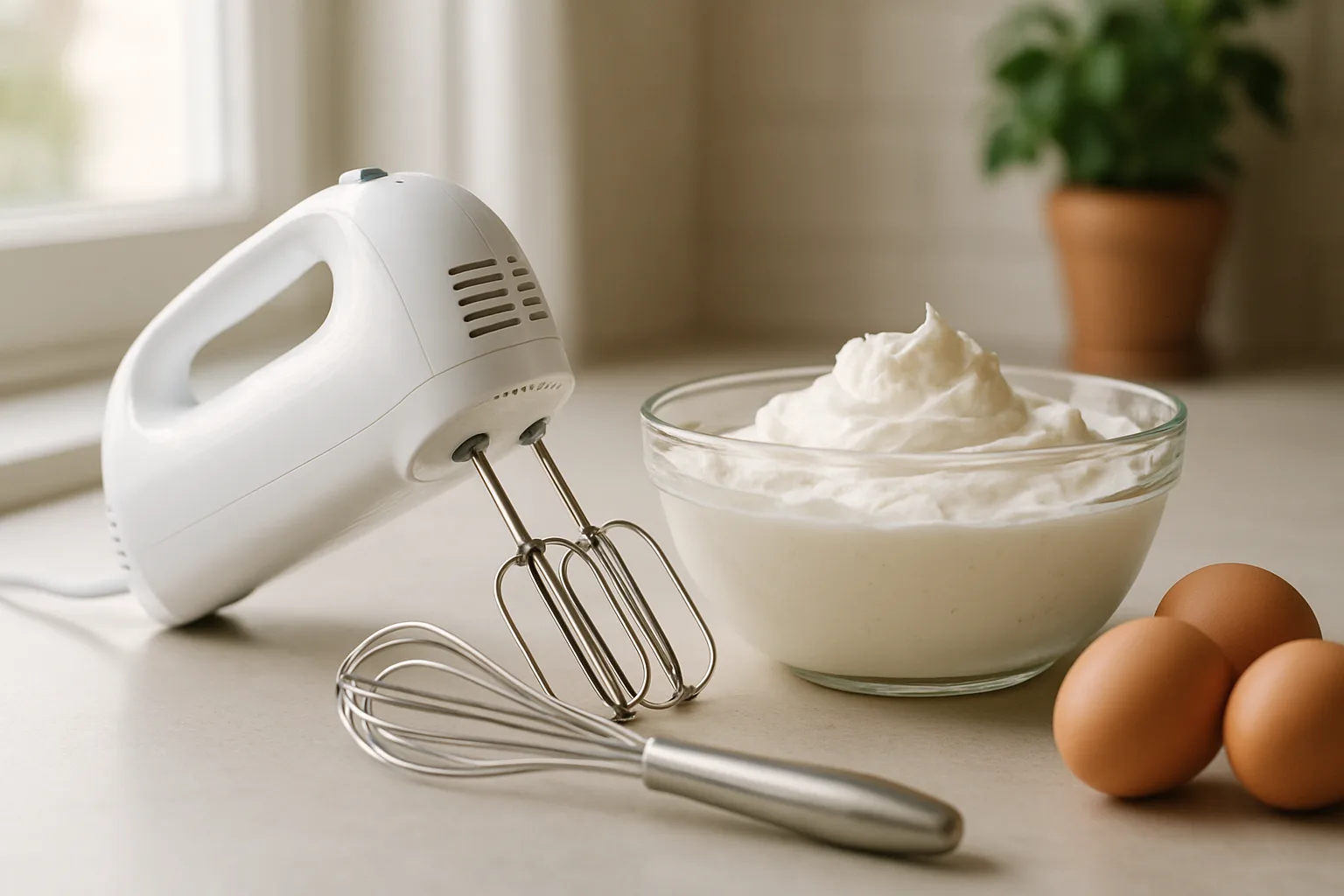
Best Hand Mixer: Breville vs KitchenAid vs Cuisinart vs Hamilton Beach
What makes a hand mixer good: a slow first speed that won't spray, wide beaters that don't clog, light weight, corded vs cordless, plus 4 picks.
Most hand mixers whip cream just fine. They split apart in the first second after the button is pressed, and deep into a batch of cookie dough. A good one starts slowly enough that powdered sugar stays in the bowl, keeps its beaters clear of stiff dough, and is light enough that an arm doesn't give out before the flour is in. A bad one launches its first speed like a rocket, gums up around a center post and vibrates the whole way through.
Below: what separates the two, corded versus cordless, when a hand mixer is enough, and four mixers worth buying, from premium to budget.
As an Amazon Associate, Best Utah Real Estate earns from qualifying purchases.
Quick verdict
- Best overall: the Breville Handy Mix Scraper (BHM800). Wide, silicone-edged beaters that don't clatter against the bowl or clog in dough, a light that shines into the bowl, a built-in timer and a pause button. It is the premium choice.
- Light and easy on the arm: the KitchenAid 7-Speed Hand Mixer (KHM7210). A gentle soft start, a quiet motor and the best balance in the hand, plus nearly every color a KitchenAid stand mixer comes in.
- Best value from a big name: the Cuisinart Power Advantage Plus 9-Speed Hand Mixer. Solid and powerful for a good deal less than the Breville, with a storage case, but heavier and top-heavy.
- Best cheap hand mixer: the Hamilton Beach 6-Speed Hand Mixer with Snap-On Case. Smooth, low-vibration and strong enough for peanut butter cookie dough, with metal beaters and a case that clips to the bottom.
The hand mixers side by side
| Hand mixer | Shop | Tier | Speeds | Beaters | Start-up | Handling | Extras |
|---|---|---|---|---|---|---|---|
| Breville Handy Mix Scraper (BHM800) |  Buy on Amazon | Premium | 9 | 2¼ in wide, silicone-lined edges | Pause button mid-mix | Trigger-style beater release | Bowl light, elapsed-time counter, pause button |
| KitchenAid 7-Speed Hand Mixer (KHM7210) |  Buy on Amazon | Mid-range | 7 | Standard metal beaters and whisk | Soft start, one press | About 1 lb 15 oz; the best balanced | Lockable swivel cord, one-press beater release, many colors |
| Cuisinart Power Advantage Plus 9-Speed Hand Mixer |  Buy on Amazon | Mid-range | 9 | Beaters plus accessories in the case | Less gentle | Heavier and top-heavy | 220 watts, storage case |
| Hamilton Beach 6-Speed Hand Mixer with Snap-On Case | 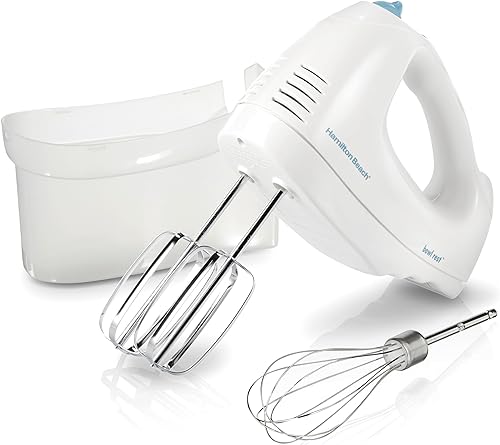 Buy on Amazon | Budget | 6 plus QuickBurst | 2 metal beaters and a whisk | Smooth | Heavier than bargain models, low vibration | 250 watts peak, snap-on case, heel rest |
What separates a good hand mixer from a bad one
A slow first speed
The most common complaint about cheap mixers is spray: cream, flour or powdered sugar thrown out of the bowl the moment the motor starts. The cause is a lowest speed that is simply too fast. Lowest settings on common hand mixers run anywhere from about 230 to 740 RPM, and the models near the top of that range are the ones that spray cream and dry ingredients at start-up. A bargain mixer with an aggressive speed one can fling cookie dough well past the rim, and on some cheap units speeds two and three feel identical.
The flip side is the top end. Top speeds range from about 860 to 1,310 RPM, and the mixers with faster top speeds blend more efficiently. The ideal is a crawl at speed one and real power at the top. A soft start, where the motor ramps up gently, solves spraying, and it is where the KitchenAid shines.
Beater shape
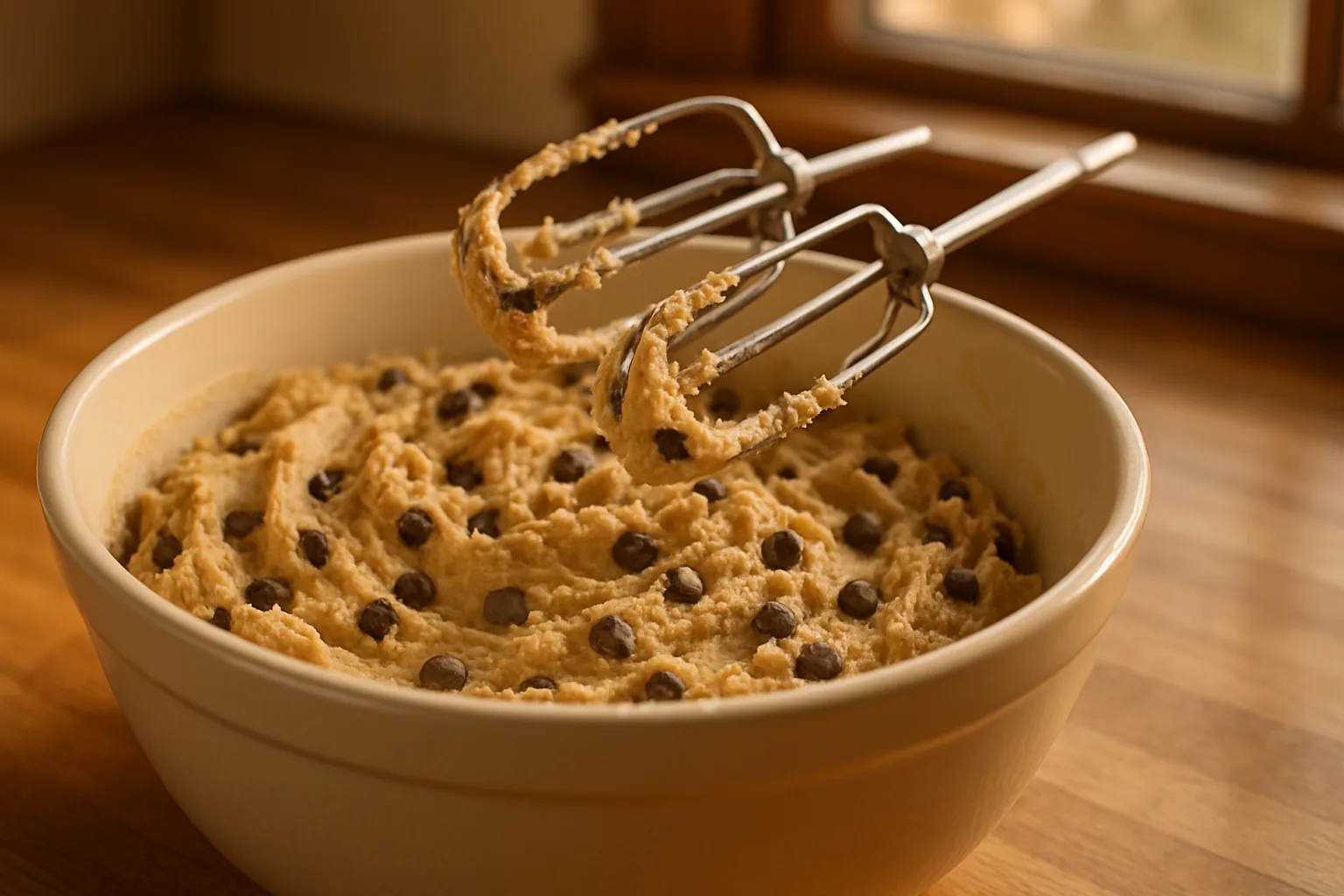
In stiff dough, beater shape matters as much as power. Narrow, wire-thin beaters and beaters with a post running down the center to the tip tend to gum up in cookie dough, so batter wraps around them instead of getting mixed. Wider, open beaters stay clear. The best are the Breville's, at 2¼ inches wide, with silicone along the bottom edge so they don't clatter against a metal or glass bowl. The same center-bar problem shows up on cordless models: a bargain cordless mixer's beaters bound up in banana bread batter, while KitchenAid's cordless beaters, which have no center bar, stayed clean.
Metal beaters are the safer bet than plastic "helix" styles, which look like silicone but are hard plastic.
Weight and balance
A few ounces sounds trivial until a batch of cookie dough takes several minutes of holding. The KitchenAid 7-speed weighs about 879 grams (1 lb 15 oz), a Cuisinart 9-speed about 949 grams (2 lb 2 oz), and a heavy vintage-style mixer 1,079 grams (2 lb 6 oz). Balance matters as much as weight. A big, bulky head forces the hand low on the handle, which makes the mixer top-heavy and tires the forearm faster. A compact body lets the hand choke up and steer.
Light isn't automatically better: the lightest bargain mixers often vibrate the most, which tires the hand too.
Beater release, heel rest and storage
- Ejector: the Breville's pull-up trigger release beats pressing a button, and the KitchenAid's button is easier than the Cuisinart's.
- Flat heel: a mixer that stands on its back end lets it rest upright between additions without dripping on the counter. The KitchenAid, Cuisinart and Hamilton Beach all have one.
- Storage case: a case keeps the whisk and beaters with the mixer. Check how the cord fits in the case before buying. Hamilton Beach's case snaps to the bottom of the mixer.
Skip the dough hooks
Many mixers include spiral dough hooks. They don't knead bread well. They are fine for mixing meatloaf or shredding cooked meat, but bread dough belongs in a stand mixer.
Corded vs. cordless
The fear with cordless hand mixers is weak power. That fear doesn't hold up: both a KitchenAid cordless 7-speed and a bargain store-brand cordless model handled banana bread batter with as much power as a corded mixer. Both take about three hours to charge.
The differences are the familiar ones. The cheap cordless model had only three speeds, little difference between them and a first speed that shot off far too fast. The KitchenAid was smoother, with a soft start and more spread between speeds. Charging differs too: KitchenAid uses its own charger, while USB models take any phone cable but may need a wall adapter. Go cordless for portability, not power.
Is a hand mixer enough, or do you need a stand mixer?
A hand mixer is the better tool for small jobs: a stand mixer often can't whip one or two egg whites, and a hand mixer goes straight into a pot of mashed potatoes. It fits a drawer and handles cake batter, cookie dough and whipped cream.
A stand mixer wins elsewhere. It creams butter and sugar fluffier, handles bread dough and spares the arm. Anyone who bakes cookies often, makes bread, or has hand or wrist trouble should look at a stand mixer instead; the KitchenAid Classic vs. Artisan vs. Artisan Plus comparison covers which model fits which baker. A well-equipped kitchen often has both.
The picks in detail
Breville Handy Mix Scraper (BHM800)
The Breville is the best hand mixer here. Its beaters are wide and open, so they don't gum up in oatmeal cookie dough, and the silicone edging keeps them quiet against the bowl. The extras earn their place: a light that shines into the bowl, a counter that shows elapsed mixing time, and a pause button for adding ingredients mid-mix. The trigger-style release pulls up to drop sticky beaters. It is the priciest here, and the one for frequent bakers.
Breville Handy Mix Scraper (BHM800)Check today’s price on Amazon

 Buy on Amazon →
KitchenAid 7-Speed Hand Mixer (KHM7210)
The KitchenAid has the most refined feel of the mid-range picks. It is lighter than the Cuisinart and better balanced, so the hand sits higher on the grip and the arm tires least. One press of the speed button starts it with a gentle soft start, and its DC motor runs quietly. Cream whips quickly with no splatter, and in peanut butter cookie dough it stays smooth and keeps most of the dough in the bowl.
It isn't perfect: once flour goes into a thick dough, it can buck a little and feel harder to control. The color range is unmatched for matching a KitchenAid stand mixer.
KitchenAid 7-Speed Hand Mixer (KHM7210)Check today’s price on Amazon

 Buy on Amazon →
Cuisinart Power Advantage Plus 9-Speed Hand Mixer
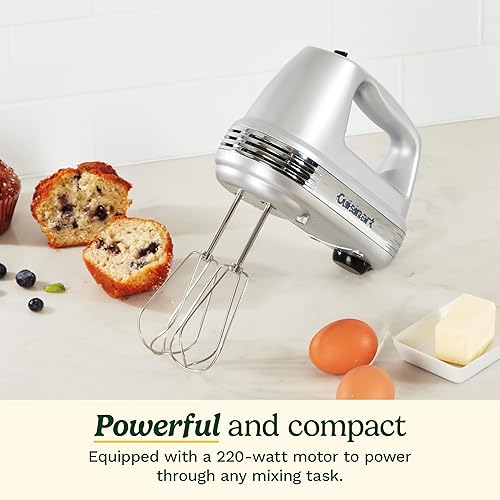
The Cuisinart is a solid all-rounder that costs well under the Breville and handles everyday mixing well, which makes it the value choice among premium brands. It runs on 220 watts, with plenty of power for cookie dough, nine speeds and a storage case for the accessories.
The trade-off is handling. Cuisinart's 9-speed body is heavier than the KitchenAid's and carries its weight in a large head, which pushes the hand down the grip and tires the arm. The start-up is also less gentle. For arm or wrist fatigue, the KitchenAid is the better fit.
Cuisinart Power Advantage Plus 9-Speed Hand MixerCheck today’s price on Amazon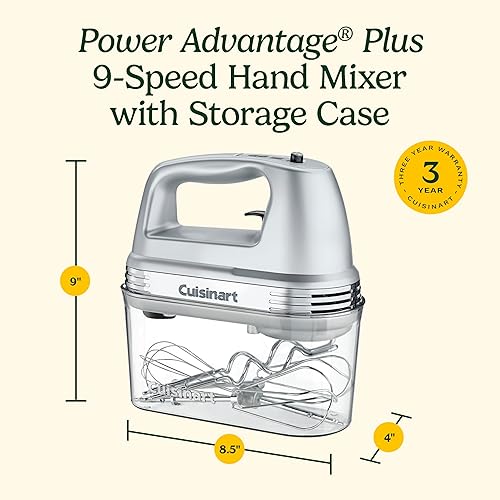
 Buy on Amazon →
Hamilton Beach 6-Speed Hand Mixer with Snap-On Case
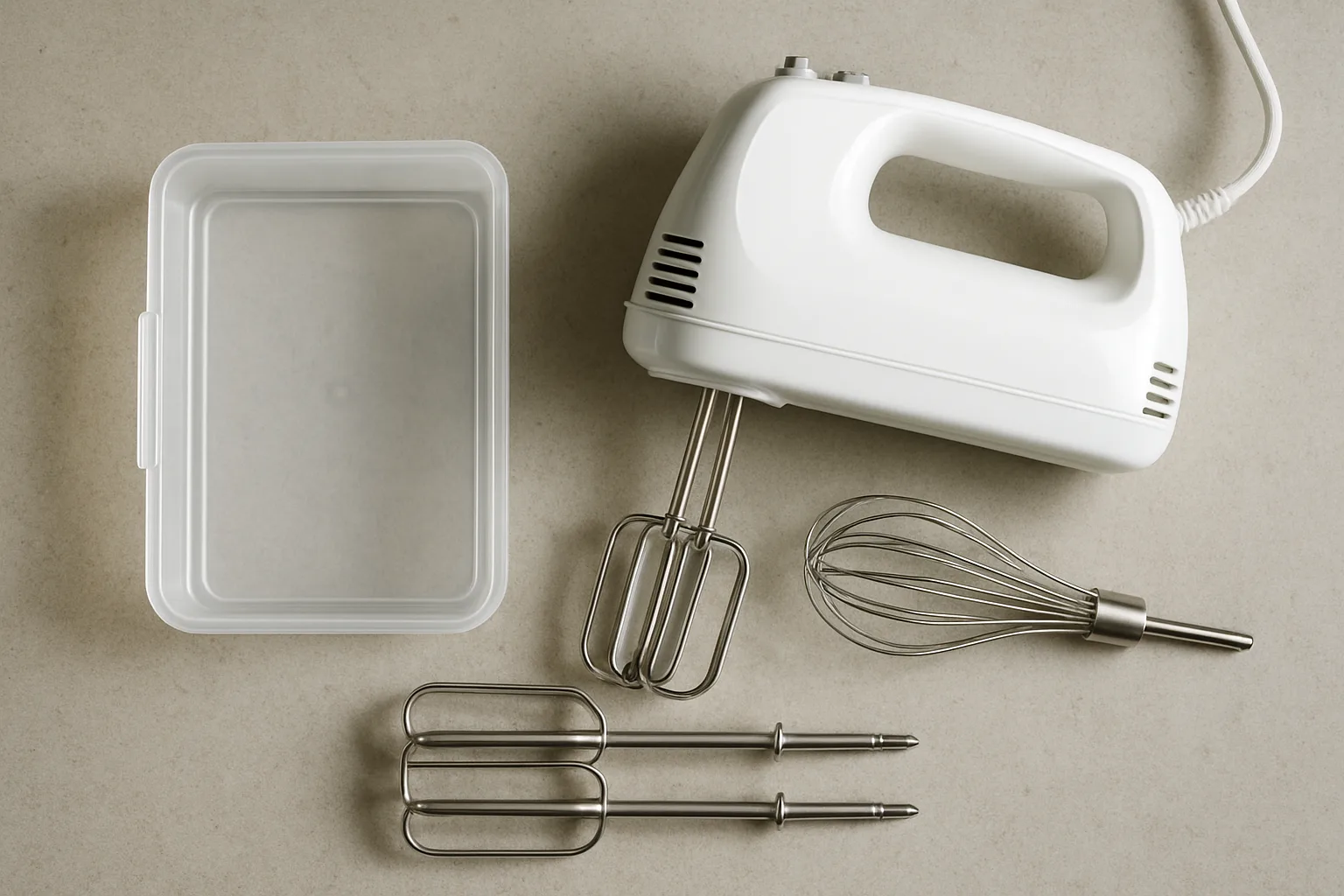
Among cheap hand mixers, the Hamilton Beach is the one to buy. It is sturdier than bargain-bin models, and its motor runs far smoother, with much less vibration. It whips cream well with its single whisk, and in thick peanut butter cookie dough it powered through on speed three without bogging down. Some batter flies when the mixer is tilted up the side of the bowl, but nothing like the cheapest models.
It comes with two metal beaters and a whisk, which feel sturdier than plastic beaters, and the case clips to the bottom so everything stays together. Speeds run to six, plus a QuickBurst button. It is a bit heavy for long sessions; stepping up to the KitchenAid buys lighter weight and better handling.
Hamilton Beach 6-Speed Hand Mixer with Snap-On CaseCheck today’s price on Amazon

 Buy on Amazon →
Others worth knowing about
- Black & Decker Helix: stylish and very smooth at whipping cream, but its beaters are plastic and it flings more dough than the Hamilton Beach.
- Bargain store-brand mixers: a five-speed big-box model with no whisk vibrated hard, threw dough everywhere on speed one and bogged down in cookie dough. Leave these on the shelf.
Tips for better results
- Chill the bowl and whisk before whipping cream, and add powdered sugar with the mixer on its lowest speed.
- Keep the beaters level and fully in the mix. Tilting them up the side of the bowl is what throws batter.
- Unplug the mixer before ejecting beaters or scraping them, and check the CPSC recall list for any older mixer pulled from a cupboard.
For soups and sauces, see the immersion blender comparison.
Who should buy which
- Frequent baking and the best beaters available: the Breville Handy Mix Scraper (BHM800).
- Light weight, a gentle start and a color to match a stand mixer: the KitchenAid 7-Speed (KHM7210).
- A powerful, well-known mixer for less than the Breville: the Cuisinart Power Advantage Plus 9-Speed.
- A dependable mixer on a tight budget: the Hamilton Beach 6-Speed with Snap-On Case.
- Bread, big batches or tired wrists: a stand mixer, not a hand mixer.
Posted by Kristopher Larson
Frequently asked questions
What is the best hand mixer?
The Breville Handy Mix Scraper (BHM800) is the best overall. Its wide, silicone-edged beaters stay clear in cookie dough and don't clatter against the bowl, and it adds a bowl light, an elapsed-time counter, a pause button and an easy trigger release. It is a premium mixer; the KitchenAid 7-speed is the lighter, gentler mid-range alternative.
Is the Breville Handy Mix Scraper worth it?
For anyone who bakes often, yes. The beaters are what set it apart: they are 2¼ inches wide, so thick dough doesn't wrap around them, and the silicone edges keep them quiet on a metal or glass bowl. The extras, such as the light and timer, are small but genuinely useful. For occasional whipped cream, a cheaper mixer is enough.
KitchenAid vs Cuisinart hand mixer: which is better?
Both have plenty of power for cookie dough. The KitchenAid 7-speed is lighter, better balanced and starts with a gentler soft start, so it is easier on the arm and sprays less. The Cuisinart Power Advantage Plus 9-speed offers more speeds and a storage case, but it is heavier and its weight sits up in the head, which tires the hand faster during long mixing.
What is the best cheap hand mixer?
The Hamilton Beach 6-Speed with Snap-On Case. It runs far smoother than bargain-bin models, keeps going in thick peanut butter cookie dough without bogging down, and comes with metal beaters, a whisk and a case that clips underneath. The very cheapest mixers tend to vibrate hard and start so fast that dough flies out of the bowl.
Why does my hand mixer splatter everywhere?
Usually because its lowest speed is too fast. Low settings on hand mixers vary widely, roughly 230 to 740 RPM, and the faster ones throw cream and flour at start-up. Start on the lowest speed with the beaters fully submerged, keep them level instead of tilting them up the side of the bowl, and look for a mixer with a soft start.
Can a hand mixer knead bread dough?
Not well. The spiral dough hooks many hand mixers include struggle with bread dough and are better kept for mixing meatloaf or shredding meat. Bread, large batches and frequent cookie baking are stand mixer jobs; a hand mixer is best for whipped cream, egg whites, cake batter, mashed potatoes and smaller batches of cookie dough.
Keep reading
More from the blog

Best Milk Frother: Aeroccino 3 vs 4 vs Breville Milk Cafe vs Zulay
Best Juicer: Nama J2 vs Hurom H400 vs Ninja NeverClog vs Omega
How to Turn Your Garage Into a Home Gym or Personal Training Studio: Flooring, Racks and Local Rules