Best Juicer: Nama J2 vs Hurom H400 vs Ninja NeverClog vs Omega
Cold press vs centrifugal juicers compared on yield, pulp, greens, prep and cleanup, plus the Nama J2, Hurom H400, Ninja NeverClog and Omega picks.
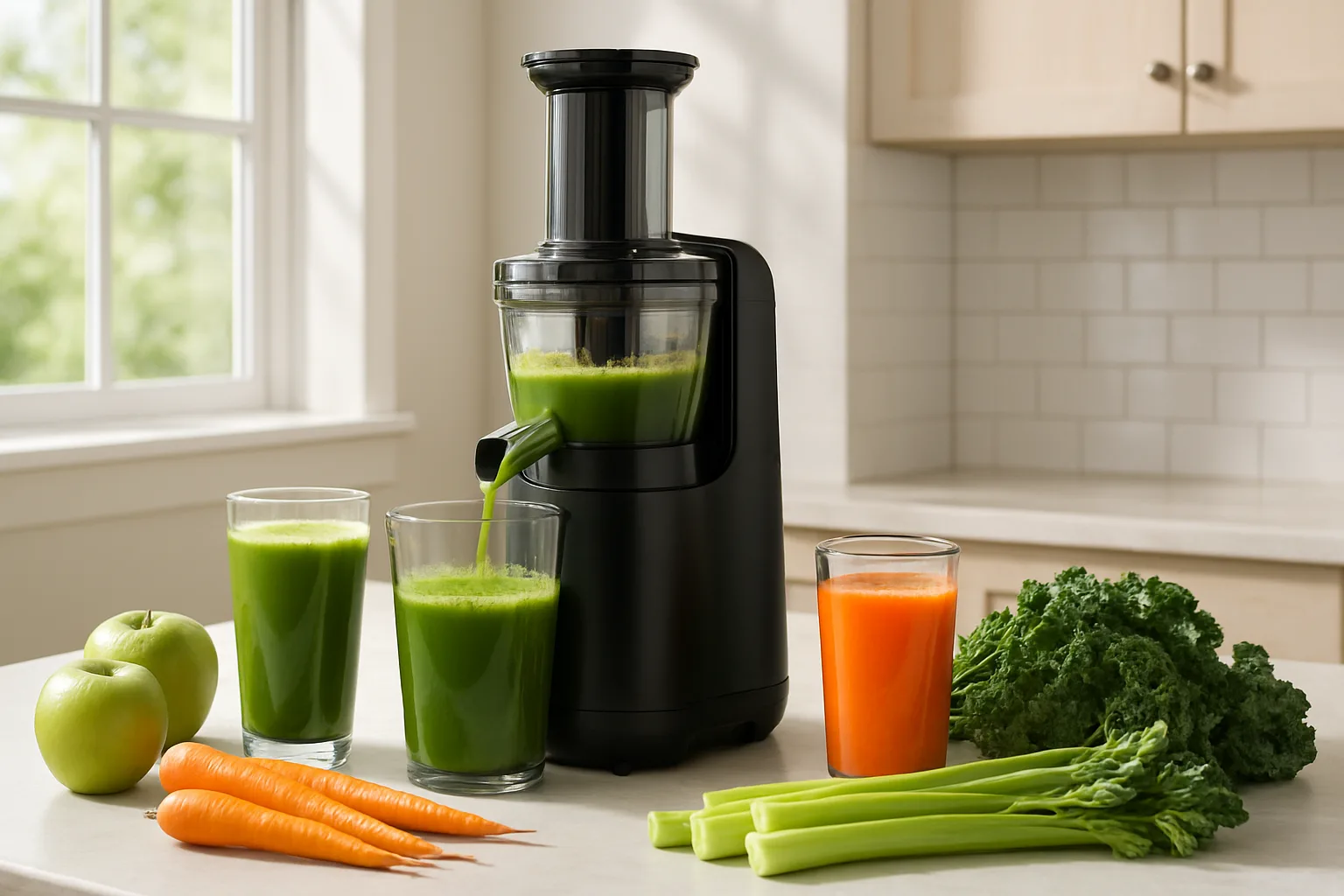
Juicers split into two camps. Centrifugal models shred produce with a spinning blade disc and fling the juice through a mesh. Cold press models, also called slow or masticating juicers, crush it with a slowly turning screw called an auger and press the juice through a screen. Cold press comes in three shapes: vertical with a feed chute, vertical with a batch hopper for whole produce, and horizontal models fed piece by piece.
The type matters more than the brand name. It decides how much juice comes out of a bag of greens, how pulpy the glass is, how long prep and cleanup take, and how loud the kitchen gets. This guide covers those differences, then four cold press juicers worth buying.
As an Amazon Associate, Best Utah Real Estate earns from qualifying purchases.
Quick verdict
- Most juice and the least pulp: the Nama J2 Cold Press Juicer. Fill the hopper with whole produce and walk away. Highest yield, driest pulp, 15-year warranty; the screen takes scrubbing.
- Fastest cleanup: the Hurom H400 Easy Clean Slow Juicer. A hands-free hopper juicer that excels on celery and rinses clean in about a minute, with a little more pulp in the juice.
- Budget cold press: the Ninja NeverClog Cold Press Juicer (JC151). Strong yield and low pulp for far less money, but there is no hopper, so everything gets chopped and fed by hand.
- Smooth juice from a classic vertical design: the Omega Vertical Low-Speed Juicer (VSJ843), which handles carrots, grapes and kale well and is easy to put together and clean.
The juicers side by side
| Juicer | Shop | Type | Prep | Yield and pulp | Cleanup | Warranty |
|---|---|---|---|---|---|---|
| Nama J2 Cold Press Juicer |  Buy on Amazon | Vertical, batch hopper | Whole produce, hands-free | Highest yield of its group; bone-dry pulp; least pulp in the juice | Stainless screen needs scrubbing | 15 years |
| Hurom H400 Easy Clean Slow Juicer |  Buy on Amazon | Vertical, batch hopper | Whole produce, hands-free | Best on celery; a bit more pulp than the J2 | Rinses clean in about a minute | 15 years |
| Ninja NeverClog Cold Press Juicer (JC151) |  Buy on Amazon | Horizontal auger, no hopper | Chop small, feed piece by piece | Second-highest yield of its group; low pulp; slightly damp pulp | Check the listing | 1 year |
| Omega Vertical Low-Speed Juicer (VSJ843) |  Buy on Amazon | Vertical, 43 RPM, feed chute | Cut to fit the chute | Smooth juice, kale included | Easy to assemble and clean | Check the listing |
| Typical centrifugal juicer | High-speed blade disc | Large chunks, fast | Fine on soft fruit; very little from greens; wet pulp, foamy juice | Quick | Often about 1 year |
Cold press vs centrifugal: what actually changes
Greens are the big gap
On soft, watery produce like pears, cucumber and grapes, a centrifugal juicer can produce close to the same volume as a cold press model. Leafy greens are a different story. Kale and spinach are so light that they fly past the blade disc and land in the pulp bin nearly whole. From the same 150 g of leafy greens, a cold press juicer can deliver around 90 ml of juice against roughly 20 ml from a centrifugal one, about four and a half times as much. Celery stalks often pass through a centrifugal juicer barely touched.
Foam, separation and flavor
The fast spin whips air into the juice. Centrifugal juice comes out with a thicker layer of foam, a thinner body, and it starts separating into layers within minutes of sitting on the counter. Cold press juice has only a light foam and stays mixed. It also tastes more of its ingredients: the ginger in a carrot, ginger and apple juice comes through from cold press and goes missing from a typical centrifugal.
Heat is not the real difference
Centrifugal juicers are often said to cook the juice, but glasses from both types come out within about a degree Celsius of each other. Air and shredding set them apart, not temperature.
Shelf life follows from that. Centrifugal juice can smell off after a day in the fridge, while cold press juice of the same recipe may last about three days before it smells wrong. Treat that as a rough guide rather than a rule. Fresh juice is unpasteurized, and the FDA's juice safety guidance covers who should be careful with it and how to handle produce.
Where centrifugal juicers still win
Speed and price. A centrifugal juicer runs at thousands of RPM, takes bigger chunks through a wide chute, and rarely clogs. Entry models cost a fraction of a good cold press machine. The downsides: jet-engine noise, pieces that bounce out of the chute, wet pulp and short warranties, often around a year. For a tight budget and mostly apples, oranges and carrots, one is better than no juicer at all. For greens, it is the wrong tool.
Hopper, chute or horizontal: how much prep you sign up for
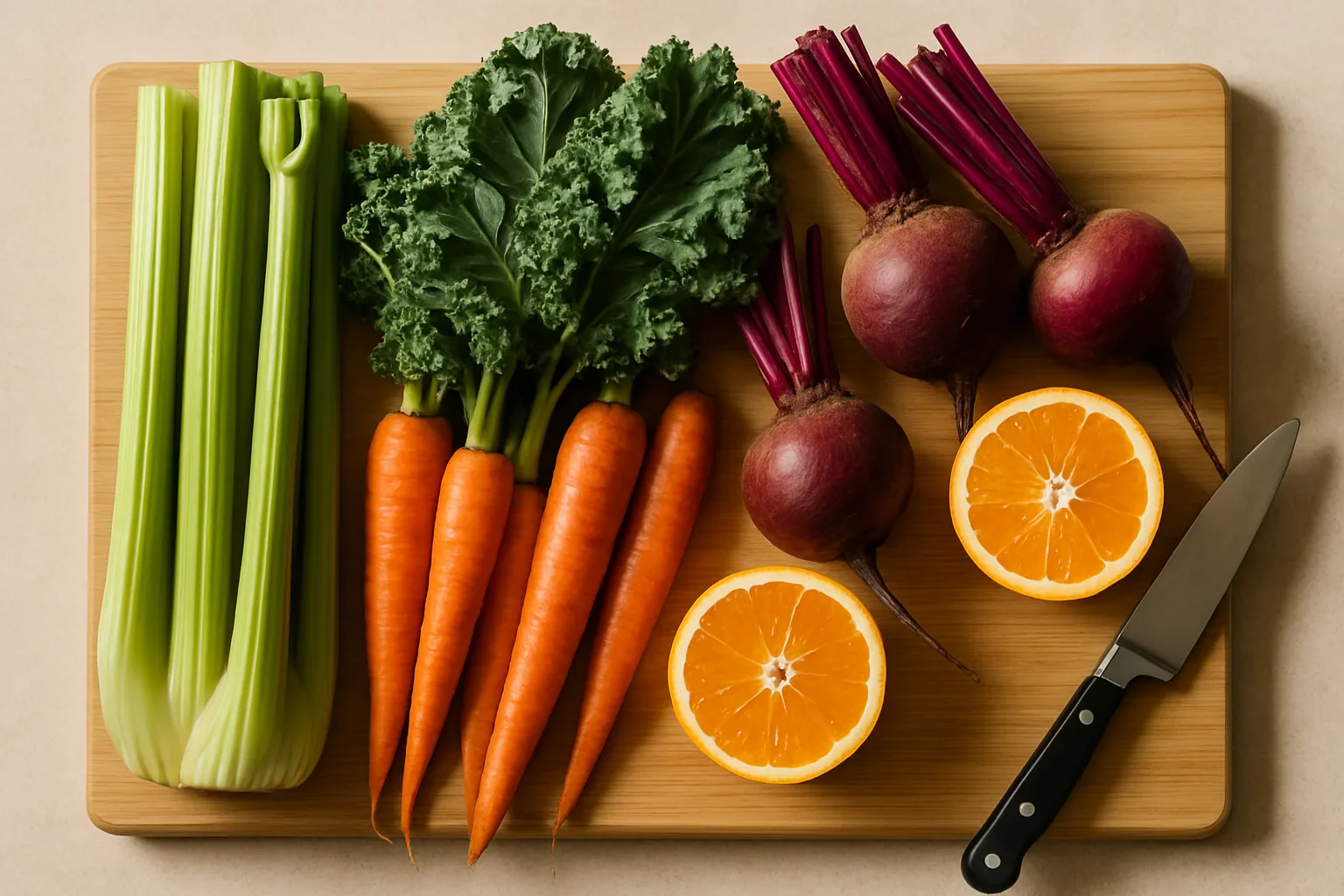
Prep time is the main reason people stop juicing. A good batch hopper can save around 20 minutes of chopping: the blades at its base cut whole produce as it feeds the auger, so you fill it, press start and leave. A cheap hopper does not deliver that. Budget hopper juicers that look much like the J2 clogged on fibrous celery and oranges and even on apples, left beets trapped in the auger, and had to be taken apart and restarted. Getting them to run smoothly meant chopping everything into bite-size pieces, which defeats the point of a hopper.
Horizontal juicers like the Ninja have no hopper at all. Produce is cut small and fed by hand, one piece at a time. It takes attention, but the auger chews through everything without clogging. A big cutting board speeds up that chopping; the cutting board guide compares sizes and materials. Vertical chute models like the Omega sit in between: the produce has to fit the chute, and leafy greens need the pusher or they hang up in the tube.
Yield, pulp and the squeeze test
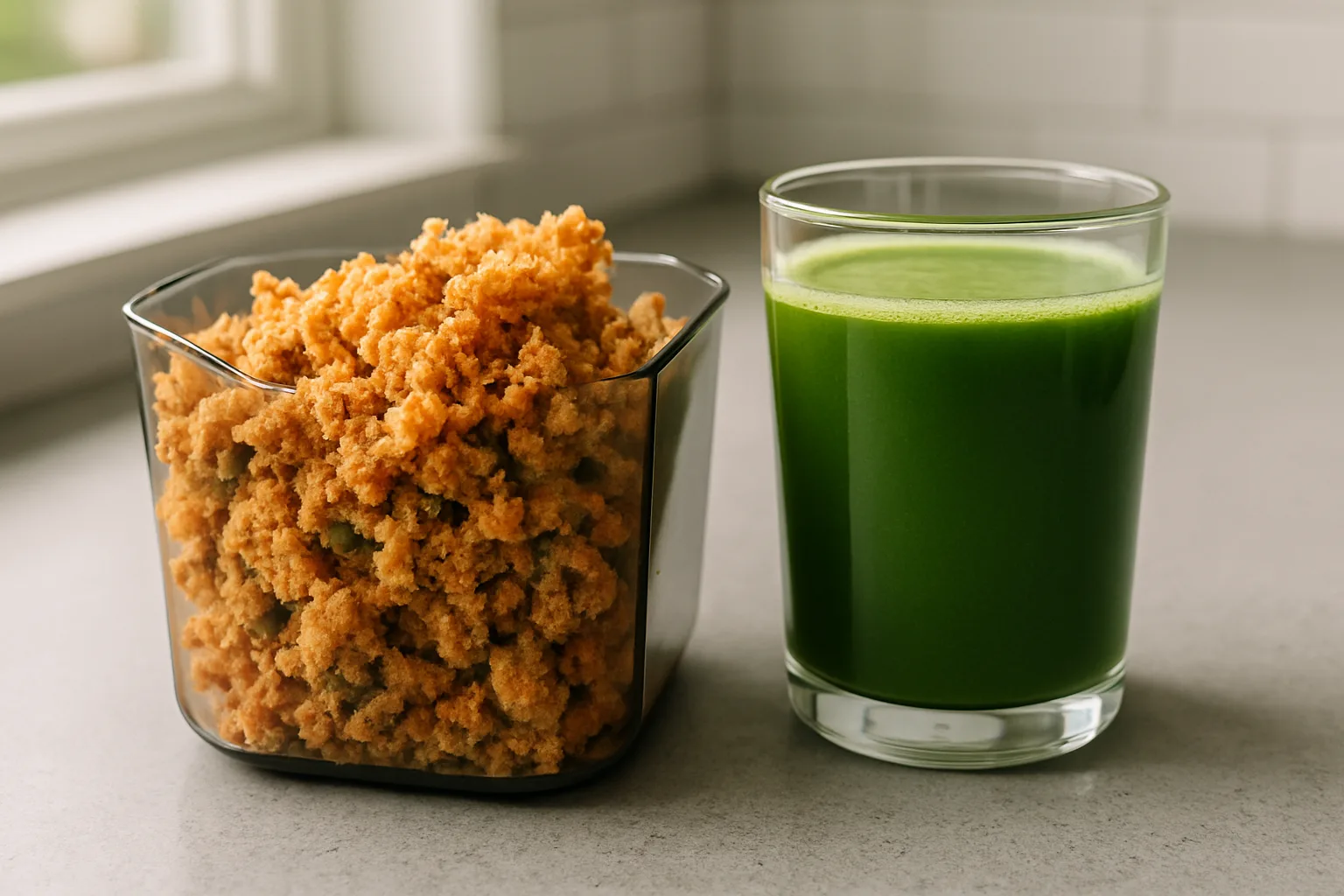
Squeeze a handful of pulp: dry means the juice got out, dripping means it went in the bin. Heavy augers squeeze harder than light, cheap ones. A fine stainless screen gives smooth juice, while mostly-plastic screens with large holes let pulp through, and the bottom of the glass turns to something like baby food.
With equal weights of beets, carrots and oranges, the Nama J2 produced 597 ml, the Ninja NeverClog 532 ml, a budget Kuvings hopper model 491 ml and an Our Place juicer 469 ml. The J2's pulp was bone dry, and the Ninja's gave up a few drops. The Kuvings and Our Place juice was noticeably pulpier. Cheap vertical clones sold under unfamiliar brand names do worse still: their celery pulp comes out soaking wet, and the juice in the cup is pulpy too. Small gaps compound: the half cup a day separating the J2 from the Kuvings comes to more than 160 cups of juice a year, and the Ninja's smaller gap still adds up to about 65.
Cleanup and noise
Cleaning is where most cold press juicers lose people. Fine stainless screens need a brush and real scrubbing, and some machines are fiddly to take apart and put back together. None of them is effortless, except the Hurom H400, whose Easy Clean screen rinses clean with water in about a minute from start to finish.
Noise favors cold press. Centrifugal juicers are by far the loudest, cheap vertical clones are quieter but still loud, and premium hopper models like the J2 are among the quietest. The big Kuvings Auto10 hopper machine has great yields but sits in between on noise, weighs around 16.5 lb and costs more: overkill for most kitchens.
Read the warranty fine print
Juicer motors rarely fail; parts do. One budget hopper juicer advertises 15 years, but the fine print covers parts for only three months. The Nama J2 and Hurom H400 both carry 15-year warranties. The Ninja comes with one year. Always check the parts coverage.
The picks in detail
Nama J2 Cold Press Juicer
The J2 is the yield and convenience pick. Its hopper holds enough whole produce for two to three cups of juice per batch, and blades at the bottom do the chopping. It finished its batch first, processed everything cleanly, gave the most juice and left pulp that would not drip even when squeezed hard. The juice had the least pulp of any machine in its group, thanks to a heavy vertical auger and a solid stainless screen. It is quiet, and a larger hopper is sold separately.
The trade-offs are price, since it sits at the premium end, and cleanup. The stainless screen has to be scrubbed after each use, so it rewards people who juice often enough to justify the routine.
Nama J2 Cold Press JuicerCheck today’s price on Amazon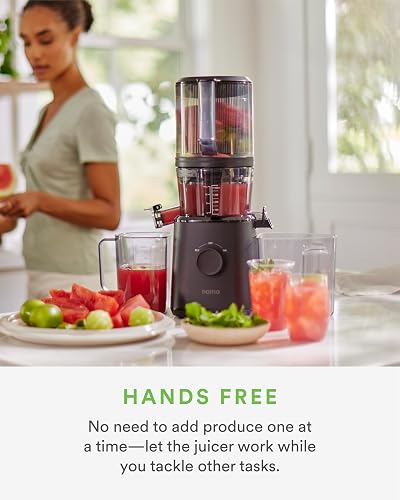

 Buy on Amazon →
Hurom H400 Easy Clean Slow Juicer
The H400 is for people who hate cleaning. Like the J2, its hopper takes whole fruits and vegetables and makes two to three cups at a time without supervision. It was the strongest of the top machines on celery. The Easy Clean screen is the difference: instead of scrubbing, the parts get splashed with water and the job is done in about a minute. The cost is a bit more pulp in the juice than the J2 leaves. It also carries a 15-year warranty.
Hurom H400 Easy Clean Slow JuicerCheck today’s price on Amazon

 Buy on Amazon →
For smoothies with the fiber left in, a blender is the better machine. The Vitamix vs Ninja blender guide covers those.
Ninja NeverClog Cold Press Juicer (JC151)
The Ninja is the budget cold press worth buying. On beets, carrots and oranges it came second in yield, ahead of two budget hopper juicers, processed everything, and made juice with little pulp. The pulp left in its auger looked much like the J2's, though a hard squeeze still pulled a few drops. It comes with a 24 oz juice jug, a 36 oz pulp container, two interchangeable pulp filters, and Start/Stop and Reverse programs for working through jams.
The catch is prep. With no hopper and a horizontal auger, everything has to be cut into small pieces and fed by hand, which takes a while for a full batch. The warranty is one year.
Ninja NeverClog Cold Press Juicer (JC151)Check today’s price on Amazon

 Buy on Amazon →
Omega Vertical Low-Speed Juicer (VSJ843)
The Omega is a classic vertical cold press that turns its auger at 43 RPM. Across carrots, kale and grapes it made consistently smooth juice, including from the kale, while some machines in the group made noticeably gritty juice. It was quick to run, and easy to assemble, take apart and clean, which put it ahead of four other masticating juicers. A pound of carrots took about a minute and a half on average across that group. Like every juicer with a fine filter, its screen still needs scrubbing, and produce has to be cut to fit the chute.
Omega Vertical Low-Speed Juicer (VSJ843)Check today’s price on Amazon

 Buy on Amazon →
Who should buy which
- Daily juicers who want the most juice and the smoothest glass: the Nama J2.
- Celery juice fans and anyone who dreads cleanup: the Hurom H400 Easy Clean.
- A first cold press juicer on a budget, if you don't mind chopping: the Ninja NeverClog (JC151).
- Smooth carrot, fruit and kale juice from a proven vertical design: the Omega VSJ843.
- Occasional orange or apple juice, as fast and cheap as possible: a centrifugal juicer will do, but skip it for greens.
- Shredding and slicing instead: see the food processor comparison.
Posted by Kristopher Larson
Frequently asked questions
Is a cold press juicer better than a centrifugal juicer?
For most juice, yes. Cold press juicers pull far more juice from leafy greens and celery, leave drier pulp, and make juice with less foam that stays mixed instead of separating. Centrifugal juicers are faster, cheaper and take bigger chunks, so they still make sense for occasional apple, orange or carrot juice on a tight budget.
Do centrifugal juicers heat up the juice?
Not in a meaningful way. Juice from a centrifugal machine and a cold press machine comes out within about a degree Celsius of each other. The real differences are the extra air whipped in by the fast spin and the shredding action, which show up as foam, separation and a shorter fridge life.
Nama J2 vs Hurom H400: which is better?
Both take whole produce in a hands-free hopper and carry 15-year warranties. The Nama J2 gives the least pulp and very high yields, but its stainless screen has to be scrubbed. The Hurom H400 Easy Clean rinses clean in about a minute and does especially well on celery, at the cost of a little more pulp in the juice.
Is the Ninja NeverClog a good juicer?
For a budget cold press, yes. With beets, carrots and oranges it out-yielded two budget hopper juicers and made low-pulp juice, and its horizontal auger handled everything without clogging. The trade-offs are prep, since there is no hopper and produce must be chopped and fed by hand, and a one-year warranty.
What is the best juicer for celery and leafy greens?
A cold press model. Centrifugal juicers let light greens fly through nearly whole: 150 g of leafy greens can yield about 20 ml from a centrifugal machine versus around 90 ml from a cold press one. Among hopper juicers, the Hurom H400 stands out on celery, and the Omega VSJ843 makes smooth kale juice.
Do you have to chop produce for a cold press juicer?
It depends on the design. Well-made batch hopper juicers such as the Nama J2 and Hurom H400 take whole produce and cut it with blades at the base. Horizontal juicers like the Ninja NeverClog and vertical chute models like the Omega need produce cut small. Cheap hopper juicers often clog on celery, oranges and apples unless everything is chopped first.
Keep reading
More from the blog
Best Hand Mixer: Breville vs KitchenAid vs Cuisinart vs Hamilton Beach
Best Milk Frother: Aeroccino 3 vs 4 vs Breville Milk Cafe vs Zulay
How to Turn Your Garage Into a Home Gym or Personal Training Studio: Flooring, Racks and Local Rules