Best Cutting Board for Knives: Teakhaus vs Epicurean vs Larch Wood
Which cutting board won't dull knives? Wood, plastic, composite, bamboo, rubber and metal compared for dulling, noise, stains and warping, plus 3 picks.
A cutting board is where a knife loses most of its edge, and the material matters more than the brand. It decides how fast a knife goes dull, how loud chopping is, whether beets and garlic linger, whether the board warps or cracks, and what ends up in your food.
Below: each material, care, sizing and three picks.
As an Amazon Associate, Best Utah Real Estate earns from qualifying purchases.
Quick verdict
- Best main board for most kitchens: the Teakhaus Edge-Grain Teak Cutting Board. Big, heavy and quiet, it was among the gentlest boards on a knife edge and didn't stain from beets or chipotle. It needs oiling and hand washing.
- Best second board: the Epicurean Gourmet Series Cutting Board. Thin, light, stain-free and dishwasher safe, for quick jobs. It is harder on knives, loud and slippery.
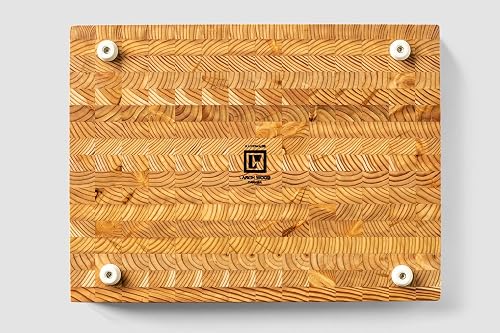
- Best end-grain board: the Larch Wood Canada End Grain Cutting Board, a premium board with rubber feet, built to stay on the counter for good.
The boards side by side
Ranks are out of nine boards; 1 is gentlest or quietest.
| Board | Shop | Material | Knife dulling | Chopping noise | Stains and odor | Problems |
|---|---|---|---|---|---|---|
| Teakhaus Edge-Grain Teak Cutting Board |  Buy on Amazon | Teak, edge grain | 2nd | 2nd | No beet or chipotle stain; some garlic odor after one wash | No feet, can slide slightly; nearly 12 lb |
| Epicurean Gourmet Series Cutting Board |  Buy on Amazon | Paper composite (Richlite) | 6th | 8th; last for rocking | None | Very slippery |
| Larch Wood Canada End Grain Cutting Board |  Buy on Amazon | Larch, end grain | No score | No score | Closed grain resists stains | Large; meant to stay put |
| Sonder Los Angeles Alfred Walnut End Grain Board | Walnut, end grain | 5th | Middle | No stain; some garlic odor | Compartments eat prep space | |
| Hasegawa rubber board | Rubber over a wood core | 3rd | 1st | No stain; slight garlic | Not for rocking or fast chopping | |
| OXO Good Grips plastic | Plastic | 1st | 7th | None | Sheds plastic dust; marks up | |
| Made In maple | Maple, edge grain | 4th | 4th–5th | Beet stain and garlic took several washes | Warped and cracked | |
| Dalstrong teak | Buy on Amazon
| Teak, edge grain | 7th | 9th (loudest) | No stain | Thin at 1 in |
| Dalstrong Lionswood | Teak, end grain | 8th | Not ranked | No stain; minimal garlic | Nearly 30 lb; cracked | |
| John Boos R-Board | Maple, edge grain | 9th (worst) | 3rd | Beet and chipotle didn't fully wash out | Slides easily |
Board materials, one by one
Wood: edge grain vs end grain
Wood is the best all-round surface. As a group it was second only to rubber at keeping a knife sharp, it was noticeably quieter than plastic, composite and metal, and it feels soft under the blade. Softer woods are easier on edges but mark up faster; harder woods resist marks but dull a little quicker. The maple John Boos board dulled its knife the most of nine, with a sharpness reading going from 454 to 628 (lower is sharper).
End-grain boards stand the fibers on end, so the edge slips between them, and edge-grain boards lay them flat, so each cut severs them. End grain costs more to make and closes up after cuts, but the edge-saving advantage is slight. The walnut end-grain Sonder board landed mid-pack, and the end-grain Dalstrong Lionswood placed eighth. Buy end grain for the look, not a big jump in sharpness.
The trade-off is upkeep. Wood can hold garlic odor and beet color, though a few washes usually clear both.
Plastic
Plastic is cheap, light and dishwasher safe, and it doesn't stain or hold odors. Its record on knives is mixed: the OXO Good Grips board dulled its knife the least of nine brands, while a plastic board ranked seventh of ten materials in a separate ranking. The bigger issues are hygiene and shedding. Knife grooves trap bacteria; a University of Wisconsin study found bacteria could survive in those cuts for hours and multiply, while on wood they were drawn below the surface and didn't survive. Long chopping sessions also shed plastic dust, and North Dakota State University research estimated that plastic boards can put millions of microplastic particles into food each year. Dishwasher heat can also warp plastic boards. If you keep one, replace or sand it once it's deeply scored.
Composite
Composite boards like the Epicurean press paper or wood fiber with food-safe resin into one dense sheet. They resist cut marks, are less prone to warping or cracking than glued wood, don't stain and go in the dishwasher. They are also hard: a composite board ranked eighth of ten materials for dulling and was louder than plastic, wood and bamboo. Almost all need a non-slip mat or a damp towel underneath.
Bamboo
Bamboo is a grass with silica in it, which makes it harder than most woods and tough on edges. It dulled knives more than every hardwood, ranked sixth of ten, and was one of the loudest surfaces at over 75 dB. Thin bamboo boards warp; glued strips can split.
Rubber
Rubber is the gentlest material and the quietest: a knife on the Hasegawa lost only about 10 points of sharpness, the best of ten materials. Its grip keeps board and food from sliding, and it resists stains. The catch is technique. The soft surface absorbs the blade, so rocking and fast chopping feel sluggish; it is built for slicing. Food catches in the texture, so cleanup takes longer. It is a premium, niche choice for high-end Japanese knives, and Hasegawa boards aren't sold on Amazon.
Glass, granite and metal
Skip them. All three are hard enough to dull an edge quickly, and a glass board is better used as a trivet. A titanium board did the most damage of all, a 444-point drop. With two identical new knives, the one used on titanium went from 205 to 433, while the one used on end-grain wood barely lost any sharpness. Stainless steel ranked ninth of ten. Both were the loudest surfaces, slide on the counter and have thin, somewhat sharp edges.
Care: oil, wash, dry, and stop the slide
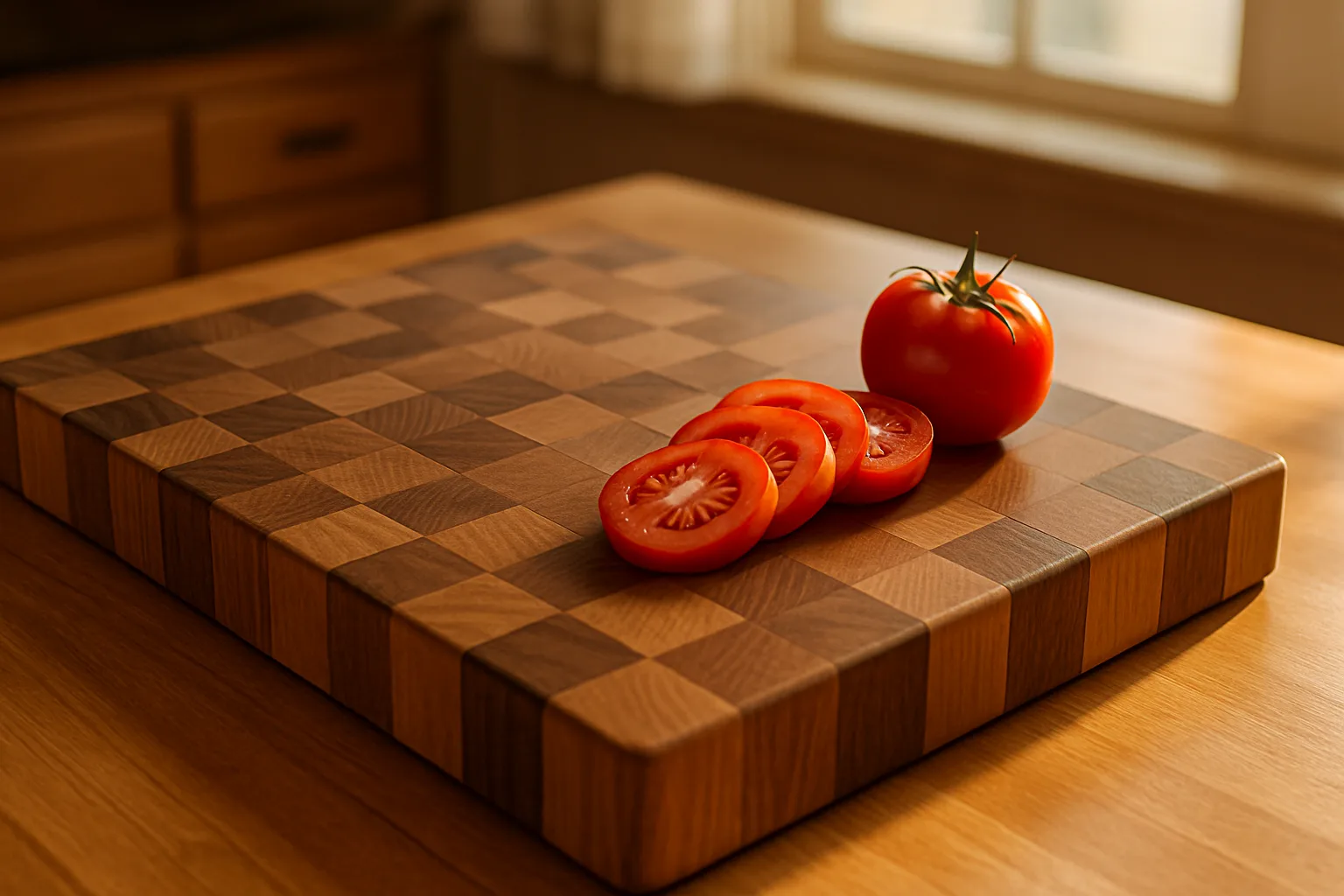
- Oil wood regularly with mineral oil or a board wax. Dry wood cracks, and a sealed surface absorbs fewer flavors.
- Hand wash wood and never put it in the dishwasher. Washing any board thoroughly after each use keeps the bacteria risk low.
- Dry it fully and store it upright. Wood swells and shrinks with moisture, which is how boards split. Even with regular oiling and drying, the Made In maple board warped slightly and cracked.
- Put a damp towel under any board without feet. A sliding board is a moving target for the knife.
- Wet an open-grain board first, like Tojiro's very light paulownia, so flavors rinse away with the water.
- Buy from someone who makes boards for daily use. Pretty craft-fair boards can come apart at the glue lines after a few washes.
A gentle board slows dulling but doesn't stop it. When an edge does fade, the knife sharpener guide covers honing steels, electric sharpeners and whetstones.
Sizing: big main board, small second board
Make the main board thick and large, with room for several ingredients. Weight adds stability, up to a point: the Dalstrong Lionswood, over 24 by 17 inches, 2.6 inches thick and nearly 30 pounds, is rock steady but too heavy for daily lifting, washing and storage. A smaller second board is easier to carry to the stove and scrape into a pot, and a thin composite one can go in the dishwasher.
Juice grooves help when carving meat but cost cutting area, and scraped food gets stuck in them. If you carve roasts often, the Teakhaus Edge-Grain Teak Carving Board with Juice Groove is the same board with a groove.
The picks in detail
Teakhaus Edge-Grain Teak Cutting Board
Buy the Teakhaus if there's room for only one board. It ranked second of nine for keeping a knife sharp and second for quiet chopping, and beets and chipotle left no stain. Teak doesn't soak up moisture easily and feels smooth under the blade. The extra-large surface has room to spare, side finger grips make its nearly 12 pounds easy to lift, the corners are rounded, and with no juice groove the whole face is usable. It also costs less per square inch of cutting space than the other wood boards here.
The downsides: some garlic odor lingered after one wash, there are no feet, so it can slide slightly (its weight usually holds it), and it needs regular mineral oil.
Teakhaus Edge-Grain Teak Cutting BoardCheck today’s price on Amazon

 Buy on Amazon →
Epicurean Gourmet Series Cutting Board
The Epicurean is Richlite, a paper composite made in the USA. It is thin, light and dishwasher safe, held no odor or stain from garlic, beets or chipotle, and is heat resistant to 350°F. At 17.5 by 13 inches, it has a juice groove on one side and is flat on the other. It ranked sixth of nine for dulling, eighth for chopping noise and last for rocking noise, and slides badly without a damp towel under it.
Epicurean Gourmet Series Cutting BoardCheck today’s price on Amazon

 Buy on Amazon →
Larch Wood Canada End Grain Cutting Board
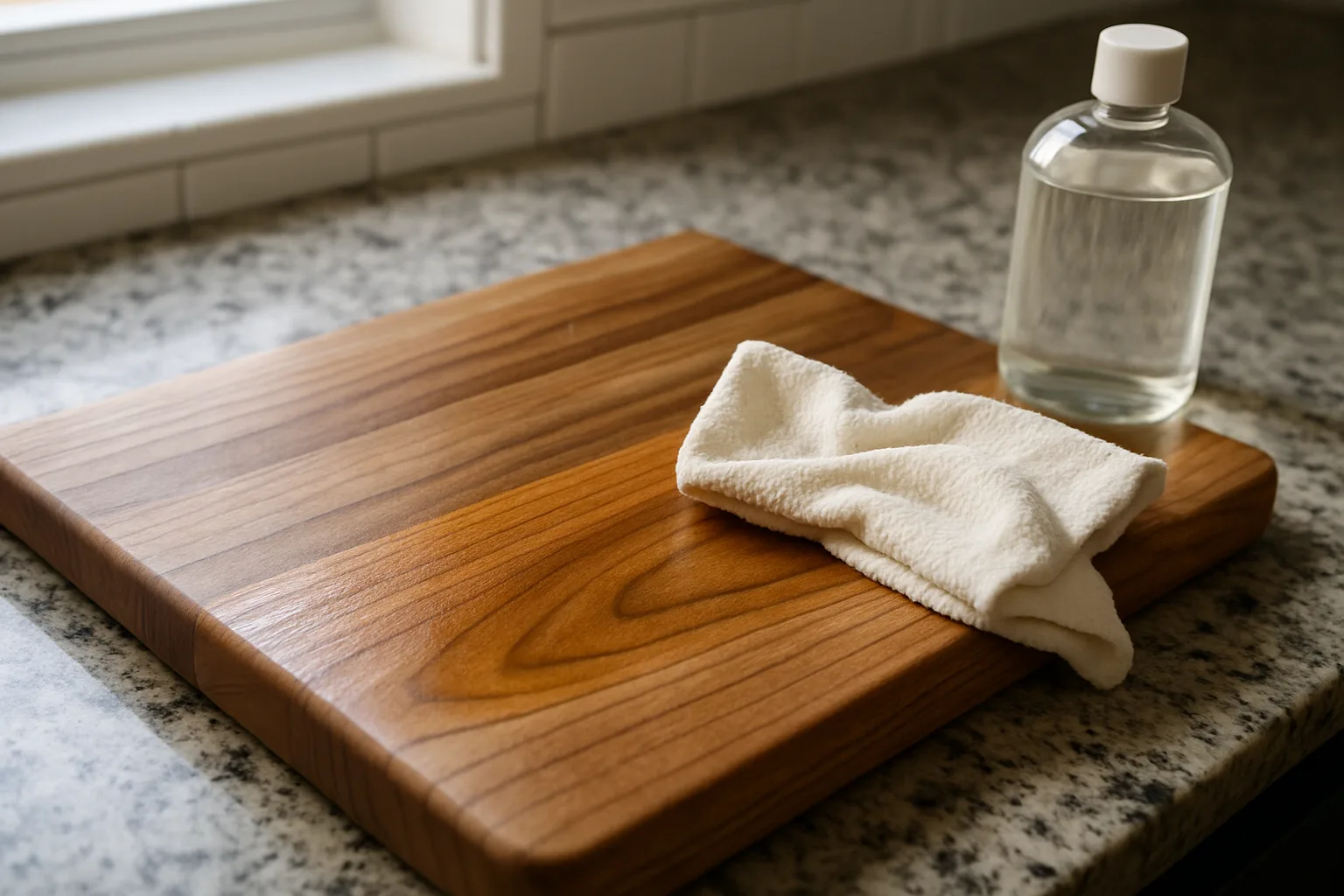
The Larch Wood Canada board is the pick for a board that never moves. Larch is firm but not especially hard, and its closed grain doesn't absorb stains or harbor bacteria easily. The end-grain build is easier on edges and scars less. Rubber feet hold it in place and keep it off the counter, so a big one becomes a permanent fixture. It has no dulling or noise scores. The Medium, 17-3/4 by 13-1/2 inches and 1-5/8 inches thick, is this guide's size suggestion for most counters.
Larch Wood Canada End Grain Cutting BoardCheck today’s price on Amazon

 Buy on Amazon →
Others worth knowing about
- Sonder Los Angeles Alfred Walnut End Grain Board: a checkered walnut board with feet on both sides, a juice groove on one face and compartments on the other. Knife dulling and noise were middle of the pack, and the compartments take up prep space.
- Dalstrong teak: rubber feet, hand grooves and measurement lines, but the loudest chopping surface and seventh for dulling.
- Made In and John Boos maple: the Made In warped and cracked; the Boos is quiet but was the hardest on knives.
Who should buy which
- One board that does almost everything: the Teakhaus Edge-Grain.
- A dishwasher-safe second board for quick prep: the Epicurean Gourmet Series.
- An end-grain board that lives on the counter: the Larch Wood Canada Medium.
- Expensive Japanese knives and mostly slicing: a rubber board like Hasegawa's.
- Setting up a kitchen: see whether a knife set or three good knives makes more sense, and the chef's knife picks.
Posted by Kristopher Larson
Frequently asked questions
What cutting board won't dull knives?
Soft rubber boards are the gentlest, followed by wood. A Hasegawa-style rubber board barely affected a knife's edge, and wood as a group came next. Composite, bamboo and especially glass, granite, titanium and stainless steel wear edges down much faster. For most home cooks, a large wood board is the best balance of edge-friendliness, feel and versatility.
Is teak or maple better for a cutting board?
Teak is the easier choice. It resists moisture, feels smooth under the blade and is softer than maple, so it tends to be kinder to edges. The Teakhaus teak board ranked second of nine for keeping a knife sharp, while the maple John Boos board ranked last. Maple's hardness does help it resist surface damage.
Teakhaus vs Epicurean: which should I buy?
They do different jobs. The Teakhaus is a big, heavy, quiet teak board that is easier on knives but needs oiling and hand washing. The Epicurean is a thin, light paper composite that stays stain-free and goes in the dishwasher, but it is louder, harder on edges and slides without a damp towel under it. Many kitchens use the Teakhaus as the main board and the Epicurean for quick prep.
Is an end grain cutting board better than edge grain?
Slightly. End grain stands the wood fibers upright so the blade slips between them, which can save a little sharpness and hides cut marks, but the real-world difference is small. Two end-grain boards placed fifth and eighth of nine for knife dulling, behind the edge-grain Teakhaus. Pick end grain for its look and feel, and expect it to cost more.
Are plastic cutting boards safe?
They work, but they have drawbacks. Knife grooves in plastic can shelter bacteria that survive washing, and chopping sheds plastic particles into food; researchers have estimated millions of microplastics a year from regular use. If you use plastic, wash it thoroughly and replace or sand it once it is deeply scored. Wood, by contrast, draws bacteria below its surface, where they don't survive.
How do you keep a wood cutting board from cracking?
Oil it regularly with mineral oil or board wax, wash it by hand and never put it in the dishwasher, dry it right away and store it upright. Wood swells and shrinks with moisture, so soaking and drying out are what split boards. Glued boards from makers who don't build for daily use can also come apart at the seams.
Keep reading
More from the blog

Best Electric Gooseneck Kettle: OXO vs Cosori vs Bodum
Best Toaster: Is a Smeg Worth It? Smeg vs KitchenAid vs Dash
Best Instant-Read Thermometer: Thermapen ONE vs. Typhur vs. Sizzle