Best Rice Cooker: Zojirushi vs. Cosori vs. Aroma, and Is Zojirushi Worth It?
Zojirushi vs. Cosori vs. Aroma rice cookers: batch sizes, brown and sushi rice, fuzzy logic, quick mode, keep warm, and coated vs. stainless pots.
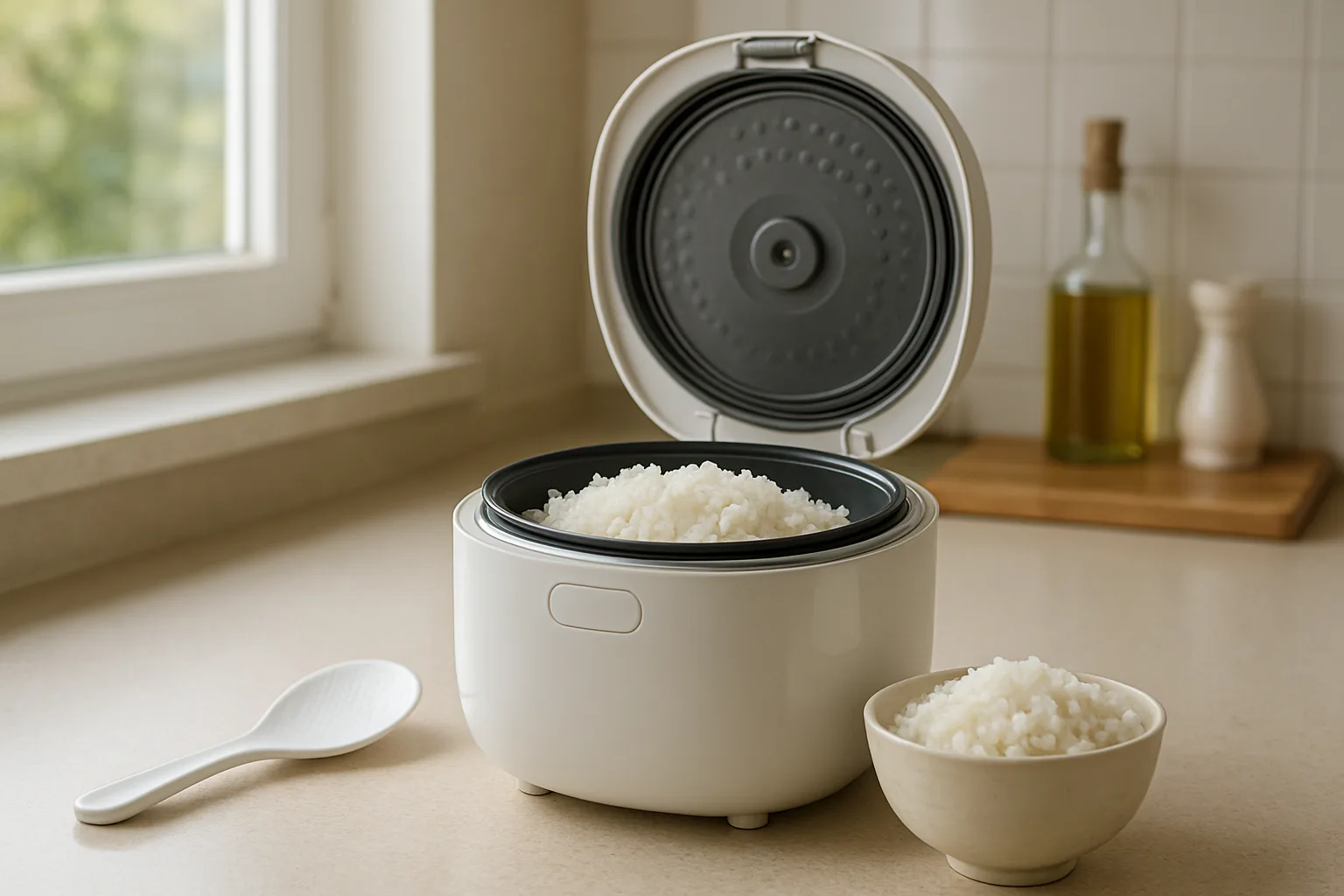
Most rice cookers make good rice once the water ratio is dialed in. The ones worth buying get it right at every batch size, handle brown and sushi rice without turning them to paste, and are easy to live with: a lid that doesn't slam into the cabinets, readable water lines and an inner lid that comes off for washing.
This guide compares the Zojirushi Neuro Fuzzy, the Cosori 10-cup and the budget Aroma 4-cup, and covers fuzzy logic, quick mode, keep warm and coated vs. stainless pots.
As an Amazon Associate, Best Utah Real Estate earns from qualifying purchases.
Quick verdict
- Best for most kitchens: the Cosori 10-Cup Rice Cooker. Even results from one cup to five, the best brown rice of the group, a ceramic-coated pot and shorter cook times than the Zojirushi.
- Best if rice is on the table every day: the Zojirushi Neuro Fuzzy NS-ZCC10 Rice Cooker. Top-tier white and sushi rice, texture settings that work, and the most thoughtful design details. It is also the slowest and the most expensive.
- Best budget pick: the Aroma 4-Cup Digital Rice Cooker, as long as you usually cook two to four cups at a time.
Rice cookers side by side
| Rice cooker | Shop | Inner pot | Capacity (uncooked) | Inner lid | Best at | Weak spot |
|---|---|---|---|---|---|---|
| Cosori 10-Cup Rice Cooker |  Buy on Amazon | Ceramic-coated nonstick | 10 cups | Removable, plus steam cap | Every batch size, brown and sushi rice | About 19 in tall with the lid open; faint water lines |
| Zojirushi Neuro Fuzzy NS-ZCC10 Rice Cooker | 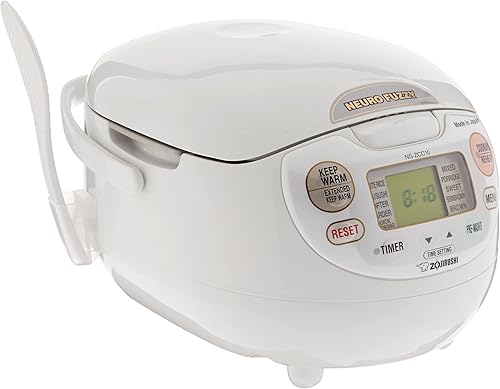 Buy on Amazon | PTFE nonstick | 5.5 cups | Removable | White and sushi rice, texture settings, keep warm | Slowest cook times; brown rice a little soft |
| Aroma 4-Cup Digital Rice Cooker |  Buy on Amazon | Nonstick | 4 cups (8 cooked) | Removable | 3 to 4 cup batches, brown rice | Wet 1-cup batches and sushi rice |
| Toshiba | Nonstick | — | Removable | Grain separation | Runs dry; lid snaps open | |
| Tiger | Nonstick | — | Fixed | Brown rice, quick mode | Inner lid doesn't come off | |
| Cuckoo | Nonstick | — | Removable | White rice | Lid flies open; laggy touchscreen | |
| Instant Pot | Stainless steel | — | Pressure lid | Speed, brown rice | Small batches uneven; rice sticks |
How the cookers actually differed
Small batches separate the good from the average. One cup is the hard test. The Aroma's one-cup white rice comes out wet and a little mushy with some overcooking on the bottom, and the Tiger leaves a thin starchy film with a few fused grains. The Cosori's one-cup batch is as even as its larger ones. The Zojirushi's is slightly softer than its bigger batches but still very good.
Brown rice is where the Cosori pulls ahead. It comes out tender and evenly cooked with clear grain separation and no mushiness. The Zojirushi's brown rice is tender but softer and clumpier. The Cuckoo's turns mushy, with grains that split open, while the Toshiba's runs slightly dry.
Sushi rice punishes too much water. Medium-grain sushi rice should hold together without going gummy. The Cosori and the Zojirushi both land on the right stickiness. The Aroma and the Cuckoo come out too wet.
Skip the tiniest cookers. The Dash one-cup cooker boils over even at its own recommended ratio, makes wet, uneven rice and tips over easily.
Fuzzy logic, explained
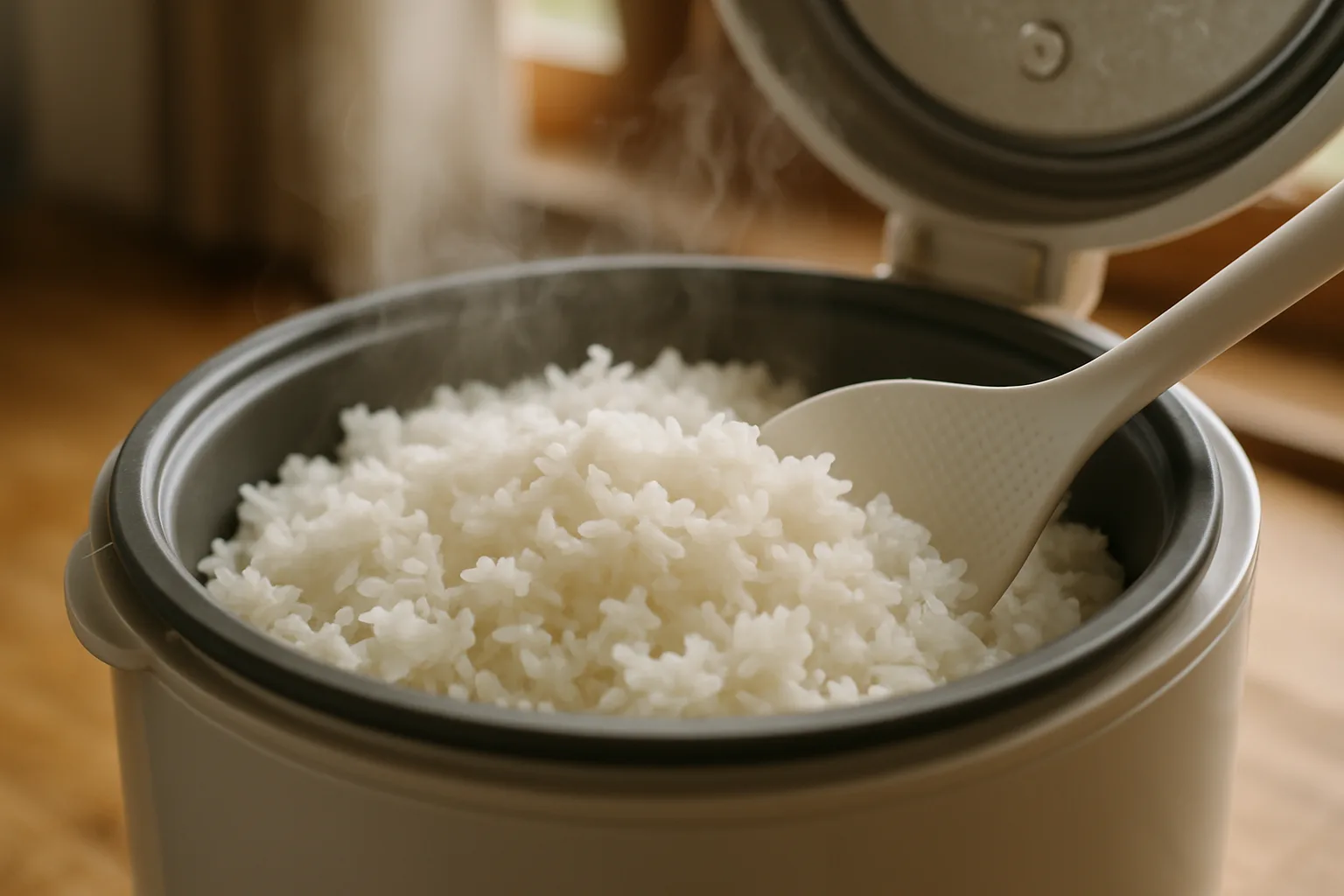
A basic cooker heats at one steady level until the water is gone, then flips to warm. A fuzzy logic cooker adjusts heat and timing as the rice cooks. On the Zojirushi the power draw cycles up into the 600-watt range and drops back into the 20s throughout the cook, rather than running flat out the whole time. That helps consistency, and it's why it takes longer.
What fuzzy logic can't do is rescue a measuring mistake. Two cups of rice with water filled to the three-cup line comes out wet, clumpy and soft enough to mash into paste. Good rice still depends mostly on the cook: the right water for the rice, and rinsing off surface starch first. A smart cooker polishes rice that was measured correctly; it doesn't replace measuring.
Cook time and quick mode
The Zojirushi is the slowest cooker here. White rice takes 49 minutes for one cup, 53 for three and 59 for five. Three cups takes six minutes longer than the next-slowest cooker, and brown rice takes 1 hour 43 minutes, when the next-longest finishes in about 65 minutes. The soft texture setting adds about 15 minutes over the hard setting.
Quick mode varies a lot by brand:
- Zojirushi: three cups in 39 minutes, 14 minutes faster, with no drop in texture.
- Cosori: saves only about 2 minutes, but it is already the third-fastest cooker in both regular and quick modes.
- Aroma: saves about 3 minutes.
- Tiger and Cuckoo: save about 16 and 14 minutes, both without hurting texture.
If speed matters most, the Instant Pot is in a different league: three cups of white rice in 21 minutes against a typical 42, and brown rice in 41 minutes including the rest time. Its small batches are uneven, and the manual pressure release vents very hot steam.
Keep warm: how long rice really lasts
Keep warm is one of the best reasons to own a rice cooker instead of using a pot on the stove. On the Zojirushi, rice tastes nearly fresh after an hour, starts to dry slightly by three hours and is only a little drier at six. It holds well above 140°F, the line the USDA's food safety guidance gives for keeping hot food hot. Opening the lid lets steam out, so keep it shut.
The keep-warm seal is a wear part. With daily use, the rubber seal on the Zojirushi's inner lid can wear out in about two years, and rice then dries out within hours. A replacement inner lid fixes it.
One small advantage of basic cookers: a glass lid shows at a glance that rice is still inside, while a solid lid shows only a small warm light that is easy to miss overnight.
Coated vs. stainless inner pots
Nearly every dedicated rice cooker uses a nonstick inner pot, because rice releases easily and cleanup takes seconds. The trade-off is wear. The Zojirushi's PTFE coating shows visible scratches after a light rub with a metal fork, and even careful daily use leaves fine scratches over time, partly from washing rice in the pot. Treat the bowl like a nonstick pan: use the included paddle or silicone tools and nothing metal or sharp. The Cosori's ceramic coating is a different type of nonstick from the traditional PTFE most cookers use, and the same gentle-utensil rule applies.
A stainless steel pot doesn't wear out, takes a metal spoon, and a simple one-button stainless cooker has little that can break. The catch is sticking. Rice clings to the bottom, so the pot needs a soak, overnight if possible. In a hurry, leave the pot in the cooker, add water, press cook and let it boil for a few minutes; the stuck layer lifts off easily. Some people like that crispy bottom layer anyway.
Coated pots win on easy cleanup. Stainless suits daily rice cooks who would rather never replace a pot.
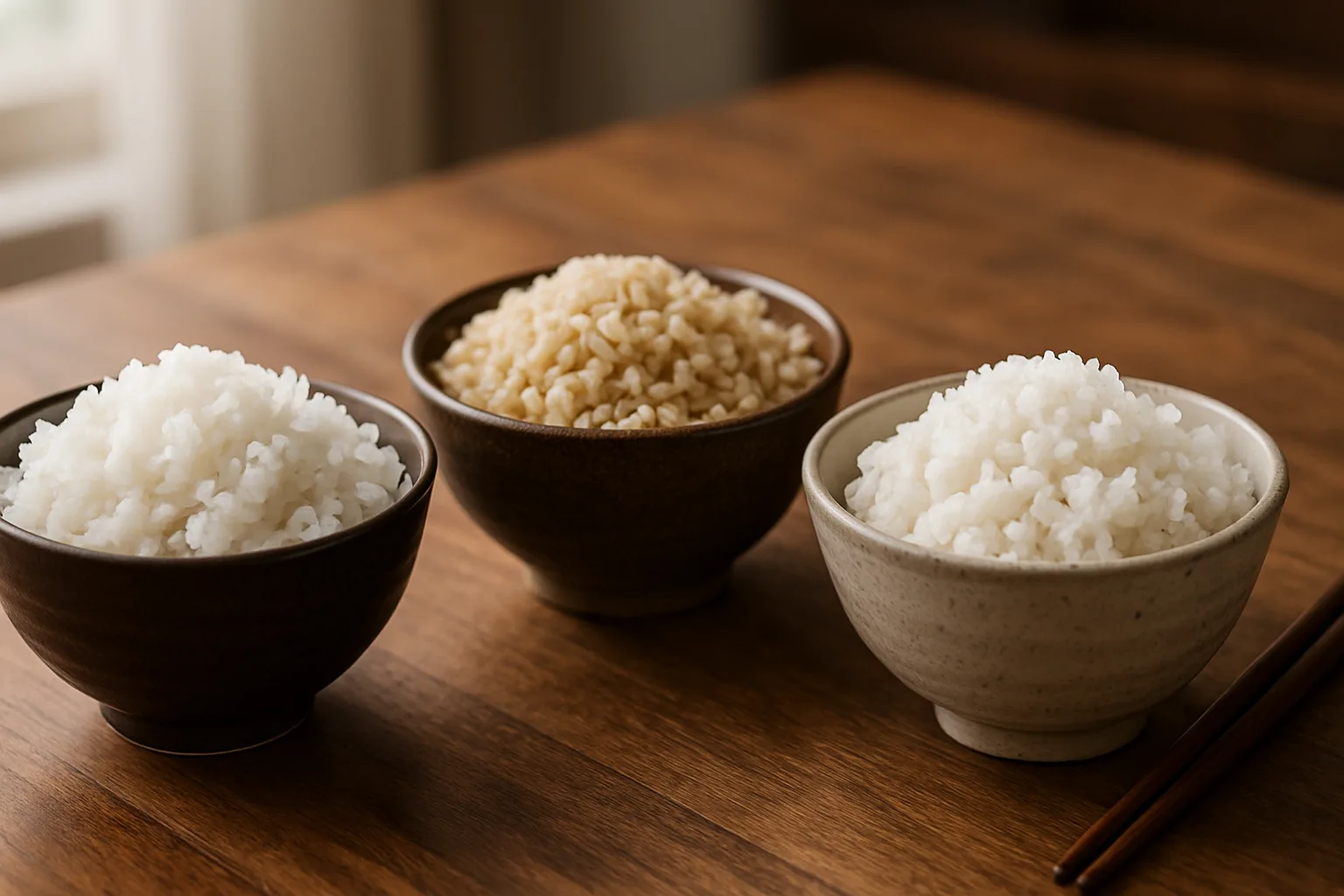
The picks in detail
Cosori 10-Cup Rice Cooker
The Cosori is the best all-round pick. One, three and five cups of white rice all come out evenly cooked with good chew, clear grain separation and no burning on the bottom. Its brown rice is the best of the group, and its sushi rice has the right stickiness without going mushy. It nearly matches the Zojirushi on white rice and finishes faster. It has settings for many rice types, grains and textures, plus a large steamer basket.
The lid opens slowly and smoothly instead of snapping up, and both the inner lid and steam cap pop off for washing. Two caveats: with the lid open it stands about 19 inches tall, enough to touch cabinets mounted the usual 18 inches above the counter, and the engraved water lines are the same color as the pot, so they're hard to read in dim light.
Cosori 10-Cup Rice CookerCheck today’s price on Amazon

 Buy on Amazon →
Zojirushi Neuro Fuzzy NS-ZCC10 Rice Cooker
Is Zojirushi worth it? For someone who cooks rice several times a week and wants the established name, yes. Its medium and large batches of white rice come out consistently excellent, its sushi rice is spot on, and the soft and hard settings make a real difference: soft is fluffier and moister without going mushy, hard gives a firmer bite and clearer grains. Keep warm holds for hours.
The design details are what set it apart. The lid opens gently. The inner lid comes out for the sink. The water lines are white on a dark background, so they're easy to read. The inner pot has handles, so it lifts out hot and only sits one way, with the water lines facing front. The retractable cord is also longer than any other here. The downsides are speed, softer brown rice and price; much of that is the brand, and the Cosori gets close for far less.
Zojirushi Neuro Fuzzy NS-ZCC10 Rice CookerCheck today’s price on Amazon

 Buy on Amazon →
Aroma 4-Cup Digital Rice Cooker
The Aroma is the best low-cost option. Three- and four-cup batches of white rice come out with good chew and even cooking across the pot, and brown rice is tender with well-separated grains. It adds a steam tray, a delay timer and a removable inner lid, and holds 4 cups uncooked (8 cooked).
Skip it if you mostly cook a single cup or make sushi rice. Both come out too wet. Its water lines are also the same color as the coating and hard to see.
Aroma 4-Cup Digital Rice CookerCheck today’s price on Amazon

 Buy on Amazon →
The others
The Toshiba makes well-separated rice but runs drier than the rest and bubbles audibly for the first 10 minutes. The Tiger cooks very good medium and large batches, but its inner lid doesn't come off, so it has to be wiped clean in place. The Cuckoo makes excellent white rice, but its heavy lid flies open hard enough to lift the front feet off the counter, and its touchscreen often needs a second press. The Toshiba's and Tiger's lids snap open too.
Cleaning a rice cooker
- Pull the inner lid and steam cap after each use. Starch and condensation collect around the vent; a removable inner lid rinses clean in the sink and leaves the area behind it easy to wipe.
- Wash the inner pot by hand with a soft sponge. Skip scouring pads on any coated pot.
- Soak stainless before scrubbing. Or boil a little water in the pot for a few minutes to lift stuck rice.
Building out the rest of the kitchen? A good food processor takes care of the chopping for stir-fries and curries served over rice.
Who should buy which
- Most households, any batch size, brown rice regularly: the Cosori 10-Cup.
- Rice every day, sushi rice, a cooker that lasts on keep warm: the Zojirushi Neuro Fuzzy NS-ZCC10, if the long cook times don't matter.
- Tight budget, usually two to four cups: the Aroma 4-Cup.
- Speed, or one appliance for more than rice: an Instant Pot, accepting less consistent small batches.
- Never want to replace a coated pot: a simple stainless one-button cooker, plus the patience to soak it.
Posted by Kristopher Larson
Frequently asked questions
What is the best rice cooker for most people?
The Cosori 10-Cup Rice Cooker suits most kitchens. It cooks one, three and five cups of white rice evenly, makes the best brown rice of the group, gets sushi rice sticky without going mushy and finishes faster than the Zojirushi. Its inner pot uses a ceramic nonstick coating.
Is a Zojirushi rice cooker worth it?
For people who cook rice several times a week and want the long-established brand, yes. The Zojirushi Neuro Fuzzy makes excellent white and sushi rice, its soft and hard settings change the texture, keep warm holds for hours, and details like the handled inner pot, readable water lines and retractable cord are well done. It is the slowest cooker in the group, though, and the Cosori comes close on white rice and beats it on brown rice for much less.
Zojirushi vs. Cosori: which makes better rice?
On long-grain white rice they are nearly even, and both nail sushi rice. The Cosori is better with brown rice, which comes out with clearer grain separation, while the Zojirushi's is softer and clumpier. The Cosori is also faster: the Zojirushi needs 53 minutes for three cups of white rice and 1 hour 43 minutes for brown rice.
What does fuzzy logic do in a rice cooker?
Fuzzy logic lets the cooker raise and lower its heat during the cook instead of running at one level until the water boils off. That gives more consistent texture, but it can't fix a big measuring error. Too much water still gives wet, mushy rice, so measuring and rinsing matter more than the cooker.
How long can rice stay on keep warm?
In a good cooker, rice tastes nearly fresh after an hour, starts to dry slightly around three hours and is still fine at six, as long as the lid stays closed. A cooker should hold the rice above 140°F. If rice starts drying out much faster than it used to, the rubber seal on the inner lid may be worn and need replacing.
Is a stainless steel or nonstick rice cooker pot better?
Nonstick pots release rice easily and clean in seconds, but the coating scratches over time, so use only the paddle or silicone tools. Stainless steel pots don't wear out and take metal utensils, but rice sticks to the bottom. Soak the pot, or add water and run the cook cycle for a few minutes, to lift the stuck rice.
Keep reading
More from the blog
Best Cutting Board for Knives: Teakhaus vs Epicurean vs Larch Wood
Best Electric Gooseneck Kettle: OXO vs Cosori vs Bodum
Best Toaster: Is a Smeg Worth It? Smeg vs KitchenAid vs Dash