Best Nonstick Pan: Ceramic vs. PTFE vs. HexClad vs. Misen Carbon Nonstick
Ceramic vs. nonstick PTFE, HexClad hybrid and Misen carbon: which coating lasts, safe heat limits, metal utensil claims, induction and when to replace.
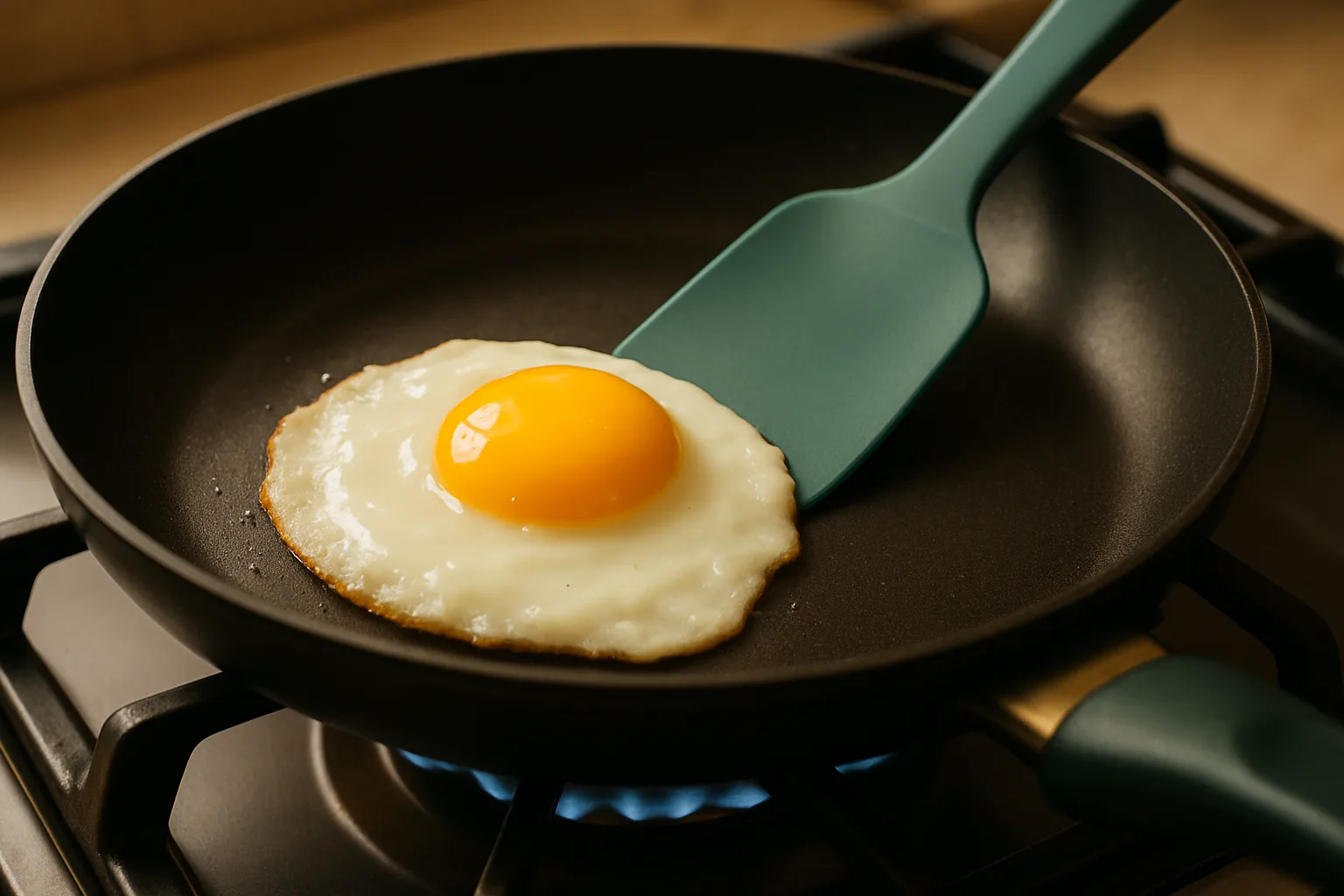
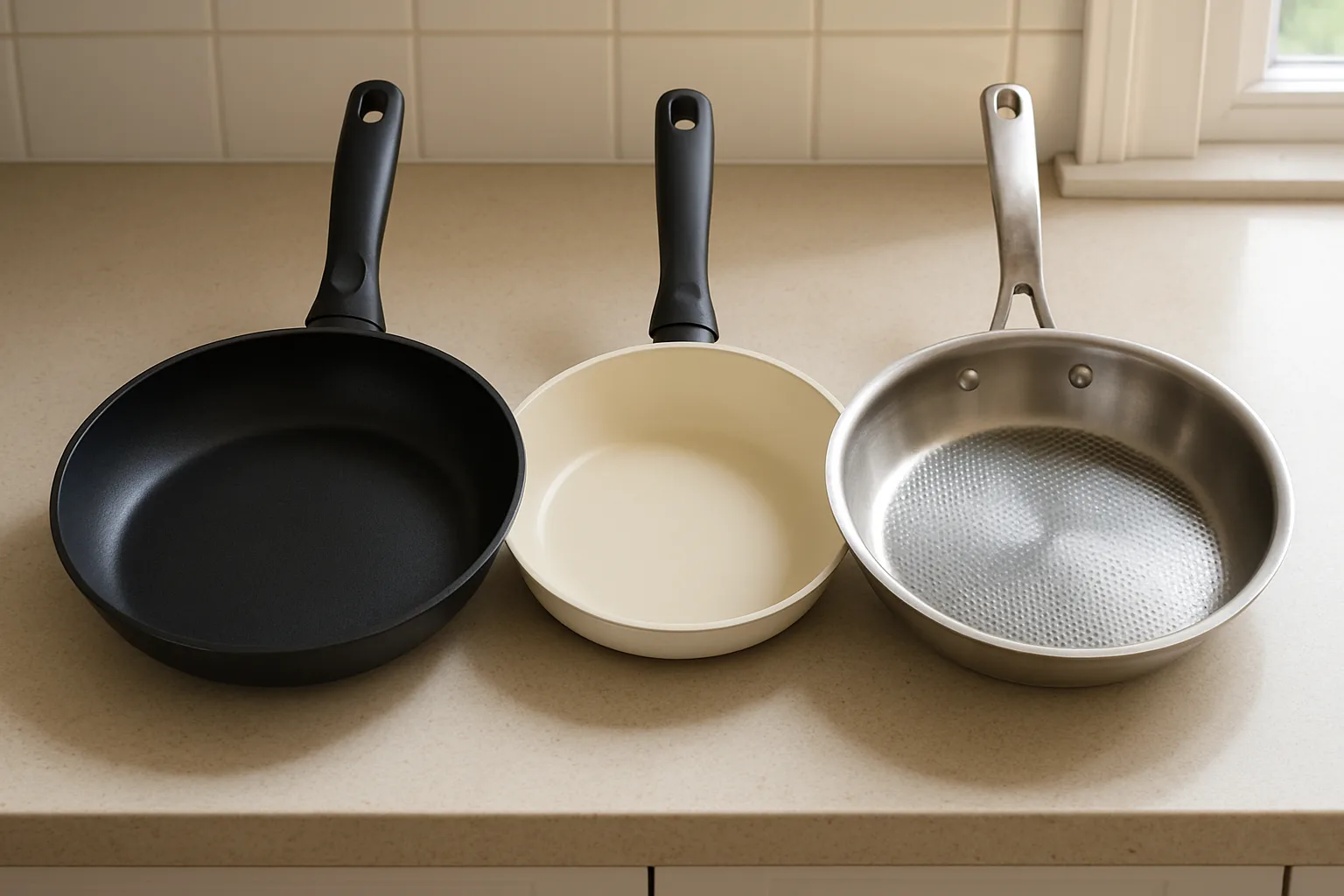
Every nonstick pan promises easy eggs; the surface decides whether it delivers. Classic PTFE coatings are still the slickest option, ceramic coatings avoid PTFE but wear faster, "hybrid" pans mix a coating with a raised steel pattern, and the newest "forever nonstick" pans skip coatings altogether and use treated carbon steel.
Below: four pans, one from each camp, plus how long coatings hold up, safe heat limits and when to replace a worn pan.
As an Amazon Associate, Best Utah Real Estate earns from qualifying purchases.
Quick verdict
- Slickest release for the money: the Tramontina Professional 10-Inch Nonstick Fry Pan, a plain PTFE restaurant pan that eggs slide right off.
- Best ceramic pick: the GreenPan Valencia Pro 10-Inch Ceramic Nonstick Frypan, with the hardest surface in the group.
- Hybrid steel-and-coating pan: the HexClad Hybrid 10-Inch Fry Pan: induction-ready and oven-safe to 500°F, but softer than its name suggests.
- No coating at all: the Misen Carbon Nonstick Skillet, nitrided carbon steel that shrugs off metal utensils and acidic sauces.
The pans side by side
| Pan | Shop | Surface | Oven-safe to | Induction | Metal utensils | Weight |
|---|---|---|---|---|---|---|
| Tramontina Professional 10-Inch Nonstick Fry Pan | 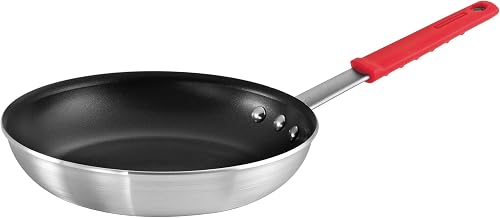 Buy on Amazon | PTFE on aluminum | 400°F | No | Avoid; soft coating | 990 g |
| GreenPan Valencia Pro 10-Inch Ceramic Nonstick Frypan | Ceramic on aluminum | — | — | Rated safe; hardest surface here | 838 g | |
| HexClad Hybrid 10-Inch Fry Pan |  Buy on Amazon | Raised stainless pattern over nonstick, tri-ply | 500°F | Yes | Rated safe; coating still scratches | 1,136 g |
| Misen Carbon Nonstick Skillet |  Buy on Amazon | Nitrided carbon steel, aluminum core, no coating | — | Yes | Light scuffs only | Under 3 lb |
PTFE vs. ceramic vs. hybrid vs. "forever" nonstick
PTFE (polytetrafluoroethylene), better known by the Teflon name, is sprayed onto an aluminum pan in one to five layers and baked on. It repels both water and oil, and it remains the most effective nonstick surface made. Good PTFE pans release fat-free eggs one after another, even after heavy use. The trade-off: PTFE is for low and medium heat, not searing or broiling.
Ceramic nonstick is also sprayed on and hardened with heat, but the coating is a glass-like material derived from sand, with no PTFE. It gives off no fumes at high heat. It is a little less slick and less durable than PTFE, and it loses slickness faster because the surface is more brittle and develops microscopic cracks with everyday use. Quality varies widely: most ceramic skillets start sticking within about seven fat-free eggs; only a few keep releasing through a long run. Ceramic also cooks hotter than PTFE, because PTFE acts as a mild insulator between the aluminum and the food while ceramic passes heat through quickly.
Hybrid pans like HexClad combine a nonstick coating with a raised stainless steel pattern, on a tri-ply body (aluminum between two layers of stainless). The ridges are meant to shield the coating, but HexClad's coating still scratches easily, so read "metal utensil safe" as "the steel takes some abuse", not "scratch-proof".
"Forever" nonstick pans such as Misen Carbon Nonstick and Anolon EverLast N2 have no coating at all. They are carbon steel that has been nitrided, baked in a nitrogen-rich oven to harden the surface, resist rust and release food better than raw carbon steel. They don't need seasoning, and there is no coating to wear off. They are not as slick as new PTFE and need some oil or butter every time.
How long nonstick coatings last
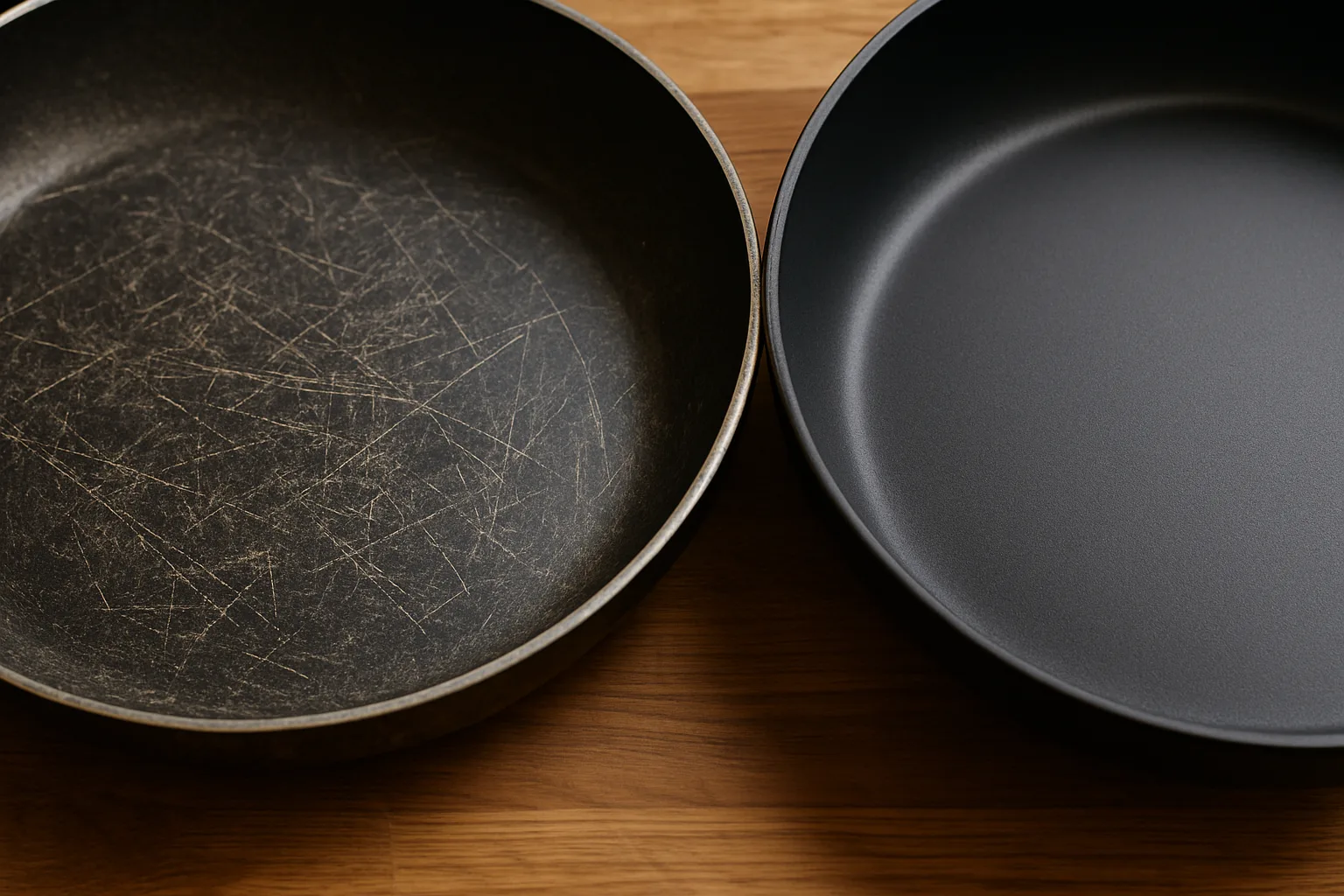
Every coated pan slowly loses its release. Scratches speed that up, because a scratched spot is where food starts to stick. Scratch hardness across more than a dozen 10-inch pans fell into clear tiers:
- Hardest: GreenPan ceramic was unharmed by the medium hardness grades and only failed at the toughest one.
- Next: the Granitestone Diamond Pro 10-Inch Fry Pan and an OXO hard-anodized pan held out one grade short of GreenPan.
- Middle: the Caraway 10.5-Inch Ceramic Fry Pan resisted light scratching but was cut at the next grade up.
- Softest: the Tramontina, HexClad, Ninja, Anolon, Carote and SENSARTE coatings were all cut down to the metal at a fairly low hardness grade.
A soft coating can still last if it is treated well: good PTFE pans arrive slick and stay slick with soft tools and hand washing. Ceramic loses slickness sooner, even when it resists scratches, because of those micro-cracks. Nitrided carbon steel is the exception. After months of use, plus weighted metal ladles, spatulas and a whisk dragged across the surface, the Misen and Anolon pans showed only light scuffs and released food just as well.
Heat limits and why they matter
For PTFE, overheating is the real concern. PTFE belongs to the chemical class known as PFAS, sometimes called "forever chemicals" because they persist in the environment. It is not clear that the coating moves into food during cooking; the more established risk is that a badly overheated PTFE pan gives off fumes. Teflon's own guidance warns that those fumes can kill pet birds. Practical limits:
- Never broil with a PTFE pan or take it above 500°F.
- In the oven, set no higher than 450°F, since ovens cycle above the set point.
- Don't preheat an empty PTFE pan. Add oil or butter first; most fats smoke around 350°F to 400°F, which warns you well before the pan gets dangerously hot.
- Run the hood fan or open a window when cooking with nonstick.
Ceramic carries no fume concern at high heat, so its limits are about durability, not safety. A single-layer carbon steel pan like the Anolon EverLast N2 heats so fast it can smoke before food goes in; bring it up slowly.
Induction compatibility
Plain aluminum pans like the Tramontina Professional and the OXO hard-anodized pan don't work on induction. HexClad's stainless layers, the Granitestone's stainless-clad base, the Caraway and the carbon steel Misen all work on induction. Carbon steel can warp on fast induction burners, but the Misen and Anolon pans stayed flat after two minutes at 425°F on a powerful induction cooktop.
Want a pan with no coating to wear out at all? See the best stainless steel frying pans.
The picks in detail
Tramontina Professional 10-Inch Nonstick Fry Pan
This is the straightforward PTFE choice: a heavy aluminum restaurant-style pan, NSF certified, made in Brazil and oven-safe to 400°F. Its release is excellent. Pancakes and eggs came off without sticking, and melted cheese, which welded itself to cheaper coatings, released cleanly. Heat spread was good (a little over 100°F between hot and cool spots on a hot plate), and pancakes browned evenly. The weak point is the coating's softness, so keep metal tools away from it. It does not work on induction.
Tramontina Professional 10-Inch Nonstick Fry PanCheck today’s price on Amazon

 Buy on Amazon →
GreenPan Valencia Pro 10-Inch Ceramic Nonstick Frypan
GreenPan makes the strongest case for ceramic. Its surface was the hardest of every pan here, and it heated water faster than nearly anything else, passing 180°F in five minutes. Release is a step behind PTFE: an egg left an extra minute held on, and a little cheese stuck. Ceramic runs hot, so lower the flame and pull food sooner than a recipe says. GreenPan lists the coating as free of PFAS, lead and cadmium.
HexClad Hybrid 10-Inch Fry Pan
HexClad is the premium pick, with tri-ply construction, a stay-cool handle, induction compatibility and a 500°F oven rating. Eggs lifted off easily, though it took more shaking to free one than with the slickest pans. Melted cheese stuck noticeably, but it scraped away rather than welding on. Heat spread was uneven (nearly 170°F between hot and cool spots), though it heated water quickly. The coating between the ridges was among the softest here, and metal utensils left visible scratches. HexClad lists the pan as dishwasher-safe, but hand washing is easier on any coating.
HexClad Hybrid 10-Inch Fry PanCheck today’s price on Amazon

 Buy on Amazon →
Misen Carbon Nonstick Skillet
Misen layers nitrided carbon steel over an aluminum core, so it handles like a light everyday nonstick pan. It needs no seasoning, sat wet overnight without rusting, and came through 15 minutes of simmering crushed tomatoes unchanged. With a teaspoon of oil and a little butter at about 325°F, eggs slid around freely, and that held even with half the fat. Pancakes with a light layer of butter released cleanly. The limit: a pancake with no fat at all stuck badly. It has a wide cooking surface and low walls, about 1.75 inches. The rounded handle can get slippery. The Anolon EverLast N2 is the heavier alternative, with taller walls and no aluminum core.
Misen Carbon Nonstick SkilletCheck today’s price on Amazon

 Buy on Amazon →
Care that makes nonstick last
- Skip cooking spray. The additives in aerosol sprays bake onto the surface and slowly make the pan stickier.
- Use wood, silicone or nylon tools on PTFE and ceramic. A scratched spot becomes a sticky spot.
- Hand wash with soap and water. The dishwasher wears coatings away faster, and so do abrasive sponges and scouring powders.
- Don't heat it empty.
- Stack with a paper towel or paper plate between pans.
- Refresh a dull surface by wiping a thin coat of vegetable oil onto a warm pan, then buffing most of it off.
When to replace a nonstick pan
Replace a coated pan when food sticks even with a little fat at medium heat, or when the coating is scratched through to the metal across the cooking area. Modern coatings no longer flake into food the way old ones did, but worn spots keep grabbing eggs, and the extra scrubbing speeds the wear. Nitrided carbon steel has no coating to wear out.
Who should buy which
- Eggs, omelets and fish with the least effort: the Tramontina Professional, kept at medium heat and used with soft tools.
- Avoiding PTFE, or cooking in the oven: the GreenPan Valencia Pro, with the heat turned down a notch.
- An induction range on a tight budget: the Granitestone Diamond Pro, which also spread heat evenly and resisted scratches well.
- A premium induction pan that can go from stovetop to oven: the HexClad Hybrid, used gently.
- Never buying another nonstick pan: the Misen Carbon Nonstick, cooked with a little fat.
For hard searing, a stainless steel skillet is the better tool; a separate stainless guide is coming. Cast iron gets its own guide too, for heat retention nonstick can't match. A Dutch oven guide will cover braising and bread. Also see how the KitchenAid Classic, Artisan and Artisan Plus stand mixers compare.
Posted by Kristopher Larson
Frequently asked questions
Is ceramic or traditional nonstick better?
Traditional PTFE nonstick is slicker and keeps its release longer, so it wins on pure performance. Ceramic gives off no fumes at high heat and contains no PTFE, but it is a little less slick, more brittle and loses its release sooner. The best ceramic pans come close to PTFE; many cheaper ones start sticking within a handful of eggs.
How long does a nonstick pan last?
Every coated pan slowly loses its release, and how fast depends on the coating and the care. Scratches, high heat, the dishwasher, abrasive cleaners and cooking spray all shorten its life. Replace the pan when food sticks even with a little fat at medium heat, or when the coating is worn through to the metal.
Can you use metal utensils on a nonstick pan?
On PTFE and ceramic pans, no. A scratch becomes a spot where food sticks. Even pans sold as metal-utensil safe, including HexClad, can scratch. Nitrided carbon steel pans like Misen Carbon Nonstick have no coating and show only light scuffs from metal tools.
How hot can a nonstick pan get?
Keep PTFE pans at low to medium heat, never above 500°F, and set the oven no higher than 450°F. Don't broil with them or preheat them empty, because an overheated PTFE coating gives off fumes that are especially dangerous to pet birds. Ceramic does not give off fumes at high heat, so its limits are about protecting the coating. Check each pan's listing for its oven rating.
Why shouldn't you use cooking spray on nonstick pans?
The additives in aerosol cooking sprays bake onto the surface as the pan heats. Over time that residue builds up and makes the pan stickier, not slicker. A small amount of oil or butter works better and protects the coating.
Do nonstick pans work on induction?
Only if the base is magnetic. Plain aluminum pans, such as the Tramontina Professional, don't work on induction. Pans with a stainless steel base or layers, like HexClad and Granitestone Diamond Pro, and carbon steel pans like Misen do. Check the listing before buying for an induction cooktop.
Keep reading
More from the blog
How to Turn Your Garage Into a Home Gym or Personal Training Studio: Flooring, Racks and Local Rules
How to Turn a Spare Room Into a Home Podcast Studio: Mic, Interface and Acoustic Treatment
Home Dog Grooming Setup: Shernbao vs Shelandy Dryers and the Right Table