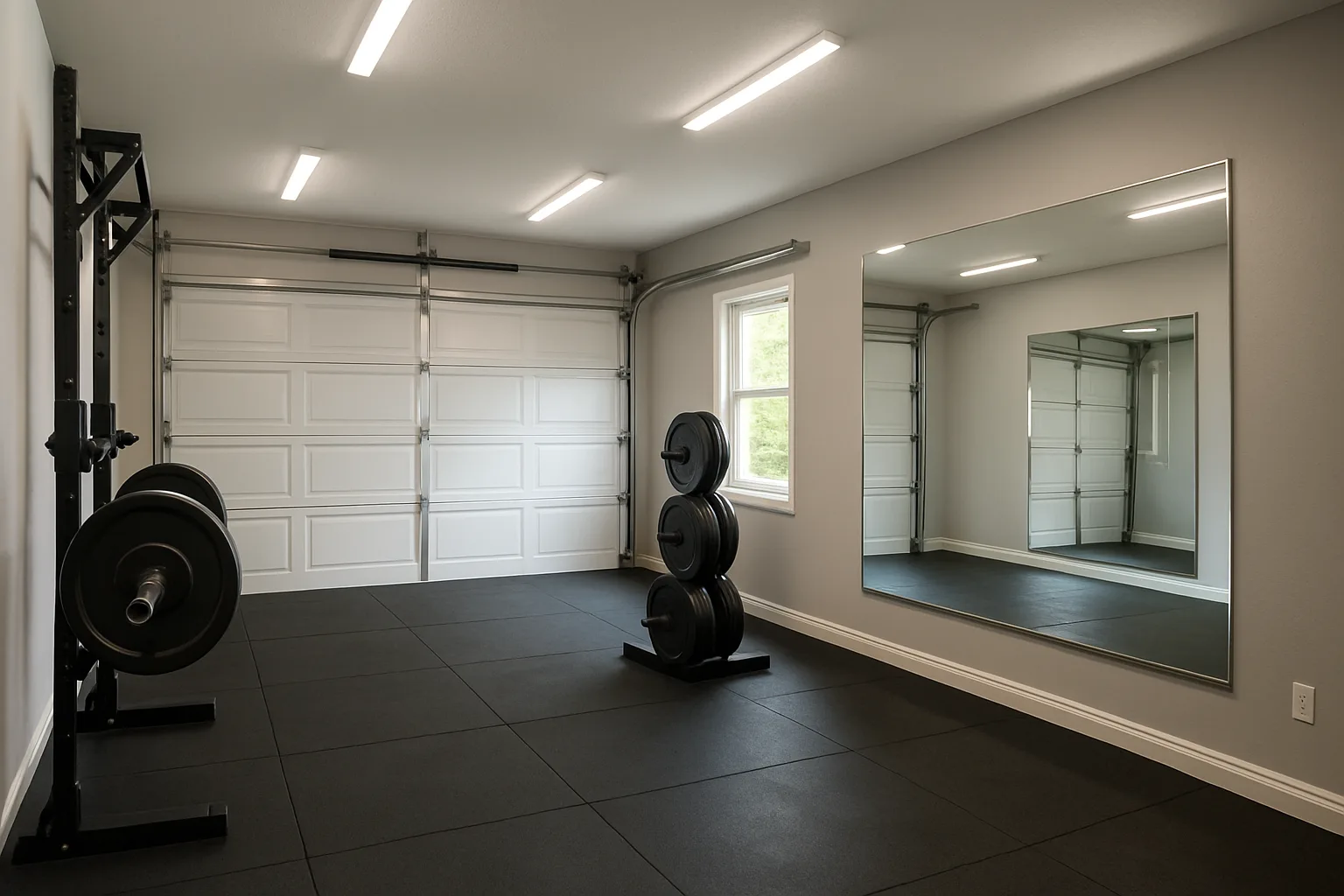
How to Turn Your Garage Into a Home Gym or Personal Training Studio: Flooring, Racks and Local Rules
Turn a garage into a home gym or training studio: rubber flooring, rack sizing, local rules for training clients, and keeping it a garage for resale.
A garage gym comes down to two big decisions: what goes on the floor and what rack stands on it. The right floor protects the slab, the equipment and the lifter's footing. The right rack fits under the ceiling, stays stable and takes the attachments added later.
Coaching clients there adds a third question: what the city or county allows. This guide covers flooring, rack sizing, the home-business rules for training clients, and how to keep the garage usable as a garage when it's time to sell.
As an Amazon Associate, Best Utah Real Estate earns from qualifying purchases.
Quick verdict
- Best value flooring for lifting: 4x6 horse stall mats, 3/4 inch thick. Dense, grippy and fine for drops, but heavy, inconsistent between batches and often smelly at first.
- Cleaner look, easier to handle: interlocking rubber tiles around 3/8 inch. They stay put under dragged equipment, but need extra protection where heavy weights get dropped.
- Best looking: rolled rubber, with seams that are hard to spot. The hardest to install yourself.
- Skip for lifting: EVA foam. Fine for a stretching corner, not under a barbell.
- Rack: a wall-mounted folding rack if a car still parks there; otherwise a power rack about 30 inches deep in 11-gauge, 3x3 steel.
Garage gym flooring compared
| Flooring | Typical thickness | Cost | Good for | Drawbacks |
|---|---|---|---|---|
| EVA foam tiles | Thin foam | The cheapest option | Yoga, stretching, a play corner | Compresses under load, slides, edges curl and trip people |
| Horse stall mats (4x6) | 3/4 inch | The best value in real rubber | Heavy lifting and drops | About 100 lb each, uneven heights between mats, smell, visible seams |
| Interlocking rubber tiles (2x2) | 8 mm to 3/8 inch and up | The thinnest can cost less than stall mats | A tidy, commercial look; easy DIY | Thin tiles need a platform for drops; must face one direction |
| Rolled rubber | 8 mm to 3/4 inch | Usually the most, often by custom quote | The cleanest look | Heavy rolls, glue or tape, precise cutting |
The four flooring types
EVA foam: comfortable, not for lifting
Foam puzzle tiles cost the least per square foot and snap together in minutes. Under a loaded bar, though, foam compresses, which makes squats and deadlifts less stable. The tiles slide, wear quickly and their edges lift into tripping hazards. Foam with a thin rubber top costs enough that real rubber is the better buy.
Horse stall mats: the value pick
The 4x6 foot, 3/4 inch mats sold at farm and feed stores are the most common garage gym floor for good reason: solid, grippy and thick enough for dropped weights. Before buying:
- Inspect each mat. Batches can differ by close to 1/4 inch in height, and some have pitting or a diamond-pattern top.
- Buy them all at once. The next trip may bring a different style, and mismatched mats leave ridges.
- Smell them first, before hauling 100-pound mats home.
- Ask about B-grade mats. Mats with rough cuts or cosmetic flaws are sometimes sold for less and lift just fine.
- Check the underside. A cupped or button-pattern bottom lets air and moisture move under the mat on a damp slab.
To compare sizes and textures, browse 4x6 horse stall mats.
Interlocking rubber tiles: the tidy upgrade
Rubber tiles come in 2x2 foot squares that lock like puzzle pieces. Because rubber is heavy, the edges stay flat in a way foam never does, and no seam tape is needed. The thinnest 8 mm tiles can cost a bit less than stall mats and are far easier to carry and cut.
A 3/8 inch tile floor holds up well: after a year of heavy racks and machines dragged across it, tiles stay down and seams stay closed, because the connected pieces act as one sheet. The smell is much milder than stall mats. Most tiles have an arrow on the back; lay them all the same way so the puzzle seams don't stand out. Where heavy weights get dropped, add a platform or second layer. Browse 3/8 inch rubber gym tiles.
Rolled rubber: the commercial look
Rolled flooring is what commercial gyms use, often 8 mm, under half the thickness of a stall mat. Installed well, the seams nearly disappear. Gray or colored fleck brightens the room and hides dust better than solid black, but more fleck costs more. Rolls need glue or double-sided tape and careful cutting. They usually smell less than stall mats, which matters if the gym shares air with the house. Premium brands cost far more for little difference in a home gym. Browse rolled rubber gym flooring.
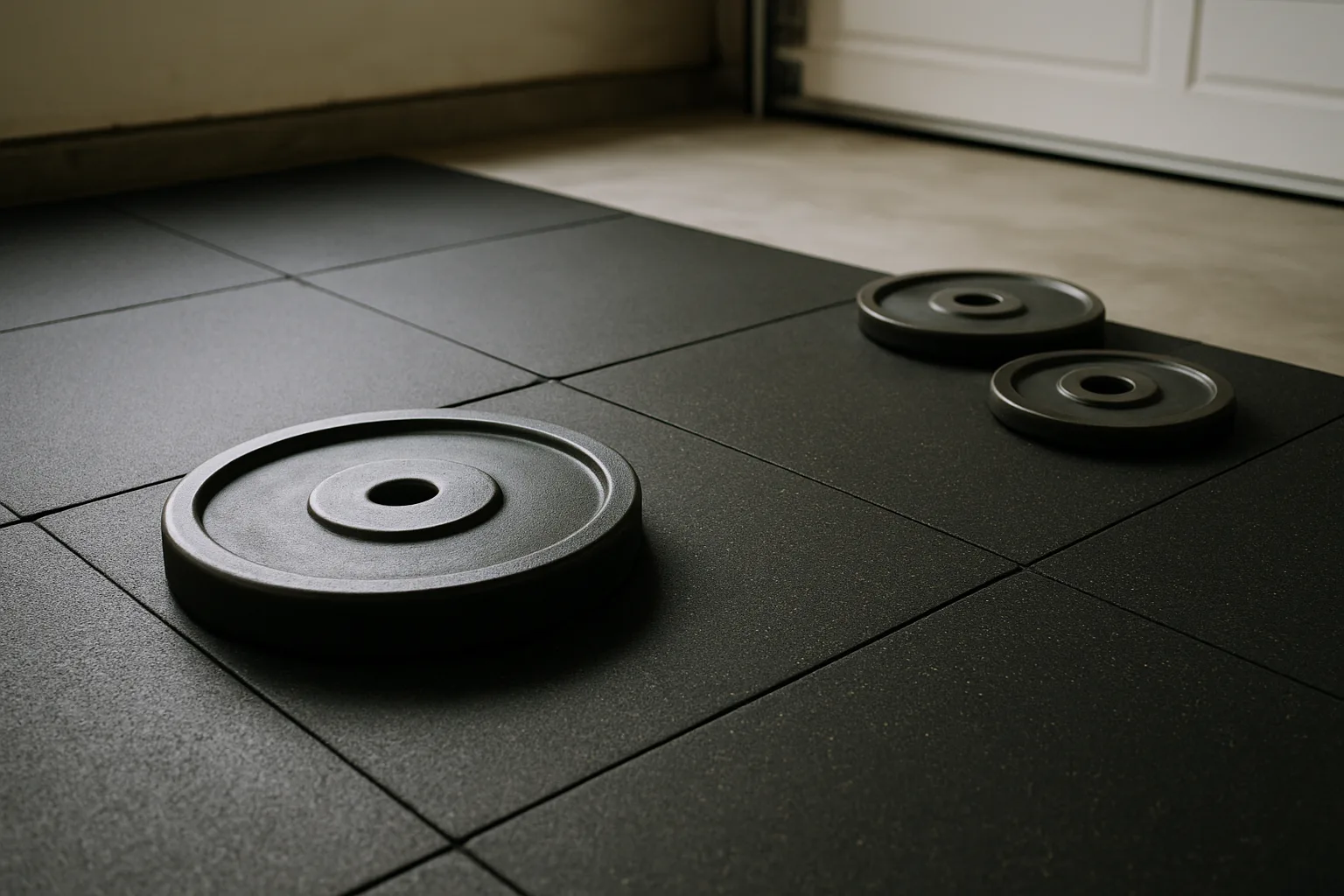
Laying stall mats without the headaches
- Clean the slab. Scrape off lumps and old gunk, then sweep or blow it clean so mats sit flat and tape sticks.
- Move mats rolled up. Roll each mat into a tube and cinch it with a ratchet strap; it's far easier to carry than a flopping sheet. Browse ratchet straps.
- Stagger the seams like wood flooring. It looks better and keeps mats from creeping apart.
- Tape underneath. Double-sided carpet tape on the concrete holds mats firmly. Tape over the top seams works too, but looks rough and leaves residue later. Browse double-sided carpet tape.
- Cut with fresh blades. Mark the line, score the top with a straightedge and a new utility blade, then slip a pipe or 2x4 underneath so the cut opens as the blade goes through. Blades dull fast, so keep a pack handy. A jigsaw with a soft-material blade also cuts thick rubber; wear a mask for the fumes.
- Air them out. Mats off-gas faster spread out than stacked. Time outside helps, and some people scrub them with Simple Green and rinse.
Choosing a rack for a garage
- Squat stands: two uprights on feet. The simplest and easiest to store; steadier with a connected base or pull-up bar.
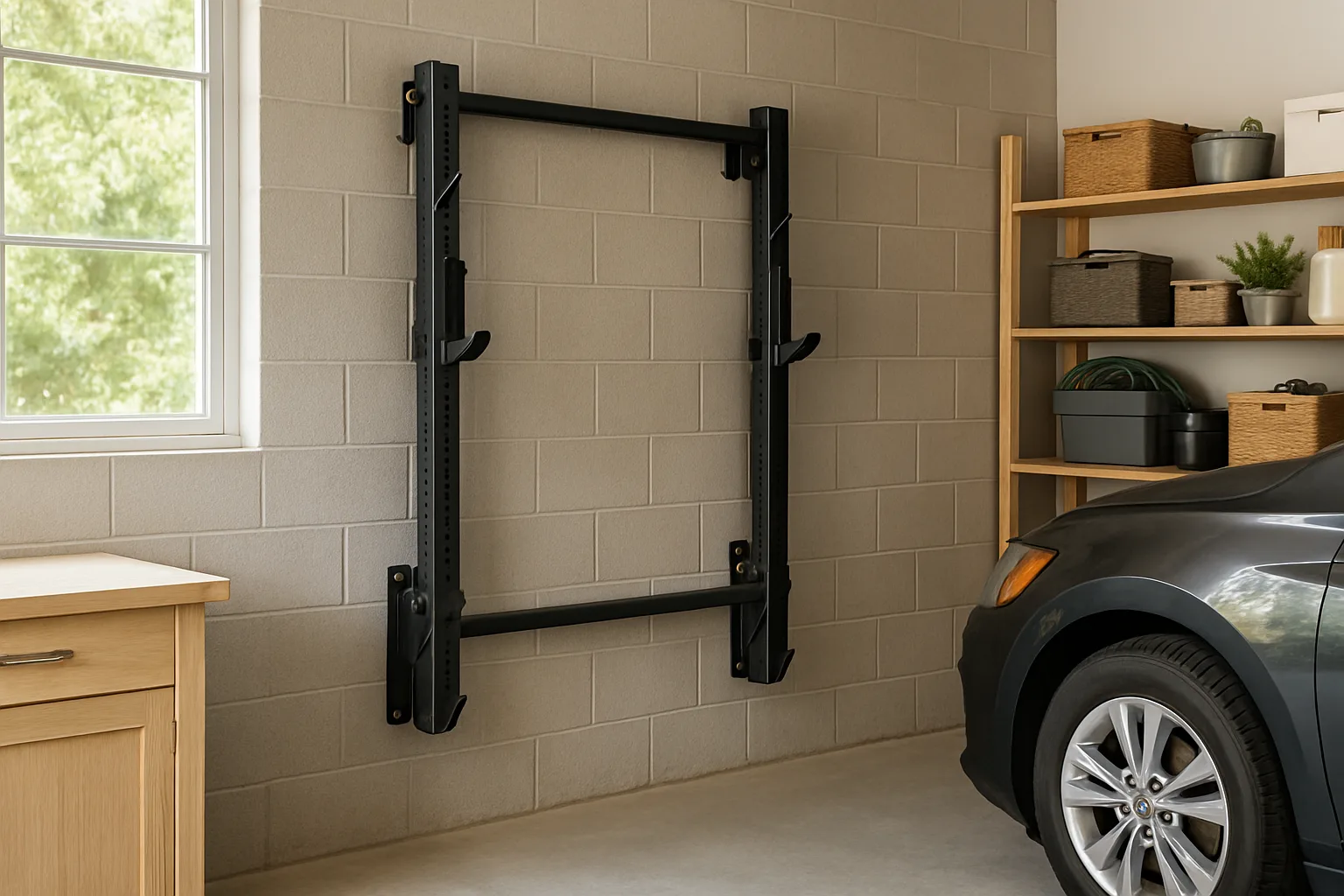
- Folding wall-mounted racks: the smallest footprint, but bolted to the wall. Many owners stop folding them, except models on gas struts, which fold with little effort.
- Half racks: front uprights plus shorter rear posts, lifted outside of. Often sold in lower heights for low ceilings, usually cheaper than a power rack, with plate storage that adds stability.
- Power racks: a four- or six-post cage to lift inside. The most popular style, with the most attachments and the biggest footprint.
Pick a modular rack. 3x3 inch uprights have the largest choice of attachments; 2x2 racks work well on a budget with fewer add-ons. Metric "3x3" tubing is 75 mm, slightly under true 3 inches, so attachments made for one fit loose or tight on the other and hole spacing drifts out of line. Browse power racks or browse half racks, filtering by height and depth first.
A folding rack that leaves room for the car
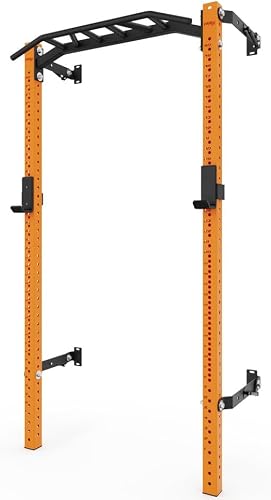
For a garage that still parks a car, the PRx Performance Profile PRO Folding Squat Rack is one of the best-known wall-mounted racks. It uses 3x3 uprights and folds up against the wall when not in use. Gas struts carry the weight, so folding it after a workout is quick, which is where most folding racks fall short. Plan the spot carefully: it needs solid framing behind it, and the mounting holes stay when it comes down.
 PRx Profile PRO Folding Squat RackCheck today’s price on Amazon

 Buy on Amazon →
Rack sizing checklist
- Ceiling: most racks are 80 to 90 inches tall; 90 inches allows full pull-ups. Measure at the rack's spot, including the garage door track and opener, plus headroom for pull-ups and presses.
- Depth: about 30 inches is ideal for lifting inside. Under 24 inches, a rack acts like a half rack. Deeper racks are steadier and often skip anchoring; loaded plate storage helps too.
- Gauge: a smaller number means thicker steel. 3x3 racks are usually 11-gauge, many 2x2 racks 14-gauge. Avoid anything thinner than 14-gauge; listed weight capacities say little.
- Width: common 3x3 racks are about 47 to 49 inches outside the uprights. Wider gives more hand room but less margin when walking the bar out, and width decides whether another brand's attachments fit.
- Holes: match attachments to the hole size (1 inch or 5/8 inch). Holes every 2 inches, or closer in the bench zone, make setting J-cups and safeties easier.
Turning it into a personal training studio
A wall mirror lets clients check form. Clear walkways and a floor without lips or loose tape edges cut down on trips, and foam can stay in a stretching corner while rubber covers the lifting area. Browse gym mirrors sized for a wall section.
Paying clients notice temperature. Look at a garage heater and a wall-mounted or high-velocity garage fan early, since both may need wiring or venting.
Flooring, rack and mirror picks on Amazon
Example picks for the gear covered above, chosen from Amazon listings by their specs, stock and customer ratings. They are not the exact pieces from the setups described here, so check sizes before ordering.
Three-quarter-inch rubber stall mats are the value flooring for a lifting area.
 American Floor Mats 3/4 in Horse Stall MatCheck today’s price on AmazonBuy on Amazon →
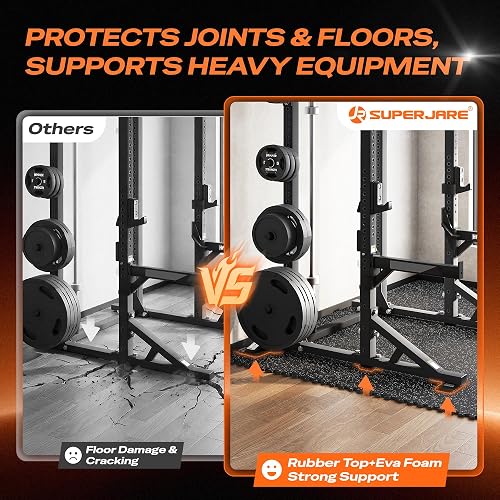
Interlocking tiles go down without cutting heavy mats and pull up when the garage goes back to parking.
 SUPERJARE Rubber Top Gym Floor Tiles, 48 sq ftCheck today’s price on Amazon


 Buy on Amazon →
A full power cage with safeties is the safest place for clients to squat and bench.
 Multi-Functional Power Cage with J-HooksCheck today’s price on Amazon


 Buy on Amazon →
A smaller stand-style rack fits where a full cage will not; check the ceiling height for the pull-up bar.
 CAP Power Rack Stand with Pull-Up BarCheck today’s price on Amazon


 Buy on Amazon →
Wall mirrors let clients check their form, which matters when coaching.
 Frameless Gym Mirror, 56 x 28 in, 2 PackCheck today’s price on Amazon


 Buy on Amazon →
Local rules for training clients at home
For a home training studio, the rules that matter most usually come from the city or county's home occupation code, and some states limit how far those local rules can go. Three examples, as of this writing:
Utah: home business rules
- State fee rule: under Utah Code 10-1-203, a city generally can't charge a resident a fee to run a home-based business unless its offsite impact materially exceeds the home's own. Client traffic and parking can count, and cities can still require a license.
- Lehi: Lehi's home occupation code limits patrons by available parking (no more than six spaces at once) and sessions to four a day, keeps garage doors closed during business, bans signs, and counts garage space toward the square-footage limit.
- Ogden: Ogden's guidelines limit the business to family members living there, bar interior or exterior alterations, and keep it out of accessory buildings and yard space.
Texas: home business rules
- Cities can't ban or require a license or permit for a "no-impact" home business (HB 2464).
- To count, employees and clients on site at once must stay within the property's occupancy limit, the business can't create on-street parking or a substantial traffic increase, none of its activity can be visible from the street, and it can't substantially add noise. A training session with the garage door open may not pass that test.
- Cities can still enforce building, fire, health, traffic and noise codes, and HOA rules and deed restrictions still apply.
Florida: home business rules
- State law lets home businesses operate in residential zones and bars cities and counties from regulating them differently from other businesses (s. 559.955).
- To qualify, up to two employees or contractors who don't live there can work on site, business parking can't exceed what a normal home generates, the property must look residential from the street, and the business stays secondary to the home.
- Local business taxes still apply, and condo, HOA and deed rules aren't overridden.
Elsewhere: check with your state, plus your county and city for home-occupation permits, zoning, parking and signage.
Confirm with the city's licensing or planning office before taking clients, and ask whether homeowner's insurance covers visitors working out; a separate liability policy is common.
Keep it a garage for resale
- Loose-laid rubber (mats or tiles on carpet tape) lifts up in an afternoon, unlike glued rolls. If the slab is getting a coating anyway, compare garage floor tiles and epoxy first.
- A bolted rack comes down with a wrench; anchor and mounting holes are small patch jobs.
- Avoid permanent changes like walling off the door. Some cities require off-street parking, and buyers may see a converted garage as a lost one.
- Check the HOA, whose rules on home businesses, client parking and noise can be stricter than the city's.
More home business room guides
- Turning a spare bedroom into a home hair salon
- Setting up a home dog grooming room
- Starting a home bakery
- Building a photo and video studio in a spare room or garage
- Building a home podcast studio
Posted by Kristopher Larson
Frequently asked questions
What is the best flooring for a garage gym?
For most lifting setups, 3/4 inch rubber horse stall mats are the best value: dense, grippy and thick enough for dropped weights. Interlocking rubber tiles look cleaner and are easier to handle, and rolled rubber looks best but is the hardest to install. EVA foam is too soft and slippery for barbell work.
Are horse stall mats good for a home gym?
Yes. A 4x6 foot, 3/4 inch mat makes a solid lifting surface. The downsides are weight (about 100 pounds each), height differences between batches and a rubber smell that fades as the mats air out. Inspect and smell each mat before buying, and buy them all at once so they match.
How do you keep stall mats from moving on a concrete floor?
Start with a clean, smooth slab, stagger the seams like wood flooring, and lay double-sided carpet tape on the concrete before setting the mats. Tape over the top seams also works but looks rougher and leaves residue when the mats come up.
How tall and deep should a garage power rack be?
Most racks are 80 to 90 inches tall, and 90 inches allows full pull-ups, so measure the ceiling, door track and opener first. A depth of about 30 inches gives room to lift inside the rack; under 24 inches it behaves more like a half rack. Low ceilings often suit a half rack or a folding wall-mounted rack.
Can you train clients in a garage gym?
Often, yes, but it depends on the local home occupation rules, and some states limit those rules. As of this writing, Texas bars cities from banning or permitting "no-impact" home businesses with no street parking, no visible activity and no added noise, and Florida lets home businesses run in residential zones with up to two non-resident workers. Utah cities such as Lehi cap client parking and sessions and want the garage door closed. Check with the city or county licensing or planning office before taking clients.
Does a home gym hurt a garage's resale value?
Not if it comes apart easily. Loose-laid rubber and a bolted rack can be removed in a day, leaving a garage that still parks cars. Permanent changes, such as walling off the garage door or gluing down flooring, are harder to undo, and an HOA may have its own rules on home businesses and parking.
Keep reading
More from the blog

How to Turn a Spare Room Into a Home Podcast Studio: Mic, Interface and Acoustic Treatment
How to Set Up a Home Photo and Video Studio in a Spare Room or Garage
Home Dog Grooming Setup: Shernbao vs Shelandy Dryers and the Right Table