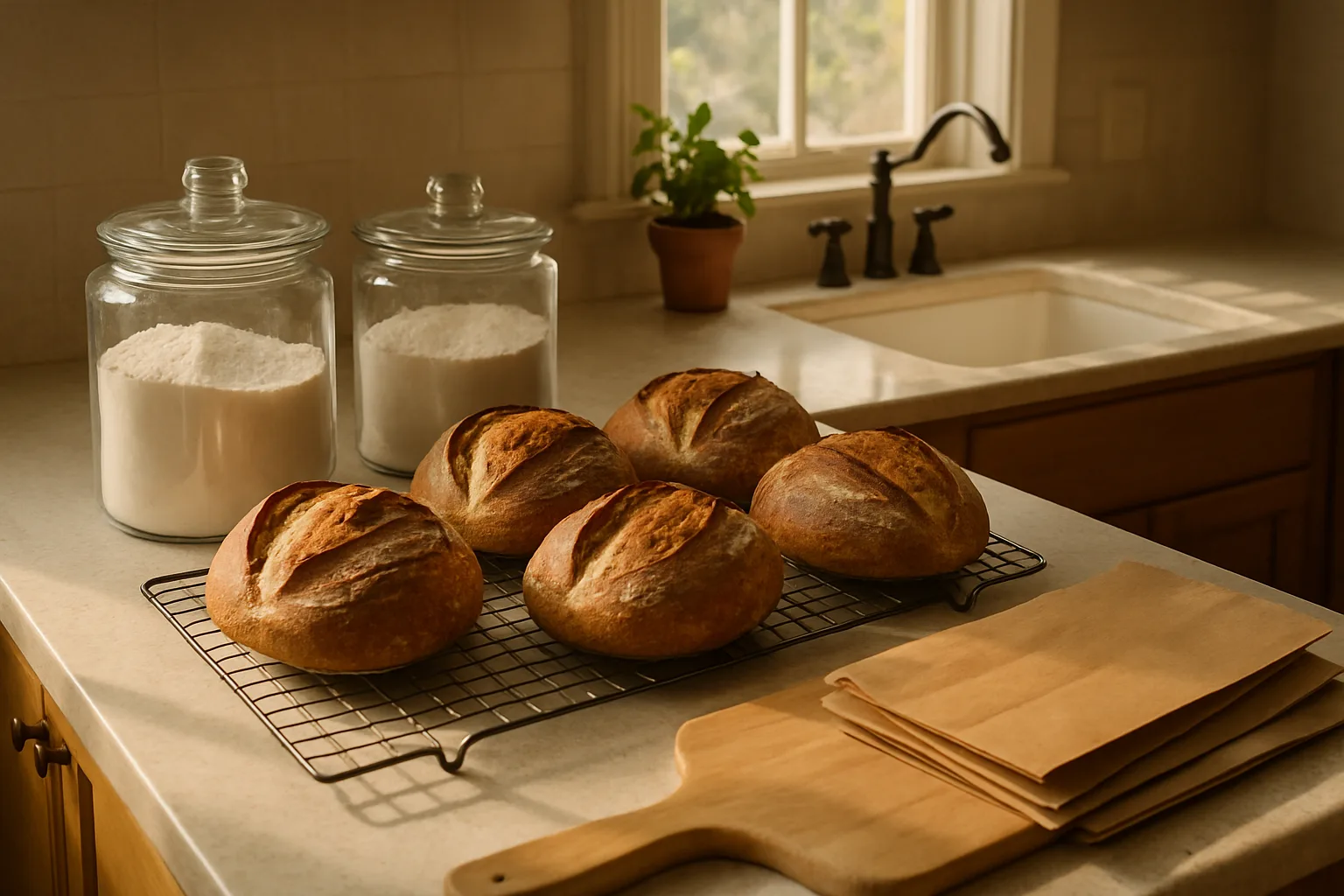
How to Start a Home Bakery: Cottage Food Rules, Kitchen Setup and Gear
Start a home bakery: how cottage food laws differ by state, with Utah, Texas and Florida examples, plus kitchen setup, mixers, proofers and label gear.
Most states let home bakers sell bread, cookies and pies from a home kitchen under a cottage food law, but the laws differ more than most new bakers expect: which foods qualify, whether you register or get inspected, whether you can sell online, ship or sell to stores, and what the label must say. Knowing your state's version comes first. The kitchen, the gear and the labels all follow from it.
Below: what to check in your state's rules, three state examples, how to lay out the kitchen, and gear that holds up to batch baking.
As an Amazon Associate, Best Utah Real Estate earns from qualifying purchases.
Quick verdict
- Want to sell to coffee shops or stores: check that your state's cottage food law allows resale. Many limit sales to the final customer, and some allow store sales only after registration.
- Want to sell online or ship: this is where states differ most. Some allow shipping; others require you to deliver in person.
- Mixer for mostly cookies, frosting and small bread batches: the KitchenAid 7-Quart Bowl-Lift Stand Mixer (KSM70), as long as you respect its kneading limits.
- Mixer for a bread-first bakery: the Ooni Halo Pro Spiral Mixer, built around dough.
- Steady rise in a cold or drafty kitchen: the Brod and Taylor Folding Proofer.
Cottage food rules: what to check in your state
Cottage food laws answer the same handful of questions, so start by finding your state's answers:
- Paperwork: some states require registration, an inspection or a food handler's permit; others require no state permit at all.
- Sales channels: in person, online with local delivery, shipping, or wholesale to stores and coffee shops.
- Sales cap: some states cap annual gross sales.
- Foods allowed: usually shelf-stable foods that don't need a fridge.
- Labels: almost every state requires a label, often with an exact home-kitchen statement.
State rules: three examples
Here is how three states handle it, as of this writing. Rules change, so confirm the details on each agency's site before you sell:
Utah: two home bakery paths
- Cottage Food Production: a food handler's permit plus an inspection and registration with the Utah Department of Agriculture and Food (UDAF). Shelf-stable foods on UDAF's permitted list; sell directly or to stores for resale, within Utah only.
- Homemade Food Act: no UDAF registration but a business license. In-person sales to the final customer only, within Utah; no stores or restaurants; no meat or raw dairy.
- Labels: cottage products list the product name, ingredients, net quantity, allergens, business name and contact, and "Home Produced." Homemade Food Act products carry allergens and "Not for Resale – Processed and prepared without the benefit of state or local inspection."
- Sourdough: on the cottage path, the starter must be commercially made or backed by a certified lab result showing a pH of 4.0 or lower.
- Meals: ready-to-eat and temperature-controlled foods go through a local health department permit instead, the microenterprise home kitchen (Utah Code 26B-7-416).
- Details: UDAF's Cottage Food Production page and Homemade Food Act page.
Texas: cottage food basics
- Paperwork: the operator must complete food handler training. Registration with the Department of State Health Services (DSHS) is required only for foods that need time and temperature control, such as refrigerated items.
- Foods: most foods qualify; meat and poultry, seafood, ice, low-acid canned goods, cannabis-derived products and raw milk do not.
- Sales: directly to consumers, or online within Texas when the operator, an employee or a household member delivers the food in person. Mail order is no longer listed in the law. Shelf-stable foods may be sold wholesale only to a registered cottage food vendor.
- Cap: annual gross income of $150,000 or less, adjusted each year for inflation.
- Labels: name and address (or a DSHS registration number), the product's common name, major allergens, and "THIS PRODUCT WAS PRODUCED IN A PRIVATE RESIDENCE THAT IS NOT SUBJECT TO GOVERNMENTAL LICENSING OR INSPECTION." Refrigerated foods add a date and safe handling instructions.
- Details: DSHS cottage food page and the SB 541 bill text.
Florida: cottage food basics
- Paperwork: no state permit or inspection when the operation follows the cottage food law and stays under the sales cap.
- Foods: low-risk foods such as breads, cookies, cakes, pastries, jams and nut butters. Anything needing refrigeration, such as custard or cream cheese fillings, is out, as are meat, fish and dairy products.
- Sales: in person, online or by mail order, delivered in person, to an event venue, or by the Postal Service or a commercial carrier. No wholesale.
- Cap: annual gross sales of $250,000 or less across all locations.
- Labels: name and address, product name, ingredients by weight, net weight or volume, allergens, and "Made in a cottage food operation that is not subject to Florida's food safety regulations." in at least 10-point type.
- Local rules: cities and counties can't ban a cottage food operation, but the home-business conditions in state law still apply.
- Details: Florida Statutes s. 500.80 and FDACS's cottage food page.
Elsewhere: check with your state's cottage food program (usually the agriculture or health department), plus your county and city for home-occupation permits, zoning, parking and signage.
What a cottage bakery can and can't make
Most cottage lists are narrower than new bakers expect. The usual line is shelf-stable foods baked with dry heat, with no fillings or toppings that need a fridge:
- Usually allowed: breads with non-perishable inclusions like nuts, dried fruit and chocolate; cookies; fruit pies; granola; popcorn; candies; jams and jellies.
- Often excluded: cream or cream cheese frostings, egg-based buttercreams such as Swiss or Italian meringue, custard pies, cheesecake, fresh fruit toppings, and anything refrigerated or frozen. A few states, such as Texas, allow some of these after registration.
When a recipe sits on the line, ask your state's program before it goes on the menu. Ready-to-eat meals usually fall outside cottage food rules and need a health department permit or a commercial kitchen.
Whichever path your state offers, check your city's or county's home occupation rules too. They often limit customer traffic, parking, signs and employees.
Setting up the kitchen
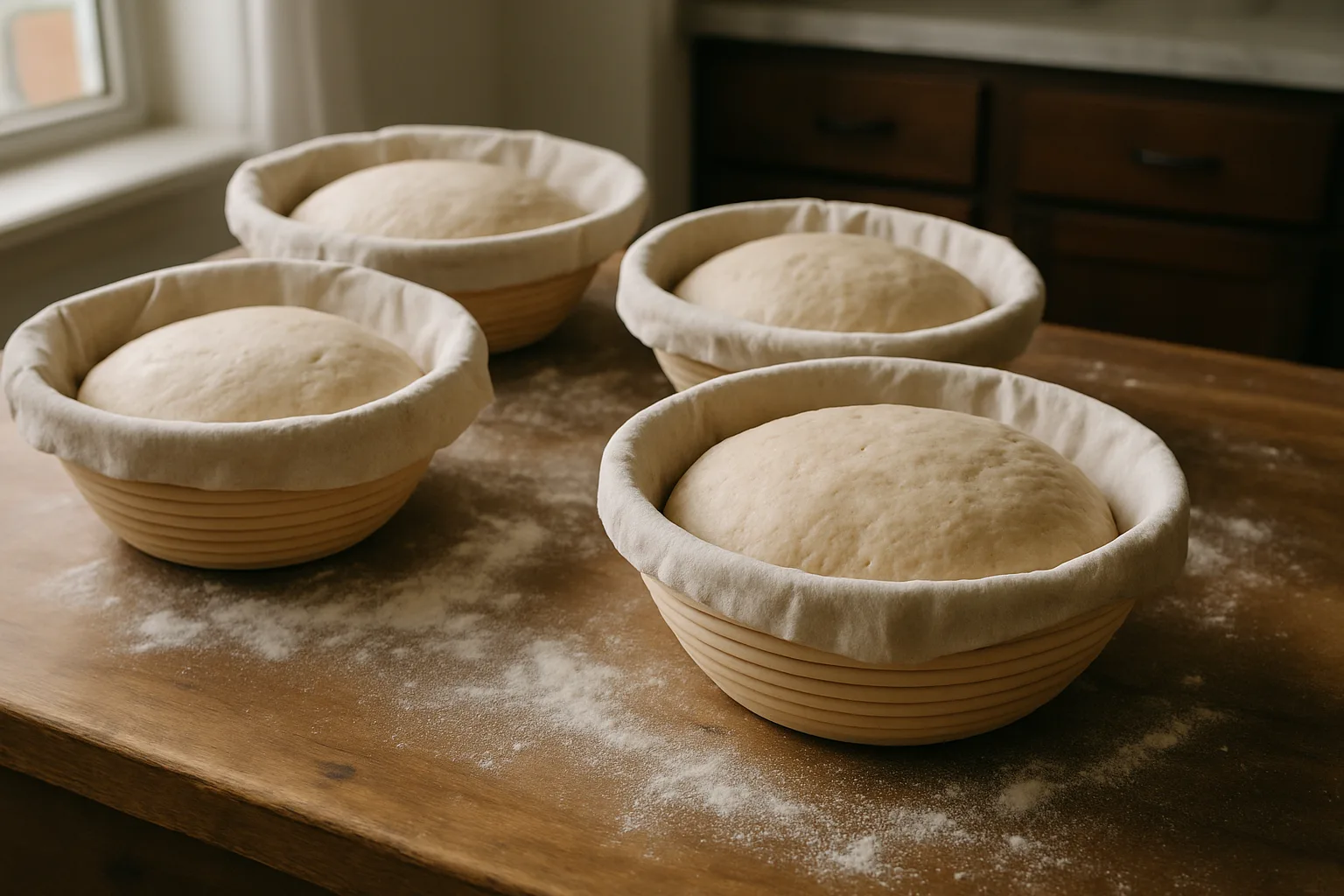
A home micro-bakery runs on routine more than square footage:
- Bake the day before a pickup, so loaves have time to cool.
- Cool completely before bagging. Warm bread in a sealed bag traps steam, and condensation softens the crust and shortens shelf life.
- Plan around the fridge. Refrigerator space for butter, eggs and cold-fermenting dough runs out before oven space does.
- Keep flour at arm's reach. Large lidded bins at the end of the counter, one for all-purpose and one for bread flour, save trips to the pantry. Browse flour storage bins that hold several large bags and stack.
- Weigh everything. Consistent loaves need it, and so does an accurate net quantity on the label. Browse digital kitchen scales that read in grams.
For crusty loaves without a steam oven, a heavy pot does a lot of the work; see the Dutch oven comparison for which ones hold heat best.
The equipment that matters
The mixer, the proofer and the label printer carry most of the load. Here's how they compare.
| Equipment | Shop | Best at | Watch out for | Capacity and controls |
|---|---|---|---|---|
| KitchenAid 7-Quart Bowl-Lift Stand Mixer (KSM70) |  Buy on Amazon | Cookie dough, frosting, whipped cream; strong enough for double dough batches | Maker's kneading limits: speed 2, 2 minutes at a time, 4 to 6 minutes total | 7 qt bowl, 11 speeds including a half speed for folding |
| Ooni Halo Pro Spiral Mixer |  Buy on Amazon | Sandwich bread, sourdough and pizza dough | Weak on whipped cream; cookies less fluffy | 7.3 qt rotating bowl, 58 speed settings from 60 to over 1,000 RPM |
| Brod and Taylor Folding Proofer |  Buy on Amazon | Holding dough at a steady rising temperature | Thin side walls, short cord, no timer | 70 to 120°F proofing; fits two 6-qt dough tubs |
| Ankarsrum | Heavy, sticky and stiff doughs; open bowl | Learning curve and many parts to store; not sold on Amazon | Rotating bowl with roller, scraper and dough hook; 12-minute timer |
KitchenAid 7-Quart Bowl-Lift Stand Mixer (KSM70)
The big KitchenAid has the torque for real bread work. It kneads a double batch of very sticky, high-hydration pizza dough and a double batch of stiff bagel dough without stalling. It is also the best of these mixers at whipped cream, frosting and cookie dough, where it creams butter and sugar light and fluffy. The listing rates it for more than 8.5 lb of bread dough per batch, and it has a half speed for folding in delicate ingredients.
The catch is KitchenAid's own guidance: knead dough no higher than speed 2, for no more than 2 minutes at a time and 4 to 6 minutes in total. That fits a bakery heavy on cookies and frosting with small bread batches. It is a poor fit for kneading enriched dough all morning, and constant bread work can burn out KitchenAid motors. If you buy one for business use, buy a bowl-lift model like this one rather than a tilt-head. To compare it with the smaller models, see the KitchenAid Classic vs Artisan comparison.
KitchenAid 7-Quart Bowl-Lift Stand Mixer (KSM70)Check today’s price on Amazon

 Buy on Amazon →
Ooni Halo Pro Spiral Mixer
The Halo Pro is a spiral mixer: the bowl turns while the hook works the dough. A breaker bar stops dough from climbing the hook, and sandwich bread, sourdough and pizza dough all come together smooth, with strong gluten. Half of the bowl stays open for adding ingredients while it runs, the controls go by RPM or percent, and a timer can run long kneads unattended.
It is not the all-rounder. Whipped cream takes a long time and doesn't reach the KitchenAid's result, though adding butter turns it into a workable frosting. Cookie dough mixes fine but comes out less fluffy, and ingredients can catch on the bump in the center of the bowl. It is also a fairly new machine, so its long-term durability is still unknown. Buy it if bread is the business.
Ooni Halo Pro Spiral MixerCheck today’s price on Amazon

 Buy on Amazon →
The heavy-duty alternatives
The Swedish Ankarsrum outperformed the big KitchenAid on heavy doughs. It kneads both sticky and stiff doughs almost effortlessly, has an open bowl that's easy to add to and see into, and offers a hook for wet doughs and a roller for stiff ones. It has a learning curve and a lot of parts to store, and it isn't sold on Amazon, so buyers find it through other retailers. A Bosch mixer is a long-running workhorse for sandwich loaves too. Skip its plastic cookie paddles: they can strip and drop plastic shards into dough, especially with cold butter.
Brod and Taylor Folding Proofer
Rise times swing with room temperature. The proofer holds dough anywhere from 70 to 120°F, usually reaching temperature in 10 to 15 minutes with the lid on. A water tray keeps the air humid, and a window in the lid lets you check the rise. It holds two 6-quart tubs of dough. There is also a slow-cook mode with a higher temperature range, handy for yogurt and similar projects. It folds to about 2.75 inches for storage.
The downsides: the plastic side walls feel flimsy, the cord is short, and there's no timer or automatic shut-off, so set a phone alarm.
Brod and Taylor Folding ProoferCheck today’s price on Amazon

 Buy on Amazon →
Shaping, cooling and packaging gear
Buy these for size and sturdiness, not brand:
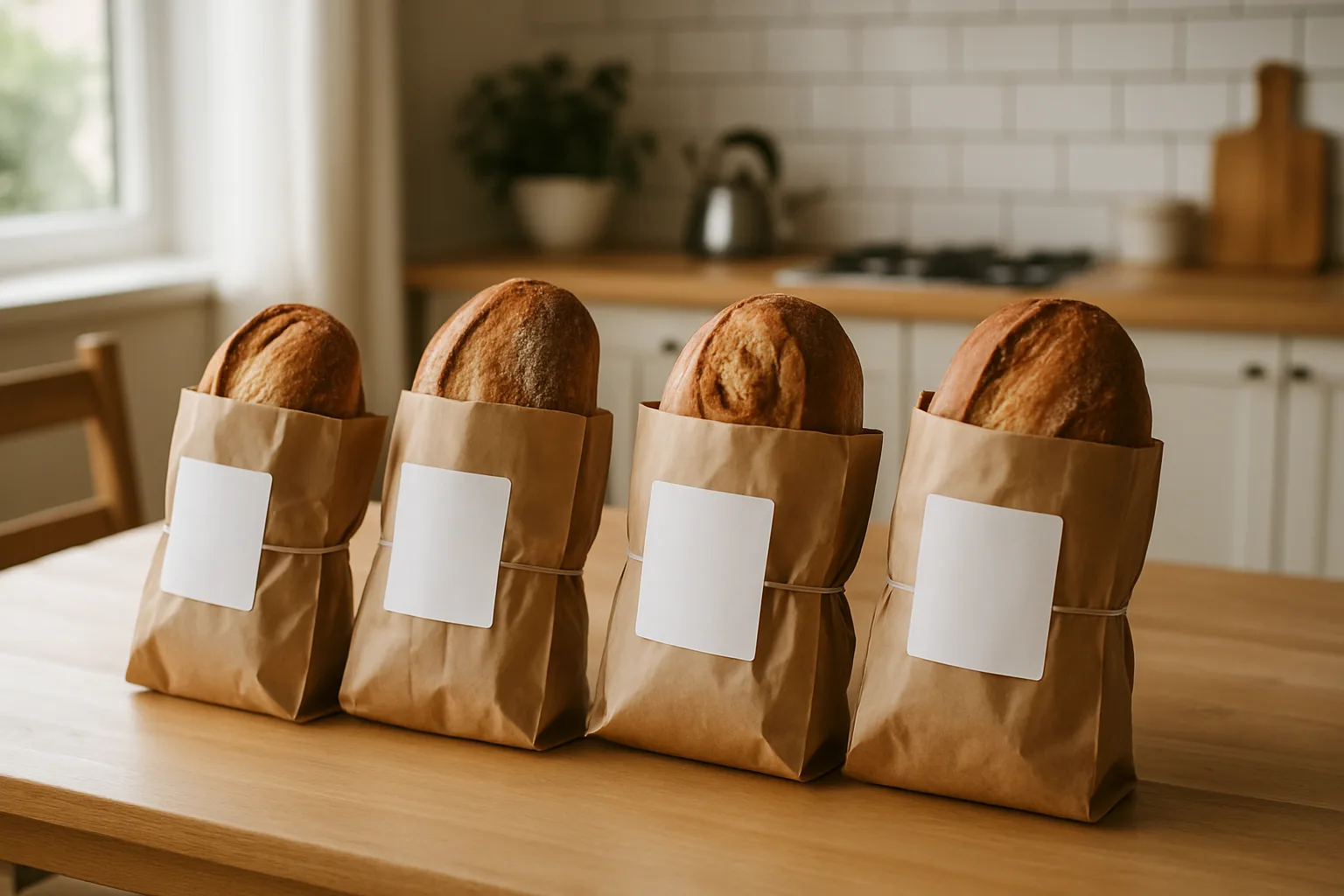
- Bannetons: cloth-lined proofing baskets hold a round or oval loaf's shape better than a loaf pan and help give it a crusty, open rise. Browse cloth-lined bannetons.
- Collapsible cooling racks: a tiered rack that folds flat can cool 12 to 14 loaves, then go in a closet. Browse collapsible cooling racks.
- Bread bags: plastic-lined paper bags with a fold-over tin tie keep crusty bread fresh and protected from dust, while clear bags suit sandwich loaves. Browse bread bags with tin ties.
- Bakery boxes: fold-up pastry boxes for cookies, muffins and mini pies ship flat and assemble in seconds. Browse bakery boxes.
Labels without a print shop
Nearly every state requires a label on home-baked products, and custom-printed stickers get costly when the menu changes. A thermal label printer prints black text on standard 4x6 labels with no ink to buy, from a computer or a phone app. Browse 4x6 thermal label printers.
Build one template per product with every line your state requires. Most labels list the product name, ingredients, net quantity, allergens and your business name and address, plus a required statement that the food was made in a home kitchen. Copy that statement word for word as your state publishes it; Texas and Florida, for example, spell out the exact wording.
Baking and packaging gear picks on Amazon
Example picks for the gear covered above, chosen from Amazon listings by their specs, stock and customer ratings. They are not the exact pieces from the setups described here, so check sizes before ordering.
A scale that reads in grams keeps batches consistent and labels honest.
 Etekcity 22 lb Kitchen ScaleCheck today’s price on Amazon


 Buy on Amazon →
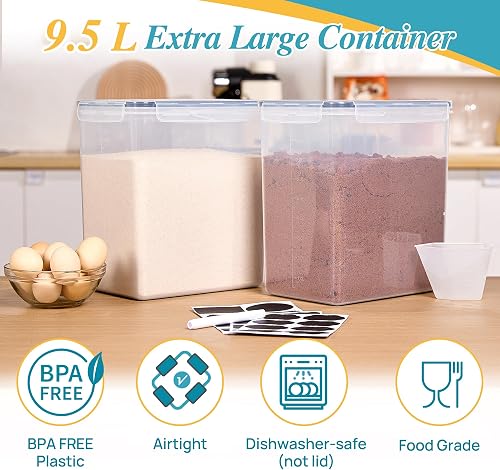
Airtight bins that each hold a full 12.5 lb bag keep flour and sugar sealed and easy to scoop.
 Vtopmart Flour Storage Containers, 2 PackCheck today’s price on Amazon


 Buy on Amazon →
Cloth-lined proofing baskets give sourdough its shape and a clean release.
 DOYOLLA Banneton Proofing Baskets, Set of 2Check today’s price on Amazon


 Buy on Amazon →
A stacked rack triples cooling space on one patch of counter during a big bake.
 3-Tier Stackable Cooling RackCheck today’s price on Amazon


 Buy on Amazon →
Window boxes show off cookies and pastries and stack neatly for pickup orders.
 YEKTFS Bakery Boxes with Window, 24 PackCheck today’s price on Amazon


 Buy on Amazon →
Lined tin-tie bags reseal, which customers appreciate for cookies and granola.
 BagDream Tin Tie Bakery Bags, 100 PackCheck today’s price on Amazon


 Buy on Amazon →
A thermal printer turns out ingredient and allergen labels with no ink to buy.
 Rollo 4x6 Thermal Label PrinterCheck today’s price on Amazon


 Buy on Amazon →
Who should buy what
- Cookie and frosting sellers with occasional bread: the KitchenAid 7-Quart Bowl-Lift, kneading within its limits.
- Bread, sourdough and pizza dough most days: the Ooni Halo Pro.
- Anyone fighting a cold kitchen or unpredictable rise times: the Brod & Taylor proofer, whatever mixer you use.
- Just starting out: a scale, bannetons, a cooling rack and a label printer first. Upgrade the mixer once orders show what you bake most.
More home business room guides
- Turning a spare bedroom into a home hair salon
- Setting up a home dog grooming room
- Building a photo and video studio in a spare room or garage
- Building a home podcast studio
- Turning a garage into a personal training studio
Posted by Kristopher Larson
Frequently asked questions
Do I need a license to sell baked goods from home?
It depends on the state. As of this writing, Utah's cottage food path requires a food handler's permit plus a state inspection and registration, Texas requires food handler training and registers only operators selling foods that need refrigeration, and Florida requires no state permit under the sales cap. Either way, check your city's or county's home occupation rules and your state's cottage food program before selling.
What is a cottage food law?
A cottage food law lets people make certain low-risk foods in a home kitchen and sell them without a commercial kitchen. Each state sets its own list of allowed foods, sales channels, any registration or training, any annual sales cap and the label wording, so the same bakery can be legal in one state and not the next.
Can I sell cheesecake or cream cheese frosted cupcakes from a home bakery?
Usually not under a cottage food law, since most states limit home bakers to foods that don't need refrigeration. Utah and Florida exclude cream cheese fillings and custards, for example. Texas is an exception as of this writing: it allows foods that need temperature control after registration with DSHS, with a safe handling statement on the label. Ask your state's program about any recipe that sits on the line.
Can I ship home-baked goods to customers?
Only in some states. As of this writing, Florida allows online and mail-order sales delivered by the Postal Service or a commercial carrier. Texas allows online sales within the state only when the operator or a household member delivers in person, and Utah's cottage foods stay within Utah. Check your state's rules before offering shipping.
What has to be on a cottage food label?
Most states ask for the product name, ingredients, net quantity, allergens and the business name and address, plus a required home-kitchen statement. Texas requires "THIS PRODUCT WAS PRODUCED IN A PRIVATE RESIDENCE THAT IS NOT SUBJECT TO GOVERNMENTAL LICENSING OR INSPECTION," and Florida requires "Made in a cottage food operation that is not subject to Florida's food safety regulations." Use your state's exact wording.
Is a KitchenAid stand mixer good enough for a home bakery?
For cookies, frosting and small bread batches, yes. The 7-quart bowl-lift model handles heavy doughs, but KitchenAid advises kneading at speed 2 or lower, for 2 minutes at a time and 4 to 6 minutes total. A bakery that kneads bread all day is better served by a dough-focused machine such as a spiral mixer.
Keep reading
More from the blog

How to Turn a Spare Room Into a Home Podcast Studio: Mic, Interface and Acoustic Treatment
How to Turn Your Garage Into a Home Gym or Personal Training Studio: Flooring, Racks and Local Rules
Home Dog Grooming Setup: Shernbao vs Shelandy Dryers and the Right Table