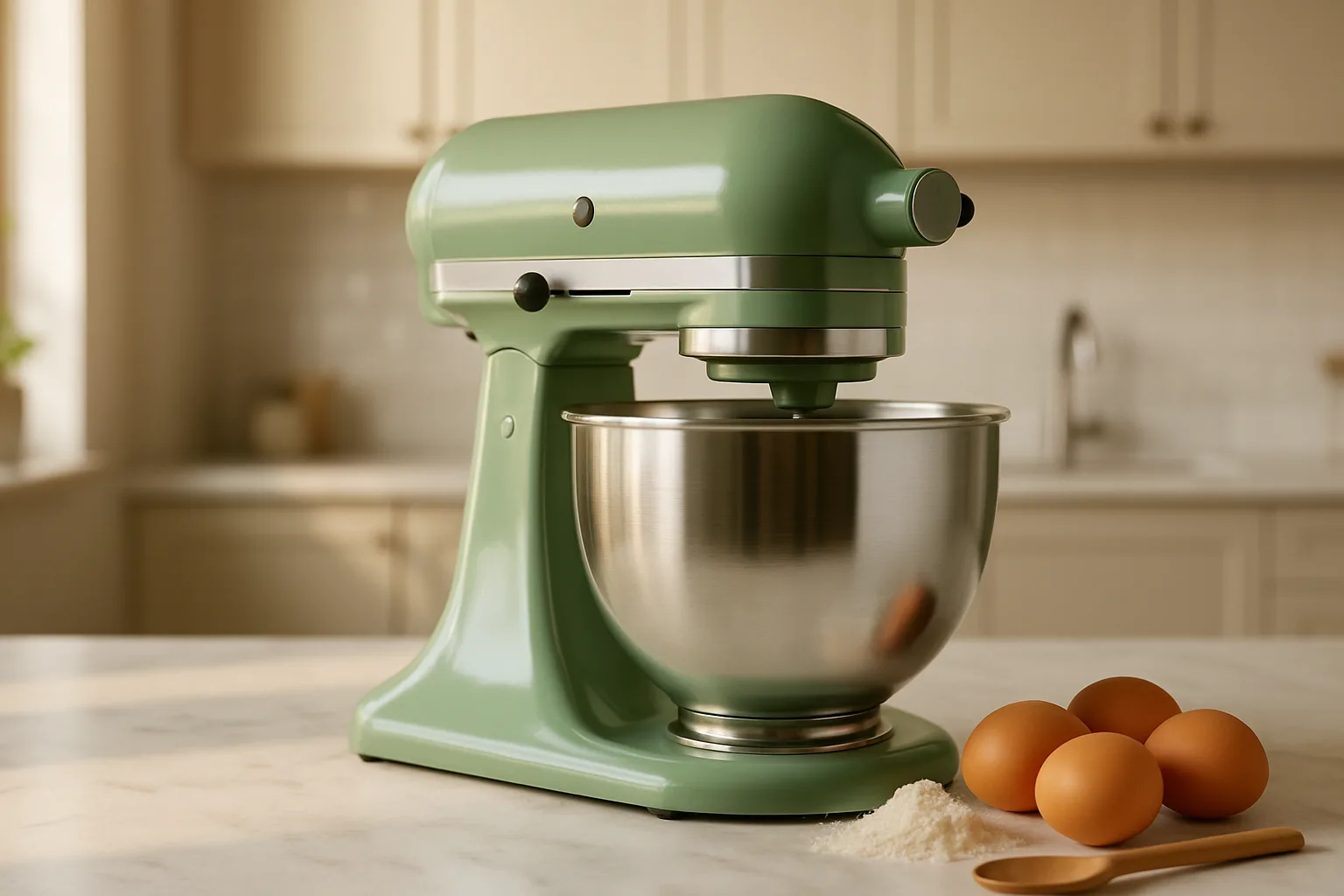
KitchenAid Classic vs. Artisan vs. Artisan Plus: Which Stand Mixer Is Worth It?
What each KitchenAid stand mixer adds: bowl size, motor rating, stainless accessories and speed control, plus when a 7-quart bowl-lift makes more sense.
KitchenAid's tilt-head mixers look nearly identical from across the kitchen, which makes the price steps between them confusing. The Classic, the Artisan and the newer Artisan Plus share the same basic shape, the same planetary mixing action and the same front attachment hub, so the pasta roller or meat grinder bought for one fits the others. What changes is the bowl, the motor rating, the accessories and the controls.
This guide breaks down what each step up actually adds, when a bowl-lift model makes more sense, and which one fits different kinds of bakers.
As an Amazon Associate, Best Utah Real Estate earns from qualifying purchases.
Quick verdict: which KitchenAid mixer to buy
- Best value: KitchenAid Classic 4.5 Qt (K45SS). The same tilt-head design and attachment hub at the lowest price, with a slightly smaller bowl that has no handle.
- Best for most home bakers: KitchenAid Artisan 5 Qt (KSM150PS). A 5-quart bowl with a handle, a pouring shield, a 325-watt motor rating and more than 20 colors.
- Best tilt-head features: KitchenAid Artisan Plus. Stainless steel accessories including a double flex edge beater, precision speed control with a half speed for folding, soft start and a built-in bowl light.
- Best for big batches and bread: KitchenAid 7 Qt Bowl-Lift (KSM70SKXX). A 7-quart bowl, 11 speeds including a half speed, and a double flex edge beater in the box.
- Best cheap upgrade for any tilt-head: KitchenAid Flex Edge Beater (KFE5T), which scrapes the bowl as it mixes.
Spec comparison
| Model | Shop | Design | Bowl | Rated power | Speeds | Included beaters | Extras |
|---|---|---|---|---|---|---|---|
| Classic (K45SS) |  Buy on Amazon Buy on Amazon
| Tilt-head | 4.5 qt, brushed stainless, no handle | 275 W | 10 | Coated flat beater, coated dough hook, 6-wire whip | None |
| Artisan (KSM150PS) | 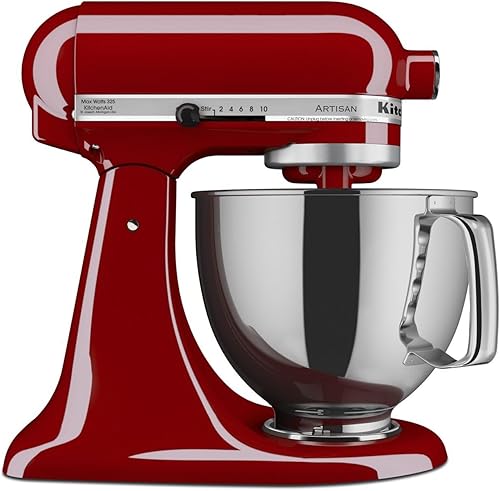 Buy on Amazon Buy on Amazon
| Tilt-head | 5 qt, polished stainless, handle | 325 W | 10 | Coated flat beater, coated dough hook, 6-wire whip | Pouring shield, 20+ colors |
| Artisan Plus | Tilt-head | 5 qt welded stainless | 350 W (retailer listing) | Precision control plus half speed | Stainless flat beater, double flex edge beater, dough hook, whisk | Soft start, LED bowl light | |
| 7 Qt Bowl-Lift (KSM70SKXX) |  Buy on Amazon Buy on Amazon
| Bowl-lift | 7 qt | 500 W | 11 including half speed | Double flex edge beater, coated flat beater, coated dough hook, 11-wire whip | Pouring shield |
Figures come from KitchenAid's listings and launch materials. KitchenAid sells each mixer in many colors under slightly different model numbers, and bundles with extra attachments are common, so check the exact model before buying.
What the price steps buy
Bowl size and handle
The Classic's 4.5-quart bowl is enough for a standard batch of cookies, one loaf of bread or a cake. The Artisan's 5-quart bowl adds a little room for double batches and, more noticeably day to day, a handle that makes pouring batter and scraping out dough easier. KitchenAid notes the Classic bowl has a brushed finish while the Artisan bowl is polished.
Motor ratings
The ratings climb from 275 watts (Classic) to 325 watts (Artisan) to a listed 350 watts (Artisan Plus). Those numbers describe how much power the motor can draw, not how much mixing force reaches the bowl, and a mixer kneading a normal batch of dough rarely runs near its rating. For typical home batches, all three tilt-head models handle the same recipes; the bigger gap in capacity comes with the move to a bowl-lift model. KitchenAid's manuals list the maximum flour capacity and the speed to use for kneading each model, and staying within those limits matters more than wattage for motor life.
Accessories
The Classic and Artisan ship with a coated flat beater, a coated dough hook and a wire whip. The coated beater and hook are generally dishwasher safe, but the wire whip should be washed by hand according to KitchenAid care guidance; owners should check the manual for their exact model. The Artisan Plus moves to dishwasher-safe stainless steel accessories, including a welded stainless bowl, and adds a double flex edge beater with silicone edges on both sides that scrape the bowl while mixing.
KitchenAid Classic: the value pick
The Classic is the simplest current KitchenAid tilt-head. It has 10 speeds on the familiar side lever, a 4.5-quart bowl and the same attachment hub as the rest of the lineup. It is offered in fewer colors than the Artisan and skips the pouring shield. For bakers who make one batch at a time and want KitchenAid's attachment ecosystem without paying for color choices and a bowl handle, it covers nearly everything a stand mixer is used for.
KitchenAid Classic 4.5 QtCheck today’s price on AmazonBuy on Amazon →
KitchenAid Artisan: the long-running favorite
The Artisan has been KitchenAid's best-known model for decades. Compared with the Classic, it adds the 5-quart handled bowl, a pouring shield that reduces splatter when adding flour or sugar, a higher motor rating and the widest color range in the lineup. Mixing hardware and controls are otherwise similar: a 10-speed lever, a tilt-head lock and the front hub.
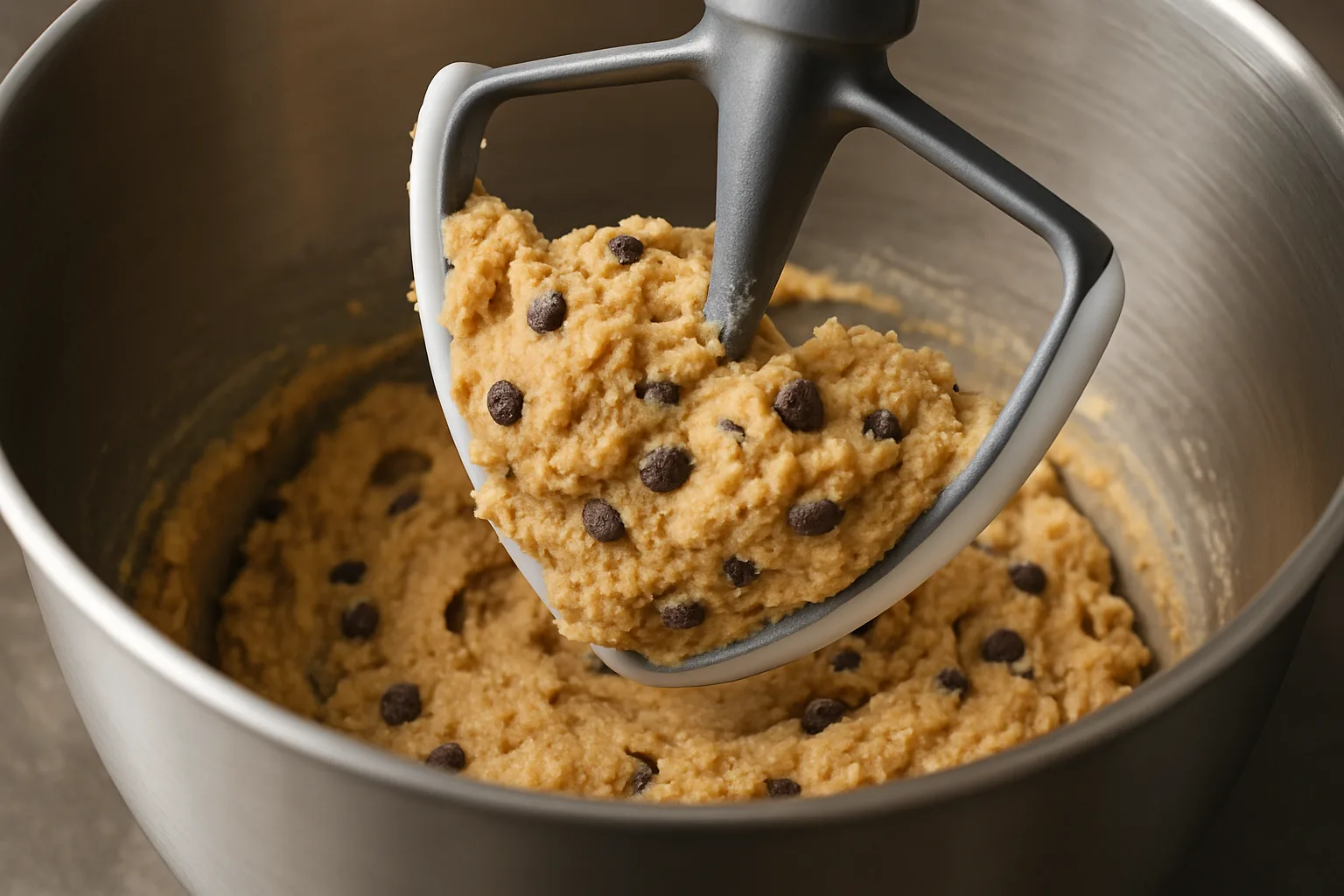
The most useful add-on for both the Classic and the Artisan is a scraping beater. The Flex Edge Beater fits 4.5- and 5-quart tilt-head mixers and wipes the bowl walls as it turns, which cuts down on stopping to scrape with a spatula when creaming butter or mixing cookie dough.
KitchenAid Artisan 5 QtCheck today’s price on AmazonBuy on Amazon →
KitchenAid Artisan Plus: the biggest tilt-head update
KitchenAid introduced the Artisan Plus as its newest tilt-head model and called it the largest update to its tilt-head mixer in decades, according to trade coverage of the launch. The changes are practical rather than cosmetic:
- Precision speed control. A redesigned control lets the user land on an exact speed rather than nudging a lever between marked settings, and adds a half speed for folding in ingredients like berries or whipped egg whites.
- Soft start. The mixer ramps up gradually to reduce flour clouds and splatter.
- Integrated LED bowl light. A first for a KitchenAid stand mixer, useful for checking dough under upper cabinets.
- Stainless steel accessories. A welded stainless bowl, flat beater, double flex edge beater, dough hook and whisk, all dishwasher safe.
It sits at the top of the tilt-head price range. Availability on Amazon has been limited since launch, so buyers may need to check KitchenAid and major appliance retailers for current stock and colors. For someone buying a first mixer to keep for many years, the accessory upgrade alone closes much of the price gap, since buying a flex edge beater and stainless whisk separately for an Artisan adds up.
Tilt-head or bowl-lift?
Tilt-head mixers hinge at the back so the head lifts up for adding ingredients and swapping beaters. Bowl-lift mixers keep the head fixed and raise the bowl with a lever, which gives a more rigid frame for heavy dough and room for larger bowls.
- Choose tilt-head for everyday baking, smaller kitchens and easy access to the bowl.
- Choose bowl-lift for frequent bread baking, double batches or holiday-scale cookie runs. The 7-quart KSM70 bowl-lift adds 11 speeds with a half speed, a 500-watt rating, an 11-wire whip, a double flex edge beater and a pouring shield, and weighs about 28 pounds.
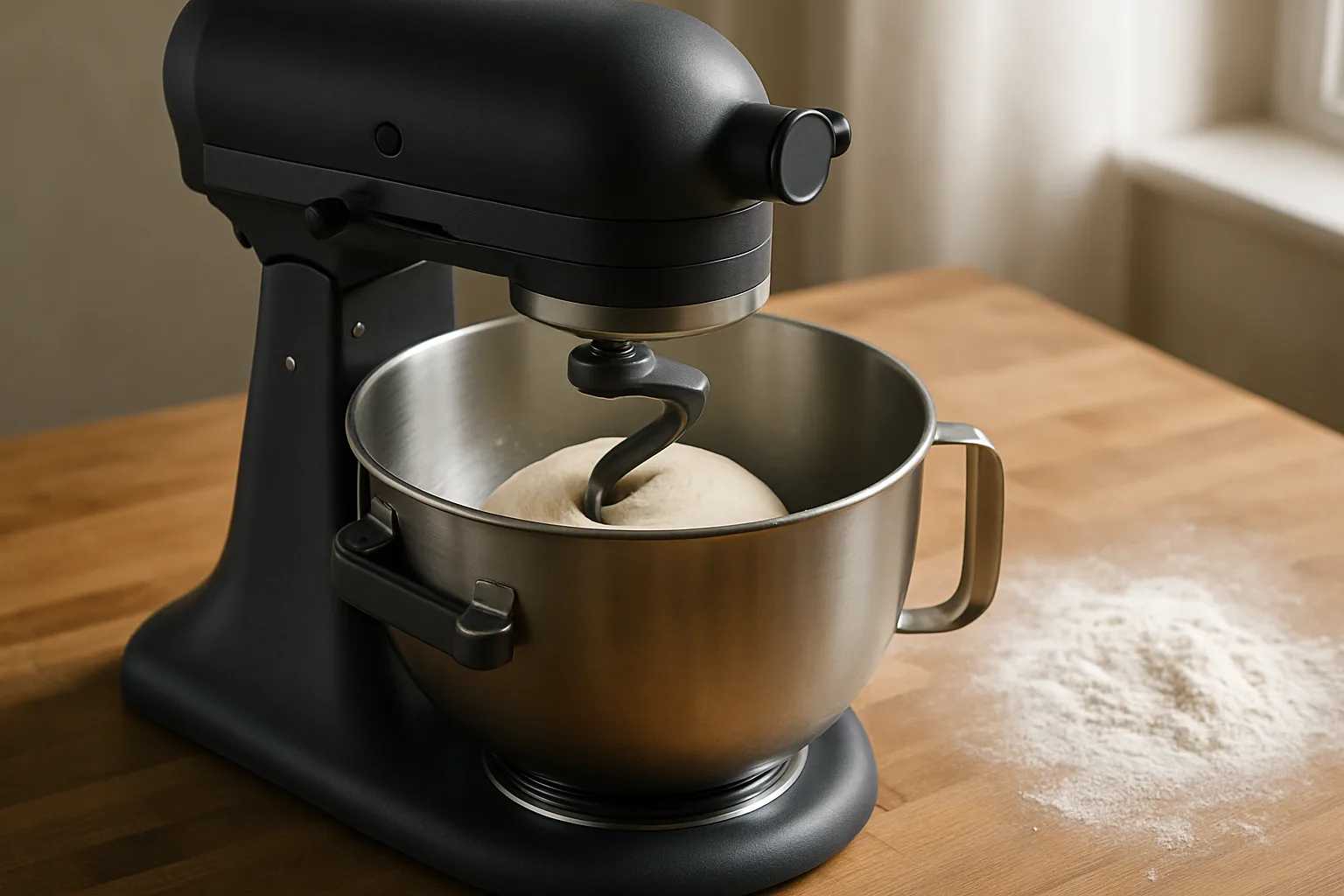
Measure before buying. A tilt-head mixer needs extra clearance above it to open fully, which can be a problem under upper cabinets, while a bowl-lift is taller at rest but does not need to tilt. A heavy mixer is easiest to live with if it stays on the counter; one that has to come out of a low cabinet every time gets used less. Owners reorganizing a kitchen around a baking station can find ideas in this guide to kitchen cabinet organizers, including pull-outs and lift shelves for heavy appliances.
Care tips that extend a mixer's life
- Knead at low speed. KitchenAid manuals specify a low speed for yeast dough; running dough at high speed strains the motor and gears.
- Respect the flour capacity. Each model's manual lists a maximum flour amount for stiff dough. Splitting a large batch is easier on the machine than overloading it.
- Check beater-to-bowl clearance. KitchenAid tilt-head mixers have an adjustment screw for the head height; if the beater hits the bowl or leaves a layer of unmixed ingredients at the bottom, the manual explains the dime test and adjustment.
- Hand wash where the manual says to. Wire whips and some coated parts last longer out of the dishwasher.
- Let it rest. Long kneading sessions on heavy dough can make the motor hot; a break between batches helps.
Who should buy which
- Budget-minded bakers making single batches: Classic, ideally with a flex edge beater.
- Most households, especially gift buyers who care about color: Artisan.
- Bakers who want the best tilt-head experience and stainless accessories: Artisan Plus.
- Regular bread bakers and big-batch cooks: 7-quart bowl-lift.
Kitchen upgrades like a quality mixer are personal purchases, but a well-equipped, organized kitchen also shows well when a home goes on the market; these simple kitchen fixes cover the improvements that matter more to buyers.
Posted by Kristopher Larson
Frequently asked questions
What is the difference between the KitchenAid Classic and Artisan?
The Artisan has a 5-quart polished bowl with a handle, a pouring shield, a 325-watt motor rating and more than 20 colors. The Classic has a 4.5-quart brushed bowl without a handle, a 275-watt rating, no pouring shield and fewer colors. Both are 10-speed tilt-head mixers that use the same attachment hub.
Is the KitchenAid Artisan Plus worth the extra cost?
For bakers keeping a mixer for many years, often yes. It adds dishwasher-safe stainless steel accessories including a double flex edge beater, precision speed control with a half speed for folding, soft start and a built-in LED bowl light. Buyers who only bake occasionally get similar results from an Artisan or Classic.
Do KitchenAid attachments fit every model?
KitchenAid's hub-powered attachments, such as the pasta roller, food grinder and spiralizer, fit the front hub found on its stand mixers. Bowls and beaters are model specific: tilt-head and bowl-lift beaters are not interchangeable, so match accessories to the mixer's type and bowl size.
Should I get a tilt-head or bowl-lift stand mixer?
A tilt-head suits everyday baking and gives easy access to the bowl. A bowl-lift, like the 7-quart KSM70, has a more rigid frame and larger capacity for frequent bread baking and big batches. Check the clearance under upper cabinets, since a tilt-head needs room to open.
Is the KitchenAid wire whip dishwasher safe?
On the Classic and Artisan, the coated beater and dough hook are generally dishwasher safe, but the standard wire whip is meant to be washed by hand. The Artisan Plus ships with stainless steel accessories that are dishwasher safe. Check the care section of the specific model's manual.
What is a flex edge beater and do I need one?
A flex edge beater has a flexible silicone edge that scrapes the bowl as it mixes, reducing how often the mixer must be stopped to scrape down batter. It is an inexpensive upgrade for Classic and Artisan owners; the Artisan Plus and 7-quart bowl-lift include a double flex edge beater.
Keep reading
More from the blog
Pellet Grill Buying Guide: Weber Searwood vs. Traeger Woodridge vs. Pit Boss vs. Camp Chef
Whole-House Surge Protectors: Type 1 vs. Type 2, What They Can't Stop, and Square D vs. Siemens vs. Eaton

Chain vs. Belt vs. Wall-Mount Garage Door Openers: Chamberlain vs. Genie, Plus Smart Retrofits