Kitchen Cabinet Organizers That Earn Their Space: Pull-Outs vs. Lazy Susans vs. Shelf Risers
Which kitchen cabinet organizers add usable space: pull-out drawers, lazy Susans, shelf risers, spice racks and under-sink sliders, plus how to measure.
Most kitchens do not run out of cabinet space. They run out of reachable cabinet space. The back half of a 24-inch-deep base cabinet, the dead corner behind a blind door, the air above a short stack of plates and the tangle around the sink drain all hold things nobody can find. The organizers worth buying are the ones that bring that hidden volume forward or upward, and the ones worth skipping just add plastic to a shelf that was already full.
This guide sorts the main types of cabinet and pantry organizers by the problem each one solves, explains how to measure so the first purchase actually fits, and names specific products with a good track record for each job.
As an Amazon Associate, Best Utah Real Estate earns from qualifying purchases.
Quick verdict: which organizer for which cabinet
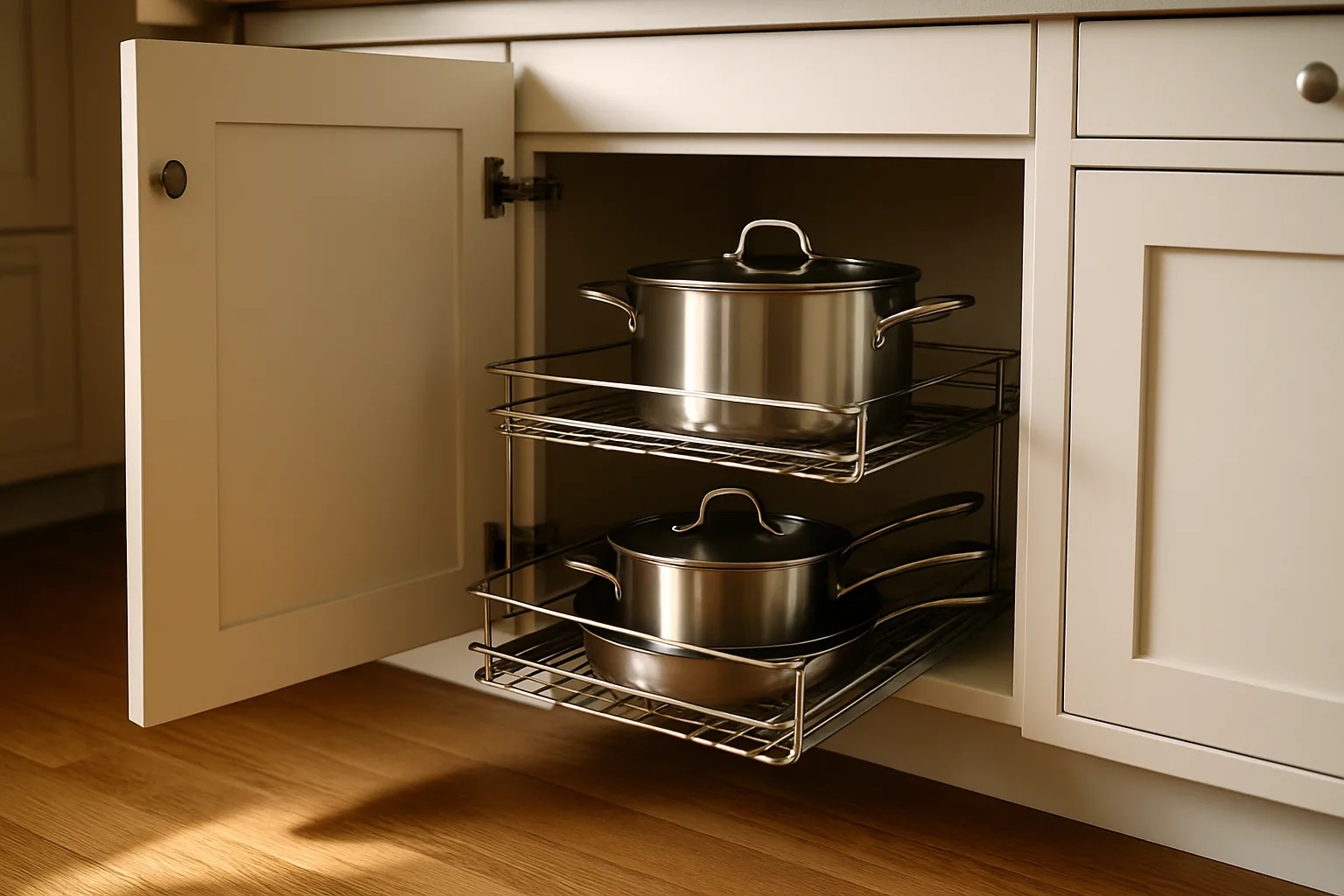
- Deep base cabinet full of pots and small appliances: a screw-mounted pull-out drawer such as the Lynk Professional 2-Tier Pull Out Cabinet Organizer (14" x 21"). It is the single biggest upgrade for a lower cabinet.
- Corner cabinet or a fridge shelf of bottles: a turntable such as the OXO Good Grips Lazy Susan Turntable, 16-Inch.
- Tall upper cabinet with short stacks of dishes: a shelf riser such as the YouCopia Adjustable-Height UpSpace Shelf.
- Spices piled two and three deep: a pull-down tiered drawer such as the YouCopia SpiceStack 24-Bottle Spice Rack Organizer.
- Under the sink: a freestanding two-tier slider such as the Simple Houseware 2 Tier Pull-Out Sliding Drawer, which fits around plumbing without drilling.
- Pantry shelves crowded with half-open bags: square, stackable airtight canisters such as the OXO Good Grips POP 5-Piece Container Set.
Organizer types compared
| Type | Best spot | Install | What it fixes | Main trade-off | Price tier |
|---|---|---|---|---|---|
| Pull-out drawer (screw-mounted) | Base cabinets, pantry floor | Screws into cabinet floor | Items lost at the back | Needs exact measuring; uses some width | Mid-range to premium |
| Freestanding sliding basket | Under sink, rentals | None | Clutter around pipes | Lighter duty; can rack under heavy loads | Budget |
| Lazy Susan turntable | Corner cabinets, fridge, pantry | None | Bottles and jars hidden behind each other | Round shape wastes square corners | Budget |
| Shelf riser | Upper cabinets | None | Unused height above short stacks | Reduces clearance for tall items | Budget |
| Tiered or pull-down spice rack | Upper cabinet, pantry | None | Labels hidden in a jumble | Fits standard jar sizes only | Budget to mid-range |
| Airtight canisters | Pantry shelves | None | Bags, stale food, wasted space between round packages | Refilling takes a few minutes | Mid-range |
Measure first: the step most returns come from
Cabinet organizers fail for one reason more than any other: they are bought to fit the cabinet box rather than the opening. On a framed cabinet, the face frame overhangs the interior by a fraction of an inch on each side, and the door hinges can stick farther into the opening than either. A drawer that fits the interior perfectly can still hit a hinge on the way in.
A reliable routine:
- Open the door fully and measure the narrowest horizontal gap, usually between the hinge side and the far face frame. Measure top, middle and bottom and keep the smallest number.
- Measure depth from the back of the face frame to the back wall, then subtract an inch or so for clearance. Most pull-outs are sold in 18-inch and 21-inch depths; standard base cabinets are about 24 inches deep, but older or shallow cabinets may only take the shorter size.
- Measure clear height from the cabinet floor to the underside of any fixed shelf, and note the height of the tallest item that will go in.
- Under the sink, measure the space on each side of the drain trap and disposal, and check the height under the trap. Many sink bases only have room for a narrow unit on one side.
Lynk notes that its under-sink pull-out needs at least a 12-inch cabinet opening, a useful reminder that each model publishes its own minimum. Check the listing's minimum opening against the smallest number from step one.
Pull-outs: the biggest gain in a base cabinet
A pull-out drawer turns a cave into a drawer. Instead of kneeling and reaching past the front row, the whole contents slide forward into view. For base cabinets that hold pots, mixing bowls, baking sheets or small appliances, nothing else comes close.
There are two broad builds. Screw-mounted units attach a track to the cabinet floor and carry heavier loads with smoother glides. Lynk's two-tier chrome models use ball-bearing glides and an "easy mount" template that positions the four mounting screws, and the company backs them with a lifetime limited warranty. The 14-inch-wide, 21-inch-deep two-tier size is a common fit for a standard 15- to 18-inch base cabinet. Freestanding wire baskets with plastic runners cost less and install in seconds, but they tend to flex under a full load of cookware.
A few trade-offs are worth knowing before buying:
- A pull-out gives up some width to its frame and runners, so a cabinet that held four stacked pots across may hold three in the drawer. The gain is that all three are reachable.
- Two-tier units split the height. That is ideal for lids, small pans and food storage, but a stockpot or stand mixer usually needs a single-tier drawer.
- Screw holes in the cabinet floor are small and easy to hide, but renters may prefer a freestanding unit.

Lazy Susans: corners, bottles and the fridge
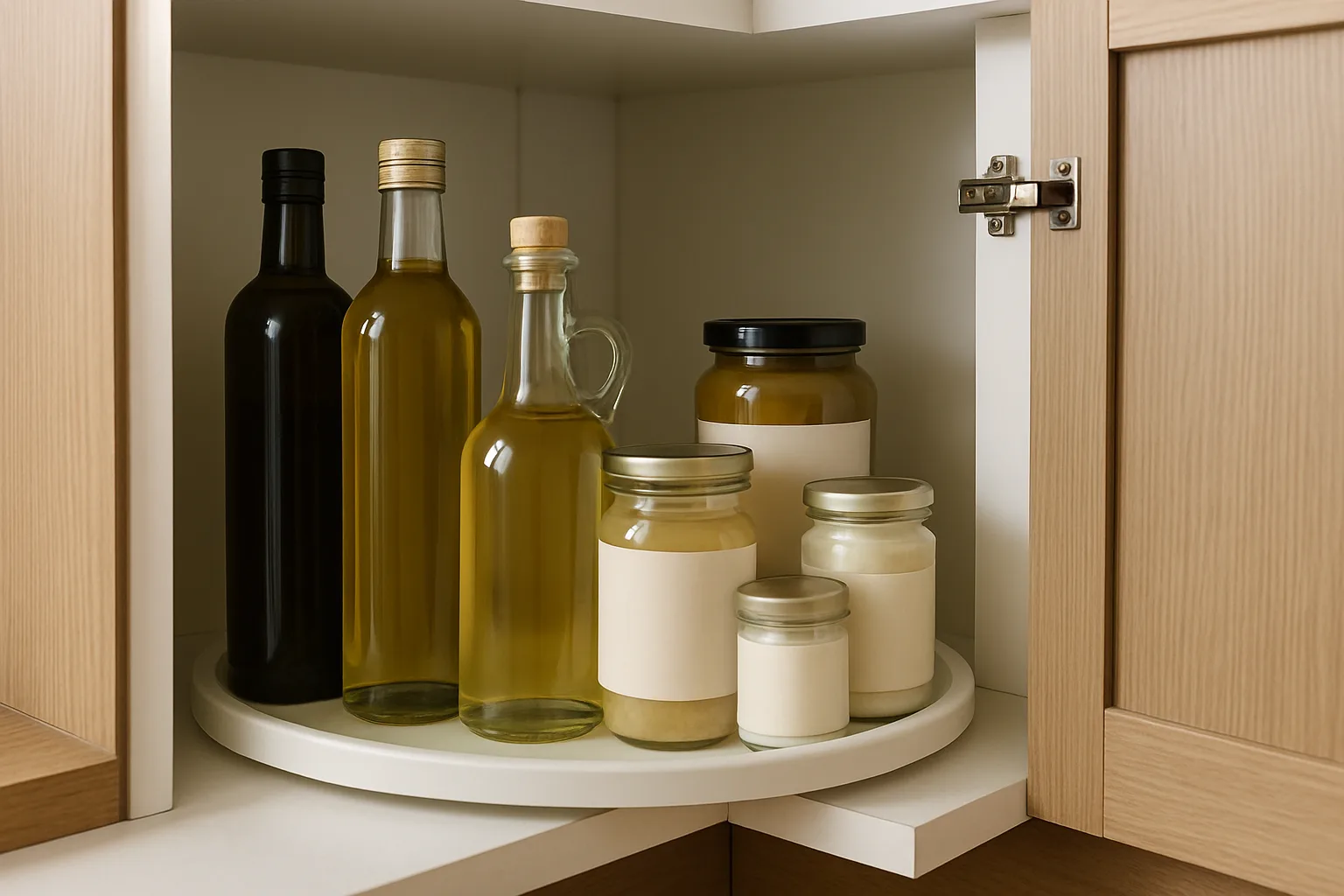
A turntable earns its place wherever round containers hide behind other round containers: oils and vinegars, condiment jars, vitamins, cleaning sprays. A quarter turn brings the back row forward without moving anything.
The OXO 16-inch turntable is a long-standing pick because of three details: a raised ledge that keeps bottles from sliding off when spun, a soft non-slip surface and a wider base that keeps the tray from rubbing cabinet walls as it turns. OXO also sells an 11-inch version for narrower shelves and fridge doors.
Sizing is simple: measure the narrower of the shelf depth and the door opening, then subtract an inch. A 16-inch tray needs a shelf at least 17 inches deep and wide, which suits most lower corner cabinets but few upper cabinets, since uppers are usually about 12 inches deep. In a blind corner, where part of the shelf sits behind a fixed panel, a turntable is the low-cost fix; a full swing-out corner system is the premium one.
Shelf risers: reclaiming the air in upper cabinets
Upper cabinet shelves are often spaced for the tallest glass, which leaves several inches of air above stacks of plates, bowls and mugs. A riser adds a second level in that gap. A stack of salad plates goes on top and dinner plates stay underneath, and both stay reachable.
Wire risers are the budget option and work well for dishes. The YouCopia UpSpace Shelf adds adjustable legs, so the lower level can be set to the height of what sits under it, which matters when the shelf above is close. Its listed footprint is 9 inches deep by 16 inches wide, a good fit for a 12-inch-deep upper cabinet.
Before buying a riser, check whether the cabinet shelf itself can move. Many cabinets have a column of shelf-pin holes on each side, and simply adding a second shelf or lowering the existing one does the same job with no organizer at all.
Spice storage: see every label
Spices are the classic case of a small item lost in a crowd. Tiered step shelves lift each row above the one in front, and pull-down drawer units go further: each drawer slides out and tips down so every lid faces up. The YouCopia SpiceStack holds 24 standard bottles in three pull-down drawers, needs no tools and comes with printed and blank lid labels. Before buying any spice organizer, check the bottle size it is built for; tall or oversized warehouse-club jars often will not fit.
Under the sink: plumbing, moisture and safety
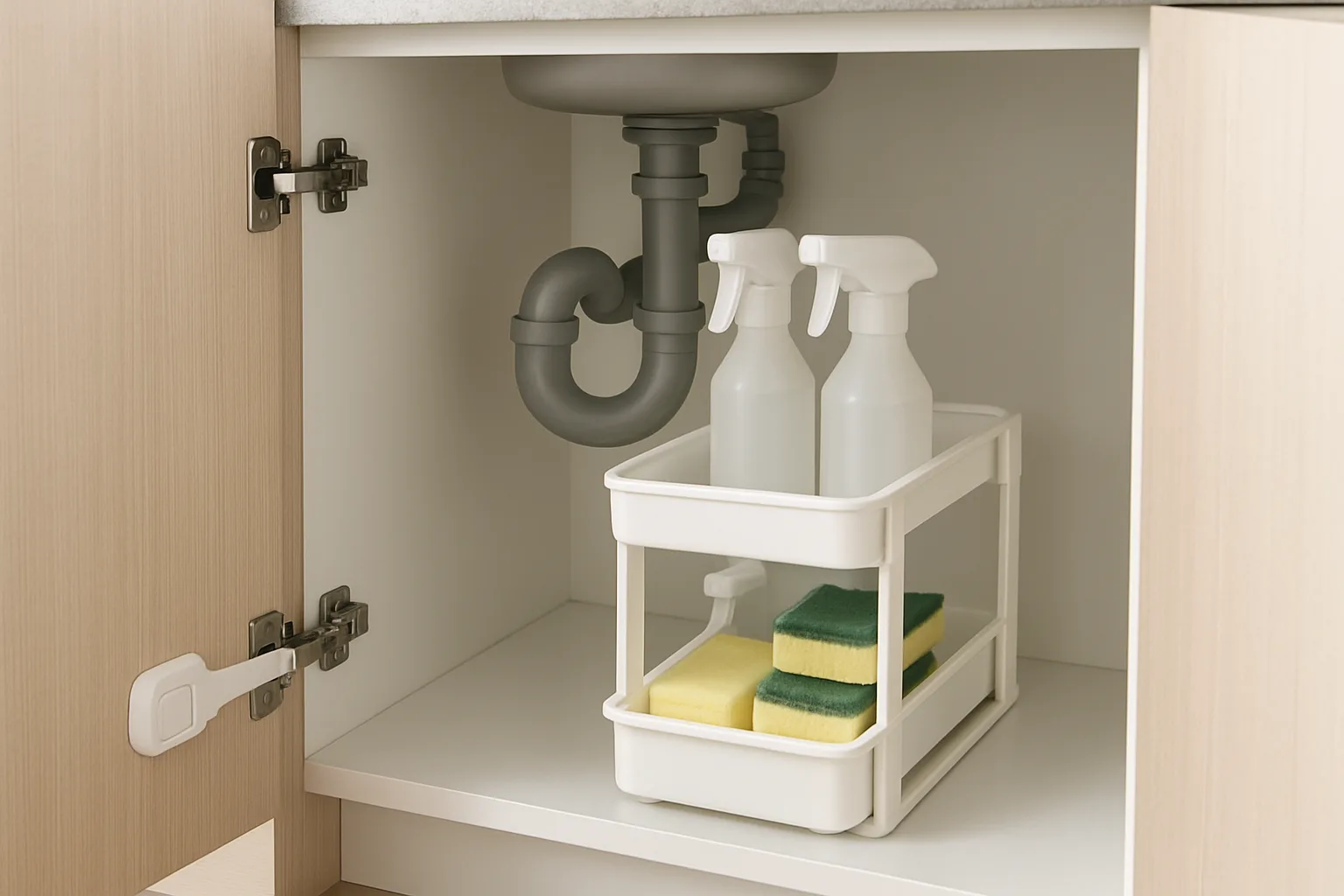
The sink base is the hardest cabinet to organize because the trap, supply lines and often a disposal or filter occupy the middle. A two-tier sliding unit on one or both sides of the plumbing usually works best. The Simple Houseware 2 Tier sliding organizer is freestanding plastic with perforated trays that let drips drain and air move, and it installs without tools. Plastic is a sensible material here because the occasional leak will not rust it.
Two habits make the sink base safer and cheaper to maintain:
- Keep the area under the trap clear so a slow drip is easy to see. A cheap tray or mat under the plumbing catches small leaks before they swell the cabinet floor.
- Lock up cleaners if children visit. The U.S. Consumer Product Safety Commission's childproofing guide recommends safety latches or locks on cabinets that hold household cleaners and medicines, and notes that child-resistant packaging alone is not childproof. Keep chemicals in their original containers rather than decanting them into unlabeled bottles.
Pantry containers: square beats round
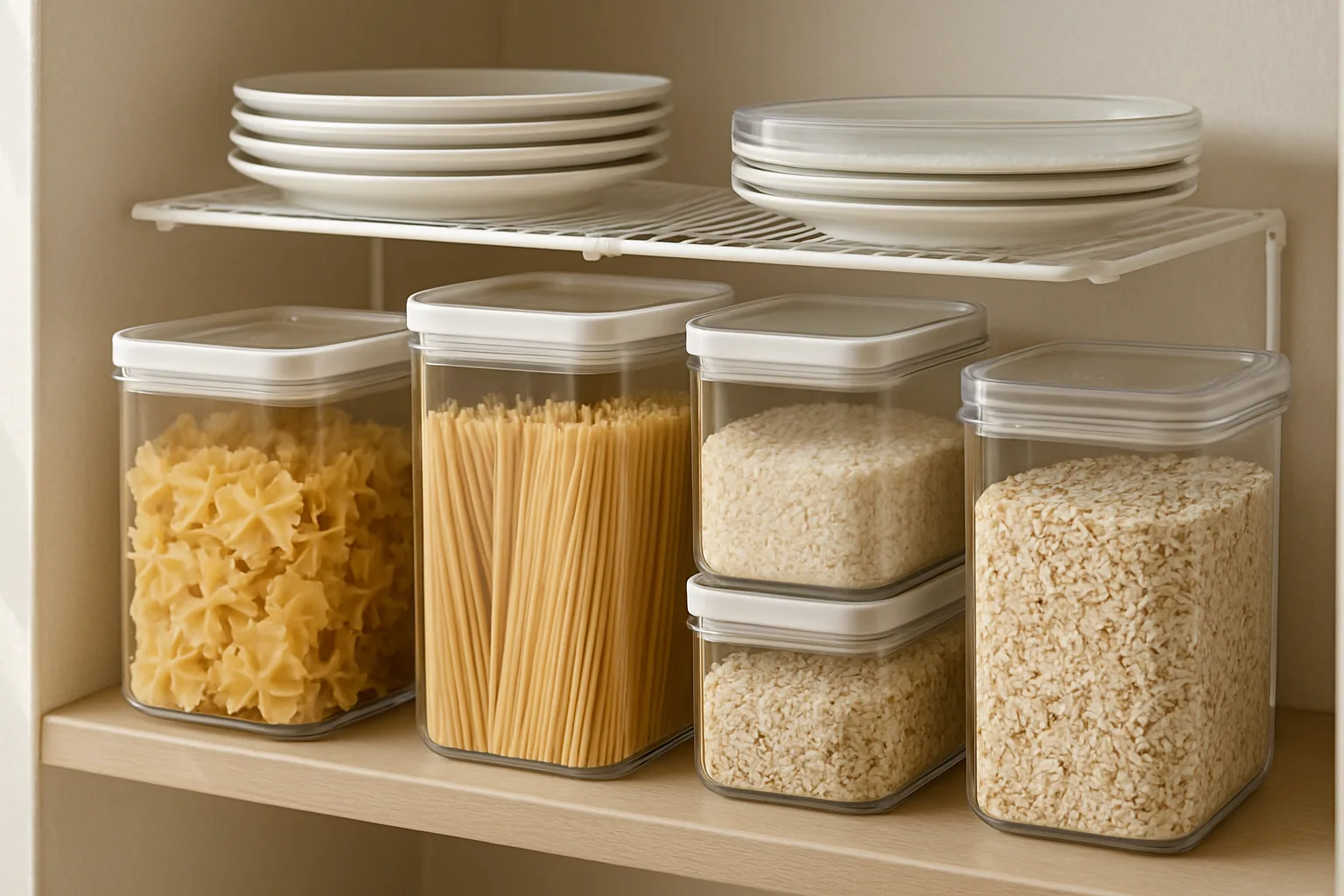
Decanting dry goods into containers is not just for looks. Square or rectangular canisters pack against each other with no gaps, stack safely and show at a glance when something is running low. Airtight lids keep crackers and cereal from going stale and help keep pantry pests out of flour and grains.
The OXO POP containers are a common recommendation for a reason: a push-button lid seals and opens with one hand, the square footprint stacks, and the line is sold in many sizes that share the same footprint, so a set can grow over time. For a budget approach, start with the three or four foods the household goes through fastest rather than decanting the entire pantry.
Organizers that usually are not worth it
- Single-use gadgets sized for one brand of bottle or pod. When the product changes, the organizer becomes clutter.
- Bins without a plan. A row of matching bins in a deep cabinet still leaves the back bin hard to reach unless the bins themselves slide out like drawers.
- Over-door racks on lightweight doors loaded with heavy jars. The extra weight strains hinges over time.
- Buying before purging. Expired spices, duplicate gadgets and lids with no matching container take up more space than any organizer can recover.
A sensible order of operations
- Empty one cabinet, toss expired food and duplicates, and group what is left by use.
- Decide what the cabinet's job is (cookware, baking, cleaning) before choosing a product.
- Measure the opening, depth and height as described above.
- Start with the cabinet used most often. A single pull-out in the pots-and-pans base usually makes more daily difference than a dozen small bins.
Organized storage also matters when a home goes on the market. Buyers open cabinets during showings, and tidy, well-lit storage reads as more space. For related projects, see this guide to under-cabinet lighting options, these simple kitchen fixes that boost home value and a budget plan for small closet organization.
Posted by Kristopher Larson
Frequently asked questions
What is the best organizer for a deep base cabinet?
A pull-out drawer that mounts to the cabinet floor is usually the most useful upgrade, because it brings everything at the back of a 24-inch-deep cabinet forward. Screw-mounted models with ball-bearing glides handle heavy cookware better than freestanding baskets with plastic runners.
How do I measure a cabinet for a pull-out organizer?
Open the door fully and measure the narrowest point of the opening, usually between the hinge and the face frame, at the top, middle and bottom. Keep the smallest number, then measure depth from the back of the face frame to the back wall and the clear height under any shelf. Compare those numbers to the minimum opening listed for the specific model.
What size lazy Susan fits a corner cabinet?
Measure the shelf depth and the door opening and use the smaller number minus about an inch. A 16-inch turntable suits most lower corner cabinets, while 11- to 12-inch sizes fit upper cabinets, which are usually about 12 inches deep, and refrigerator shelves.
How should the cabinet under a kitchen sink be organized?
Use narrow two-tier sliding organizers on one or both sides of the drain trap, choose plastic or coated materials that will not rust, and keep the area directly under the plumbing clear so leaks are easy to spot. If young children visit, add safety latches, since the CPSC notes child-resistant packaging alone is not childproof.
Are shelf risers worth it in kitchen cabinets?
They are worth it in upper cabinets where short stacks of plates, bowls or mugs leave several inches of empty space overhead. Before buying one, check whether the cabinet has extra shelf-pin holes, because adding or lowering a shelf can do the same job for free.
Are airtight pantry containers worth the cost?
Square, stackable airtight containers waste less shelf space than round packages, keep crackers and cereal fresh longer and help keep pantry pests out of flour and grains. Starting with the few foods a household uses most keeps the cost down.
Keep reading
More from the blog
How to Measure Home Electricity Use: Kill A Watt vs. Smart Plugs vs. Emporia Vue vs. Sense
Chain vs. Belt vs. Wall-Mount Garage Door Openers: Chamberlain vs. Genie, Plus Smart Retrofits
Propane vs. Electric Patio Heaters: Mushroom vs. Infrared vs. Tabletop, and How Much Heat a Patio Needs