Chain vs. Belt vs. Wall-Mount Garage Door Openers: Chamberlain vs. Genie, Plus Smart Retrofits
Chain, belt or wall-mount? How to pick a garage door opener, Chamberlain myQ vs. Genie Aladdin Connect, battery backup and smart retrofits for old openers.
A garage door opener gets used several times a day for 10 to 15 years, and the biggest differences between models are not the brand logo but the drive system, the motor type, the smart-home app and whether the opener fits the door hardware already in place. Many homeowners with a working opener don't need a new one at all: a small retrofit controller adds phone control for a fraction of the cost.
As an Amazon Associate, Best Utah Real Estate earns from qualifying purchases.
Quick verdict
- Quiet opener for an attached garage or a bedroom above it: a DC belt drive. The Genie StealthDrive Connect 7155-TKV pairs a steel-reinforced belt with battery backup and an app that works with Alexa, Google Assistant and SmartThings.
- Staying in the Chamberlain and myQ world: the Chamberlain B4310, a 3/4 HP DC belt drive with battery backup, myQ Wi-Fi and a built-in camera.
- High ceilings, storage racks or a car lift overhead: a wall-mount opener such as the Chamberlain RJO20, which frees the ceiling but only works with torsion-spring doors.
- Opener works fine, just wants phone control: skip the new opener and add the myQ Smart Garage Control, or the Meross smart garage controller for Apple Home users.
Chain vs. belt vs. wall-mount: how the drive types differ
Chain drive
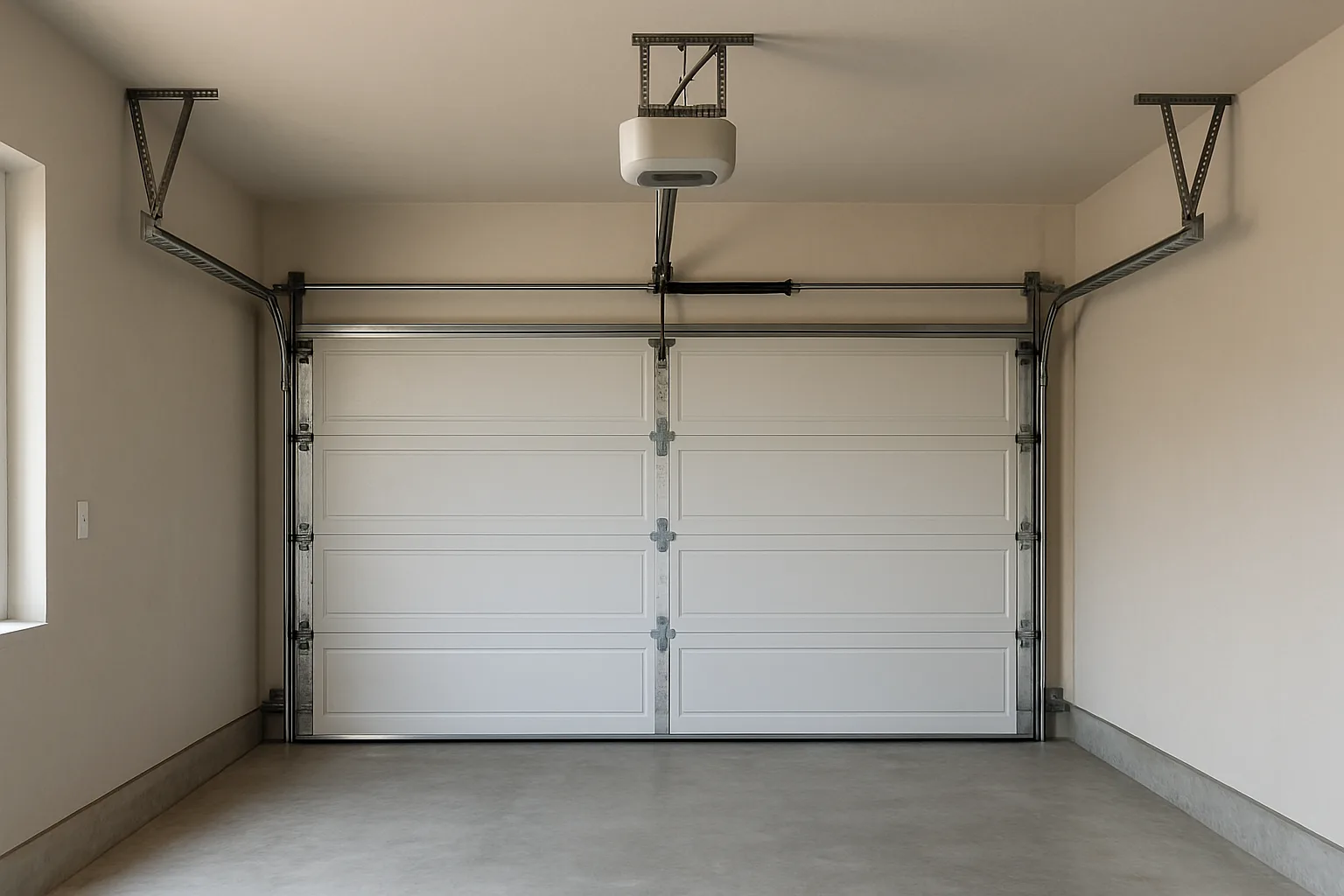
A metal chain pulls a trolley along a rail above the door. Chain drives are the least expensive and the most tolerant of heavy doors, which is why installers still favor them for solid wood or oversized doors. The downside is noise and vibration: the clank carries into rooms above or beside the garage. Modern chain drives with DC motors are much quieter than older AC units, but a belt is still quieter.
Belt drive
A steel-reinforced rubber belt replaces the chain. It runs smoothly and quietly, needs no lubrication, and is the default choice for attached garages, especially with a bedroom or living space overhead. Belt drives cost a little more and can be a slightly weaker choice for very heavy doors, so check the opener's rated door weight.
Wall-mount (jackshaft)
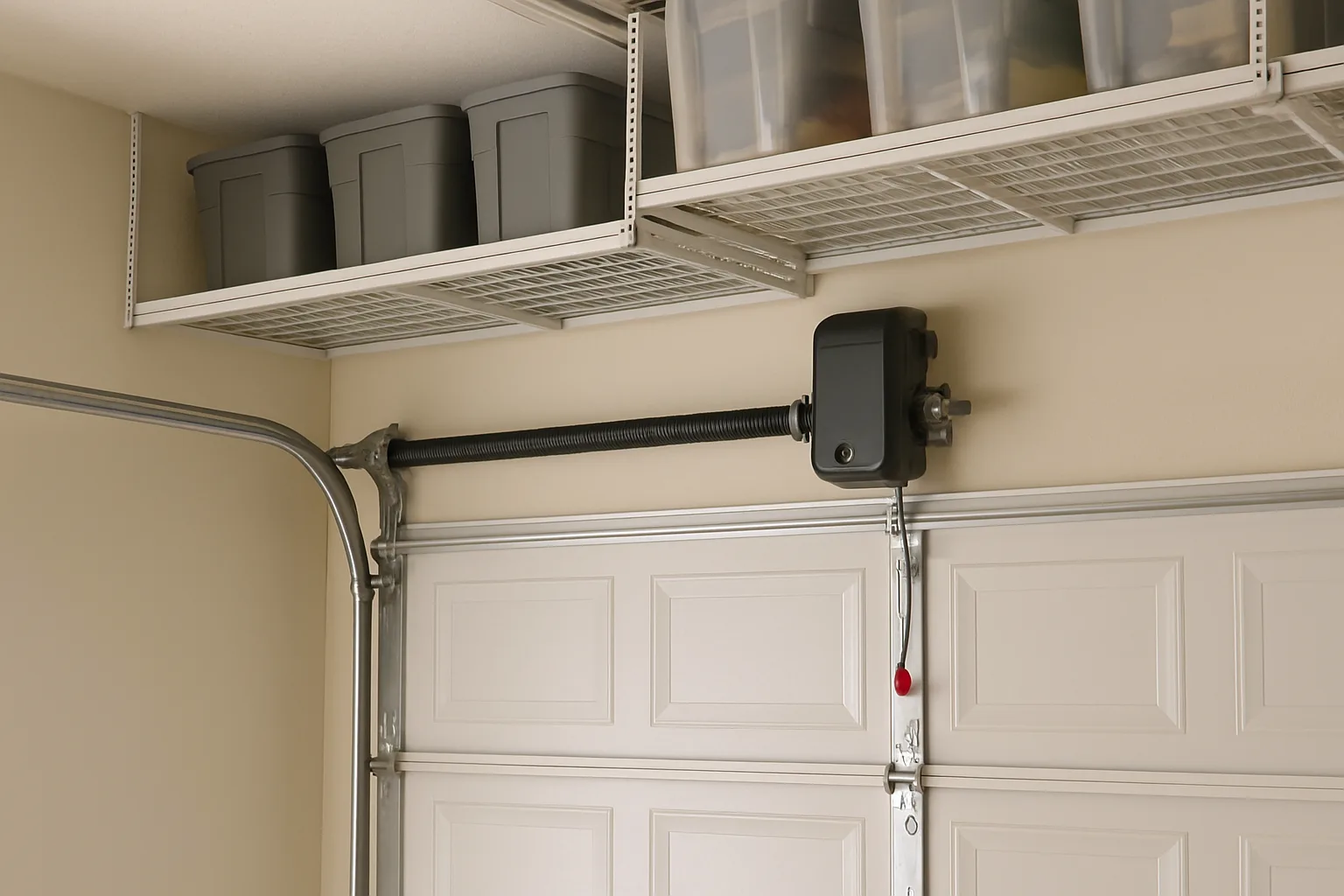
A wall-mount opener sits on the wall next to the door and turns the torsion bar directly, with no rail or trolley on the ceiling. That frees overhead space for storage racks, a car lift or a high-lift track, and it is very quiet. It has strict requirements. Chamberlain says the RJO20 works only on sectional doors with torsion spring assemblies, not extension springs, and not with reverse-wound drums. Doors with standard-lift track may need extra hardware, so measure the headroom, track and spring system before buying.
What else matters: motor, horsepower and battery backup
- DC motors start and stop softly, run quieter, and make battery backup practical. Most mid-range and premium openers now use them.
- "Horsepower" ratings are not apples to apples. Brands label DC motors with equivalent ratings such as HPc, so a 1 1/4 HPc DC opener and a 3/4 HP opener from another brand can't be compared on the number alone. The rated door size and weight are more useful; Genie, for instance, lists the 7155-TKV for sectional doors up to 7 feet high and 500 pounds, with an extension kit for 8-foot doors.
- Battery backup keeps the door working during a power outage. California now requires it on openers sold or installed in homes there, a rule passed after wildfire evacuations in which people had trouble getting cars out of garages without power. It is worth having anywhere outages are common.
- Lighting and accessories. Built-in LED lights, wall controls, keypads and remotes vary. Chamberlain notes that most older accessories are not compatible with its newer openers, so plan on replacing old remotes and keypads.
Spec comparison
| Product | Shop | Type | Drive / motor | Battery backup | App and smart-home support | Best for |
|---|---|---|---|---|---|---|
| Genie StealthDrive Connect 7155-TKV |  Buy on Amazon Buy on Amazon
| Opener | Steel-reinforced belt, 1 1/4 HPc DC | Yes, built in | Aladdin Connect; Alexa, Google Assistant, SmartThings | Quiet attached garages, mixed smart homes |
| Chamberlain B4310 |  Buy on Amazon Buy on Amazon
| Opener | Reinforced belt, 3/4 HP DC | Yes | myQ app with built-in 130-degree camera | Households already using myQ |
| Chamberlain RJO20 |  Buy on Amazon Buy on Amazon
| Opener | Wall-mount direct drive | Check model (RJO70 adds it) | myQ app | Free ceilings, torsion-spring doors |
| myQ Smart Garage Control |  Buy on Amazon Buy on Amazon
| Retrofit | Uses existing opener | N/A | myQ app | Most post-1993 openers with photo eyes |
| Meross smart garage controller (HomeKit) |  Buy on Amazon Buy on Amazon
| Retrofit | Uses existing opener | N/A | Apple Home, Alexa, Google Assistant, SmartThings | Apple Home users; no subscription |
The openers in detail
Genie StealthDrive Connect 7155-TKV
Genie StealthDrive Connect 7155-TKVCheck today’s price on AmazonBuy on Amazon →
The 7155-TKV combines a 1 1/4 HPc DC motor, a steel-reinforced belt and integrated battery backup. Its built-in Aladdin Connect Wi-Fi lets owners open, close and monitor the door from a phone, and Genie lists support for Alexa, Google Assistant, SmartThings and Amazon Key in-garage delivery. That broad compatibility is the main reason to pick Genie over Chamberlain for a home that already runs on a voice assistant or hub. Installation instructions are available as interactive 3D steps through the BILT app. Genie backs the motor and belt with limited lifetime warranties and parts for five years; confirm current terms on the listing.
Chamberlain B4310
Chamberlain B4310Check today’s price on AmazonBuy on Amazon →
Chamberlain is the largest retail opener brand, and its professional line is sold under the LiftMaster name. The B4310 is a quiet reinforced-belt drive with a 3/4 HP DC motor, battery backup and myQ Wi-Fi, plus a 130-degree wide-angle camera that streams the garage interior to the myQ app. It ships with two remotes, a wall control and safety sensors; its lighting uses two LED bulbs sold separately. The myQ app is polished, but Chamberlain has kept tight control over third-party access, and its list of voice-assistant and smart-home links is shorter than Genie's. Check the current myQ integration list before buying if Google Home, Apple Home or a hub matters.
Chamberlain RJO20 wall-mount
Chamberlain RJO20 Wall-MountCheck today’s price on AmazonBuy on Amazon →
The RJO20 mounts beside the door and drives the torsion bar, leaving the ceiling clear. It is quiet and suited to garages where overhead space is valuable. Chamberlain's pre-purchase checklist limits it to sectional doors with torsion springs, rules out extension springs and reverse-wound drums, and requires an accessible 120-volt outlet near the installation spot. The RJO70 version adds battery backup and LED lighting. Because the fit is so specific, many homeowners have a garage door technician confirm compatibility first.
Smart retrofits: phone control without a new opener
If the existing opener runs well and has working safety sensors, a retrofit controller adds remote open, close, alerts and schedules for much less than a new opener.
myQ Smart Garage Control
myQ Smart Garage ControlCheck today’s price on AmazonBuy on Amazon →
The myQ hub and door sensor link an existing opener to the myQ app. Chamberlain says it works with most major-brand openers made after 1993 that use photo-eye safety sensors, with exceptions for some sensor designs and for certain Chamberlain-family openers with a yellow learn button. It needs a 2.4 GHz Wi-Fi network within about 50 feet and a sectional door. Features include remote control, open-door alerts, scheduled closing and guest access.
Meross smart garage controller for Apple Home
The Meross HomeKit garage controller wires to the opener's wall-button terminals and adds control through Apple Home and Siri, as well as Alexa, Google Assistant and SmartThings, with no subscription. The main compatibility catch is Chamberlain's newest Security+ 3.0 openers, which Meross lists as unsupported; Security+ 1.0 and 2.0 openers can work, sometimes with an adapter. It also requires 2.4 GHz Wi-Fi.
Safety: the monthly reversal test
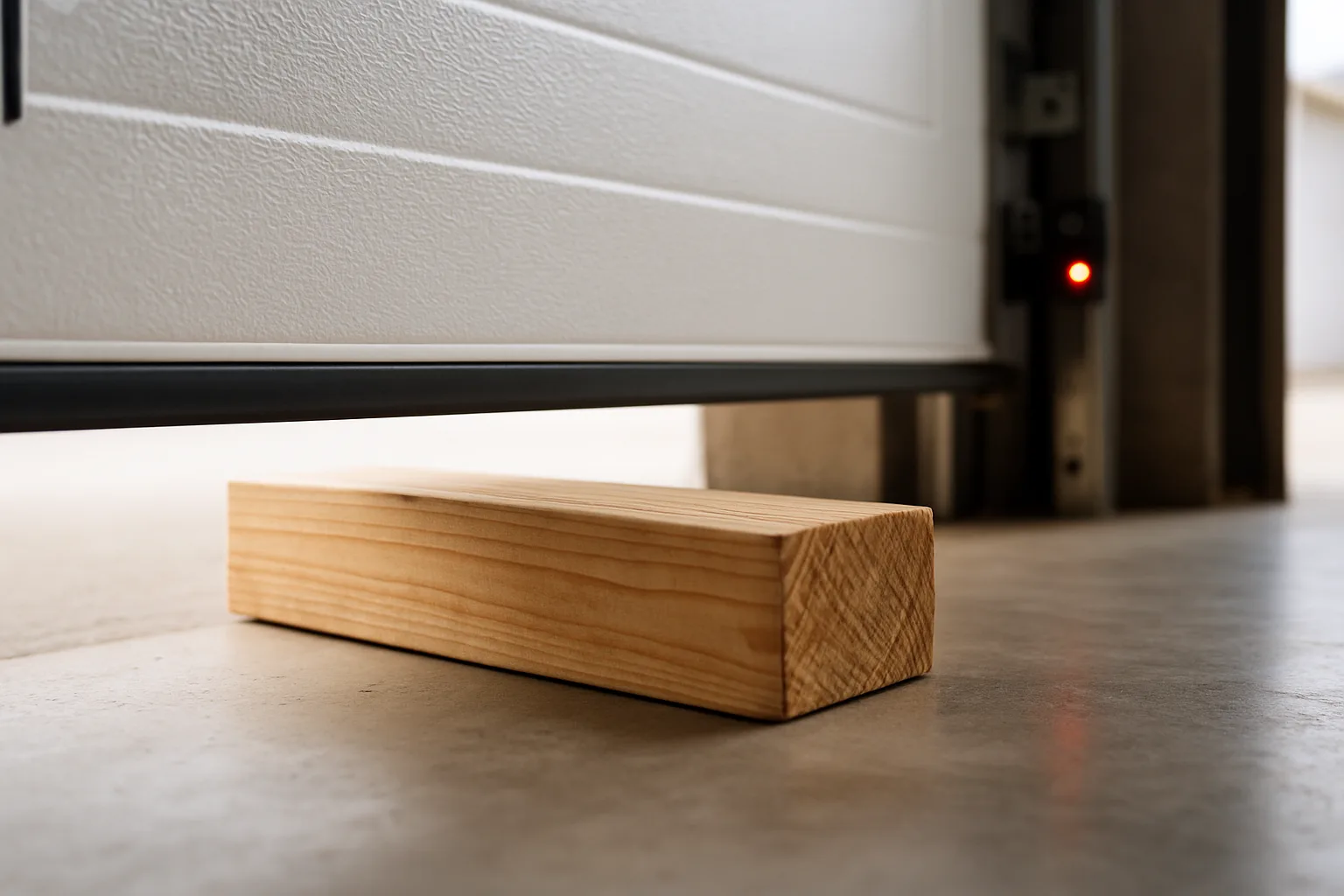
Federal rules incorporate the UL 325 standard and have required automatic reversing and external entrapment protection, usually photo-eye sensors, on residential openers since the early 1990s. The CPSC's garage door opener safety guidance recommends a monthly check: lay a 2x4 flat on the floor in the door's path and close the door. If it does not reverse after touching the board, stop using the opener until it is adjusted or replaced. Also confirm the photo eyes sit a few inches above the floor and reverse the door when the beam is broken. Any opener installed on a door with broken springs or poor balance will wear out fast, so have the door itself checked when replacing an old unit.
Which opener should you buy?
- Heavy wood or oversized door, detached garage: a DC chain drive rated for the door's weight.
- Attached garage, quiet matters: a DC belt drive with battery backup.
- Ceiling space matters and the door has torsion springs: a wall-mount opener, after confirming the hardware fits.
- Mixed smart home with Alexa, Google or SmartThings: Genie's Aladdin Connect line.
- Apple Home: a HomeKit retrofit controller on a compatible opener.
- Opener is under 10 years old and works well: a retrofit controller, not a new opener.
The garage door itself does as much for curb appeal and daily use as the opener; see this guide to choosing a garage door for materials and insulation. Smart openers pair well with smart locks on the house door, and anyone freeing up ceiling space with a wall-mount opener can borrow ideas from these garage storage and layout ideas.
Bottom line
Choose the drive system for the door and the room above it, a DC motor with battery backup for daily comfort, and the app ecosystem the household already uses. Genie's StealthDrive Connect is the most flexible pick for mixed smart homes, Chamberlain's B4310 suits myQ households, and the RJO20 is the right answer only when the door has torsion springs and the ceiling space is worth the extra cost. For an opener that still works, a retrofit controller is the cheapest upgrade.
Posted by Kristopher Larson
Frequently asked questions
Is a belt drive or chain drive garage door opener better?
A belt drive is quieter and smoother, which makes it the better choice for attached garages and rooms above the garage. A chain drive costs less and handles very heavy doors well, so it suits detached garages and solid wood or oversized doors. With modern DC motors, both are far quieter than older AC chain openers.
Can a wall-mount garage door opener be installed on any door?
No. Wall-mount (jackshaft) openers turn the torsion bar directly, so they need a sectional door with torsion springs. Chamberlain's RJO20, for example, is not compatible with extension springs or reverse-wound drums, and doors with standard-lift track may need extra hardware. A garage door technician can confirm the fit before purchase.
What horsepower garage door opener is needed?
For most single-layer or insulated steel doors, a 1/2 to 3/4 HP opener, or the DC-motor equivalent, is enough. Because brands rate DC motors with equivalent figures such as HPc, comparing the rated door height and weight is more reliable than comparing horsepower numbers across brands. Heavy wood or oversized doors call for a higher rating, often on a chain drive.
Can an old garage door opener be made smart?
Usually, yes. Retrofit controllers such as the myQ Smart Garage Control work with most major-brand openers made after 1993 that have photo-eye safety sensors, and Apple Home users can use a HomeKit controller from brands like Meross. Check compatibility first: some newer Chamberlain openers using Security+ 3.0 are not supported by third-party controllers, and most retrofits need 2.4 GHz Wi-Fi.
Do garage door openers need battery backup?
It is optional in most states but required in California, which requires battery backup on openers sold or installed in homes there. Battery backup lets the door open and close during a power outage, which matters for evacuations and for homes where the garage is the main entry.
How do you test a garage door opener's safety reverse?
The CPSC recommends a monthly test: lay a 2x4 flat on the floor in the door's path and close the door. The door should reverse after it touches the board. Also wave an object through the photo-eye beam while the door closes; it should stop and reverse. If either test fails, stop using the opener until it is adjusted, repaired or replaced.
Keep reading
More from the blog
Pellet Grill Buying Guide: Weber Searwood vs. Traeger Woodridge vs. Pit Boss vs. Camp Chef
Whole-House Surge Protectors: Type 1 vs. Type 2, What They Can't Stop, and Square D vs. Siemens vs. Eaton
How to Measure Home Electricity Use: Kill A Watt vs. Smart Plugs vs. Emporia Vue vs. Sense