Pellet Grill Buying Guide: Weber Searwood vs. Traeger Woodridge vs. Pit Boss vs. Camp Chef
Which pellet grill smokes and sears? Weber Searwood XL 600, Traeger Woodridge Pro, Pit Boss 850 Navigator and Camp Chef Woodwind Pro compared by specs.
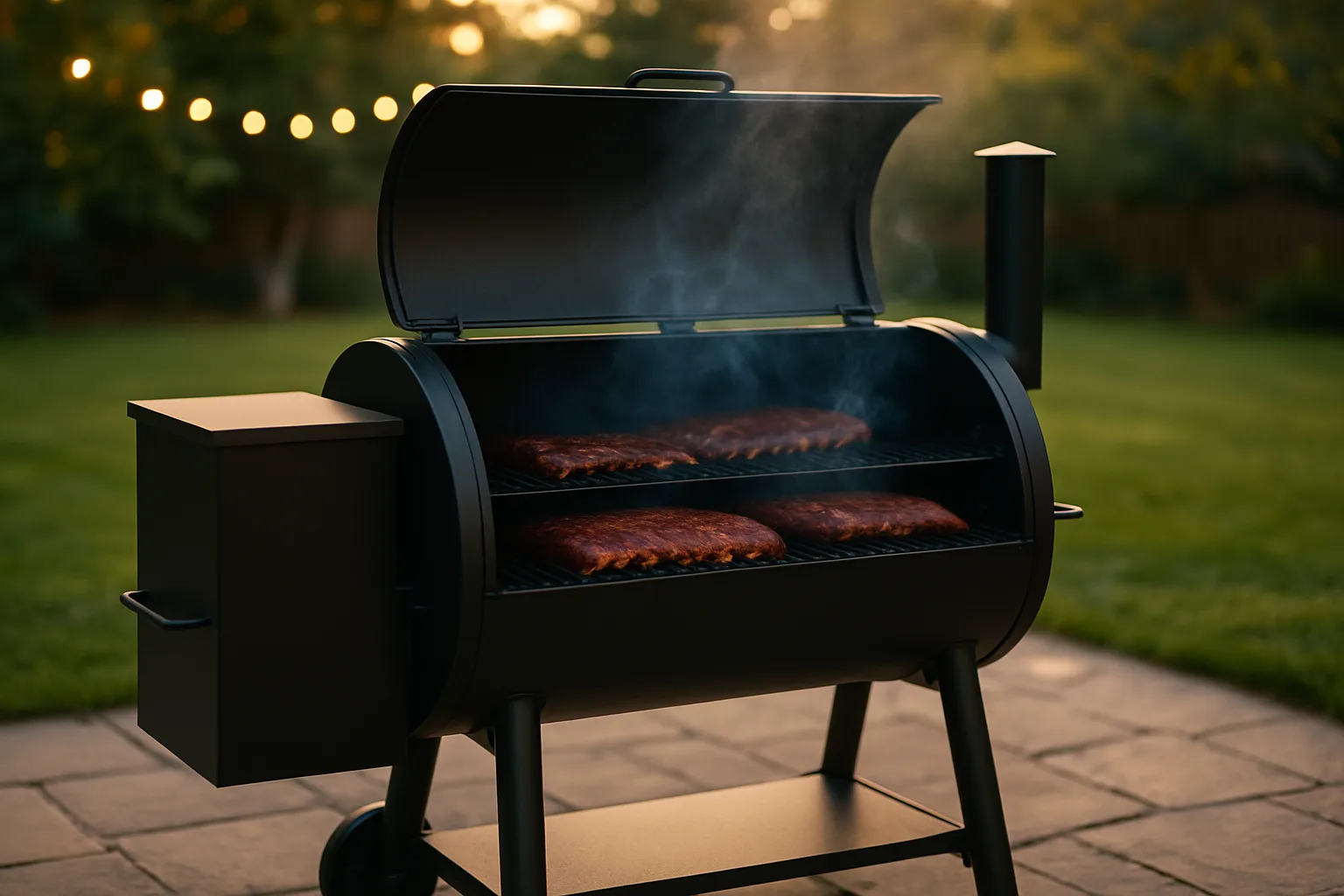
Pellet grills made low-and-slow smoking about as hands-off as baking: fill the hopper with hardwood pellets, set a temperature, and a fan-fed firepot holds it for hours. The trade-off has always been searing. Most pellet grills bury the fire under a steel diffuser, which spreads heat evenly but leaves steaks without a crust. The models below split along exactly that line, so the right choice depends on whether the grill will mostly smoke, mostly grill, or replace a gas grill entirely.
As an Amazon Associate, Best Utah Real Estate earns from qualifying purchases.
Quick verdict
- One grill that smokes and sears: Weber Searwood XL 600. Its open-flame design runs from 180°F to 600°F, and optional griddle and rotisserie inserts make it the most versatile pick.
- Set-and-forget barbecue with the most polished app: Traeger Woodridge Pro, with 970 square inches of cooking space, Super Smoke mode and WiFIRE app control.
- Most grill for the money: Pit Boss 850 Navigator, 932 square inches, a 30-pound hopper and a slide-open flame broiler for direct-flame grilling.
- Most smoke flavor: Camp Chef's Woodwind Pro 24, whose Smoke Box burns wood chunks or charcoal alongside the pellets. Check current stock at Camp Chef and home centers.
How a pellet grill works, and why searing is the hard part
An auger feeds compressed hardwood pellets from a hopper into a small firepot, where a hot rod lights them and a fan supplies air. A controller reads a temperature probe in the cook chamber and adjusts the auger and fan to hold the set point. Most current models use PID-style controllers that make small, constant corrections, which keeps temperature swings narrow.
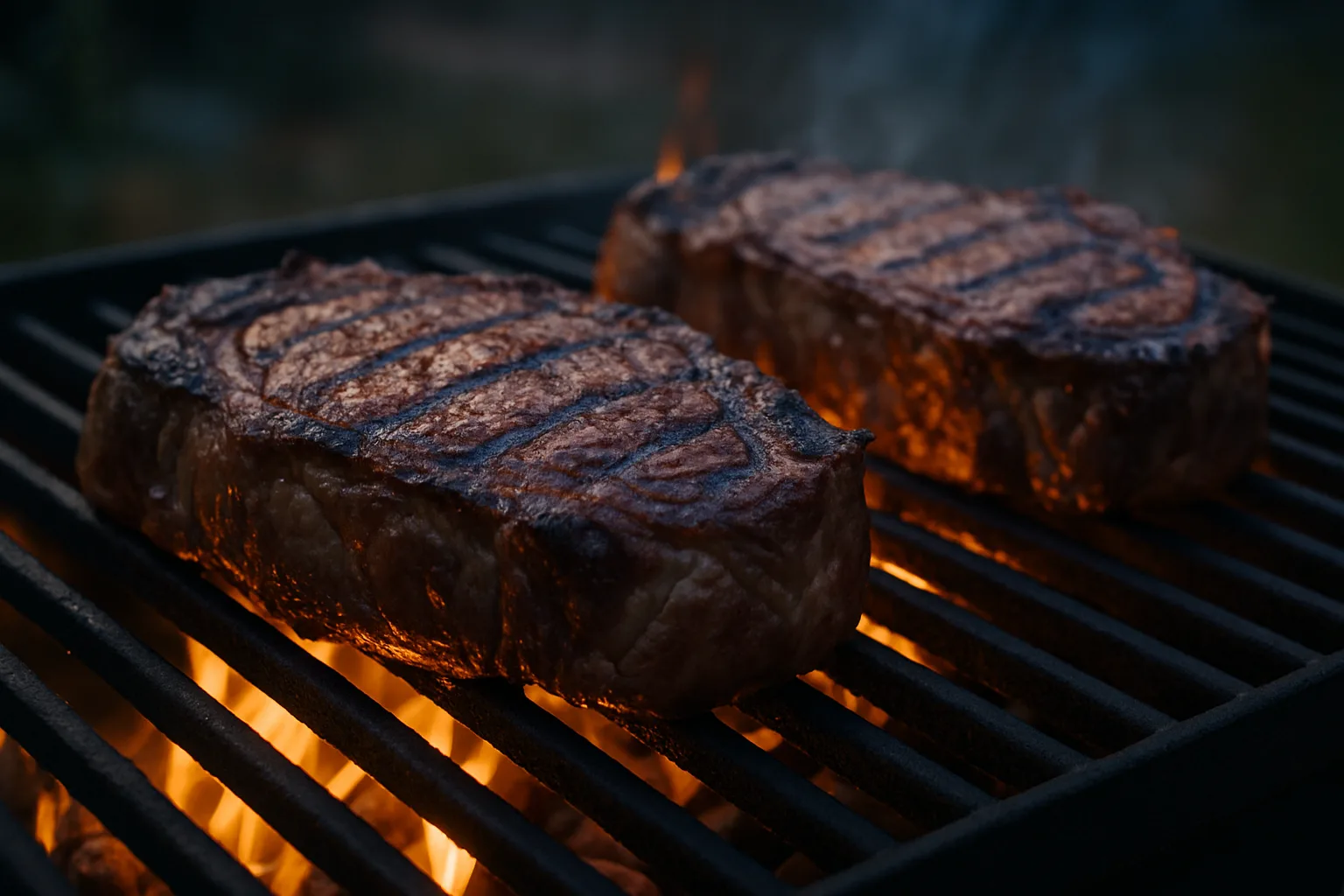
Above the firepot, most pellet grills place a heat baffle and a sloped drip tray. That layout is excellent for smoking because the heat and smoke circulate evenly, but it blocks direct flame, so surface temperatures at the grate stay too low for a hard sear. Manufacturers solve this in three ways: an open-flame design (Weber's DirectFlame), a slide-open plate over the fire (Pit Boss's flame broiler), or a separate propane sear burner or griddle attachment (Camp Chef's Sidekick).
Spec comparison
| Model | Shop | Temperature range | Cooking area / size | Searing method | Smoke feature | App |
|---|---|---|---|---|---|---|
| Weber Searwood XL 600 |  Buy on Amazon Buy on Amazon
| 180–600°F | 36-inch XL model | DirectFlame open-flame design | SmokeBoost (holds 180°F) | Weber Connect, Wi-Fi and Bluetooth |
| Traeger Woodridge Pro |  Buy on Amazon Buy on Amazon
| 180–500°F | 970 sq in | Indirect only | Super Smoke mode | WiFIRE |
| Pit Boss 850 Navigator |  Buy on Amazon Buy on Amazon
| 180–500°F | 932 sq in, 30 lb hopper | Slide-plate flame broiler | Smoke setting | Wi-Fi and Bluetooth |
| Camp Chef Woodwind Pro 24 | Check current model | 24-inch chamber | Optional Sidekick propane attachment | Smoke Box for chunks, chips or charcoal | Wi-Fi and Bluetooth |
Cooking-area figures include upper racks and are calculated differently by each brand, so compare the main grate size when deciding how many racks of ribs or briskets fit.
The grills in detail
Weber Searwood XL 600: the do-everything pellet grill
Weber Searwood XL 600Check today’s price on AmazonBuy on Amazon →
The Searwood removes the large sheet diffuser most pellet grills use, so flame reaches the full grate. Weber rates it from 180°F to 600°F and says its Rapid React PID controller reaches set temperature in 15 minutes or less and recovers quickly after the lid opens, which also helps in cold weather. A SmokeBoost setting holds 180°F for maximum smoke absorption, and a manual mode runs steady fuel and fan for griddling or lid-open cooks. Optional accessories include a griddle insert and a rotisserie. One food probe is included and reads through the grill display and the Weber Connect app, and Weber lists a five-year limited warranty. The open flame does mean more airflow through the chamber, so long smokes benefit from a water pan to keep meat from drying. This is the pellet grill for households that want to retire the gas grill, not just add a smoker.
Traeger Woodridge Pro: easy barbecue, strong app
Traeger Woodridge ProCheck today’s price on AmazonBuy on Amazon →
Traeger's Woodridge Pro offers 970 square inches of cooking space, a 180°F to 500°F digital controller, Super Smoke mode for extra smoke at low temperatures, a side shelf, and WiFIRE app control that lets owners adjust temperature, set timers and monitor a probe from a phone. Traeger lists a 10-year limited warranty on the Woodridge line; confirm terms on the listing. Like most Traeger models it cooks indirectly, so it excels at ribs, pork shoulder, brisket and poultry but leaves steaks and burgers without strong grill marks; many owners finish steaks in a cast-iron pan or on a separate grill. For anyone who mostly wants dependable, low-effort barbecue with a well-supported app, it is a safe choice.
Pit Boss 850 Navigator: value and a real flame broiler
Pit Boss 850 NavigatorCheck today’s price on AmazonBuy on Amazon →
The Navigator 850 delivers 932 square inches of cooking space, a 180°F to 500°F range, a large 30-pound hopper for overnight cooks, Wi-Fi and Bluetooth control, an LCD controller and an included meat probe. Its signature feature is the flame broiler: a slide plate that opens over the firepot so burgers, chops and steaks can cook over direct flame. The direct-flame zone is small, so it handles a few steaks at a time rather than a full grate. Pit Boss typically undercuts Traeger and Weber on price for similar cooking space, which makes it a strong first pellet grill.
Camp Chef Woodwind Pro 24: for smoke chasers
Camp Chef's Woodwind Pro adds a Smoke Box beside the firepot that takes wood chunks, chips or even charcoal in addition to pellets, with a damper to tune output. That gives a heavier, more traditional smoke profile than pellets alone, and a fan-only mode allows cold smoking cheese or fish. The grill is compatible with Camp Chef's Sidekick attachments, a propane sear box or flat-top griddle that bolts to the side, for owners who also want to sear. Its stainless construction looks sharp but shows fingerprints and discoloration, so expect some extra exterior cleaning.
What to check before buying any pellet grill
- Controller and probes. A PID-style controller, at least one included food probe and an app that shows a temperature graph make long cooks much easier.
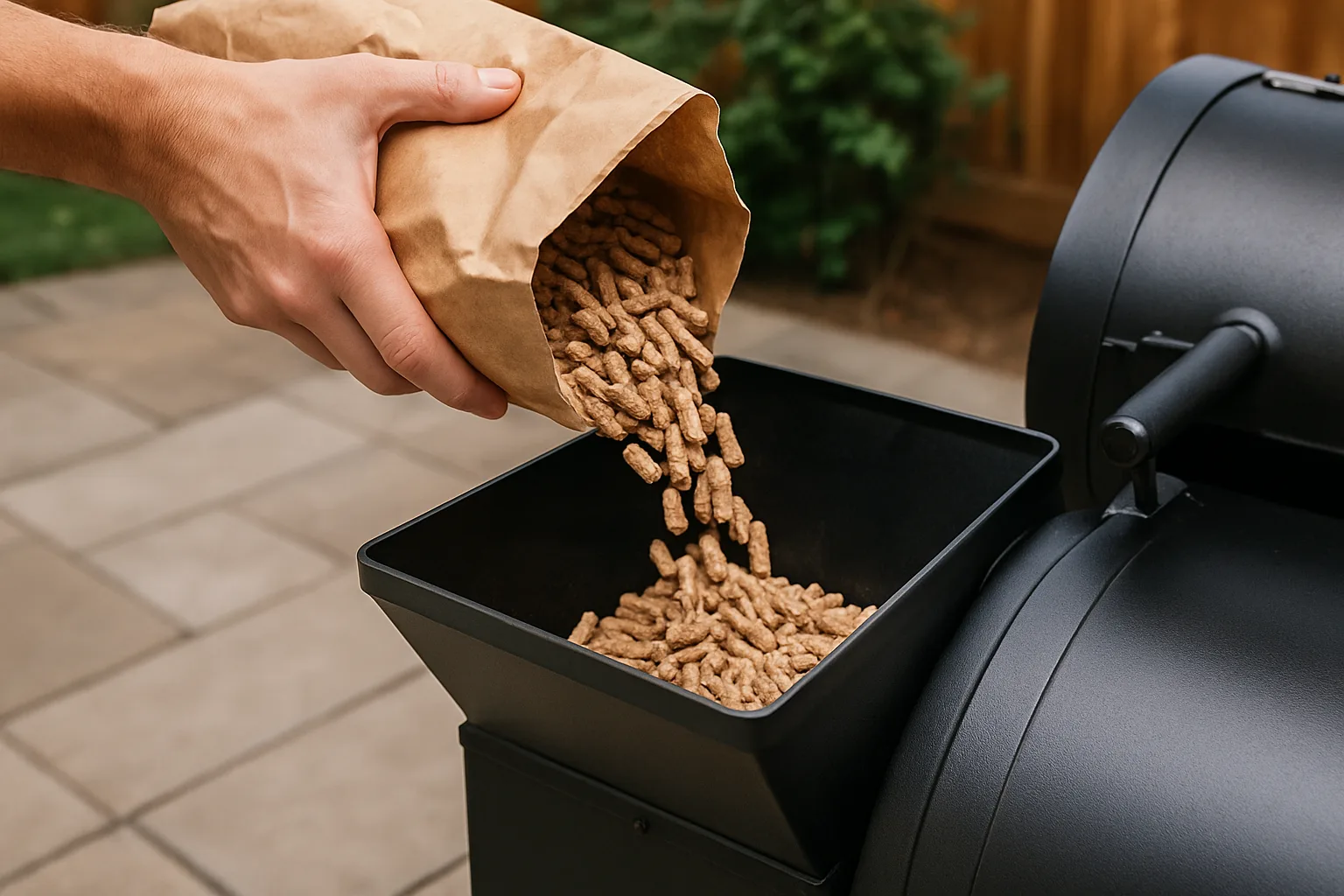
- Hopper size. A hopper of 20 pounds or more lets an overnight brisket finish without a 3 a.m. refill. Pellet consumption rises in cold weather and at high temperatures.
- Ash and grease cleanup. Ash builds up in the firepot and chamber and must be vacuumed out every few cooks; some grills have a pull-out ash cleanout that makes this faster. Clean the grease tray and drip channel regularly to prevent grease fires.
- Wheels and storage. Pellet grills weigh well over 100 pounds. Four locking casters are much easier to move than two wagon wheels and two fixed legs.
- Power and placement. Every pellet grill needs a 120-volt outlet. Keep it on a level, noncombustible surface away from siding, eaves and railings, and follow the manufacturer's clearance distances.
- Pellet storage. Pellets swell and crumble when they absorb moisture, which can jam the auger. Store them in a sealed bin in the garage, and empty the hopper before long breaks.
Thermometers still matter
Built-in probes are convenient but can drift, and a single probe can't check every piece on a full grate. A fast instant-read thermometer such as the TempPro TempSwift instant-read thermometer confirms doneness in seconds. The USDA's safe minimum internal temperature chart lists 145°F with a three-minute rest for whole cuts of beef, pork and lamb, 160°F for ground meats, and 165°F for poultry. Barbecue cuts like brisket and pork shoulder are cooked far past those minimums, often into the 195°F to 205°F range, for tenderness rather than safety.
Pellet grill vs. charcoal vs. gas
Charcoal still delivers the most intense sear and classic flavor at the lowest equipment cost, but it takes practice to hold a steady low temperature. Gas grills light instantly and sear well but add little smoke flavor. A pellet grill sits in between: easy temperature control and real wood smoke, with searing ability that depends heavily on design. Readers weighing the options can compare this with the guide to charcoal grills for backyard cooking. A grill is often the anchor of an outdoor living area; ideas for outdoor spaces that feel like living rooms and a look at smokeless fire pits round out the patio.
Bottom line
Buy for the cooking style. The Weber Searwood XL 600 is the closest thing to a single grill that smokes, sears, griddles and roasts. The Traeger Woodridge Pro is the easy, app-driven barbecue machine. The Pit Boss 850 Navigator gives the most space and a usable flame broiler for the money. Camp Chef's Woodwind Pro suits cooks who want the strongest smoke flavor and the option to bolt on a sear box later.
Posted by Kristopher Larson
Frequently asked questions
Can you sear a steak on a pellet grill?
It depends on the design. Most pellet grills cook indirectly over a heat baffle and struggle to leave sear marks. Models built for searing either expose the flame, like the Weber Searwood's DirectFlame design rated to 600°F, open a slide plate over the firepot, like Pit Boss's flame broiler, or add a separate propane sear box, like Camp Chef's Sidekick.
Is Traeger better than Pit Boss?
They aim at different buyers. Traeger's Woodridge Pro offers a polished WiFIRE app, Super Smoke mode and a long limited warranty, and it excels at indirect barbecue. Pit Boss's 850 Navigator offers more cooking space per dollar, a large 30-pound hopper and a flame broiler for direct grilling. Buyers focused on easy barbecue often prefer Traeger; buyers focused on value and occasional grilling often prefer Pit Boss.
How long does a bag of pellets last?
Consumption varies with temperature, weather and grill design. Low-temperature smoking uses far fewer pellets per hour than high-heat grilling, and cold or windy weather increases use. A 20-pound bag usually covers several long smokes or a handful of high-heat cooks. Store pellets sealed and dry, since damp pellets crumble and can jam the auger.
Do pellet grills need electricity?
Yes. The auger, fan, igniter and controller all run on power, so a pellet grill needs a 120-volt outlet, ideally a GFCI-protected outdoor receptacle. A few portable models can run from a battery or power station, but full-size grills are designed to stay plugged in during a cook.
How often should a pellet grill be cleaned?
Empty or vacuum the firepot and chamber ash every few cooks, more often after long smokes, and clean the grease tray and drip channel regularly to prevent grease fires. Scrape the grates after each cook. Grills with a pull-out ash cleanout make the firepot step much faster.
What internal temperature should smoked meat reach?
The USDA lists 145°F with a three-minute rest for whole cuts of beef, pork and lamb, 160°F for ground meats and 165°F for poultry. Tough barbecue cuts such as brisket and pork shoulder are typically cooked to roughly 195°F to 205°F so the connective tissue breaks down, well above the safety minimum.
Keep reading
More from the blog
Whole-House Surge Protectors: Type 1 vs. Type 2, What They Can't Stop, and Square D vs. Siemens vs. Eaton
Propane vs. Electric Patio Heaters: Mushroom vs. Infrared vs. Tabletop, and How Much Heat a Patio Needs
Chain vs. Belt vs. Wall-Mount Garage Door Openers: Chamberlain vs. Genie, Plus Smart Retrofits