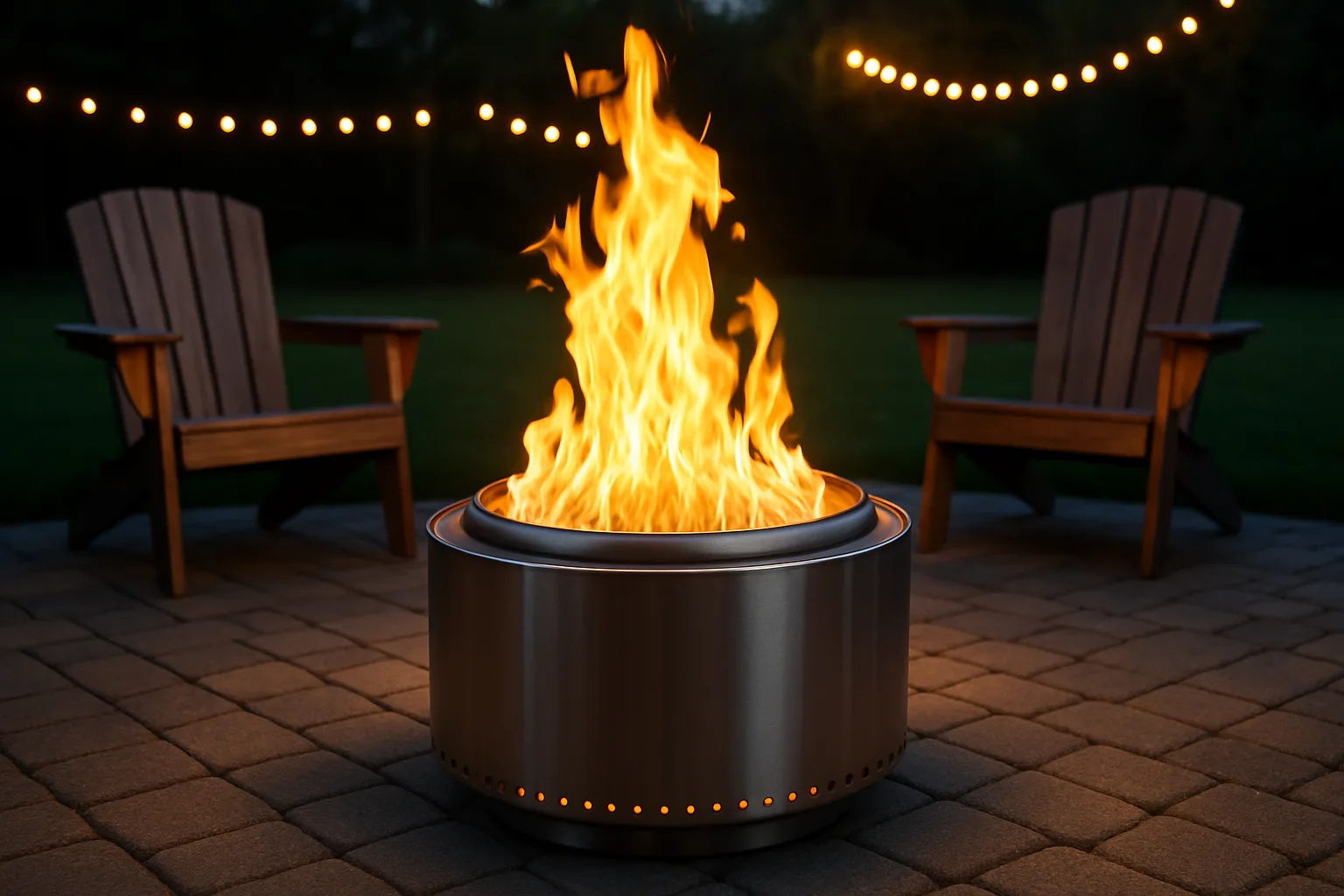
Smokeless Fire Pits Explained: How They Work, What to Expect, and Solo Stove vs. Breeo vs. TIKI
How smokeless fire pits use secondary combustion, when they still smoke, the right wood and size, safe clearances, and Solo Stove, Breeo and TIKI picks.
"Smokeless" is the most oversold word in backyard gear. A well-run double-wall fire pit really does produce far less smoke than an open ring of bricks, but it still smokes at startup, when the wood is damp, when it is overloaded and when the fire dies down. Knowing how the design works, and what it needs from the person feeding it, is the difference between a clean, bright fire and an expensive steel bucket that smokes like any other.
This guide explains how secondary combustion works, what "smokeless" realistically means, how to choose a size and fuel, how to place and use one safely, and which models from Solo Stove, Breeo and TIKI fit which yards.
As an Amazon Associate, Best Utah Real Estate earns from qualifying purchases. Product picks are based on published specs and independent testing data, not paid placement.
Quick verdict: which smokeless fire pit for which yard
- Small patio, two to four people, or camping: the 15-inch Solo Stove Ranger 2.0 with Stand.
- Most backyards, four to six people: the 19.5-inch Solo Stove Bonfire with Stand, the most common middle size.
- Large groups and a bigger fire: the 27-inch Solo Stove Yukon 2.0.
- A heavy-duty, permanent centerpiece: the Breeo X Series 24 (Stainless Steel), a 62-pound, 27.5-inch pit with a lifetime limited warranty.
- Budget backyard pick: the TIKI Patio 25-Inch Smokeless Fire Pit, which includes a stand and cover.
Models compared
| Model | Diameter | Listed weight | Group size (maker's rating) | Material | Price tier |
|---|---|---|---|---|---|
| Solo Stove Ranger 2.0 | 15 in | About 15 lb (16.5 lb with stand) | 2 to 4 | 304 stainless steel | Mid-range |
| Solo Stove Bonfire | 19.5 in | About 20 to 22 lb | 4 to 6 | 304 stainless steel | Mid-range |
| Solo Stove Yukon 2.0 | 27 in | About 38 lb | 6 or more | 304 stainless steel | Premium |
| Breeo X Series 24 | 27.5 in | 62 lb | Large groups | Stainless or Corten steel | Premium |
| TIKI Patio 25-Inch | 25 in | Check listing | 4 to 6 | Stainless steel | Budget to mid-range |
Weights and bundles vary between listings and colors, so confirm the exact configuration (with or without stand, lid or shield) on the product page.
How secondary combustion works
Smoke is mostly unburned fuel: tiny particles and gases that left the wood without getting hot enough, with enough oxygen, to finish burning. A smokeless pit attacks that problem with two air paths.
- Primary air enters holes in the floor of the burn chamber and feeds the base of the fire, producing a hotter, more complete primary burn than wood lying on the ground.
- Secondary air enters vents near the bottom of the outer wall and rises through the gap between the two steel walls. The hot inner wall preheats it on the way up.
- That preheated air jets out of a ring of small holes just under the rim, right where the smoke is leaving the fire. Hot oxygen meeting hot smoke ignites a large share of it a second time. That second burn is the row of small flame jets visible around the top of a pit running well.
The system only works when the inner wall is hot and the fire is large enough to drive a strong draft. That explains every situation where these pits smoke: during the first several minutes, when a cold pit is warming up; when wet wood cools the fire; when logs stick up above the secondary holes, where the smoke escapes before reaching the hot air; and at the end of the night, when the fire shrinks to coals.
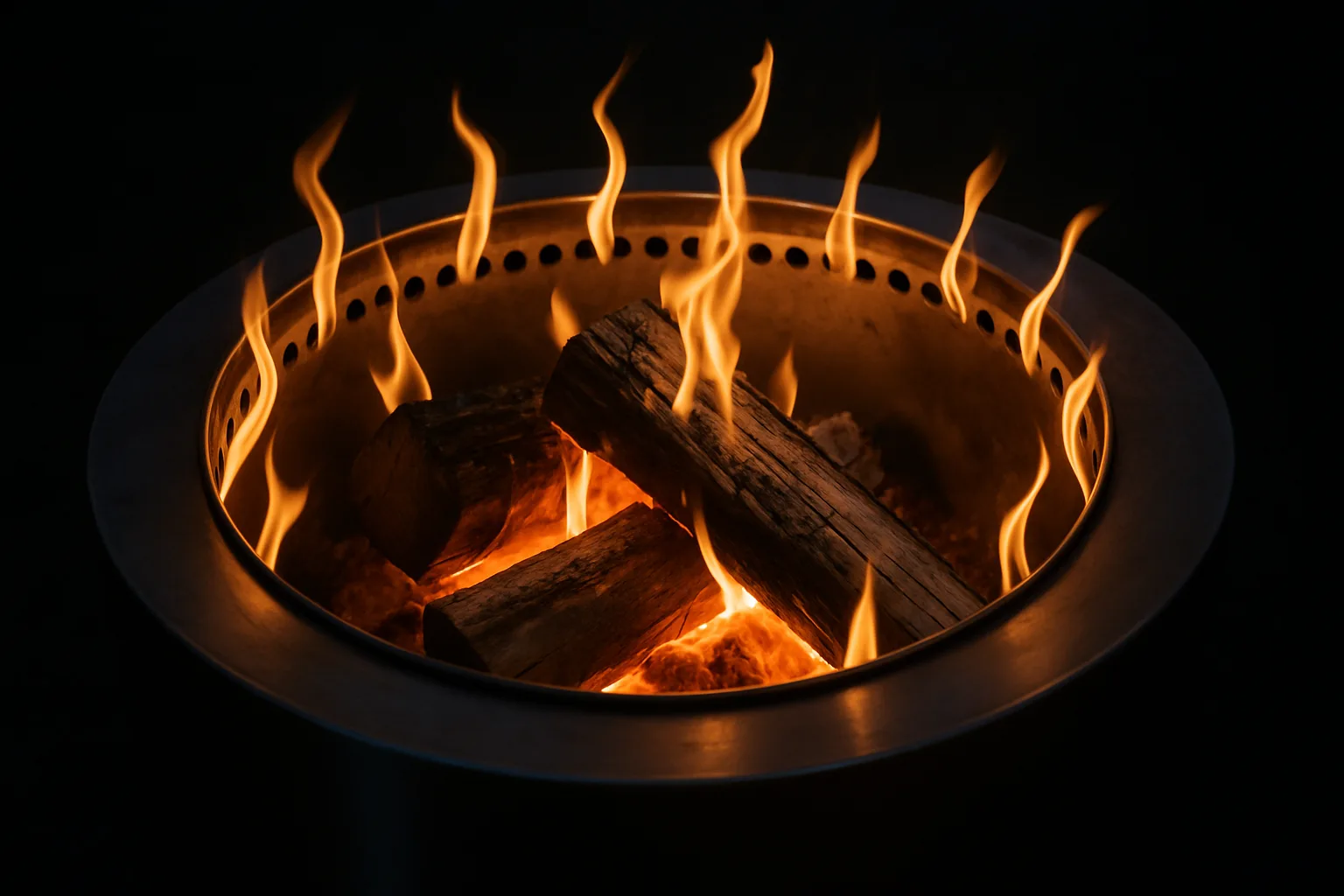
What "smokeless" realistically means
Think "low-smoke once up to temperature." A practical expectation:
- Startup: some smoke for the first several minutes, less with small dry kindling and a top-down or log-cabin build.
- Full burn: very little visible smoke, provided the wood is dry and stays below the secondary holes.
- Wind: gusts can push smoke sideways before the secondary burn catches it.
- Burn-down: smoke returns as the fire weakens. Adding a split or two when flames drop, rather than letting it die, keeps it clean.
Smoke reduction also matters beyond comfort. The EPA's guidance on backyard fires notes that wood smoke affects children, older adults and people with heart or lung disease most, recommends skipping fires on air-quality alert days and suggests considering wind direction and neighbors.
Fuel: dry hardwood, sized right
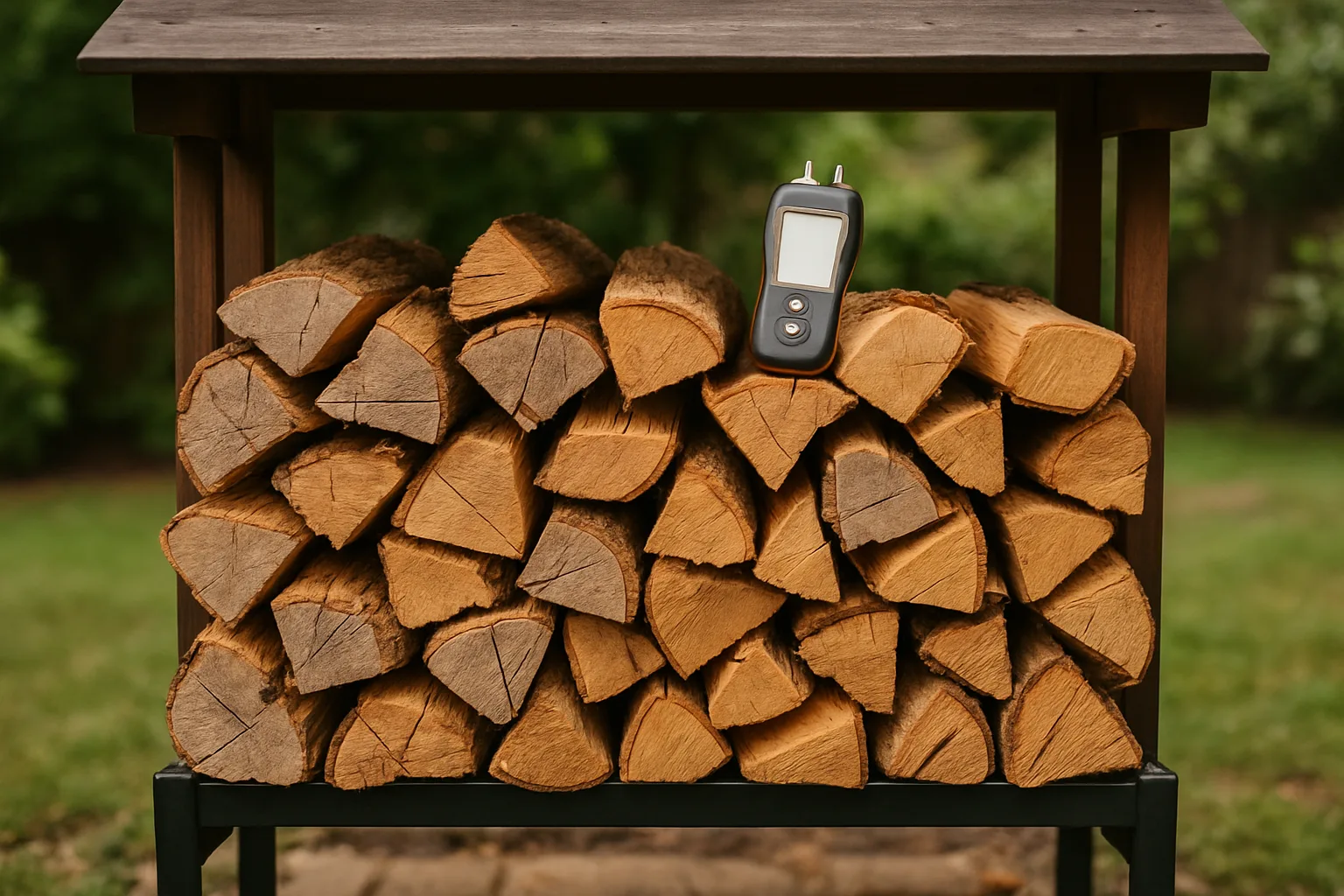
Wood quality decides whether a smokeless pit performs as advertised. The EPA recommends seasoned wood at about 20 percent moisture or less, checked with an inexpensive moisture meter on a freshly split face. Freshly cut wood can hold far more water than that, and burning it wastes the fire's heat boiling off moisture, which is exactly what produces smoke.
- Species: dense hardwoods such as oak, ash, maple, hickory and birch burn longer and build a coal bed. Softwoods like pine light easily but burn fast and leave sap residue.
- Size: splits roughly the thickness of a forearm catch and burn cleanly. Large rounds smolder.
- Loading: keep every piece below the secondary air holes. Overfilling is the most common reason a smokeless pit smokes.
- Storage: stack off the ground with the top covered and the sides open so air keeps drying it.
- Never burn trash, plastic, treated or painted lumber or yard waste, and never use gasoline or lighter fluid to start or revive the fire.
Larger pits are hungrier. A 27-inch pit running hot enough to stay smokeless consumes noticeably more wood per hour than a 19.5-inch one, so size the pit to the group that will usually gather, not the biggest party of the year.
Heat: why seated guests feel less
The double wall that powers secondary combustion also insulates the sides of the pit. Much of the heat goes up with the flame rather than out toward the legs of people sitting around it, so a smokeless pit can feel cooler from a low, reclined chair than an open fire of the same size. Standing guests and upright chairs closer to flame height feel more. Heat deflectors sold by Solo Stove and Breeo sit over the fire and push more warmth outward, at the cost of the open-flame view.
A hot, clean-burning pit is also tricky for cooking at full blaze; marshmallows and hot dogs scorch quickly. Roasting over the later coal bed works better, and both brands sell grill and griddle accessories for dedicated cooking.
Placement and safety
A smokeless fire pit is still an open wood fire. The National Fire Protection Association's educational messages for fire pits cover the basics:
- Check local rules and burn bans first, and get a permit if one is required.
- Place the pit at least 10 feet from anything that can burn, on a level, noncombustible surface, away from siding, overhanging branches and covered patios.
- Keep a 3-foot kid- and pet-free zone around the pit and never leave the fire unattended.
- Let ashes cool, then store them in a metal container with a tight-fitting lid used only for ashes.
Some local fire codes based on the International Fire Code use a larger 15-foot clearance for portable outdoor fireplaces, and local amendments vary, so the local fire department has the final word.
Decks and grass: stands from Solo Stove and similar makers are designed to reduce heat transfer to the surface underneath, and Solo Stove markets its stand for use on decks and grass. A stand does not stop sparks and popping embers from landing outside the pit, which is the bigger risk on wood or composite decking. A spark screen and a nonflammable pad under and around the pit help, but constant supervision is the real safeguard. A gas fire pit is the lower-risk choice for decks and covered spaces.
Rain and ash: wet ash can clog the floor holes that feed primary air and harden as it dries. Empty the ash pan after each fire once it is cold, and keep a cover on the pit when it is not in use. Avoid setting a lid on a pit that is still burning; most covers are not designed for that heat.
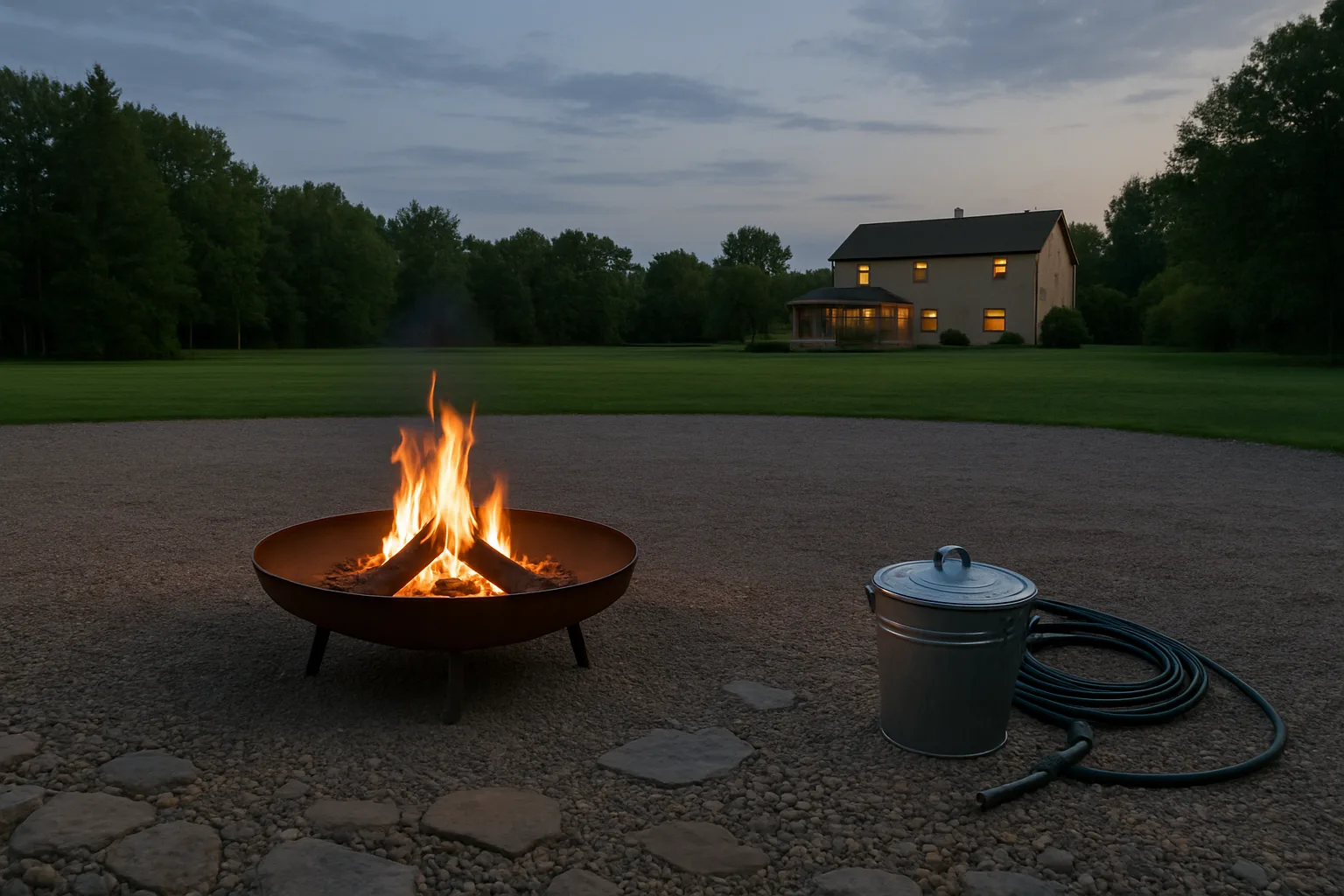
The picks in more detail
Solo Stove Ranger, Bonfire and Yukon
Solo Stove's three main sizes share the same 304 stainless steel, double-wall design, and the 2.0 versions add a removable base plate and ash pan that make cleanup much easier than tipping the whole pit. The Ranger is light enough to carry to a campsite. The Bonfire is the size most households end up with. The Yukon 2.0 throws a much larger flame for big groups but burns through wood faster. The stand is sold separately on some listings, so check the configuration.
Breeo X Series 24
The Breeo X Series 24 is built heavier than most, at 62 pounds, and is sold in stainless steel and Corten steel, which develops a protective rust patina outdoors. Breeo backs it with a lifetime limited warranty and sells grills and heat deflectors that fit it. Its weight makes it better as a permanent patio fixture than something moved every weekend.
TIKI Patio 25-Inch
The TIKI Patio uses its own internal airflow design to reduce smoke and comes with a stand, ash pan and cover in the box, which adds up to a lower total cost than buying a premium pit plus accessories. It can burn firewood or TIKI's prepackaged wood packs.
Before buying: a short checklist
- Confirm local rules, burn-ban policies and required clearances.
- Measure the space: the pit plus at least 10 feet of clearance and room for chairs.
- Pick a size for the usual group, not the largest one.
- Plan a dry wood supply and a covered spot to store the pit.
- Budget for a stand, spark screen, lid and a metal ash bucket if they are not included.
A fire pit area is one of the easier outdoor upgrades that photographs well when a home is listed. For more backyard projects, see these tips for a functional backyard retreat and this look at charcoal grills as an outdoor cooking space.
Posted by Kristopher Larson
Frequently asked questions
Are smokeless fire pits really smokeless?
Not completely. They produce much less smoke once the pit is hot and the fire is burning strongly, but they still smoke during startup, when the wood is damp, when logs sit above the top air holes and as the fire dies down.
How does a smokeless fire pit work?
Air enters through holes in the floor to feed the fire and through vents in the outer wall, where it rises between two steel walls and is preheated. That hot air jets out of holes near the rim and ignites smoke as it leaves the fire, a process called secondary combustion.
What is the best wood for a smokeless fire pit?
Seasoned hardwood such as oak, ash, maple, hickory or birch, split to about forearm thickness. The EPA recommends wood at about 20 percent moisture or less, which a basic moisture meter can confirm.
Can a smokeless fire pit be used on a wood deck?
Some makers sell stands designed to limit heat transfer to the surface below, but stands do not stop popping embers. On wood or composite decks, a spark screen, a nonflammable pad and constant supervision are essential, and local rules may prohibit it. A gas fire pit is the lower-risk option for decks.
How far should a fire pit be from a house?
NFPA guidance recommends at least 10 feet from anything that can burn, including the house, fences and overhanging branches. Some local fire codes based on the International Fire Code require 15 feet for portable outdoor fireplaces, so check with the local fire department.
What size smokeless fire pit fits most backyards?
Match it to the usual group: about 15 inches for two to four people, around 19 to 20 inches for four to six, and 25 inches or more for larger groups. Larger pits burn more wood per hour to stay smokeless.
Keep reading
More from the blog
Robot Vacuum and Mop Buying Guide: Mop Types, Docks, Obstacle Avoidance and Top Picks
Electric Pressure Washers: Which PSI and GPM Matter, and Budget vs. Premium Picks
Best Cordless Stick Vacuums by Home Type: Shark vs. Dyson vs. Dreame vs. Levoit