Best Cordless Stick Vacuums by Home Type: Shark vs. Dyson vs. Dreame vs. Levoit
Which cordless stick vacuum fits your home? Shark PowerDetect, Dyson V15, V12, V8, Dreame Z30 and Levoit LVAC-200 compared on runtime, filters and docks.
Cordless stick vacuums have mostly replaced the corded upright as the vacuum people actually reach for. They hang on the wall, charge themselves, and turn into a handheld for stairs and car seats. The catch is that the category runs from bargain sticks to models with lasers, particle counters and docks that empty the bin on their own, and the gap between a good one and a frustrating one is rarely about suction alone.
This guide matches current models from Shark, Dyson, Dreame and Levoit to the kind of home and budget each suits, and explains the specs that separate them.
As an Amazon Associate, Best Utah Real Estate earns from qualifying purchases. Product picks are based on published specs and independent testing data, not paid placement.
Quick verdict: the best cordless vacuum for each home
- Best all-around for a busy family home: Shark PowerDetect Speed Clean & Empty (IA3241). It senses floor type and dirt, cleans on both strokes, and docks into a base that empties the bin and charges it.
- Best for pet hair and allergy-conscious homes: Dyson V15 Detect. A de-tangling motorized head, a laser hard-floor head, whole-machine filtration and a screen that reports what it picked up.
- Best lightweight pick for apartments and quick daily passes: Dyson V12 Detect Slim Origin. Dyson's lightest "intelligent" stick, with a power button instead of a trigger.
- Best entry into Dyson: Dyson V8 Cyclone. A 5.7-pound frame, push-button power, three modes and a click-in battery.
- Best mid-price feature set: Dreame Z30. Automatic suction adjustment, a dust-reveal light and a long rated runtime.
- Best on a tight budget: Levoit LVAC-200. Stands on its own, lies flat under furniture, and has a removable battery.
Spec comparison
| Model | Rated runtime (best case) | Bin | Filter | Power control | Standout feature |
|---|---|---|---|---|---|
| Shark PowerDetect Speed IA3241 | Up to 60 min (Eco, non-motorized tool) | 0.5 L + auto-empty dock | HEPA | Auto, floor and dirt sensing | Dock empties and charges; forward and reverse pickup |
| Dyson V15 Detect | Up to 60 min | 0.2 gal (about 0.76 L) | Whole-machine, 99.99% at 0.3 microns | Trigger, auto mode | Laser head, particle count on screen |
| Dyson V12 Detect Slim Origin | Up to 60 min | 0.1 gal (about 0.38 L) | HEPA | Power button | Lightest Dyson "Detect" model |
| Dyson V8 Cyclone | Up to 60 min | 0.14 gal (about 0.53 L) | Whole-machine, 99.99% at 0.3 microns | Power button, 3 modes | 5.7 lb, click-in battery |
| Dreame Z30 | Up to 90 min (with attachments) | 0.6 L | HEPA | Auto suction adjustment | Dust-reveal light, pet grooming tool |
| Levoit LVAC-200 | 50 min tool / 30 min floor head / 12 min Turbo | 0.75 L | Foam, 5-stage | Eco and Turbo | Self-standing, lies 180° flat |
Figures are from each manufacturer's listing. Brands sell many near-identical variants (different heads, extra batteries, colors), so confirm the exact model number on the current listing.
Runtime claims: read the footnote
Nearly every stick in this list advertises "up to 60 minutes" or more, and nearly every one reaches that number in the gentlest mode with a non-motorized crevice or dusting tool. Shark says so directly in its IA3241 footnote. Levoit is unusually clear: the LVAC-200 is rated for 50 minutes with a tool in Eco mode, 30 minutes with the motorized floor head, and 12 minutes in Turbo.
That last spread is typical of the category. With the main floor head on carpet, real runtime is often well under half the headline figure, and max mode drains a battery fast. That is why auto modes matter. Shark's PowerDetect, Dyson's Detect models and the Dreame Z30 ramp suction up when they sense heavy debris or carpet and back down on clean hard floor, which stretches the battery without the owner flipping switches.
For a typical three- or four-room daily pickup, any of these will finish on one charge. Whole-house cleaning of a large carpeted home is where a spare battery or a corded vacuum still earns its place.
Floor heads: one head or two?
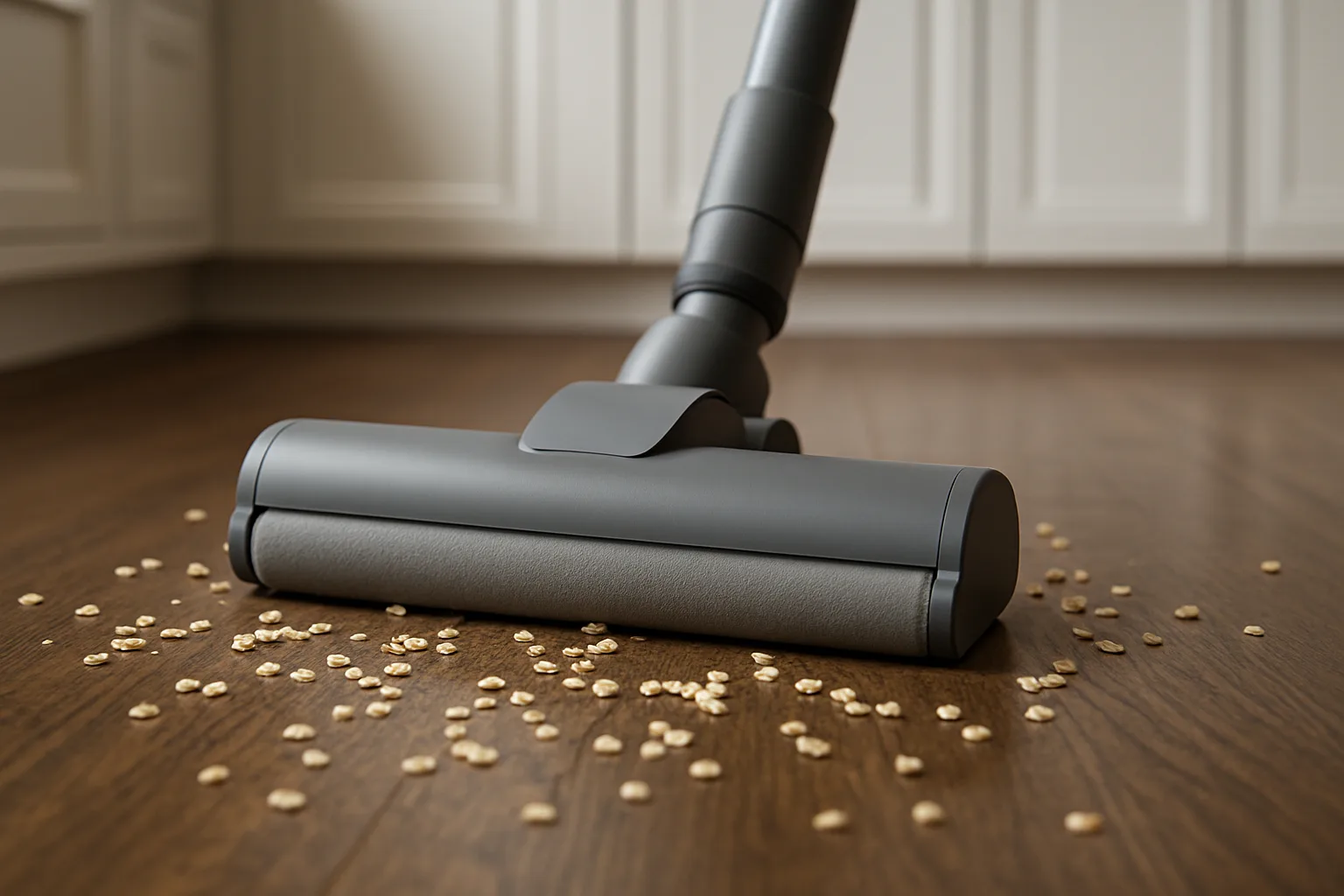
Hard floors and carpet want different things from a brush roll. On carpet, a stiff, fast-spinning brush digs grit out of the fibers. On hard floors, that same brush can fling crumbs and cereal ahead of the vacuum instead of pulling them in. Manufacturers solve this in two ways:
- Two dedicated heads. The Dyson V15 Detect ships with a Digital Motorbar head for all floors and a soft "Fluffy Optic" head with a laser that lights up fine dust on hard floors. The trade-off is swapping heads between rooms.
- One adaptive head. Shark's PowerDetect Speed uses a single TurboPro Detect nozzle and automatically boosts power when its sensors pick up carpet, hidden dirt or a change in cleaning direction. That is easier in homes that mix both on every level.
Homes that are mostly hard floor with frequent kitchen messes should look closely at how a model handles larger debris like cereal and pet food, since that is where some sticks scatter instead of pick up.
Hair wrap
Long human hair and pet hair wrap around brush rolls and slowly reduce pickup. Anti-tangle designs (combs, conical or tapered rolls, self-cleaning brushrolls) have become common even on budget models. Dyson's Motorbar and hair screw tool, Shark's self-cleaning brushroll and Levoit's anti-tangle brush all target this. None is perfect with very long hair, so owners should still expect to pull strands off the roll once in a while.
Bins, clogs and why suction fades
A stick vacuum loses suction when the filter or screen inside the bin clogs, not just when the bin is full. Cyclone designs, which spin debris out of the airflow before it reaches the filter, have kept Dyson sticks consistent for years. Newer Shark and Dreame designs also work to keep hair off the screen. Bargain sticks with a simple mesh screen tend to clog faster, especially with hair and fine dust.
Bin size trades directly against weight. The V12 Detect Slim's small bin is part of why it is so light, and owners of homes with heavy shedding will empty it often. An auto-empty dock like Shark's sidesteps the issue: each docking pulls the bin contents into a sealed base that Shark rates for up to 45 days.
Filtration and allergies
For homes with allergies or asthma, sealed filtration matters. Dyson rates the V15 Detect and V8 Cyclone at 99.99% of particles as small as 0.3 microns across the whole machine, and the Shark, V12 and Dreame list HEPA filters. Budget sticks often use foam and mesh filters; Levoit's LVAC-200 lists a 5-stage system rated at 99.9% of 0.3-micron particles, tested to ASTM F1977-22, but it is not marketed as HEPA. The EPA's page on asthma triggers lists dust mites and pet dander among the common indoor ones, and regular vacuuming with a well-sealed machine is one of the standard ways to cut them down.
Washable filters only work if they are washed and fully dried. Levoit recommends replacing the LVAC-200 filter every three months; Dyson and Shark publish their own schedules in the manual.
Ergonomics: trigger vs. button, weight and storage
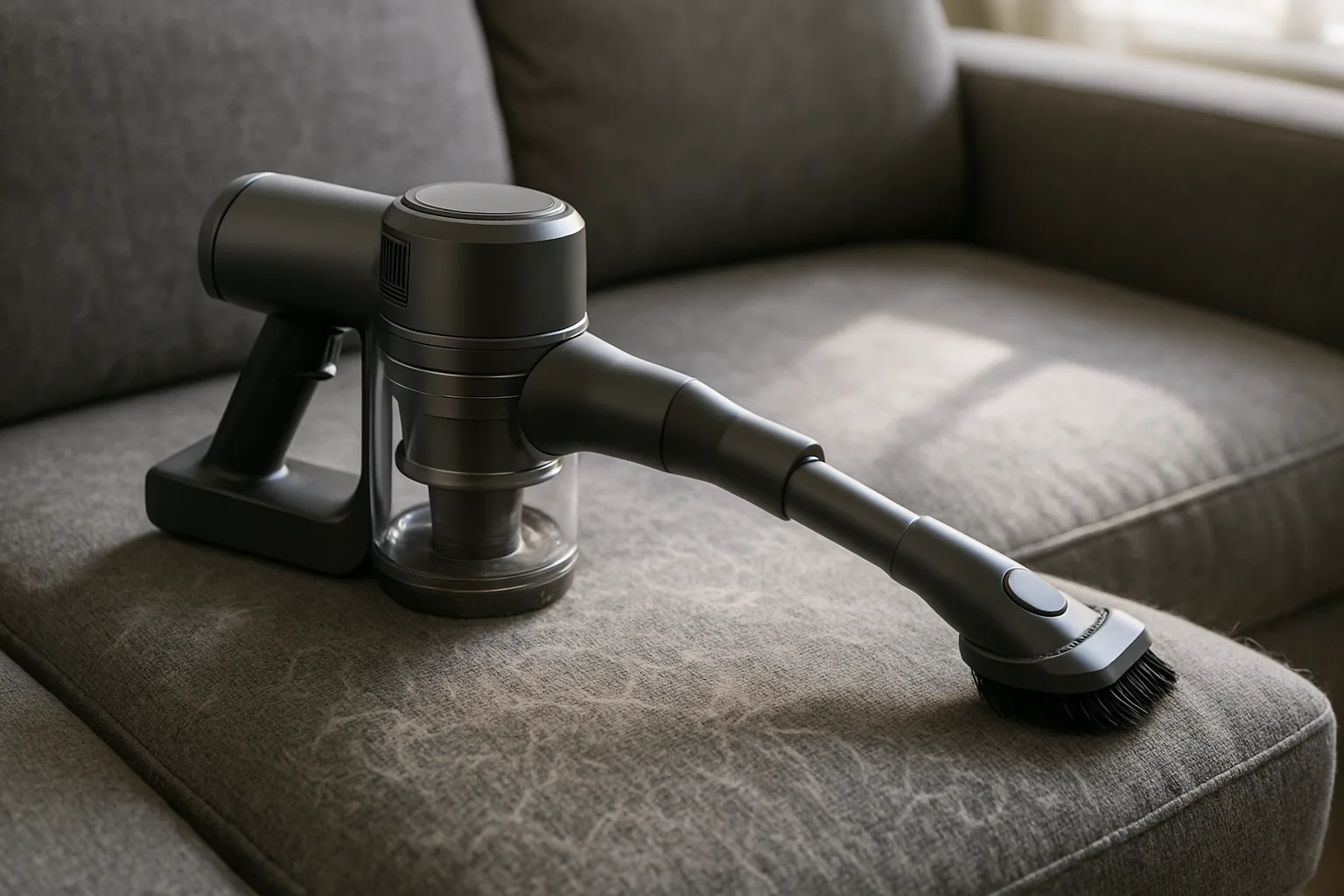
- Trigger or button. The Dyson V15 Detect uses a trigger that must be held the whole time. Some people like that it only runs when needed; others find it tiring over a long session. The V12 Detect Slim Origin and V8 Cyclone use a power button, as do the Shark and Levoit.
- Weight balance. Pistol-grip Dysons carry the motor and bin at the hand, which makes them feel heavier overhead but very nimble for handheld work. Sticks with the weight lower down feel lighter pushing across a floor.
- Reaching under furniture. Shark's MultiFLEX wand bends so the head can slide under a bed without kneeling. The Levoit LVAC-200 lies 180° flat. Dyson's swiveling heads tilt low, though the wand stays straight.
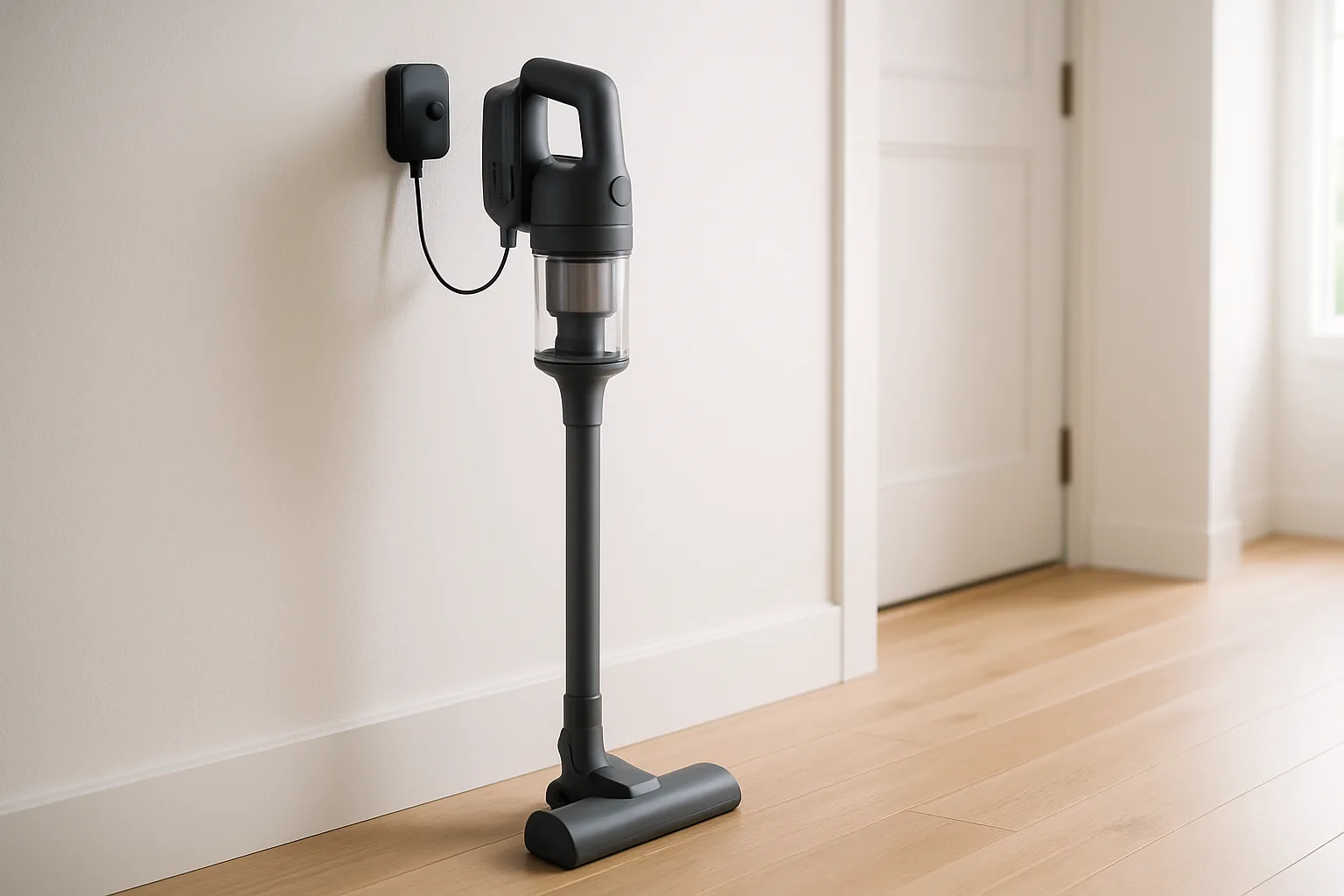
- Storage. The Levoit stands on its own. The Shark parks in its dock. Dysons typically hang on a wall-mounted charging dock, which means a drill and a nearby outlet.
Who should buy which
Family homes with mixed floors and kids: the Shark PowerDetect Speed Clean & Empty does the most with the least effort. One head for every floor, cleaning on both strokes, and no emptying the bin after every run.
Shark PowerDetect Speed Clean and Empty Cordless Stick Vacuum (IA3241)View on Amazon →
Pet owners and allergy-sensitive households: the Dyson V15 Detect is the premium choice for its de-tangling head, laser hard-floor head and whole-machine filtration.
Apartments, condos and second-floor touch-ups: the V12 Detect Slim Origin or V8 Cyclone keep weight down. The V12 adds the dust-revealing tech; the V8 Cyclone is the lower-cost way into a proven cyclone design.
Mid-budget buyers who want automation: the Dreame Z30's auto suction and long rated runtime cover most of what premium sticks do, with a 0.6 L bin.
Tight budgets, small homes, or a second vacuum for the garage or a rental: the Levoit LVAC-200 handles everyday messes, stands on its own and lets owners buy a second battery. Expect shorter runtime with the floor head and more frequent filter care.
Battery care and replacement
Lithium-ion packs lose capacity over a few years of use. Models with click-in or removable batteries (the V8 Cyclone, V15 Detect and Levoit LVAC-200 among them) let owners replace only the battery instead of the whole vacuum. Use only the maker's charger and replacement pack, and take worn batteries to a battery recycling drop-off rather than the trash.
A good cordless stick pairs well with a robot vacuum for daily upkeep, and with rugs that are easy to care for (see this comparison of machine-washable vs. traditional rugs). Sellers getting a house ready for photos can also run through the spots people forget to clean before listing, and buyers weighing flooring will find notes on how carpet choice shapes first impressions.
Posted by Kristopher Larson
Frequently asked questions
How long do cordless stick vacuums really run on a charge?
Advertised runtimes are usually measured in the lowest power mode with a non-motorized tool. With the motorized floor head on carpet, real runtime is often less than half the headline figure, and max or Turbo mode can drain a battery in roughly 10 to 15 minutes. Auto modes that adjust suction to the floor help stretch a charge.
Is a cordless stick vacuum strong enough to replace an upright?
For most apartments and homes with mostly hard floors and area rugs, yes. Homes with a lot of wall-to-wall carpet, heavy shedding pets or large square footage may still want an upright or a spare battery for deep cleaning sessions.
Is an auto-empty dock worth it on a stick vacuum?
For people who dislike emptying a small bin into the trash, it is one of the most useful upgrades. The dock pulls debris into a sealed base each time the vacuum is parked and charges it at the same time. Shark rates the base on its PowerDetect Speed Clean and Empty for up to 45 days between emptying.
Do cordless vacuums need a HEPA filter?
Not every home needs one, but households with allergies or asthma benefit from sealed, high-efficiency filtration that keeps fine dust from blowing back out of the exhaust. Many premium sticks list HEPA or whole-machine filtration rated at 99.99 percent of 0.3-micron particles, while budget models often use foam and mesh filters.
Why does a stick vacuum lose suction partway through cleaning?
The most common cause is a clogged screen or filter inside the bin, often from hair and fine dust, rather than a full bin. Emptying the bin, tapping out or washing the filter (and letting it dry fully), and removing hair from the brush roll usually restores suction.
How long does a cordless vacuum battery last before it needs replacing?
Lithium-ion packs gradually lose capacity with charge cycles and age, and many owners notice shorter runtime after a few years of regular use. Models with click-in or removable batteries let owners replace only the pack. Use the maker's replacement battery and charger, and recycle old packs at a battery drop-off.
Keep reading
More from the blog
Robot Vacuum and Mop Buying Guide: Mop Types, Docks, Obstacle Avoidance and Top Picks
Electric Pressure Washers: Which PSI and GPM Matter, and Budget vs. Premium Picks
How to Choose an Air Purifier by Room Size and CADR: Coway vs. Levoit vs. Winix