Electric Pressure Washers: Which PSI and GPM Matter, and Budget vs. Premium Picks
What PSI and GPM a homeowner really needs, max vs. rated specs, nozzle tips, plus Sun Joe, Westinghouse, Karcher and Greenworks electric picks.
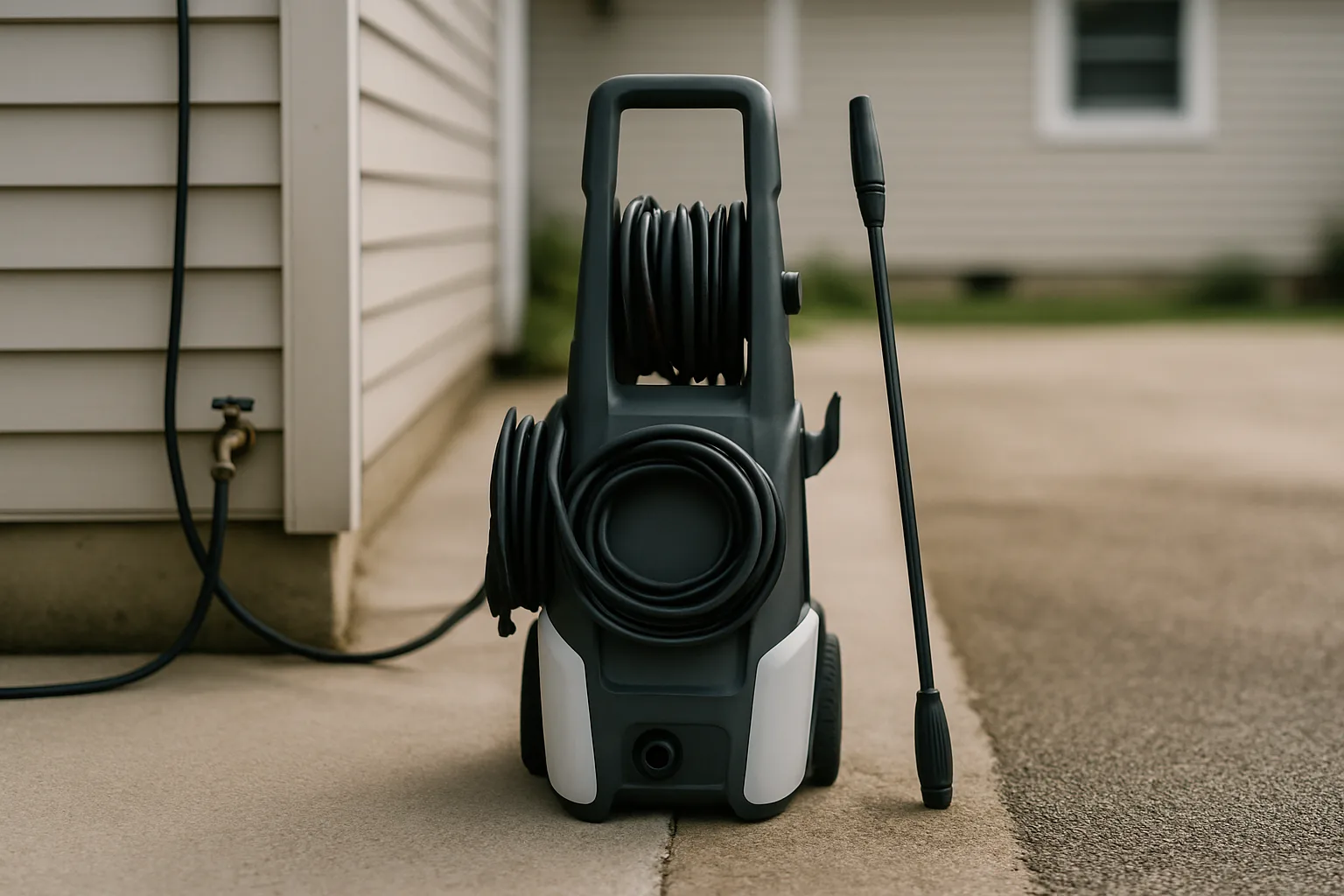
An electric pressure washer is one of the most useful tools a homeowner can keep in the garage: driveway stains, a green-tinged fence, patio furniture, bikes and the car all come clean in an afternoon. It is also a category where the number on the box can be misleading. Two machines labeled "2,500 PSI" and "3,000 PSI" may clean about the same, and a more expensive unit does not always finish the job faster.
This guide explains which pressure and flow numbers actually matter, how budget and premium electric models differ, and which current models fit which jobs.
As an Amazon Associate, Best Utah Real Estate earns from qualifying purchases. Product picks are based on published specs and independent testing data, not paid placement.
Quick verdict: which electric pressure washer to buy
- Best budget pick for cars, patio furniture and light decks: Sun Joe SPX3000. 2,030 PSI working pressure (PWMA rated), five quick-connect tips and two detergent tanks.
- Best compact pick for small garages: Westinghouse ePX3100. About 19 pounds and 16.5 inches tall, with a 25-foot hose and a 3-year limited warranty.
- Best long-life motor: Kärcher K5 Premium. A water-cooled induction motor, 1.43 GPM, a hose reel and a rotating "DirtBlaster" wand.
- Most cleaning power from a wall outlet: Greenworks 3000 PSI Brushless (GPW3002A). A 14-amp brushless motor, 2.0 GPM max flow and specs Greenworks says were verified by an independent lab.
- Best add-on for driveways and patios: a 15-inch surface cleaner such as the Edou Direct 15" Surface Cleaner, which turns any of the above into a far faster flat-surface tool.
PSI vs. GPM: what each number does
PSI (pounds per square inch) is the force of the water. It breaks the bond between dirt and the surface. GPM (gallons per minute) is how much water moves through the nozzle. It rinses loosened dirt away and decides how wide a path can be cleaned in one pass.
A useful way to compare machines is cleaning units: PSI multiplied by GPM. A machine at 2,000 PSI and 1.4 GPM (about 2,800 cleaning units) will usually clean a driveway faster than one at 2,300 PSI and 1.1 GPM (about 2,530), even though its PSI is lower. On most household jobs, extra flow shortens the job more than extra pressure does.
"Max" vs. "rated": read the fine print
Electric pressure washer boxes often list the highest number the pump can produce for an instant, not what it delivers while cleaning. The listings themselves show this:
- Westinghouse lists the ePX3100 at 2,300 max PSI and 1.76 max GPM (the flow measured at the lowest pressure), but 1,900 PSI and 1.24 GPM rated.
- Sun Joe markets the SPX3000 as "2500 Max PSI" while listing 2,030 PSI working pressure and 1.2 GPM, rated to the Pressure Washer Manufacturers' Association (PWMA) standard.
- Greenworks lists 3,000 PSI and 2.0 GPM max for the GPW3002A, plus a 3,300 cleaning-unit figure. That cleaning-unit number is far below 3,000 × 2.0, which shows that the peak pressure and peak flow do not happen at the same time.
When comparing machines, use the rated or PWMA figures where the brand publishes them, and treat "max" numbers as marketing.
| Model | Pressure (as listed) | Flow (as listed) | Motor | Hose | Best for |
|---|---|---|---|---|---|
| Sun Joe SPX3000 | 2,030 PSI working (PWMA) | 1.2 GPM | 14.5 A | 20 ft | Cars, furniture, light decks |
| Westinghouse ePX3100 | 1,900 PSI rated (2,300 max) | 1.24 GPM rated (1.76 max) | Auto-stop pump | 25 ft | Small storage spaces, general cleaning |
| Kärcher K5 Premium | 2,000 PSI | 1.43 GPM | Water-cooled induction | 25 ft with reel | Frequent use, patios, siding |
| Greenworks GPW3002A | 3,000 PSI max | 2.0 GPM max (3,300 cleaning units) | 14 A brushless | 25 ft | Large driveways, heavy grime |
Specs are from each manufacturer's listing; check the current model page, since brands revise ratings and sell bundles under similar names.
Budget vs. premium: where the extra money goes
A budget electric washer and a premium one often clean an ordinary dirty car or a lightly weathered fence about equally well. The real differences show up elsewhere:
- Motor and pump life. Many budget units use a universal (brushed) motor and a plastic-bodied pump. Kärcher's K5 uses an induction motor cooled by the water passing through it, and Greenworks uses a brushless motor. Both are built for longer, more frequent sessions.
- Flow. Premium electrics push more water, which matters on big flat areas like driveways. Higher flow also makes a surface cleaner work better.
- Fittings and hose. Metal guns, metal-to-metal connections and kink-resistant hoses (Greenworks lists a metal gun and a 25-foot kink-resistant hose) cut down on leaks and cross-threaded plastic fittings.
- Storage. Hose reels, onboard tip storage and compact frames matter more than they seem for a tool that lives in a garage corner.
What extra money does not buy is a way around physics. Deep stains in porous wood and concrete (oil, berry juice, grease) often need a cleaner or degreaser and dwell time, not more pressure. Getting closer with a narrow tip to force them out usually damages the surface first.
Nozzles: picking the right tip
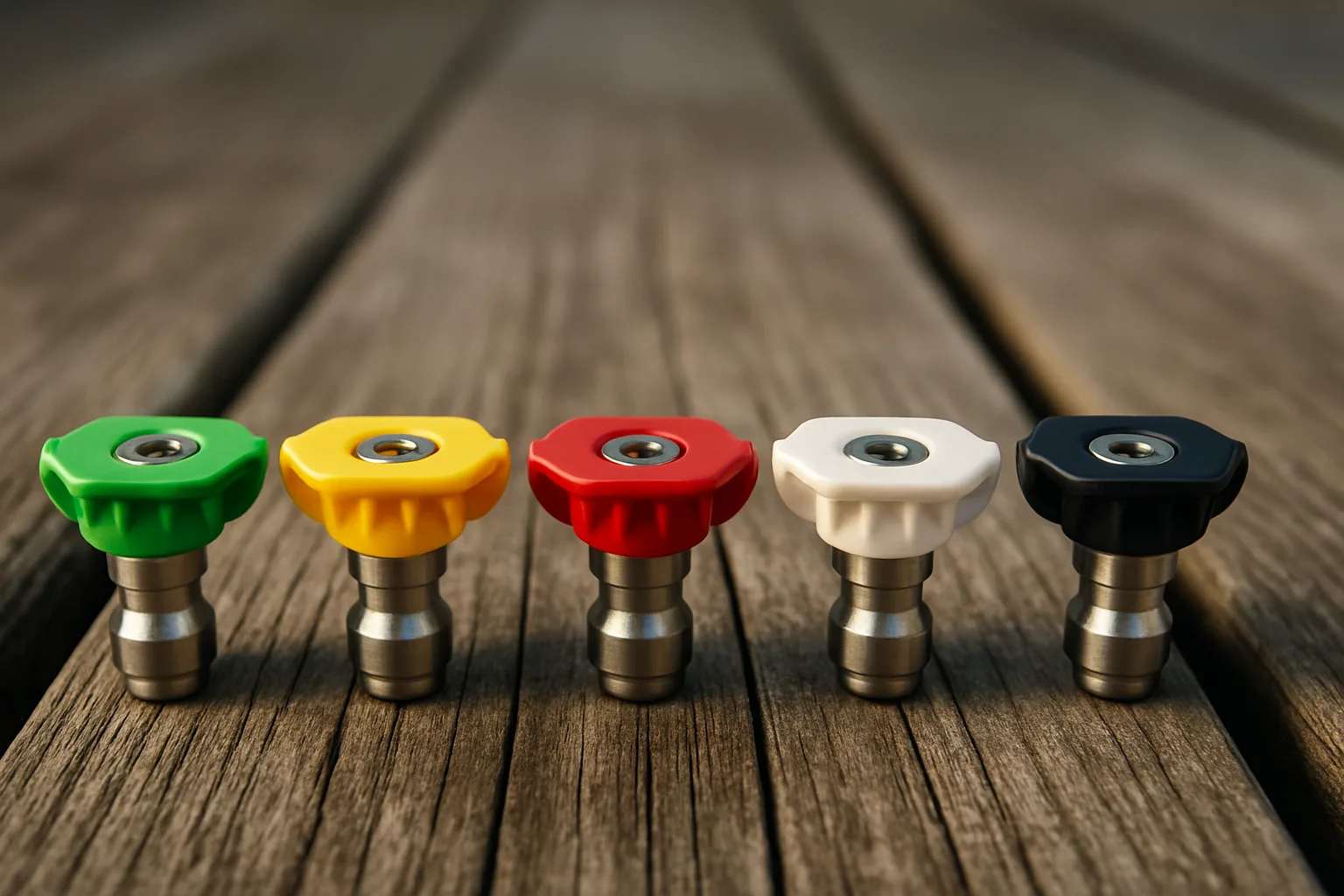
Most brands follow the same color code for quick-connect tips:
- Red, 0°: a pinpoint jet. It can etch concrete, gouge wood, strip paint and tear rubber seals. It has very few safe household uses.
- Yellow, 15°: stripping and heavy grime on concrete and masonry, used from a distance.
- Green, 25°: the general-purpose tip for decks, fences, patio furniture and lawn equipment.
- White, 40°: a wide, gentle fan for cars, windows (from a distance), siding and anything delicate.
- Black, soap: low pressure, used to pull detergent through the machine.
Turbo or rotating nozzles (Greenworks and Westinghouse include one, and Kärcher's DirtBlaster wand works the same way) spin a narrow jet in a cone. They clean concrete quickly but are too harsh for wood and paint at close range.
Always start with the widest tip and the greatest distance, then move closer or narrow the tip only as needed. Test on a hidden spot first.
Matching the machine to the job
Cars and boats
Any electric unit in this guide is enough. Use the 40° tip, stay a couple of feet from the paint, and keep the spray off door seals, badges, chipped paint and wiper blades. A foam cannon helps, but the onboard soap tanks work for routine washes.
Wood decks and fences
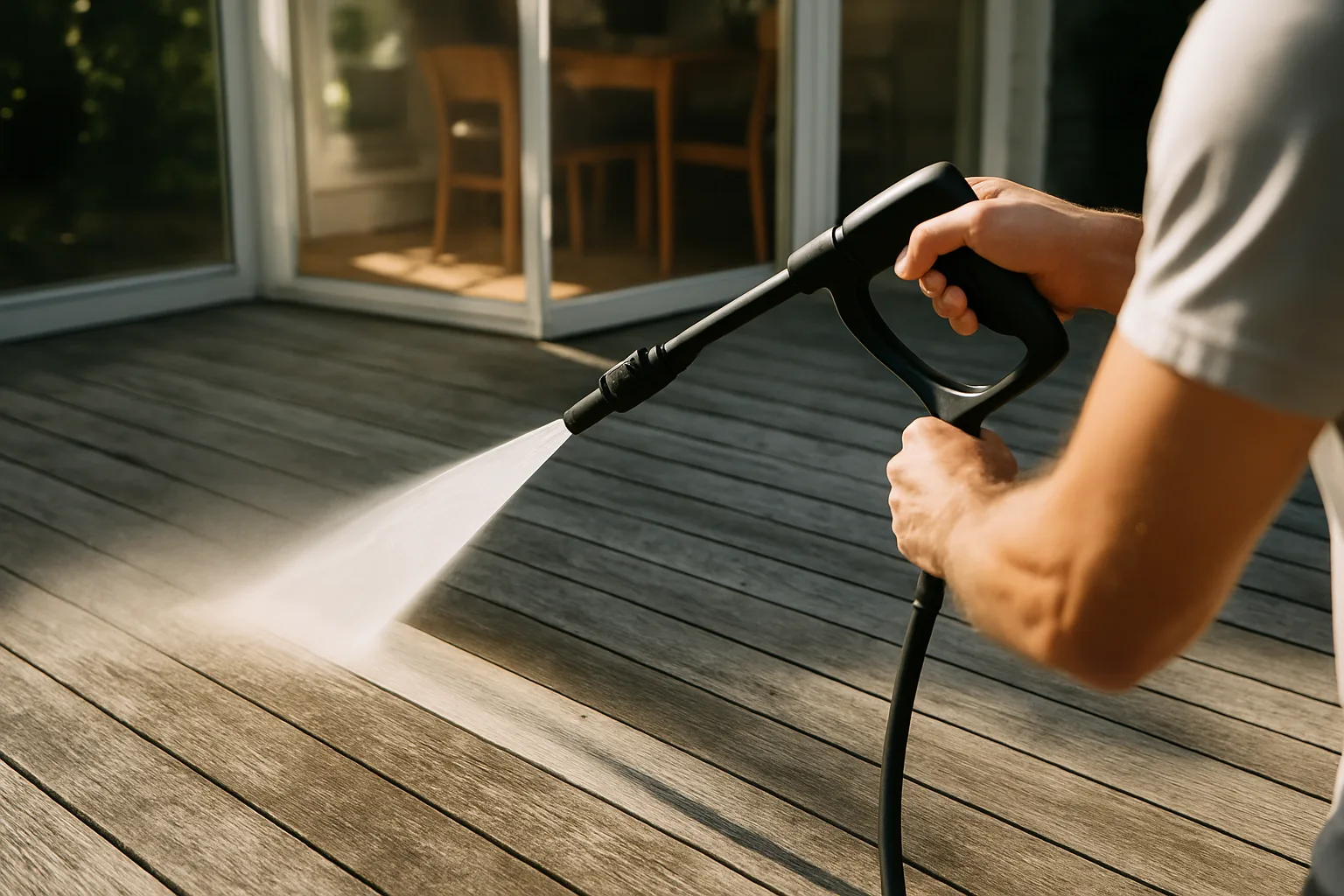
Wood is where most damage happens. Softwoods like pine and cedar "fur" (raise fibers) when the jet is too strong or too close. Use the 25° or 40° tip, keep 12 inches or more from the surface, and work with the grain. Plan to let wood dry fully before sealing or staining. This list of budget deck upgrades covers what comes after the cleaning.
Concrete driveways, walks and patios
This is where flow and a surface cleaner pay off. A wand alone leaves stripes and takes hours on a two-car driveway. A 15-inch surface cleaner spins two jets under a hood, cleaning a wide, even path with less overspray. Check that the cleaner's rating fits the washer: the Edou model is built for 1/4-inch quick-connect electric machines up to 3,000 PSI.
Edou Direct 15-Inch Pressure Washer Surface CleanerView on Amazon →
Siding
Spray at a downward angle, never up under the laps of vinyl or fiber cement, where water gets behind the siding. Keep the stream off windows, vents, light fixtures and electrical boxes. Homes built before 1978 may have lead paint, and blasting old paint can spread chips and dust, so homeowners should have it tested before pressure washing painted surfaces.
Surfaces to skip
- Asphalt shingle roofs. High pressure strips the protective granules. Roofs need low-pressure soft washing or a pro (see these roof maintenance tasks).
- Windows and screens up close. Seals and glazing fail easily. These window cleaning mistakes include pressure washing too close.
- Soft brick, old mortar and stucco. Use the widest tip, test first, or call a pro.
Electrical and personal safety
Water and a 13- to 15-amp motor make electrical protection non-negotiable. Electric pressure washers should have a ground-fault circuit interrupter (GFCI) built into the plug or cord. The Consumer Product Safety Commission has warned consumers to stop using a line of washers sold online that lacked that built-in protection, citing electrocution risk. Buying from an established brand, and checking for the plug-mounted GFCI before first use, avoids that problem.
- Plug into a grounded outdoor outlet. Most manuals discourage extension cords; where one is allowed, use the heavy gauge and short length the manual lists, and lengthen the garden hose instead.
- Never point the wand at people, pets or skin. Water at these pressures can penetrate skin. A study of hand injuries from high-pressure injection found pressure washers caused about 90% of cases and warned that small puncture wounds can hide deep damage, so any injection injury needs prompt medical care.
- Wear closed-toe shoes and eye protection, and engage the trigger lock between passes.
- Never run the pump without water flowing. Turn the water on and squeeze the trigger to purge air before starting the motor.
Setup and care tips
- Thread fittings carefully. When threading a plastic fitting onto metal, turn it backward until it clicks into the thread start, then tighten. Cross-threaded plastic leaks for good.
- Check the inlet screen. A clogged garden-hose filter starves the pump and causes pulsing.
- Use pressure-washer detergents only. Household cleaners and bleach can damage seals.
- Store it drained. In freezing climates, empty the pump and hose and use a pump-protection product per the manual. Freeze damage is a common way these pumps fail.
Who should buy which
Owners who wash a car, a few chairs and a small patio a handful of times a year will be well served by the Sun Joe SPX3000 or the Westinghouse ePX3100. The Westinghouse is the better pick where storage space is tight.
Homeowners who clean siding, a long driveway and a deck every season get more from the Kärcher K5 Premium for durability, or the Greenworks GPW3002A for flow. Either one paired with a surface cleaner turns a full-day driveway job into a couple of hours.
Regular washing is one of the cheaper ways to protect exterior materials and curb appeal. More on that in this look at why exterior maintenance matters, from pressure washing to curb appeal.
Posted by Kristopher Larson
Frequently asked questions
What PSI pressure washer does a homeowner need?
For cars, patio furniture, fences and light deck cleaning, a rated 1,300 to 2,000 PSI electric machine is plenty. Concrete driveways and heavily stained masonry go faster with more flow and a surface cleaner. Rated or PWMA pressure is a better guide than the max PSI printed on the box.
Is PSI or GPM more important on a pressure washer?
Both matter, but GPM (flow) often decides how fast a job goes. PSI loosens dirt, and flow rinses it away and covers more area per pass. Multiplying the two gives cleaning units, a quick way to compare machines.
What is the difference between max PSI and rated PSI?
Max PSI is the peak the pump can produce briefly, and max GPM is often measured at the lowest pressure, so the two never occur together. Rated or working PSI and GPM describe the machine during normal spraying. Westinghouse, for example, lists the ePX3100 at 2,300 max PSI but 1,900 rated PSI.
Can an electric pressure washer damage a wood deck?
Yes. A narrow tip or a nozzle held too close can gouge the surface and raise wood fibers, especially on softwoods like pine and cedar. Using a 25 or 40 degree tip, staying about a foot away and working with the grain keeps the risk low.
Is it safe to pressure wash a car?
With an electric washer, the 40 degree tip and a couple of feet of distance, it is generally safe on sound paint and glass. Keep the spray off rubber seals, trim, badges and any chipped or peeling paint, and never use the 0 degree tip on a vehicle.
Can an extension cord be used with an electric pressure washer?
Many manuals advise against it. Where the manual allows one, it specifies a heavy gauge and limited length to avoid voltage drop and overheating. The safer approach is to plug directly into a grounded GFCI outdoor outlet and use a longer garden hose to reach the work area.
Keep reading
More from the blog
Robot Vacuum and Mop Buying Guide: Mop Types, Docks, Obstacle Avoidance and Top Picks
How to Choose an Air Purifier by Room Size and CADR: Coway vs. Levoit vs. Winix
Best Cordless Stick Vacuums by Home Type: Shark vs. Dyson vs. Dreame vs. Levoit