Whole-House Surge Protectors: Type 1 vs. Type 2, What They Can't Stop, and Square D vs. Siemens vs. Eaton
What a panel surge protector does and doesn't stop, Type 1 vs. Type 2, VPR and kA ratings explained, plus Square D HEPD80, Siemens FSPD140 and Eaton picks.
A modern house is full of circuit boards: the furnace control, the refrigerator, the washer, garage door opener, EV charger, every LED fixture and every smart switch. A brief voltage spike from the utility, a nearby lightning strike on the lines or a large motor cycling on can stress or kill those boards, often without anyone noticing until something stops working. A whole-house surge protector, mounted at the electrical panel, is designed to clip those spikes before they reach the circuits.
It is also one of the most oversold devices in home improvement. This guide explains what a panel-mounted surge protector does and doesn't do, the difference between Type 1, 2 and 3 devices, which specs matter on the label, and how three widely sold models compare.
As an Amazon Associate, Best Utah Real Estate earns from qualifying purchases.
Quick verdict: which whole-house surge protector to buy
- Works with any panel brand, can go on the line side: Square D HEPD80. A Type 1 device rated at 80 kA per phase with a 600 V voltage protection rating line to neutral.
- Highest surge rating of the group: Siemens Boltshield FSPD140. A Type 2 device rated at 140 kA per phase, in an indoor/outdoor NEMA 4X enclosure.
- Eaton panels and a familiar name among electricians: Eaton CHSPT2ULTRA. A Type 2 device rated at 108 kA with an LED status indicator.
- Still needed at the desk and TV: a point-of-use strip such as the APC SurgeArrest P11VNT3, which also protects coax and Ethernet lines.
What a surge protector does, and what it can't do
A surge protective device (SPD) watches voltage, not current. Inside most units are metal oxide varistors (MOVs), components that act like an open switch at normal voltage and become highly conductive when voltage climbs past a threshold. When a spike arrives, the MOVs shunt the excess energy to the neutral and ground conductors and clamp the voltage reaching the home's circuits to a lower, survivable level. Then they reset and wait for the next one.
The surges a home sees most often are modest and frequent:
- From outside: utility switching, capacitor banks switching on and off, faults being cleared on the grid, and lightning that strikes near the power lines rather than the house itself.
- From inside: motors and compressors starting and stopping (HVAC, refrigerators, well pumps), and other inductive loads cycling.
What a panel SPD can't do is stop a direct lightning strike. A direct hit carries enormous energy and needs a dedicated lightning protection system of air terminals, down conductors and ground electrodes that gives the strike a path around the building. Any electrician or product page that sells a panel surge protector as "lightning protection" is overselling it.
Type 1 vs. Type 2 vs. Type 3
UL 1449, the safety standard for surge protective devices, sorts them by where they connect:
- Type 1: permanently connected and allowed between the utility transformer and the line side of the main breaker, as well as on the load side. Type 1 units carry their own internal overcurrent protection, so they don't need a dedicated breaker, although they are often wired to one.
- Type 2: permanently connected on the load side of the main breaker, including at a subpanel. They are connected through a breaker in the panel.
- Type 3: point-of-use devices such as plug-in strips and surge receptacles, intended to sit at least 10 meters (about 30 feet) of wire from the panel.
- Type 4: components built into equipment, like the surge circuitry inside an appliance.
For a typical house, either a Type 1 or Type 2 unit at the main panel does the job. Type 1 adds flexibility for meter-main combinations and outdoor service equipment.
The code now requires one
Recent editions of the National Electrical Code (section 230.67) require a Type 1 or Type 2 SPD on all services supplying dwelling units, built into the service equipment or mounted right next to it, and the requirement also applies when service equipment is replaced. Leviton's summary of the NEC surge requirements walks through the details. Local adoption varies, so the permit office decides which edition applies.
Spec comparison
| Model | Shop | UL type | Surge current rating | VPR (line to neutral) | Enclosure |
|---|---|---|---|---|---|
| Square D HEPD80 | 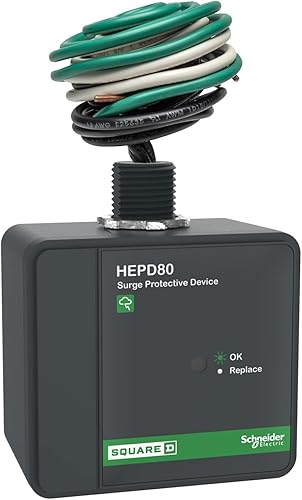 Buy on Amazon Buy on Amazon
| Type 1 | 80 kA per phase | 600 V | NEMA 4X |
| Siemens Boltshield FSPD140 |  Buy on Amazon Buy on Amazon
| Type 2 | 140 kA per phase | 700 V | NEMA 4X |
| Eaton CHSPT2ULTRA |  Buy on Amazon Buy on Amazon
| Type 2 | 108 kA | See spec sheet | NEMA 4 |
| APC SurgeArrest P11VNT3 | Type 3 (plug-in) | 3,020 joules | See listing | Power strip |
Ratings come from manufacturer data sheets and retailer spec listings. Connected-equipment warranty terms vary by model and change over time, so check the current warranty document rather than relying on a listing summary.
Reading the label
Voltage protection rating (VPR)
VPR is the voltage the device lets through during a standardized test surge. Lower is better. A 600 V VPR means the SPD held a test surge down to about 600 volts on that mode. Ratings are listed separately for each mode (line to neutral, line to ground, line to line), so compare the same mode across products.
Maximum continuous operating voltage (MCOV)
MCOV is the highest voltage the device tolerates continuously before it starts conducting. For a standard 120/240 V home, look for 150 V line to neutral. The HEPD80 and FSPD140 are both listed at 150 V.
Surge current rating
The large kA figure (80 kA, 108 kA, 140 kA) is the biggest single surge the device can absorb. A higher number mostly buys longevity, because MOVs wear a little with each surge. The nominal discharge current (In), usually 10 or 20 kA, is the surge level the unit must survive repeatedly in testing. The HEPD80 lists 10 kA; Siemens lists 20 kA for its residential units.
Status lights
MOVs eventually wear out. Most panel units have an indicator light, and on those a dark light usually means the protection is gone and the device needs replacing. Checking it once a season, and after big storms, is worth adding to a home maintenance routine.
The three panel picks
Square D HEPD80
The HEPD80 is a compact, single-phase Type 1 device that Schneider Electric lists at 80 kA per phase, 600 V VPR line to neutral, 1,000 V line to line, 150 V MCOV and a 10 kA nominal discharge rating, in a NEMA 4X enclosure that can mount on any brand of panel. Its Type 1 listing makes it the most flexible to place.
Square D HEPD80 Surge Protection DeviceCheck today’s price on AmazonBuy on Amazon →
Siemens Boltshield FSPD140
The FSPD140 is the current Siemens whole-house unit in the Boltshield line. Retail spec listings show a Type 2 device rated at 140 kA per phase, 700 V VPR line to neutral, 150 V MCOV and a 20 kA nominal discharge rating, in an indoor/outdoor NEMA 4X enclosure. The VPR is a little higher than the Square D's, but the surge capacity is the highest of the three, which matters most for longevity in areas with frequent storms.
Siemens Boltshield FSPD140Check today’s price on AmazonBuy on Amazon →
Eaton CHSPT2ULTRA
Eaton's CHSPT2ULTRA is a Type 2 unit rated at 108 kA with a 20 kA nominal discharge current, a NEMA 4 enclosure and LED indication. It's a common choice for homes with Eaton CH or BR panels, where electricians already stock matching breakers.
Eaton CHSPT2ULTRA Surge ProtectorCheck today’s price on AmazonBuy on Amazon →
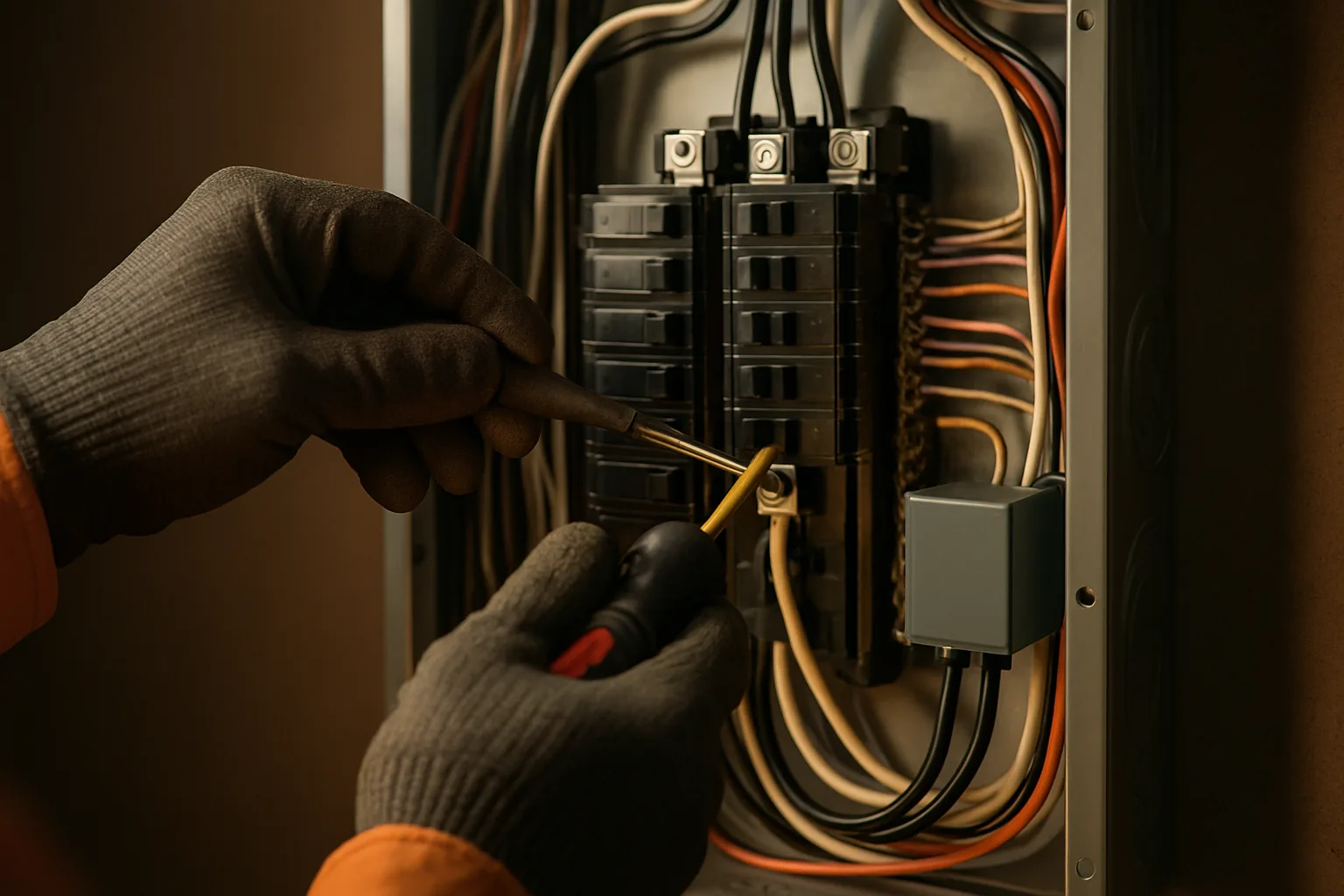
Installation: a licensed electrician's job
Every panel SPD is installed with the panel open and live parts exposed. In most areas it is permitted electrical work. A few details affect how well it works:
- Short leads. Every inch of wire adds impedance and lets more voltage through. Electricians mount the device as close to the panel as possible and trim leads rather than coiling extra.
- Breaker position. A Type 2 unit connects through a breaker in the panel, and the manufacturer's instructions set its size.
- Good grounding. An SPD diverts energy to ground. A home with an old, corroded or missing grounding electrode connection won't get full benefit, and that is worth having checked at the same time.
Layered protection: why the strip still matters
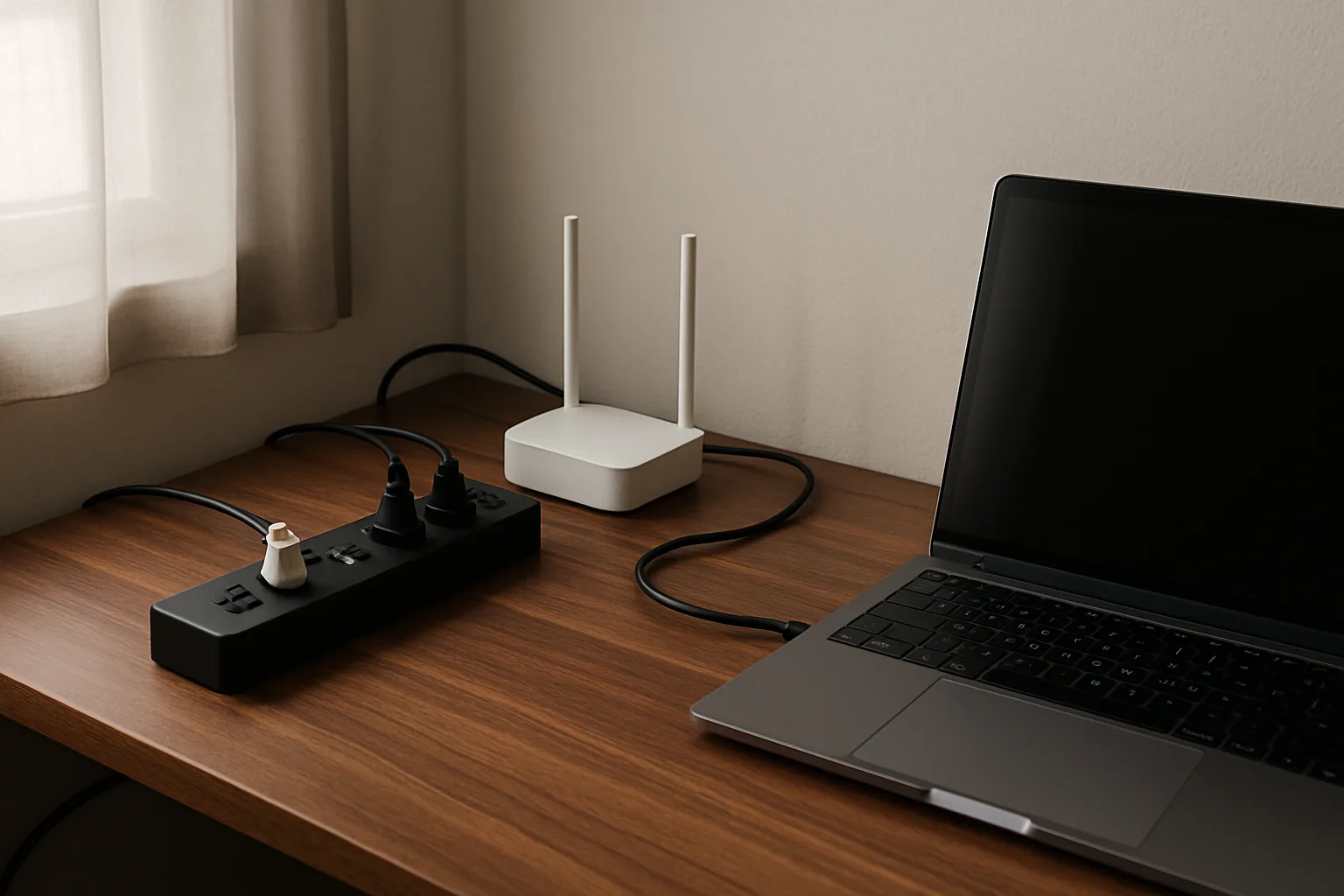
A panel device takes the edge off large incoming surges, but it can't stop spikes created inside the house, and surges can also arrive on cable, phone and network lines that never pass through the panel. Square D, for one, says its panel devices are meant to work together with plug-in surge strips, which add a second layer at sensitive electronics. The APC SurgeArrest P11VNT3 is rated at 3,020 joules and adds coax, phone and Ethernet protection, which covers a TV, a modem and a mesh Wi-Fi router in one place.
Surge protection doesn't keep anything running during an outage. Households that need the furnace, sump pump or fridge to keep going should look at whether a standby generator is worth it or a portable power station. Buyers and sellers can also note the SPD on an inspection or disclosure, along with other electrical and efficiency upgrades.
Who should buy which
- Any panel brand, or meter-main and outdoor service equipment: Square D HEPD80 (Type 1).
- Frequent storms or a home with lots of electronics, wants the largest surge rating: Siemens Boltshield FSPD140.
- Eaton panel, or an electrician who stocks Eaton: Eaton CHSPT2ULTRA.
- Everyone: a quality plug-in strip at the TV, computer and network gear as the second layer.
Posted by Kristopher Larson
Frequently asked questions
Is a whole-house surge protector worth it?
For most homes, yes. Appliances, HVAC equipment, EV chargers and LED lighting all rely on circuit boards that can be damaged by voltage spikes from the utility or from motors cycling inside the house. A panel-mounted surge protective device clamps those spikes at the service, and current editions of the National Electrical Code require one on dwelling services.
Does a whole-house surge protector protect against lightning?
Not against a direct strike. A direct hit carries far more energy than any panel device can absorb and needs a dedicated lightning protection system with air terminals, down conductors and grounding. A surge protector helps with the much more common surges caused by lightning striking near utility lines, grid switching and equipment inside the home.
What is the difference between a Type 1 and Type 2 surge protector?
Under UL 1449, Type 1 devices are permanently connected and may be installed on the line side of the main breaker as well as the load side, and they don't require external overcurrent protection. Type 2 devices are installed on the load side of the main breaker, including at subpanels, and connect through a breaker. Either type satisfies the NEC dwelling requirement.
Is a whole-house surge protector required by code?
Section 230.67 of recent National Electrical Code editions requires a Type 1 or Type 2 surge protective device on services supplying dwelling units, located in or next to the service equipment, including when service equipment is replaced. Local jurisdictions adopt code editions on their own schedules, so the local permit office confirms what applies.
Can a homeowner install a whole-house surge protector?
Installation requires working inside an energized electrical panel, and in most areas it is permitted electrical work. A licensed electrician should install it, keep the leads as short as possible, size the breaker per the manufacturer's instructions and confirm the home's grounding is sound.
Are surge protector power strips still needed with a whole-house unit?
Yes. A panel device reduces large incoming surges but can't stop spikes created inside the home or surges that arrive on cable, phone or network lines. A quality plug-in surge strip at the TV, computer and network equipment adds a second layer, and Square D describes its panel devices as designed to work alongside plug-in strips.
Keep reading
More from the blog
Pellet Grill Buying Guide: Weber Searwood vs. Traeger Woodridge vs. Pit Boss vs. Camp Chef
Propane vs. Electric Patio Heaters: Mushroom vs. Infrared vs. Tabletop, and How Much Heat a Patio Needs
Chain vs. Belt vs. Wall-Mount Garage Door Openers: Chamberlain vs. Genie, Plus Smart Retrofits