Propane vs. Electric Patio Heaters: Mushroom vs. Infrared vs. Tabletop, and How Much Heat a Patio Needs
Propane or electric? Watts vs. BTUs, infrared vs. mushroom heaters, tank runtime and placement rules, plus Amazon Basics, Dr Infrared and Hiland picks.
A patio heater can stretch outdoor season by months, but the wrong one leaves guests huddled around a glowing tube while the heat blows away. The choice comes down to fuel (propane, natural gas or electric), how the heater delivers warmth (warming the air versus radiant infrared that warms people directly), and whether it is portable or permanently mounted. Numbers help: comparing watts and BTUs on the same scale makes it obvious why a plug-in electric heater and a tall propane tower are not the same class of product.
As an Amazon Associate, Best Utah Real Estate earns from qualifying purchases.
Quick verdict
- Most heat for an open patio, no wiring: a full-size propane mushroom heater such as the Amazon Basics 46,000 BTU patio heater, which runs on a standard 20-pound tank.
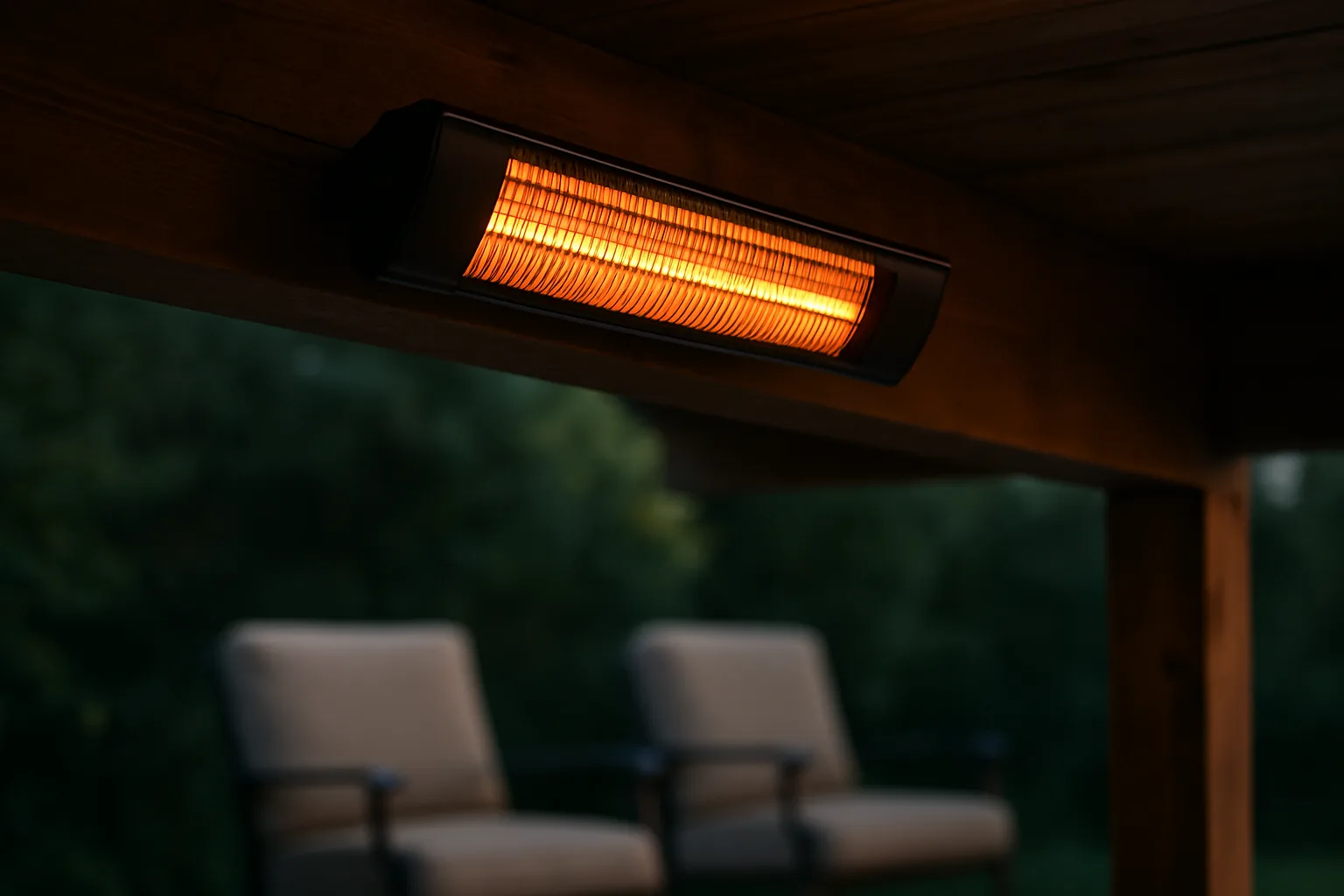
- Covered patio or porch with an outlet: a wall- or ceiling-mounted electric infrared heater like the Dr Infrared DR-238, a 1,500-watt, 120-volt unit with three heat settings.
- More electric heat for a larger covered space: the 240-volt, 3,000-watt Dr Infrared DR-239, which needs a matching 240-volt circuit.
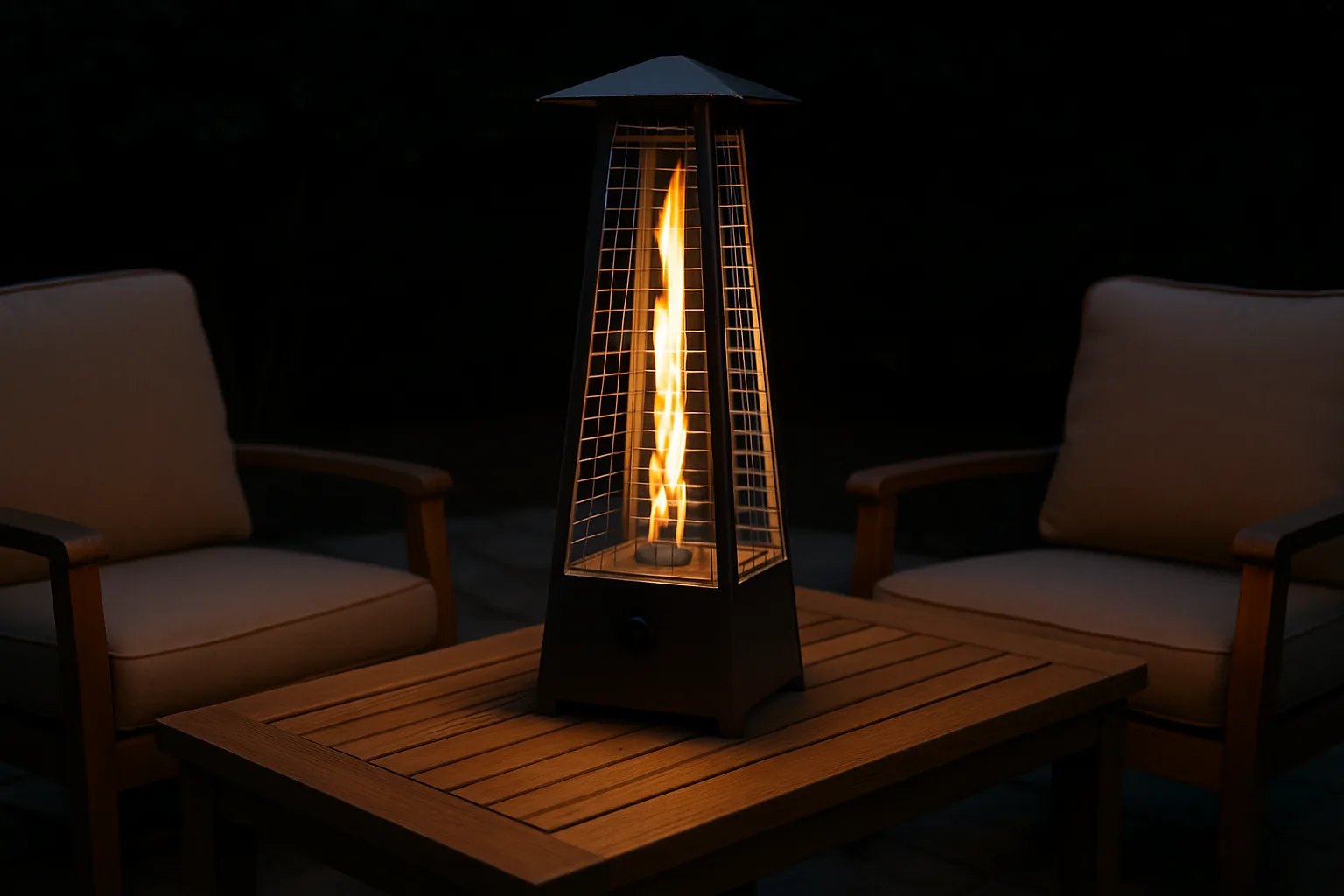
- Ambience at a small table: a tabletop pyramid flame heater like the Hiland HLDS032-GTTSS, about 10,000 BTU on a 1-pound cylinder. It looks great and warms a couple of people nearby, not a whole patio.
Watts vs. BTUs: putting heaters on the same scale
Gas heaters are rated in BTUs per hour and electric heaters in watts. The U.S. Energy Information Administration lists 3,412 BTUs per kilowatt-hour of electricity and about 91,500 BTUs per gallon of propane, which makes the conversion simple:
- A 1,500-watt plug-in electric heater produces about 5,100 BTUs per hour.
- A 3,000-watt, 240-volt electric heater produces about 10,200 BTUs per hour.
- A tall propane mushroom heater at 46,000 BTUs per hour puts out roughly nine times the energy of a 1,500-watt heater.
Raw output is not the whole story, because electric infrared heaters aim their energy at people and surfaces, while much of a propane tower's heat rises and drifts away in open air. Still, the gap explains why a single plug-in heater suits a covered nook or a couple of chairs, while an open patio party needs gas or several hardwired electric units.
Infrared vs. convective heat
Radiant infrared heaters warm the people, furniture and floor in their line of sight, much like sunlight. Because they don't depend on warming the air, they hold up better in a breeze. Most electric patio heaters are infrared, and so are the reflector-topped mushroom heaters, though those also lose a lot of heat upward. Heaters that mainly warm the air work best in enclosed or screened spaces; in the open, wind carries that warm air off almost immediately. For patios that are open on several sides, infrared is the more efficient choice.
Spec comparison
| Heater | Shop | Fuel / power | Output | Install | Best for |
|---|---|---|---|---|---|
| Amazon Basics 46,000 BTU |  Buy on Amazon Buy on Amazon
| Propane, 20 lb tank | 46,000 BTU/hr | Freestanding, wheels | Open patios, gatherings |
| Dr Infrared DR-238 |  Buy on Amazon Buy on Amazon
| Electric, 120V | 900 / 1,200 / 1,500 W (about 5,100 BTU/hr max) | Wall or ceiling mount, plug-in | Covered patios, porches, small groups |
| Dr Infrared DR-239 |  Buy on Amazon Buy on Amazon
| Electric, 240V plug | 3,000 W (about 10,200 BTU/hr) | Wall or ceiling mount, 240V outlet | Larger covered spaces |
| Hiland HLDS032-GTTSS |  Buy on Amazon Buy on Amazon
| Propane, 1 lb cylinder | About 10,000 BTU/hr | Tabletop | Ambience, one or two seats |
The picks in detail
Amazon Basics 46,000 BTU propane heater
Amazon Basics 46,000 BTU Patio HeaterCheck today’s price on AmazonBuy on Amazon →
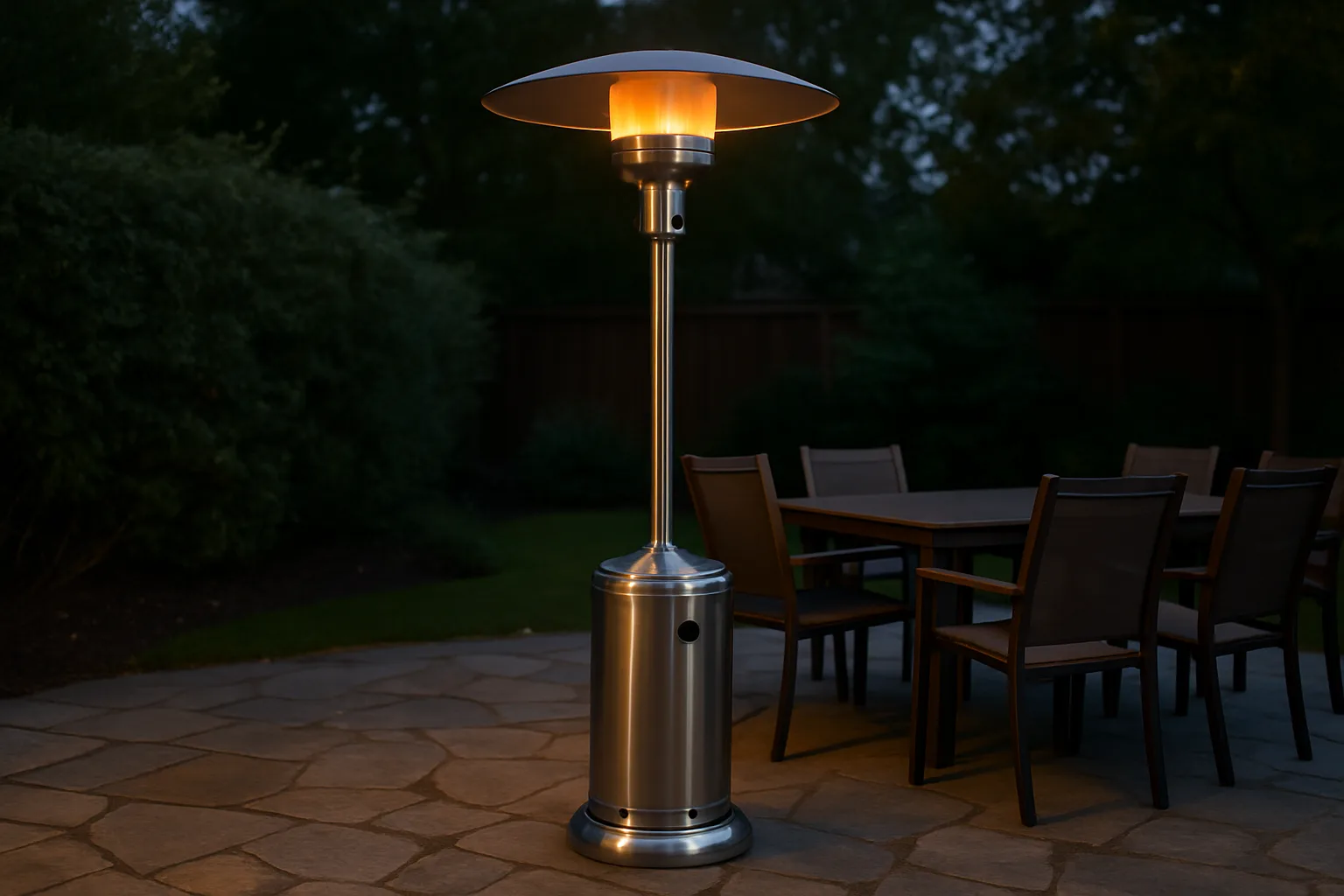
This is the classic mushroom-style tower: a burner under a wide reflector cap on a pole, with a 20-pound propane tank hidden in the base and wheels for moving it. It is rated at 46,000 BTUs per hour with an adjustable output knob, and Amazon lists a heating radius of about 9 feet. The appeal is simple: lots of heat anywhere on a patio, no electrician, and refills at any tank exchange. Using the EIA figure, a full 20-pound tank (about 4.7 gallons) holds roughly 430,000 BTUs, which works out to around nine hours on high and longer at lower settings. Expect to secure it against wind and check that the unit has a tip-over shut-off before use.
Dr Infrared DR-238: the plug-in electric
Dr Infrared DR-238Check today’s price on AmazonBuy on Amazon →
The DR-238 is a carbon infrared heater that runs on an ordinary 120-volt outlet with 900-, 1,200- and 1,500-watt settings and a remote. It is IP55-rated for outdoor use and mounts to a wall or ceiling, out of the way of foot traffic. There is no flame, fuel or exhaust, and it warms people almost instantly. The limit is output: around 5,100 BTUs per hour at full power warms a seating area or a couple of chairs under a roof, not a wide-open deck. A 1,500-watt heater also uses most of a standard 15-amp circuit, so it should not share that circuit with other big loads.
Dr Infrared DR-239: twice the electric heat
Dr Infrared DR-239Check today’s price on AmazonBuy on Amazon →
The DR-239 doubles the output to 3,000 watts, about 10,200 BTUs per hour, by running on 240 volts. Its cord uses a NEMA 6-15 plug, so most homes need an electrician to add a matching 240-volt outdoor receptacle on its own circuit. It is also IP55-rated and mounts on a wall or ceiling. For larger covered patios, several of these spaced along the seating area give even, quiet heat. Larger permanent installations can add up to a lot of amperage, so it is worth confirming panel capacity before planning multiple heaters.
Hiland tabletop pyramid heater: flame for the table
The Hiland HLDS032-GTTSS is a 39-inch tabletop version of the glass-tube pyramid heaters seen at restaurants, rated around 10,000 BTUs and fueled by a 1-pound propane cylinder. The dancing flame in the quartz tube is the main attraction. Glass-tube designs send a lot of their heat upward, so treat it as ambience plus a little warmth for the people sitting closest. Full-size pyramid heaters in the 40,000-BTU range exist too, but they generally warm less effectively than a mushroom-style heater of similar output.
How much heat does a patio need?
Square footage alone is a poor guide. The factors that matter most:
- Mounting height. The higher an electric heater is mounted, the more powerful it needs to be to feel warm at seat level. Follow the manufacturer's minimum clearances and recommended mounting heights.
- Enclosure. A covered patio with a wall or two holds heat far better than an open deck. Drop-down screens or windbreaks make any heater more effective.
- Wind. Wind strips heated air away quickly. Infrared handles it best, but windy sites still need more heat than calm ones.
- Temperature. Heaters work below freezing, but comfort drops fast in open air. In cold climates, plan more output than seems necessary. Undersizing is the most common complaint, while an oversized heater can simply be turned down.
Safety and placement
- Propane heaters are outdoor-only. They produce carbon monoxide and must never be used in a garage, tent, enclosed porch or any closed space.
- Clearances. Keep flame heaters well away from umbrellas, awnings, siding, branches and furniture, using the distances in the owner's manual.
- Stability. Set freestanding heaters on level ground, anchor them in wind, and choose models with a tip-over shut-off.
- Propane storage. Store tanks outdoors, upright and away from ignition sources, not in the house or garage, and check connections with soapy water for leaks.
- Electrical. Use outdoor-rated, GFCI-protected outlets, avoid extension cords for high-wattage heaters, and have hardwired or 240-volt units installed by a licensed electrician.
Heat is one piece of a usable outdoor room. A smokeless fire pit adds a gathering point, and these ideas for outdoor spaces that feel like living rooms and budget deck upgrades cover furniture, lighting and layout. For buyers and sellers, a covered patio with built-in heat is one of the outdoor features that makes a backyard feel like extra living space.
Bottom line
For an open patio and the most heat with no wiring, a 46,000-BTU propane mushroom heater remains the practical default. For a covered patio, electric infrared is cleaner, quieter and cheaper to live with: a 1,500-watt plug-in unit for a small area, or 240-volt, 3,000-watt heaters for bigger spaces. Tabletop flame heaters are for atmosphere. Whatever the fuel, size generously and respect clearances.
Posted by Kristopher Larson
Frequently asked questions
Are electric or propane patio heaters better?
Propane heaters put out far more heat and need no wiring, so they suit open patios and gatherings. Electric infrared heaters produce no flame or exhaust, are quiet, and warm people directly, which makes them the better choice for covered patios and porches. Many homes use electric heaters under a roof and a propane tower for open areas.
How long does a 20-pound propane tank last in a patio heater?
A full 20-pound tank holds about 4.7 gallons of propane, or roughly 430,000 BTUs using the EIA's figure of about 91,500 BTUs per gallon. A 46,000-BTU heater on high therefore runs around nine hours, and longer on lower settings. Cold weather and wind do not change the math, but they make people turn the heater up.
How many BTUs is a 1,500-watt electric patio heater?
About 5,100 BTUs per hour. One watt equals about 3.412 BTUs per hour, so 1,500 watts converts to roughly 5,100 BTUs and a 3,000-watt heater to about 10,200. Because electric patio heaters are usually infrared and aim their heat at people, they feel warmer than the raw number suggests, but they still cover a smaller area than a large propane heater.
Can a propane patio heater be used on a covered patio or in a garage?
Propane heaters must never be used in a garage or any enclosed space because they produce carbon monoxide. On a covered patio, follow the manufacturer's overhead and side clearances carefully, and keep the area well ventilated. For covered spaces, a mounted electric infrared heater is usually the safer and more practical option.
Do patio heaters work in freezing weather?
Yes, but comfort drops quickly in open air below freezing. Infrared heaters hold up better in wind and cold because they warm people rather than the air. Covered, partially enclosed spaces with windbreaks or drop-down screens make any heater far more effective, and it is better to oversize than undersize.
Do electric patio heaters need a special outlet?
A 1,500-watt, 120-volt heater plugs into a standard outdoor GFCI outlet but uses most of a 15-amp circuit. Higher-output models, such as 3,000-watt heaters, run on 240 volts and need a matching receptacle or hardwired circuit installed by an electrician. Several heaters on one patio can require significant panel capacity.
Keep reading
More from the blog
Whole-House Surge Protectors: Type 1 vs. Type 2, What They Can't Stop, and Square D vs. Siemens vs. Eaton

UPS Battery Backup for a Router, Modem or PC: Runtime, Sine Wave and APC vs. CyberPower Picks
Chain vs. Belt vs. Wall-Mount Garage Door Openers: Chamberlain vs. Genie, Plus Smart Retrofits