Are Smart Locks Safe? Security Grades Explained, Plus Schlage vs. Yale vs. Level Picks
How ANSI/BHMA AAA and Grade 1 lock ratings work, where front doors really fail, and smart lock picks from Schlage, Yale and Level by security grade.
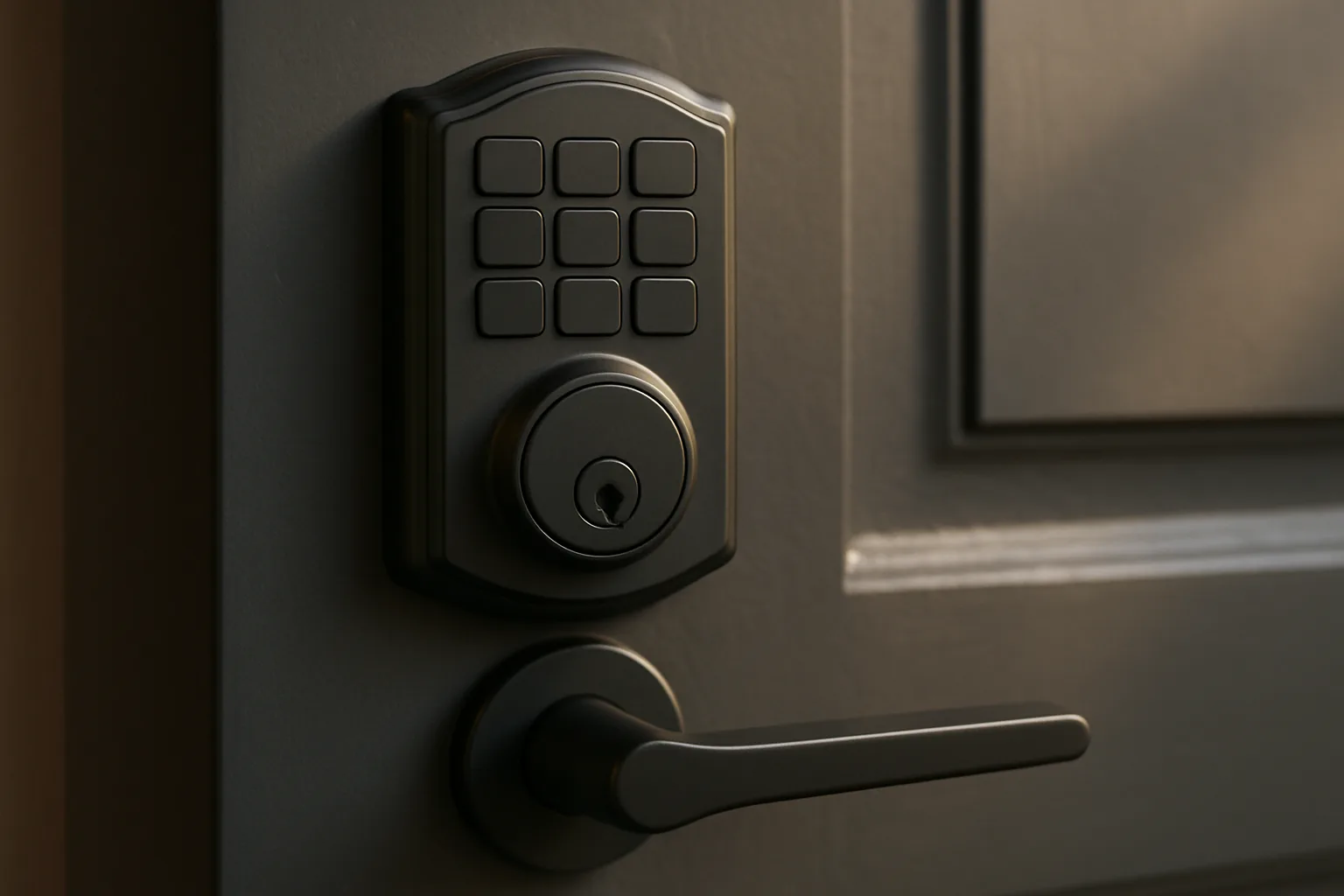
A smart lock replaces a metal key with a code, a phone or a fingerprint, and that swap makes plenty of homeowners nervous. The worry usually comes in three forms: someone could hack it, it could die and lock the family out, or it is simply flimsier than a regular deadbolt. The physical question has the clearest answer, because smart deadbolts are graded under the same industry standards as ordinary ones. This guide explains those ratings, where the real weak points of a front door are, and which smart locks carry the strongest published grades.
As an Amazon Associate, Best Utah Real Estate earns from qualifying purchases. Product picks are based on published specs and independent testing data, not paid placement.
Quick verdict: the safest smart locks by type
- Best overall smart deadbolt: the Schlage Arrive Smart WiFi Deadbolt, rated AAA under the residential deadbolt standard and Grade 1 under the commercial one, with built-in Wi-Fi and a backup key.
- Best for app features and a door sensor: the Yale Assure Lock 2 with Wi-Fi. Yale's DoorSense sensor tells the lock whether the door is actually shut before it auto-locks.
- Best for Apple Home and Matter homes: the Level Lock+ (Matter), which looks like a plain deadbolt and carries a AAA BHMA certificate.
- Best for renters or anyone keeping their current deadbolt: the Yale Approach with Keypad, which mounts on the inside over the existing thumbturn.
- Best for a door without a deadbolt: the Schlage Encode Smart WiFi Lever, a keypad lever rated Commercial Grade 1.
Smart lock comparison table
| Model | Type | Published BHMA rating | Connection | Backup entry |
|---|---|---|---|---|
| Schlage Arrive Smart WiFi Deadbolt | Deadbolt replacement, keypad | A156.40 AAA; A156.36 Commercial Grade 1 | Built-in Wi-Fi (2.4GHz) plus Bluetooth | Physical key |
| Yale Assure Lock 2 (keyed, Wi-Fi) | Deadbolt replacement, touchscreen | Grade 2, per Yale | Built-in Wi-Fi | Physical key |
| Level Lock+ (Matter) | Deadbolt replacement, no keypad on the lock | A156.40 AAA, per BHMA certificate | Matter over Thread; Apple Home Key | Physical key |
| Yale Approach with Keypad | Retrofit over existing deadbolt | Same as the existing deadbolt | Bluetooth plus included Wi-Fi bridge | Existing key |
| Schlage Encode Smart WiFi Lever | Keypad lever (no deadbolt) | A156.36 Commercial Grade 1; residential AAA | Built-in Wi-Fi (2.4GHz) | Physical key |
Ratings are as published by each manufacturer or in BHMA certification documents. Grades apply to a specific model number, so confirm the exact model on the listing.
How lock security ratings work
The Builders Hardware Manufacturers Association (BHMA) writes the ANSI standards that locks are tested against. The one written for homes is ANSI/BHMA A156.40 for residential deadbolts. It grades a lock in three separate categories, each on an A, B or C scale:
- Security: how well the lock resists physical attack.
- Durability: how it holds up to years of locking and unlocking.
- Finish: how well the coating resists corrosion and wear, tested under a companion standard.
A lock marketed as "AAA" earned the top grade in all three. A lock might also be rated "ABA" or "BBB," and each letter is judged on its own, so a lock can have a strong finish and only middling security. Older and commercial ratings use a numbered scale instead: under A156.36, the standard for commercial auxiliary locks, Grade 1 is the toughest and Grade 3 the lightest. Seeing both ratings on one product, as with the Schlage Arrive, means it passed the residential and the commercial tests.
The standard itself notes that results come from a lab and that real-world performance depends on installation and on how the door and frame are built. That caveat matters more than any grade.
The real weak point is the door frame
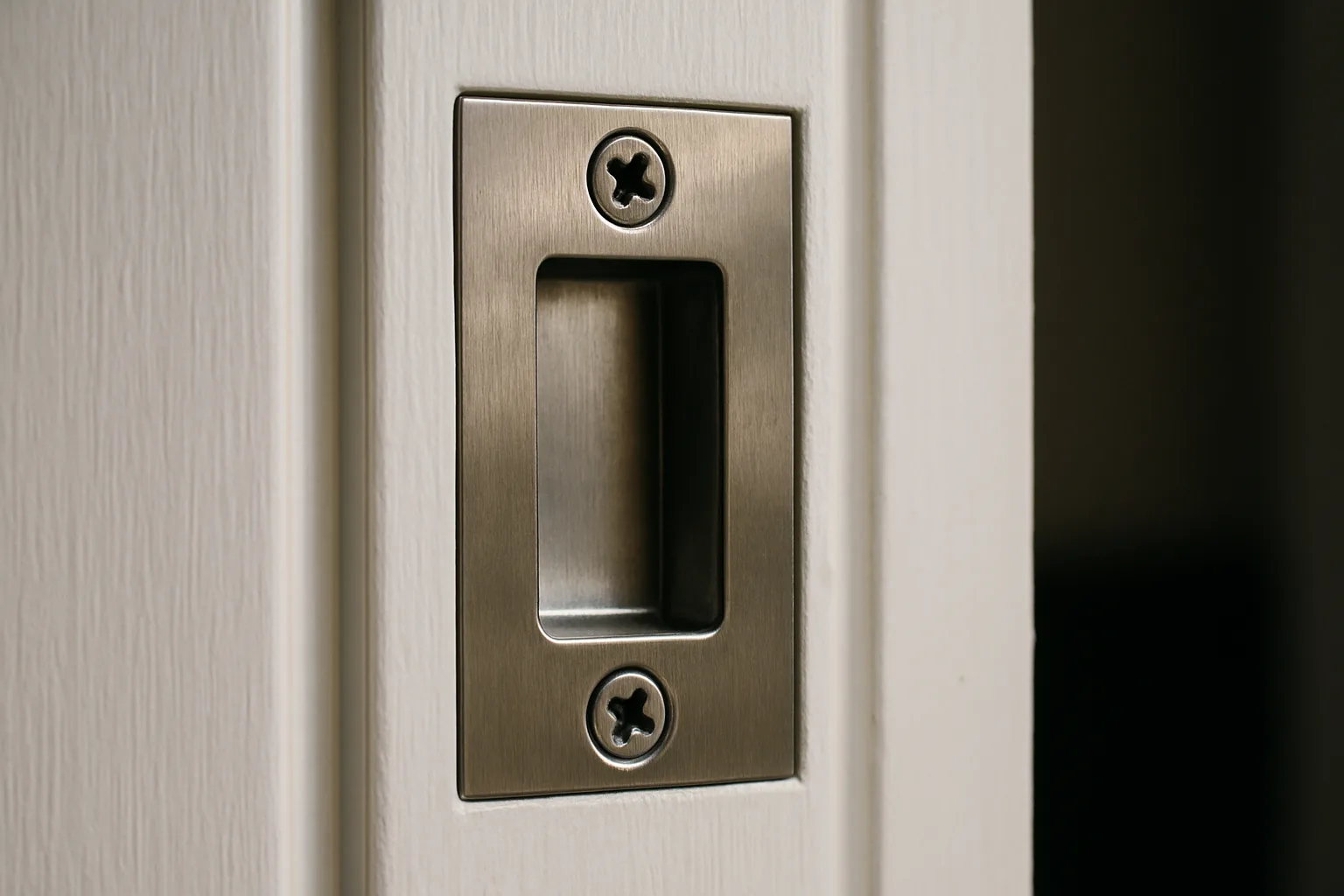
When a door is kicked in, the lock usually survives and the wood around it splits. Seattle Police crime-prevention guidance puts it bluntly: the weakest point is almost always the strike plate, which on many doors is held only by short screws into thin trim. Its door security checklist recommends a heavy-duty strike plate fastened with 3- to 4-inch wood screws that reach the framing stud, plus at least one long screw in each hinge.
That upgrade costs a few dollars in screws and protects any lock, smart or not. Before spending more for a top-grade smart deadbolt, it makes sense to check:
- Strike plate screws are long enough to bite into the stud, not just the trim.
- The deadbolt extends fully into the strike; a bolt that has to be forced will wear the motor and may not lock at all.
- Hinges on outward-facing doors are secured with long screws too.
- Glass near the lock is not close enough for someone to reach through and turn an inside thumbturn.
Can a smart lock be hacked?
In theory, yes, like any connected device. In practice, the documented risks are more ordinary: weak or reused app passwords, codes handed to contractors or dog walkers and never deleted, and accounts shared too widely. A few habits close most of those gaps:
- Turn on two-factor authentication for the lock maker's app.
- Give every person their own code, and use scheduled or temporary codes for service visits.
- Check the access log occasionally and delete codes that are no longer needed.
- Install firmware updates when the app offers them.
Smart locks can also add security an old deadbolt can't. Most can send an alert whenever the door unlocks, and many can lock themselves automatically a set time after unlocking. The Yale Assure Lock 2 pairs auto-lock with its DoorSense sensor so it only throws the bolt once the door is closed, and the Schlage Encode lever has a built-in alarm that sounds when it detects a forced-entry attempt.
What happens when the Wi-Fi or batteries die
Smart locks run on their own batteries, not house power, so a power outage doesn't affect them. If the Wi-Fi goes down, the lock loses remote control and notifications, but codes still work at the door. Schlage says the Arrive keeps codes and schedules active through Wi-Fi or power outages, and its Bluetooth connection lets the app work from close range without Wi-Fi.
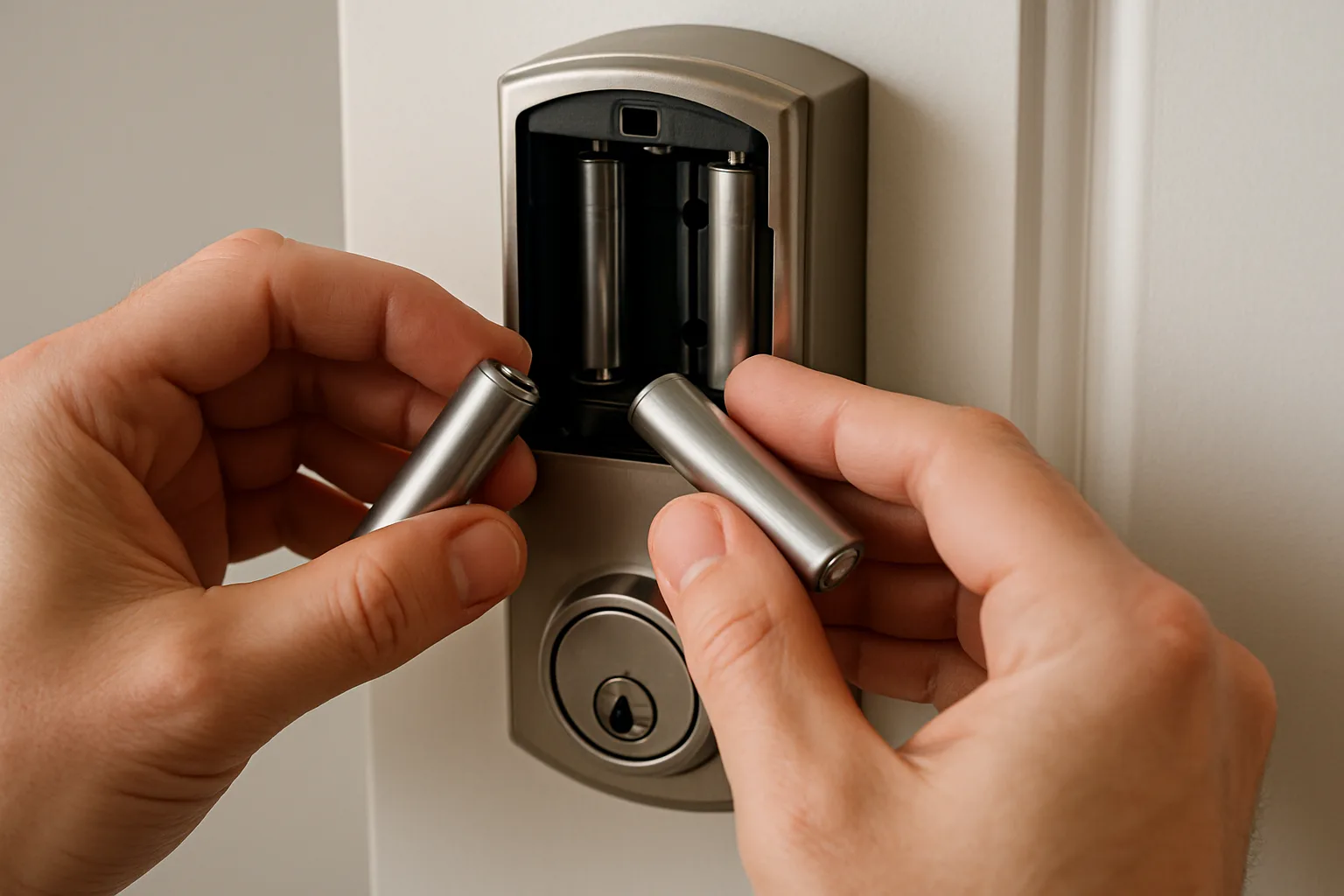
Batteries are the more realistic concern. Locks warn well ahead of time with a light on the lock, a beep and an app notification. Schlage rates the Arrive at up to six months on four AA batteries with typical use. If the warnings are ignored, every lock in this guide still has a physical key cylinder (the Yale Approach keeps the home's existing key), so there is always a manual way in.
The picks in more detail
Schlage Arrive Smart WiFi Deadbolt
The Arrive is Schlage's newer Wi-Fi keypad deadbolt and holds the strongest published ratings here: AAA under A156.40 and Commercial Grade 1 under A156.36. It connects directly to 2.4GHz Wi-Fi with no hub, stores up to 250 access codes, works with Alexa and Google Assistant, and installs with a screwdriver on standard doors 1-3/8 to 1-3/4 inches thick. Schlage backs the mechanical parts and finish with a limited lifetime warranty and the electronics for three years.
Schlage Arrive Smart WiFi DeadboltView on Amazon →
Yale Assure Lock 2 with Wi-Fi
Yale rates the Assure line to ANSI/BHMA Grade 2, a step below the Schlage. What it offers in return is a better-featured app, support for the DoorSense door-position sensor, and auto-unlock when the owner's phone arrives. The keyed touchscreen version linked here keeps a key cylinder; a key-free version and a fingerprint version are also sold. Buyers who want the toughest physical rating should favor the Schlage; buyers who value door-ajar alerts and app polish often pick the Yale.
Level Lock+ (Matter)
Level hides its motor and battery inside the bolt, so from the outside the Lock+ looks like an ordinary deadbolt. BHMA's certificate for Level lists the Lock+ at AAA. This version connects over Matter on Thread and supports Apple Home Key, which unlocks the door with a tap of an iPhone or Apple Watch. Remote access requires a Thread border router, such as a compatible Apple TV 4K or HomePod mini. There is no keypad on the lock itself; Level sells one separately.
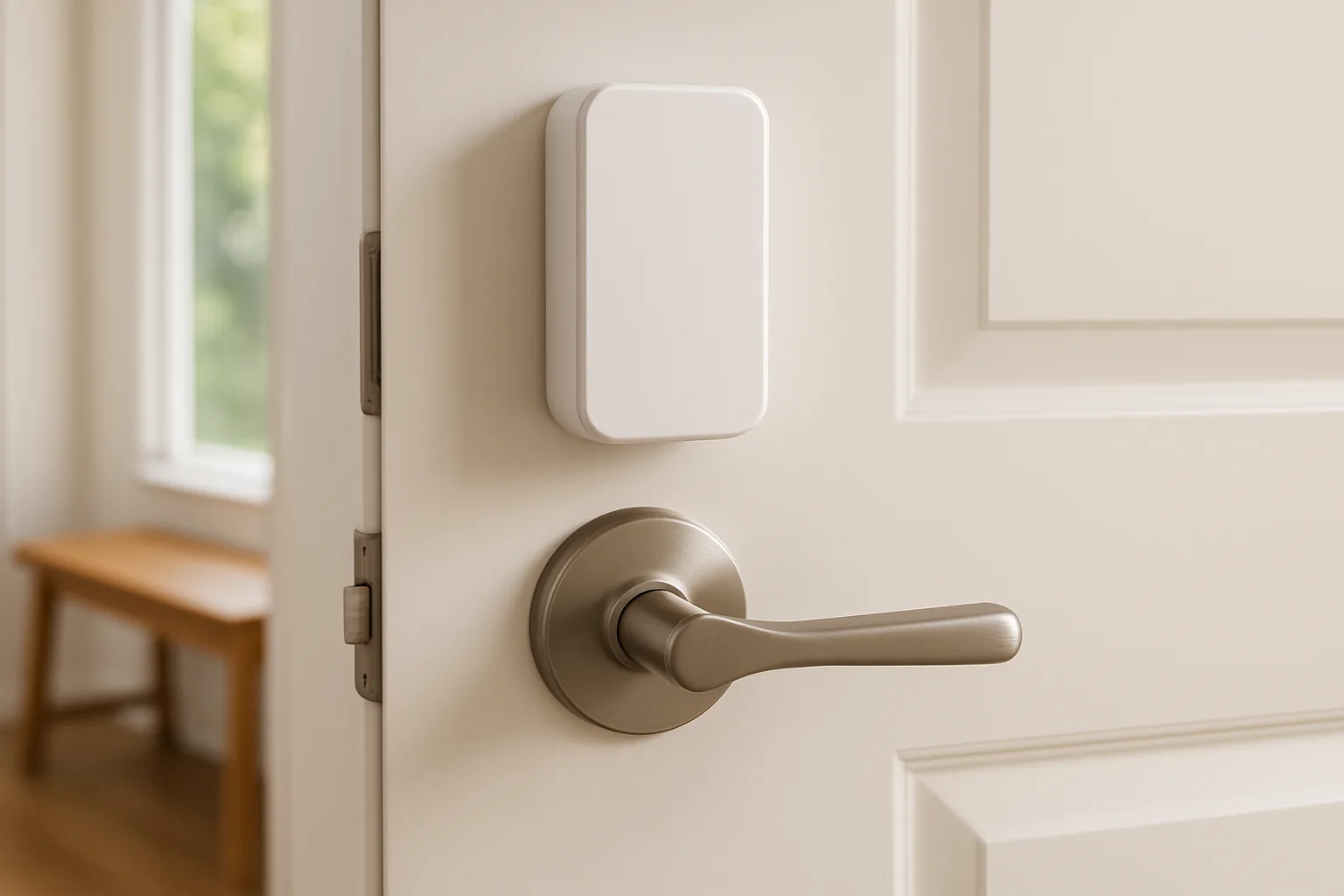
Yale Approach with Keypad
The Approach replaces only the inside thumbturn of an existing deadbolt, so the outside of the door and the existing keys stay the same. That makes it a good fit for renters and for homeowners who already have a high-grade deadbolt they like. Because the original deadbolt does the locking, its security is only as good as that deadbolt. The kit includes a Wi-Fi bridge and a Bluetooth touchscreen keypad rated IPX5 for weather. The Nuki smart lock overview covers another retrofit design that works the same way.
Yale Approach with KeypadView on Amazon →
Schlage Encode Smart WiFi Lever
Doors that only have a knob or lever, such as many garage-to-house doors and some apartment entries, can't take a smart deadbolt. Schlage's Encode lever is the solution: a keypad lever with built-in Wi-Fi, room for 100 access codes, and a forced-entry alarm. Schlage's spec sheet lists it at A156.36 Commercial Grade 1 and residential AAA, and it is UL listed for 20-minute fire doors, which matters on many attached-garage doors. A lever latch is still easier to pry than a full deadbolt, so the main front door is better served by a deadbolt.
Who should buy which
- Homeowners who want the strongest rating: Schlage Arrive.
- Households that forget to lock up: Yale Assure Lock 2, for DoorSense and auto-lock.
- Apple Home users: Level Lock+ (Matter).
- Renters, or anyone keeping their hardware: Yale Approach.
- Garage entry or doors with no deadbolt: Schlage Encode lever.
A smart lock works best alongside a video doorbell, so owners can see who is at the door before unlocking it, and both can show up on a wall-mounted panel like the one in the Amazon Echo Hub review. For the door itself, the guide to European exterior doors explains how multipoint locking and frame construction add strength.
Bottom line
A well-rated smart deadbolt is as physically secure as a well-rated traditional one, because both pass the same tests. The bigger risks are a weak door frame and sloppy code management, and both are cheap to fix. For most front doors, the Schlage Arrive gives the top published grade, the Yale Assure Lock 2 gives the best everyday features, and long strike-plate screws make whichever lock gets installed far harder to defeat.
Posted by Kristopher Larson
Frequently asked questions
Are smart locks as secure as regular deadbolts?
Physically, yes, when they carry the same rating. Smart deadbolts are tested under the same ANSI/BHMA standards as traditional ones, so a AAA-rated smart deadbolt such as the Schlage Arrive meets the same residential test criteria as a AAA-rated mechanical deadbolt. The door frame and strike plate installation usually matter more than the lock itself.
What does a AAA lock rating mean?
Under ANSI/BHMA A156.40, the residential deadbolt standard, a lock is graded A, B or C in three categories: security, durability and finish. AAA means it earned the top grade, A, in all three. Each category is judged on its own, so a lock rated ABA, for example, scored lower on durability.
What is the difference between BHMA Grade 1, 2 and 3?
The numbered grades come from BHMA's commercial and older standards, such as A156.36 for auxiliary locks. Grade 1 is the toughest, Grade 2 is a common residential level, and Grade 3 is the lightest. Some smart locks list both a numbered commercial grade and a lettered residential rating.
Can a smart lock be hacked?
Any connected device can be attacked in theory, but the common real-world risks are weak app passwords, shared codes that are never deleted and accounts shared too widely. Turning on two-factor authentication, giving each person their own code, deleting old codes and installing firmware updates address most of those risks.
Does a smart lock work if the Wi-Fi or power goes out?
Yes. Smart locks run on their own batteries, so a power outage does not affect them, and keypad codes keep working without Wi-Fi. Only remote control and notifications stop until the connection returns. Many models also connect over Bluetooth for app control at close range.
What happens if the smart lock batteries die?
Locks warn well before the batteries run out, through a light or beep on the lock and an app notification. If the batteries do die, models with a key cylinder can still be opened with a physical key, and some locks accept emergency power from a 9-volt battery or a USB-C cable held to the exterior.
Keep reading
More from the blog
Best Cordless Stick Vacuums by Home Type: Shark vs. Dyson vs. Dreame vs. Levoit
How to Choose an Air Purifier by Room Size and CADR: Coway vs. Levoit vs. Winix
Robot Vacuum and Mop Buying Guide: Mop Types, Docks, Obstacle Avoidance and Top Picks