Under-Cabinet Lighting: Plug-In vs. Hardwired vs. Battery, and LED Tape vs. Puck vs. Bar
Plug-in, hardwired or battery? LED tape, puck or bar? A spec-based guide to under-cabinet lighting with CRI, color temperature and named picks.
Upper cabinets put the counter directly below them in shadow, and the ceiling light behind the cook makes it worse. Under-cabinet lighting fixes the problem better than any overhead fixture, because it puts light right where knives, cutting boards and recipes are. The hard part is choosing among the formats: plug-in bars, hardwired fixtures, low-voltage LED tape in an aluminum channel, battery pucks and rechargeable magnetic bars all promise the same result and deliver very different ones.
This guide compares the power options and the fixture types, explains the specs that matter (lumens, color temperature, CRI), and names specific picks for each situation.
As an Amazon Associate, Best Utah Real Estate earns from qualifying purchases.
Quick verdict
- Best for most kitchens with an outlet nearby: a linkable plug-in LED bar such as the Enbrighten 24-inch linkable plug-in under-cabinet light (803 lumens, 3000K, dimmable). No electrician, a clean look and enough output for real task work.
- Best during a remodel: hardwired fixtures on a wall switch, such as the GE Enbrighten 24-inch direct-wire fixture (769 lumens, 3000K, in-wall dimmer compatible), or LED tape on a low-voltage driver.
- Best continuous line of light: high-CRI 24-volt LED tape inside an aluminum channel with a frosted diffuser.
- Best for renters, pantries and spots with no outlet: rechargeable magnetic motion-sensor bars or battery pucks. They are convenient, but they are accent lights, not task lights.
Power options: plug-in vs. hardwired vs. battery
Plug-in
Plug-in bars connect to a standard outlet, usually the backsplash outlet, and many models link end to end with short jumper cords so one outlet powers several fixtures. The main drawbacks are a visible cord running to the outlet and a switch on each fixture (or the first fixture in a linked run) instead of on the wall. Cords can usually be tucked behind the cabinet's front lip, the light rail, or clipped along the underside.
Hardwired (direct wire)
Hardwired fixtures connect to a 120-volt circuit, controlled by a wall switch or dimmer. The result has no cords and works like any other room light. The trade-off is installation: wiring usually has to be fished through the wall or run while cabinets are off, and new wiring generally requires a licensed electrician or a permit, depending on local rules. Hardwired installs make the most sense during a kitchen remodel, when walls and cabinets are already open.
Low-voltage LED tape
LED tape typically runs on 12 or 24 volts, so it needs a driver (a transformer that converts household 120-volt power to low voltage). The driver can plug into an outlet or be hardwired and hidden in a cabinet, a wall cavity or a basement below. Twenty-four-volt tape can run longer distances than 12-volt tape before the far end dims. Size the driver to the total wattage of the tape; a common rule is to leave about 20 percent headroom so the driver is not running at full load.
Battery and rechargeable
Battery-powered pucks and rechargeable bars stick or magnetize under the cabinet with no wiring at all. Most include a motion sensor or remote and an auto-off timer to save power. They are easy and cheap, but output per fixture is low and batteries need replacing or recharging, so they work best in pantries, closets, bars and corners with no outlet nearby.
Fixture types: tape vs. puck vs. bar
| Type | Light pattern | Typical power | Install difficulty | Cost tier | Best for |
|---|---|---|---|---|---|
| LED bar fixture | Even, with a slight drop between bars | Plug-in or hardwired | Easy to moderate | Mid-range | Most kitchens |
| LED tape in channel | Continuous line, no gaps | Low-voltage driver | Moderate | Budget to mid-range | Remodels, long runs, custom lengths |
| Puck lights | Pools of light with dark gaps | Battery, plug-in or hardwired | Easy | Budget | Accent lighting, glass-front cabinets, closets |
| Rechargeable magnetic bar | Even but dim | Built-in battery | Very easy | Budget | Renters, pantries, spots with no outlet |
LED bars
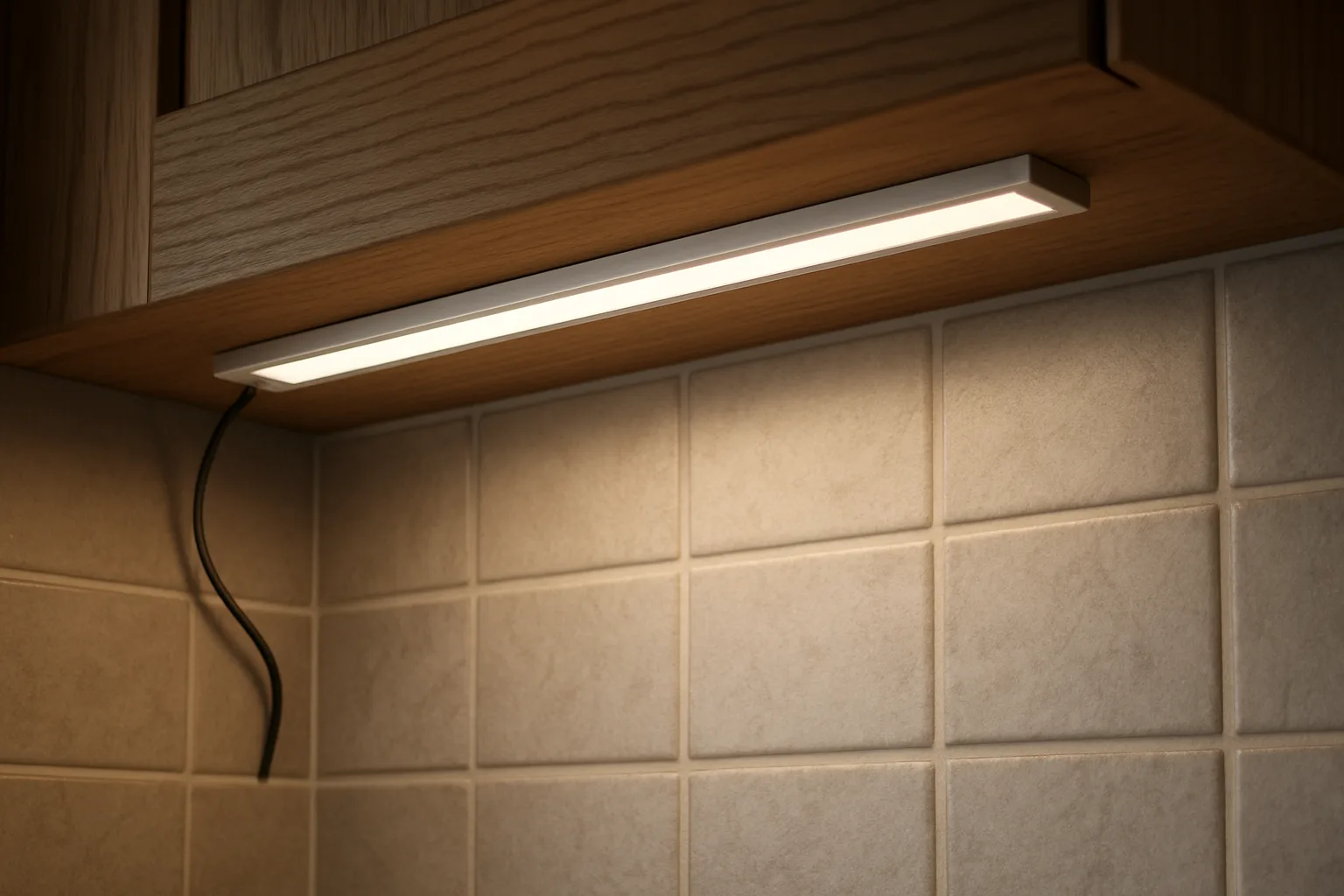
Bars are the default for a reason. They come in standard lengths (common sizes include 12, 18, 24 and 36 inches), most link together, and the light is even enough for prep work. Choose a length a few inches shorter than each cabinet run so the bar hides behind the cabinet frame. The plug-in and hardwired Enbrighten 24-inch models above fall around 385 to 400 lumens per foot, which is plenty for a counter.
LED tape
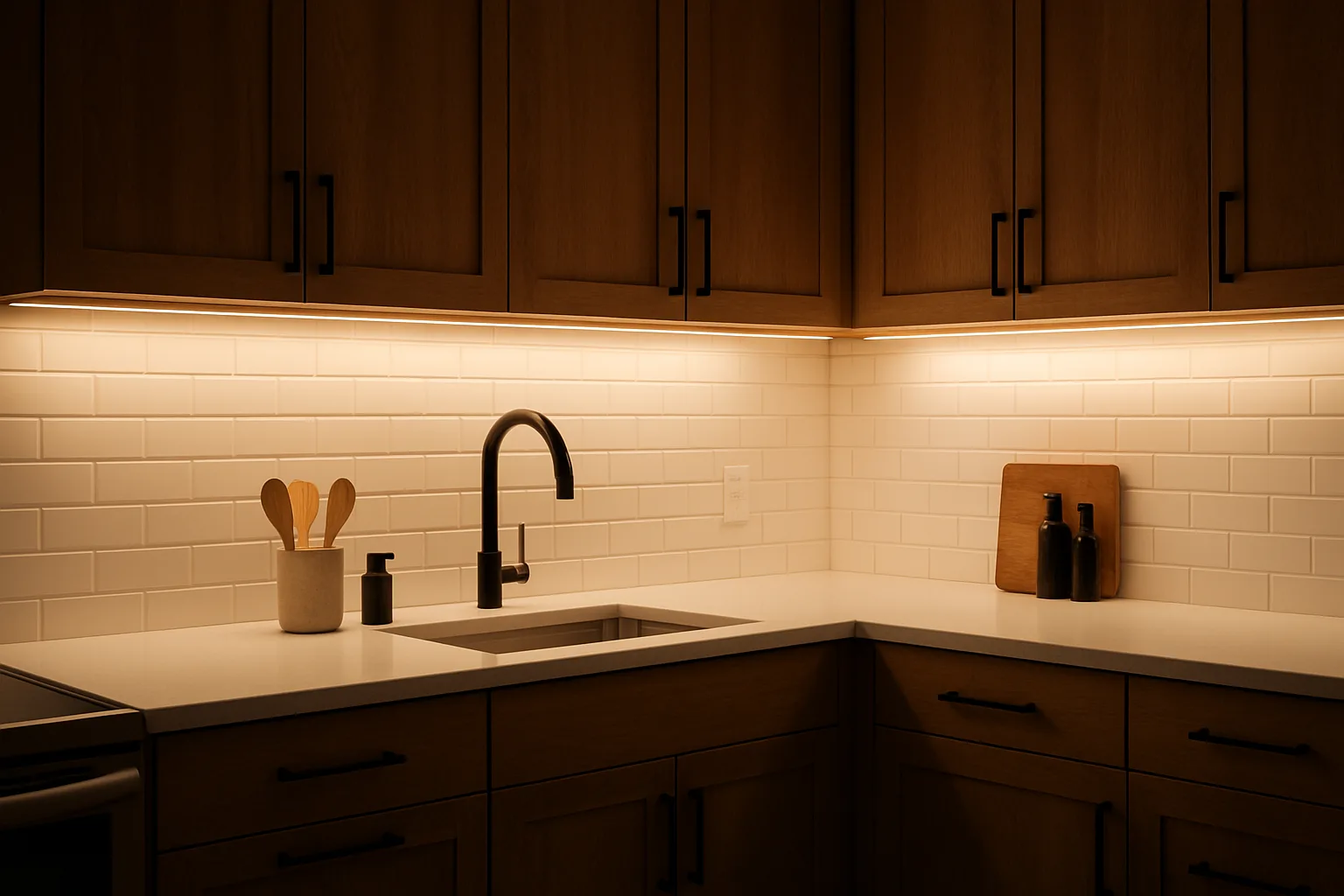
Tape gives the cleanest result: a continuous line of light that can be cut to exact lengths and run around corners. Bare tape stuck directly to the cabinet shows each diode as a bright dot on glossy counters and can peel as the adhesive warms. An aluminum channel with a milky diffuser solves both: it keeps the tape straight, spreads the light into an even line and helps draw heat away from the LEDs. The Muzata U1SW aluminum LED channel (10-pack, 3.3 ft) has a 0.5-inch inner width that fits strips narrower than 12 mm and comes with diffuser covers, end caps and mounting clips.
For the tape itself, prioritize a high color rendering index and a listing mark. The HitLights 24V 3000K LED strip (26.2 ft) is listed at CRI above 95 and UL Listed, and it is sold without a power supply, so a separately purchased 24-volt driver is needed.
 HitLights 24V 3000K High-CRI LED Strip LightCheck today’s price on AmazonBuy on Amazon →
Puck lights
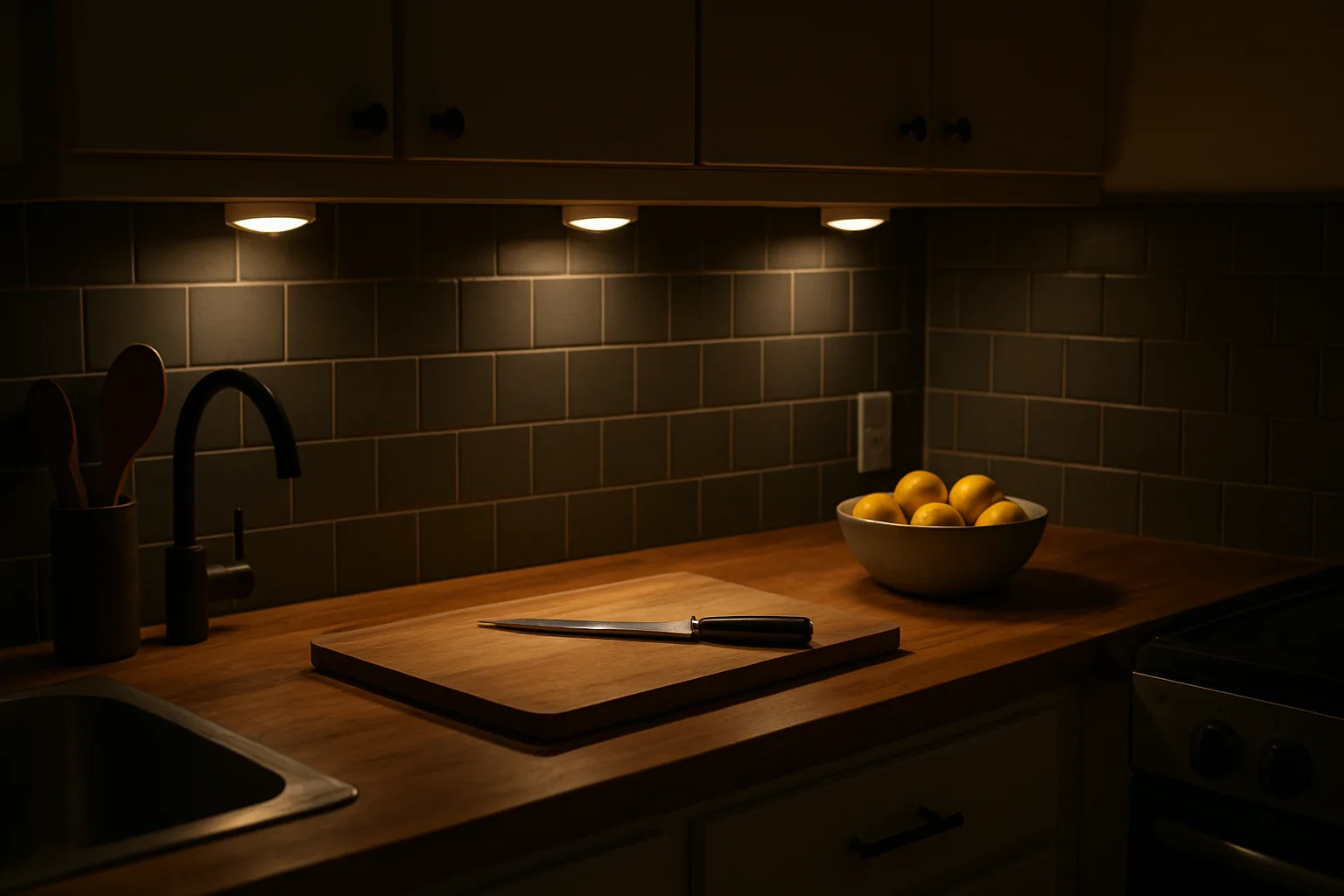
Pucks throw circles of light with darker gaps between them. That scalloped look suits glass-front cabinets, open shelves and display areas, but it is a poor fit for a prep counter. Battery pucks such as the Brilliant Evolution 6-pack warm white puck lights with remote are rated at 55 lumens each, roughly a fifth of a single short plug-in bar, so they are better treated as accent or night lighting.
Rechargeable magnetic bars
Rechargeable bars attach with a magnetic plate and come down for charging. The EZVALO 10-inch rechargeable motion-sensor lights (2-pack) have a 2500mAh battery, three color temperature settings and dimming. Runtime depends heavily on how often the motion sensor triggers, so expect to recharge more often in a busy kitchen.
The specs that matter
Color temperature
Most kitchen task lighting looks best at 2,700K to 3,000K. The U.S. Department of Energy's bulb purchasing guide describes 2,700K as warm and 3,000K as soft white, both typical for homes. Match the under-cabinet color to the ceiling lights: a 4,000K strip under a 2,700K pendant looks blue by comparison. Adjustable-color fixtures avoid the guesswork.
Color rendering (CRI)
CRI rates how accurately a light shows colors on a 0 to 100 scale. ENERGY STAR certified bulbs must reach at least 80, but under-cabinet light falls directly on food, wood and stone, where the difference shows. Look for CRI 90 or higher so raw chicken, tomatoes and countertop veining look natural.
Brightness
Under-cabinet light is task lighting, so it should be noticeably brighter at the counter than the room's ambient light. Compare lumens per foot when shopping; a dimmer or a high/low switch makes a bright fixture comfortable for evenings.
Safety listing
Plug-in fixtures and drivers should carry a mark from a Nationally Recognized Testing Laboratory such as UL, ETL (Intertek) or CSA. OSHA maintains the current list of NRTLs, which helps sort real listing marks from vague "certified" claims on cheap imports.
Installation tips that make the difference
- Mount toward the front. Placing fixtures near the front edge of the cabinet underside lights the counter where hands work and lights the backsplash as well. Fixtures mounted against the back wall mostly light the backsplash and leave the front of the counter dimmer.
- Hide the fixture. Most cabinets have a recessed bottom with a front lip. A slim bar or channel tucked behind that lip is invisible from a standing position. If the cabinets are flat-bottomed, add a small light rail.
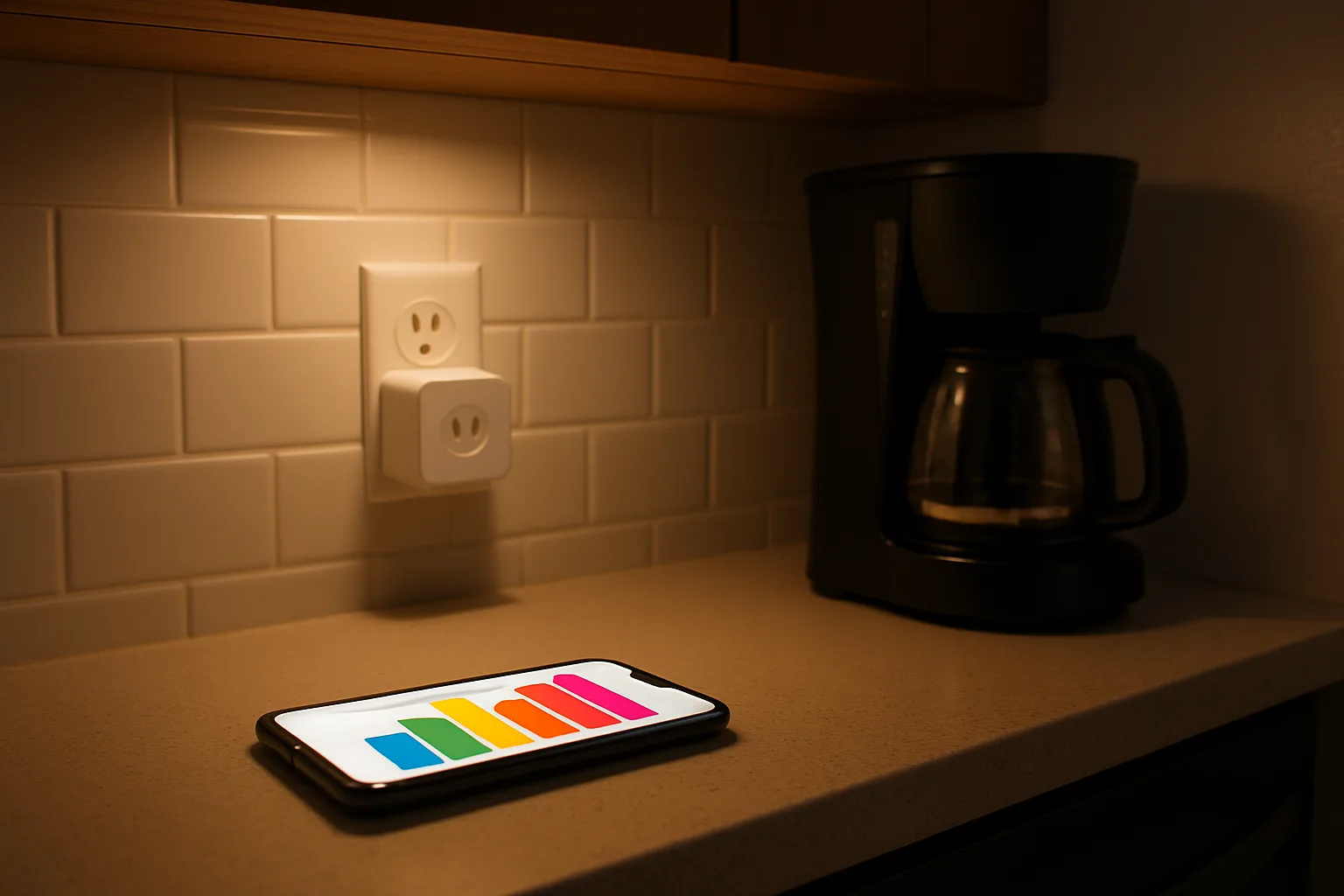
- Plan the switch. With plug-in fixtures, a linked run with one switch, or a smart plug, is easier than reaching under every cabinet. With hardwired or tape setups, put the lights on their own wall dimmer.
- Check dimmer compatibility. LED tape dims through a compatible driver or a low-voltage dimmer, not an ordinary wall dimmer on the driver's input unless the driver is rated for that.
- Measure each run separately. Cabinet runs are interrupted by the range hood, the sink window and corners. Measure each section and buy fixtures or tape lengths per section.
For where under-cabinet lighting fits with pendants and recessed fill in island, peninsula and galley layouts, see these kitchen lighting ideas by layout. Other small upgrades that make a kitchen feel finished are covered in these smart interior upgrades, and the same LED questions (lumens, white range, cuttable strips) come up outdoors in this permanent outdoor lights comparison.
Who should buy which
- Homeowner, outlet on the backsplash, no remodel planned: linkable plug-in bars. The Enbrighten plug-in line is widely sold, dimmable and links from a single outlet.
- Kitchen remodel with cabinets off the wall: hardwired bars on a wall dimmer, or high-CRI 24-volt tape in channels with the driver hidden.
- Renter or a kitchen with no nearby outlet: rechargeable magnetic bars for the main counter, pucks for accent spots.
- Glass-front cabinets or open shelves: pucks or short tape runs for a display glow.
The bottom line
For real task light, choose bars or tape over pucks, keep the color at 2,700K to 3,000K with CRI 90 or higher, and mount the fixtures near the front of the cabinet. Plug-in linkable bars are the best balance of cost and effort for most kitchens. Hardwired fixtures and tape in channels are worth it when a remodel already has the walls open. Battery lights are a handy fill-in, not a replacement.
Posted by Kristopher Larson
Frequently asked questions
Is plug-in or hardwired under-cabinet lighting better?
Hardwired lighting looks cleaner and runs from a wall switch, but it usually needs an electrician and works best during a remodel. Plug-in linkable bars are the practical choice for most existing kitchens: they install in an afternoon, and one outlet can power several linked fixtures.
What color temperature is best for under-cabinet lighting?
Most kitchens look best at 2,700K to 3,000K, which the U.S. Department of Energy describes as warm and soft white light typical for homes. Match the under-cabinet color to the ceiling and pendant lights so the counter does not look blue next to warmer fixtures.
What CRI should under-cabinet lights have?
Look for CRI 90 or higher. ENERGY STAR certified bulbs must reach at least 80, but under-cabinet light falls directly on food, wood and stone, where higher color rendering makes ingredients and countertops look natural.
Are puck lights good for under-cabinet task lighting?
Not usually. Pucks create circles of light with dark gaps between them, which suits display shelves and glass-front cabinets better than a prep counter. Battery pucks are also low in output, often around 55 lumens each, so bars or LED tape are better for task lighting.
Does LED tape need an aluminum channel?
It is strongly recommended under cabinets. A channel with a frosted diffuser hides the individual diodes so they do not reflect as dots on glossy counters, keeps the tape straight and helps pull heat away from the LEDs, which protects the adhesive and the strip.
Where should under-cabinet lights be mounted?
Mount them toward the front edge of the cabinet underside, tucked behind the front lip or a light rail. That position lights the counter where hands work and still washes the backsplash, while staying hidden from someone standing at the counter.
Keep reading
More from the blog
Whole-House Surge Protectors: Type 1 vs. Type 2, What They Can't Stop, and Square D vs. Siemens vs. Eaton
Propane vs. Electric Patio Heaters: Mushroom vs. Infrared vs. Tabletop, and How Much Heat a Patio Needs
Chain vs. Belt vs. Wall-Mount Garage Door Openers: Chamberlain vs. Genie, Plus Smart Retrofits