How to Set Up a Home Photo and Video Studio in a Spare Room or Garage
Set up a home photo and video studio in a spare room or garage: space, backdrops, one- and three-light setups, LED panels and tubes for product shots.
A spare bedroom or one bay of a garage can become a working photo and video studio for Etsy listings, e-commerce product shots, headshots and content shoots. It doesn't take a big room or a big budget. The short gear list is a backdrop, one or two good lights, something white to bounce light off, and stands that won't tip over.
This guide covers planning the room, lighting it with one light or three, choosing a backdrop, and three pieces of gear worth building around.
As an Amazon Associate, Best Utah Real Estate earns from qualifying purchases.
Quick verdict
- Key light for a small studio: the amaran Pano 60c Kit. It weighs about 600 grams, runs on USB-C, puts out more light than its rating and has accurate color. Bare, it's a hard light, so plan to bounce it or soften it.
- Background and rim light: the Nanlite PavoTube II 30C 4 ft LED Tube. Slim 4-foot tubes that stand beside the backdrop to light it evenly, or turn toward the subject to outline it.
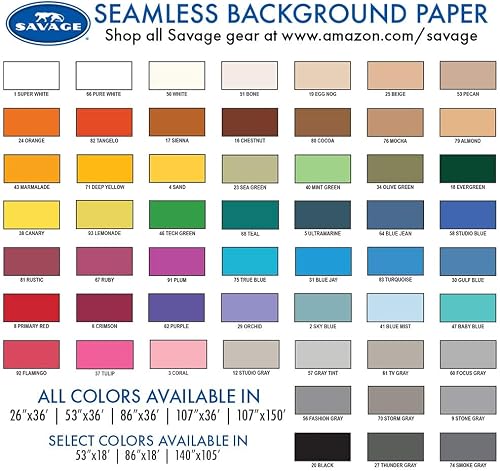
- Backdrop: Savage Super White Backdrop Paper (107 in x 36 ft), a wide roll of matte white paper for the clean, no-horizon look that product photos and headshots call for.
The core gear side by side
| Gear | Shop | Job in the studio | Power | Key numbers | Watch out for |
|---|---|---|---|---|---|
| amaran Pano 60c Kit |  Buy on Amazon | Key light or fill light | USB-C power delivery up to 65 W | About 6,900 lux at 1 m at full power (5600K setting), CRI 96.7, 45° beam, 2,300K to 10,000K | Harsh through the included diffuser; bounce it or use the softbox |
| Nanlite PavoTube II 30C 4 ft LED Tube |  Buy on Amazon | Backdrop, rim and accent light | Check the listing for battery and charging details | 4 ft long, full color plus adjustable white | Set it to the same color temperature as the key light |
| Savage Super White Backdrop Paper (107 in x 36 ft) |  Buy on Amazon | Backdrop for products and people | None | 107 in wide, 36 ft long | Needs a support stand and floor depth for the curve; not wipeable |
Planning the space: spare room or garage
Floor depth and ceiling height
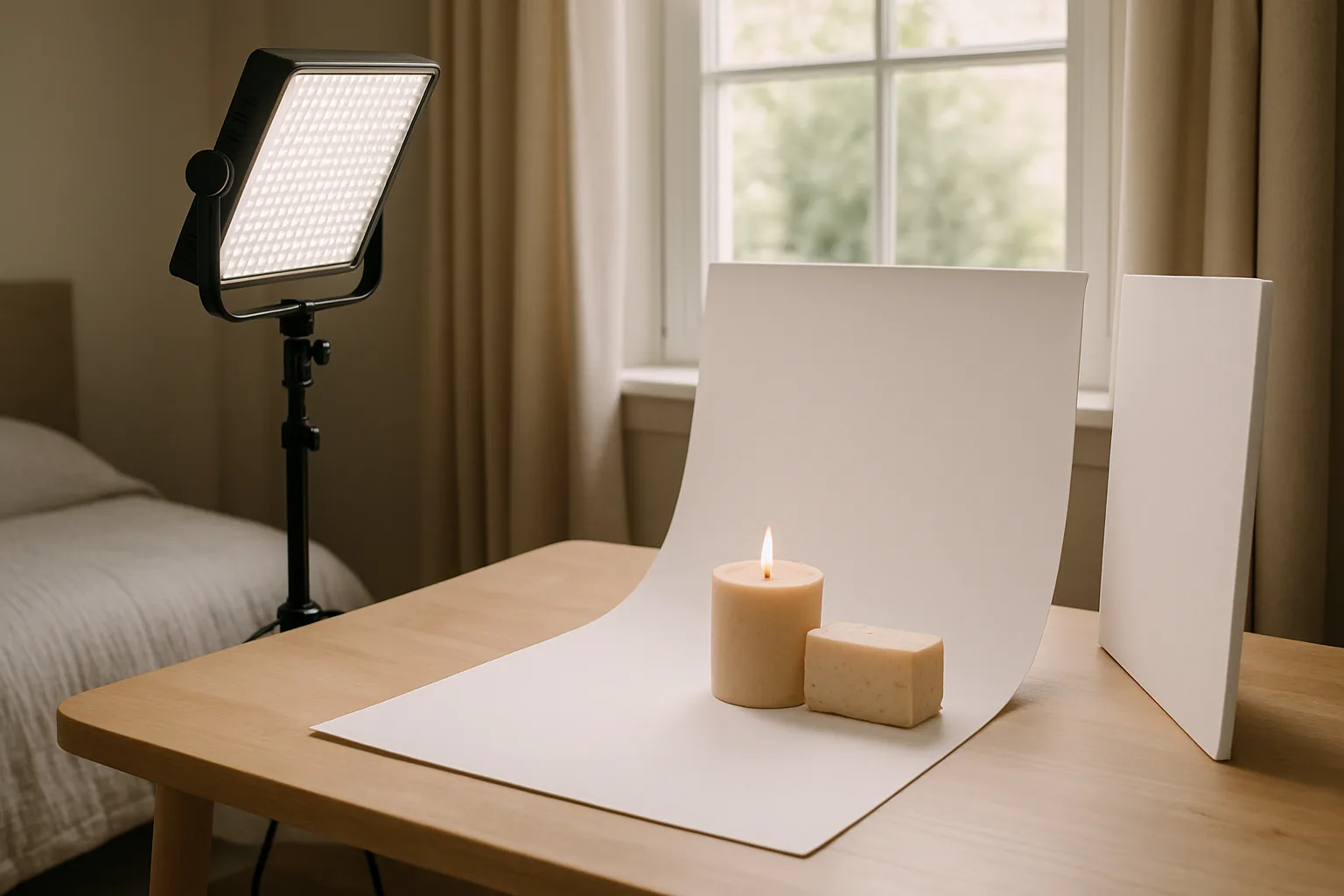
The size of the room decides what you can shoot. Tabletop product photography fits in a corner with a folding table, a light and a couple of white boards.
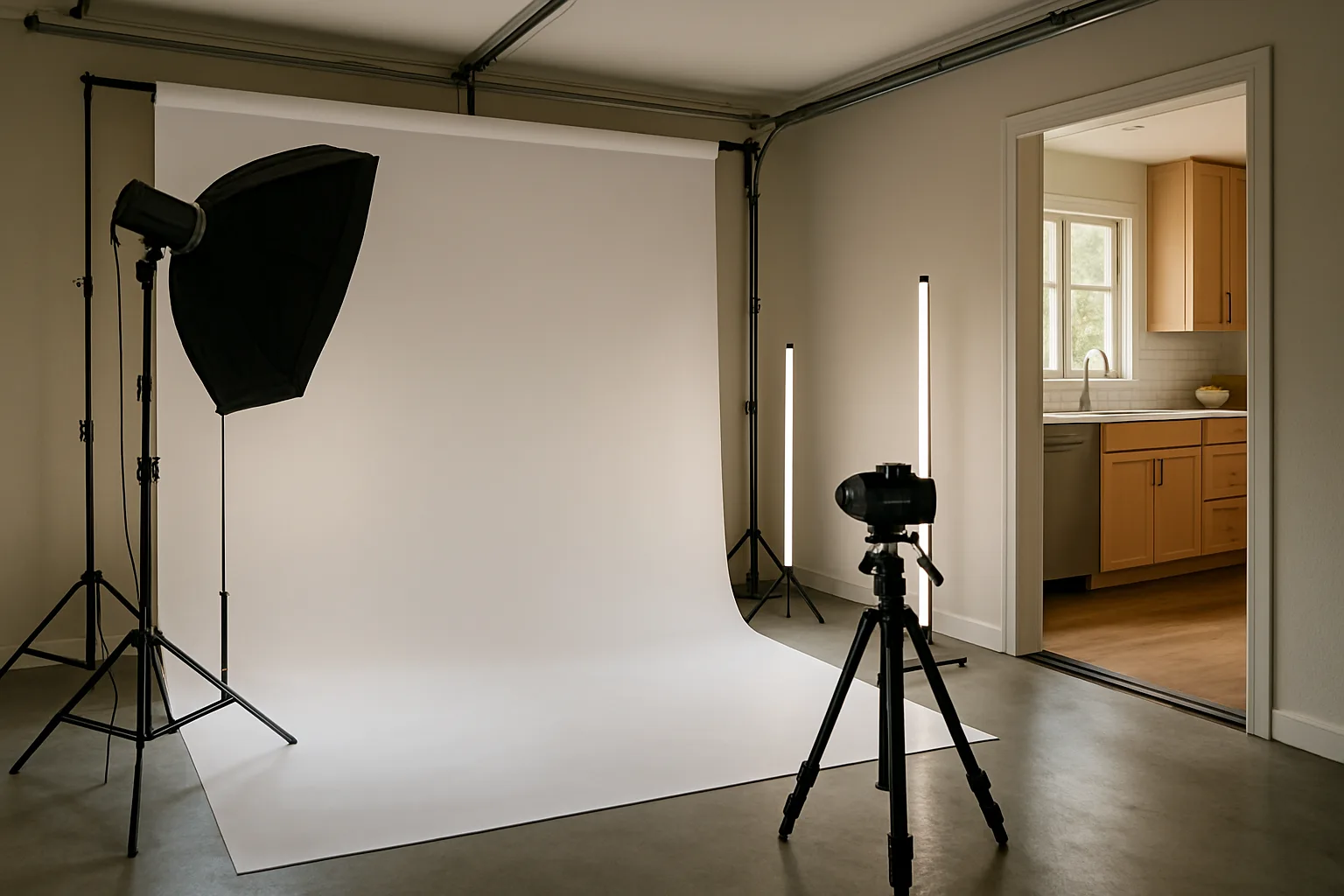
People are another matter. For headshots and full-length shots, backdrop paper usually hangs 10 to 12 feet high, or higher, and rolls out about 15 feet so it curves into the floor without a visible line. Few spare bedrooms can manage that, which is why a garage often works better for portraits and groups.
Use the backdrop to hide the clutter
In a garage, set the backdrop up in front of whatever you don't want seen: shelving, the lawn mower, the trash cans. Everything behind the paper becomes dead space, but the shooting area looks clean, which matters when a client or model walks in.
Light control and power
Garages tend to be dim, so plan on two main lights rather than one. Overhead shop lights are a separate job for working in the space; the LED garage lights guide covers those. In a spare room the problem is usually the opposite: window light that changes with the weather and the hour. Natural light is fine to start; consistent results need artificial light in a room you can darken. Browse blackout curtains for the windows.
Many LED panels now run on USB-C, and some offer a "studio mode" that turns the light back on by itself when power returns. Put every light on one switched power strip and a single switch turns the whole studio on. Lights with a battery option can move anywhere without a cord.
Storage: paper can stay up on its stand, vinyl rolls up, and many portable light stands fold small enough for the light's case.
When clients come to the house
Shooting your own products draws little notice; having clients over is when home business rules come into play. Some states limit what cities can require; in Utah, for example, state law (Utah Code 10-1-203) generally bars cities from charging a license fee for a home-based business unless its impact on the neighborhood materially exceeds normal residential use. Cities and counties still set the ground rules. Lehi's home occupation code, for one, limits client parking, caps sessions at four a day, bans signs and wants garage doors kept closed. Rules vary and change, so check with your county and city before booking client sessions.
Lighting with one light
Where the light sits matters more than which light it is. A small change in angle or distance changes the mood of a shot. Set it to 5600K, which matches daylight, and keep the other lights in the room at the same setting.
- Bounce it. White foam core boards are cheap and make a big difference with one light: light bounced off a board, a wall or a sound blanket becomes a large, soft source. Bouncing costs output, so the light may need to run near full power. Larger V-flats matter more when the subject is a person. Browse foam core boards.
- Add negative fill. A dark board just out of frame on the side opposite the key light soaks up stray light and deepens the shadows for more contrast.
- Consider a hybrid light if you shoot both stills and video. Some studio lights work as a strobe for photos and as a continuous light for video.
Adding a second and third light
A garage or large room usually needs more. A proven layout: a key light inside a large softbox, around 48 inches, on one side, and a second light inside a lantern modifier aimed up at the ceiling to fill the room with soft light.
Big softboxes need a light built for them. Compact panels are made to be portable; for a large modifier, a COB light with a Bowens mount is the better match. Browse softboxes with a Bowens mount.
On a white backdrop, the key light won't light the paper evenly for a bright, clean look, so it needs its own lights. They needn't be expensive, but their color temperature should match the key light. Tube lights work well here: stand one on each side, just behind where the subject will be, aimed along the backdrop. Turn one toward the subject instead, opposite the key, and it draws a rim of light that separates the subject from the background.
What separates a good LED panel from a bad one
Budget RGB panels look alike on paper but differ a lot side by side:
- Brightness varies widely between panels of similar size.
- True white mode. Some cheap panels have no real color temperature mode and fake white by turning down the saturation on their RGB LEDs. Look for a proper CCT mode.
- Color accuracy. A panel can look fine alone and then show a warm, green or magenta shift next to another. A high CRI and a green-magenta adjustment help.
- Battery. At 5600K and full power, the better built-in batteries last past three hours, while others quit well before that. Lights that take swappable batteries can run all day.
- Controls and mounting. One-button lights are clumsy without the app; onboard controls plus an app is easiest. Check mounting options too.
Backdrops: paper or vinyl
Whatever the material, pick a matte, non-reflective surface. Paper gives the classic white sweep for products and portraits. It doesn't have to be white, either; colored paper and moody lighting, such as a key light pointed straight down, open up other looks. Vinyl backdrops wipe clean, which makes them the better choice for liquids, creams and anything messy. Both need something to hang on: browse backdrop support stands.
Camera support, lens and props
A tripod is enough to start. A C-stand with a ball head adds reach for overhead flat lays and holds the camera dead still, which matters when several frames get combined so the whole product is sharp. C-stands are heavy and need weight at the base: browse C-stands and browse sandbags.
The lens matters more than the camera body. A 50mm or longer lens keeps products from looking distorted, and a macro lens is ideal for small details. Keep props to three or fewer so the product stays the hero. Shiny products are the hardest: they reflect the camera, and even a light cone takes trial and error.
The picks in detail
amaran Pano 60c Kit
The Pano 60c is a compact full-color panel. It weighs about 600 grams, roughly a third of the older amaran P60c, and runs on USB-C power delivery up to 65 W through a locking connector. At 1 meter and full power at its 5600K setting, it puts out about 6,900 lux, above its rated 6,200, with a CRI of 96.7, an SSI of 76 and almost no green tint.
Controls are straightforward: CCT from 2,300K to 10,000K with an option to widen the range, green-magenta adjustment, HSI color and effects, plus Bluetooth app control. Studio mode lets it come back on with a master power switch. The fans are very quiet, and a silent fan mode helps for video. The included stretch diffuser still leaves a hard light on a face, and the small softbox is fiddly to fit. Bouncing the panel works best. Check the listing for what this kit includes.
Need more output? The larger Pano 120c measures about 15,100 lux at 1 meter but needs a 140 W supply for full power. It adapts to smaller chargers and tells you so, capping at about 70% on 100 W and about 40% on 65 W.
amaran Pano 60c KitCheck today’s price on Amazon

 Buy on Amazon →
A second charger lets a second panel or the camera run at the same time: browse 100 W USB-C PD chargers.
Nanlite PavoTube II 30C 4 ft LED Tube
The PavoTube II is a 4-foot tube light about the diameter of an energy drink can. It does adjustable white plus full RGB color and effects, so one tube can light a white backdrop one day and add colored accents the next. Two of them, one on each side, are a common way to brighten a white backdrop. Check the listing for battery run time and mounting.
Nanlite PavoTube II 30C 4 ft LED TubeCheck today’s price on Amazon Buy on Amazon →
Savage Super White Backdrop Paper (107 in x 36 ft)
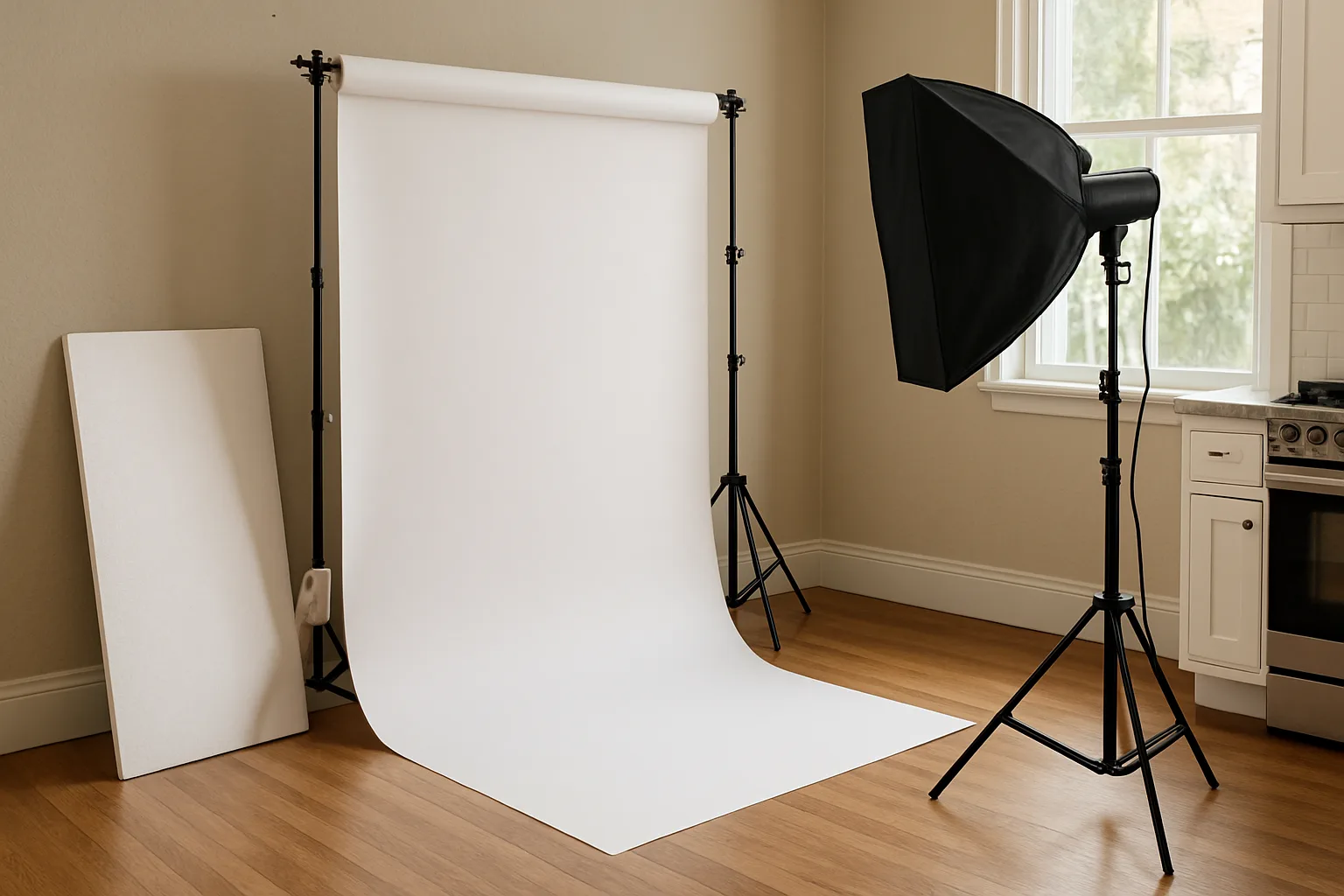
Savage paper is a studio staple with dependable color. This roll is 107 inches (almost 9 feet) wide and 36 feet long, enough for a 10 to 12 foot drop plus a 15-foot sweep across the floor. Paper can't be wiped clean, so for liquids and messy products, pair it with a vinyl backdrop.
Savage Super White Backdrop Paper (107 in x 36 ft)Check today’s price on Amazon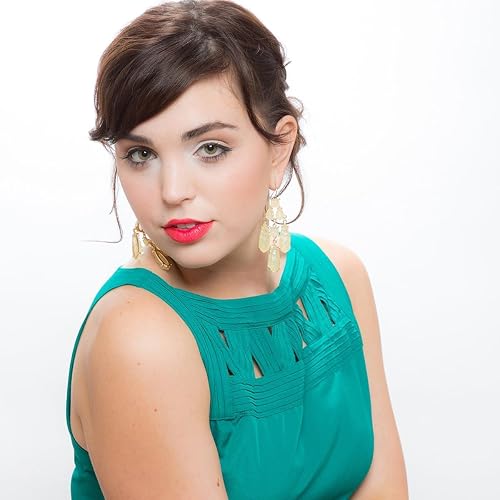

 Buy on Amazon →
More studio gear picks on Amazon
Example picks for the gear covered above, chosen from Amazon listings by their specs, stock and customer ratings. They are not the exact pieces from the setups described here, so check sizes before ordering.
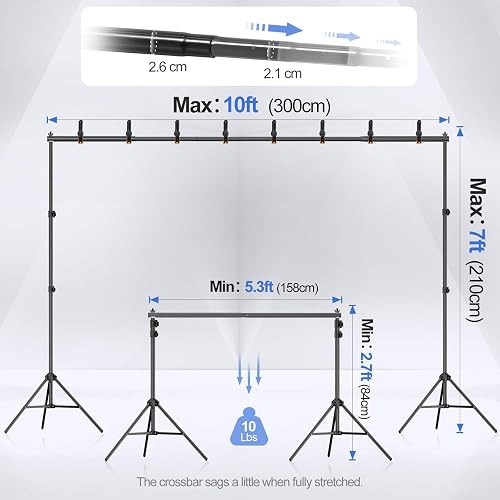
An adjustable stand holds a paper roll or fabric backdrop without drilling the wall.
 EMART 10 x 7 ft Backdrop StandCheck today’s price on Amazon

 Buy on Amazon →
A C-stand with an arm puts a light or reflector exactly where it is needed, including overhead.
 NEEWER Stainless Steel C-StandCheck today’s price on Amazon


 Buy on Amazon →
A large softbox turns a bare LED into soft, flattering light for portraits and products.
 SmallRig 35 in Bowens Mount SoftboxCheck today’s price on Amazon


 Buy on Amazon →
Sandbags on every stand leg keep lights from tipping when someone brushes past.
 ABCCANOPY Photography Sandbags, 4 PackCheck today’s price on Amazon


 Buy on Amazon →
Blackout curtains block window light so every shot is lit only by the studio lights.
 NICETOWN Blackout CurtainsCheck today’s price on Amazon


 Buy on Amazon →
Who should set up what
- Etsy and e-commerce product sellers: a tabletop corner, one panel, white foam boards, a tripod or C-stand and a paper or vinyl backdrop.
- Headshots and portraits: a garage or large room, paper hung 10 to 12 feet high, a key light in a big softbox, a fill or ceiling bounce and two tube lights on the backdrop.
- Video and content creators: continuous lights with quiet fans, app control and battery options. The desk setup upgrades guide covers the gear for the desk side of the shoot.
More home business room guides
- Turning a spare bedroom into a home hair salon
- Setting up a home dog grooming room
- Starting a home bakery
- Building a home podcast studio
- Turning a garage into a personal training studio
Posted by Kristopher Larson
Frequently asked questions
How much space do I need for a home photo studio?
It depends on the subject. Product photography for Etsy or e-commerce listings fits in a room corner with a folding table, one light and a few white foam boards. Headshots and full-length portraits need far more: backdrop paper is usually hung 10 to 12 feet high and pulled out about 15 feet across the floor so it curves without a visible line, which is why many people shoot portraits in a garage instead of a spare bedroom.
Can I turn my garage into a photo studio?
Yes, and a garage often has more floor depth than any room in the house. Place the backdrop in front of storage so shelving and bins stay out of sight, and plan on at least two main lights, since garages are usually dim. A large softbox for the key light, a second light bounced off the ceiling and a pair of tube lights on the backdrop make a solid starting layout.
What lighting do I need for product photography at home?
One good continuous light set to 5600K, plus white foam core boards to bounce it, covers most tabletop product work. Bounced light becomes a large, soft source, and a dark board on the opposite side adds contrast when you want it. Continuous LED lights also work for video, so the same setup handles listing photos and short product clips.
Are cheap RGB LED panels good enough for a home studio?
Some are, but they vary a lot. Watch for panels that have no true white (CCT) mode and fake it with desaturated RGB, panels whose color drifts warm, green or magenta next to another light, and short battery life. A high CRI, a green-magenta adjustment, onboard controls plus an app, and solid mounting options separate the good ones.
Should I use a paper or vinyl backdrop?
Paper gives the clean white sweep for portraits and most products, and it comes in wide rolls for full-length shots. Vinyl wipes clean, so it suits liquids, creams and messy products. Either way, choose a matte, non-reflective surface so the backdrop doesn't throw glare into the shot.
Do I need a business license for a home photography studio?
Often not for shooting your own products, but rules tighten once clients visit. Cities and counties regulate home occupations, usually covering client parking, sessions per day, signs and whether garage doors stay closed, and some states limit those local rules; Utah, for example, generally bars city license fees for a home-based business unless its offsite impact materially exceeds normal residential use (Utah Code 10-1-203). Check with your county and city before booking clients at the house.
Keep reading
More from the blog
How to Turn a Spare Room Into a Home Podcast Studio: Mic, Interface and Acoustic Treatment
How to Turn Your Garage Into a Home Gym or Personal Training Studio: Flooring, Racks and Local Rules
Home Dog Grooming Setup: Shernbao vs Shelandy Dryers and the Right Table