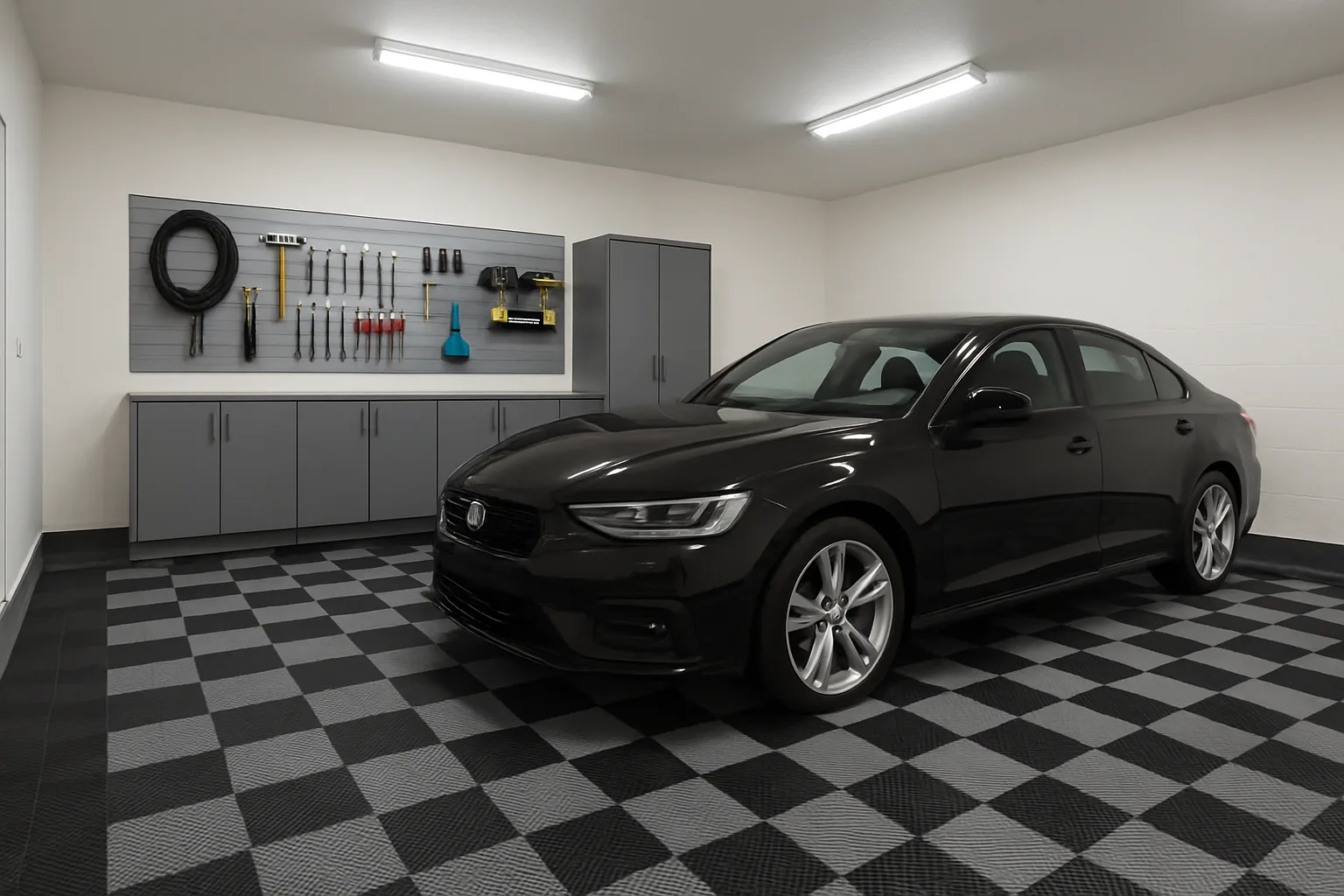
Garage Floor Tiles vs. Epoxy: Swisstrax vs. RaceDeck vs. VEVOR
Garage floor tiles vs. epoxy: how Swisstrax, RaceDeck and VEVOR vented tiles compare on drainage, durability, cleaning, rolling carts and install time.
Bare concrete stains and holds puddles. The three usual fixes are interlocking garage floor tiles, an epoxy coating and solid tiles or mats, and they wear very differently. Epoxy costs the least to buy but takes days to apply and can mark, stain and peel. Vented tiles click together in an afternoon, let water drain through and can be pulled up later. The catches are cost, small parts falling into the holes, and rolling jacks.
This guide compares Swisstrax and RaceDeck, the two established names in vented tiles, with a low-cost VEVOR tile and a DIY epoxy floor, and covers drainage, cleaning, noise, rolling chairs and carts, and fitting tiles around obstacles.
As an Amazon Associate, Best Utah Real Estate earns from qualifying purchases.
Quick verdict
- Best long-term floor: the Swisstrax Ribtrax PRO Garage Floor Tiles. A thick, fully vented tile that holds up to dropped weight, chemicals and wet cars over years of use.
- Best for carts and detailing stools: the Swisstrax Ribtrax Smooth PRO Garage Floor Tiles. The same tile with a flat top, so wheels roll without bumping over ribs.
- The other proven name: the RaceDeck Free-Flow Garage Floor Tiles. A one-foot vented tile that sits at the same height as Swisstrax.
- Best value: the VEVOR Garage Floor Tiles. A budget drainage tile that looks much like the premium brands and has held up through a full snowy winter.
- Lowest cost to buy: a DIY epoxy kit, if you can give up the garage for days and accept recoating later.
Tiles vs. epoxy at a glance
| Floor | Shop | Tile size | Surface | Drainage | Best for |
|---|---|---|---|---|---|
| Swisstrax Ribtrax PRO Garage Floor Tiles |  Buy on Amazon | 15.75 in square | Ribbed, matte | Vented all the way through | Wet cars, detailing, long-term use |
| Swisstrax Ribtrax Smooth PRO Garage Floor Tiles |  Buy on Amazon | 15.75 in square | Flat, smooth top | Vented all the way through | Rolling carts, stools and creepers |
| RaceDeck Free-Flow Garage Floor Tiles |  Buy on Amazon | 12 x 12 in | Ribbed | Vented all the way through | A proven brand in a one-foot tile |
| VEVOR Garage Floor Tiles |  Buy on Amazon | 12 x 12 in | Open grid | Vented all the way through | Large garages on a budget |
| DIY epoxy coating | Poured coating | Glossy, flake finish | None; water pools | Lowest material cost, sealed look |
Vented tiles vs. epoxy: how they wear
Epoxy is the cheaper floor to buy, and a well-prepped coat can last. The prep is the whole job: an acid wash, filling cracks, sometimes self-leveling compound, then a bonding coat, color coats, a flake broadcast and clear coats. A DIY floor takes about two full days of prep and labor at the quick end and closer to a week when it is fit around work. The garage is out of use the whole time, and nothing can be parked on it until it cures.
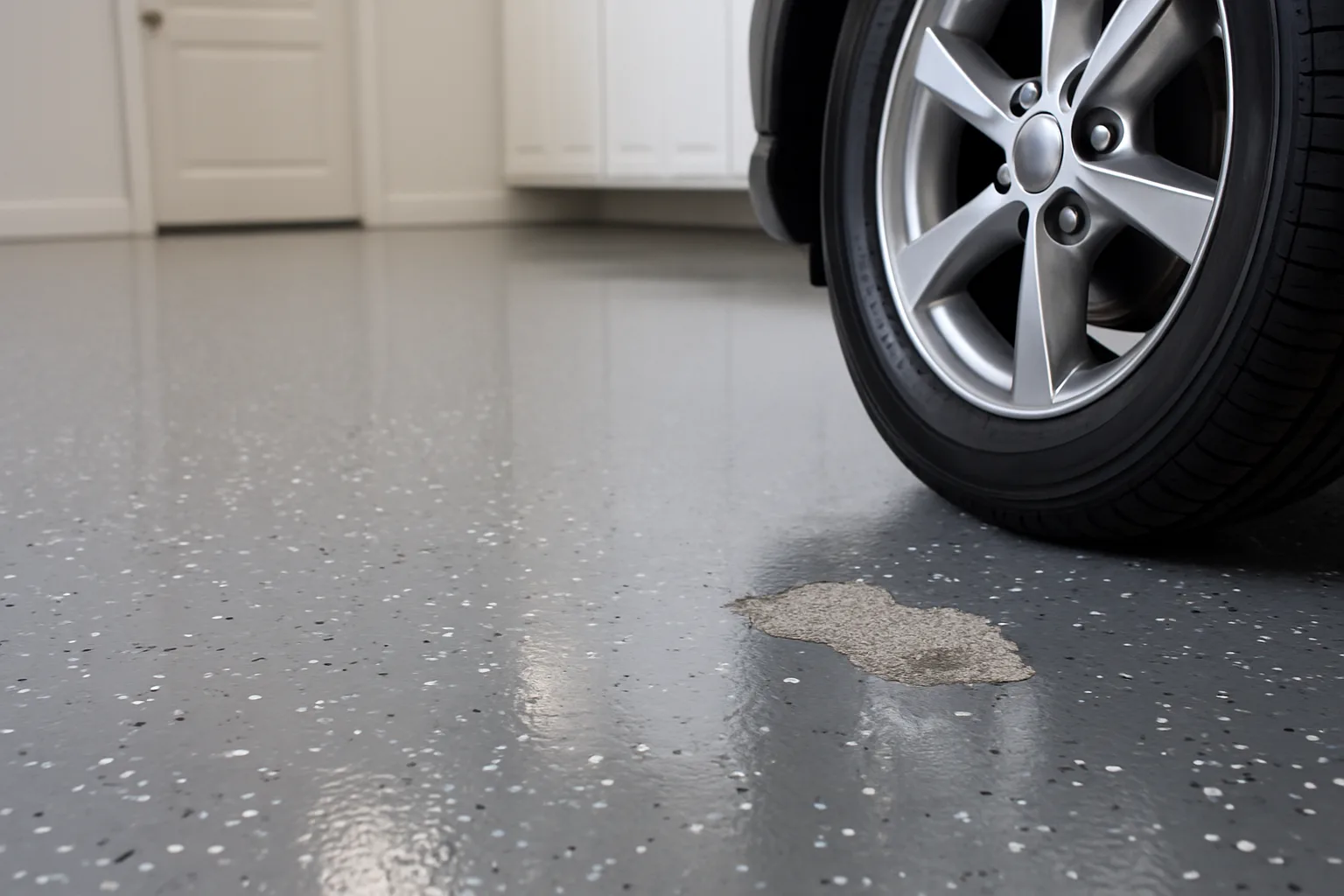
The trouble shows up after a few years. Tires parked on a newer epoxy floor can leave brown marks, the problem usually called hot-tire pickup. Motorcycle tires can leave black marks. Oil and coolant can strip the coating, and a rusty plow blade leaves a stain. Poorly prepped coatings peel. Fixing it is harder than the first coat, because a worn floor can't just be washed and recoated. Clean epoxy can also turn slippery, especially with a little grease on it.
Vented tiles sit on top of the slab instead of bonding to it. Thick premium tiles have taken dropped loads of several hundred pounds over five years without cracking, and car chemicals haven't discolored them. Tire marks don't show, oil can't strip anything, and a section can be lifted out and replaced. The trade-off is cost: premium tiles run several times the price of a DIY epoxy kit, while budget tiles like VEVOR land close to what an epoxy kit costs.
Drainage and snowmelt
This is where vented tiles win clearly. Water from a dripping car, a rinse or melting snow runs through to the slab instead of sitting on top. Spill a gallon of water on epoxy or bare concrete and it pools and takes a long time to evaporate. On vented tiles, the top stays only slightly wet and dries fast, so people can walk through it. That matters most in snowy climates, where cars come in coated in salty slush all winter.
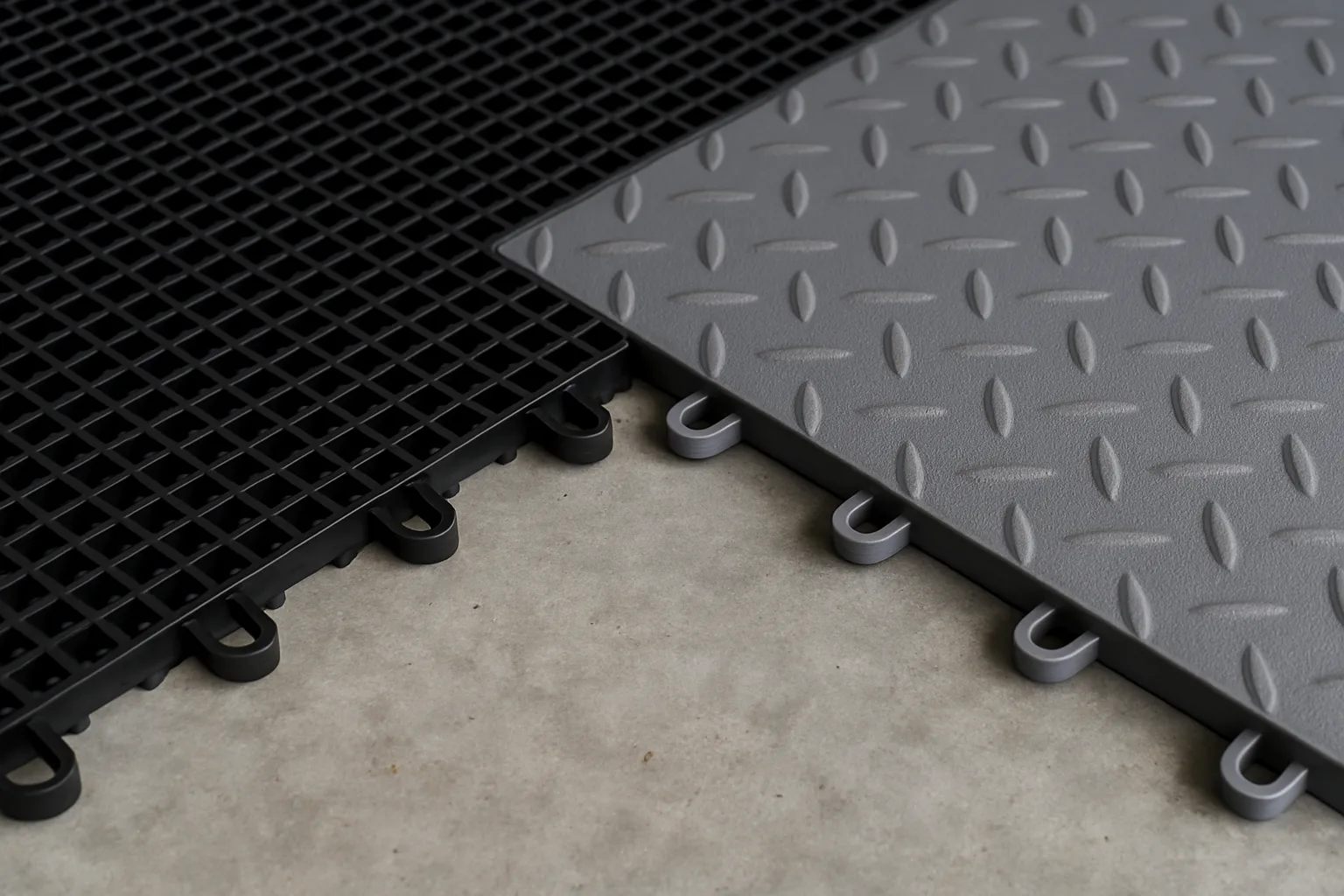
Venting also helps the slab underneath. Concrete holds moisture, and a solid cover can trap it. Trapped moisture can push a crusty, salty buildup to the surface and lift tiles. Vented tiles let that moisture escape. Solid-back tiles and mats, such as raised-coin tiles, look clean but have little or no path for moisture to escape, so they are the riskier choice on a damp slab. If the slab's moisture is in doubt, have it checked before covering it with anything solid.
Polypropylene vs. PVC, and ribbed vs. smooth
Interlocking garage tiles come in two broad types. Rigid tiles, usually polypropylene, are hard plastic that snaps together and is often molded with open vents. Flexible tiles, usually PVC, feel softer underfoot and more often come with a solid surface. All four tiles in this guide are vented designs that snap together. Check each listing for its exact material and warranty, and read the warranty terms closely: a tile sold "for garages" isn't always meant for heavy cars and hot tires.
The surface matters as much as the material. Ribbed tops grip and hide dirt, but every wheel bumps over the ribs. Floor jacks don't roll well on ribbed tiles, and a top-heavy cart can shake enough to tip over. Smooth-top tiles fix that. Small casters still roll on ribbed tiles, though metal creeper chairs with large casters rattle. It's loud for a few seconds, and they rattle on bare concrete too. A thicker tile also hides dirt that settles below the top.
The picks in detail
Swisstrax Ribtrax PRO Garage Floor Tiles
The Ribtrax PRO is the main Swisstrax garage tile. At 15.75 inches square it's larger than a one-foot tile, and it's thick, so dirt that settles below the top stays out of sight. The finish is a matte, satin look rather than a shine, and it comes in a wide range of colors for checkered patterns, borders or a two-tone layout. Small holes near the corners are molding marks, not extra drains.
Over five years under salty cars, heavy drops, pressure washing and detailing chemicals, it hasn't cracked or broken. The two real complaints: small bolts and nuts can disappear into the vents, and even strong magnets don't always pull them back out. Jacks also roll poorly on the ribs, so keep a hard mat or a smooth section where cars get lifted.
Swisstrax Ribtrax PRO Garage Floor TilesCheck today’s price on Amazon

 Buy on Amazon →
Swisstrax Ribtrax Smooth PRO Garage Floor Tiles
The Smooth PRO is the same 15.75-inch tile with the ribs ground flat, so it loses only a hair of height. It's still vented all the way through, but carts, stools and creepers roll across it without the bump and rattle of a ribbed top. Jacks roll better on it. It's the better pick for a detailing bay, a work area where carts move all day, or a section in front of a bench. A common layout mixes the two: ribbed where cars park and drip, smooth where wheels roll.
Swisstrax also sells a thinner, glossier one-foot Ribtrax Smooth for home use. It isn't the garage-rated version, so stick with the PRO for parking cars.
Swisstrax Ribtrax Smooth PRO Garage Floor TilesCheck today’s price on Amazon

 Buy on Amazon →
RaceDeck Free-Flow Garage Floor Tiles
RaceDeck is the other long-established name in vented garage tiles. The Free-Flow is a one-foot square tile that snaps together much like Swisstrax and sits at the same height. Compare the listing photos if a flat matte look matters.
RaceDeck also makes a larger Free-Flow XL whose ribs are flattened on top, a middle ground between ribbed and smooth. Either way, the drainage, chemical resistance and long track record are close to Swisstrax. The choice mostly comes down to finish, tile size and color.
RaceDeck Free-Flow Garage Floor TilesCheck today’s price on Amazon

 Buy on Amazon →
VEVOR Garage Floor Tiles
VEVOR's drainage tile is the value play. It looks much like the premium brands once installed, at a fraction of the cost for a large garage. The build feels lighter in the hand, and its top is recessed into the edge instead of sitting on top of it, which gives a slightly different look. It comes in gray, black, green and blue. Gray hides tire tracks better than black, which shows every path like fresh asphalt.
After six months, including a full winter of snow and ice, nothing has broken, chipped or faded. Dropped drywall screws mostly stay on top and come up by hand in under 20 seconds. Bits of styrofoam, though, wedge into the grid, and a vacuum won't pull them out. The open grid also doesn't hide the concrete completely: look straight down and a stained slab shows through, though from normal standing height it reads as solid tile. The tiles are one foot square, so ordering is simple: square footage plus a few spares. Matching edge trim gives a finished border.
VEVOR has updated its interlocking loops, and the listing warns that tiles from before the change will not lock into the current ones, so buy enough to finish the floor in one order.
VEVOR Garage Floor TilesCheck today’s price on Amazon

 Buy on Amazon →
Installing and trimming tiles
- Time: tiles go down like building blocks. A full garage takes about four hours, and a big one can go down in about two once the pattern is set. Compare that with days for epoxy.
- Prep: sweep the slab and clear the floor. Tiles don't need the acid wash and crack repair epoxy demands, but a slab with a moisture problem should be checked first.
- Cutting: trim tiles around workbenches, cabinets and lift posts with an oscillating tool or a drill. The plastic cuts easily.
- Edges: finish open edges and the garage door line with matching ramp or edge trim so tires and toes don't catch.
- Spares: keep a few extra tiles for swaps.
Keeping tiles clean
Routine cleaning is quick. A pass with a cordless leaf blower about once a week pushes leaves and grit out the door. For a deeper clean, vacuum the vents with a shop vac, foam the surface, scrub with a shop brush, rinse with a pressure washer or hose, then open the door and run fans until it dries. Some owners unsnap a row once a year and clean underneath, but with regular blowing out that usually isn't needed. Epoxy cleans a little faster with a surface cleaner and squeegee, but tiles aren't much more work.
Who should buy which
- Detailers and anyone washing cars inside: Swisstrax Ribtrax PRO, with Smooth PRO where carts roll.
- Home mechanics: vented tiles cut around the lift, plus a smooth section or a hard mat where the jack rolls.
- Prefer a one-foot tile from a proven brand: RaceDeck Free-Flow.
- A big garage or a rental: VEVOR Garage Floor Tiles, for the look at a much lower cost, and they come up when you move.
- Tight budget, empty garage and time to prep: DIY epoxy, knowing tire marks, chemical spots and a harder recoat come later.
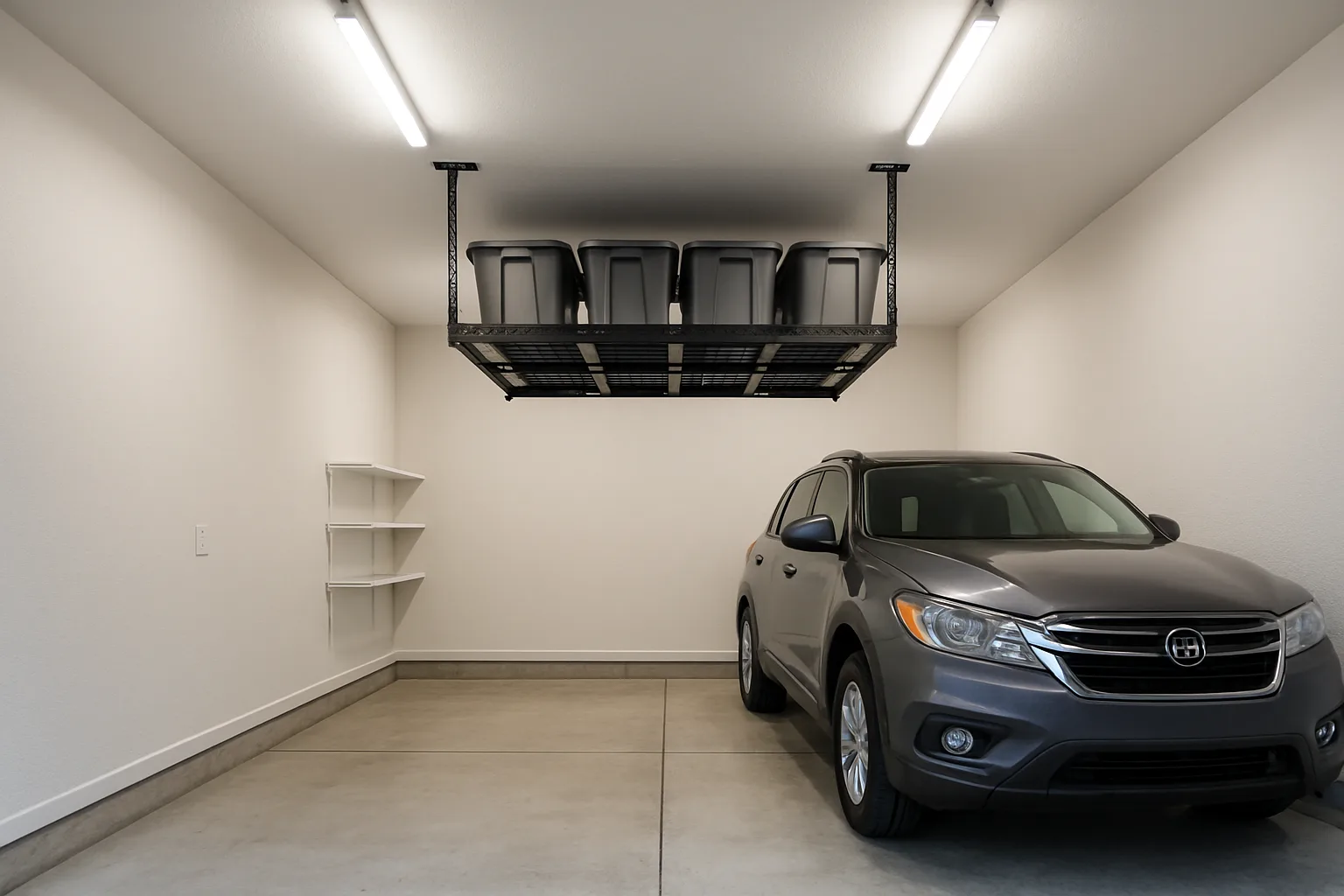
Once the floor is done, getting bins and ladders off it keeps it clean longer. Overhead garage storage racks clear the floor space the tiles just covered.
Posted by Kristopher Larson
Frequently asked questions
Are garage floor tiles better than epoxy?
For most garages that see wet cars, chemicals or heavy use, vented tiles hold up better. They drain water, don't show tire marks, can't be stripped by oil or coolant, and a damaged tile can be swapped out. Epoxy costs less to buy and cleans a little faster, but it takes days to apply, can mark and peel over time, and is much harder to redo than to coat the first time.
What is the difference between Swisstrax and RaceDeck?
Both make vented, interlocking garage tiles with a long track record, and their tiles sit at about the same height. The Swisstrax Ribtrax PRO is a larger 15.75-inch tile with a matte finish and a flat-top Smooth PRO version. The RaceDeck Free-Flow is a one-foot tile. Drainage and durability are close, so the choice mostly comes down to tile size, finish and color options.
Do cheap garage floor tiles hold up?
Budget vented tiles such as VEVOR have held up well: after six months, including a winter of snow and ice, none broke, chipped or faded. They feel lighter than premium tiles and have no long track record yet, so premium brands remain the safer long-term bet. For a large garage or a rental, the budget tiles deliver most of the look for far less.
Can you put garage tiles over a damp concrete slab?
Vented tiles are the better choice over a slab that holds moisture, because air and water can move through them. Solid-back tiles and mats can trap moisture against the concrete, which can leave a crusty, salty buildup and lift the tiles. If the slab's moisture is in doubt, have it checked before covering it with anything solid.
Can you roll a floor jack or creeper on garage tiles?
Floor jacks roll poorly on ribbed tiles, and top-heavy carts can shake over the ribs. Smooth-top tiles such as the Swisstrax Ribtrax Smooth PRO fix that, or a hard mat can be laid where cars get lifted. Small casters still roll on ribbed tiles, while metal creepers with large casters roll well but rattle.
How do you clean interlocking garage floor tiles?
Blowing leaves and grit out with a leaf blower about once a week handles most of it. For a deep clean, vacuum the vents, foam and scrub the surface, rinse with a hose or pressure washer, and let fans dry it with the door open. Small screws are easy to pick off the top, but tiny bolts and bits of foam can wedge into the vents and are harder to get out.
Keep reading
More from the blog
Best Air Compressor for a Home Garage: Quiet, CFM and Tank Size Explained
Best LED Garage Lights: Deformable Screw-In vs. Shop Lights, by Measured Brightness
How to Choose a Garage Heater: Propane vs. Electric vs. Mini-Split