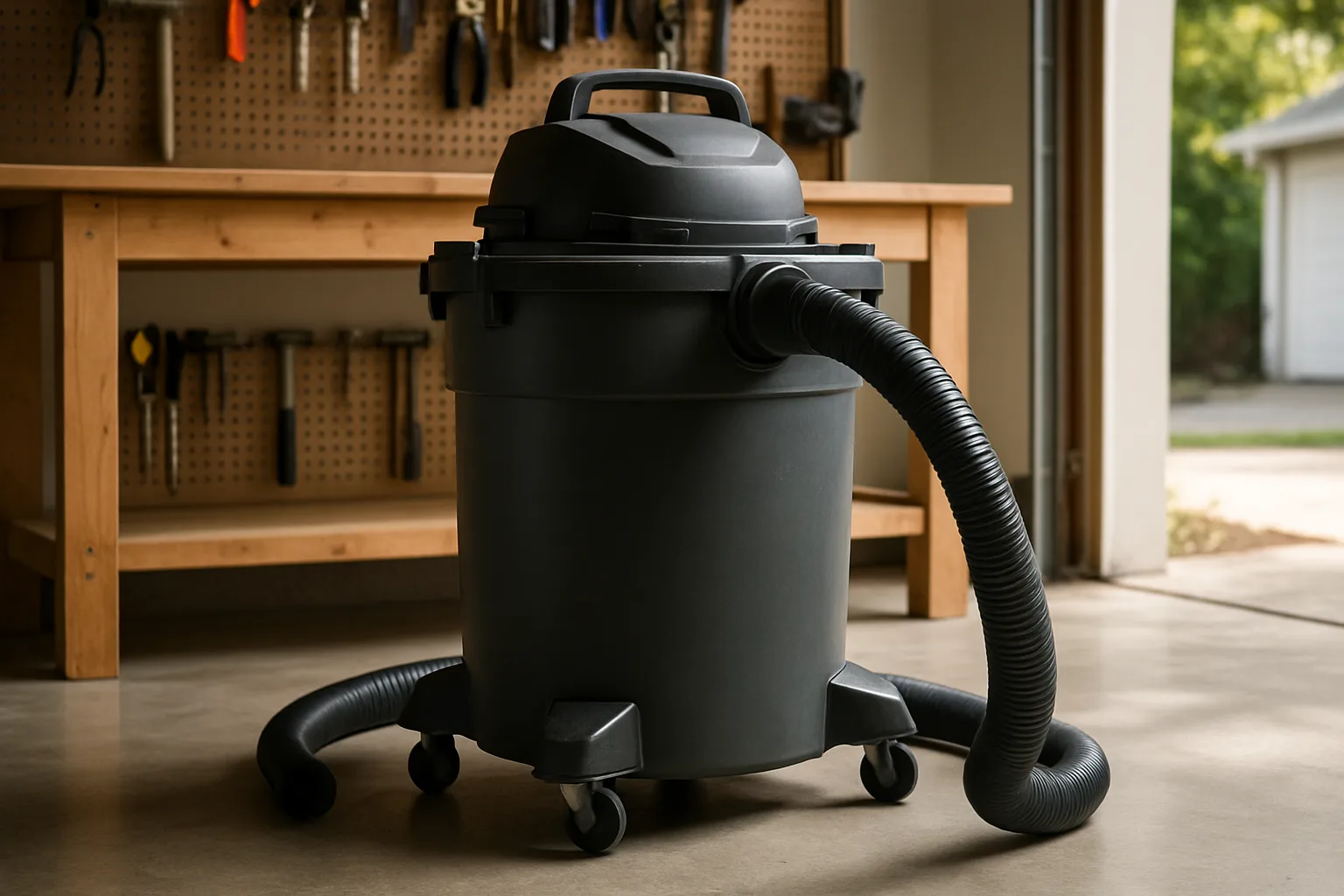
Best Shop Vac for Home and Garage: Craftsman vs. Vacmaster Beast vs. DeWalt vs. Shop-Vac
Why peak HP misleads, how CFM, water lift and hose size matter, what tank size a house needs, and Craftsman, Vacmaster Beast, DeWalt and Shop-Vac picks.
A wet/dry shop vacuum is the tool most homeowners wish they owned the day a water heater leaks, a basement drain backs up or a drywall patch leaves fine dust over everything. It also cleans out cars, clears gutter debris, picks up cold fireplace ash and the sawdust a household vacuum should never touch. The hard part is reading the box: nearly every model advertises a big "peak horsepower" number that says very little about how well it actually picks up.
This guide explains which specs predict performance, how big a tank a house really needs, which filter to use for wet versus fine dust, and where the Craftsman, Vacmaster, DeWalt and Shop-Vac models fit.
As an Amazon Associate, Best Utah Real Estate earns from qualifying purchases.
Quick verdict: which shop vac to buy
- Best all-around for a garage or basement: Craftsman CMXEVBE17595 16-gallon. A big drum, a 2-1/2-inch hose that swallows debris, and a rear blower port.
- Most published suction for the money: Vacmaster Beast VJH1612PF 16-gallon. Rated around 150 CFM and roughly 64 inches of water lift, plus a 20-foot cord.
- Quietest full-size option: DeWalt StealthSonic DXV16P-QTA 16-gallon. Rated under 65 dB(A), which DeWalt says is half as loud as its standard 16-gallon model.
- Mid-size with a drain for water jobs: DeWalt DXV09P 9-gallon. Easier to carry up stairs, with a built-in tank drain.
- Small and portable: Shop-Vac 5-gallon 6.0 peak HP. Light enough for car detailing and quick spills, with a long 20-foot cord.
- Cordless, for buyers already on Milwaukee M18 batteries: Milwaukee M18 0880-20. A 2-gallon bare-tool vac with a 6-foot hose and a washable filter.
Spec comparison
| Model | Shop | Tank | Rated power | Published airflow / water lift | Hose | Cord |
|---|---|---|---|---|---|---|
| Craftsman CMXEVBE17595 |  Buy on Amazon Buy on Amazon
| 16 gal | 6.5 peak HP | Check current listing | 2-1/2 in x 7 ft | Corded |
| Vacmaster Beast VJH1612PF |  Buy on Amazon Buy on Amazon
| 16 gal | 6.5 peak HP | About 150 CFM / about 64 in | 2-1/2 in x 7 ft | 20 ft |
| DeWalt StealthSonic DXV16P-QTA |  Buy on Amazon Buy on Amazon
| 16 gal | 6.5 peak HP | About 135 CFM / about 75 in listed | 2-1/2 in x 7 ft | 20 ft |
| DeWalt DXV09P | 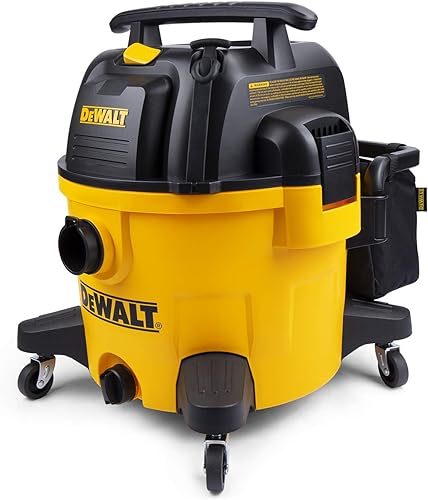 Buy on Amazon Buy on Amazon
| 9 gal | 5 peak HP | Not published by DeWalt | 1-7/8 in x 7 ft | 10 ft |
| Shop-Vac 5 gal (H87S600CR) | 5 gal | 6.0 peak HP | 90 CFM / 50 in | 1-1/2 in x 8 ft | 20 ft | |
| Milwaukee M18 0880-20 |  Buy on Amazon Buy on Amazon
| 2 gal | 18V battery | Not comparable | 6 ft | Cordless |
Figures come from manufacturer pages and listings. Bundles and look-alike model numbers are common in this category, so confirm the exact model on the current listing.
Ignore peak horsepower; read CFM and water lift
Peak horsepower is an industry comparison figure measured in a lab, including the motor's momentary inertia. Manufacturers themselves note that the motor never runs at that output in real use, which is why a 5-gallon portable and a 16-gallon drum can both claim 6 horsepower. Two other numbers tell more, and Shop-Vac's spec pages define them clearly:
- Airflow (CFM) is the volume of air the motor moves. High airflow picks up light, bulky debris such as sawdust, leaves and drywall dust, and it is what makes a vac feel strong on a floor.
- Sealed water lift (sealed suction) is how high the motor can pull a column of water with no air moving, in inches. High water lift helps with heavy material, such as wet sludge, gravel and water drawn up through a long hose.
Both numbers fall as the hose gets longer or narrower, as accessories are added, and as the filter loads with dust. A clean filter does more for real-world suction than an extra half "horsepower" on the label.
What a "6.5 HP" vac really draws
A standard household outlet tops out around 15 amps, and most big shop vacs list about 12 amps. At 120 volts, 12 amps is roughly 1,440 watts, a little under 2 horsepower of electrical input, and the motor's useful output is lower still. Independent lab-style comparisons of 16-gallon vacs, all sold as roughly 6.5 peak HP, have measured power draws from about 1,000 to 1,550 watts and sealed suction ranging from around 50 to the mid-80s in inches of water, with airflow differences just as wide. In other words, two vacs with the same label can perform very differently, and the label is no help in telling them apart.
Hose diameter matters as much as the motor
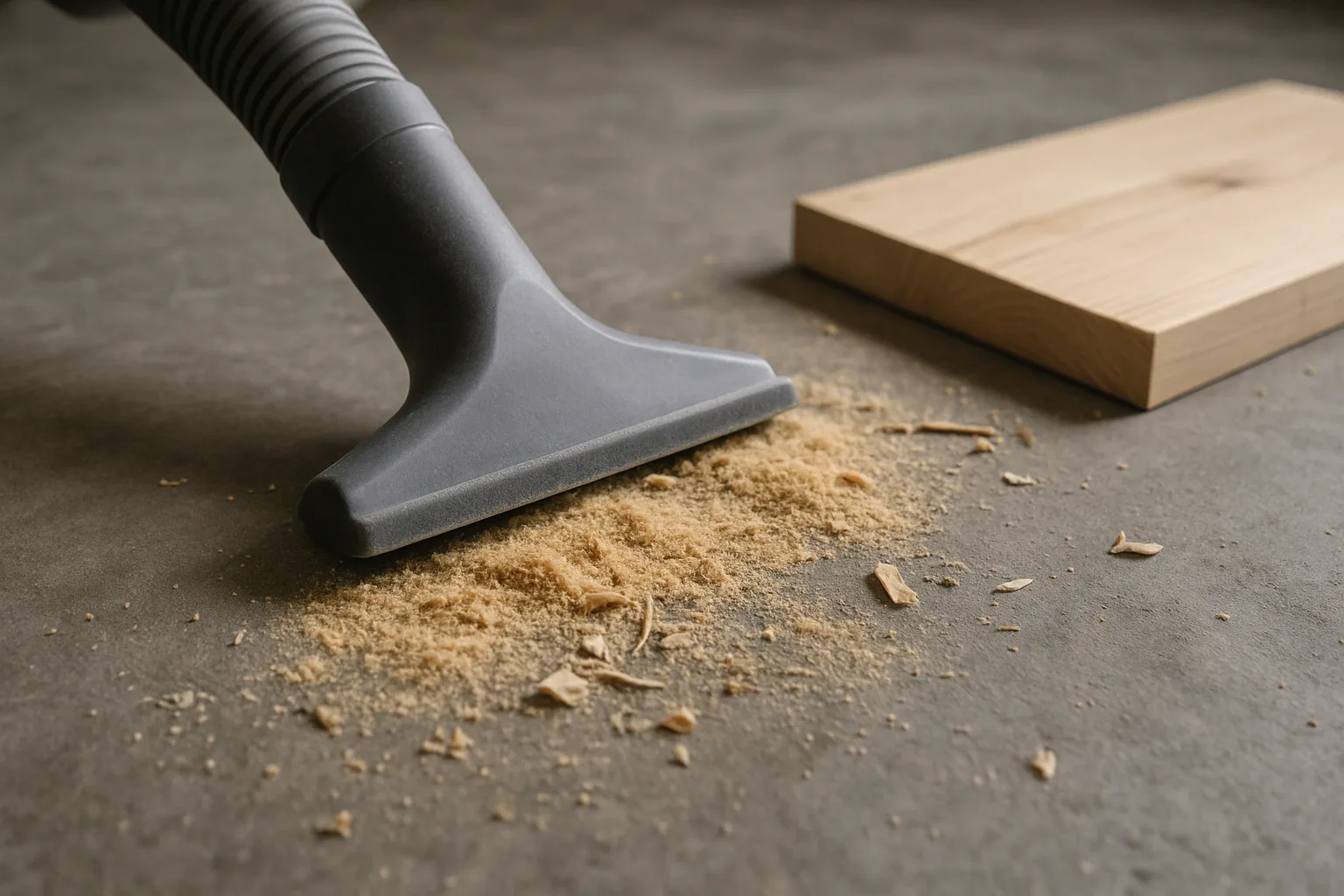
A 2-1/2-inch hose clears wood chips, leaves and screws that would jam a 1-1/4-inch hose, and it moves more air. A smaller hose is lighter and easier to steer around a car interior and fits power-tool dust ports better. Many owners of big vacs buy a small adapter or second hose for detail work rather than giving up the wide one.
How big a tank does a house need?
Bigger is not automatically better. A 16-gallon drum holds more water before it needs emptying, but full of water it is heavy and awkward to tip into a floor drain or carry outside. A rough guide:
- 2 to 5 gallons: cars, apartment spills, stair treads and quick workshop cleanup.
- 8 to 10 gallons: the most practical size for most houses, especially if the vac has to go up and down stairs.
- 12 to 16 gallons: basements prone to water, garages, remodeling debris and leaf cleanup.
Manufacturers list drum volume, not usable collection capacity. A shutoff float stops the motor before water reaches it, so the real wet capacity is always lower than the number on the box; tests of 16-gallon drums have found them shutting off at roughly 9 to 13 gallons of water. Before a real emergency, run a test with clean water to confirm the float actually stops the motor, since a stuck float lets water reach the hose connection and the motor. A tank drain, as on the DeWalt DXV09P, makes emptying water far easier than lifting the drum.
Filters: wet, dry and fine dust
The cartridge that comes in the box handles general debris. For anything else, the filter choice matters more than the vac:
- Water: most makers recommend removing the paper cartridge, or switching to a foam sleeve, for wet pickup. A soaked paper filter clogs and can tear.
- Drywall dust, ash and concrete dust: use a filter bag inside the drum plus a fine-dust or HEPA cartridge. The bag catches the bulk, so the cartridge does not choke within minutes.
- Older homes: houses built before 1978 may have lead paint. EPA's lead-safe guidance for do-it-yourselfers calls for a HEPA vacuum for cleanup. A shop vac with a basic filter can blow fine dust back into the room through its exhaust.
The picks in detail
Craftsman CMXEVBE17595 16-gallon
Craftsman CMXEVBE17595 16 Gallon Wet Dry VacCheck today’s price on AmazonBuy on Amazon →
Craftsman's top 6.5 peak HP drum comes with a 2-1/2-inch by 7-foot hose, two extension wands, several nozzles, a cartridge filter and a dust bag. The rear port turns it into a blower for clearing a garage floor or porch. It is a large, heavy unit, so it fits a garage or basement better than a house with tight stairs. Craftsman lists a three-year limited warranty.
Vacmaster Beast VJH1612PF 16-gallon
Vacmaster Beast 16 Gallon Wet Dry VacCheck today’s price on AmazonBuy on Amazon →
The Beast publishes the strongest numbers in this group: around 150 CFM of airflow and roughly 64 inches of water lift, with a 2-1/2-inch kink-resistant hose and a 20-foot cord. It converts to a blower as well. For a basement that takes on water or a homeowner tackling remodel debris, it is the strongest choice per dollar on paper. Like the Craftsman, it is bulky.
DeWalt StealthSonic DXV16P-QTA 16-gallon
DeWalt StealthSonic DXV16P-QTA 16 Gallon Wet Dry VacCheck today’s price on AmazonBuy on Amazon →
Noise is the complaint most owners have about shop vacs, and many run in the mid-80s to 90s in decibels. DeWalt's StealthSonic version of its 16-gallon poly vac is rated under 65 dB(A), with listings citing about 135 CFM, a 2-1/2-inch by 7-foot hose, a 20-foot cord, a built-in drain and a three-year limited warranty. It costs more than the Craftsman or Vacmaster, but for vacuuming inside a finished basement, a house or an attached garage at night, the quieter motor is the reason to buy it.
DeWalt DXV09P 9-gallon
DeWalt DXV09P 9 Gallon Wet Dry VacCheck today’s price on AmazonBuy on Amazon →
DeWalt's 9-gallon poly vac is rated at 5 peak HP with a 1-7/8-inch by 7-foot hose, a washable cartridge filter, a built-in drain and a blower port. Its 10-foot cord is short, so an extension cord rated for the load will often be needed. The size is the appeal: big enough for real water cleanup, small enough to carry. DeWalt backs it with a three-year limited warranty.
Shop-Vac 5-gallon 6.0 peak HP
Shop-Vac's portable 5-gallon (model H87S600CR) lists 90 CFM and 50 inches of sealed water lift, an 8-foot by 1-1/2-inch hose and a 20-foot cord. The narrow hose limits it on chunky debris, but it is easy to carry to a car, a closet or an upstairs spill.
Milwaukee M18 0880-20 cordless
The 0880-20 holds about 2 gallons and runs on any Milwaukee M18 slide-on battery, with a 6-foot hose, crevice tool and wide nozzle in the box. It is sold as a bare tool, so it makes the most sense for someone who already owns the batteries. It will not replace a corded drum for a flooded basement, but for cleanup in a driveway, a truck bed or a room without a nearby outlet, the lack of a cord is the whole point.
Shop vac or wet/dry floor cleaner?
A shop vac and a wet/dry floor cleaner solve different problems. The floor cleaners compared in the wet-dry vacuum mop guide wash finished floors with clean water and a roller. A shop vac pulls up standing water, debris and dust that would destroy a household machine. For water emergencies, pairing a shop vac with leak sensors or an automatic shutoff valve means less water to pick up in the first place.
Care and safety
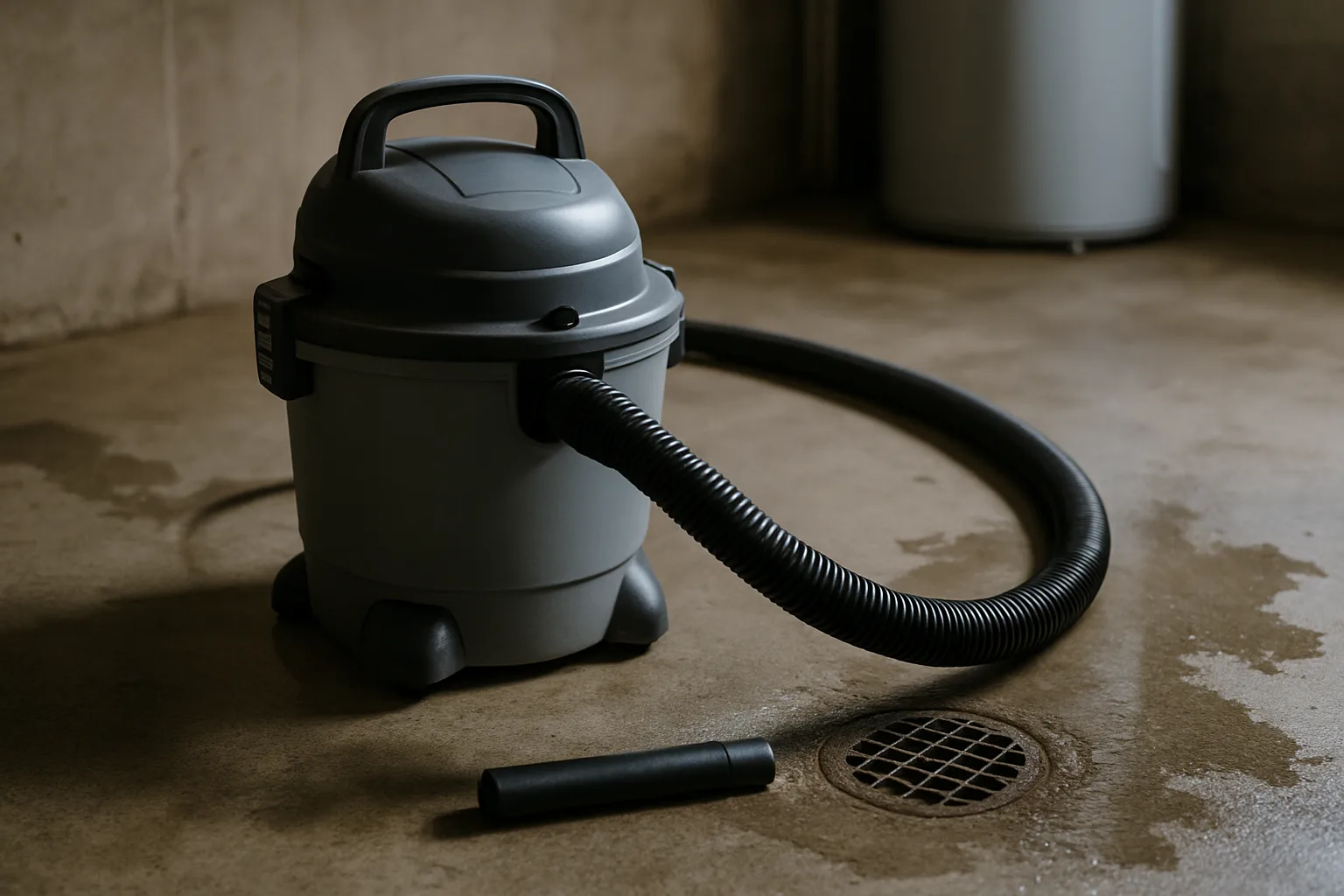
- Empty water promptly and let the drum air-dry with the lid off to prevent odors and mildew.
- Tap or rinse the cartridge outdoors after dusty jobs, and keep a spare so one can dry while the other works.
- Never vacuum flammable liquids, gasoline, or hot ashes. Fireplace ash should be cold for at least a day, and a filter bag helps keep it out of the motor.
- Use a grounded outlet and a GFCI when picking up water, and do not stand in water while operating a corded vac.
- Store the hose loosely coiled. Sharp bends and sun exposure crack hoses over time.
Who should buy which
- A house with a garage and a basement: the Craftsman 16-gallon or the Vacmaster Beast. Choose the Beast for the higher published suction and longer cord.
- Anyone sensitive to noise, or vacuuming inside the living space: the DeWalt StealthSonic.
- A house where the vac lives upstairs or in a closet: the DeWalt DXV09P.
- Cars, small spills and small spaces: the Shop-Vac 5-gallon.
- A Milwaukee M18 battery owner: the 0880-20 as a second, cordless vac.
For buyers outfitting a new garage, a shop vac belongs on the same short list as a wall organizer and a workbench, ideas covered in the garage renovation guide.
Posted by Kristopher Larson
Frequently asked questions
What size shop vac is best for home use?
For most houses, an 8- to 10-gallon wet/dry vac is the practical middle: big enough for a water heater leak or a garage cleanup, small enough to carry up stairs. Homes with basements that take on water, or owners doing remodeling, benefit from a 12- to 16-gallon drum. A 2- to 5-gallon unit suits cars and small spaces.
Is peak horsepower a good way to compare shop vacs?
Not really. Peak horsepower is a lab comparison figure that includes the motor's inertia, and manufacturers note the motor never runs at that output in normal use. Airflow in CFM and sealed water lift in inches, along with hose diameter, say much more about real pickup.
Do I need to remove the filter to vacuum water with a shop vac?
Most manufacturers recommend removing a paper cartridge filter or switching to a foam sleeve for wet pickup, since a soaked paper filter clogs and can tear. Check the manual for the specific model. The float shutoff stops the motor when the tank is nearly full of water.
Can a shop vac pick up drywall dust?
Yes, but use a filter bag inside the drum and a fine-dust or HEPA cartridge. Without them, fine drywall dust clogs a standard cartridge quickly and can pass through it back into the room. Tap the cartridge clean outdoors between uses.
Is a shop vac safe for lead paint dust?
A standard shop vac is not the right tool. EPA's lead-safe guidance for homes built before 1978 calls for cleanup with a HEPA vacuum, because ordinary vacuums can blow fine dust back out through the exhaust. A shop vac fitted with a true HEPA filter and a bag is a better choice, and a dedicated HEPA vacuum is better still.
What is the difference between CFM and water lift?
CFM measures how much air the vacuum moves, which matters for light, bulky debris such as sawdust and leaves. Sealed water lift measures how hard the motor can pull with no air moving, which matters for heavy material like wet sludge and gravel. Both drop with longer or narrower hoses and dirty filters.
Keep reading
More from the blog

Best Christmas Tree Stand for a Real Tree: Steel vs. Plastic vs. Ratchet (Cinco, Jack-Post, Krinner)

Costway Christmas Inflatables Reviewed: Snow Globe, Nativity, Santa on a Dinosaur and More

C3 vs. C6 vs. C7 vs. C9 Christmas Lights: Which Bulb Size for Rooflines, Trees and Bushes