Water Leak Sensors vs. Automatic Shutoff Valves: Govee vs. Moen Flo vs. Phyn vs. YoLink
Leak sensors warn, shutoff valves stop the water. How Govee, Moen Flo, Phyn and YoLink compare, and where to place sensors to catch leaks early.
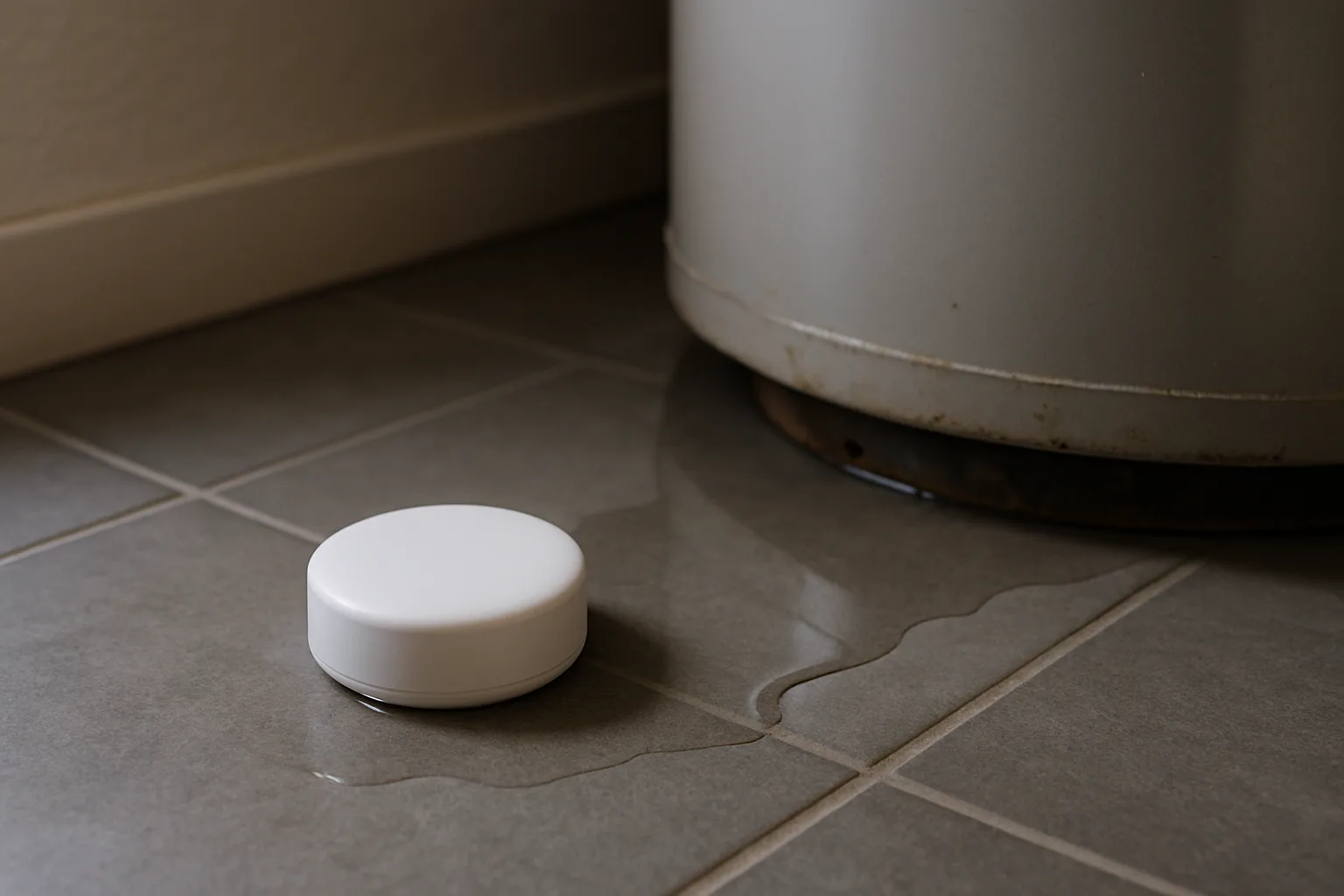
Most household leaks are small and slow: a weeping water heater, a failing washing-machine hose, a supply line under the sink that drips for weeks before anyone opens the cabinet. The damage comes from time, not volume. According to the Insurance Information Institute, about one in 60 insured homes has a property damage claim caused by water damage or freezing, and it ranks behind only wind and hail as a cause of homeowners claims.
Two kinds of devices shorten that time. Leak sensors sit on the floor and sound an alarm, or send a phone alert, when they get wet. Automatic shutoff valves go on the main water line and close it, either when a sensor trips or when the valve itself spots abnormal flow. This guide compares the options, explains where sensors belong, and names specific products for each approach.
As an Amazon Associate, Best Utah Real Estate earns from qualifying purchases.
Quick verdict: what to buy for which home
- Best value smart sensors: the GoveeLife Smart Water Leak Detector 1s (3-pack with gateway), with IP67 sensors, a loud local alarm, phone alerts and a long-range gateway.
- Best no-Wi-Fi alarm: the Basement Watchdog BWD-HWA, a battery-powered 110 dB alarm with a detachable probe on a 6-foot wire.
- Best whole-home shutoff for 1-inch mains: the Moen Flo 900-006 Smart Water Shutoff, which watches flow and pressure and runs a daily leak test.
- Best for small-leak detection on larger mains: the Phyn Plus Smart Water Assistant and Shutoff (2nd Gen), with an ultrasonic flow sensor and fit for pipes up to 1-1/4 inches.
- Best shutoff without cutting pipe: the YoLink Water Shutoff Kit, a motorized actuator that turns the existing quarter-turn main valve, plus three sensors and a hub.
Sensors, flow monitors and valve actuators: how each works
Spot leak sensors
A spot sensor has metal contacts on its underside. When water bridges two contacts, it alarms. Basic models beep and nothing more, which works only if someone is home to hear it. Smart models connect to a hub or gateway and push alerts to a phone, so a leak in the basement reaches someone at work. They only detect water where they are placed, so coverage depends entirely on putting them in the right spots.
Inline smart water monitors with shutoff
These install directly on the main supply line, usually just after the main shutoff. They measure flow, pressure and temperature, learn the home's normal use, and close a built-in valve when something looks wrong, such as water running for hours at 3 a.m. The best ones also run a periodic test, closing the valve briefly and watching for pressure loss, which catches tiny leaks inside walls that no floor sensor would ever touch. Installation means cutting into the main, so most manufacturers recommend a plumber, and the unit needs a power outlet and Wi-Fi.
Valve actuators
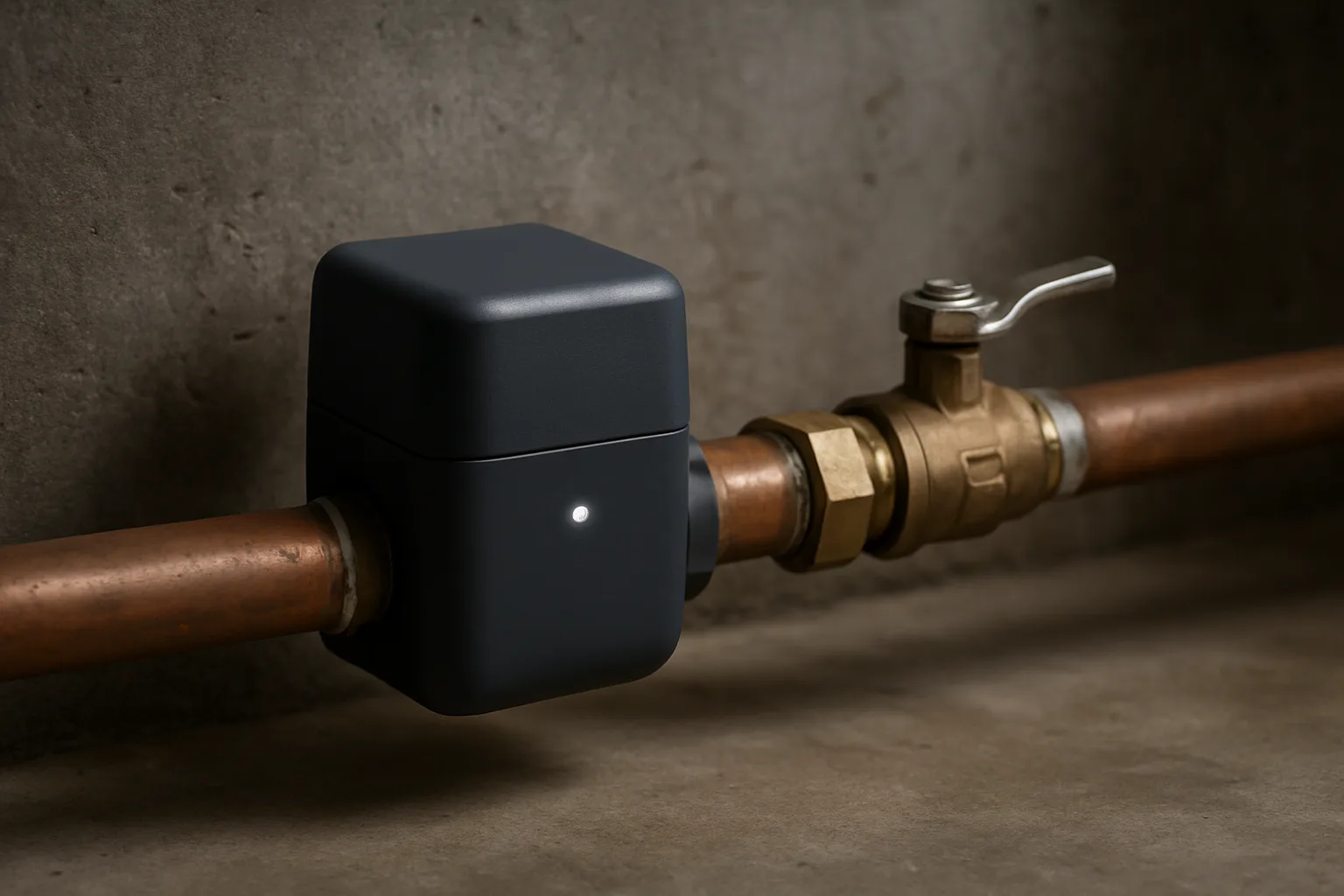
An actuator is a motor that clamps onto an existing quarter-turn ball valve and turns the handle. Paired with leak sensors, it closes the main when any sensor gets wet. There is no pipe cutting, so it is the easiest retrofit. It does not monitor flow, so it cannot catch a hidden leak; it only reacts to the sensors. Gate valves with round wheel handles generally will not work and may need to be swapped for a ball valve first.
Leak protection options compared
| Product | Shop | Type | Shuts off water? | Catches hidden leaks? | Power | Install |
|---|---|---|---|---|---|---|
| GoveeLife Leak Detector 1s | 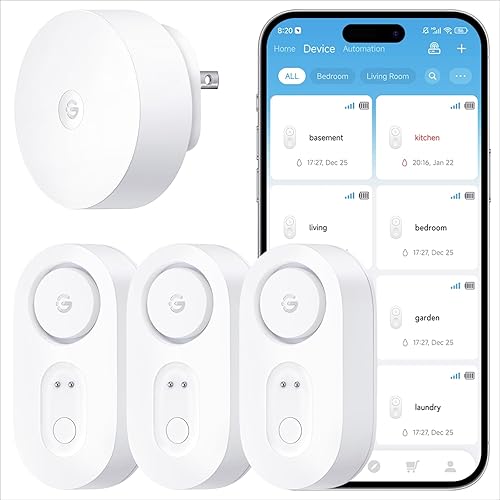 Buy on Amazon Buy on Amazon
| Smart spot sensors + gateway | No (alerts only) | No | Batteries; gateway plugs in | Place on floor |
| Basement Watchdog BWD-HWA |  Buy on Amazon Buy on Amazon
| Standalone alarm | No | No | 9-volt battery | Place on floor |
| Moen Flo 900-006 |  Buy on Amazon Buy on Amazon
| Inline monitor + valve | Yes, automatically | Yes, daily test | AC outlet | Cut into 1 in. main |
| Phyn Plus (2nd Gen) |  Buy on Amazon Buy on Amazon
| Inline monitor + valve | Yes, automatically | Yes, daily plumbing check | AC outlet | Cut into main up to 1-1/4 in. |
| YoLink Water Shutoff Kit | 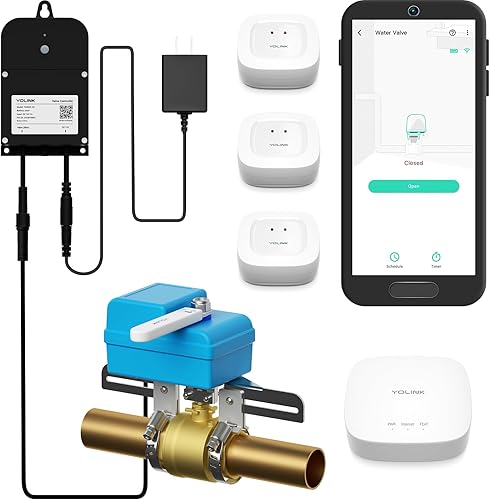 Buy on Amazon Buy on Amazon
| Valve actuator + sensors | Yes, when a sensor trips | No | Sensor batteries; controller power varies by kit | Clamps on existing ball valve |
The picks in more detail
GoveeLife Smart Water Leak Detector 1s
The 1s kit pairs battery-powered sensors with a plug-in Wi-Fi gateway. Govee lists the sensors as IP67, meaning they survive submersion, rates the batteries for up to five years, and claims a range of up to 1,804 feet between sensor and gateway, which is long enough to reach a detached garage. Each sensor has its own loud alarm, so it works even when the internet is down. The gateway uses 2.4 GHz Wi-Fi and pairs only with 1s-series sensors, so older Govee sensors are not interchangeable. It is the most practical way to put a sensor at every risky fixture without a large budget.
GoveeLife Smart Water Leak Detector 1sCheck today’s price on AmazonBuy on Amazon →
Basement Watchdog BWD-HWA
For a cabin, a rental unit or a single sump pit, a plain alarm is often enough. This one runs on a 9-volt battery, detects water at about 1/32 of an inch, and puts the sensor on a detachable 6-foot wire so the alarm itself can sit up high where it is easier to hear. It has no app and no shutoff, which is the trade-off for never needing a hub or Wi-Fi.
Moen Flo 900-006
Flo installs inline on a 1-inch or smaller main and needs Wi-Fi and a nearby outlet. Moen says its daily MicroLeak test can identify leaks as small as a drop per minute, and its FloSense feature learns the home's usage to close the valve automatically when it sees something like a burst pipe or a fixture left running. The app shows usage, flow rate and pressure, and Moen states there is no required subscription for the core features. The Flo shutoff also pairs with Moen's own floor sensors. It does not replace the home's manual main valve; it goes alongside it.
Phyn Plus (2nd Gen)
Phyn uses a high-resolution ultrasonic flow sensor with no moving parts, along with pressure and temperature sensing, to spot leaks and freezing risk and to break down water use by fixture. Phyn lists compatibility from 3/4-inch up to 1-1/4-inch pipe, 1-inch NPSM threaded ends (adapters sold separately), NSF/ANSI 61 and 372 certifications, and an IP55 rating for indoor or outdoor installation. That larger pipe range makes it the stronger fit for big homes with a 1-1/4-inch main. Professional installation is recommended. The Phyn Plus 2nd Gen sits at the premium end of this category, so check the current price and seller before buying.
YoLink Water Shutoff Kit
YoLink's kit bundles a motorized valve operator, a controller, three leak sensors and a hub. It uses YoLink's long-range LoRa radio rather than Wi-Fi for the sensors, and the company says that once paired, sensors can trigger the valve directly, even without internet. It suits renters who cannot alter plumbing, homes with a main valve in an awkward spot for an inline unit, and anyone who wants automatic shutoff for well under the cost of a plumber-installed monitor. Confirm that the main valve is a quarter-turn ball valve before ordering.
Where to put leak sensors
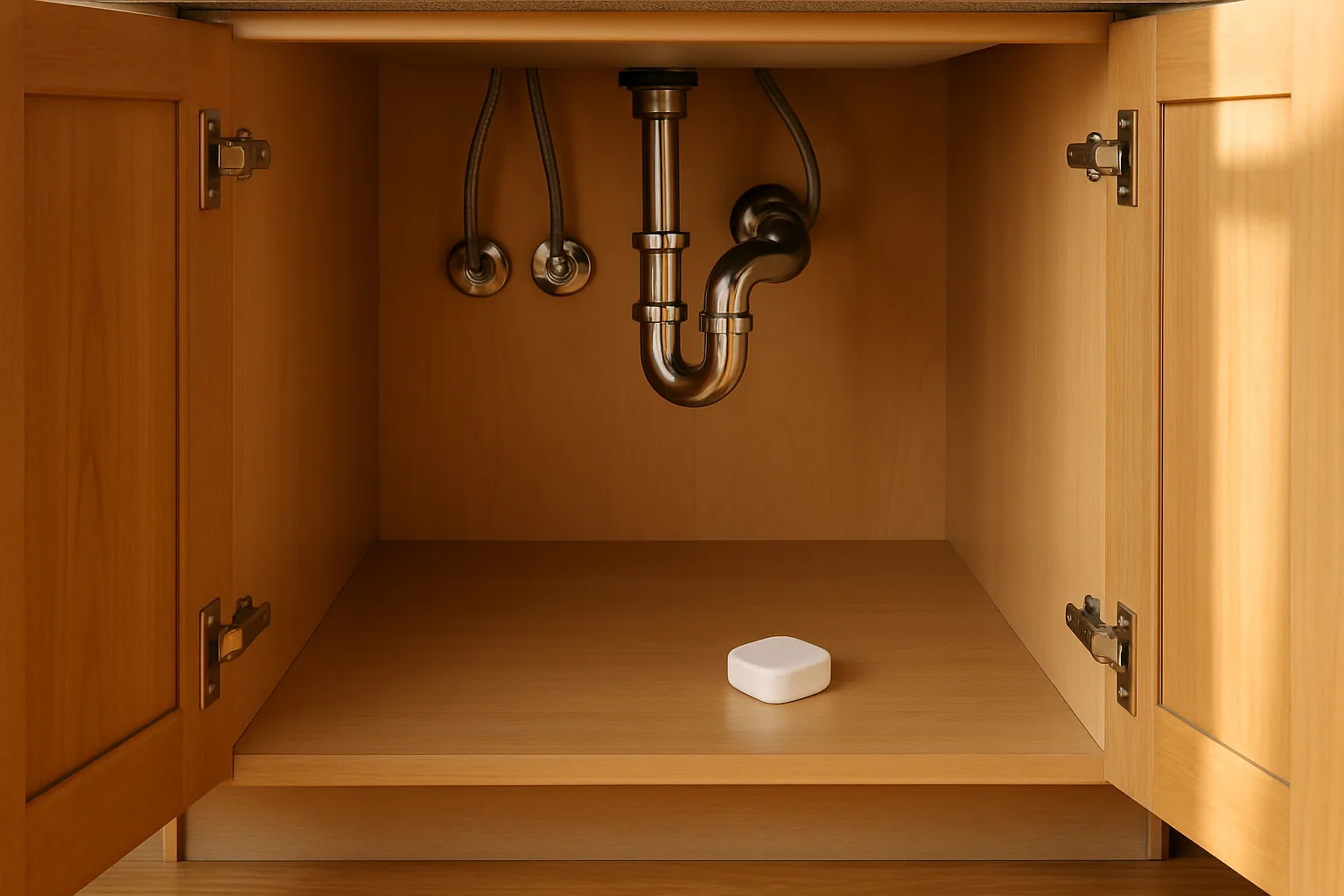
Sensors work only where water will reach them. Place them on the floor, as close to the likely source as possible, ideally at the low point where water would collect. Set them slightly to the side of a drip rather than directly under it, so the alarm speaker is not covered. The highest-value spots:
- Water heater. Tank heaters fail eventually, usually by leaking at the bottom. Put a sensor in the drain pan or beside the base.
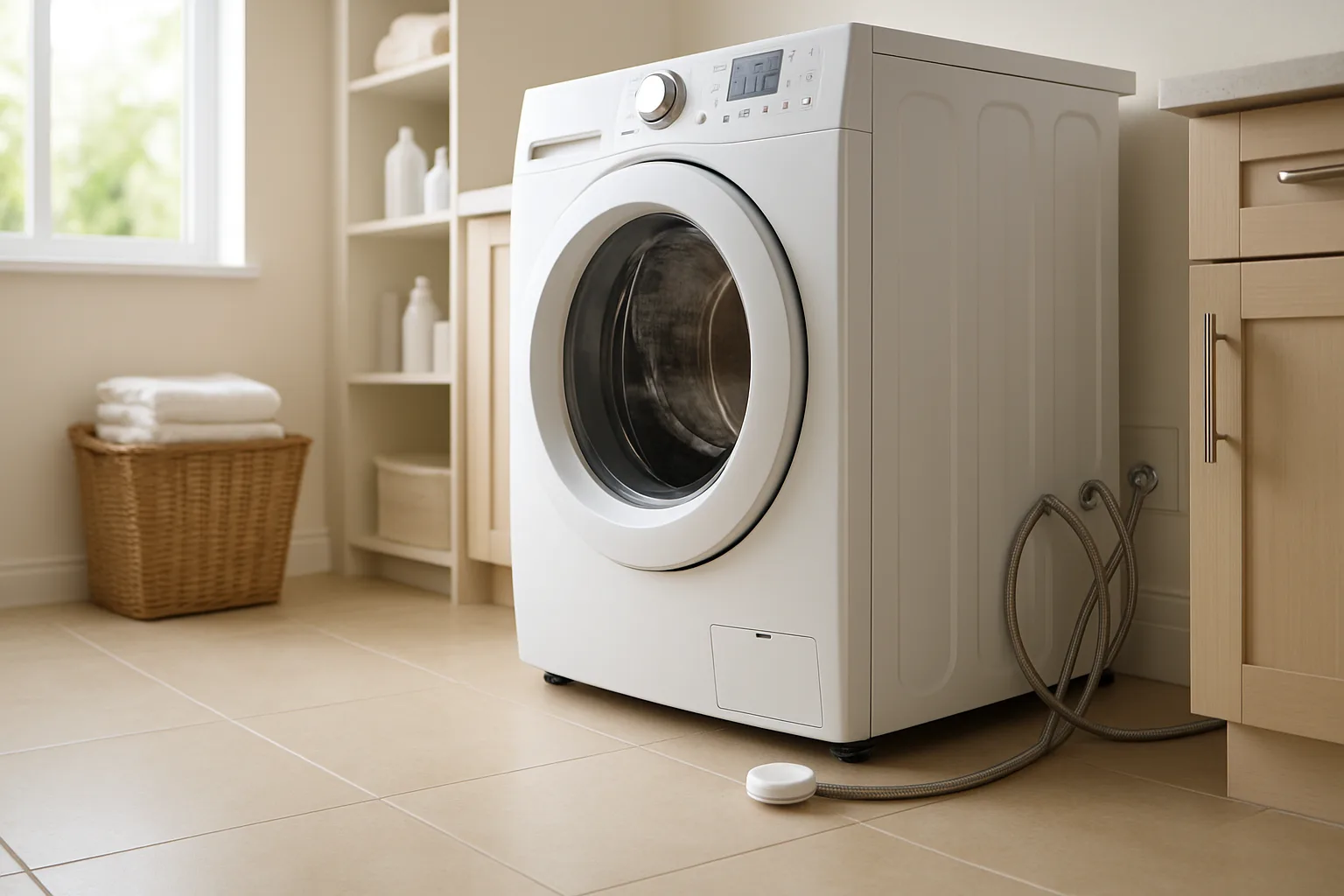
- Washing machine. Supply hoses are a classic failure point. Place the sensor behind the machine near the hose connections, and replace rubber hoses with braided stainless ones.
- Kitchen sink and dishwasher. Inside the sink base and, if reachable, under the dishwasher's front kick plate.
- Refrigerator with an ice maker. The thin supply line behind it can crack and leak unseen.
- Toilets and bathroom vanities. Especially in upstairs bathrooms, where a leak damages the ceiling below.
- Furnace and air handler. Air conditioning condensate lines clog and overflow.
- Sump pit, water softener and whole-house filters. Anything that holds water or connects to the main.
Which approach makes sense
For most homes, the sensible path is layered. Start with smart sensors at every fixture on the list above. Add an automatic shutoff if the home is often empty, has finished basement space, or has bathrooms above living areas, because a sensor alert is only useful if someone can get home to close the valve. Choose an inline monitor if hidden in-wall leaks are a concern and the budget allows a plumber; choose an actuator if the goal is shutoff at the lowest cost and effort.
Some insurers offer discounts for monitored water shutoff devices, so it is worth asking the carrier before buying. Also test the system once in a while: wet each sensor with a damp paper towel, and confirm the valve actually closes.
When a leak is found anyway
Detection limits the damage but does not always prevent it. Wet drywall, flooring and insulation need to be dried quickly, because mold can begin to grow within a day or two. This explainer on how fast water damage turns into mold covers the timeline, and this guide to what full water restoration covers explains what professionals do beyond running fans. For the outside of the house, this piece on waterproofing a home covers grading, gutters and foundations.
Posted by Kristopher Larson
Frequently asked questions
What is the difference between a water leak sensor and an automatic shutoff valve?
A leak sensor detects water where it is placed and sounds an alarm or sends a phone alert. An automatic shutoff valve closes the home's main water line, either when a paired sensor trips or when an inline monitor sees abnormal flow. Sensors warn; shutoff valves stop the water.
Where should water leak sensors be placed?
Put them on the floor at the most likely leak points: beside the water heater, behind the washing machine, inside the kitchen sink cabinet, behind the refrigerator, near toilets, by the furnace or air handler, and next to the sump pit or water treatment equipment. Place each slightly to the side of a likely drip so the alarm speaker is not covered.
Do smart water shutoff valves need a plumber?
Inline monitors such as Moen Flo and Phyn Plus are installed on the main supply pipe, and both manufacturers recommend professional installation. Valve actuators that clamp onto an existing quarter-turn ball valve can be installed without cutting pipe, which makes them a common DIY choice.
Can a smart water monitor find leaks inside walls?
Inline monitors can. They run periodic tests, closing the valve and watching for a pressure drop, which reveals small leaks anywhere in the plumbing, including behind walls. Floor sensors and valve actuators cannot, because they only react to water that reaches a sensor.
How long do leak sensor batteries last?
It varies by model. Many smart sensors are rated for one to five years on their batteries, and basic alarms often use a 9-volt battery that should be checked at least yearly. Smart sensors usually send a low-battery alert, while basic alarms may not.
Do insurance companies give discounts for water leak detection?
Some insurers offer discounts or rebates for monitored water shutoff devices, and a few provide the devices themselves. Terms vary widely, so ask the carrier which devices qualify before buying.
Keep reading
More from the blog

Best Christmas Tree Stand for a Real Tree: Steel vs. Plastic vs. Ratchet (Cinco, Jack-Post, Krinner)

Costway Christmas Inflatables Reviewed: Snow Globe, Nativity, Santa on a Dinosaur and More

C3 vs. C6 vs. C7 vs. C9 Christmas Lights: Which Bulb Size for Rooflines, Trees and Bushes