
What Full Water Restoration Really Covers Beyond Simple Drying
Water damage doesn't end when visible water is gone. This guide walks through each stage of full restoration, from inspection and extraction to monitoring, cleaning, repairs, and documentation.
What Full Water Restoration Really Covers Beyond Simple Drying
Water damage rarely ends when visible water disappears. Moisture can remain inside drywall, flooring, cabinets, insulation, and framing, causing swelling, odor, and microbial growth. Effective restoration follows the water through each affected material, removes hidden moisture, cleans contaminated surfaces, and repairs damaged finishes. That process requires more than fans placed in a wet room. The stages below explain what a complete response includes and why each stage matters.
Inspection Finds More Than Visible Water
Restoration starts with an inspection that identifies the source, affected rooms, material types, and moisture boundaries. Technicians use moisture detection tools to locate damp areas behind baseboards, beneath flooring, and inside walls. Moisture mapping creates a record of conditions before extraction begins.
A complete water restoration plan uses those findings to match equipment and working methods to the property. This approach prevents teams from drying only the surfaces that look wet. It also helps identify hidden plumbing leaks, slab leaks, roof intrusion, and damage from overflowing fixtures before repairs begin. Buyers can catch many of these issues early with a pre-purchase plumbing inspection, and storm-related leaks are covered in our guide to how natural disasters damage your roof.
Extraction Removes Standing Water
Water extraction addresses liquid water that remains on floors, in carpets, or inside other absorbent materials. Commercial-grade pumps and extraction tools remove larger volumes faster than household equipment. Quick removal reduces how long materials stay saturated and limits spread into nearby areas.
Extraction also lowers the moisture load inside the building. However, it does not prove that the structure is dry. A floor can appear clear while water remains beneath boards, under cabinets, or inside wall cavities.
Controlled Drying Reaches Structural Materials
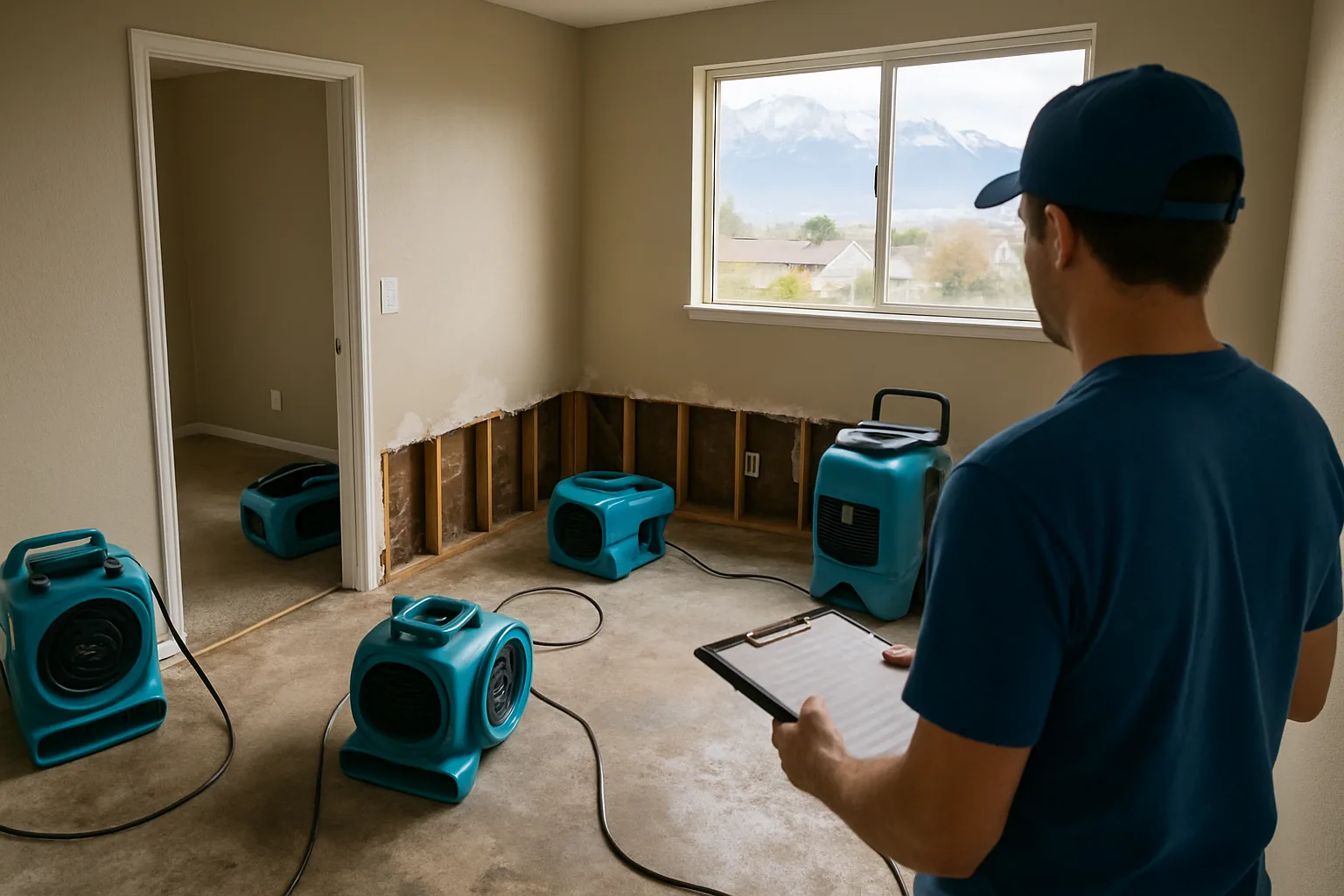
Drying uses air movers, dehumidifiers, and a placement plan based on moisture readings. Air movement helps release moisture from materials, while dehumidification removes water vapor from indoor air. Technicians adjust equipment as readings change.
Material type affects the drying strategy. Drywall, hardwood, insulation, concrete, and cabinetry release moisture at different rates. A single fan cannot address those differences or reach enclosed spaces without a planned approach.
Monitoring Verifies Progress
A professional drying job includes repeated moisture readings, equipment checks, and documented progress. Technicians compare readings across affected and unaffected areas to determine whether materials are returning to acceptable dry conditions.
Monitoring matters because surface temperature and airflow can create a false impression of dryness. Documentation also records completed work, equipment used, and readings collected. Property owners can use those records when discussing damage with an insurance carrier.
Cleaning Addresses Water Quality and Odor
Water from a supply line differs from water from a toilet overflow, storm intrusion, or drain backup. The source affects the cleaning methods, protective measures, and materials that can remain in place. Restoration work, therefore, includes cleaning, sanitizing, and deodorizing when the water severity requires those steps.
Odor control also requires source removal. Cleaning the air while leaving wet drywall, padding, or insulation behind does not resolve the cause. Damaged porous materials sometimes require removal before you can clean the area properly.
Repairs Return the Property To Use
Drying and cleaning stabilize the property, but damaged finishes still need attention. Restoration can include drywall, baseboards, flooring, cabinets, paint, and other finish work after drying has been verified.
Repairs should follow the drying record, not precede it. Replacing materials while moisture remains trapped can conceal continuing damage and create another repair cycle. A clear sequence keeps reconstruction tied to measured site conditions.
Records Support Better Decisions
Photos, moisture readings, equipment logs, and a written scope create a clear project record. These documents show where damage occurred, what work addressed it, and when drying goals were met. They also help separate emergency services from later repairs.
Property owners should ask for documented readings and a description of affected materials. If a claim is involved, organized records make conversations with the insurance carrier more precise. The record should describe observed conditions rather than assume damage outside the inspected areas. Utah homeowners should also review their finances and reserves so unexpected repairs are manageable.
Conclusion
Full restoration follows a property through inspection, extraction, controlled drying, monitoring, cleaning, and repairs. Each stage answers a different question: where the moisture is, how much water remains, whether materials are dry, what must be cleaned, and what must be rebuilt. After a leak or flood, property owners should request moisture mapping, documented readings, and a written scope before approving repairs. Those steps provide a practical basis for deciding whether drying alone is sufficient.
Frequently asked questions
What is included in full water damage restoration?
Why isn't using fans enough after a leak or flood?
What is moisture mapping in water restoration?
How do I know when my home is truly dry?
What documents should I request from a restoration company?
Should repairs start before drying is finished?
Keep reading
More from the blog

Smart Interior Upgrades That Increase a Home's Appeal

Best Airports for Utah and Colorado Mountain Towns
Types of Metal Roofing: What Homebuyers Should Know