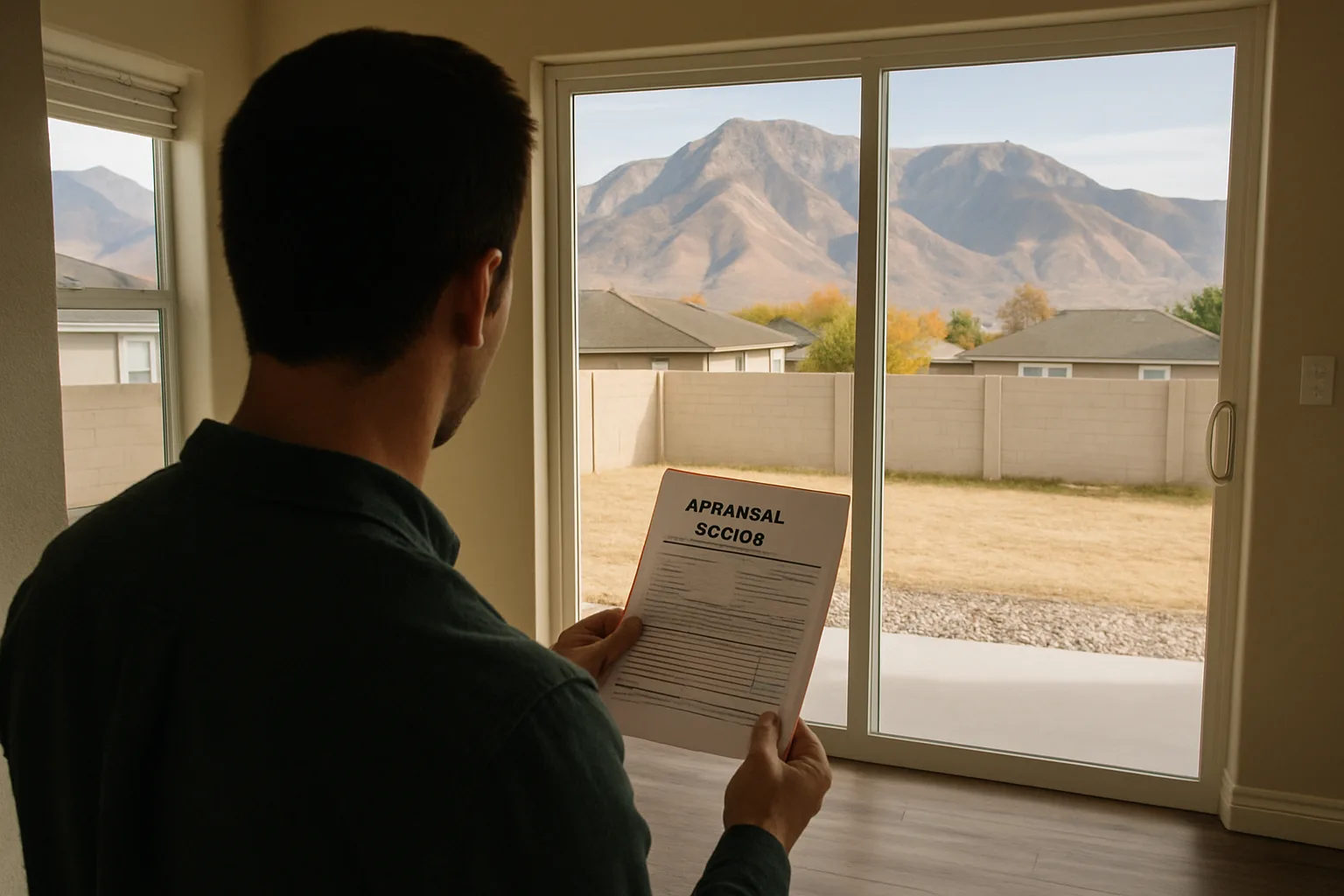

How to Prepare Your Finances Before Buying a Home in Utah
A practical, step-by-step guide to preparing your finances before buying a home in Utah - covering budgeting beyond the mortgage, credit and debt strategy, documenting funds, mortgage options, and pressure-testing your budget before you make an offer.
Clarify the Purchase Goal and Timeline
Start with the location, property type, and timing
A home search often begins with a neighborhood, a bigger kitchen, or the hope of finally having a yard. The financial plan needs a little more detail.
A condo in West Jordan or elsewhere in Salt Lake County, a townhome in Utah County, and a detached mountain property can come with very different expenses. HOA dues, insurance, utilities, and maintenance all deserve a place in the comparison-not just the listing price.
Timing matters, too. A buyer hoping to move within three months needs accessible savings and organized paperwork. A buyer with a year has more room to reduce debt, strengthen credit, and build a cushion. Buyers relocating from out of state, including those leaving California for Utah, often need extra runway to sort out timing and financing before they start touring homes.
Find a monthly payment that leaves breathing room
The amount a lender approves can feel like a spending recommendation. It is not. Approval reflects lending guidelines, not every expense that makes a household function.
A comfortable monthly payment should leave room for groceries, transportation, childcare, retirement savings, and occasional enjoyment. Include taxes, insurance, applicable mortgage insurance, HOA dues, utilities, and maintenance-not merely principal and interest. If converting solana to usdt is part of your broader financial planning, account for any fees and applicable taxes, and keep one-time asset conversions separate from dependable monthly income.
One useful rehearsal is saving the difference between current housing costs and the proposed ownership budget. If that transfer feels manageable, it can build both savings and confidence. If it strains the household, adjusting the budget now can help make future ownership more comfortable.
Build a Utah Homebuying Budget Beyond the Mortgage
Separate the down payment from the other upfront costs
The down payment gets most of the attention, but several expenses arrive before the keys do. Some mortgage programs allow around 3 down, while eligible buyers may qualify for zero-down options. A 20 down payment is not a universal requirement.
Earnest money is another early cash need. It is generally credited toward the buyer's funds at closing, rather than becoming an additional permanent expense. Whether it can be recovered if the purchase falls through depends on the contract and deadlines.
Closing costs can include lender charges, appraisal, title and settlement services, recording fees, prepaid interest, insurance, and escrow deposits. Inspections, moving, and utility setup need their own space in the budget. If your appraisal comes back higher than expected, it's worth understanding what a higher-than-offer appraisal actually means for your equity and closing numbers.
Look closely at taxes, insurance, and HOA dues
Utah property taxes depend on assessed value, local taxing districts, and applicable exemptions. Qualifying primary residences generally receive a 45 exemption from market value, leaving 55 taxable, with qualifying land generally limited to one acre. Eligibility and filing requirements should be confirmed with the county. Buyers who want to understand the mechanics behind their bill can review how Utah assessed value really gets set and why similar houses can end up with different tax bills.
The seller's bill is useful background, not a promise of future costs.
For an HOA property, look beyond current dues. Financial statements, reserve information, and pending special assessments can reveal expenses that a listing leaves out. Low dues are not necessarily a bargain if major repairs have gone unfunded.
Leave room for the first year of ownership
The first year has a way of finding money the budget forgot: window coverings, a ladder, snow-removal equipment, a leaking faucet. Sometimes the surprise is an appliance that stops working shortly after move-in.
A home maintenance budget should reflect the property's age and condition. An older roof needs a different plan from a recently replaced one.
Ideally, closing leaves both household emergency savings and money for foreseeable home expenses. Those funds serve different purposes, even if they sit in the same savings account. New Utah homeowners settling in during the colder months may also find it helpful to plan out the first month in a new Utah home.
Strengthen Credit and Reduce Debt
Check credit before the application becomes urgent
Credit preparation is easier when there is time to solve problems. Buyers should review reports from all three nationwide credit bureaus and look for unfamiliar accounts, incorrect balances, and reporting errors.
Dispute inaccuracies early and retain supporting records. Collections and other negative items need more careful handling; paying an account does not guarantee a specific score increase or immediate mortgage approval.
A lender can explain how the intended loan program treats particular issues. That conversation is more useful several months before shopping than several days before an offer deadline.
Pay down debt without emptying savings
Debt-to-income compares recurring monthly debt payments with qualifying gross income. Reducing those obligations can improve mortgage readiness, while lower revolving balances may also help credit utilization.
The most useful payoff is not always the largest balance. A smaller loan with a substantial monthly payment may be worth examining.
Still, paying off debt with every available dollar can leave a buyer short at closing. The goal is balance: manageable obligations, adequate purchase funds, and enough cash left for ordinary life.
Keep finances steady after pre-approval
A furniture promotion or replacement car can seem unrelated to a home purchase. To an underwriter, it may change the calculation.
New credit, co-signing, and large financed purchases can affect qualification. Employment changes may also require additional review, especially when income shifts toward commissions or self-employment.
Changes are not automatically disqualifying. The important habit is checking with the lender before making them. Pre-approval is conditional, and financial information may be checked again before closing.
Make Purchase Funds Easy to Document
Keep a clear trail for the money
Underwriting becomes smoother when the source of purchase funds is easy to follow. Save complete statements and records for payroll, transfers, asset sales, and significant deposits.
"Seasoned funds" does not mean every dollar must remain untouched for one universal waiting period. Requirements depend on the loan and the source. Recent funds may be acceptable when properly documented.
Unexplained cash deposits are harder to verify. Repeatedly moving savings between accounts can also create extra paperwork without accomplishing much. For mortgage preparation, simple is often helpful.
Arrange family help before the transfer
A family gift can make a purchase possible, but the paperwork should come before the money moves.
Loan programs have different rules about eligible donors, permitted uses, and documentation. A lender may require a gift letter, transfer records, or evidence of available donor funds.
A gift generally cannot carry an undisclosed repayment obligation. If the family expects repayment, that arrangement should be described accurately. Sorting this out early protects both the mortgage process and the family relationship.
Understand the Mortgage Options
Compare conventional, FHA, VA, and USDA loans
Loan type | Down payment considerations | Costs and requirements to examine |
Conventional | Some programs allow 3 down | Private mortgage insurance commonly applies below 20 down |
FHA | As little as 3.5 for qualifying borrowers | Upfront and annual mortgage insurance |
VA | Often no down payment for eligible borrowers | Entitlement, appraisal requirements, and a possible funding fee |
USDA guaranteed | Zero-down financing for eligible buyers | Household income limits, eligible locations, and guarantee fees |
The smallest down payment is not automatically the least expensive choice. It preserves cash, which can be valuable, but may increase monthly or long-term financing costs.
Conventional mortgage insurance may be cancellable under applicable conditions. FHA mortgage insurance can last for the loan term, depending on the original down payment and loan terms. Written estimates using the same purchase assumptions make these differences easier to see.
Explore Utah assistance without assuming it is free money
Utah Housing Corporation and some local governments offer assistance for eligible buyers. Program availability, funding, income limits, education requirements, and occupancy rules can change.
Some assistance involves a second mortgage, monthly payments, deferred repayment, or other obligations. Buyers should ask what becomes due during ownership, refinancing, or sale.
An authorized participating lender can explain current options. The comparison should include the combined payment and repayment terms-not simply how much assistance reduces the initial cash requirement.
Choose a rate structure the budget can handle
A fixed-rate mortgage keeps principal and interest predictable. Taxes, insurance, and HOA dues can still increase.
An adjustable-rate mortgage may offer an appealing initial payment, but its adjustment schedule, index, margin, and caps need careful review. The budget should survive a permitted increase without assuming refinancing will be available.
Rate locks also have deadlines and conditions. A closing delay can have financial consequences, so lock timing belongs in the conversation rather than becoming an afterthought.
Prepare for Property-Specific Surprises
Understand the appraisal gap before making promises
An appraisal gap arises when the purchase price exceeds the appraised value used for lending. Depending on the financing structure, the buyer may need additional cash.
Competition varies across Utah neighborhoods and price ranges, a dynamic worth watching alongside broader Utah housing market conditions heading into next year. There is no reason to assume every offer requires an aggressive gap commitment.
Before agreeing to cover a difference, calculate its effect on remaining savings. Contract language and appraisal or financing contingencies also matter. An offer that wins the house but consumes the emergency fund may be too expensive in practice.
Budget for what the inspection might uncover
Inspection findings can change the picture quickly. A roof near replacement, aging heating equipment, or significant plumbing work may turn an affordable-looking home into a difficult first year.
Negotiations might involve repairs, a price adjustment, or seller credits, subject to contract and lending limits. Credits generally cannot become unrestricted repair cash, and some conditions must be corrected before financing can close.
Contractor estimates help replace guesswork with numbers. Not every finding deserves alarm, but expensive uncertainty deserves attention.
Get insurance quotes early
Insurance costs should be checked against the actual property, not a generic calculator estimate. Roof condition, replacement cost, location, deductibles, and wildfire exposure can affect availability and price.
Utah buyers should also consider radon testing and potential mitigation. Flood and earthquake damage are generally excluded from standard homeowners policies and may require separate coverage.
Some locations may create additional air-filtration or maintenance needs. These are separate questions, but together they help explain what living in the home could realistically cost.
Organize Savings and Mortgage Paperwork
Give the home fund a clear purpose
A dedicated home fund makes progress easier to track. Automatic transfers can support separate targets for the down payment, closing expenses, moving, and reserves.
Money needed soon should remain accessible rather than depend on favorable market performance. Transfers should be documented, especially once underwriting begins.
Build the closing folder early
Common mortgage documents include:
Recent pay stubs and employment information.
W-2s or relevant 1099s.
Tax returns when required.
Complete bank and investment statements.
Identification and debt information.
Gift and asset-sale documentation where applicable.
Additional business records for self-employed borrowers.
Requirements vary. Upload sensitive documents through the lender's verified secure system, and expect requests for updated records as closing approaches. Home shoppers should also be cautious online more broadly-see this guide on how to protect your family online while searching for Utah homes.
Pressure-Test the Budget Before Making Offers
Run a less comfortable scenario
A budget deserves a second version with less favorable assumptions: higher insurance, a rate increase before locking, rising HOA dues, and a repair allowance.
For example, a projected monthly housing budget of $2,800 should also be tested at $3,100. The question is whether essential spending and savings still work.
New construction needs particular care. An existing tax estimate may reflect land rather than the completed home. A low initial figure can make affordability look better than it will after assessment catches up.
Set the walk-away number in advance
Three boundaries help keep bidding decisions grounded:
Maximum purchase price.
Maximum sustainable monthly housing expense.
Minimum savings remaining after closing.
All three matter. A manageable price can still produce an uncomfortable payment or drain reserves through an appraisal gap.
Setting limits before negotiations makes it easier to step away. Disappointment is real, but it is usually easier to recover from than years of an overstretched housing budget. Comparing neighborhoods against a few practical filters before you commit, like those in this guide to choosing a Utah neighborhood, can also help set realistic price expectations before you start bidding.
Review the Final Numbers Before Signing
Compare the Loan Estimate and Closing Disclosure
Check the rate, loan type, points, lender credits, mortgage insurance, prepaid expenses, escrow deposits, and cash to close. Confirm that earnest money and negotiated credits appear correctly.
Points typically involve paying more upfront for a lower rate. Lender credits may involve accepting a higher rate. Neither should be evaluated without considering the expected ownership period and available cash.
For most standard home-purchase mortgages, the Closing Disclosure must be received at least three business days before consummation. That time is for review. Unexplained changes deserve questions before signing.
Keep the final stretch financially quiet
Avoid new debt and large discretionary purchases while underwriting is being finalized. Material income, employment, or asset changes should be reported promptly.
Closing funds also need protection from wire fraud. Payment instructions should be independently confirmed using a previously established phone number, particularly when a message announces a last-minute change.
A familiar email thread is not enough. A brief verification call is far less disruptive than trying to recover money sent to the wrong account.
Financial Confidence Comes From Buffers and Clarity
The practical takeaway
Preparing to buy a Utah home means more than reaching a down payment target. The strongest plan supports the mortgage, the move, and the ordinary surprises that follow.
Stable credit, documented funds, realistic ownership costs, and clear financial limits make decisions easier when the search becomes emotional. Cash reserves matter just as much as approval.
A successful purchase leaves room to settle in-not just enough money to reach closing day.
Frequently asked questions
How much should I save before buying a house in Utah?
What credit score do I need to buy a home in Utah?
Does Utah offer down payment assistance for first-time buyers?
What is an appraisal gap and how common is it in Utah?
How long before closing should I stop opening new credit accounts?
What closing costs should Utah homebuyers budget for besides the down payment?
Keep reading
More from the blog

Pre-Purchase Home Plumbing Inspection Guide for Buyers

How Natural Disasters Damage Your Roof and How to Protect It
The Field Kit Every Property Manager Should Carry