The Field Kit Every Property Manager Should Have in Their Vehicle
A property manager's vehicle is often their real office. Here's the practical field kit of paperwork, tools, safety supplies, footwear, and backup tech that keeps a day of site visits from turning into a bad afternoon.
A property manager's real office is often the driver's seat. Between move-out inspections, maintenance calls, vendor walkthroughs, and the occasional emergency that can't wait until morning, a single day might touch four or five different properties before lunch. The vehicle ends up doing double duty as a mobile office and a first-response toolkit, whether or not it was ever set up for that job.
Most of the friction that comes with this kind of work is avoidable. It usually traces back to the same handful of gaps: no paperwork on hand when a tenant needs something signed, no tool for the small fix that turns into a bigger one, or no plan for the stretch of the day spent walking a site rather than sitting behind a desk. None of it requires an elaborate setup. It just takes deciding once what belongs in the vehicle and keeping it stocked. This kind of preparation matters just as much for property management operations juggling a handful of rentals as it does for teams handling large portfolios, including landlords weighing the costs covered in our guide to how much property management companies charge to manage a rental.
Paperwork That Can't Wait for the Office
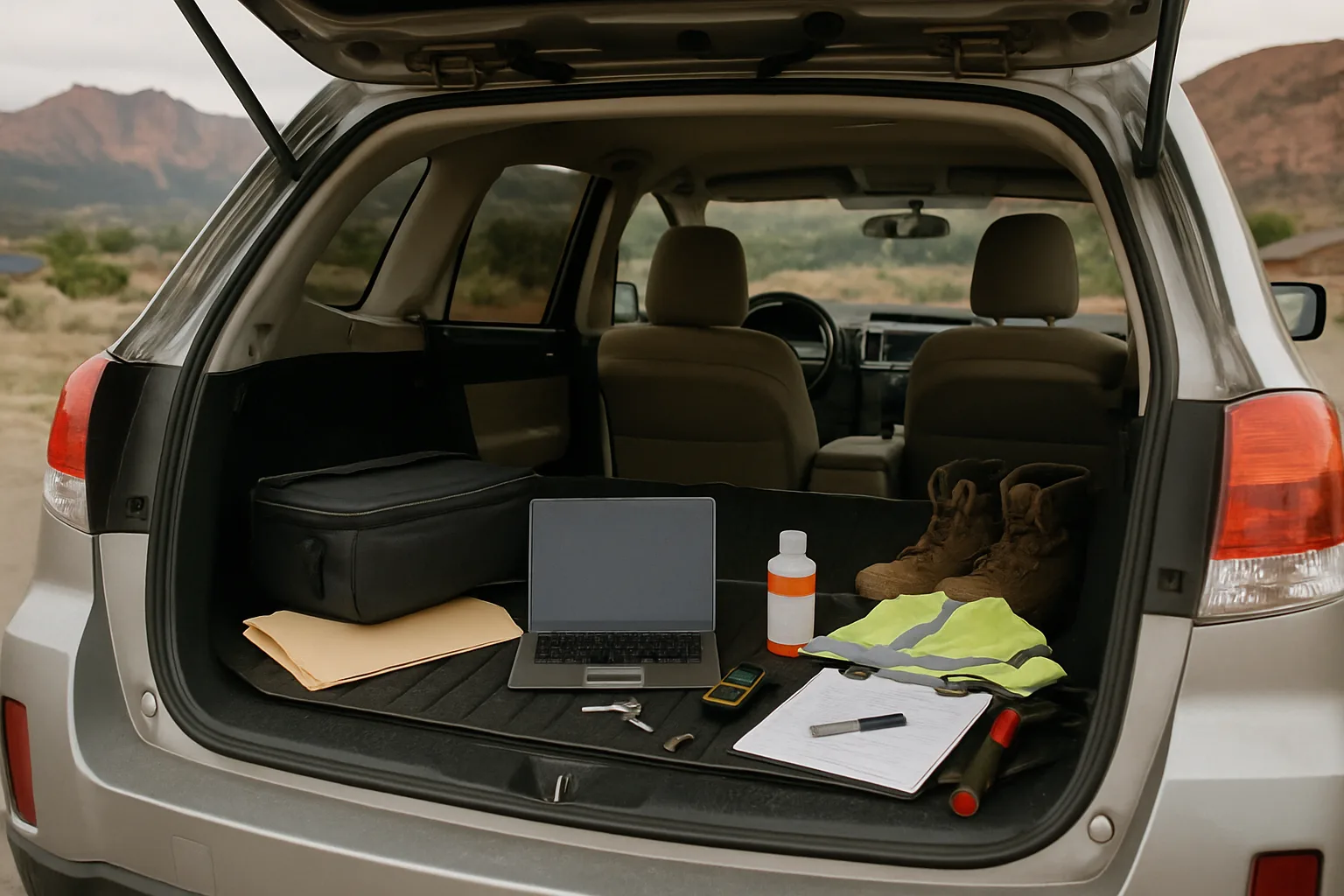
Plenty of property management still runs on paper, even in an otherwise digital operation. Lease addenda, move-in and move-out checklists, incident report forms, and a notepad for handwritten notes all belong in a waterproof folder or a small file box, not scattered across the back seat.
A clipboard earns its space here too. Signing a document on the hood of a car is awkward without one, and tenants notice the difference between a manager who looks prepared and one who's digging through a bag for a working pen.
Keeping a spare set of building keys or access fobs in a locked compartment, separate from the daily set, saves a trip back to the office when a set goes missing mid-route. The same goes for a small stack of blank move-in packets, since a last-minute lease signing shouldn't depend on what's already printed at the office.
Tools for the Fix That Can't Wait
Most on-site problems a property manager deals with aren't full repairs. They're the small stuff: a loose cabinet hinge, a sticking door, a light fixture that needs a new bulb before a showing. A basic tool kit with a screwdriver set, an adjustable wrench, pliers, and a utility knife covers the majority of these without needing to call a vendor.
Duct tape, zip ties, and a roll of plumber's tape solve more temporary problems than their low cost suggests. A flashlight with fresh batteries matters too, since plenty of property issues turn up in a basement, a utility closet, or a unit with the power already shut off.
A cordless drill with a basic bit set closes the gap between what a screwdriver can handle and what genuinely needs a maintenance call. Mounting a shelf, replacing a door strike plate, or securing a loose railing are all common enough that carrying the tool saves a second trip more often than not.
Safety Supplies for the Unplanned Stop
A stocked first aid kit is worth having even for managers who rarely expect to need it, since minor cuts and scrapes happen more often on job sites and vacant units than in an office. The Occupational Safety and Health Administration recommends keeping basic first aid supplies accessible in any work vehicle that regularly visits job sites, precisely because the nearest help isn't always close by.
Jumper cables, a portable tire inflator, and a few reflective triangles round out the emergency side of the kit. None of these get used often, but the day they're needed is rarely a day with time to improvise.
A small fire extinguisher rated for both electrical and grease fires is worth the glove box space, especially for anyone who regularly visits units with older wiring or aging appliances. It's the kind of item that sits untouched for years right up until it's the only thing that matters.
Footwear Built for Both Ends of the Day
The job asks for two very different things from a property manager's feet. There's the stretch behind the wheel, sometimes an hour or more between properties, and then there's the walk across a muddy yard, an unfinished unit, or a gravel lot that follows it with no transition. Keeping a pair of work boots for long-haul driving from Overlook Boots in the vehicle covers both ends of that shift, the highway miles and the walk-through immediately after.
A boot built for that kind of day needs to be comfortable enough for extended sitting without losing the support and traction a site walk actually requires. Swapping out of dress shoes or sneakers before stepping onto uneven ground also cuts down on the kind of ankle strain that shows up after a few too many quick site visits in the wrong footwear.
Backup Tech for When the Signal Drops
A phone is the primary tool for most of a property manager's day, which is exactly why a backup matters. A portable battery pack keeps a dead phone from turning into a missed vendor call or a tenant who can't reach anyone during an emergency.
A printed list of key contacts, laminated or kept in the same folder as the paperwork, covers the moments when a phone is dead, lost, or simply out of signal in a rural or underground unit. It's a five-minute setup that avoids a genuinely bad afternoon.
A basic dash-mounted phone holder also earns its keep, mostly for the days spent navigating between unfamiliar addresses back to back. It sounds minor until the alternative is glancing at a phone propped against a coffee cup while pulling into an unfamiliar driveway.
Keeping the Kit Actually Ready
A field kit only helps if it gets checked. First aid supplies expire, batteries die quietly, and paperwork forms get outdated after a lease template changes. A quarterly walk-through of everything in the vehicle, restocking what's low and swapping what's expired, keeps the kit from becoming a box of good intentions.
The property managers who handle the unexpected well aren't the ones with the most gear. They're the ones who took an hour once to think through what a normal week actually demands, then made sure it was always within reach. For Utah property managers weighing whether to hire outside help versus keeping this kind of hands-on operation in-house, it's also worth reviewing what certificates of insurance actually cover before sending a vendor or contractor out on a job.
Keep reading
More from the blog

Pre-Purchase Home Plumbing Inspection Guide for Buyers

How Natural Disasters Damage Your Roof and How to Protect It

Preparing Your Finances Before Buying a Utah Home