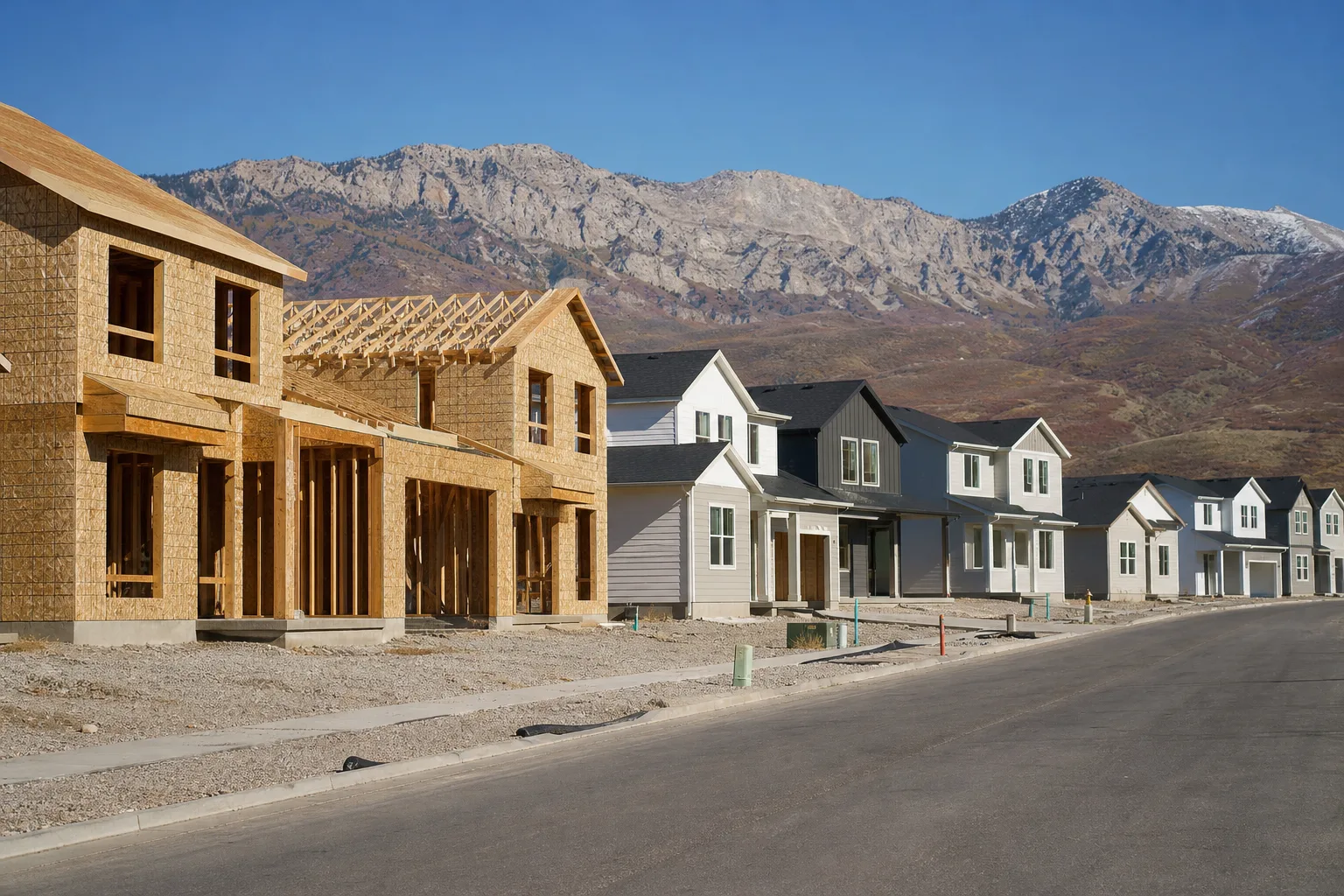
Utah Is a Quarter of the Way to 35,000 Starter Homes. Here Is What First-Time Buyers Can Use Now.
Utah has built 7,909 of the 35,000 starter homes it wants by the end of 2028. Here is which buyer and builder programs are in place now, where homes under $450,000 are being built, and what is only proposed for the 2027 session.
Utah set out to add 35,000 starter homes by the end of 2028. With a little more than two years left, the count stands at 7,909, according to KUER's Oct. 14, 2026 report. That is less than a quarter of the goal, and state officials say the pace has slowed as borrowing costs have climbed.
For a first-time buyer, the statewide tally matters less than three practical questions: what help exists right now, what price range the state is aiming at, and where lower-priced new homes are being built. This article separates what is in place today from what is only proposed for the 2027 legislative session.
Where the 35,000-Home Goal Stands
Gov. Spencer Cox announced the target in late 2023. The numbers reported since then show a fast start followed by a sharp slowdown:
| Date reported | Starter homes counted | Source |
|---|---|---|
| March 2026 | 6,000 to 7,000 (estimate) | Governor's housing adviser Steve Waldrip, to KUTV |
| July 21, 2026 | About 7,412, including 3,825 in Utah County | State housing dashboard, as reported by Utah News Dispatch |
| Oct. 14, 2026 | 7,909 | KUER |
Waldrip told KUTV in March that more than 5,000 homes were built in the first year and roughly 1,600 in the second, and that the effort was "well behind." In late October he told the Deseret News that interest rates are rising again and that the increase can add $400 to $500 to a monthly house payment. He described the headwinds as getting tougher. The Deseret News reported mortgage rates above 7% at the time.
Cox acknowledged in August that the goal was very ambitious, KUER reported, while arguing that setting a public number has made a difference. How rate moves change a budget is covered in how a 1% rate increase changes what home a buyer can afford.
What Counts as a Starter Home
The state's working definition is about price, not size or style: a newly built home priced at or below $450,000. Since a 2025 change in state law, condominiums built with the program's financing count alongside single-family homes, and Waldrip told KUTV the plan has "pivoted" toward starter condos as the lowest entry point to ownership.
That cap sits well under the broader market. The Kem C. Gardner Policy Institute's "State of the State's Housing Market: 2025-2026" report, released Sept. 9, 2026, put Utah's median single-family price at $520,000 in the first quarter of 2026 and the income needed to buy a median-priced home at about $147,000. The estimated monthly payment on that home, $3,669, is out of reach for about 91% of Utah renters, the report found. Current statewide figures are on the Utah market statistics page.
In Place Now: Help a First-Time Buyer Can Use Today
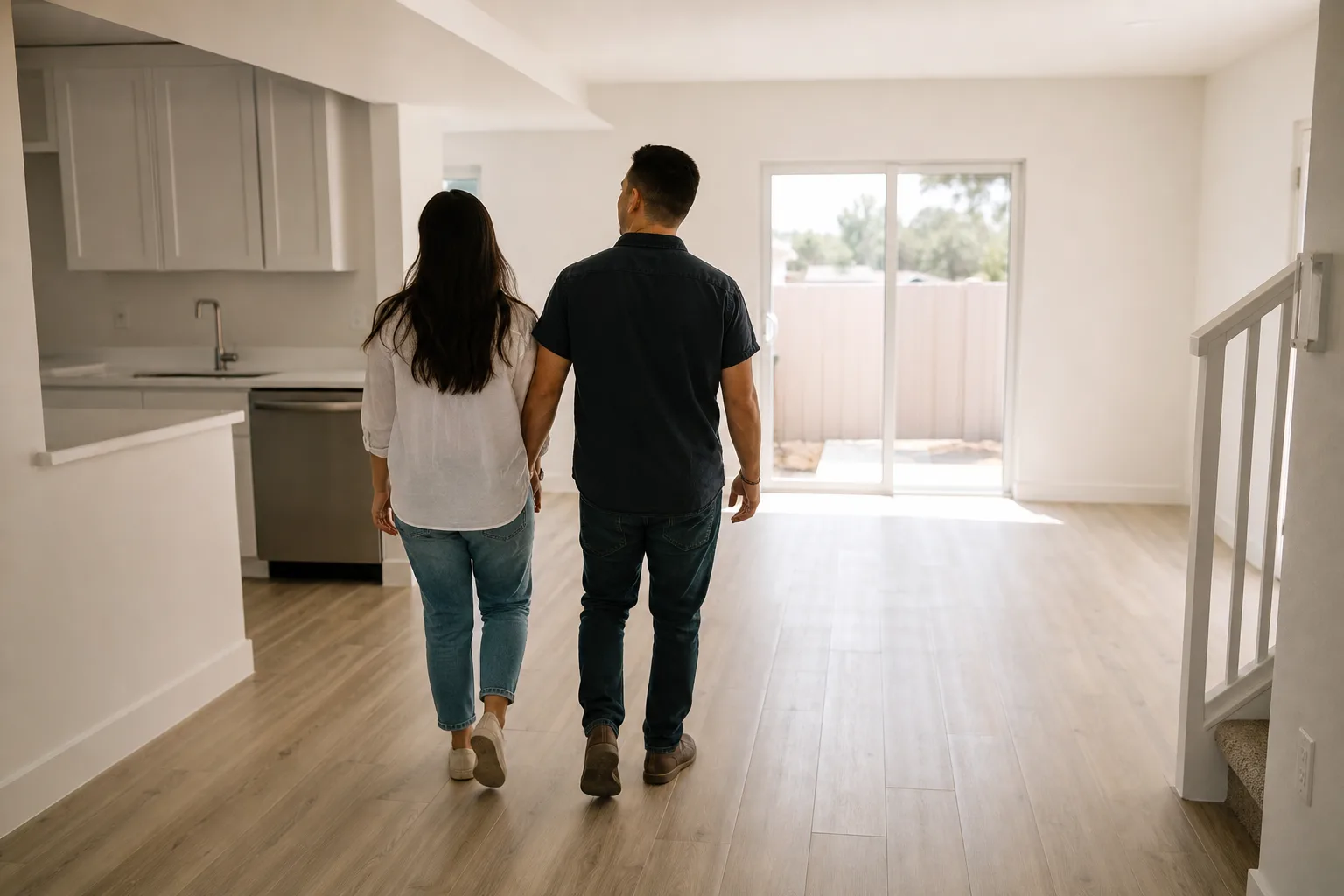
The First-Time Homebuyer Assistance Program
This is the one state program aimed directly at buyers of new starter homes. It is run by Utah Housing Corporation, the state's housing finance agency. According to the agency's program FAQ, updated in July 2026:
- Amount: up to $20,000, usable for a down payment, closing costs, a permanent interest rate buydown, or a mix of the three.
- Form: a 0% interest loan with no monthly payment, recorded against the home as a subordinate lien.
- Home: new construction, or newly built and never lived in. Detached houses, condominiums, townhomes and owner-occupied two-unit homes qualify. The maximum purchase price is $450,000.
- Buyer: no ownership of a principal residence in the previous three years, a Utah resident for at least 12 months before closing, and within the income limit of the Utah Housing loan being used.
- Loan: the first mortgage has to be a Utah Housing loan obtained through one of its participating lenders. The lender submits the reservation request.
- Repayment: due when the home is sold or refinanced, at the lesser of the amount received or 50% of the owner's equity.
A reservation can be approved before a specific property is chosen, and the first reservation lasts 90 days with extensions possible. The FAQ says the $80 million appropriated since the program began is expected to help about 3,900 buyers, and that money stays available only while funds last. KSL reported that the 2026 Legislature added $10 million. The program still does not cover existing homes.
Other Utah Housing options
The same FAQ notes that the $20,000 loan can be combined with Utah Housing's down payment assistance second mortgage. It cannot be combined with the agency's separate grants for veterans or for law enforcement and correctional officers. A participating lender can explain which combination fits a given buyer. The basics of loan types and the purchase process are in the Utah first-time home buyers guide.
In Place Now: What the State Is Doing for Builders
Most of the starter-home effort targets supply. None of these programs writes a check to a buyer, but they decide how many homes under $450,000 get built and where.
- Low-interest construction loans. The state made about $300 million available for loans to developers who build homes for first-time buyers, KSL reported in 2025. Builders have to price the homes under $450,000, and Waldrip told KUTV this year that the money has been "difficult" to place.
- Starter condo financing. The 2025 Legislature allowed the same funds to be used for condominiums and let Utah Housing Corporation lend on them, a way around a federal rule that makes FHA loans hard to get in a new condo project until half the units are sold.
- Infrastructure loans (H.B. 492). Passed in the 2026 session, this law created the State Housing Infrastructure Partnership Fund, which lends to cities and counties for the water, sewer and road work that approved subdivisions are waiting on. KUER reported that lawmakers set aside $250 million in grants and loans for this purpose and that Waldrip expects it to yield 12,500 starter homes. The Deseret News reported more than 100,000 approved housing units statewide were stalled by missing infrastructure.
- State-owned land. The state is selecting developers to build housing on unused Utah Department of Transportation property, such as lots left over from road projects, according to KUER.
- A new housing division. H.B. 68 (2026) created the Division of Housing and Community Development, led by a state housing coordinator, to run these programs in one place.
The full list of bills is in what Utah's 2026 housing laws change for buyers.
Proposed, Not Yet Law: Ideas for the 2027 Session
Nothing in this section can be used by a buyer today. The Legislature meets in January, and these are the ideas officials and lawmakers have described in public so far:
- A statewide starter home zone. At a housing summit in August, Waldrip said one priority is a zone where small homes on small lots could be built without negotiated development agreements, Building Salt Lake reported. As described there, homes of roughly 1,000 to 1,400 square feet could be built by right on qualifying property, possibly with pre-approved house plans. Lot sizes were still being discussed, and one housing advocate said she understood cities would opt in instead of being required to take part.
- Smaller minimum lots. Rep. Ray Ward said at a housing conference, covered by Building Salt Lake in early September, that he plans a bill allowing homes on lots as small as 5,000 square feet, with cities choosing whether to treat them as a permitted or conditional use. His 2026 starter-home bill, H.B. 184, was voted down 3-6 in a House committee, KSL reported.
- More infrastructure financing tools. Lawmakers on the same panel expected bills dealing with public infrastructure districts and tax increment financing.
The Deseret News reported in late October that new initiatives to boost starter-home production are being developed for the upcoming session, without details. No bill text has been published, so the specifics may change.
Where Lower-Priced New Homes Are Being Built
Utah County has about half of the starter homes counted so far: 3,825 of 7,412 on the state dashboard in July. In Eagle Mountain the median sale price is $500,000, and buyers can scan Eagle Mountain homes under $500,000 or townhomes in Saratoga Springs, where the median sale price is $490,000.
Weber County is the other place the program is visible. Nilson Homes is building 275 starter homes next to market-rate homes there, a project KSL reported was financed with the state's low-interest loans, and the owner told KUER the capped homes sell before they are finished. Current listings are on the Plain City new construction page.
Supply is not only a land problem. Springville's city administrator told a Gardner Institute panel in September that the city has more than 2,000 lots available, none larger than 3,000 square feet, and that very few are being built on.
For buyers who cannot find a new detached house under the cap, condos are the realistic route. Median condo prices in the second quarter of 2026, from Salt Lake Board of Realtors data reported by Utah News Dispatch:
| County | Median condo price, Q2 2026 | Median single-family price, Q2 2026 |
|---|---|---|
| Salt Lake | $417,900 | $645,000 |
| Davis | $416,000 | $568,450 |
| Utah | $399,990 | $600,000 |
| Tooele | $370,950 | $487,495 |
| Weber | $358,000 | $499,000 |
Only a new condo or townhome qualifies for the $20,000 loan, so it helps to filter by both type and age, starting with new construction across Utah.
A Short Checklist for First-Time Buyers
- Call a Utah Housing participating lender first. The lender determines income eligibility and files the reservation, and funds are limited.
- Confirm the home is new and at or under $450,000. A resale home does not qualify, no matter the price.
- Ask the builder what incentives stack. Builder rate buydowns and closing cost credits are separate from the state loan; the lender can say what may be combined.
- Budget for HOA dues in a condo or townhome. Lenders count dues in the monthly payment.
- Remember the payback. The assistance comes back out of the proceeds at sale or refinance.
- Do not plan around 2027 proposals. A starter home zone, if it passes, would take time to produce houses.
New-build contracts carry their own traps, covered in five costly mistakes to avoid when buying new construction in Utah. Listings in every price range can be searched on Best Utah Real Estate.
Sources: KUER (Oct. 14, 2026); Deseret News (Sept. 9 and Oct. 27, 2026; March 7, 2026); KUTV (March 5, 2026); KSL (May 27, 2025; Feb. 23 and March 11, 2026); Utah News Dispatch (July 21, 2026); Building Salt Lake (Aug. 18 and Sept. 2, 2026); Kem C. Gardner Policy Institute, "State of the State's Housing Market: 2025-2026"; Utah Housing Corporation First-time Homebuyer Assistance Program FAQ (updated July 16, 2026).
Posted by Kristopher Larson
Frequently asked questions
How many starter homes has Utah built toward the 35,000 goal?
KUER reported on Oct. 14, 2026 that 7,909 starter homes had been built, less than a quarter of the 35,000 the governor wants by the end of 2028. In July 2026 the state housing dashboard showed about 7,412, with 3,825 of them in Utah County.
What counts as a starter home in Utah's program?
The state defines it by price: a newly built home priced at or below $450,000. Single-family houses, townhomes and, since a 2025 law change, condominiums built with the program's financing can count.
How much first-time homebuyer assistance does Utah offer?
Utah Housing Corporation's First-Time Homebuyer Assistance Program provides up to $20,000 for a down payment, closing costs or a permanent rate buydown. It is a 0% loan with no monthly payment, and it is repaid when the home is sold or refinanced at the lesser of the amount received or 50% of the owner's equity. Funds are limited and are reserved through a participating lender.
Can the Utah first-time homebuyer loan be used on an existing home?
No. The home must be new construction, or newly built and never lived in, with a purchase price of $450,000 or less. The buyer must also have lived in Utah for at least 12 months before closing and use a Utah Housing mortgage.
Why has starter-home construction slowed in Utah?
The governor's housing adviser has pointed to higher interest rates, along with construction costs, labor and land prices. He told KUTV in March 2026 that more than 5,000 starter homes were built in the first year of the effort and roughly 1,600 in the second.
What starter-home changes are proposed for Utah's 2027 legislative session?
State officials have described a statewide starter home zone that would allow small homes on small lots without development agreements, and Rep. Ray Ward has said he plans a bill allowing homes on lots as small as 5,000 square feet. Neither is law, and no bill text had been published as of mid-November 2026.
Keep reading
More from the blog

Utah Property Taxes Are Due Nov. 30, 2026: How to Pay, What Late Costs and What 2026 Buyers Should Check
Half of Young Utahns Own a Home in 2026, and 91% of Renters Can't Afford One: How First-Time Buyers Still Get In
Utah Had the Nation's Highest Rate of Dropped Home Insurance Policies in 2025: What Owners and Buyers Should Do