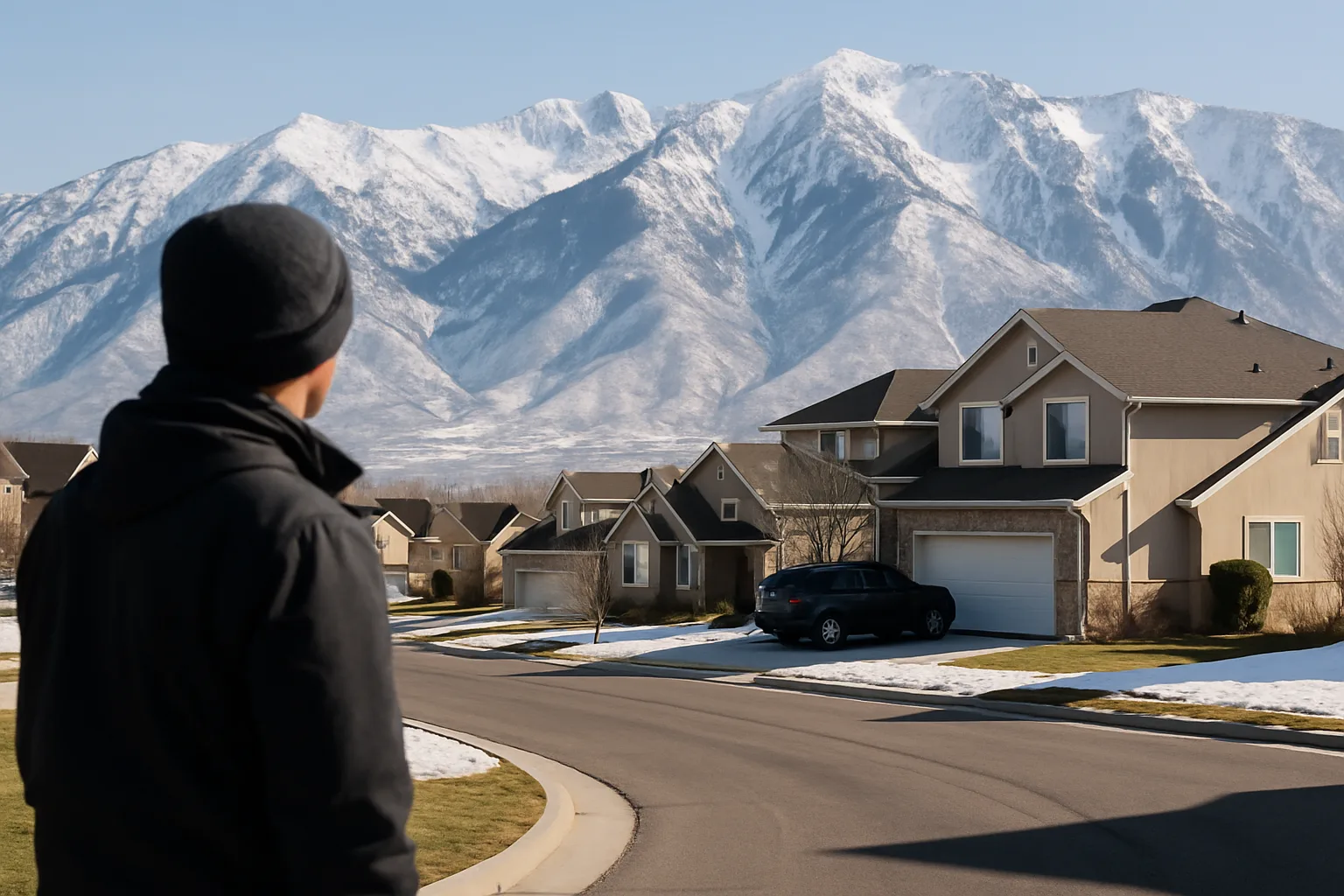
Utah's 2026 Housing Laws: What Passed, What Failed and What Changes for Buyers
The 2026 Legislature funded housing infrastructure, created a state housing division and changed local land use rules, but rejected a starter-home zoning bill. Here is what each change means for buyers in 2026.
Housing affordability was the top issue Utah voters wanted lawmakers to tackle heading into the 2026 legislative session, according to a Deseret News and Hinckley Institute of Politics poll. Seven months after the session ended, the results are a mix: new infrastructure money, a reorganized state housing office, a statewide plan with more than 50 tactics, and a land use bill that changes how cities handle backyard homes and appeals. The most direct starter-home zoning proposal failed. Meanwhile, Gov. Spencer Cox told reporters in August 2026 that the state's efforts to bring prices down have not worked as well as needed, as Salt Lake County's median single-family price reached a record $645,000, according to KSL.
This 2026 update sorts the policy changes by what they actually do, when they took effect, and what a buyer is likely to notice.
The Four Pieces That Passed
H.B. 492: Loans for the pipes and roads behind new subdivisions
H.B. 492, Transportation, Infrastructure, and Housing Amendments, sponsored by Rep. Calvin Roberts and Sen. Kirk Cullimore, created the State Housing Infrastructure Partnership Fund and a board that can lend from it to cities, towns and other political subdivisions for system improvements that make housing construction possible. KSL reported the fund at $100 million. The bill also lets state agencies sell surplus land at its pre-entitlement appraised value to qualifying entities and defer payment, and it limits certain affordable housing infrastructure grants in some counties to owner-occupied homes. Most of its provisions took effect May 6, 2026. The full text is on the Utah Legislature's H.B. 492 page.
The reason for the focus on infrastructure: according to the Deseret News, eight cities identified 109,074 housing units that were already entitled in late 2025, and only 12% were ready to build. The other 88% needed infrastructure such as water, sewer or roads first. Approval on paper does not put a house on the ground if the lines and roads are not there.
H.B. 68: One state housing office instead of several
H.B. 68, Housing and Community Development Amendments, created the Division of Housing and Community Development inside the governor's economic development office and a state housing coordinator appointed by the governor with Senate consent. It repealed the Commission on Housing Affordability and moved several programs into the new division, including the Homeless Housing and Services Grant Program. The division launched July 1, 2026, led by Steve Waldrip, who also remains the governor's senior advisor for housing strategy. KSL reported that the Olene Walker Housing Loan Fund and the new infrastructure fund are among the programs the division now runs.
This bill created no new rules for buyers. Its goal is fewer handoffs between agencies, which matters most to the cities and builders trying to get projects approved and financed.
H.C.R. 6: The Utah Housing Strategic Plan
H.C.R. 6 is a resolution, not a law with penalties. It puts the Legislature and governor on record supporting the Utah Housing Strategic Plan, which the Governor's Office of Planning and Budget completed in December 2025 with more than 100 stakeholders, as a 2025 law required. The plan has three goals:
- Improve housing availability, affordability and stability.
- Foster community well-being and quality of life.
- Seek consensus- and evidence-based policy and housing support solutions.
The resolution commits both branches to track how the plan is carried out and what results it produces. Those reports will be the yardstick for future sessions.
S.B. 284: Land use changes, including backyard homes
S.B. 284, Local Land and Water Modifications, sponsored by Sen. Lincoln Fillmore and Rep. Jill Koford, is a long bill that touches several parts of the local approval process:
- Stalled recommendations: If a planning commission does not make a timely recommendation on a proposed land use regulation, the city or county council must still make a decision.
- Appeals: A city council or county commission may not act as the appeal authority on land use decisions, and the bill changes the standard of review for those decisions.
- Height rules: It sets requirements for how local governments regulate structure height.
- Water exactions: Beginning January 1, 2028, counties, cities and special districts must adopt a written plan for determining future water needs before requiring water rights or water from a developer.
- Detached accessory dwelling units: Starting October 1, 2026, larger cities must allow a detached ADU as a permitted use on qualifying single-family lots of at least 11,000 square feet, with local limits on size, setbacks and design still allowed. The full rules, including owner occupancy and parking, are covered in a separate city-by-city ADU guide.
Most of S.B. 284 took effect May 6, 2026. The detached ADU section is the piece buyers will feel first, because it can change what a large lot is allowed to hold.
The Starter-Home Bill That Did Not Pass
H.B. 184, sponsored by Rep. Ray Ward, would have let property owners in larger counties ask for exceptions to local rules, such as building a home smaller than the zoning allows, and would have approved the request automatically if the city did not respond in time. The House Economic Development and Workforce Services Committee rejected it 3-6 in February 2026, KSL reported. The Utah League of Cities and Towns opposed it, arguing it interfered with the authority of city councils.
The vote shows where the line sits for now. The state is willing to fund infrastructure and set approval deadlines, but lawmakers did not override local lot-size rules this year. Smaller-lot starter homes still depend on city-by-city zoning decisions.
Where the 35,000 Starter Homes Goal Stands
Gov. Cox's goal is 35,000 new starter homes by the end of 2028. Progress has been slower than planned:
- In July 2026, the state's housing dashboard counted about 6,861 starter homes built, with 3,650 of them in Utah County, KPCW reported.
- In August 2026, KSL reported that just over 7,400 had reached the market.
- Gov. Cox has acknowledged the state may miss the target and has pointed to surplus state land as one way to add supply.
On the land question, the Deseret News reported that the Utah Department of Transportation made 15 parcels available for starter homes, and the state housing office set a developer request for qualifications for its Surplus State Land Program to open by September 21, 2026. Those parcels take time to plan, approve and build, so they are more likely to affect supply in 2027 and 2028 than this year.
What Changes for Buyers Right Now
First-time buyers looking at new construction
The state's First-Time Homebuyer Assistance Program, run by the Utah Housing Corporation, provides up to $20,000 that can go toward a down payment, closing costs or a permanent rate reduction. The money is repaid when the home is sold or the loan is refinanced, at the lesser of the amount received or 50% of the owner's equity, according to Utah Code 63H-8-502. KUER reported in July 2026 that more than 3,500 households had used it, that the Legislature had appropriated $80 million, and that homes must be newly built and priced under $450,000. An attempt in 2026 to extend the program to existing homes did not make it out of a House committee. Buyers using it will be shopping listings such as new construction in Saratoga Springs or homes under $500K in Eagle Mountain, then confirming the specific home and price qualify with a participating lender.
Owners of larger lots
From October 1, 2026, a qualifying lot of 11,000 square feet or more in a larger city may support a detached ADU without a conditional use permit. That can matter for resale value, multigenerational living or rental income, though owner-occupancy and local design rules can still apply. Buyers comparing lots should ask the city how it has implemented the new rule.
Buyers in fast-growing areas
Infrastructure loans are aimed at places where approved homes are waiting on water, sewer or road capacity. The Deseret News reported that Washington City alone had 2,852 planned lots waiting to be built when the plan was released. As those projects move, buyers may see more inventory in master-planned areas, including new construction in Washington. Timing depends on each city applying for and receiving funds.
Anyone attending a local hearing
The S.B. 284 changes to appeals and planning commission deadlines affect how land use disputes are decided. Residents who want to weigh in on a nearby rezoning or subdivision should follow both the planning commission and the council agenda, since a stalled recommendation no longer stops the council from voting.
What to Watch Before the 2027 Session
- The first loans from the State Housing Infrastructure Partnership Fund and which cities receive them.
- Updated starter-home counts on the state housing dashboard.
- How large cities write their detached ADU ordinances under S.B. 284.
- Whether another starter-home zoning bill returns after H.B. 184's defeat.
- Funding levels for the First-Time Homebuyer Assistance Program in the next budget.
For background on how Utah's growth created this pressure in the first place, see this earlier look at Utah's growth surge, housing shortage and transit plans. Current listings and city market data are available at Best Utah Real Estate.
Frequently asked questions
What housing bills did the Utah Legislature pass in 2026?
Key housing measures included H.B. 492, which created the State Housing Infrastructure Partnership Fund for local infrastructure loans; H.B. 68, which created the Division of Housing and Community Development and a state housing coordinator; H.C.R. 6, which endorsed the Utah Housing Strategic Plan; and S.B. 284, which changed local land use procedures and requires larger cities to allow detached ADUs on qualifying lots starting October 1, 2026.
Did Utah pass a starter home zoning law in 2026?
No. H.B. 184, which would have let owners request exceptions such as building a home smaller than local zoning allows, was rejected 3-6 in a House committee in February 2026. Lot-size and minimum home-size rules remain local decisions made by each city or county.
How many starter homes has Utah built toward the 35,000 goal?
The state's housing dashboard counted about 6,861 starter homes in July 2026, with 3,650 in Utah County, and KSL reported in August 2026 that just over 7,400 had reached the market. The goal is 35,000 by the end of 2028, and Gov. Cox has acknowledged progress is behind schedule.
What is Utah's First-Time Homebuyer Assistance Program?
The program, run by the Utah Housing Corporation, offers up to $20,000 toward a down payment, closing costs or a permanent rate reduction on a newly built home priced under $450,000. It is repaid on sale or refinance at the lesser of the amount received or 50% of the owner's equity. Buyers apply through a participating lender, and funding depends on legislative appropriations.
What does the State Housing Infrastructure Partnership Fund do?
Created by H.B. 492 in 2026, the fund lets a state board make loans to cities, towns and other local governments for system improvements such as water, sewer and roads that allow housing to be built. KSL reported the fund at $100 million, and the new Division of Housing and Community Development oversees its implementation.
Who is Utah's state housing coordinator?
Steve Waldrip leads the Division of Housing and Community Development, which launched July 1, 2026, as the state housing coordinator. He also continues as Gov. Spencer Cox's senior advisor for housing strategy. The position was created by H.B. 68 and is appointed by the governor with the consent of the Utah Senate.
Keep reading
More from the blog
2034 Winter Olympics in Utah: Which Cities and Projects to Watch Before Buying (2026)
Multi-Tier Outdoor Layouts That Boost Backyard Property Value
How to Vet a Home Services Contractor in Utah