What Utah Homeowners Should Know Before Hiring a Home Services Contractor
Four quick checks, what a fair quote looks like, and the warning signs to watch for before hiring a plumber, HVAC pro or other home services contractor in Utah.
My neighbor in Layton paid a guy $400 in cash for a furnace repair last January. By February the heat was out again, the number was disconnected, and she was starting over with a real company. That $400 was the cheap option right up until it wasn't.
Most Utah homeowners don't get burned because they're careless. They get burned because nobody ever handed them a filter to run contractors through. So here it is. You'll learn the four checks I run before anyone touches my house, why free estimates are worth exactly what you pay for them, and how to read a quote that looks suspiciously low. It takes about 20 minutes. It can save you several thousand dollars. And if you'd rather skip the vetting entirely, working with Bragg Home Services shows what a fully vetted operation looks like: licensed, insured, and traceable since the 1960s.
Why Utah's Contractor Market Is Harder to Read Than Most
Utah grows fast, and fast growth brings a wave of people with a truck, a magnet sign, and a price that's 30 percent under everyone else. Some of them are honest and undercharging while they build a book of business. Others are collecting deposits and disappearing. From the outside, the two look identical.
That's the problem. You can't tell them apart by looking at them, so you have to check things instead. The good news is that the real operators don't mind being checked. They expect it. A contractor who gets twitchy when you ask for a license number has already told you something useful.
Here's the counterintuitive part: the cheapest quote is rarely the cheapest outcome. Repair work is one of the few purchases where the low bid often signals missing insurance, skipped permits, or parts sourced from whoever had them on the shelf. You're not buying a repair. You're buying the next five years of not thinking about your furnace. Costs like these matter whether you are budgeting for homeowners insurance in Utah or planning upkeep on a foundation or basement.
The Four Checks I Run Before Anyone Touches My House
I'll walk you through exactly what I do. It's not complicated, and you can do all of it from your couch.
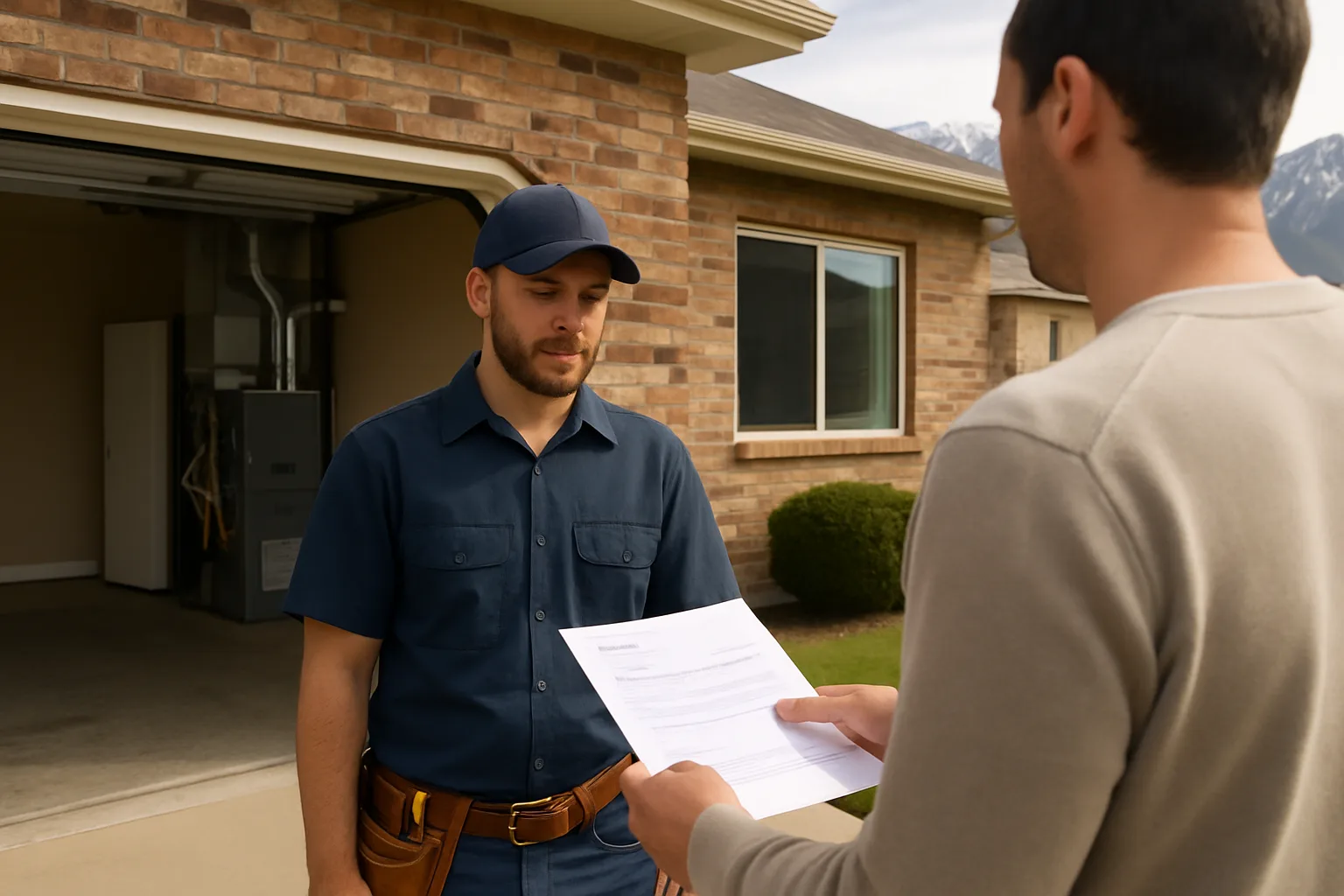
Look up the license number. Every state keeps a searchable database of licensed contractors, and a legitimate business will give you the number without being asked twice. Write it down and look it up. Verify it's active, not just present.
Confirm general liability and workers' comp. Ask for a certificate of insurance and call the phone number on it. If a worker gets hurt on your property and the company has no coverage, that problem can wind up on your homeowner's policy. This is the single most skipped step.
Ask who's actually doing the work. Some companies subcontract everything. That's not automatically bad, but you deserve to know whether the crew in your basement is on the payroll or a same-week hire.
Search the business name for complaints. The federal Federal Trade Commission maintains consumer guidance on spotting home repair scams, and its warning signs line up almost exactly with what Utah homeowners report every winter: upfront cash demands, pressure to decide today, no written contract.
The whole checklist takes 20 minutes. Most people spend longer than that picking a Netflix show.
What a Fair Quote Actually Looks Like
A serious estimate is a document, not a number shouted from your driveway. You want to see the scope of work written in plain language, the specific parts or equipment being installed, whether permits are included, a start date, and a payment schedule you can live with. If you're comparing booking options, see this guide to booking home repairs.
On payment: never pay the full amount upfront. A deposit for materials is normal. Fifty percent before anyone opens a truck door is not. And if someone asks for cash only, with no receipt, that's not a scheduling preference. That's a business that can't pass a bank review.
One more thing people miss. Ask what happens if the diagnosis changes once the wall is open. The answer separates a professional from a salesperson. A pro says the crew will stop, show you photos, and give you a revised price before proceeding. A salesperson says don't worry about it.
The Warning Signs That Show Up Before Any Real Work Starts
You'll usually get a signal in the first conversation. Watch for a quote given over the phone with no walkthrough. Watch for a refusal to put anything in writing. Watch for a request for a deposit via a payment app with no invoice attached.
Also watch for the opposite problem: a company that talks you into replacing equipment your system doesn't need yet. Industry bodies like the North American Technician Excellence program certify technicians on diagnostics for exactly this reason. A certified tech can explain why a repair fails and a replacement makes sense. Someone reading off a script can't.
And when the work involves ductwork or refrigerant handling, the Environmental Protection Agency sets the rules technicians have to follow. A company that shrugs at that question isn't being casual. It's telling you it doesn't keep up.
Choose Based on Trust, Then Price, Then Speed
That's my order, and I'll defend it. Price matters, obviously. But when I'm deciding between a company I've verified and one that's $300 cheaper with no license posted, I'm paying the $300. Every time. The downside of a bad hire is not a slightly worse repair, it's water in your ceiling or a furnace that quits in a cold snap.
Speed comes last because urgency is the weapon. "We can be there this afternoon, but you have to decide right now" is a pressure tactic, not a scheduling reality. Real companies can hold a slot for a day while you read a contract.
Here's the honest trade-off in Utah specifically: the well-established firms are often booked out further, especially in the first cold week of the year. That gap is exactly when the unlicensed crowd shows up at your door with same-day availability. Plan for it. Schedule seasonal maintenance in the fall, before everyone's furnace dies at once, and you'll never be the person making a panicked decision in a cold house. A month-by-month winter prep plan helps, and knowing the early warning signs your heating system needs attention lets you book before an emergency.
The Real Cost of Skipping the Check
Nobody enjoys spending an evening in a licensing database. I get it. But the 20 minutes you spend now is the difference between a repair that holds and a repair you pay for twice.
Run the four checks. Ask for the paperwork. Trust the company that hands it over without being asked. Your house, your furnace, and your January heating bill will all thank you. So before you call anyone, pull up the license lookup and see what comes back. What you find out in the first five minutes will tell you more than any sales pitch ever will.
Frequently asked questions
Should I get three quotes or is one enough for home repairs?
Is it normal for a contractor to ask for a deposit?
How do I check if a Utah contractor is licensed and insured?
What if a contractor is new but licensed?
What are the biggest red flags when hiring a home services contractor?
Keep reading
More from the blog
Living Near Utah's Ski Resorts: Towns, Drive Times and Trade-Offs

Staying Put After 65: Utah Programs That Help Seniors Keep Their Homes in 2026
Your Utah Cost Segregation Questions, Answered!