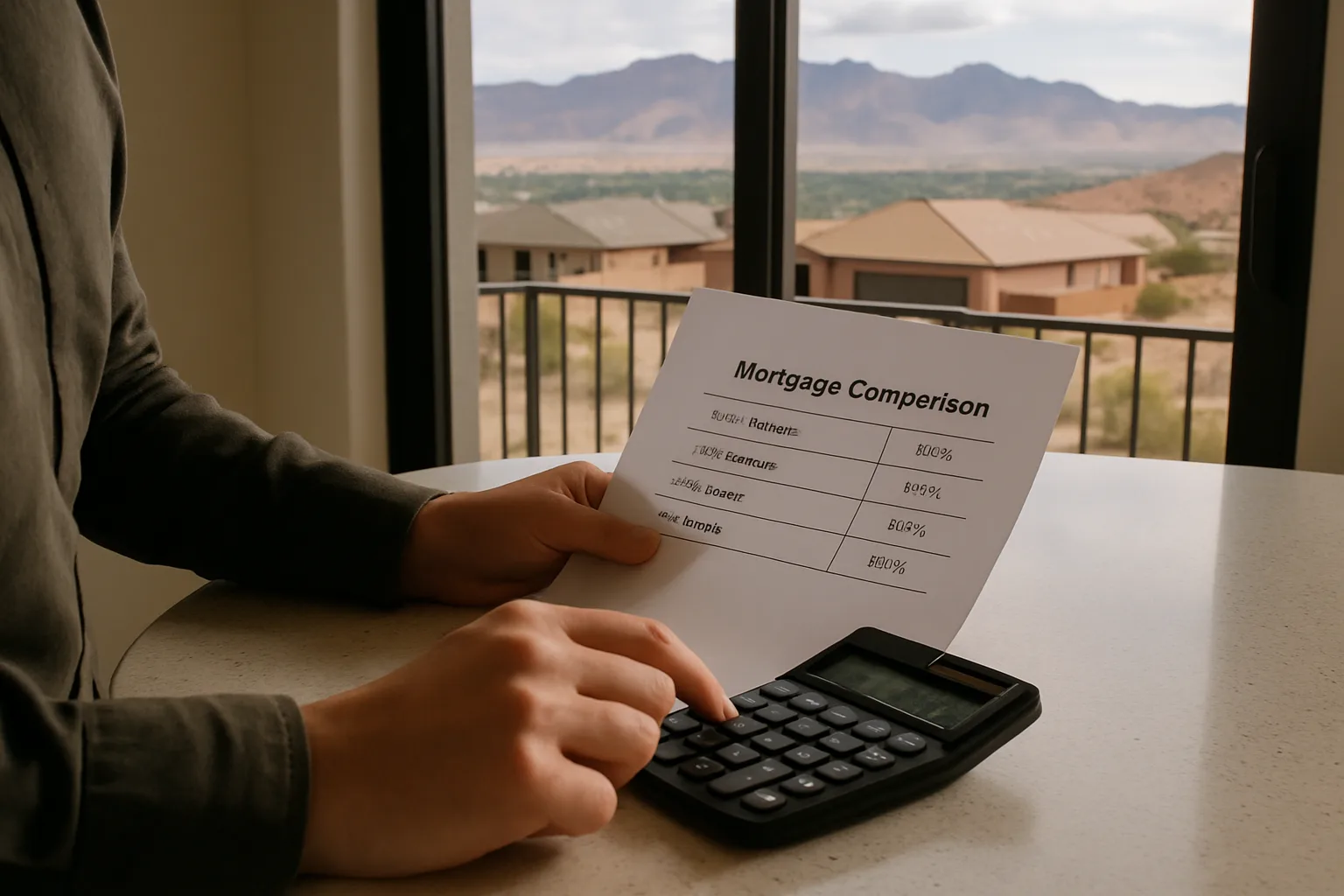
Utah Homeowners Insurance Costs in 2026: What Buyers Should Budget
Utah posted the nation's largest jump in homeowners insurance premiums from 2021 to 2024. Here is what drove it, what standard policies leave out, and how buyers can budget for coverage in 2026.
Between 2021 and 2024, the typical homeowners insurance premium in Utah rose 59 percent, the largest percentage increase of any state, according to a March 2025 analysis of insurer rate filings by the Consumer Federation of America. Metro Salt Lake City posted a 62 percent jump over the same three years, the steepest of the large metro areas in the study. Utah's Office of the Legislative Fiscal Analyst has also cited the 59 percent figure. For buyers, the takeaway is simple: the insurance line on a mortgage estimate is no longer a rounding error, and it deserves the same scrutiny as the interest rate.
This breakdown covers what the 59 percent number actually measures, why Utah premiums climbed, which common Utah risks a standard policy leaves out, and how buyers can budget for coverage in 2026 before they sign a purchase contract.
What the 59 Percent Figure Measures
The number is often repeated without context, so it helps to know where it comes from. The Consumer Federation of America bought test-quote data from Quadrant Information Services covering nearly every U.S. ZIP code, then compared premiums for the same typical household in 2021 and 2024. The model home had a $350,000 replacement value and an owner with a mid-range credit score. The quotes reflect the rates and pricing formulas insurers filed with each state.
That design has two consequences for Utah buyers:
- It measures price, not coverage. The 59 percent is the change in what insurers charge for an identical policy profile, not the change in what Utah households spent. Owners who raised deductibles or trimmed coverage to offset higher prices are not reflected in the comparison.
- It stops at 2024. The figure describes a three-year window. It is not a forecast, and it does not capture renewals that hit in 2025 or 2026. A current quote on a specific address is the only reliable number for a purchase decision.
Nationally, the same study found premiums rose 24 percent over those three years, and insurers raised prices in 95 percent of ZIP codes. Utah's increase was more than double that national rate.
Why Utah Premiums Rose
The Utah Insurance Department explains that insurers set premiums based on the expected cost of future claims, and state law requires that rates not be excessive, inadequate, or unfairly discriminatory. Its consumer guide on why home insurance premiums increase lists the forces behind recent hikes. Several apply directly to Utah:
- Rebuilding costs. Labor and materials cost more, especially where construction demand is high and supply is tight. Those costs flow straight into the dwelling limit insurers price against.
- Severe weather. The department notes that natural disasters are becoming more frequent and severe, including in areas that historically saw little damage, which leads to more claims.
- Reinsurance. Insurers buy their own coverage, called reinsurance, and its cost has risen significantly. Those costs pass through to policyholders.
- Inflation and litigation. General price inflation and rising legal costs also feed into rates.
Wildfire is the Utah-specific accelerant. The Utah Division of Forestry, Fire and State Lands reported in its 2025 re-evaluation that more than 700 Utah communities are now considered at risk from wildfire, up from almost 600 when the state first made the list in 2001. More homes near brush and forest edges means more exposure for every insurer writing policies in the state.
Utah's New Wildfire Map and What It Changes for Insurance
The Legislature responded with HB 48, the 2025 Wildland Urban Interface Modifications bill, and its insurance provisions took effect January 1, 2026. Three parts matter to buyers:
- One official boundary. When deciding whether a home sits in a high-risk wildland-urban interface area, insurers must use the boundary in the state's wildfire risk mapping tool. Buyers can look up any address on the Utah Wildfire Risk Assessment Portal before writing an offer.
- Reasons for big increases. If an insurer raises the premium on a wildland-urban interface property by more than 20 percent because of wildfire risk, it must explain the facts behind the decision when the policyholder asks.
- Reasons for cancellations. A cancellation or nonrenewal tied to wildfire risk must state the facts behind the decision with reasonable precision.
The same law created an annual fee on structures inside the state's high-risk boundary to fund wildfire prevention and mitigation. Cities such as Herriman have told residents that billing details are still being worked out with their counties, so buyers looking at foothill properties should ask the county how the fee will be collected. Buyers weighing a mountain-edge home will find more on defensible space and site selection in the guide to buying a Utah home in a wildfire risk zone.
Mitigation can now be certified in Utah
In April 2026, the Insurance Institute for Business & Home Safety expanded its Wildfire Prepared Home designation to Utah and nine other states. Owners earn it by completing ember- and fire-resistance steps, such as a Class A roof and cleared space around the house, verified by a third party. Utah Insurance Commissioner Jon Pike said in July 2026 that State Farm grants premium decreases for homes certified through the program. Other insurers may treat the designation differently, so owners should ask each company directly before paying for an inspection.
Gaps in a Standard Utah Policy
A higher premium does not mean broader protection. The Utah Insurance Department lists flood, earthquake, earth movement, and mudslide as perils typically not covered by a homeowners policy. In Utah, each of those is a real exposure:
- Earthquake. Much of the Wasatch Front sits along active fault zones. Earthquake coverage is available by endorsement or as a separate policy and often carries its own percentage deductible.
- Landslides and settling ground. Hillside neighborhoods, including parts of Draper such as Suncrest, sit on slopes where ground movement is a known hazard. Buyers can check a property against the Utah Geological Survey hazards map before choosing coverage.
- Flood. Spring runoff and flash floods affect canyon-mouth and low-lying areas. Flood coverage is sold separately, and federal flood policies generally carry a 30-day waiting period before coverage starts, with limited exceptions, so it is best arranged well before closing.
For risks that are hard to insure through a regular endorsement, the Insurance Department notes that Utah homeowners can look at Difference in Conditions policies, which bundle perils such as earthquake, flood, mudslide, and earth movement. These are written in the surplus lines market and differ from a standard policy, so the exclusions deserve a careful read.
Deductibles that scale with the house
More policies now use a percentage deductible instead of a flat dollar amount. The Insurance Department gives a simple illustration: a 2 percent deductible on a home insured for $250,000 means the owner pays the first $5,000 of a claim. Buyers comparing quotes should line up the deductible terms, not just the premium.
How to Budget for Insurance on a Utah Purchase
Insurance is usually collected through the mortgage escrow account, so it raises the monthly payment and counts toward the debt-to-income ratio a lender uses to approve the loan. A quote that comes in a few hundred dollars higher than expected can change how much house a buyer qualifies for. A practical sequence:
- Get quotes before the offer, or early in due diligence. Request at least three quotes for the specific address, using the same coverage limits and deductible so they can be compared side by side. Rates vary widely by company.
- Insure the rebuild cost, not the sale price. Coverage is based on replacement cost, which excludes land. In a market where the median sale price in Salt Lake City is $543,500, the dwelling limit on a given home may be well above or below that figure depending on its size, age, and finishes.
- Ask about the wildfire map. If the property falls inside the state's high-risk boundary, ask each insurer how that affects the price and whether mitigation credits are available.
- Price the add-ons Utah buyers actually need. Earthquake coverage, ordinance-and-law coverage for code upgrades on older homes, and higher limits for detached shops or barns all change the total.
- Read the HOA's policy for attached homes. Under Utah's Community Association Act, an association's property policy is primary when both it and the owner's policy cover a loss, but the owner is responsible for a share of the association's deductible based on how much of the damage hit that unit. Townhome and condo buyers should ask for the master policy deductible and buy a policy that covers that share.
A simple scenario
Consider a hypothetical couple relocating from Phoenix who are comparing two four-bedroom homes in Herriman's new-construction neighborhoods and a cabin-style home on the bench above Midway. The newer homes may qualify for new-construction discounts, which the Insurance Department notes some insurers offer, while an older mountain property can trigger requirements to update roofing, wiring, or plumbing. If the mountain home also falls inside the high-risk wildfire boundary and needs earthquake and outbuilding coverage, its annual insurance cost could differ by a wide margin from the newer homes even at a similar price. Running quotes on both before choosing is what keeps that difference from surfacing after the offer is accepted.
Ways Owners Can Lower Their Premium
- Shop at every renewal. Commissioner Pike has noted that about 130 companies write homeowners coverage in Utah, so a large increase is a reason to compare, not simply to pay.
- Raise the deductible carefully. A higher deductible lowers the premium, but only if the owner has cash set aside to cover it.
- Bundle and ask for device credits. Combining home and auto, and installing monitored alarms, deadbolts, or sprinkler systems, can earn discounts.
- Harden the home. A Class A roof, ember-resistant vents, and cleared vegetation reduce wildfire risk and may qualify for certification-based discounts.
- Keep the policy current. Remodels and additions raise replacement cost. Reviewing limits each year avoids underinsurance after a loss.
Insurance cost is now part of choosing a neighborhood, not just a closing-day formality. Buyers comparing Utah homes on Best Utah Real Estate can use the listing address to check the wildfire map and hazard map first, then collect quotes while there is still time to adjust the budget.
Frequently asked questions
How much have homeowners insurance premiums gone up in Utah?
A Consumer Federation of America analysis of insurer rate filings found the typical Utah homeowners premium rose 59 percent from 2021 to 2024, the largest percentage increase of any state. Metro Salt Lake City rose 62 percent over the same period. The figure compares prices for an identical policy profile and does not include changes after 2024.
Why is home insurance so expensive in Utah now?
The Utah Insurance Department points to higher rebuilding costs, more frequent and severe weather, rising reinsurance costs, inflation and litigation. Wildfire exposure adds pressure: the state now counts more than 700 communities at risk from wildfire, up from almost 600 in 2001.
Does a standard Utah homeowners policy cover earthquakes or landslides?
Usually not. The Utah Insurance Department lists flood, earthquake, earth movement and mudslide as perils typically excluded from homeowners policies. Coverage can be added by endorsement, bought as a separate policy, or obtained through a Difference in Conditions policy in the surplus lines market.
What does Utah's HB 48 change for homeowners insurance?
Starting January 1, 2026, insurers must use the state's official wildfire risk boundary to decide whether a home is in a high-risk wildland-urban interface area. If a wildfire-related premium increase exceeds 20 percent, the insurer must explain the facts behind it on request, and wildfire-based cancellations or nonrenewals must state their reasons.
Can wildfire mitigation lower an insurance premium in Utah?
It can with some insurers. The IBHS Wildfire Prepared Home designation became available in Utah in April 2026, and the state's insurance commissioner said State Farm grants premium decreases for certified homes. Owners should confirm with their own insurer before paying for an inspection.
When should a Utah homebuyer get insurance quotes?
Before making an offer or early in the due-diligence period. Insurance is usually paid through escrow and counts toward the lender's debt-to-income calculation, so a higher-than-expected quote can change the loan amount. Comparing at least three quotes with matching limits and deductibles gives the clearest picture.
Keep reading
More from the blog
Your Utah Cost Segregation Questions, Answered!
How Noisy Is the Home? A Buyer's Noise Check Guide
Photos of Your Utah Rental Are Worth Money at Tax Time