Photos of Your Utah Rental Are Worth Money at Tax Time
Your phone already holds photos that can support a cost segregation study. Learn what to shoot, how to document it, and when a study makes sense for Utah rentals.
There are maybe 200 photos of your rental sitting in your phone right now, and most of them are worth money.
Landlords snap carpet, cabinets, and that cracked driveway during turnovers without thinking twice about it. A handful of those images can decide whether your next tax return reflects a 27.5-year write-off or a much faster one. A legitimate diy cost segregation approach (done with real documentation, not a spreadsheet guess) turns the photos you already have into a classification report, and that report can shift thousands of dollars of basis into 5, 7, and 15-year property.
Utah renters move constantly. That turnover is annoying. It is also free photo documentation.
What Actually Has to Be in a Photo
Here is the standard most people miss: a photo only counts if someone can tell what the item is, roughly when it was installed, and that it belongs to this property.
Generic close-ups of beige carpet fail on all three counts. A wide shot of the same room, with a doorframe and window visible, passes all three at once. Shoot wide, then close. Every time.
The items worth capturing, in plain terms:
Flooring: carpet, LVP, tile, transitions between rooms
Cabinetry and countertops, including the vanity in each bathroom
Appliances, with the data plate visible if you can get it
Exterior hardscape: driveway, walkways, retaining walls
Landscaping: fences, irrigation, mature trees, sod
Anything bolted in that is not the building itself
That last bullet is the one landlords skip, and it covers a surprising amount of value in Ogden and Provo rentals. Fencing alone has settled major dollar arguments between owners and the IRS.
Why the Building Is the Slow Bucket
Residential rental property is depreciated over 27.5 years. That is the default, and it is slow.
But the building is not the only thing you bought. You also bought the driveway, the appliances, the flooring, and the landscaping. Those are separate assets with shorter lives, and the IRS publishes a Cost Segregation Audit Techniques Guide describing exactly how they should be identified and documented. The whole practice exists because Congress wrote shorter recovery periods for property that wears out faster.
So you are not inventing a loophole. You are applying a schedule that already exists to assets you already own. What differs is the paperwork: an itemized list, a stated method, and defensible values for each component.
Fair warning, and I mean this as someone who has watched owners try it: this is where the spreadsheet crowd gets hurt. Estimating your own allocations without documentation is the number one way a study falls apart under review.
The Kitchen Table Method: A Simple Mobile Workflow
You do not need an app or a camera kit. You need one habit.
Before every tenant turnover, walk the unit in this order and shoot as you go:
Start outside at the street, then work toward the front door.
Capture the driveway, walkway, fence line, and any mature landscaping.
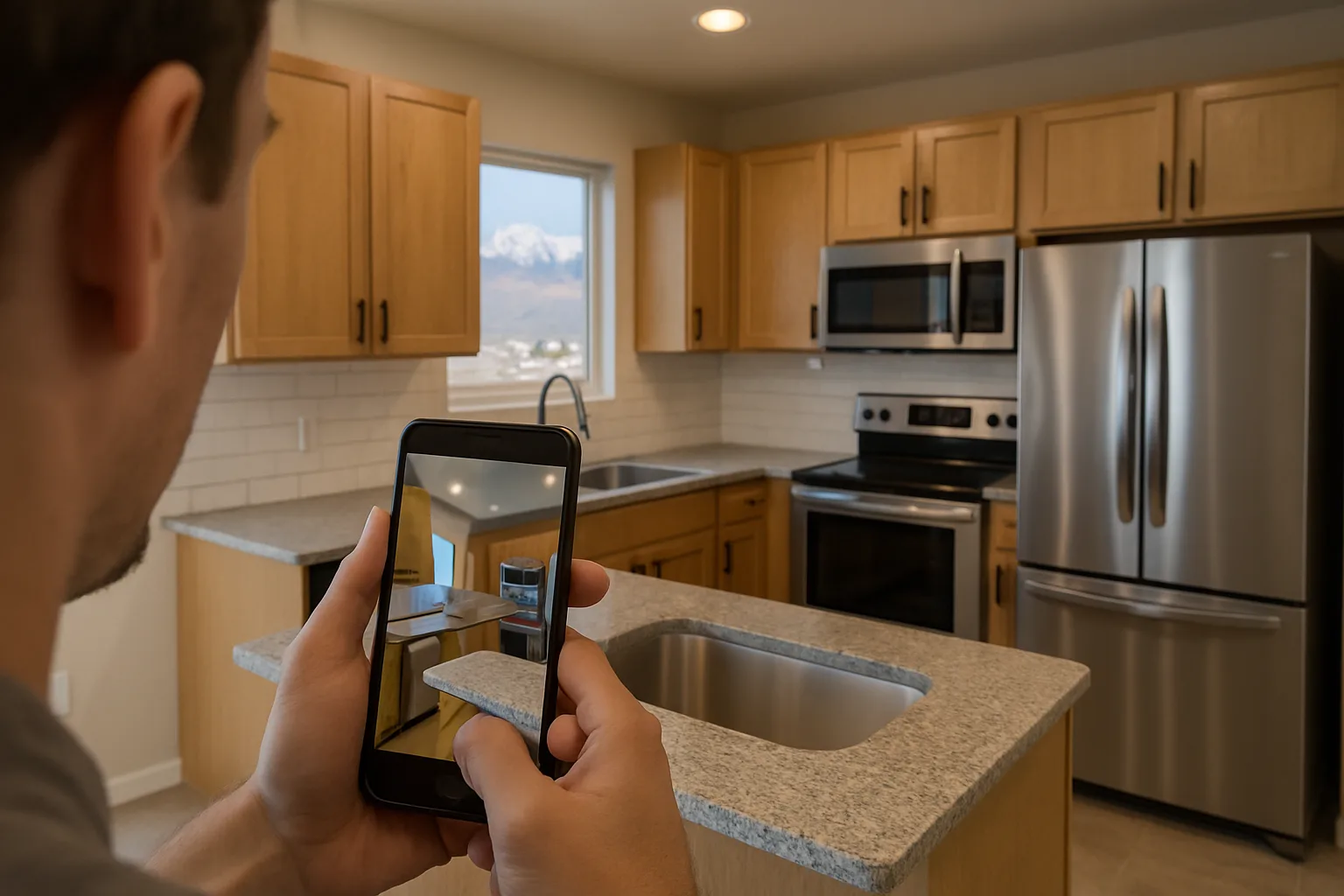
Inside, go room by room, wide shot first, then close.
Open every appliance and shoot the brand plate.
Finish in the mechanical area: water heater, furnace, panel.
Name the folder by address and date, then stop thinking about it. That folder becomes the intake for a study covering the current year and any prior years you have not already claimed.
One thing I would personally do differently than most guides suggest: I would not wait for a turnover. If your current tenant has been in place for three years and you already took photos at move-in, use those. You are documenting the asset, not the tenant. Good records also help with landlord maintenance tracking.
Utah Numbers That Make This Worth the Effort
Whether a study pays off depends on basis, and Utah basis is not small anymore. According to U.S. Census Bureau data, the median value of owner-occupied housing in Utah has climbed steadily over the past decade, and investor purchases tracked right along with it.
Translated to your situation: if you bought a fourplex in Ogden, a townhome in Washington or St. George, or a duplex anywhere along the Wasatch Front in the last several years, your building basis is probably large enough that reclassifying even a modest slice of it moves real money.
Here is a quick gut check before you pay anyone a dollar:
Building Basis | Realistic 5/7/15-Year Slice | Does a Study Make Sense? |
Under $150,000 | Small | Usually not worth the fee |
$150,000 to $350,000 | Meaningful | Possibly, depending on carryback years |
$350,000 and up | Substantial | Almost always worth pricing |
Two conditions have to line up, and both matter. You need depreciable basis in short-lived assets, and you need either rental income to absorb the deduction or a way to use the loss. High-income W-2 landlords often find the second condition is the real blocker, which is a conversation for your CPA, not a blog.
The Utah ADU Wrinkle
Accessory dwelling units are everywhere in Salt Lake and Davis County now, and they create a specific opening. A converted garage or finished basement splits into its own cluster of short-life assets: flooring, cabinetry, appliances, and mechanical systems that rarely match the main house.
I would treat an ADU as its own project rather than an add-on to the main unit's study. Separate scope, separate documentation, and a cleaner story if anyone ever asks questions.
You already took the photos when the build finished. Do not let them sit in a camera roll.
Where This Usually Goes Wrong
Three failure modes, in order of frequency.
Counting assets you did not buy. If a component came with the property and has been there since 1998, its remaining life is not what you think, and claiming it as new invites a correction.
Using retail prices as values. Replacement cost is not the same as the allocated basis of what you actually own. Any serious study uses a defensible method and states it.
Missing the filing mechanics. A look-back study needs Form 3115 to change your accounting method, and that form has to be attached correctly. If your preparer has never filed one, that is a real problem. So is hiring someone who files it wrong.
Your Move Before Next Filing Season
Pull up your camera roll tonight. Scroll back through the last turnover and count how many framing shots include a doorframe, a window, or anything that proves which property you were standing in. That count tells you whether you are ten minutes of folder organization away from a defensible study or a full re-shoot.
If your photos hold up and your basis is real, this becomes one of the few tax moves that costs a flat fee and produces a tangible return. If they do not hold up, you have a weekend project that pays for itself later. Also budget for rising Utah property taxes as you plan.
Either way, the answer is sitting in your pocket already. The only question left is whether you will scroll past it again this year.
Frequently asked questions
What photos do I need for a rental property cost segregation study?
Is cost segregation worth it for a small Utah rental property?
Can I do a cost segregation study on a rental I bought years ago?
Should I treat a Utah ADU separately in a cost segregation study?
What are the most common cost segregation mistakes for landlords?
Keep reading
More from the blog

Your Utah Cost Segregation Questions, Answered!
How Noisy Is the Home? A Buyer's Noise Check Guide

Utah Homeowners Insurance Costs in 2026: What Buyers Should Budget