Buying a Utah Home in a Wildfire Risk Zone: What to Check Before Making an Offer
Wildfire risk can affect insurance, financing, and resale for Utah homes near foothills, canyons, and desert land. This guide walks buyers through checking the state's wildfire risk map, securing insurance, and budgeting for mitigation before making an offer.
Wildfire risk is becoming a more important part of buying a home in Utah, especially near foothills, canyon entrances, wooded areas, and open desert land. A scenic location can still be an excellent choice, but buyers need to understand how a property's wildfire designation may affect insurance availability, carrying costs, financing, maintenance, and future resale.
Utah's statewide wildfire risk framework gives buyers a practical starting point: check the address before submitting an offer, confirm that meaningful wildfire coverage is available, and understand the work needed to reduce risk around the structure. A high-risk designation is not automatically a reason to reject a home. It is a reason to complete better due diligence.
Why Wildfire Risk Matters to Utah Home Buyers
Utah has long been viewed as a comparatively affordable state for homeowners insurance. That picture can change for homes in high-risk wildland areas. Drier conditions, low snowpack, strong winds, and expanding development near undeveloped land can increase the likelihood of wildfire exposure in particular neighborhoods, including communities near Pine Valley and other foothill and canyon towns.
The financial issue is larger than the possibility of physical fire damage. A buyer who cannot obtain an acceptable homeowners insurance policy may not be able to close on a mortgage. Lenders generally require proof of insurance before funding a home purchase. Even where coverage is available, a high-risk property may carry a higher premium, a wildfire-specific deductible, exclusions, or more stringent underwriting requirements.
For homeowners evaluating relocation options across the state, Best Utah Real Estate provides Utah property search tools and market resources that can help narrow a home search by location and lifestyle. Buyers weighing whether now is the right time to move forward may also want to review whether it's a better moment to buy or sell in Utah's current housing market.
Utah's High-Risk Wildland-Urban Interface Map Explained
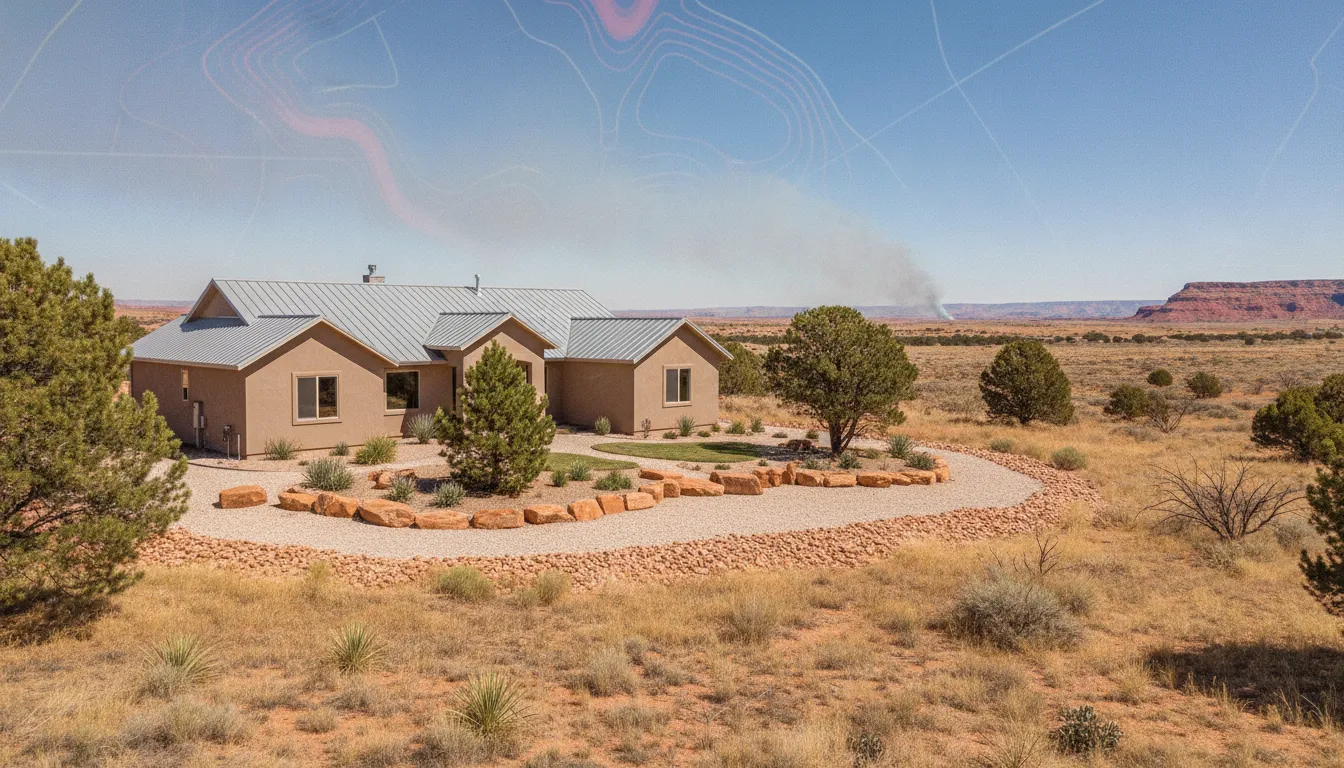
Utah has established a statewide map identifying high-risk properties within the wildland-urban interface, commonly called the WUI. The WUI is the area where residential development meets or borders undeveloped vegetation and wildland. Common examples include homes near mountain benches, canyons, parkland, forests, and desert terrain — the kind of setting found in towns like Kanarraville or New Harmony.
The state's map is especially significant because insurers operating in Utah must reference the standardized high-risk boundary when evaluating wildfire exposure. About 60,000 structures were identified in the high-risk area when the map was created.
Do Not Confuse the Two WUI Map Layers
Utah maintains related map layers that serve different purposes:
WUI zone: A broader planning area that local governments may use for building-code and future-development purposes.
High-risk WUI properties map: A narrower, structure-level designation identifying existing homes that fall within the state's high-risk boundary.
For a home purchase, the structure-level high-risk designation is the critical result. It is the designation most directly connected to the wildfire mitigation fee and insurance decisions.
How to Check Whether a Utah Home Is in a High-Risk Wildfire Area
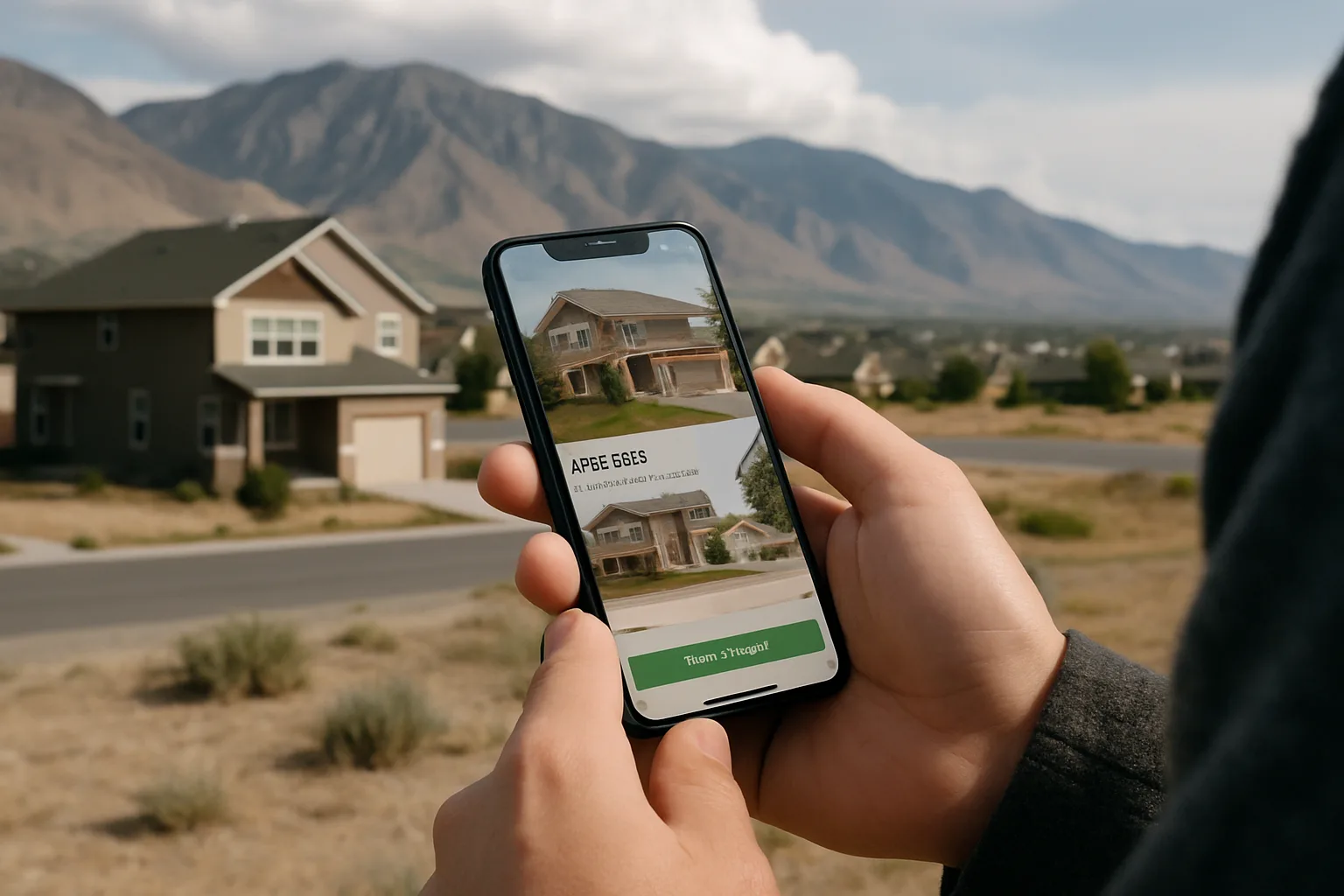
Before becoming emotionally committed to a specific home, buyers should search the property address through the Utah Wildfire Risk Assessment Portal. The portal provides a public, address-based way to determine whether the structure falls inside the high-risk WUI boundary.
The process is straightforward:
Enter the complete property address in the state risk portal.
Confirm the structure-level result, not merely the broader WUI planning layer.
Save the map result with the home-shopping records.
Request insurance quotes before removing any purchase contingency.
Ask about prior wildfire assessments and mitigation work completed at the property.
A home outside the high-risk structure boundary may have a simpler insurance path. Properties on valley floors and in some master-planned communities farther from foothills may not be flagged. However, every buyer should still obtain a property-specific insurance quote because risk models and policy terms vary by carrier.
What Utah's Wildfire Rules Can Mean for Property Taxes
Structures in Utah's high-risk wildfire boundary may be subject to a wildfire mitigation fee on the property tax bill. Through 2026 and 2027, the fee is described as a flat charge ranging from $20 to $100 per structure, based on the square footage of taxable buildings.
Beginning in 2028, the flat-fee approach is expected to be replaced by a property-specific triage score. The score reflects the wildfire risk associated with the individual lot and its condition.
This creates an important deadline for buyers and current owners: a property that has not received a lot-level wildfire risk assessment may default to the highest risk tier. Completing the appropriate assessment can document the property's actual condition and can support a lower risk score when mitigation has been completed.
State wildfire resources and assessment information are available through the Utah Division of Forestry, Fire and State Lands.
Insurance Questions Every Buyer Should Ask
A standard insurance quote is not enough for a home in a high-risk wildfire area. Buyers need written confirmation of exactly what the policy covers. Some insurers may decline to write new policies in higher-risk locations, choose not to renew existing policies, or issue coverage that excludes wildfire damage.
A policy that looks complete but excludes wildfire can create a serious gap in protection. The buyer should obtain answers in writing before proceeding.
Essential Questions for the Insurance Carrier
Is wildfire damage specifically included in the policy?
Does the policy contain a separate wildfire deductible?
What is the total annual premium and deductible amount?
Is the quote bindable for this exact address and closing date?
Are there property improvements required before coverage can be issued?
Could defensible space or home-hardening improvements improve eligibility or pricing?
When an insurer raises a rate by 20% or more, or cancels coverage because of wildfire risk, Utah's consumer protections allow the policyholder to request a written factual justification. That documentation can help a homeowner understand the decision and compare alternatives.
Make Insurance a Written Purchase Contingency
Insurance should be treated as a core part of the purchase analysis, not an afterthought during the final days before closing. Buyers considering a high-risk Utah property should include an insurance contingency in the purchase agreement whenever possible.
The contingency should allow sufficient time for the buyer to obtain a bindable quote for that specific address with wildfire coverage included. A rough estimate based on a nearby house is not adequate. Insurers consider the specific structure, roof, surrounding vegetation, access, prior loss history, and other property-level factors.
If acceptable coverage is unavailable or the cost materially changes the buyer's budget, it is better to learn that while the contingency remains in place. This protects the buyer from discovering an insurance problem after earnest money protections have been removed.
Use Wildfire Risk as a Negotiation and Budgeting Tool
A high-risk designation can affect a home's appeal to future buyers, but it can also provide a basis for informed negotiation. The key is to translate the designation into documented costs and practical work items.
Request the Assessment Status
Buyers should ask whether the home has received a certified lot-level wildfire risk assessment. A general home inspection or an older city inspection is not necessarily the same as a certified assessment used in the state program.
If no assessment exists, the absence is not automatically a deal breaker. It is a future task, a potential ownership expense, and a point to consider in negotiations.
Estimate the Cost of Needed Improvements
A buyer should identify any visible wildfire mitigation needs, obtain estimates where appropriate, and use those findings to evaluate the offer price. Examples include roof replacement, vent upgrades, siding work, vegetation removal, and annual defensible-space maintenance. Reviewing common roof problems to check before making an offer can help buyers spot issues that also affect wildfire resistance.
A seller credit or price adjustment may be reasonable when a property needs documented risk-reduction work. The home's high-risk map status and insurance quote can provide objective support for that discussion.
Calculate the Real Cost of Ownership
The purchase price and mortgage payment do not show the complete monthly cost of a wildfire-exposed property. Buyers should also consider:
Homeowners insurance premium and deductible
Wildfire mitigation fee
Lot-level assessment costs, when applicable
Regular landscaping and defensible-space maintenance
Future roof, vent, siding, or exterior hardening improvements
For some households, the views, outdoor access, and neighborhood location justify those added costs. For others, a lower-risk location may be a better long-term fit. The important point is that the decision should be based on the complete budget.
Wildfire Home Hardening: Improvements That Matter Most
Wildfire mitigation is not limited to clearing brush. Windblown embers can enter small gaps, collect in combustible debris, or ignite vulnerable materials around the home. Reducing these ignition paths can improve safety, support a lower property risk assessment, and create useful documentation for insurers and future buyers.
Start With the Roof and Vents
A Class A fire-rated roof and ember-resistant vent screening are among the most important protective measures. In an ember storm, homes often ignite from embers that land on roofs or enter attic and crawlspace openings, rather than from direct contact with a wall of flames.
During the inspection process, buyers should ask about the roof's fire rating, remaining useful life, vent construction, and any openings around eaves or rooflines.
Maintain the First Five Feet Around the Home
The zone immediately around the foundation should have the least combustible material. Gravel, stone, and other noncombustible materials are generally preferable near the structure. Combustible mulch, shrubs pressed against exterior walls, stacked firewood, and debris beneath a wood deck can all increase ember ignition risk.
Create Spacing From Five to Thirty Feet
The area beyond the immediate five-foot zone should be managed to interrupt continuous fuel. Practical measures include spacing trees and shrubs, keeping grass cut, removing dead vegetation, and reducing "ladder fuels" that can allow fire to move from ground cover into trees and toward the home.
Address Siding and Small Gaps
Fire-resistant siding is valuable, but small openings also deserve attention. Gaps beneath eaves, dryer vents, garage doors, and other openings can permit embers to enter vulnerable areas. Buyers should include these details in the inspection and mitigation plan.
Defensible Space Is Ongoing Maintenance
Wildfire preparation is not a one-time renovation. Vegetation grows back, needles accumulate in gutters, and combustible materials return to decks and side yards over time. Defensible space requires seasonal upkeep.
Typical maintenance includes clearing gutters, removing dead leaves and pine needles, pruning branches, mowing grass, maintaining spacing between plants, and keeping stored combustible materials away from the home. Wildfire assessments are generally valid for about five years, but the safety benefit depends on consistent maintenance throughout ownership.
Water planning is another important part of evaluating a Southern Utah property. Buyers considering the St. George area can review Southern Utah water planning and conservation considerations alongside wildfire risk and property maintenance needs.
Consider Resale Before Buying a High-Risk Home
Wildfire risk should be evaluated as both a current ownership issue and a future resale consideration. A home that is difficult to insure may attract a smaller pool of buyers. Rising premiums, non-renewals, special deductibles, and unaddressed mitigation needs can affect future demand.
Conversely, a property with a completed assessment, documented mitigation, defensible space, a compliant roof, protected vents, and organized maintenance records may be easier for a future buyer to evaluate. Good documentation can demonstrate that the homeowner took risk seriously rather than leaving the next owner with uncertainty.
Buyers comparing Southern Utah communities may also benefit from reviewing the pros and cons of living in St. George, including the climate and lifestyle tradeoffs associated with desert living, as well as nearby foothill-adjacent options like Toquerville.
Utah Wildfire Home Purchase Checklist
Check the address: Search the structure in the Utah Wildfire Risk Assessment Portal.
Confirm the correct map result: Focus on the high-risk structure designation, not only the broad WUI layer.
Get a bindable insurance quote: Confirm wildfire coverage, premium, and deductible in writing.
Use an insurance contingency: Avoid removing protections before acceptable coverage is secured.
Ask for assessment records: Determine whether a certified lot-level assessment has been completed.
Inspect risk-reduction features: Review the roof, vents, siding, decks, gaps, landscaping, and stored materials.
Price mitigation work: Obtain estimates for upgrades and maintenance before finalizing the offer.
Budget beyond the mortgage: Include insurance, wildfire fees, assessments, and recurring defensible-space care.
Preserve records: Keep assessments, invoices, photos, and maintenance documentation for insurance and resale.
Final Takeaway
Wildfire risk does not remove the appeal of Utah's mountain, canyon, and desert communities. It changes the homework required before purchase. A careful buyer should check the state map, verify insurance coverage, assess the home's current condition, budget for mitigation, and maintain clear records over time.
When those steps are completed before making an offer, a high-risk designation becomes a measurable part of the decision instead of an unexpected obstacle after closing.
Frequently asked questions
Does a high-risk wildfire designation make a Utah home uninsurable?
Can a mortgage close without homeowners insurance in Utah?
What is the difference between a WUI zone and a high-risk WUI property in Utah?
What happens if a Utah property never gets a wildfire risk assessment?
Which Utah towns are considered high wildfire risk for buyers?
How much does wildfire mitigation typically cost a Utah homeowner?
Keep reading
More from the blog
Utah ADU Rules in 2026: State Law and City-by-City Limits
Inherited a House? The Order to Tackle Each Step
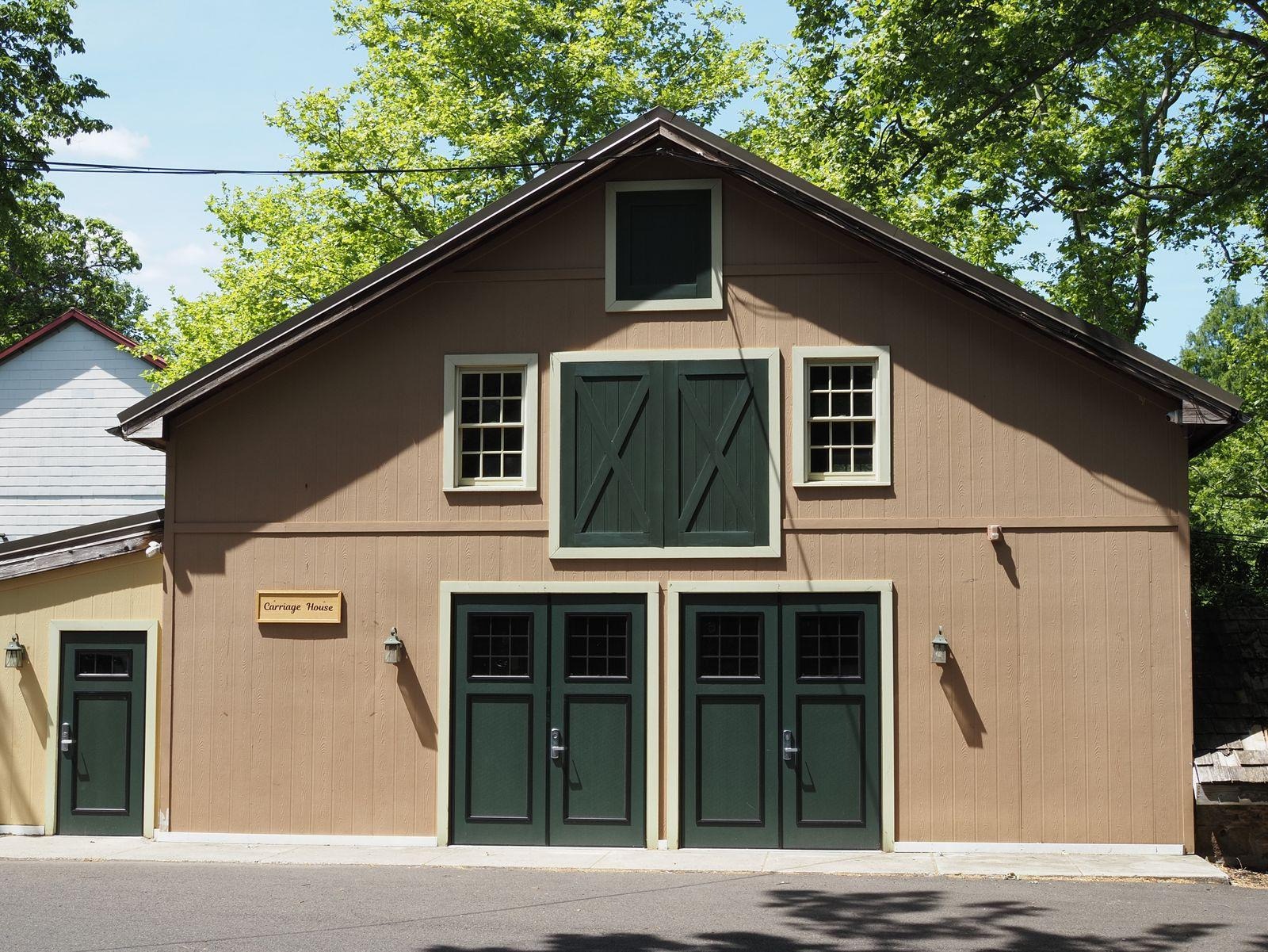
Utah's New Detached ADU Law and Garage Apartments