Should You Buy or Sell in Utah's Housing Market Right Now?
Utah's housing market is adjusting after years of rapid growth, giving buyers more leverage and requiring sellers to price realistically. This guide breaks down how to decide whether buying or selling makes sense right now based on affordability, timing, and lifestyle.
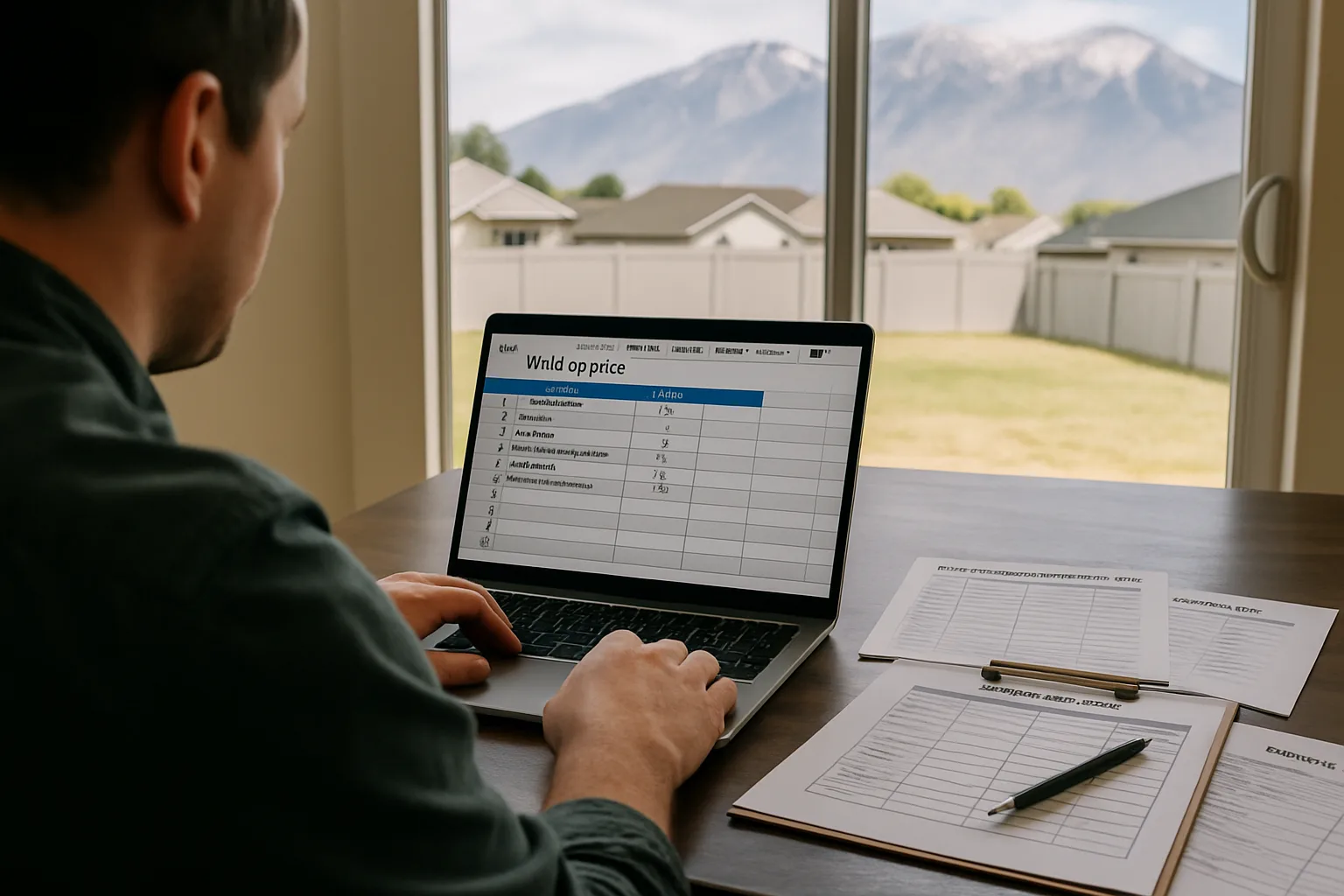
Utah's housing market is no longer behaving like the frenzy that pushed prices up so quickly a few years ago. Buyers have more choices, sellers face more competition, and pricing mistakes are taking longer to correct. For anyone deciding whether to buy or sell, the key question is not whether the market is collapsing. It is whether today's conditions match the household's finances, timeline, and goals.
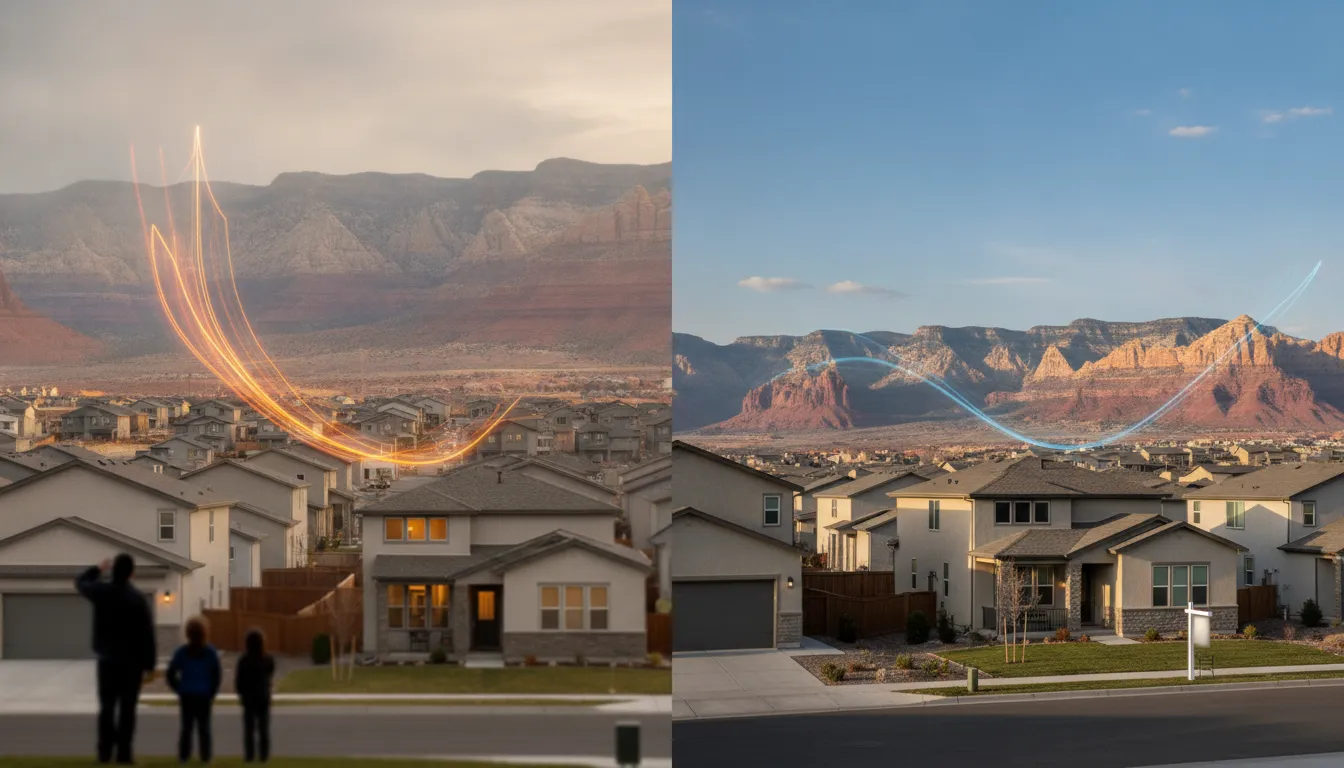
This market is better understood as an adjustment. Home values that rose unusually fast during the migration surge are being pulled back toward more normal expectations. That shift changes strategy for both sides of the transaction. First-time buyers weighing their options may also want to review this first-time home buyer's guide to Utah real estate for a step-by-step planning framework.
For broader Utah listings and market resources, Best Utah Real Estate provides statewide home search tools and local housing content.
What is happening in the Utah housing market?
Utah is not repeating the kind of crash many people associate with 2008. The current market dynamic is different. The main change is that the rapid run-up in home prices is cooling off, and many sellers are having to reset expectations.
During the boom, a wave of out-of-state buyers, many with stronger cash positions, helped push prices beyond what many local buyers could comfortably afford. That was not a stable long-term pattern. As demand normalizes, prices are softening and buyers are less willing to overpay.
That creates a market with these characteristics:
More inventory and more comparison shopping
Longer time on market for overpriced homes
More negotiating power for buyers
More concessions, especially from builders
Greater need for realistic pricing from sellers
Readers looking for a deeper statewide trend breakdown may also find this update on Utah's buyer's market shift helpful, as well as this analysis of Zillow's 2026 housing u-turn and what it means for buyers.
Is Utah's housing market crashing?
No, not in the sense most people mean by a crash.
The current environment is better described as a market correction or normalization. Homes are not automatically selling at inflated pandemic-era prices anymore. That does not mean every property is losing value dramatically, and it does not automatically mean widespread distress sales. It means the market is less forgiving.
Sellers who price based on outdated expectations can sit for months. Buyers who stay patient may find stronger leverage than they had during the peak years.
For additional national housing context, the National Association of Realtors research center tracks broader market trends that can help frame local decisions.
Should homeowners sell now in Utah?
For many owners who already know they need to sell, waiting can be risky in a softening market.
The basic concern is simple. If prices are drifting downward toward more realistic levels, delaying the sale may reduce the final sale price. That does not mean every seller should rush to market without a plan. It means sellers should be especially clear about timing, pricing, and presentation.
When selling now may make sense
The homeowner already plans to move in the near term
The household wants to capture today's value before further price softening
The property can be priced accurately from day one
The seller is ready to compete with both resale homes and builder incentives
Why pricing matters more than ever
One of the biggest mistakes in a changing market is listing too high and assuming a price reduction later will fix everything. Often, it does not.
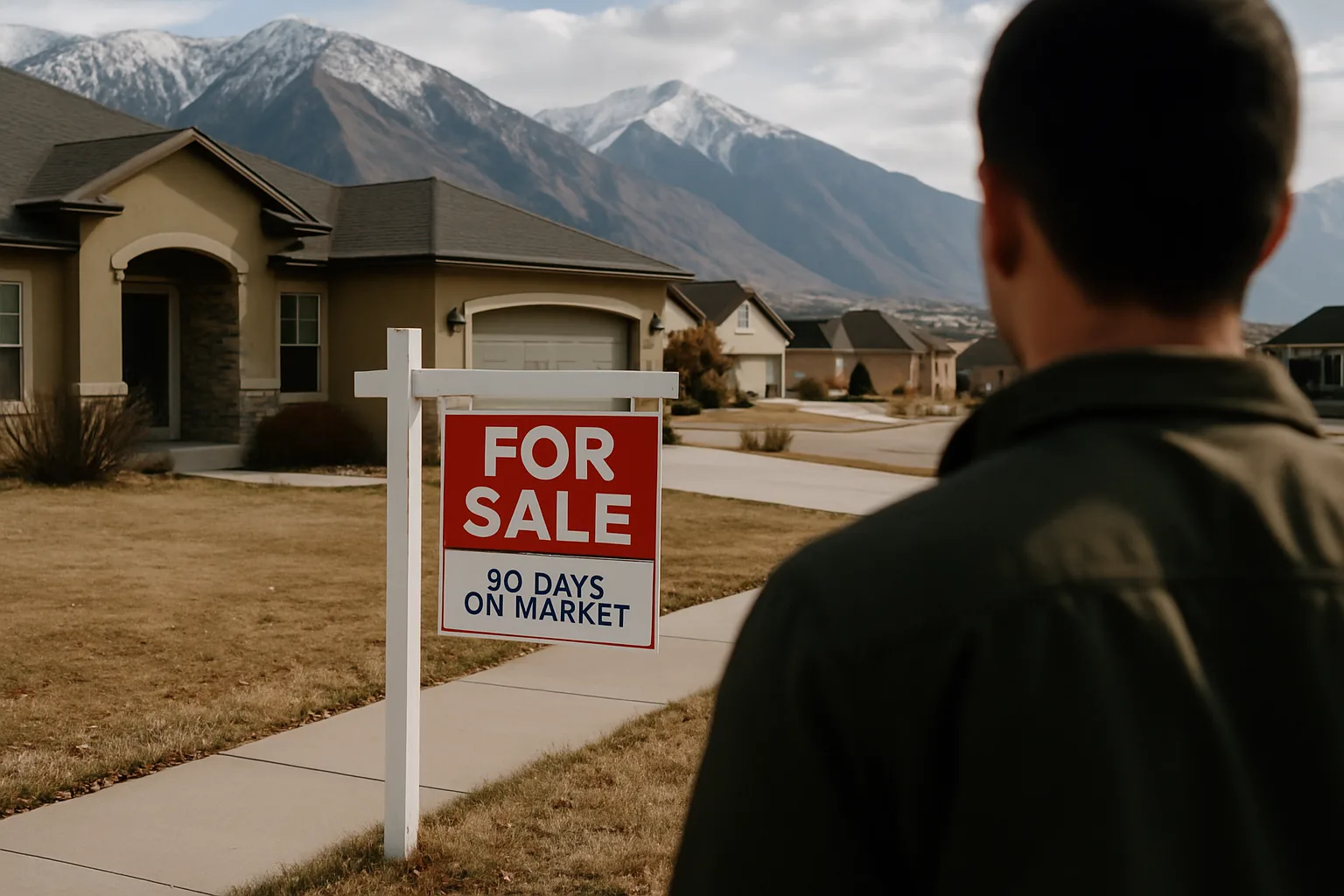
When a home sits for 60, 90, or more days, buyers can start assuming something is wrong with the property. The real issue may only be the original list price, but the market often punishes stale listings. That can lead to lower offers and a harder sale than if the home had simply been priced correctly from the start.
What sellers should do before listing
Review recent comparable sales rather than relying on neighbor opinions or peak-market memories.
Price for current demand, not for what the seller hopes the market still is.
Prepare for negotiation on price, closing costs, or rate buydown requests.
Compete with new construction by making the resale home show stronger value.
Move quickly if selling is already necessary, because waiting in a declining environment can reduce proceeds.
Homeowners unsure where to start can use a local valuation resource such as a free Utah home value CMA to compare pricing against current comparable sales.
Why some Utah homes are not selling
Many homes that linger on the market are not unsellable. They are simply mismatched with current buyer expectations.
Common reasons include:
Overpricing from the start
Sellers relying on outdated peak values
Weak positioning against builder incentives
Insufficient marketing or presentation
Buyers becoming suspicious after extended market time
In this kind of market, strategy matters more than it did when almost anything could attract multiple offers quickly.
Should buyers purchase a home in Utah right now?
For some households, yes. For others, waiting may still be smarter. The right answer depends less on headlines and more on affordability, stability, and personal timing.
Buyers now have advantages they did not have during the hottest part of the market. There is more room to compare options, negotiate terms, and ask for concessions. Builders in particular may be more flexible than many people expect.
Reasons buying now can make sense
More negotiating power than during the competitive run-up
Potential price reductions on homes that have been sitting
Builder incentives such as closing-cost help, rate buydowns, or lower prices
Opportunity to refinance later if interest rates improve
Long-term equity building instead of paying rent indefinitely
Reasons waiting might be smarter
The payment would stretch the budget too far
Credit issues would push the interest rate much higher
The household lacks reserves for inspections and surprise costs
Job or income stability is uncertain
The buyer is only shopping because of fear of missing out
How to decide if buying is affordable
A mortgage pre-approval and a comfortable monthly payment are not the same thing.
Many buyers focus too much on the maximum amount a lender approves. That number only shows the upper edge of qualification. It does not mean the home will feel affordable once real life happens.
A better affordability test
Before buying, a household should ask:
What monthly payment feels sustainable, not just possible?
How does the mortgage compare with current rent?
Is there room for HOA increases, taxes, maintenance, or temporary income loss?
Will there still be cash reserves after closing?
A simple example makes this easier to understand:
If rent is around $2,500 and the ownership payment is around $3,000, the gap may be manageable if the household values equity and stability.
If rent is far below the expected mortgage and the payment would double or triple housing costs, that is a much tougher case.
Buyers should also remember that buying below the maximum approval amount can be the safer move. A smaller home, condo, or townhome may create far less financial strain than stretching for the highest possible price point.
Why new construction deserves a close look
New construction is a major part of the current Utah buying conversation because builders often have stronger incentive packages than individual resale sellers.
In a slower market, builders may have standing inventory and stronger motivation to move it. That can translate into meaningful buyer benefits.
Common builder advantages in this market
Price reductions
Closing cost assistance
Interest rate buydowns
Included appliances or landscaping
More flexibility on concessions
This is one reason resale sellers need sharper pricing and marketing. A buyer comparing an older listing to a builder package may choose the option offering the stronger total value, even if the sticker price is similar.
Those comparing property types may also want to review buying new construction homes in Utah for a broader look at the tradeoffs.
Does it make sense to buy if interest rates are high?
High rates make the monthly payment harder, but they do not automatically mean a buyer should stay out of the market.
One practical reason is that rates can often be refinanced later, while the purchase price and competition conditions at the time of purchase are different variables. If a buyer can negotiate a better deal today and the payment is still comfortable, refinancing later may improve the situation.
That said, refinancing should be viewed as a possible future benefit, not the only reason to make an unaffordable purchase today. The home still needs to work at the current payment.
Renting versus buying in Utah right now
For households on the edge of the decision, the comparison often comes down to this: is the extra monthly cost of ownership reasonable for the lifestyle and long-term value gained?
Buying may make sense when:
The monthly payment is only modestly above rent
The buyer plans to stay long enough to benefit from ownership
The household wants more control over space, privacy, or outdoor use
The financial position is stable enough to handle ownership costs
Renting may be better when:
The buyer has little savings after closing
The payment would create monthly stress
The move may only be short term
Credit or debt issues make borrowing too expensive
How lifestyle should factor into the decision
Housing decisions are financial, but they are not only financial.
A larger townhome, a yard for children or pets, room for gardening, or simply more personal space can improve daily life in ways that matter. If a move would materially improve how a household lives and the payment is sustainable, that value should be part of the equation.
On the other hand, a bigger home that creates constant financial pressure may reduce quality of life even if it looks like an upgrade on paper.
The strongest decision usually balances budget, timing, and lifestyle rather than focusing on only one of them.
Common mistakes to avoid in Utah's current market
Seller mistakes
Pricing based on old market highs
Trusting neighborhood rumors over actual comparable sales
Letting a listing sit too long before adjusting strategy
Ignoring the competition from builders
Assuming demand will erase poor marketing or weak presentation
Buyer mistakes
Buying at the top of the approved budget instead of the comfortable budget
Forgetting about taxes, HOA dues, and unexpected repairs
Entering a purchase with no reserve funds
Assuming every home price will drop enough to justify waiting
Overlooking builder concessions that may outperform resale deals
A practical decision framework for buyers and sellers
If selling
Decide whether the move is truly necessary in the near future.
Get a realistic value based on current local sales.
Price correctly from the start.
Prepare to compete on value, not nostalgia.
Move sooner rather than later if the market is still softening.
If buying
Separate lender approval from true affordability.
Compare ownership cost against current rent.
Look at both resale homes and builder inventory.
Negotiate on price, closing costs, and rate help where possible.
Buy only if the payment works comfortably today.
Bottom line
Utah's housing market has become more selective and more negotiable. Sellers can still succeed, but inflated pricing is getting punished. Buyers have better leverage than they had during the boom, but affordability still matters more than timing the market perfectly.
For sellers, the main risk is waiting too long in a softening market. For buyers, the main risk is confusing qualification with comfort. The best move depends on whether the household can act from a position of preparation rather than pressure.
Frequently asked questions
Is Utah still a good place to buy a home?
Are home prices falling in Utah?
Why are some Utah homes sitting on the market longer?
Should a seller reduce the price quickly if a home is not getting offers?
Is new construction a better deal than resale in Utah right now?
How much home should a buyer purchase in this market?
Keep reading
More from the blog
Why Utah Homes Aren't Selling in Fall 2026: What 18,000 Active Listings Show

Fall Color Drives by Home Base: Which Wasatch Front Canyon Is Closest in 2026

Wasatch Front Halloween 2026: Haunts, Corn Mazes and Witch Displays by Scare Level