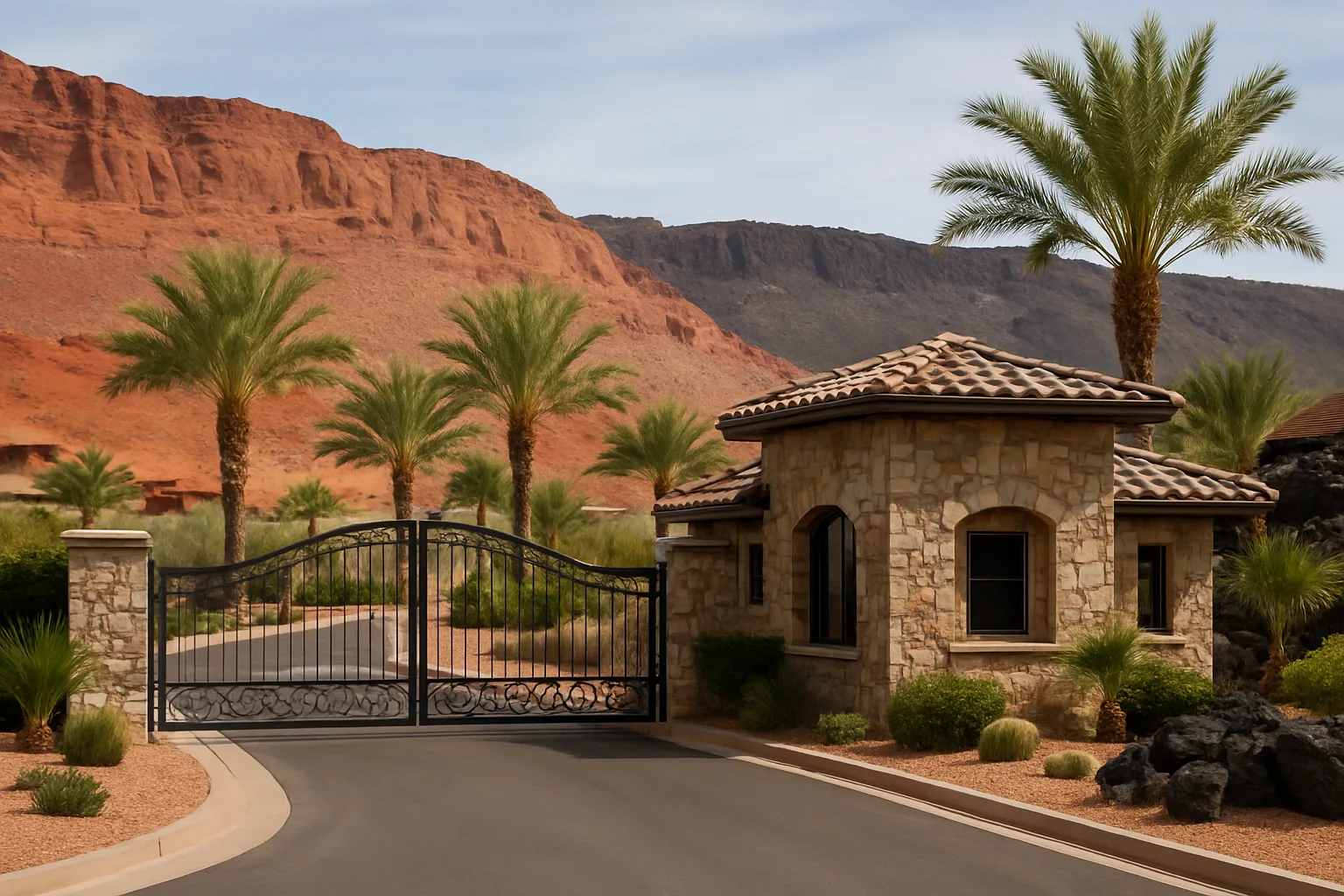

Securing St. George Utah's Water Future: Strategies and Insights from the Experts
Is St. George, Utah running out of water? Where the water comes from, what is exaggerated online, and how conservation and reuse shape homeownership.
"Is St. George running out of water?" is one of the most common questions from people thinking about moving to Southern Utah, and online videos with headlines about a water "crisis" don't help. The real picture is more measured: the county's main water source is close to fully used, so growth now depends on conservation, reuse and new local storage. Here's what's true, what's exaggerated and what it means for homeowners. To look at homes, view active St. George listings.
Where St. George's Water Comes From
Nearly all of Washington County's water comes from the Virgin River watershed, which flows out of the mountains around Zion and Pine Valley. Water is stored in off-stream reservoirs such as Quail Creek and Sand Hollow, drawn from local wells, and treated before delivery. The Washington County Water Conservancy District reports that local suppliers deliver about 45,000 acre-feet of drinking water a year, and that the watershed is nearing its full development capacity.
Common Claims, Checked
"St. George is about to run out of water."
Not accurate. Current supply serves current residents, and the district and cities plan supply years ahead. The real constraint is growth: the district expects the county's population to more than double by 2060, and new supply has to come from somewhere.
"The Lake Powell Pipeline was canceled."
It's on hold rather than canceled. After years of debate among Colorado River states, the district shifted its focus to conservation, reuse and local storage for roughly the next 20 years. Near-term plans assume no pipeline water.
"Residents will soon drink their own wastewater."
Partly true, but not soon. Treated wastewater already goes to irrigation, and a large regional reuse system is planned to supply up to 24,000 acre-feet a year by 2042. Purified reuse water isn't expected to enter the drinking supply until around 2040. A demonstration facility in La Verkin, planned to open around 2028, will let visitors see the purification process and taste the result.
What's Being Done
- Conservation: a 2025 regional plan aims to cut water use 18% between 2022 and 2042.
- Landscaping rules: St. George and the county's other large cities limit lawn on new residential lots.
- Reuse: the regional reuse system is the largest new source in the plan.
- Storage: Chief Toquer Reservoir near Toquerville was under construction in 2026.
- Treatment: the Quail Creek treatment plant is being expanded to handle peak summer demand.
More detail on the reservoirs and reuse projects is in this look at Southern Utah's water future.
What Homeowners Can Do
- Water smart: adjust sprinklers by season and turn them off after rain.
- Replace thirsty lawn: the conservancy district offers incentives to replace grass with water-efficient landscaping. Note that the program records a conservation easement on the converted area.
- Fix leaks and upgrade fixtures: efficient toilets, faucets and smart irrigation controllers cut use with little effort.
Current programs are listed on the Washington County Water Conservancy District website.
What It Means for Buyers
Water planning shows up in everyday costs and rules: impact fees built into new-home prices, smaller lawns on new lots, and tiered summer rates that make large lawns expensive to water. Before buying, ask for a year of utility bills, find out whether the yard has a recorded conservation easement, and confirm who provides the home's water. Summer utility costs are covered in more detail in the St. George cost of living guide.
Bottom Line
St. George isn't running out of water, but it can no longer grow on the Virgin River alone. Conservation, reuse and new storage are the plan for the next two decades, and residents see that plan in landscaping rules and water bills. For help finding a home that fits, contact Best Utah Real Estate.
Posted by Kristopher Larson
Frequently asked questions
Is St. George, Utah running out of water?
No. Current supply serves current residents, but the Virgin River watershed is nearing full development, so future growth depends on conservation, water reuse and new local storage rather than new river water.
Where does St. George get its water?
Nearly all of it comes from the Virgin River watershed, stored in reservoirs such as Quail Creek and Sand Hollow and supplemented by local wells. Local suppliers deliver about 45,000 acre-feet of drinking water a year, according to the Washington County Water Conservancy District.
Was the Lake Powell Pipeline canceled?
It's on hold rather than canceled. The district shifted its focus to conservation, reuse and local storage for roughly the next 20 years, so near-term planning assumes no pipeline water.
Will St. George residents drink recycled wastewater?
Not for years. Treated wastewater is already used for irrigation, and a regional reuse system is planned to supply up to 24,000 acre-feet a year by 2042. Purified reuse water isn't expected to enter the drinking supply until around 2040.
Are there watering restrictions in St. George?
New homes face limits on how much lawn can be installed, and tiered rates and surcharges make heavy summer use more expensive. Residents are also encouraged to water by season and can get incentives to replace grass with water-efficient landscaping.
How does water affect buying a home in St. George?
Water impact fees are built into new-home prices, new lots have smaller lawn allowances, and older homes with big lawns can have high summer bills. Ask for 12 months of utility bills and check for any recorded conservation easement before buying.
St George, Utah housing market
A quick read on what homes are doing in St George right now — pulled live from the MLS.
Keep reading
More from the blog
St. George Asking Prices Are 24% Below the 2022 Peak: What Late-2026 Buyers Should Weigh

What $800,000 Buys in St. George and Southern Utah, Town by Town
Luxury Neighborhoods in St. George and Southern Utah: 7 to Know