
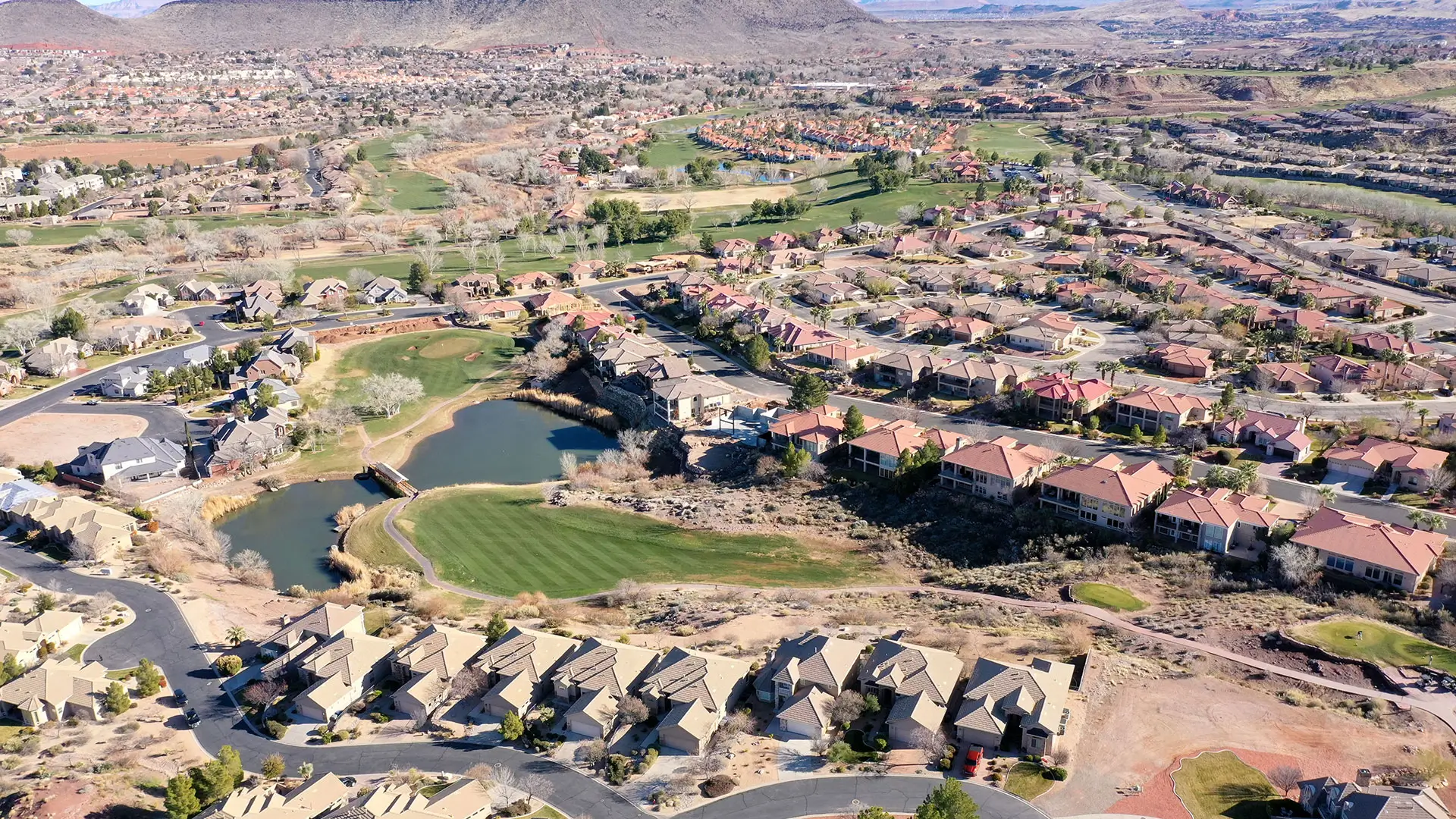
Pros and Cons of Living in St. George Utah
The honest pros and cons of living in St. George, Utah — weather, cost of living, jobs, safety, and how nearby towns compare, from a local real estate team.
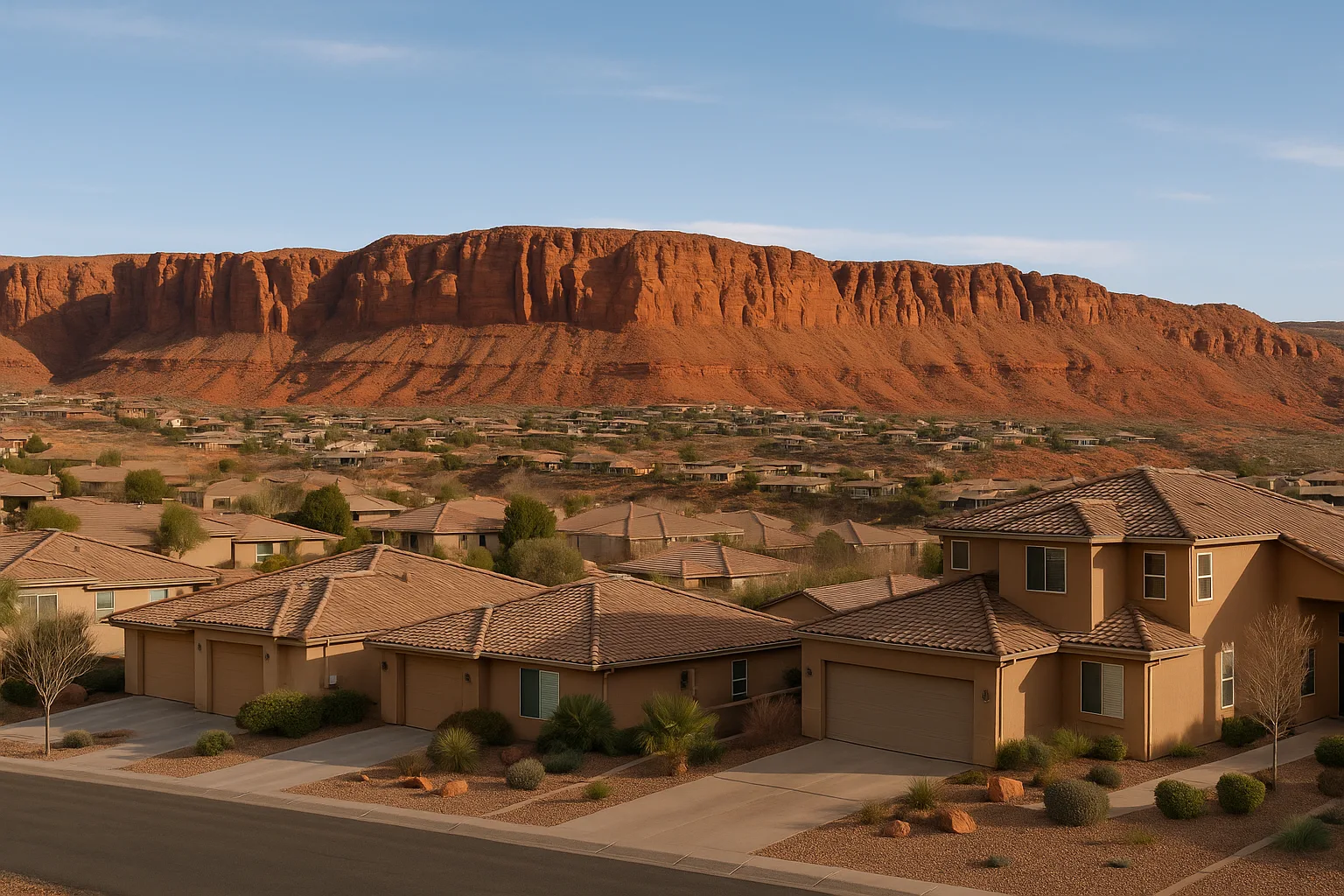
St. George pulls people in for the same handful of reasons year after year: about 300 sunny days, mild winters, red rock in every direction, and a pace of life that sits comfortably between small town and big city. It also asks something in return — summers that regularly top 105°F, housing that costs more than local wages easily support, and the construction and traffic that come with being one of the fastest-growing metro areas in the country. This guide covers both sides honestly, plus how the surrounding Washington County towns compare, so you can decide whether the trade-offs fit your household. When you're ready to start looking, browse every active St. George listing.
Related Articles:
St. George vs. Hurricane — which city is the better fit?
10 things to consider before moving to St. George
St. George Utah weather guide
Moving to St. George: costs, neighborhoods, and tips
The good and the bad of living in St. George
Las Vegas vs. St. George: the relocation showdown
St. George Market Snapshot (October 2026)
Before the pros and cons, here's what the market actually looks like right now. These numbers update automatically from the MLS — sold-side figures reflect the most recent completed month; list price and active count are live inventory:
- Median sale price: $477,000
- Median list price (active homes): $529,825
- Median days on market: 55 days
- Sale-to-list ratio: 98.1%
- Active listings right now: 1,068
For the full picture — monthly trends, price bands, and our AI market commentary — see the St. George market stats page.
What Living in St. George Is Actually Like
St. George is the commercial, healthcare, dining, and shopping center of Washington County. The surrounding communities — Washington, Ivins, Santa Clara, and Hurricane — each offer a different pace while sharing the same desert scenery and recreation access.
A useful way to think about the area is through two lifestyle patterns. Convenience-focused living: St. George, Washington, and the central neighborhoods put you closest to the hospital, major shopping, restaurants, and services. Adventure-focused living: Hurricane and the outlying towns feel more connected to the reservoirs, trails, and open desert, but you'll drive farther for errands and dining. Neither is better — the right spot depends on your daily routine, your work situation, and how much windshield time you'll tolerate. We'll compare the towns in detail further down.
Pros of Living in St. George Utah
Mild Winters and Roughly 300 Days of Sunshine
Winter is St. George's superpower. You're typically looking at highs in the 50s and low 60s, overnight lows in the 30s, and long sunny stretches — golf, hiking, and pickleball stay on the calendar all winter. For anyone escaping long, gray, snow-shoveling winters, this single factor drives more relocations than everything else combined.
Spring and fall are the sweet spots. February through May and September through November deliver the kind of weather most of the country only gets a few weeks of. Rain is limited in the desert, so overcast days and summer monsoon thunderstorms tend to feel like a welcome change rather than a nuisance. Snow does fall occasionally, but it's light and usually gone by lunch — a big contrast to the rest of Utah. Our full St. George weather guide breaks down every season month by month.
Desert Heat Without the Humidity
Even the summer heat comes with an asterisk: it's dry. Humidity typically sits below 20%, which most newcomers find far more manageable than the same temperature in Houston or the Gulf Coast — sweat actually works here. Mornings and evenings cool off enough for walks, patio dinners, and errands, and residents who plan around the midday peak find the climate very livable. That doesn't erase the July intensity (more on that in the cons), but it's a genuinely different experience from humid-summer states.
Outdoor Recreation Is Part of Everyday Life
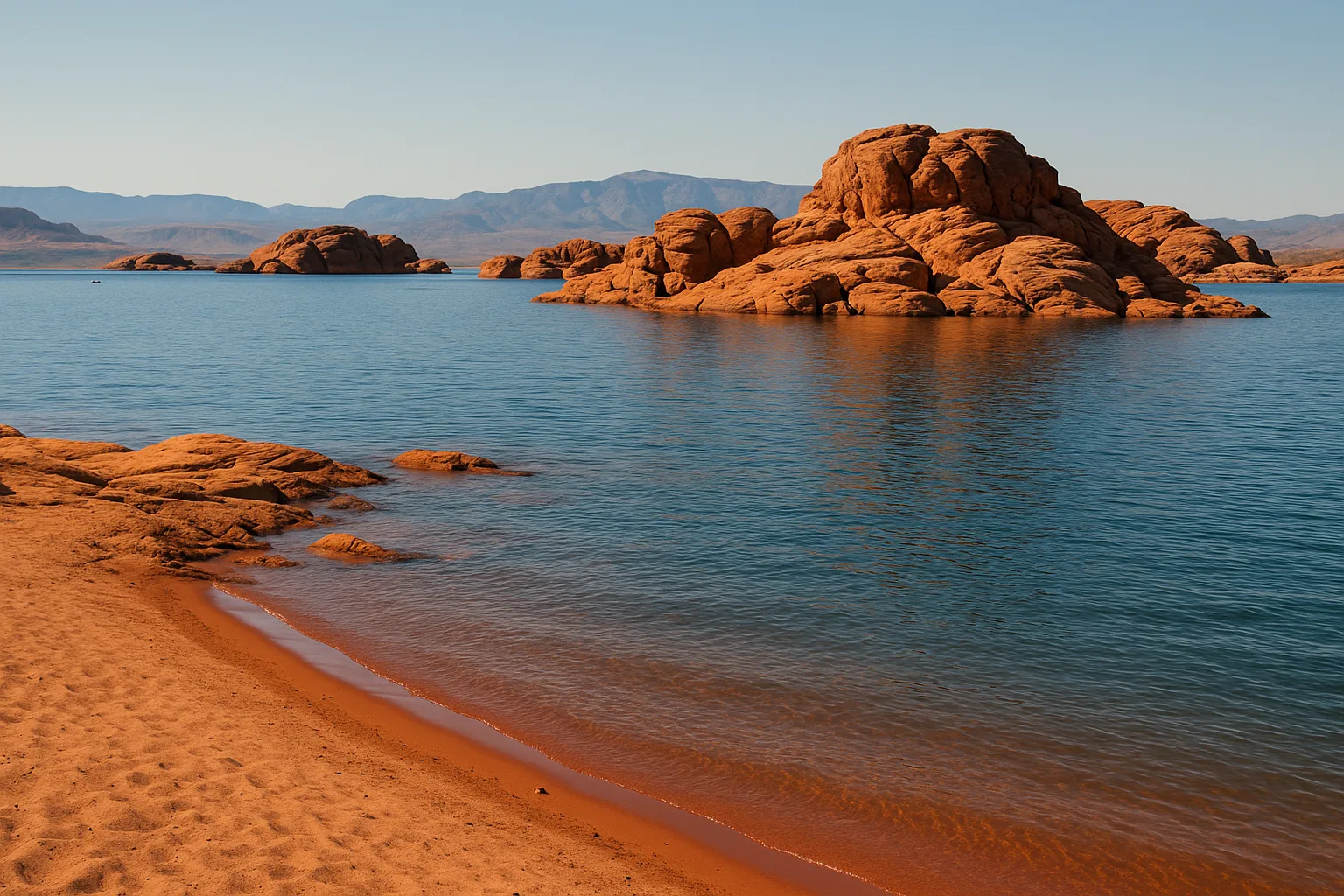
This is the reason most people stay. Outdoor time in St. George isn't a special weekend trip — trails, red rock, golf, and pickleball courts are woven into ordinary weeks. Snow Canyon State Park is 10 minutes north. Sand Hollow State Park — boating, wakeboarding, and the sand dunes — is a 30-minute drive. Zion National Park is 45 minutes to an hour east.
The bigger list is genuinely hard to match anywhere: Grand Staircase-Escalante in two hours, Capitol Reef in three and a half, the Grand Canyon's North Rim in four and a half, Canyonlands in five. And beyond the parks, the BLM's St. George Field Office manages over 600,000 acres of public land surrounding the city — mountain biking, trail running, and off-road country that never requires an entrance fee. During the hottest months, locals shift recreation to sunrise and evening; that adjustment is part of desert living. For specifics, see our guides to exploring the outdoors in St. George and the area's top 14 golf courses.
The Airport (SGU)
The St. George Regional Airport makes travel easier than most towns this size get. Short hops to Salt Lake City, Denver, and Phoenix connect you to the major hubs and international flights without a long drive first — and the Las Vegas airport is two hours down I-15 when a nonstop matters. Even from the far side of the metro — Santa Clara or Ivins — you're well under an hour to the terminal.
Location and Drive Times
If you'd rather drive, the geography works in your favor: roughly two hours to Las Vegas, four to Salt Lake City, six to Phoenix, and six to seven to Southern California beaches and Disneyland. That two-hour Vegas run matters more than it sounds — it's the escape valve for big concerts, pro sports, luxury shopping, and international flights. Weighing the two cities as places to actually live? We wrote a full Las Vegas vs. St. George relocation showdown.
If you're relocating from a larger metro like the Bay Area or Phoenix, it's best to work with a reputable moving company, such as Ontrack Moving, that's familiar with that region. Just make sure they cover your desired destination and are well-versed in things like move-in rules, access, and parking regulations.
Low Crime Rates
St. George's violent and property crime rates are notably lower than national averages, which makes it an incredibly safe place to raise a family or retire — especially if you're arriving from a major West Coast, East Coast, or Southern metro. You can't avoid crime entirely anywhere; what exists here skews toward property crime — car break-ins, trespassing, occasional graffiti — rather than violent crime. Not things you want, but a very different daily reality than what many transplants are leaving. We break the safety picture down further in the good and the bad of living in St. George.
That said, a citywide impression should never replace neighborhood-level homework. Crime reporting methods vary between cities, and comfort differs by household. Before you buy or rent, review the available data, visit the specific street at different times of day, check lighting and evening activity, and think about proximity to schools, work, and daily errands. A neighborhood that feels right at noon can feel different at 9 p.m. — that's true everywhere, including here.
A Community-Focused, Family-Friendly Culture
People say hi at the grocery store here. Transplants comment on it constantly; for those of us who grew up in Utah it's just normal. St. George is genuinely family-focused — lots of kids, lots of parks, and the City of St. George runs a full calendar of community programs, races, and events year-round. If a friendly, connected community is what you're after, you'll find it.
A Strong and Diversifying Economy
The economy keeps adding employers and the population is growing fast. Washington County added roughly 25% in the 2010–2020 census and the Kem C. Gardner Policy Institute projects the county will pass 290,000 by 2030. The biggest local employers are Intermountain Health's St. George Regional Hospital (~3,000+ employees), SkyWest Airlines (headquartered here), Washington County School District, and Utah Tech University. The 175-acre Tech Ridge business park next to the airport is bringing in tech tenants — Zonos opened its campus there in 2024 — and is the main catalyst for higher-paying job growth over the next decade.
Healthcare Access in the County Core
For retirees especially, this is a deciding factor: St. George Regional Hospital is a full regional medical center, and residents of St. George, Washington, Ivins, and Santa Clara can reach most appointments in 15–20 minutes. That's a real advantage over similar-sized recreation towns where serious care means a two-hour drive.
One honest caveat: for less common specialties, you may still occasionally travel to Las Vegas or the Wasatch Front. If your household has specialized medical needs, verify that the specific providers, facilities, and insurance networks work for you before you buy — put it on the checklist next to grocery stores and pharmacies, not after closing.
Housing Variety: Active Adult, Established, Luxury, and Brand New
Few markets this size offer this much range. Broadly, you're choosing among four flavors:
- Active-adult communities: SunRiver is the flagship — golf, clubhouse, and organized social life in a 55+ setting. Our St. George 55+ communities guide and the 55+ listings page cover the full set of options.
- Established neighborhoods: Bloomington, Bloomington Hills, Green Valley, and Sunbrook offer mature landscaping, bigger trees, and a settled feel — plus Santa Clara's older core just west of town.
- Luxury and view lots: Stone Cliff (gated, panoramic views), Entrada at Snow Canyon (Johnny Miller golf), and The Ledges anchor the high end — browse all St. George luxury homes or gated communities.
- Master-planned new construction: Desert Color (lagoon, SoDa Row town center) and Little Valley lead the new-build wave — see every new construction listing, and note the build-out caveats in the cons below.
Whatever the flavor, specific features are easy to filter: golf course homes, homes with pools, single-story homes, and homes with views are the most-requested searches in our buyer pipeline. For a narrative tour, see the best areas around St. George to live.
Cons about living in St. George Utah
No area is perfect, and anyone selling you St. George without the following list isn't being straight with you.
Summer Heat Is Not a Minor Trade-Off
This is the big one. Heat starts building in late May, intensifies through June, and peaks in July — 100–110°F stretches lasting weeks are normal, and from about noon on it's genuinely difficult to be outside. August stays hot, with evenings gradually easing late in the month. Yes, it's dry heat, and yes, that helps — but air conditioning, shade, hydration, and a flexible schedule are essentials here, not comforts. Most outdoor life shifts to sunrise, evening, the pool, or higher elevations (Pine Valley and Cedar Mountain are the local escape hatches).
If you're considering a move, visit in July. A pleasant February visit does not show you what year-round life feels like. And when you're evaluating a specific home, check these before you write an offer:
- Age, condition, and maintenance history of the A/C system
- Window orientation and afternoon sun exposure on the main living areas
- Shade structures, covered patios, mature trees, or pool access
- Realistic summer cooling costs — $200–$350/month in July and August is common on a typical single-family home
- Whether heat-sensitive pets, young kids, or medical concerns change the math for your household
Housing Costs Can Outpace Local Wages
The most significant structural con: the gap between home prices and local paychecks. St. George pricing makes sense to retirees arriving with equity, remote workers on out-of-state salaries, and California or Washington transplants who see the numbers as a bargain. It's much harder math for households relying on local wages — especially entry-level ones. If you're coming from Oklahoma, Kentucky, or the rural South, the prices will feel high; if you're coming from coastal California, they'll feel like a steal. Both reactions are correct.
The counterweights: Utah's property taxes are low (~0.55% effective), there's no estate tax, and the flat 4.55% income tax is friendly by national standards. But don't base a move on the sticker price alone — build the complete monthly number:
- Principal and interest plus property taxes, insurance, and any HOA dues
- Realistic utility quotes for the exact property (ask for summer bills, not annual averages)
- Transportation, healthcare, and a repair reserve
- Compare that total against stable income — retirement, remote, or verified local wages — not against the minimum a lender will approve
Our St. George cost of living breakdown goes line by line. And if the core-city numbers don't pencil, homes under $500K still exist — you just shop harder for them, or look one town out.
Fewer High-Paying Local Jobs
The economy is growing, but it doesn't yet have the breadth of a major metro. Outside healthcare, education, aviation, construction, and the professions (doctors, dentists, attorneys), high-earning W-2 careers are thin — most high-income households in our buyer pipeline keep a remote job headquartered somewhere else. If you already have income sorted — remote work, retirement, a business you're bringing with you — this con doesn't apply to you. If you're counting on the local market for career advancement in tech, finance, or specialized corporate roles, research actual openings and wages first via the Utah Department of Workforce Services before you make an irreversible housing decision. Tech Ridge is improving this picture, but on a decade timeline, not a next-year one.
Nightlife Is Limited
St. George has restaurants, a few breweries and bars, performing arts at Tuacahn, and university events — but no real late-night scene. People live here for sunrise trail runs, not 1 a.m. last calls. Las Vegas covers the occasional big night out two hours away, but a nearby destination isn't the same as having it available every evening. If frequent nightlife is essential to your happiness, be honest with yourself about this one — it's the con that quietly sends young singles back out of town.
Utah's Alcohol Rules Take Adjustment
Newcomers from most states find Utah's system unfamiliar: grocery and convenience stores sell beer, but wine and spirits are sold only through state-run liquor stores, which close on Sundays and holidays. Restaurants, bars, and breweries serve normally with a menu of licensing quirks you'll stop noticing after a few months. It's not a dealbreaker for most people — but if a Sunday-evening wine run is part of your routine, plan ahead. Details at the Utah Department of Alcoholic Beverage Services.
Shopping and Dining Are Improving, but Not Metro-Level
St. George has solid mid-market shopping — Red Cliffs Mall and the Promenade at Red Cliffs cover most of the national brands — but the true luxury tier (Nordstrom, high-end restaurants, luxury car dealerships) still requires a trip to Las Vegas or Salt Lake City. That said, the picture is shifting: Black Desert Resort in Ivins hosted a PGA Tour event in 2024 and is bringing higher-end dining and hospitality to the area, and Desert Color continues to draw destination restaurants to its lagoon-anchored town center. Expect the upscale gap to narrow over the next 5–10 years, not decades. The practical question isn't whether good food exists here — it does — it's whether the variety matches your priorities, and whether an occasional Vegas day trip feels like fun or a chore.
Growth Means Construction, Red Dust, and Changing Traffic
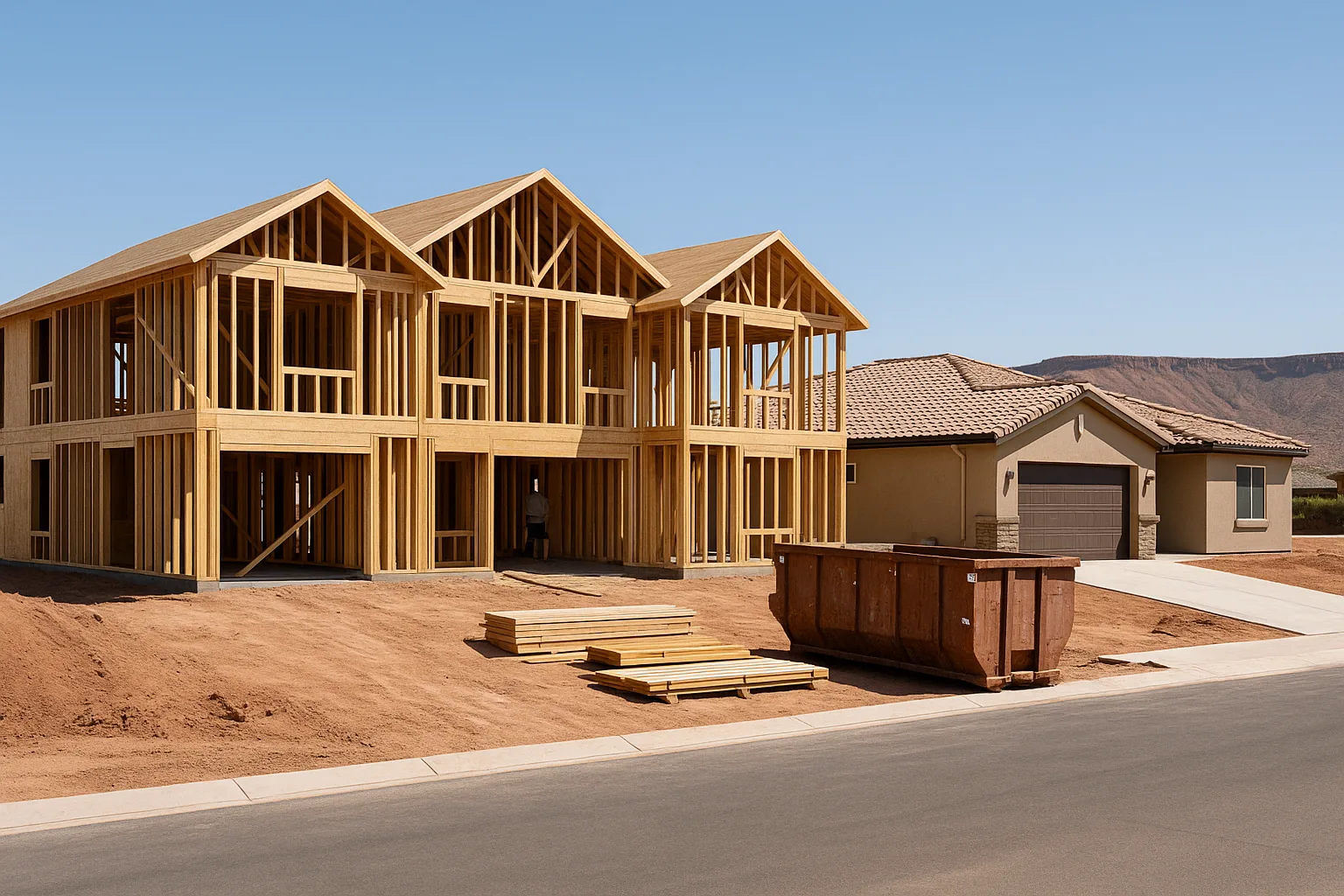
Washington County has been one of America's fastest-growing areas for years, and infrastructure doesn't always keep pace with rooftops. Traffic is heavier than the small-town image suggests — especially on the I-15 corridor, around the main commercial districts, and on the St. George–Hurricane run at commute hours. It's nothing like coastal-metro traffic, but people who moved here for quiet notice every added minute.
Near active development, add construction equipment noise, truck traffic, and the region's signature red dust, which finds its way into window tracks, air filters, and patio furniture when the wind picks up. None of this makes a new community a bad choice — but go in with open eyes. Before buying in a newer neighborhood, ask:
- Which nearby lots are still undeveloped, and what's planned for them?
- What future phases are mapped behind or beside the home?
- Are commercial pads, schools, roads, or higher-density housing proposed nearby?
- How many more years of build-out does the community expect?
- Is the home's landscaping and fencing complete, or is that on you?
And test-drive your actual routes at realistic hours — a weekday 5 p.m. run from the neighborhood to work, school, or the gym tells you more than any midday showing.
How the Nearby Southern Utah Communities Compare
Not everyone who wants the St. George lifestyle should live in the center of St. George. Here's the honest one-paragraph version of each neighbor:
Washington
Washington sits directly northeast and functions as St. George's twin — you cross between them without noticing. It offers slightly newer inventory on average and quick access to the Green Springs commercial corridor, while keeping its own residential identity. Check the specific neighborhood's development plans; this is one of the county's most active build zones.
Ivins
Ivins has the most dramatic red rock backdrop in the county — the cliffs behind Kayenta and Black Desert glow at sunset. It's quieter, more scenic, and a little farther from services. Strong fit for households prioritizing views and calm over convenience. More in why people are moving to Ivins.
Santa Clara
Santa Clara blends a historic small-town core (Swiss pioneer heritage, old orchards) with newer hillside neighborhoods. It reads as the most "established" feel in the metro while staying 10 minutes from the hospital and shopping. Older and newer housing coexist street by street, so evaluate properties individually.
Hurricane
Hurricane (locals say "Hur-ah-kun") is the adventure-side choice — closest to Sand Hollow, Quail Creek, and the trail networks, with a main-street feel that resembles an earlier stage of Southern Utah growth. Trade-offs: noticeably more wind in exposed areas, fewer dining and shopping options, and a longer drive to St. George services. We compare them head-to-head in St. George vs. Hurricane, and cover the town fully in the moving to Hurricane guide.
La Verkin, Toquerville, and Virgin
Farther out, Toquerville, La Verkin, and Virgin offer genuine small-town separation — more land, more quiet, more driving for everything. If that balance appeals, start with our Hurricane, La Verkin & Toquerville buyer's guide.
Who St. George Fits — and Who Should Think Twice
St. George tends to work well for:
- Retirees who value mild winters, healthcare access, golf, pickleball, and active-adult communities
- Remote workers whose income isn't tied to local wage levels
- Households relocating with significant equity from a prior home sale
- Hikers, cyclists, golfers, boaters, and anyone who wants outdoor time to be a daily default
- Families who want a safe, community-focused place to raise kids
- People who prefer desert sun and low humidity over four-season weather
Think twice if you are:
- Dependent on a wide local job market for specialized or high-earning W-2 careers
- Someone who genuinely hates intense heat, or works outdoors all summer
- Looking for big-city nightlife, extensive public transit, or luxury retail on your doorstep
- Expecting rural-Utah prices with St. George-level convenience
- In need of frequent, highly specialized medical care not offered locally
- Set on a fully built-out neighborhood with zero nearby construction
A Simple Scorecard for Deciding
The right move depends less on whether St. George is "better" than somewhere else and more on whether its trade-offs match your routine. Six questions to answer honestly:
- Climate: Can your household comfortably manage very hot summer afternoons — including pets, kids, and health considerations?
- Recreation: Will you actually use the trails, golf, parks, and reservoirs regularly, or do they just sound nice?
- Income: Is your income independent of the local job market, or have you verified local wages in your field?
- Entertainment: Is a quieter local scene plus occasional Vegas trips enough, or is frequent nightlife essential?
- Growth: Can you live happily alongside construction and an evolving community for the next decade?
- Location: Would a smaller neighboring town — Hurricane, Ivins, Toquerville — actually fit your balance of quiet and convenience better?
A Practical Relocation Checklist
A well-planned visit reveals more than any amount of online research. Before committing to a purchase or long-term lease:
- Visit in more than one season. A July visit is the single most valuable thing you can do.
- Drive ordinary errand routes at peak times. Grocery store, hospital, school, gym, freeway on-ramp — weekday morning and 5 p.m.
- Walk neighborhoods day and evening. Traffic, noise, lighting, construction activity, and overall feel change with the clock.
- Review nearby development plans. Vacant land next door is a question mark you should answer before closing, not after.
- Evaluate cooling seriously. A/C condition, sun exposure, shade, and real summer utility bills.
- Match the location to your actual life. A golf community, a 55+ neighborhood, a Desert Color new-build, and Hurricane acreage produce four very different daily routines.
- Budget the whole number. Taxes, insurance, HOA, utilities, and maintenance alongside the mortgage — not just the list price.
Is St. George right for you?
For families, retirees, and remote workers, the math typically pencils. Sunshine, safety, outdoor access, healthcare, and tax friendliness offset the summer heat and the thinner job market. For young professionals chasing a big-city career track or nightlife, Salt Lake City or out-of-state usually makes more sense — and that's fine; this town isn't trying to be that. If you accept the trade-offs with open eyes, St. George delivers a quality of daily life that's hard to replicate anywhere else in the Mountain West. And if you're still weighing Utah as a whole, zoom out with is Utah worth moving to?
Real-estate next steps
- Browse all St. George homes for sale — every active MLS listing, updated continuously.
- St. George market stats — current median sale, days on market, and sale-to-list ratio, refreshed monthly.
- St. George cost of living breakdown — line items so the relative-to-California savings turn into actual dollars.
- Best areas around St. George to live — neighborhood-by-neighborhood guide (Bloomington, SunRiver, Stone Cliff, Entrada, Santa Clara, Ivins).
- Retiring in St. George FAQ — the retirement-specific version of this article.
- Reach out to Best Utah Real Estate — our agents have walked SunRiver retirement homes, Stone Cliff luxury, Desert Color new-builds, and the older Bloomington / Bloomington Hills inventory.
Posted by Kristopher Larson
Frequently asked questions
Is St. George, Utah a good place to live in 2026?
What is the cost of living in St. George compared to other Utah cities?
How hot does it get in St. George in the summer?
What are the best neighborhoods in St. George to live in?
How is the job market in St. George?
Is St. George a good place to retire?
Does St. George, Utah get snow?
Is St. George affordable if you work a local job?
Are there quieter small-town alternatives near St. George?
St George, Utah housing market
A quick read on what homes are doing in St George right now — pulled live from the MLS.
Keep reading
More from the blog

Types of Metal Roofing: What Homebuyers Should Know

Real Estate Agent Recruiting Companies: How to Choose
7 HOA Management Software Options for Self-Managed HOAs