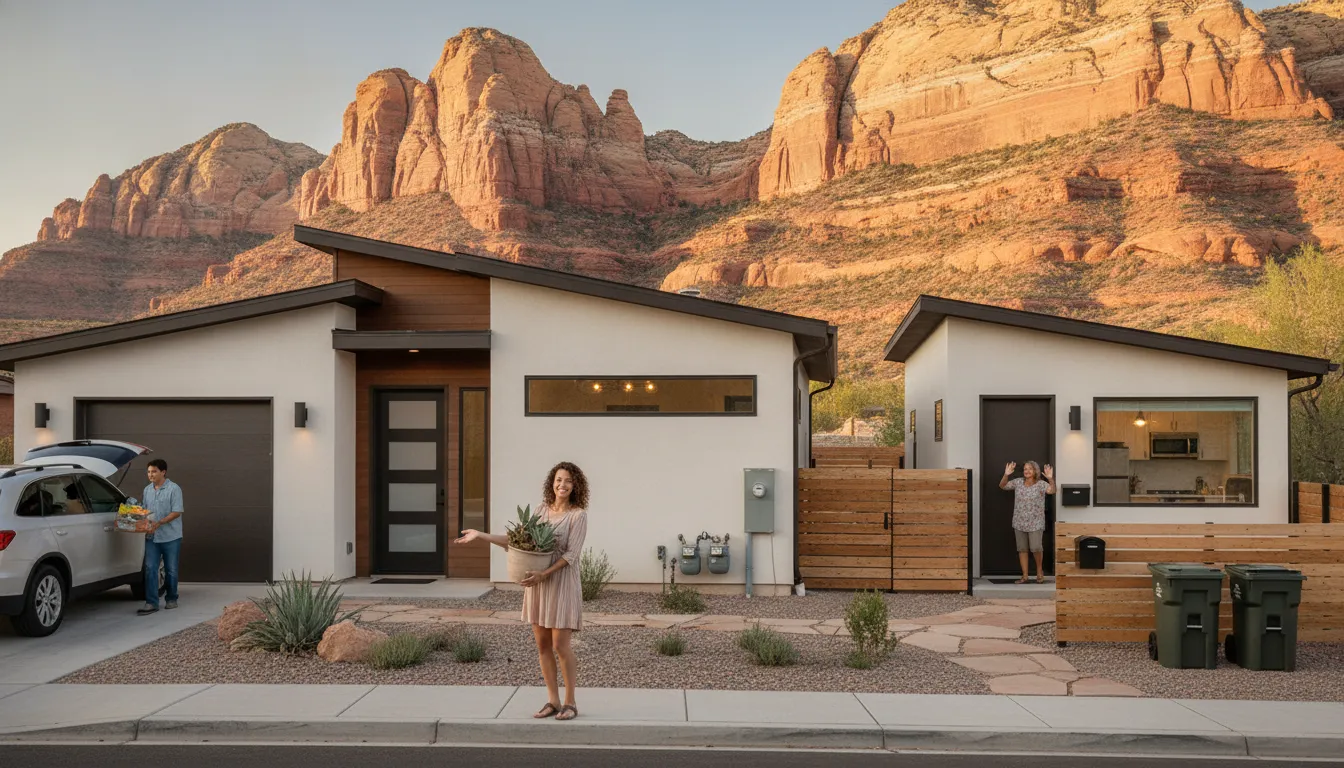
The Cost of Living in St. George, Utah: What You Need to Know
Discover the key financial aspects of living in St. George, Utah. From housing to income requirements, get the insights you need for a comfortable lifestyle.
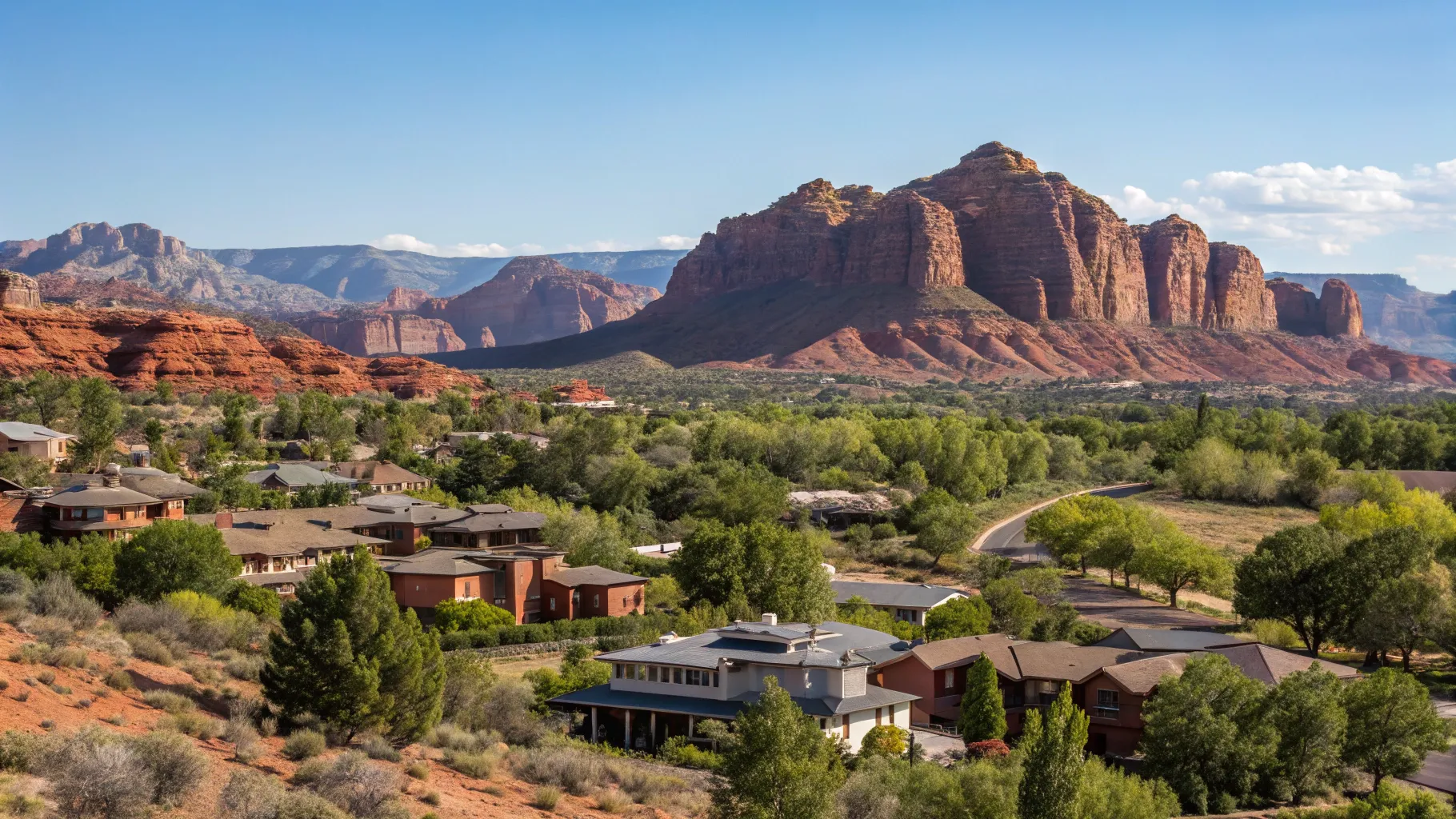
If you're considering a move to St. George, Utah, the cost-of-living math is one of the things that catches most newcomers off guard — in both directions. The line items below cover housing, utilities, groceries, transportation, and income requirements with current St. George numbers (not generic national-average figures). Ready to see what is on the market? Browse homes for sale in St. George.
Related Articles:
Pros and cons of living in St. George
St. George winter weather
St. George weather guide
How St. George stacks up
St. George's overall cost of living runs roughly 5-12% above the national average, with the gap driven almost entirely by housing. Utilities, transportation, and groceries all sit close to or slightly below the national average. Healthcare runs about average. Taxes are a notable advantage — Utah's 4.55% flat income tax and effective property-tax rate around 0.55% are both well below most coastal states.
Compared to other Utah cities: St. George is more expensive than Cedar City, Hurricane, or the city of Washington, but less expensive than the SLC metro, Park City, or Heber. Compared to nearby out-of-state markets, St. George is dramatically cheaper than coastal California (San Diego, LA, Bay Area), modestly cheaper than Phoenix or Las Vegas, and more expensive than Boise or rural Nevada/Arizona.
Housing: the biggest line item
Housing is where St. George's cost-of-living math diverges from the national average. The median sale price in St. George has run between roughly $500,000 and $600,000 in recent months — see St. George market stats for the current month's figure. That's roughly 25-35% above the U.S. median single-family price and reflects strong out-of-state demand (especially from California and Las Vegas), constrained land supply, and significant in-migration over the last decade.
Median rent for a 2-bedroom apartment typically runs $1,500-$1,900/month; a single-family 3-bedroom rental sits closer to $2,200-$2,800/month depending on neighborhood. New-construction homes in master-planned communities (Desert Color, Sunriver, Stone Cliff, Entrada) command meaningful premiums over older neighborhoods like Bloomington Hills and Dixie Downs. For a deeper neighborhood-by-neighborhood look, see discover the best areas around St. George.
Income required to live comfortably
Rough income bands that get most St. George households to comfortable (housing under 30% of gross income, room to save):
- Single adult: $60,000-$75,000/year. Rents a 1- or 2-bedroom comfortably; budgeting required if buying.
- Couple, no kids: $95,000-$120,000/year. Affords a starter home in older neighborhoods, two cars, modest savings.
- Family with kids: $130,000-$175,000/year. Affords a 3-4 bedroom home in established suburbs (Bloomington, Sunbrook, Coral Canyon) with room for childcare and activities.
- Retiree on fixed income: $4,500-$6,500/month covers most retired couples comfortably; communities like Sunriver, SunRiver, and Coral Canyon active-adult sections were designed for this band.
Most newcomers from California, NYC, or Boston find these numbers low; most newcomers from Texas, Idaho, or the Midwest find them high. The right reference is the lifestyle you're targeting, not where you're coming from.
Utilities: cheaper than most of Utah
Electricity is one of the practical bright spots: the city of St. George owns its electric utility and rates run lower than most of the country and most of Utah. Most newcomers from California or the East Coast are pleasantly surprised by the bill — until July and August, when summer A/C use can push monthly electric bills to $200-$350 on a typical single-family home (and $400+ on a larger home with a pool).
Natural gas (most St. George homes use it for water heating, furnaces in winter, and some cooktops) is supplied by Dominion Energy and runs typical Utah rates. Water service is provided by the city or by smaller municipal districts in Ivins, Santa Clara, and Washington; rates are reasonable but tiered, so heavy summer irrigation can push bills up. Internet is competitive — Google Fiber, Xfinity, and CenturyLink all cover most addresses.
Groceries and fuel
Grocery prices in St. George run roughly 2-5% above the national average and roughly in line with the Salt Lake City metro. Walmart, Smith's (Kroger), Harmons, and Costco are the main full-service options; smaller specialty stores (Sprouts, Trader Joe's is at the Promenade) round out the field. Most newcomers from California and the East Coast experience meaningful savings on groceries; most newcomers from Texas or the Midwest find prices roughly flat.
Gasoline runs typical Mountain West prices — usually within $0.20 of the national average, often noticeably cheaper than coastal California. The bigger fuel-budget consideration in St. George is total driving distance: the metro is spread out, public transit is minimal, and most households drive more than they did in their previous metro. A two-car family driving 25,000+ combined miles/year is normal here.
Transportation and registration
Utah vehicle registration is dramatically cheaper than most states ($200-$500/year for most passenger vehicles depending on age and weight, with discounts on older cars), and Utah doesn't levy a separate vehicle property tax like Virginia or some other states. Auto insurance rates are below national average for most carriers. The combination saves most multi-car households $400-$1,500/year compared to coastal California, Texas, or the Northeast.
Public transit is limited. SunTran operates fixed-route buses in St. George with reasonable coverage of the downtown, Dixie Tech, Utah Tech, and Red Cliffs Mall corridors, but most working-age residents own a car. The St. George Regional Airport (SGU) offers direct flights to Denver, Phoenix, Salt Lake City, Dallas, Las Vegas, and seasonal additions — useful for travelers, but the Las Vegas airport (LAS, about 2 hours south) handles most international and discount-carrier connections.
Healthcare and taxes
St. George Regional Hospital (Intermountain Health) is the major hospital and serves all of Washington County. It's a 359-bed Level III trauma center with cardiology, oncology, and obstetrics specialties — a meaningful retirement-age consideration in a region where the nearest comparable facilities are 2+ hours away. Most major insurance carriers participate.
Utah's tax structure is friendly to most St. George households: 4.55% flat state income tax, an effective property-tax rate around 0.55% (well below the national 1.1% average), and 6.10% state sales tax (Washington County adds local rates bringing the total to roughly 7.05-7.55% depending on city). Utah does not levy an estate or inheritance tax. Social Security benefits get a partial deduction at the state level, which matters more to retiree households than working-age ones.
Lifestyle and recreation costs
The biggest lifestyle differentiator vs. similar-COL cities is recreation access. Snow Canyon State Park (5 min from town), Zion National Park (40 min east), Sand Hollow and Quail Creek reservoirs (20-30 min), Pine Valley Mountains (45 min), and BLM lands totaling 600,000+ acres are all in the metro's backyard. National Park annual passes ($80) and Utah State Parks annual passes ($75) cover most year-round recreation for a fraction of what equivalent recreation costs in resort markets.
Golf is a notable budget consideration: St. George has 13+ golf courses with green fees ranging from $35 (municipal in summer twilight rates) to $200+ (Black Desert, Entrada). Heavy golfers usually buy an annual pass at a single course or join a country club — Sunbrook, Sunriver, and Coral Canyon all have active golf communities. Black Desert opened in 2023 and hosted a PGA Tour event in 2024.
What the cost of living math typically looks like
A reasonable rule of thumb for a comfortable household budget in St. George:
- Housing (mortgage + tax + insurance + HOA): 25-30% of gross income
- Utilities (electric + gas + water + internet): $250-$450/month average; higher in July-August
- Transportation (two cars + insurance + fuel + registration): $800-$1,400/month
- Groceries (family of 4): $900-$1,400/month
- Healthcare (premium + out-of-pocket, family of 4): varies dramatically by employer + plan
- Recreation/entertainment: $200-$500/month average for most households
Most newcomers find St. George's overall cost of living manageable — the housing is the only line that consistently runs above national average, and the lifestyle/recreation gains usually justify it. The households that struggle are typically the ones that underestimated the summer A/C bills and the total driving distance.
Real-estate next steps
- St. George market stats — current median sale price, days on market, and sale-to-list ratio for the most recent month.
- Pros and cons of living in St. George — full lifestyle and trade-off framework.
- Best areas to live around St. George — neighborhood-by-neighborhood guide.
- Reach out to Best Utah Real Estate — our agents will work backwards from your target monthly budget to figure out which St. George neighborhoods and home types actually fit.
Posted by Kristopher Larson
Frequently asked questions
What is the cost of living in St. George, Utah compared to the national average?
What is the median home price in St. George, Utah?
How much income do I need to live comfortably in St. George?
Are utilities expensive in St. George?
How does St. George compare to Las Vegas on cost of living?
Are groceries expensive in St. George, Utah?
St George, Utah housing market
A quick read on what homes are doing in St George right now — pulled live from the MLS.
Keep reading
More from the blog

Why People Are Moving to St. George, Utah in 2026
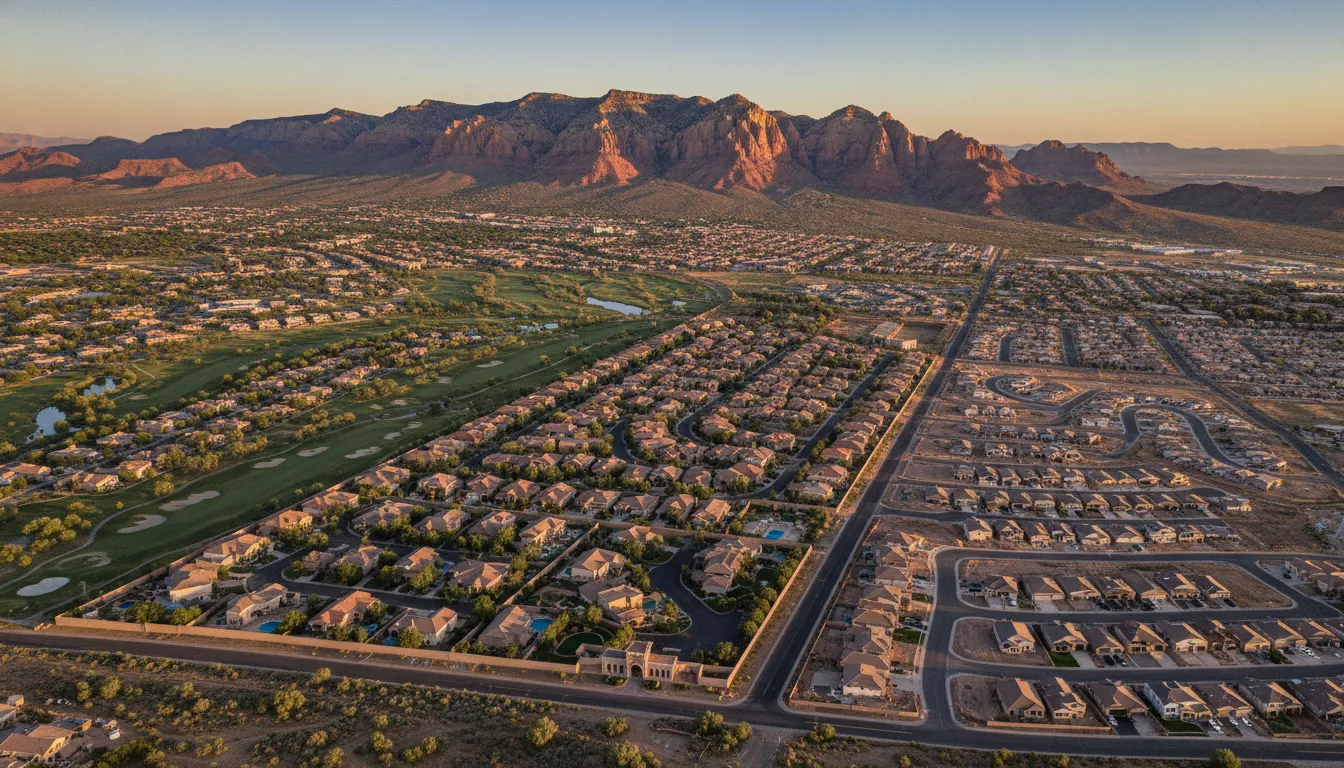
Moving to St. George Utah: Where to Live and What to Check

Pecan Valley Resort vs. Desert Color: St. George Rental Guide