The Homeowner's Guide to Foundation Repair and Basement Waterproofing
Learn why foundations shift, how basements leak, and how to tell cosmetic cracks from structural damage. Includes repair methods, costs, contractor tips, and a maintenance checklist.
The Homeowner's Guide to Foundation Repair and Basement Waterproofing
A foundation crack isn’t always obvious. It can start as a hairline mark near a basement window, then widen over time until a door won't latch anymore. Homeowners who catch these signs early save money, because foundation problems get harder to fix the longer they sit untouched. This guide explains why foundations shift and how basements let water in, along with what separates a cosmetic crack from real structural problems.
Whether you're trying to figure out if you need foundation repair contractors to stabilize your home, or you just want to keep normal wear from becoming a large repair bill, knowing the difference between drainage issues and structural damage saves both money and stress. We'll also cover typical costs and questions to ask a contractor, plus a short maintenance routine that keeps most foundation issues from starting in the first place.
What a House’s Foundation Does
Every home rests on one of a handful of foundation types: a full basement, a crawlspace, a concrete slab, or some combination built up through additions over the years. Whichever type yours has, the foundation carries the full weight of the structure above it and transfers that load into the soil below.
When the soil shifts or absorbs water unevenly, the foundation has to move with it. Cracks show up first, and settling or bowing walls tend to follow if the movement continues. Soil type and drainage play a big part in how much movement a foundation experiences. Different types of weather add to that stress, particularly freeze-thaw cycles in many regions that push and pull on wet soil in the winter.
Warning Signs to Watch Out For
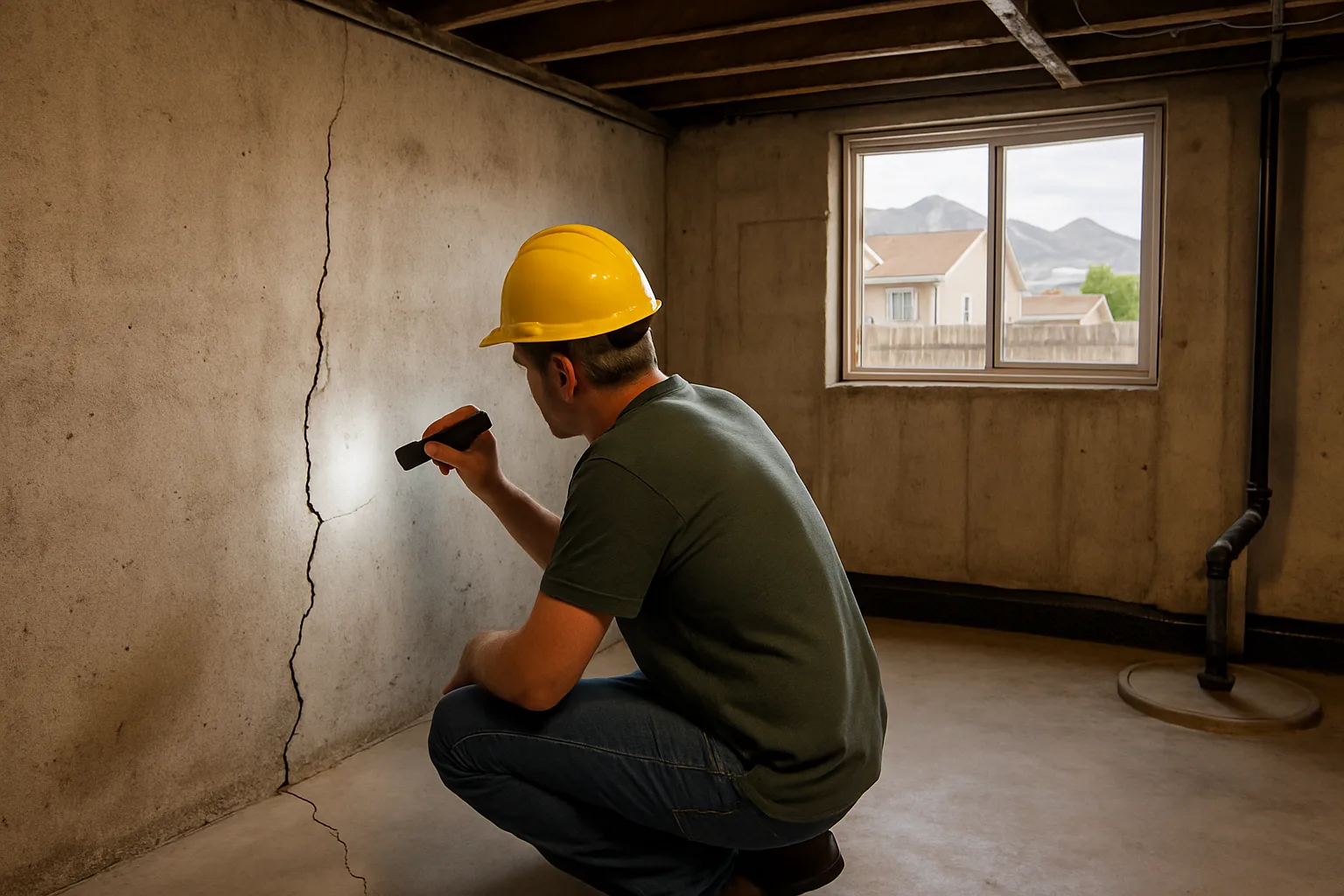
The good news is that not every crack means trouble. Hairline cracks in poured concrete are common and rarely signal anything beyond normal curing and minor settling. Pay closer attention when you notice the following:
Stair-step cracks running through masonry or brick
Doors and windows that suddenly stick or won't latch
Floors that slope or feel uneven underfoot
Basement walls that bow inward or lean
Water pooling near the foundation after rain
A single hairline crack usually calls for monitoring. Several of these signs appearing together, especially over a short period, however, strongly indicates active movement rather than historical settling.
What Causes Foundation Damage
Most foundation problems have to do with water, not the concrete itself. Poor grading lets rainwater pool next to the foundation instead of flowing away from it, and that repeated saturation puts pressure on basement walls, a force engineers call hydrostatic pressure. For detailed guidance on final grade slopes away from the foundation and how proper grading protects a structure over time, homeowners can consult resources published by The Building America Solution Center.
Soil type also plays a significant role. Expansive clay swells when wet and shrinks when dry, and that constant movement stresses a foundation more than a single flood would. A downspout dumping water two feet from the wall can undo an otherwise solid drainage system’s benefits all on its own.
Repair vs. Waterproofing
Before diving into a specific solution, homeowners should keep in mind that structural foundation repair and basement waterproofing solve different problems. At its core, waterproofing manages where water goes. Sump pumps and drainage membranes keep water out of a basement, and interior sealants add another layer of protection.
However, none of these measures stop a foundation from settling or a wall from bowing, because those are structural issues that originate in the soil. For this reason, both current property owners and those thinking of purchasing a home can benefit from this first-time buyer's guide that walks through what a home inspection should flag. Buyers can also review our pre-purchase plumbing inspection guide for hidden water issues. Some homes need just one of the two solutions, but many older homes need both: one to stop the water, and another to shore up the structure underneath it.
Common Foundation Repair Methods
Small cracks in poured concrete are usually sealed with epoxy or polyurethane injections, a fix that works well when the crack isn't actively growing. Settling foundations call for something more involved: push piers or helical piers driven down to stable soil, then used to lift and level the structure above.
For bowing basement walls, carbon-fiber strips or steel bracing are needed, both of which resist further inward movement without full excavation. Severe cases sometimes require partial rebuilding, not reinforcement. The right method always depends on how far the damage has progressed, not on which option costs less.
Basement Waterproofing Options
Exterior waterproofing means digging up the ground near the foundation, sealing the walls, and installing a drainage membrane that channels water to footing drains before it reaches the basement. It's disruptive and pricier than interior work, but it stops water before it gets inside.
Interior systems work from the inside. A drain tile system installed along the basement floor's perimeter collects water and routes it to a sump pump, which discharges it away from the house. For homes with ongoing seepage, professional basement waterproofing typically combines drain tile and a sump system, with a vapor barrier added to control humidity. Neither approach fixes structural cracks, since these are waterproofing measures, so it's essential to identify the root cause of foundation problems first.
Sump Pumps and Moisture Control
A sump pump only helps if it works when you need it. Test the primary pump twice a year by pouring water into the pit, and if your basement is finished or holds anything of value, add a battery backup that keeps working during any power outages.
Moisture that isn't drained properly doesn't just damage flooring; it creates the conditions mold needs to grow. The EPA's A Brief Guide to Mold, Moisture and Your Home explains why controlling dampness is the only effective long-term fix, since cleaning mold once it’s visible is already one step behind the problem. If you don’t stop the water source, mold will just come back within weeks. Keeping basement humidity below 60% with a dehumidifier goes a long way toward preventing that cycle.
When to Call a Professional
Some situations are serious enough that they don't leave room for a wait-and-see strategy. Cracks that widen visibly over a single season, walls that bow more than an inch, floors that have dropped noticeably, or doors that suddenly won't close all warrant an urgent inspection by an expert.
The same goes for basements that flood repeatedly despite previous repairs, since that pattern usually means the original fix addressed a symptom instead of the source. If a flood or a major leak has already soaked framing, drywall, insulation, or subfloor, calling a team that handles water damage restoration quickly matters almost as much as fixing the leak itself, since wet materials left for more than a day or two start growing mold. See also what full water restoration covers beyond drying.
What These Repairs Typically Cost
Foundation repair costs vary greatly depending on scope. A simple epoxy crack injection might run a few hundred dollars, while underpinning with push piers can reach five figures once a contractor has to lift and stabilize a large section of wall.
Waterproofing costs fall in a similar range. A single sump pump installation costs a lot less than a full exterior excavation and membrane system. Soil conditions and the affected area’s size increase expenses, and difficult access pushes that number up even more. Get a written estimate that clearly states the specific method being used rather than a single lump sum, so you can compare it against other service providers if you need to.
Choosing the Right Contractor
Rushed decisions are how homeowners end up paying for repairs they didn't need. Ask for the contractor's license and insurance upfront, and request references from similar jobs, ideally from the past few years, so you can see whether the fix held up. A written scope of work matters more than a verbal promise, since it explains exactly what's being repaired and how.
If you're planning to sell your home and trying to decide if hiring a contractor is worth it, these tips for selling a home fast make the case for an honest pre-inspection report. It builds trust with prospective buyers and provides realistic repair estimates that can nudge the needle on the closing price if you decide to tackle them first. And when pressed for time, be skeptical of any professional who pushes the most expensive repair without explaining why cheaper options won't work.
Quick Maintenance Checklist
A few habits catch most problems before they become serious:
Clean gutters and check downspouts each season, with water discharging at least a few feet from the foundation
Check the basement after heavy rain to see if there’s standing water or new dampness
Test the sump pump before spring runoff and again before winter
Watch existing cracks for changes in width or length, and take photos every few months
Keep large trees and shrubs a reasonable distance from the foundation, since deep roots disturb soil and drain lines
Final Thoughts
Foundation and basement problems rarely go away on their own, and trying to treat the visible symptom, whether a water stain or a door that won't latch, without diagnosing the underlying cause usually means the repair won’t work or will cost more in the long run. Start with an inspection and get a clear, specific scope of work before any repair begins. Address drainage first, since it's often the root cause behind both cracks and basement leaks. Handled early, most of these issues stay minor and relatively inexpensive.
Frequently asked questions
Can foundation cracks be repaired permanently?
Is basement waterproofing worth the cost?
Does homeowners insurance cover foundation damage?
How do I know if a foundation crack is serious?
What is the difference between foundation repair and waterproofing?
Keep reading
More from the blog

Essential Property Management Maintenance Tools for Landlords
Common Roofing Problems After Heavy Rain and Prevention

How Pergola Manufacturing Is Growing in the USA