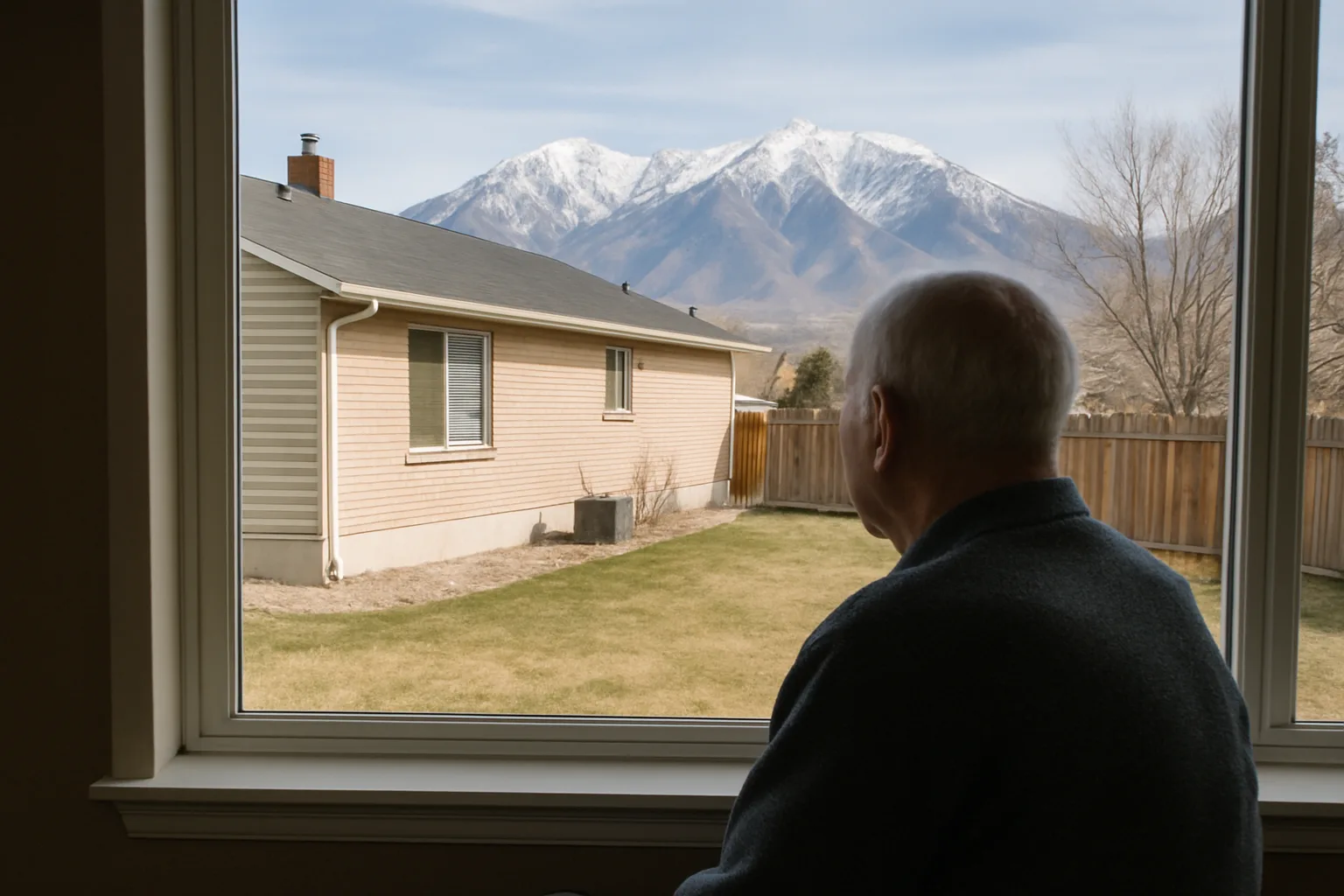
Staying Put After 65: Utah Programs That Help Seniors Keep Their Homes in 2026
Rising property taxes, heating bills and repairs push many older Utahns toward selling. Here are the state, county and nonprofit programs that help seniors stay home in 2026, and how to weigh aging in place against downsizing.
For many older Utahns, the house is paid off but the costs of keeping it are not. Property tax bills rise with valuations, winter heating bills arrive on a fixed income, and a roof, furnace or set of stairs that was manageable at 60 can become a real problem at 80. Selling is one answer. For homeowners who would rather stay, Utah has a patchwork of state, county and nonprofit programs that can cover part of the gap.
This guide sorts those programs by the problem they solve: taxes, utility bills, energy efficiency, repairs and accessibility, and help with daily living. It closes with a short look at reverse mortgages and a practical way to weigh aging in place against downsizing in 2026.
Start With the Area Agency on Aging
Utah's Division of Aging and Adult Services works through local Area Agencies on Aging, and every county is assigned to one. Some are regional, such as the Five County Area Agency on Aging in Southern Utah and the Bear River Area Agency on Aging in the north; others are run through county government, such as Davis County's senior services. These offices are the most useful first call because they know which repair, meal, caregiver and in-home programs are funded locally right now. In Utah, Wasatch and Summit counties, the Mountainland senior helpline (801-229-3804) offers the same kind of referral.
Property Taxes: Relief Exists, but Counties Run It
Utah offers several property tax programs for older and lower-income homeowners, including a homeowner's credit (often called the circuit breaker) for qualifying owners age 67 and older, a low-income abatement, and deferral options that postpone taxes rather than forgive them. Most applications go through the county, not the state, and they come with filing deadlines. Income limits, credit amounts and filing dates for this year are covered in detail in this breakdown of Utah's 2026 property tax increases and relief programs, so they are not repeated here. The key point for seniors is to check each program's renewal rules, because some, such as the low-income deferral, must be renewed with a new application every year.
Utility Bills: The HEAT Program
The Home Energy Assistance Target program, known as HEAT, helps eligible low-income Utah households pay heating and other energy bills. It is administered by the Utah Department of Workforce Services and funded through the federal Low Income Home Energy Assistance Program (LIHEAP). Key details from the state's HEAT program page:
- Seniors can apply first. Households that include someone age 60 or older, a person with a disability or a child under 6 can apply starting October 1. Applications from the general public are processed starting November 1.
- Income limit. Total household income must be at or below 150% of the federal poverty level, and the household must be responsible for paying its home energy costs.
- Shut-off help. Households in danger of a utility shut-off can contact their local HEAT office about crisis assistance.
- Funding can run out. The program year runs October 1 through September 30 or until federal funds are exhausted, and the state page posts current notices about payment timing.
Applicants typically need copies of current utility bills, proof of all household income from the month before applying, and proof of disability or eligible medical expenses where relevant. Seniors with high out-of-pocket medical costs should keep those receipts, because the program considers eligible medical expenses.
Weatherization: Lower Bills Without a Monthly Payment
The Weatherization Assistance Program makes energy-efficiency improvements to homes of eligible low-income households. The state says participating households average nearly 35% in energy savings, or about $583 per year, after the work is finished. Key points:
- Households at or below 200% of the federal poverty level, or current HEAT recipients, may qualify.
- Priority goes to elderly and disabled residents, households with high energy use, emergencies and homes with preschool-age children.
- For homeowners, the work comes at no cost. Renters may need the landlord to cover part of it.
- Applications go to the regional agency serving the county, such as Utah Community Action for Salt Lake, Davis, Weber, Morgan and Tooele counties, Mountainland Association of Governments for Utah, Wasatch and Summit counties, and Five County Association of Governments for Beaver, Iron, Washington, Garfield and Kane counties. Applications are prioritized and placed on a waiting list.
Applicants for HEAT can ask for a weatherization referral at the same time, which saves a step.
Home Repairs and Accessibility Changes
There is no single statewide senior home-repair program in Utah. Help comes from cities, housing nonprofits and regional governments, and it varies a great deal by county. Examples from Utah County and the Wasatch Back show the range:
- Habitat for Humanity of Utah County runs a repair program with three parts, including an Aging in Place component for seniors and veterans that covers ramps, rails, doorways, bathrooms and grab bars. Applicants must own and live in the home in Utah County, have household income below 80% of area median income, complete 10 hours of volunteer service and pay a project fee based on the repair cost and income.
- City rehabilitation programs. Orem offers grants or loans of up to $15,000 to fix critical damage or immediate health and safety hazards for homeowners below 80% of area median income, and Provo lists emergency repair grants for income-eligible residents.
- Free safety assessments. ASSIST, a Salt Lake City nonprofit design center, can assess a home, usually at no cost, and suggest safety modifications, with a focus on preventing falls on stairs and in bathrooms.
- Regional loan programs. Mountainland Association of Governments runs a single-family rehabilitation loan program covering items such as roof replacement and wheelchair ramps in Utah, Wasatch and Summit counties.
Other counties have their own versions, which is why the Area Agency on Aging call comes first. Waiting lists are common, so it makes sense to apply before a minor issue becomes an emergency.
Help With Daily Living at Home
Staying home often depends less on the house and more on getting help inside it. Utah's Division of Aging and Adult Services lists several programs that support older adults who want to remain at home:
- Alternatives Program. For low-income older adults who need individualized in-home services to stay in their own homes and maintain independence.
- Medicaid Aging Waiver. Provides services such as help with household tasks for people age 65 or older who need a nursing-facility level of care and meet Medicaid financial eligibility. Local Area Agencies on Aging handle intake.
- Caregiver support. Serves unpaid caregivers of older adults and people with dementia with counseling, education, support groups, respite care and supplies, with no low-income requirement.
- Medicare counseling (SHIP). Free, objective help comparing Medicare options at 800-541-7735.
Families should ask the local agency which services, including any home modifications, are covered in their county, since benefits and waiting lists differ.
Reverse Mortgages: Useful for Some, Not a Cure-All
A reverse mortgage lets homeowners convert part of their equity into cash without a monthly mortgage payment. The most common type, the Home Equity Conversion Mortgage, is only for homeowners 62 and older. Borrowers must keep living in the home as their principal residence, keep paying property taxes and homeowners insurance, and maintain the property. The loan is repaid when the borrower no longer lives in the home, often through a sale by heirs. Falling behind on taxes or insurance can put the home at risk, so a reverse mortgage works best alongside, not instead of, the tax and utility programs above. A fuller explanation is in this guide on how reverse mortgages work for Utah seniors.
Aging in Place or Downsizing: A Practical Test
Programs can stretch a budget, but they do not change a floor plan. A few questions help sort out whether staying makes sense:
- Can daily life happen on one level? A bedroom, full bathroom, kitchen and laundry on the main floor make aging in place far easier. If not, estimate the cost of a stair lift or main-floor bathroom.
- What will the next 10 years of repairs cost? A roof, furnace, water heater and windows near the end of their lives can add up faster than assistance programs can cover.
- How far is help? Distance to family, a hospital, a grocery store and public transportation matters more each year, especially after driving becomes harder.
- Does the yard still fit? Snow removal and large lawns are real costs for owners who must hire them out.
Consider a hypothetical retired couple in a two-story Utah County home with a basement laundry room. Weatherization and a HEAT grant might trim their winter bills, and a repair program might install grab bars. If the only full bathroom is upstairs, though, a move to a single-level home may solve more problems than any grant. Downsizers often compare single-story homes in Ogden or 55-plus communities in St. George, where some associations take over exterior and yard upkeep.
Bottom Line
Utah seniors who want to stay home have more support than many realize: county property tax relief, HEAT for energy bills, free weatherization for eligible owners, local repair programs and in-home services through the Area Agencies on Aging. Most require an application, income documentation and patience with waiting lists, so the best time to apply is before the money runs short. For households weighing a move instead, current listings and neighborhood data are available at Best Utah Real Estate.
Frequently asked questions
What programs help Utah seniors stay in their homes?
The main options are county-run property tax relief, the HEAT program for energy bills, the Weatherization Assistance Program, city and nonprofit home repair programs, and in-home services such as the Alternatives Program and the Medicaid Aging Waiver. The local Area Agency on Aging is the best first call because it knows which programs are funded in each county.
When can Utah seniors apply for HEAT utility assistance?
Households that include someone age 60 or older, a person with a disability or a child under 6 can apply starting October 1, ahead of the general public on November 1. Household income must be at or below 150% of the federal poverty level, and funding can run out before the program year ends September 30.
Is weatherization free for Utah homeowners?
For eligible homeowners, yes. The Weatherization Assistance Program serves households at or below 200% of the federal poverty level or current HEAT recipients, with priority for elderly and disabled residents. The state reports average savings of nearly 35%, about $583 a year. Renters may need their landlord to share the cost.
Does Utah have property tax relief for seniors?
Yes. Utah offers a homeowner's credit for qualifying owners age 67 and older, a low-income abatement and county deferral programs. Applications are filed with the county, deadlines apply, and some programs, such as the low-income deferral, must be renewed each year.
Who qualifies for Utah's Medicaid Aging Waiver?
The Aging Waiver serves people age 65 or older who need a nursing-facility level of care and meet Medicaid financial eligibility. It provides services such as help with household tasks so people can remain at home. Applications start with the local Area Agency on Aging.
Is a reverse mortgage a good way for Utah seniors to stay in their home?
It can help some homeowners, but it has strings. The most common type is limited to owners 62 and older, who must live in the home as their principal residence, keep paying property taxes and insurance, and maintain the property. The loan is repaid when the borrower no longer lives there, often through a sale.
Keep reading
More from the blog
Your Utah Cost Segregation Questions, Answered!
How Noisy Is the Home? A Buyer's Noise Check Guide
Photos of Your Utah Rental Are Worth Money at Tax Time