Living Near Utah's Ski Resorts: Which Towns Fit Which Mountains
Utah has 15 ski resorts, and the towns near them range from resort-village condos to suburban homes at a canyon mouth. A look at drive times, winter roads, pass access and housing trade-offs for 2026.
A house picked for powder days still has to work on the other 300-plus days of the year. That is the tension behind most ski-town searches in Utah. The state has 15 ski resorts, and they are spread from Logan Canyon near the Idaho line to Brian Head above Cedar City, so "living near the slopes" can mean a resort-village condo, a farmhouse in a mountain valley, or a suburban rambler ten minutes from a canyon mouth. Each choice comes with a different commute, a different winter driving routine and a very different price.
This guide is organized by the towns buyers actually shop in, not by which mountain has the best snow. For each area it covers how people get to the lifts, what the roads do in a storm, and what kind of housing is on the market.
Measure "Close" in Road Conditions, Not Miles
Almost every Utah resort is reached by a canyon road or a mountain highway, and those roads behave differently from the valley floor. During storms the Utah Department of Transportation and the Utah Highway Patrol can put the state's traction law into effect on routes such as I-80 in Parleys Canyon and US-40 in Summit and Wasatch counties. Under the standard rule, all-wheel and four-wheel drive vehicles need at least M+S tires on all four wheels, while two-wheel drive vehicles need tires carrying the three-peak mountain snowflake symbol or chains on the drive wheels. In Big and Little Cottonwood canyons, a stricter version applies when the warning lights outside the canyons are flashing, including a minimum tread depth of 5/32 inch.
Avalanche control adds another variable. Roads to several resorts close for hours, and occasionally for days, while crews bring down unstable snow. A home that is 20 minutes from the lifts on a clear morning can be cut off from them on the best powder day of the season. Before choosing a neighborhood, buyers should drive the route on a weekend morning in January, not on a sunny afternoon in September.
Park City: Two Major Resorts and a Bus System That Works
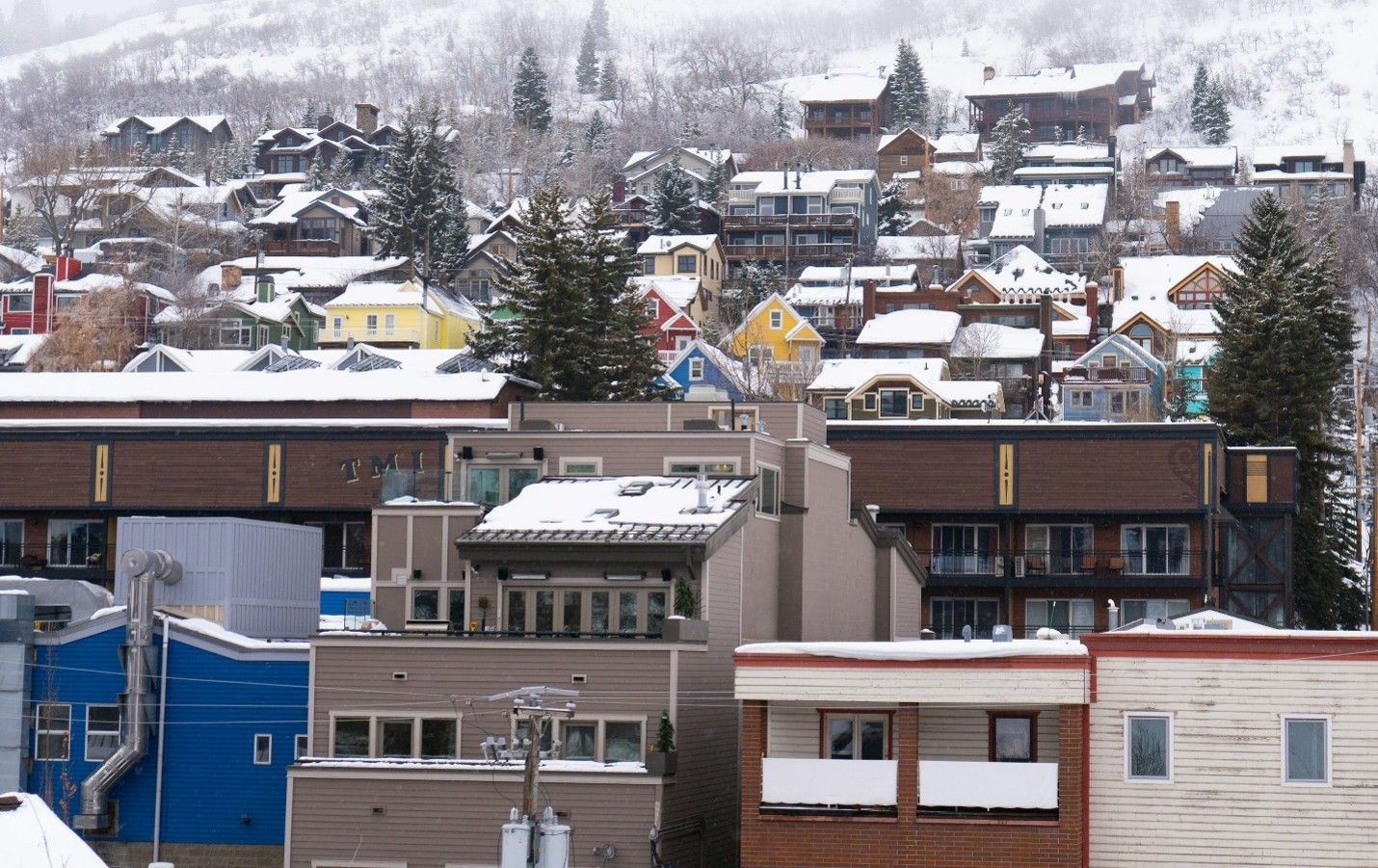
Park City is the most complete ski town in the state. Park City Mountain has been described as the largest ski resort in the United States since its 2015 connection with Canyons, at roughly 7,300 skiable acres, and it sits on the Epic Pass. Deer Valley, on the Ikon Pass, has more than doubled its footprint in the last two seasons. Daily life is easier here than in most mountain towns because Park City Transit and High Valley Transit both run fare-free buses connecting Main Street, Kimball Junction, Canyons Village and Deer Valley.
The trade-off is cost. Park City prices sit well above the Wasatch Front average; the current median list price is $2,249,750. Condos and townhomes near the base areas tend to carry high HOA dues, and many are bought as second homes or rentals, which means quieter neighbors in spring and fall and full parking lots in February. Buyers who want a primary residence often look to Snyderville Basin neighborhoods with more year-round households and shorter drives to I-80.
Heber City and Midway: The New Back Door to Deer Valley
The Heber Valley used to be a commuter base for Park City skiing rather than a ski address of its own. That changed when Deer Valley opened its East Village gondola on December 27, 2025. The East Village base sits off US-40 near Jordanelle Reservoir, about 15 minutes from Heber City, and the gondola climbs roughly 2,570 vertical feet to Park Peak. The resort set aside about 1,200 day-skier parking spaces there for the 2025–26 season.
For buyers, that makes the valley one of the more practical ski options in the state. Lots are bigger than in Park City, many homes are primary residences, and the valley has its own grocery stores, schools and Intermountain's Heber Valley Hospital. Midway adds a strong Swiss heritage, golf, and quick access to the Soldier Hollow Nordic Center, a 2002 Olympic venue with more than 20 miles of public trails. The current median list price in Heber City is $1,245,000, and in Midway it is $949,900. The drive is not risk-free: US-40 is one of the routes covered by the traction law, and fog and blowing snow near Jordanelle can slow the trip.
Cottonwood Heights and Sandy: Four Resorts From a Suburban Address
Alta, Snowbird, Brighton and Solitude are all reached through Big and Little Cottonwood canyons, and the neighborhoods closest to the canyon mouths are in Cottonwood Heights and the east side of Sandy. This is the choice for people who want ski access and a normal Salt Lake Valley commute in the same house. Downtown Salt Lake City, the airport and most large employers are a freeway drive away, and inventory is mostly standard single-family homes rather than resort condos.
The challenge is canyon traffic. On storm weekends, lines to enter Little Cottonwood Canyon can back up well into the neighborhoods. UDOT's long-term plan for that canyon is phased. Expanded bus service and a congestion toll come first, with a 2028 target date reported in June 2026. A gondola is the final phase. It is not yet funded and faces lawsuits, though the state bought a future base site on Highway 210 in Cottonwood Heights in May 2026. Buyers can follow updates on UDOT's Little Cottonwood Canyon project page. Living near the canyon mouth helps, since residents can leave early, wait out the worst of the line, or ski a weekday afternoon after a storm clears.
Eden and Huntsville: Ogden Valley's Two-Resort Setup
The Ogden Valley sits behind the mountains east of Ogden, with Pineview Reservoir in the middle and two resorts on either side. Powder Mountain is above Eden, reached by SR-158, which the resort describes as a consistent 14% grade. During and after big storms the road is often gated at the bottom while avalanche work is done above. Snowbasin, the 2002 Olympic downhill venue, is reached from Huntsville by SR-226, which branches off Trappers Loop (SR-167). Nordic Valley, a smaller area, is also in the valley.
Powder Mountain has made changes that matter for households. Starting in 2026–27, children 12 and under can ski free with a qualifying adult, senior or military pass, and new public lifts are planned for terrain that used to be reached only by guided tours. Housing in the valley ranges from Wolf Creek condos and townhomes to acreage and custom cabins. Year-round residents should plan for a longer drive to services in Ogden and a slower pace in the off-season.
Logan and Beaver Mountain: A College Town With a Family-Run Hill
Beaver Mountain is about 28 miles from Logan, up US-89 in Logan Canyon and then a short climb on SR-243. It is widely cited as the oldest ski area in the country continuously run by the same family, the Seeholzers. The setting suits buyers who want a university town with lower prices than the Wasatch Back and a small, uncrowded hill on weekends.
The canyon is the main caveat. US-89 has closed between Logan and Garden City for avalanches several times, including in January 2024, when the resort could not run lifts because guests could not reach it. Logan homes are mostly primary residences, so buyers trade on-mountain lodging for a full-service city with schools, healthcare and Utah State University nearby.
Provo, Orem and Sundance
Sundance Mountain Resort is up Provo Canyon on SR-92, so Provo and Orem residents can reach its lifts without crossing a mountain pass. The upper section of SR-92, the Alpine Loop, closes every winter, typically from about November until late spring, but the resort side of the road stays open from Provo Canyon. Utah County housing gives ski access as a weekend bonus rather than the reason for the purchase, and prices are closer to Wasatch Front levels than resort levels.
Brian Head: The Southern Utah Ski Town
Brian Head has the highest base elevation of any Utah resort, at well over 9,000 feet, and it sits about 33 miles from Cedar City, roughly a 40-minute drive up Parowan Canyon on SR-143. The town itself is small and made up mostly of cabins and condos, many of them second homes. For buyers in St. George, Cedar City or Las Vegas, it is the most direct route to a ski property. Owners should plan for heavy snow loads, long winters at that elevation, and limited services in town.
Which Pass Goes With Which Address
Pass choice often decides which neighborhood makes sense. For the 2026–27 season, according to Ski Utah:
- Epic Pass: unlimited at Park City Mountain.
- Ikon Pass: unlimited at Solitude; seven days each at Deer Valley (lift reservations required), Snowbasin and Brighton; seven days shared between Alta and Snowbird.
- Mountain Collective: two days each at Alta, Snowbasin and Snowbird.
- Power Pass: unlimited at Brian Head and Nordic Valley.
- Ski Utah Gold Pass: limited quantity, unlimited days at all 15 Utah resorts.
Powder Mountain, Sundance and Beaver Mountain sell their own season passes. A household that skis mostly on Ikon will get more from Cottonwood Heights or the Ogden Valley than from Park City, and the reverse is true for Epic.
Questions to Ask Before Buying Near a Resort
- Who plows the road? Private roads and HOA-maintained lanes are common in mountain subdivisions. Find out who clears them, how early and at what cost.
- Is a garage included? Winter parking rules, snow storage and a covered spot for the car matter more at elevation.
- What do the HOA and city allow for nightly rentals? Rules differ by city, county and subdivision, and they change. Confirm them in writing before counting on rental income.
- How is the roof built for snow? Snow loads, ice dams and roof shedding onto decks or driveways are worth a specific inspection question.
- Where is the closest hospital, school and grocery store? This matters more for a primary residence than for a weekend cabin.
- What happens on a closure day? Know the alternate route, or accept that some storm days will be spent at home.
Current listings across all of these towns, along with city pages for each market, are available at Best Utah Real Estate. Comparing two or three areas side by side on drive time, pass access and housing type usually narrows the search quickly.
Frequently asked questions
Which Utah towns are closest to ski resorts for full-time residents?
Park City has the most direct resort access, with Park City Mountain and Deer Valley inside the city area. Cottonwood Heights and east Sandy sit at the mouths of Big and Little Cottonwood canyons, Eden and Huntsville are in the Ogden Valley between Powder Mountain and Snowbasin, and Heber City is about 15 minutes from Deer Valley's East Village base. Each offers a different mix of housing, prices and winter driving.
Is Heber City a good place to live for skiing?
Heber City became more practical for skiers after Deer Valley opened its East Village gondola on December 27, 2025. The base area sits off US-40 near Jordanelle Reservoir, roughly 15 minutes from Heber City. The valley also offers larger lots and more year-round households than Park City, with a current median list price of $1,245,000.
Do I need snow tires to drive to Utah ski resorts?
During storms, UDOT can enforce the traction law on routes such as I-80 in Parleys Canyon and US-40. All-wheel and four-wheel drive vehicles need at least M+S tires on all wheels, and two-wheel drive vehicles need three-peak mountain snowflake tires or chains. Big and Little Cottonwood canyons have a stricter standard when the canyon warning lights are flashing, including a 5/32-inch minimum tread depth.
Which ski pass works best for each Utah ski area?
For 2026–27, the Epic Pass covers Park City Mountain. The Ikon Pass includes unlimited Solitude plus limited days at Deer Valley, Snowbasin, Brighton, Alta and Snowbird. The Power Pass covers Brian Head and Nordic Valley. Powder Mountain, Sundance and Beaver Mountain sell their own season passes.
Is the Little Cottonwood Canyon gondola being built?
Not yet. UDOT's plan begins with expanded bus service and congestion tolling, with a 2028 target date reported in June 2026. The gondola is a later phase that is not yet funded and faces lawsuits, though the state bought a future base parcel in Cottonwood Heights in May 2026.
How far is Brian Head from Cedar City?
Brian Head is about 33 miles from Cedar City, roughly a 40-minute drive up Parowan Canyon on SR-143. It has the highest base elevation of any Utah ski resort, and much of the town's housing is cabins and condos used as second homes. The current median list price in Brian Head is $309,990.
Keep reading
More from the blog
How to Vet a Home Services Contractor in Utah
Staying Put After 65: Utah Programs That Help Seniors Keep Their Homes in 2026
Your Utah Cost Segregation Questions, Answered!