Utah Leads the Nation in Dropped Home Insurance Policies. Here Is What to Do About It.
Insurers declined to renew 4.45% of Utah homeowners policies in 2025, the highest rate in the country. Here is why it happened, what to do after a nonrenewal notice, and how buyers can check insurance before they are locked into a purchase.
Insurance companies declined to renew 4.45% of Utah homeowners policies in 2025, about one in every 22. That is the highest rate in the country, according to data from the National Association of Insurance Commissioners (NAIC), and well ahead of second-place California at 2.93%. A year earlier Utah's rate was 1.73%.
For someone who already owns a home, a nonrenewal means shopping for coverage on a deadline. For a buyer, it means insurance belongs on the checklist before the due diligence deadline passes, not the week of closing. This article covers what the numbers show, why Utah jumped to the top of the list, and what to do in either situation.
What the Numbers Show
| State | Share of homeowners policies not renewed, 2025 |
|---|---|
| Utah | 4.45% |
| California | 2.93% |
| Arizona | Just over 2% |
| Nevada, New Mexico | Close to 2% |
| Idaho, Colorado | About 1.4% |
The Utah and California figures are from NAIC data as reported by KSL in October 2026. The other Western states are from the Mountain West News Bureau's September 2026 report on the same data. A nonrenewal is different from a cancellation: the insurer lets the policy run to the end of its term and then declines to offer another one.
Why Utah's Rate Jumped
Utah Insurance Commissioner Jon Pike described the situation to KSL as "kinda a perfect storm." Several things landed in the same year:
- Three insurers left the market. Pike said three large companies decided to get out of the homeowners business in Utah. Their customers were not renewed as a group, regardless of the individual home's risk. According to Pike, Utah's numbers would look much closer to normal without those exits.
- Wildfire exposure. Drought has meant more and stronger fires, and more homes are being built where neighborhoods meet undeveloped land, an area known as the wildland-urban interface.
- Higher rebuilding costs. Inflation in materials and labor raises what an insurer pays on every claim.
- Wind and hail. Stronger storms have added to losses across the West.
The department told KSL it believes the market is starting to stabilize. Pike also said he was not aware of anyone who had been unable to find replacement coverage. Whether the replacement is affordable is a separate question, and he acknowledged as much.
Utah Has No Insurer of Last Resort
Some states run a "FAIR plan," a backstop that sells basic coverage to owners no regular company will insure. Utah does not have one. An owner who cannot find a standard policy usually ends up in the surplus lines market, where specialty insurers write higher-risk homes.
Surplus lines policies are legal and sometimes the only choice, but they are not held to many of the rules that apply to state-licensed insurers. Regulators in neighboring Idaho warn that these policies can cost more, cover less and carry higher deductibles. Anyone offered one should read the exclusions and the deductible before comparing prices.
What to Do After a Nonrenewal Notice

- Read the reason. Under Utah's 2025 wildfire law, HB 48, an insurer that declines to renew a policy because of wildfire risk has to state the facts behind the decision with reasonable precision. A company leaving the state is a different situation from a problem with the specific property.
- Ask whether a fix would change the answer. If the reason is the roof, brush near the house or an old claim, ask the insurer in writing what would make the home eligible.
- Start shopping the day the notice arrives. Coverage has to be in place the day the old policy ends. A gap can raise the price of the next policy.
- Use an independent agent. Independent agents quote several companies at once, including ones that do not sell directly to the public.
- Tell the mortgage servicer. A lender requires insurance on a financed home. If coverage lapses, the lender can buy a policy and bill the owner for it. That lender-placed coverage is expensive and protects the lender's interest, not the owner's belongings.
- Document any mitigation. Photos and receipts for a new roof, cleared brush or ember-resistant vents give an underwriter a reason to say yes.
- Contact the Utah Insurance Department if the notice seems improper or no company will quote the home. The department takes consumer complaints and tracks which insurers are writing policies.
Premiums are the other half of the problem. The cost side is covered in what Utah buyers should budget for homeowners insurance.
What Buyers Should Do Before the Due Diligence Deadline
Insurance used to be a phone call near closing. In parts of Utah it now decides whether a purchase works at all.
- Get a written quote early. Ask for a real quote on the specific address in the first days of the contract, not an estimate based on the price.
- Ask the seller two questions. Who insures the home now, and has any insurer declined to renew or cancelled a policy on it?
- Check the property's wildfire exposure. Homes on foothill benches, in canyons and at the edge of open land get the closest look from underwriters. See buying a Utah home in a wildfire risk zone.
- Look at flood separately. A standard policy does not cover flooding. The October 2026 floods in Hurricane are a reminder; details are in flash flood risk in Hurricane and Southern Utah.
- Put the full premium in the payment. Lenders count insurance in the monthly payment, so a higher quote can change how much a buyer qualifies for.
- In a condo or townhome, ask about the HOA's master policy. Rising premiums on the association's policy show up later as higher dues or a special assessment.
Utah's purchase contract supports this. The buyer's due diligence expressly includes "the costs and availability of homeowners' insurance and flood insurance," so a buyer who cannot get acceptable coverage can cancel by the Due Diligence Deadline and get the earnest money back. The updated form is explained in what changed in Utah's new Real Estate Purchase Contract.
Where the Risk Is Concentrated
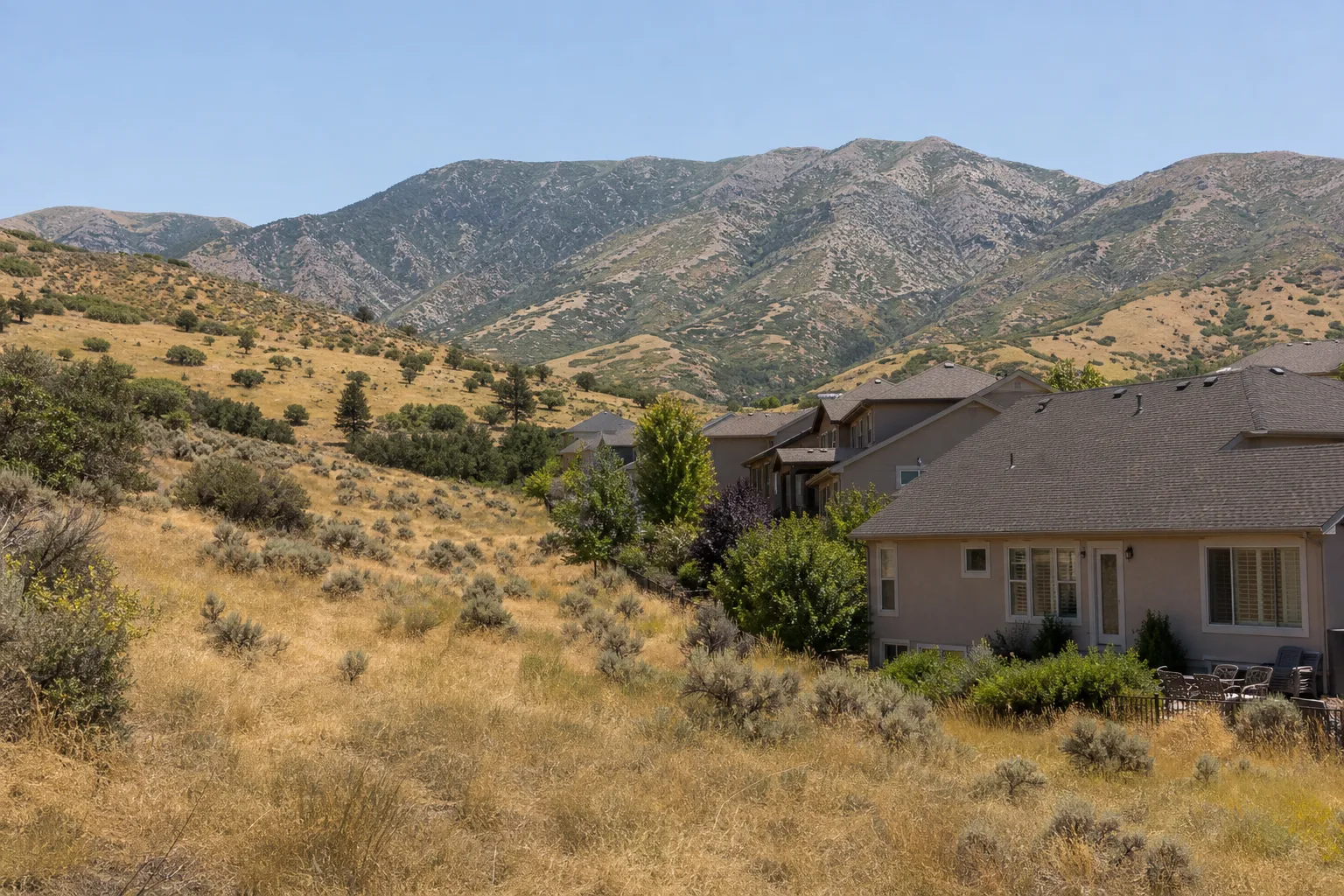
Nonrenewals tied to wildfire are most common where homes back onto wild land: the benches and canyons along the Wasatch Front, mountain communities around Park City and Summit County, and parts of Southern Utah. A house in a flat valley subdivision a few miles away may get standard quotes without trouble. The address matters more than the city.
That is also why the statewide number overstates the risk for a typical owner. Much of the 2025 jump came from companies leaving, and most of those customers found another insurer. The owners with the hardest search are the ones in high-exposure locations with an older roof or heavy vegetation near the house.
Steps That Make a Home Easier to Insure
- Roof: a newer roof with a fire-rated covering is the single biggest factor for many insurers.
- The first five feet: keep bark mulch, shrubs and firewood away from the walls; gravel or concrete is better.
- Vents and gutters: ember-resistant vent screens and clean gutters reduce the ways embers get in.
- Trees and brush: thin vegetation and remove limbs that hang over the roof.
- Water and plumbing: leak sensors and an updated water heater or supply lines help on the non-fire side, where many claims come from.
- Deductible: a higher deductible lowers the premium and can keep small claims off the record.
What Could Change
State Rep. Matt MacPherson told the Mountain West News Bureau the data is "very troubling" and that he is looking at possible legislation. Colorado passed a law in 2025 requiring insurers to account for a homeowner's mitigation work in their risk models, and Utah lawmakers may consider something similar when the 2027 session opens in January. Nothing has been proposed in detail yet.
Until then, the practical advice is the same for owners and buyers: treat insurance as part of the house, not an afterthought. Buyers comparing homes in different parts of the state can browse current listings on Best Utah Real Estate, including Salt Lake City and St. George.
Sources: National Association of Insurance Commissioners data as reported by KSL (Oct. 28, 2026) and the Mountain West News Bureau (Sept. 17, 2026); Utah Insurance Department statements to KSL; Utah HB 48 (2025).
Posted by Kristopher Larson
Frequently asked questions
What percentage of Utah homeowners policies were not renewed in 2025?
Insurers declined to renew 4.45% of Utah homeowners policies in 2025, about one in 22, according to National Association of Insurance Commissioners data. That was the highest rate in the country, ahead of California at 2.93%, and up from 1.73% in Utah in 2024.
Why are insurers dropping homeowners in Utah?
Utah's insurance commissioner pointed to three large insurers leaving the state's homeowners market, along with wildfire exposure, more homes built next to undeveloped land, and higher rebuilding costs. He said the numbers would look much closer to normal without the three companies that left.
Does Utah have a FAIR plan for homeowners who cannot get insurance?
No. Utah does not have a state insurer of last resort. Owners who cannot find a standard policy usually turn to the surplus lines market, where policies can cost more, cover less and carry higher deductibles.
What should a Utah homeowner do after a nonrenewal notice?
Read the stated reason, ask the insurer what would make the home eligible, and start shopping right away with an independent agent so there is no gap in coverage. Tell the mortgage servicer, and contact the Utah Insurance Department if the notice seems improper or no company will quote the home.
Can a Utah buyer cancel a purchase if they cannot get homeowners insurance?
Yes, if the due diligence condition applies and the buyer cancels by the Due Diligence Deadline. Utah's purchase contract lists the cost and availability of homeowners and flood insurance as part of the buyer's due diligence, and the earnest money is returned.
What makes a Utah home harder to insure?
Location next to wild land, an older roof, heavy vegetation close to the house and a history of claims are the most common reasons. A newer fire-rated roof, cleared space around the walls and documented mitigation work make a home easier to place.
Keep reading
More from the blog

Utah Property Taxes Are Due Nov. 30, 2026: How to Pay, What Late Costs and What 2026 Buyers Should Check
Utah's 35,000 Starter Home Goal Is a Quarter Done: What First-Time Buyers Can Use in 2026
Half of Young Utahns Own a Home in 2026, and 91% of Renters Can't Afford One: How First-Time Buyers Still Get In