
Utah's New Real Estate Purchase Contract: What Changed for Buyers and Sellers
Utah's updated Real Estate Purchase Contract took effect Nov. 1, 2026 and replaces the old form on Jan. 1, 2027. Here is what changed on earnest money, deadlines, smart home devices, HOA disclosures and move-out.
Almost every home sale in Utah is written on the same state form, the Real Estate Purchase Contract, usually called the REPC. A new version of that form took effect on Nov. 1, 2026. Agents can still use the old one through the end of the year, and starting Jan. 1, 2027 the new form replaces it.
The update is a cleanup more than a rewrite, but several changes affect real money: how much earnest money a seller keeps when a buyer's loan falls through, what happens to a doorbell camera or smart lock, and what a seller owes for staying past the possession date. This is a section-by-section look at the new form, based on the final text approved by the Utah Real Estate Commission and the Office of the Utah Attorney General.
This article explains the form in general terms. It is not legal advice. For a specific transaction, talk with a Utah real estate attorney.
Key Dates
- Nov. 1, 2026: the new REPC is effective and available for use.
- Through Dec. 31, 2026: either version may be used.
- Jan. 1, 2027: the old version may no longer be used, according to the Utah Association of Realtors' notice on the update.
A contract stays on the form it was signed on. A sale written on the old form in December that closes in January does not switch to the new one. For a walk through the contract as a whole, see how the Utah Real Estate Purchase Contract works.
The Changes at a Glance
| Topic | What the new form says | Section |
|---|---|---|
| Buyer conditions | One checklist on page one for due diligence, appraisal, financing and sale of the buyer's home | 3 |
| Deadlines | Separate Appraisal Deadline and Financing Deadline | 4 |
| Earnest money and financing | A percentage goes to the seller if the buyer cancels over loan terms; 50% if left blank | 3(c), 12.3 |
| Smart home devices | Included in the sale unless excluded in writing | 7.2 |
| EV chargers | A checkbox alongside washers, dryers and refrigerators | 7.3 |
| Special assessments | The contract names who pays an assessment approved before settlement | 8.2 |
| Seller's service contracts | The buyer does not take them over; the seller ends them at closing | 8.3(h) |
| Staying past possession | Holdover fee of at least $300 a day; seller gives keys and lock codes at closing | 9.3 |
| HOA documents | The reserve analysis is on the seller's disclosure list | 11(e) |
| Low appraisal | Buyer sends a complete copy of the appraisal with the cancellation | 12.2 |
| Move-out | Seller is not responsible for nail and screw holes from wall hangings | 13.2 |
| Notices | An emailed notice counts as received when it reaches the recipient's email system | 22 |
Buyer Conditions Move to One Checklist
Section 3 now lists the buyer's conditions in one place near the top of the form: due diligence, appraisal, financing, and the sale of the buyer's current home. Each one applies only if its box is checked. An unchecked box means that protection is not part of the deal, so the first page deserves a slow read before anyone signs.
The sale-of-home condition has its own catch. Checking the box is not enough. The form says a subject-to-sale addendum has to be attached, and if it isn't, the condition does not apply.
Separate Appraisal and Financing Deadlines
The earlier form used one combined financing and appraisal deadline. The new form lists them on separate lines in Section 4, so a contract can give the appraisal one date and the loan another. That matters in a slow market, where appraisals sometimes come in under the agreed price and the two questions get answered at different times.
If the home appraises below the purchase price, the buyer can cancel by the Appraisal Deadline and get the earnest money back. The written notice now has to come with a complete copy of the appraisal.
Earnest Money: The 50% Default
This is the change most likely to surprise a buyer. Under the financing condition, a buyer who is not satisfied with the loan terms can cancel after the Due Diligence Deadline and before the Financing Deadline. When that happens, part of the earnest money goes to the seller.
The new form sets that share as a percentage, chosen in Section 3(c). If neither box is filled in, the percentage is 50%. On a $10,000 deposit, a blank line means $5,000 to the seller and $5,000 back to the buyer.
- Cancel during due diligence: the full deposit goes back to the buyer.
- Cancel over loan terms before the Financing Deadline: the seller receives the Section 3(c) percentage, 50% unless the contract says otherwise.
- Loan fails after the Financing Deadline: the entire deposit goes to the seller as liquidated damages.
The first page now carries a plain warning beside the earnest money line: under certain conditions the deposit "may become totally non-refundable." Buyers stretching to qualify at today's rates should pick the percentage on purpose and know their dates. The trade-offs between loan types are covered in rate buydowns, assumable loans and ARMs for Utah buyers.
The deposit timeline is spelled out as well: the buyer delivers the earnest money to the buyer's brokerage within four calendar days of acceptance, and the brokerage has four more calendar days to deposit it. If that does not happen, the seller may cancel.
Smart Home Devices Stay With the House
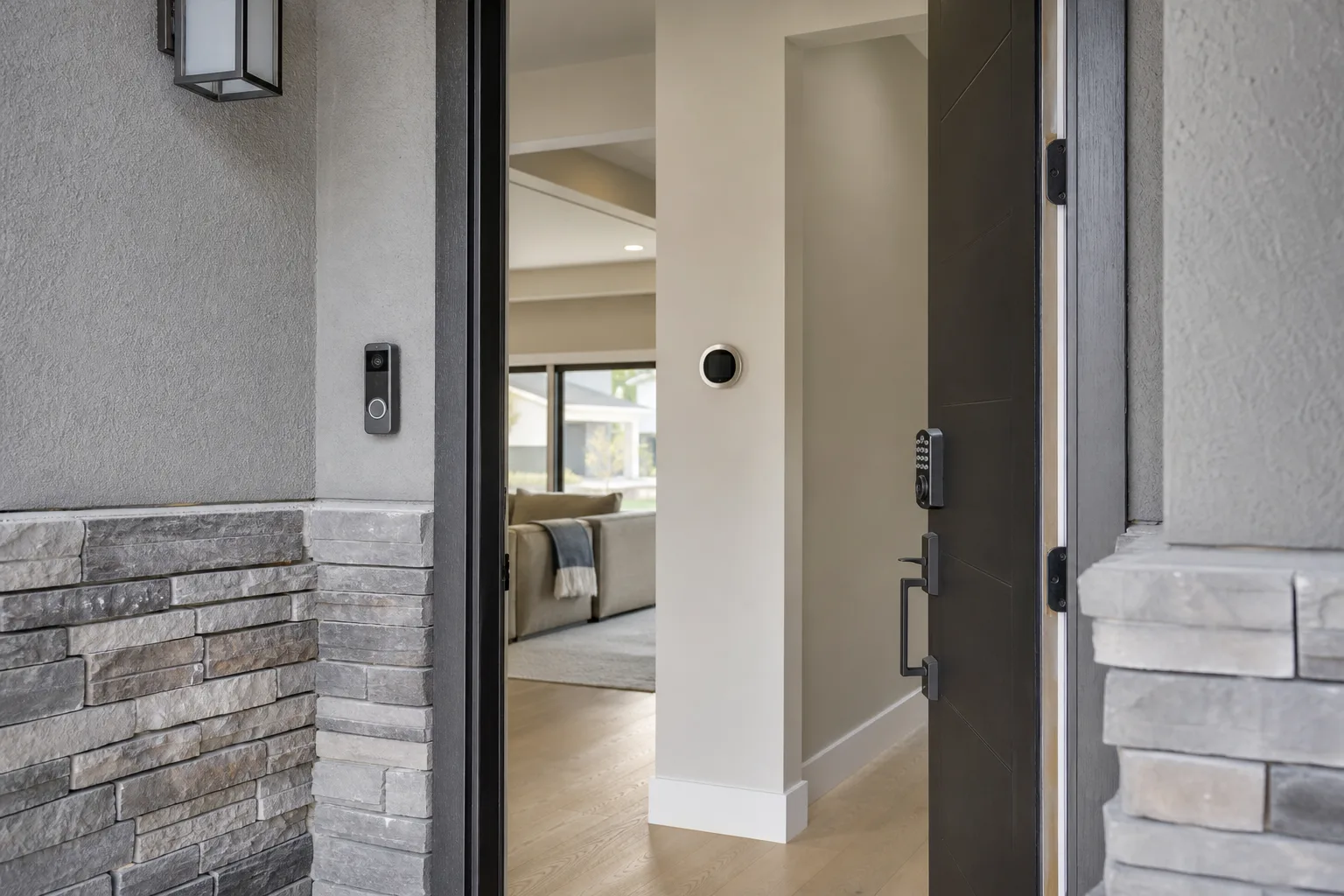
A new Section 7.2 covers home automation. Unless the contract excludes them, the sale includes all smart home devices the seller owns that are in place on the property, whether hard-wired or not. The form names security systems, thermostat controls, home monitors, automated locks, video doorbells and automated lighting, along with their dedicated controllers. Phones, tablets and laptops used to run those systems are not included.
Two practical points follow from that:
- Sellers: a device the seller plans to take, such as a video doorbell or a smart thermostat, has to be listed in the excluded items in Section 7.4. Otherwise it belongs to the buyer.
- Buyers: ask for the devices to be reset and removed from the seller's accounts, and confirm they work at the final walk-through, which now covers the Section 7.2 items. A standard inspection usually won't test them, as explained in why home inspections skip smart locks and entry systems.
Electric vehicle charging stations get their own checkbox in Section 7.3, next to washers, dryers and refrigerators. Those items transfer only if their box is checked.
The Seller's Service Contracts Do Not Transfer
Section 8.3(h) says the buyer is not obligated to take over the seller's personal service agreements unless both sides agree in writing. The form lists property management, short-term rental management, security system, pest control and landscaping agreements as examples. The seller is responsible for satisfying or ending them at closing.
For buyers of rental or vacation property, this is a prompt to ask early which contracts exist and which, if any, they want to keep. Existing leases and short-term bookings that run past closing are handled separately: the buyer takes title subject to them, and the seller cannot accept new short-term bookings after the Seller Disclosure Deadline without the buyer's consent.
Special Assessments Get Their Own Line
Section 8.2 asks the parties to choose who pays any special assessment approved before the Settlement Deadline by an HOA, a municipality or a special improvement district: the seller, the buyer, an even split, or another arrangement written in. In a condo or townhome community planning a new roof or road project, that checkbox can be worth thousands of dollars.
Staying Past the Possession Date Costs at Least $300 a Day
Section 9.3 is firmer about possession. A seller who does not hand over the home on time becomes a tenant at will, and the buyer can serve notice to begin eviction proceedings. The holdover fee is the amount written in the contract or $300 a day, whichever is greater, and the form treats it as liquidated damages, not rent.
The same section requires the seller to give the buyer a key and any keyless lock codes at closing. A seller who needs extra days after closing should arrange a written leaseback instead of relying on goodwill.
HOA Reserve Analysis Joins the Disclosure List
By the Seller Disclosure Deadline, the seller provides the HOA's most recent minutes, budget, reserve analysis and financial statement, along with the CC&Rs, bylaws, rules, and fee and fine schedules. The reserve analysis shows whether the association has been saving for big repairs or is likely to bill owners later.
Buyers looking at a community with shared roofs, roads or amenities should read it alongside the rules themselves. Two useful primers: what bylaws and CC&Rs are and Utah HOA rules that surprise buyers.
Smaller Changes Worth Knowing
- Nail holes: the seller still delivers the home broom-clean and repairs moving damage, but is not responsible for nail holes, screw holes or similar marks left by pictures and decorations.
- Email notices: a notice sent electronically is received when it enters the email system the recipient uses and can be retrieved, not when it is opened. A notice sent at 4:55 p.m. on a deadline day counts.
- Deadlines: performance is due by 5:00 p.m. Mountain Time on the stated date. If an earnest money date or the Settlement Deadline lands on a weekend or legal holiday, it moves to the next business day. Other deadlines do not get that extension.
- Insurance: the due diligence list includes the cost and availability of homeowners and flood insurance, a growing issue covered in what Utah buyers should budget for homeowners insurance.
- Folded-in terms: a 1031 exchange cooperation clause and a disclosure for buyers who are licensed agents or related to one are part of the main form.
- Marketing before closing: a buyer needs the seller's written consent to advertise the property for rent or resale before closing.
Related Forms Changed Too
Several addenda were updated to match. The FHA/VA Loan Addendum adds a right for the buyer to cancel when the appraisal requires repairs that cost more than the seller agreed to pay. The addendum for depositing earnest money with a title company clarifies the timing for delivery and deposit. The Seller Financing Addendum and a group of Utah Association of Realtors forms, including the due diligence resolution, short-term leaseback and short sale addenda, were adjusted so their section references line up with the new contract.
What Buyers Should Do
- Ask which version of the REPC the offer is written on.
- Check every box in Section 3 that should apply, and attach the addendum if the purchase depends on selling another home.
- Choose the earnest money percentage in Section 3(c) deliberately.
- Put the Due Diligence, Appraisal and Financing deadlines on a calendar with the 5:00 p.m. cutoff.
- List the smart devices and any EV charger expected to stay, and test them at the walk-through.
- Read the HOA reserve analysis before the Due Diligence Deadline.
First-time buyers can pair this with 10 tips for first-time home buyers in Utah.
What Sellers Should Do
- Write down every device and fixture that is leaving and list it as an excluded item.
- Gather service contracts and plan to cancel or pay them off by closing.
- Request the HOA's reserve analysis early so the disclosure deadline is not missed.
- Set a realistic possession date, or arrange a written leaseback.
- Have keys and lock codes ready for closing, and remove personal accounts from smart devices.
The contract is the same statewide, whether the home is in Salt Lake City, St. George or a small town in between. Current listings across the state are on Best Utah Real Estate.
Posted by Kristopher Larson
Frequently asked questions
When does Utah's new Real Estate Purchase Contract take effect?
The new REPC became effective and available for use on Nov. 1, 2026. Either version can be used through Dec. 31, 2026. Starting Jan. 1, 2027, the old version may no longer be used.
Do smart home devices stay with the house under the new Utah REPC?
Yes, unless the contract excludes them. Section 7.2 includes smart home devices the seller owns that are in place on the property, such as security systems, thermostat controls, automated locks, video doorbells and automated lighting. Phones, tablets and laptops are not included.
How much earnest money does a seller keep if a buyer cancels over financing?
If the buyer cancels over loan terms after the Due Diligence Deadline and before the Financing Deadline, the seller receives the percentage chosen in Section 3(c). If no box is checked, it is 50% of the deposit. If the loan fails after the Financing Deadline, the entire deposit goes to the seller.
What happens if a seller does not move out on time?
Under Section 9.3 the seller becomes a tenant at will and the buyer can begin eviction proceedings. The holdover fee is the amount written in the contract or $300 a day, whichever is greater.
Does a contract signed on the old form have to be redone?
No. A contract stays on the form it was signed on, even if the sale closes after Jan. 1, 2027. The new form is required for new offers written from that date.
What HOA documents does a Utah seller have to provide?
By the Seller Disclosure Deadline the seller provides the CC&Rs, bylaws, rules, fee and fine schedules, and the association's most recent minutes, budget, reserve analysis and financial statement, if the property is in an HOA.
Keep reading
More from the blog

Utah Property Taxes Are Due Nov. 30, 2026: How to Pay, What Late Costs and What 2026 Buyers Should Check

Utah's 35,000 Starter Home Goal Is a Quarter Done: What First-Time Buyers Can Use in 2026
Half of Young Utahns Own a Home in 2026, and 91% of Renters Can't Afford One: How First-Time Buyers Still Get In