Moving to Utah? Use These 5 Neighborhood Filters Before Buying
Moving to Utah is really a neighborhood decision, not a statewide one. This guide walks through five practical filters — the 15-minute rule, water and tax documents, commute testing, terrain, and future development — to help buyers compare shortlisted areas at the street level.
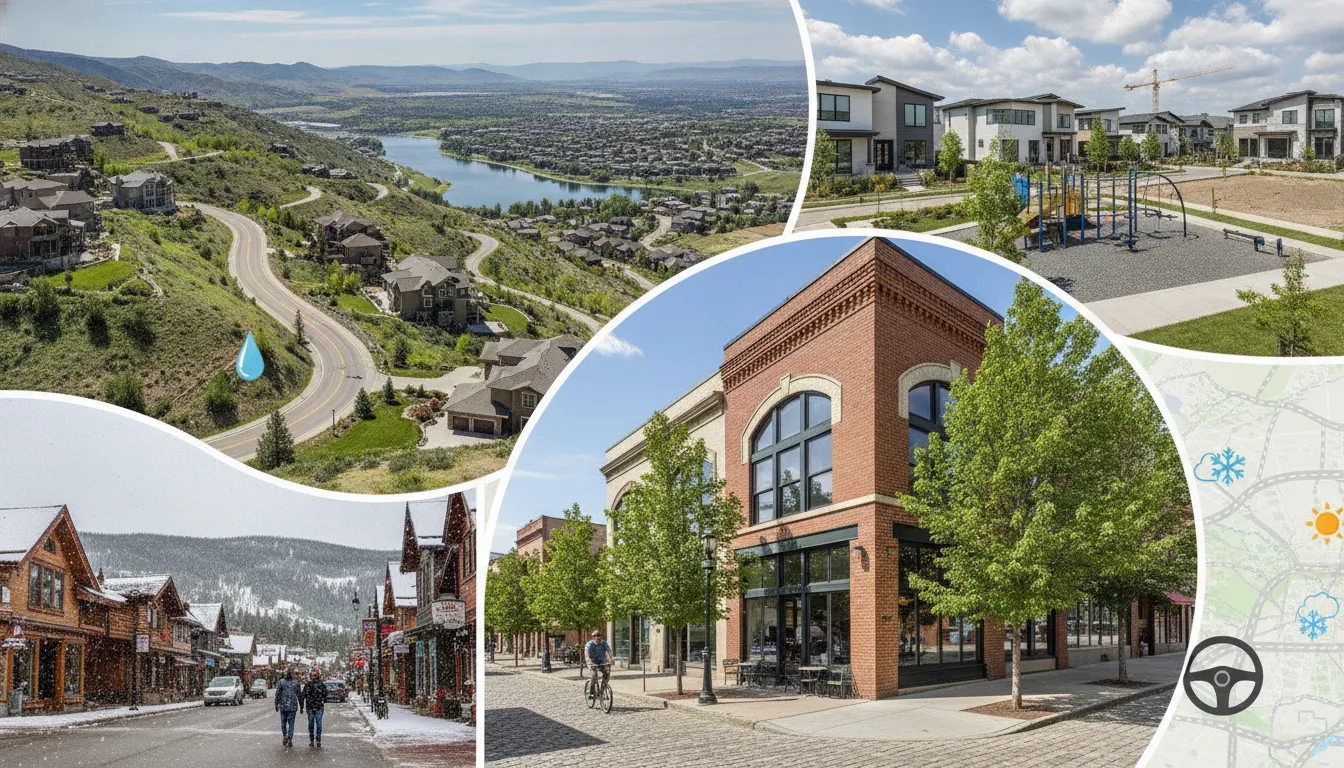
Relocating to Utah is not really a statewide decision. It is a neighborhood decision. A home near a mountain bench, a growing master-planned community, an older urban district, or a mountain town may be only minutes apart, yet each can bring a dramatically different commute, winter experience, water setup, tax picture, and future development outlook.
Statewide research on Utah weather, taxes, and housing costs can be useful during the earliest stage of relocation. Once Utah is on the shortlist, however, the focus should shift to three to five specific neighborhoods. The right area is not simply the one with the most attractive house. It is the area that fits a household's work routes, budget, preferred climate, property needs, and tolerance for growth.
Anyone comparing communities can begin by searching Utah real estate listings and local market information, then use the five filters below to evaluate each location at the street level. Households weighing several fast-growing Wasatch Front suburbs may also want to compare specific markets like West Jordan or West Valley City before narrowing a shortlist.
Why Neighborhood Research Matters More Than Statewide Research in Utah
Utah's major population centers generally sit in a relatively narrow north to south corridor between mountains, valleys, lakes, and open land. Development does not spread evenly in every direction. Instead, communities rise from valley floors toward foothills, extend along major transportation routes, and cross city, county, water-district, and school-boundary lines quickly.
As a result, a short drive can change the practical realities of ownership. A home at a higher elevation may receive more snow, have steeper streets, and sometimes sit above winter valley haze. A similarly priced property on the valley floor may offer more square footage, use a different water system, experience more winter inversion, and face a completely different daily drive.
Two Homes, Two Lifestyles
Two homes with similar price, age, size, and finishes may represent two entirely different lifestyles. A useful Utah home search compares the daily conditions around the home, not just the details within it.
Start With a Shortlist of Three to Five Areas
Trying to compare every Utah community at once often creates unnecessary confusion. A smaller shortlist makes the decision more manageable and allows for deeper research where it matters.
Each potential neighborhood should be measured against the same questions:
How does the location affect winter weather, snow, wind, and air quality?
Who supplies water, road service, inspections, and other municipal services?
What does the real commute look like during peak travel periods?
How does the lot handle slope, drainage, snow, and exposure?
What will likely be built around the property over the next five to ten years?
This approach replaces broad assumptions with answers that apply to a specific address, block, and neighborhood.
Filter 1: Apply Utah's 15 Minute Rule
The first filter is simple: treat a 15 minute drive as a potentially major change in living conditions. Elevation, terrain, municipal boundaries, water service, school assignments, traffic patterns, and development stage can all shift within that distance.
Compare elevation, not just city names
Many cities include both lower valley neighborhoods and higher foothill or bench areas. The higher sections may have colder mornings, more snow, steeper roads, and a longer winter season. They can also offer quicker access to trails and canyon recreation, cooler summer conditions, and relief from the worst winter inversion conditions.
Valley-floor neighborhoods can provide flatter streets, different pricing, newer construction, and different infrastructure. Neither setting is automatically better. The important step is identifying which conditions suit the household's routine.
Compare neighborhoods in the same city separately
A city label alone is not enough for a relocation decision. East and west sides of the same municipality may differ in elevation, winter driving, air quality, street layout, and access to employment centers. Research should focus on the specific side of town and even the specific block under consideration.
Filter 2: Verify the Documents and Services That Shape Ownership Costs
The least exciting part of buying a home often has the greatest effect on daily life and long-term costs. Before becoming attached to a property, buyers should investigate water service, primary-residence tax treatment, school boundaries, jurisdiction, and homeowner association rules.
Understand culinary water and secondary irrigation
Some Utah properties are served by two separate water systems. Culinary water is treated drinking water used inside the home. Secondary water, also called pressurized irrigation in many areas, is untreated water used for lawn and landscape irrigation.
This arrangement can mean separate connections, separate bills, and seasonal service schedules set by the local provider. In certain rural or transitional areas, water rights or water shares may also be associated with a property. Whether those rights transfer in a sale can have meaningful financial consequences.
For every neighborhood under consideration, buyers should confirm:
Whether the home has culinary water only or both culinary and secondary water.
Who provides each service.
Whether irrigation is seasonal, metered, allocated, or billed separately.
Whether water shares or rights are involved and whether they transfer with the property.
Confirm the property tax treatment
Utah provides a residential exemption for qualifying primary residences. A home used as a second home, vacation property, or rental may not receive the same treatment. That distinction can substantially alter the tax bill for otherwise similar homes.
This issue is especially important in second-home markets and mountain communities. Buyers should compare the assessed tax treatment of similar properties based on the intended use of the home, rather than assuming the current owner's tax bill will apply after closing.
Check school boundaries by address
School assignment boundaries do not necessarily follow city borders, neighborhood names, or listing descriptions. Homes on opposite sides of a street may feed into different schools.
Families should use the applicable school district's official boundary tool and search the actual property address. A neighborhood name should never be treated as confirmation of school assignment.
Read HOA and jurisdiction information early
Utah includes incorporated cities, unincorporated county pockets, and newer master-planned communities with detailed association governance. These distinctions can affect snow removal, permitting, inspections, services, monthly dues, landscaping requirements, parking rules, and driveway use.
Homeowner association documents should be requested early in the process. Important items include dues, reserve funding, architectural restrictions, exterior maintenance obligations, parking policies, and rules affecting additions, fencing, landscaping, or recreational equipment. Buyers should also understand what those dues actually fund, since HOA fees cover far more than landscaping in many Utah communities.
Buyers considering a newer master-planned setting may find useful context in this overview of HOA bylaws, covenants, conditions, and restrictions.
Filter 3: Test the Commute at Its Worst Realistic Time
A commute cannot be renovated, negotiated away, or easily corrected after closing. It should be treated as one of the most important features of a home search.
Much of the Wasatch Front's north to south travel relies on Interstate 15, with commuter rail roughly paralleling portions of the corridor and light rail serving parts of the Salt Lake Valley. These systems can work well when traffic flows, but congestion can become concentrated where routes narrow or major employment centers connect.
Do not rely on a weekend map result
A route checked from a hotel on a quiet afternoon does not reflect a typical workday. The more meaningful test uses the actual departure direction at the actual likely travel time.
A practical commute review should include:
A weekday morning trip at the expected departure time.
A weekday evening return trip.
A winter scenario if winter driving is likely to affect the route.
The reverse commute when two household members work in different directions.
School drop-off and pickup routes, when applicable.
Airport access for households that travel regularly.
Travel between Salt Lake County and Utah County often funnels through the Point of the Mountain area, where continued development and construction can influence traffic conditions. East to west travel across the Salt Lake Valley can also be more demanding than it appears on a map.
Transit access deserves consideration even for households that expect to drive. Nearby commuter rail or light rail can provide an alternative during poor weather or severe traffic and may contribute to a neighborhood's long-term appeal.
Filter 4: Evaluate Terrain, Winter Conditions, and the Lot Itself
Listing photos rarely show the conditions that matter most during a Utah winter or after a heavy storm. Terrain, drainage, driveway exposure, roof snow, and wind can affect maintenance, safety, comfort, and future repair costs.
Know how elevation affects winter life
Higher-elevation neighborhoods generally bring more snow, colder mornings, and longer winter conditions. Lower valley areas may be less snowy but can experience winter temperature inversions, when cold hazy air becomes trapped in the valley while higher benches may remain sunnier and clearer.
This tradeoff is personal. A household that values quick mountain access and cooler summer temperatures may prefer a higher bench location. Another household may prioritize flatter roads, less snow management, and easier winter driving.
Inspect the site, not only the interior
Before purchasing, buyers should walk the full perimeter of the lot and look beyond interior upgrades. A useful property review includes the following questions:
Driveway orientation: Does the driveway face north or south, and how likely is snow or ice to linger?
Street slope: How steep are the approach roads and driveway during snowy conditions?
Drainage: Where does water flow around the foundation, retaining walls, and neighboring lots?
Roof runoff: Where will snow shed from the roof, and what sits below those areas?
Retaining walls: Who owns them, what condition are they in, and what maintenance could be required?
Wind exposure: Is the home located in an exposed area where wind may affect fencing, landscaping, and outdoor comfort?
Lot grading: Is there enough space and appropriate grading between newer homes for water to move safely away?
A winter visit can reveal conditions that are impossible to observe during a summer house hunt. When a winter visit is not possible, historical street imagery may help identify street slope, driveway orientation, snow storage patterns, and the maturity of neighborhood landscaping.
Filter 5: Research What the Neighborhood Will Become
In a growing state, buyers are not purchasing only the neighborhood that exists today. They are also purchasing its likely future. Open fields, quiet roads, and unobstructed views may be part of an active growth corridor rather than permanent features.
Growth brings real benefits. New housing can be followed by parks, retail, schools, roads, trails, jobs, and services. It can also bring years of construction traffic, dust, noise, crowded schools, and views that change as nearby parcels are built.
Growth is not inherently a reason to avoid an area. It is a reason to understand the tradeoff before making an offer.
How to research future development near a home
Find the city planning page. Review the general plan and zoning map for the target property and nearby parcels.
Review active development applications. Many jurisdictions publish current proposals, planned subdivisions, commercial projects, and road work.
Inspect surrounding open land. From the street, identify every visible undeveloped parcel and ask what zoning permits there.
Assess the area's development stage. Determine whether the neighborhood is mature and largely built out or actively filling in.
Match the setting to personal priorities. Choose greater certainty and established infrastructure, or accept near-term construction in exchange for newer homes and possible future amenities.
Communities near major employment corridors and new mixed-use districts may offer long-term opportunity while requiring patience during the buildout period. Buyers interested in changing Wasatch Front conditions can compare broader trends through the Utah buyer's market overview.
How These Filters Apply Across Popular Utah Areas
The five filters do not produce one universal best neighborhood. They reveal which areas are likely to fit a particular lifestyle.
Older urban neighborhoods near Salt Lake City
Established urban areas such as Sugar House and the Avenues offer mature streets, older homes, access to downtown, and proximity to the University of Utah. Sugar House also provides a walkable business district, park access, and light rail service.
These areas are largely built out, so future changes often take the form of infill redevelopment rather than large-scale new subdivisions. The primary property-level concern is the age of the home and its systems. Buyers should pay close attention to foundations, plumbing, wiring, sewer lines, and prior updates.
Established east-side communities
Holladay and Millcreek are mature east-side locations known for larger lots, established tree cover, and central access to downtown, southern Salt Lake County, and canyon recreation. Their development pattern generally offers more certainty and less new construction than newer edge communities.
Some nearby locations include unincorporated county pockets, making jurisdiction research particularly important. Service providers, permits, and local responsibilities should be confirmed for the exact address.
Bench and canyon-access areas
Cottonwood Heights and portions of Sandy provide access to Big and Little Cottonwood Canyons and the mountain foothills. These locations can offer a strong fit for households that prioritize skiing, trails, and mountain access.
The tradeoff is more serious winter planning. Steeper roads, heavier snow, driveway orientation, drainage, and canyon traffic on busy weekends or powder days require careful consideration. Sandy itself contains varied terrain, so the east and west sides should be compared separately.
For a closer look at lifestyle considerations in this part of the valley, see the overview of the pros and cons of living in Sandy, Utah.
Foothill communities near the Point of the Mountain
Draper offers foothill views, trail access, and a location between Salt Lake County and Utah County employment centers. This can be a practical position for households with jobs in opposite directions.
Its proximity to the Point of the Mountain also makes future development and transportation conditions important. Major growth can support new jobs, retail, housing, and amenities, while also creating a medium-term construction and traffic reality.
West-side master-planned communities
Daybreak in South Jordan and newer areas farther southwest offer a different lifestyle: planned village centers, trails, pools, newer homes, community governance, and in some locations light rail access.
The HOA and water filters are especially important in these communities. Buyers should understand association rules, dues, architectural standards, and secondary irrigation arrangements. A household working on the east bench or making frequent canyon trips should also test the cross-valley drive during rush hour.
Park City and nearby mountain communities
Park City combines mountain elevation, a four-season setting, resort access, and a location relatively close to Salt Lake City International Airport. It also requires a more detailed review of property taxes, especially for second homes, rental properties, and homes connected to rental pools.
Mountain terrain means longer winters, storm-sensitive driving, and commute considerations for trips down to the Salt Lake Valley. Nearby communities such as Jeremy Ranch, Pinebrook, and Silver Creek can appeal to buyers seeking proximity to both ski areas and the valley-side commute, but water systems and HOA structures vary by neighborhood. Wasatch Back buyers may also want to compare the Swiss-themed village setting of Midway before finalizing a shortlist.
The Heber Valley, south of Park City, offers a different proposition: more land, a quieter agricultural-valley setting, and a different price structure in exchange for longer drives to downtown Salt Lake City and the airport. With growth continuing in the area, general plans and zoning maps deserve careful review before purchasing a view property.
Common Mistakes When Choosing a Utah Neighborhood
Researching the state but not the specific block. Broad Utah information cannot explain neighborhood-level differences.
Choosing a home based on a pleasant weekend visit. Traffic, snow, air quality, and noise can look very different on an ordinary workday.
Using the listing for school information. School assignment should always be verified through the official address-based tool.
Assuming one water bill serves every property. Secondary irrigation, seasonal schedules, and water shares can change the ownership experience.
Budgeting from the seller's property tax bill. Primary-residence treatment may not apply to a buyer's intended use.
Focusing on finishes while ignoring the lot. A remodeled kitchen does not reveal drainage, roof runoff, retaining-wall responsibilities, or winter ice conditions.
Assuming an open view will remain open. Nearby zoning and development applications should be reviewed before assigning value to vacant land.
Waiting until contract deadlines to read HOA documents. Rules and financial obligations should be understood before emotional commitment to the property is too strong.
A Practical Utah Neighborhood Comparison Checklist
For each of the three to five neighborhoods on a shortlist, create a simple comparison sheet with the following categories:
Location: City, side of town, elevation, nearby canyon or valley position.
Water: Culinary provider, secondary irrigation availability, seasonal rules, water shares.
Taxes: Comparable primary-residence tax treatment and second-home implications.
Schools: Address-specific school assignment and school-run route.
Services: City or county jurisdiction, snow removal, permits, and utilities.
HOA: Dues, restrictions, reserves, architectural rules, parking, and maintenance obligations.
Commute: Morning route, evening route, reverse commute, transit, airport access.
Terrain: Slope, driveway orientation, snow, drainage, roof runoff, wind, retaining walls.
Trajectory: Zoning, nearby vacant land, planned roads, development applications, construction timeline.
The result is a decision based on real-life conditions rather than generalized impressions. That is particularly valuable for buyers relocating from climates, terrain, and municipal systems that operate very differently from Utah.
Choose the Neighborhood Before Falling in Love With the House
Utah offers many distinct living environments within a relatively short distance. Some households may value mountain access and winter sun above the valley haze. Others may prefer newer construction, flatter terrain, predictable streets, or a shorter commute. A mature neighborhood may offer stability and established landscaping, while a growing community may offer new amenities and future potential.
The strongest relocation decision starts with the location, then evaluates the property. By applying the 15 minute rule and investigating paperwork, commute, terrain, and trajectory, buyers can identify a neighborhood that fits the way daily life will actually function after closing.
Southern Utah households weighing a desert lifestyle can also review St. George homes, neighborhoods, and relocation information, including the area's climate, growth considerations, and outdoor-oriented living, or read more about why people are moving to St. George in 2026.
Frequently asked questions
What is the most important thing to know before moving to Utah?
Does every Utah home have secondary irrigation water?
How should buyers check school boundaries in Utah?
Why should Utah buyers test a commute in winter instead of on a weekend?
How can buyers find out what will be built near a Utah home?
Which Utah areas are best for avoiding winter inversion?
Keep reading
More from the blog
Utah Housing Market 2026: Crash, Boom, or a Stalled Market?

How to Measure and Replace an Odd-Size Window

Protect Your Family Online While Searching for Utah Homes