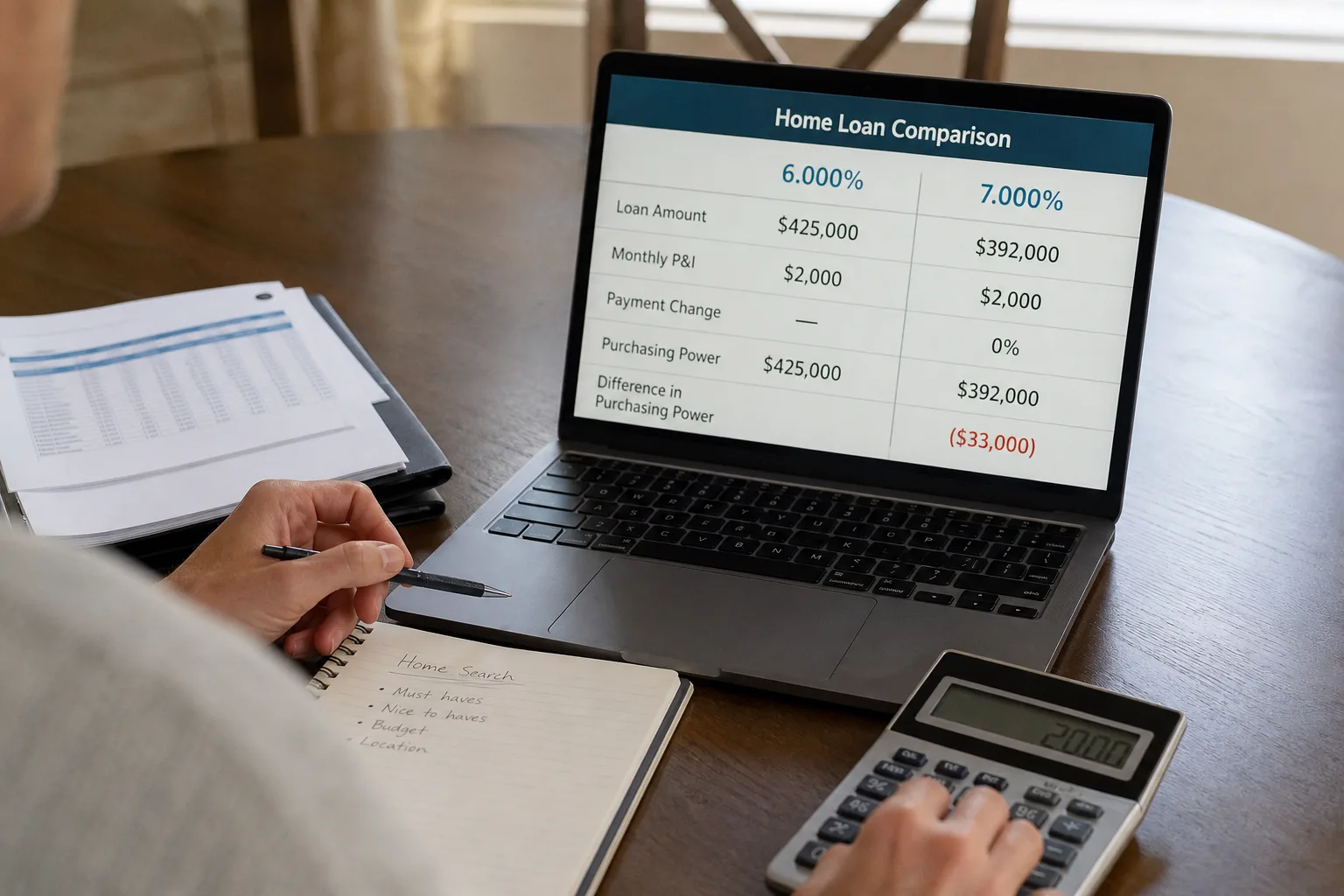
October CPI Runs Hot: What It Means for Utah Mortgage Rates
Prices rose 0.4% in October and core CPI 0.3%, both above forecasts. What it means for Utah mortgage rates, the Fed's December meeting and rate locks.
Consumer prices rose 0.4% in October, the Bureau of Labor Statistics reported on Tuesday, Nov. 10, 2026. Economists had expected 0.3%. Core prices, which leave out food and energy, rose 0.3% against a 0.2% forecast. For anyone buying, selling or refinancing a home in Utah, the number that matters is what this does to the 30-year mortgage rate, and the bond market answered within minutes: yields jumped.
Short answer: this report makes a Federal Reserve rate increase in December close to certain and pushes mortgage rates up, not down. Below is what the report said, why it moves home loans, and what Utah buyers and sellers can do about it.
What the October CPI report showed
- All items: up 0.4% for the month, after a 0.6% jump in September.
- Core (no food or energy): up 0.3%, the same pace as August and September.
- Shelter: up 0.3%, a little slower than September's 0.4%. Housing costs made up more than 30% of the month's increase.
- Food: up 0.5% after no change in September. Groceries rose 0.4% and restaurant meals 0.5%.
- Energy: up 0.7%, far less than September's 5.2% surge. Gasoline rose 1.0% and electricity 0.9%, while natural gas fell 0.8%.
- Other movers: car insurance rose 0.7% and recreation 0.8%. Used cars and trucks fell 1.2%.
The full numbers are in the Bureau of Labor Statistics release.
Why there is no annual inflation rate this month
The usual headline, prices compared with a year earlier, is missing from this report. The federal government was shut down from Oct. 1 to Nov. 12, 2025, and the bureau never collected October 2025 prices, so there is nothing to compare against. The last annual figure it published was 3.7% for September. The Fed's target is 2%, and Moody's chief economist Mark Zandi told CNBC that a monthly core reading of about 0.2% is what lines up with that target. October's 0.3% is the third month in a row above it.
Why an inflation report moves mortgage rates
A 30-year fixed mortgage is priced off the bond market, mainly the 10-year Treasury yield, plus the lender's margin. Investors who hold bonds lose buying power when inflation runs high, so they demand a higher yield. A hot inflation report also raises the odds that the Fed lifts its own rate, which pushes yields up further.
That is what happened on Tuesday. The 10-year Treasury yield climbed more than a tenth of a percentage point to about 5%, CNBC reported. Lenders reprice quickly when yields move that much in a morning, so quotes given on Tuesday afternoon were worse than the ones from Monday.
What it means for the Fed's December meeting
The Fed raised its benchmark rate in September, its first increase since 2023, to a range of 3.75% to 4%. It held there on Oct. 28, with two members voting for another increase. The post on the October Fed decision covers that meeting.
The next meeting is Dec. 8 and 9. A few hours before the inflation report came out, Fed Governor Christopher Waller said in a speech in London that he leans toward a quarter-point increase in December, and that a half-point move "should be considered" if inflation readings came in high. He put the line for core prices at about 0.3%, which is where October landed.
After the report, CME's FedWatch tool showed traders treating a December increase as close to certain, with roughly a one-in-eight chance that it is a half point instead of a quarter. The November inflation report comes out Dec. 10, the day after the meeting ends, so October's numbers are the last consumer price data the Fed sees before it votes.
Where mortgage rates stand
Freddie Mac's weekly survey had the average 30-year fixed rate at 7.18% for the week of Nov. 5, down from 7.24% the week before and the third weekly drop in a row from October's high of 7.40%. The 15-year fixed averaged 6.57%. A year ago the 30-year averaged 6.22%. That survey was taken before the inflation report. The next one comes out Thursday, Nov. 12, on Freddie Mac's rate page, and it will be the first to show the reaction.
Here is what a quarter point or a half point does to principal and interest on a 30-year loan:
| Loan amount | At 7.18% | At 7.43% | At 7.68% |
|---|---|---|---|
| $300,000 | $2,032/mo | $2,083/mo | $2,135/mo |
| $400,000 | $2,710/mo | $2,778/mo | $2,846/mo |
| $500,000 | $3,387/mo | $3,472/mo | $3,558/mo |
Taxes, insurance and any HOA dues come on top. On a $400,000 loan, each quarter point is worth about $68 a month. That is not a reason to panic, but it is a reason not to leave a rate floating through a week like this one.
The housing piece of the report
Shelter is the largest part of the index, and it works differently from home prices. The bureau does not measure what homes sell for. It measures rents, plus an estimate of what owners would pay to rent their own homes. In October, rent rose 0.2% and that owners' estimate rose 0.3%.
Two things follow for Utah. First, the bureau does not publish a consumer price index for Utah or any Utah metro area, so this national report is the one that matters for mortgage rates here. Second, a fixed-rate mortgage is the one housing cost in the report that does not rise with inflation. Rent can go up every lease. Principal and interest on a fixed loan stay the same for 30 years, even when property taxes and insurance do not. That does not make buying right for everyone, but it is part of the math when rent and prices keep climbing.
What Utah buyers can do now
If you are under contract
Ask your lender today where your lock stands. With a December increase expected and yields back near 5%, the risk of floating runs mostly one way. Most locks cover 30 to 60 days, so ask what an extension costs if closing slips.
If you are still shopping
Set your budget at today's rate, not the rate you hope for. If rates fall later, refinancing is an option. If they don't, you have bought a home you can afford. Get quotes from more than one lender on the same day, since pricing is moving fast and varies between lenders.
Lower the payment without waiting on inflation
- Assumable loans. FHA, VA and USDA loans can be taken over by a qualified buyer along with the seller's original rate, often 3% to 5%. Browse assumable-loan homes for sale in Utah.
- Seller credits for a buydown. Asking the seller to pay points can cut the rate for the first years or for the life of the loan, and it often lowers the payment more than a price cut does.
- Builder incentives. Builders with homes to move often pay for rate buydowns through their own lenders. See new construction homes in Utah.
- Seller financing. Some owners will carry the loan themselves. The guide to seller financing in Utah explains how it works, and you can see current seller-financing listings.
Utah homes with assumable loans
These listings mention an assumable mortgage. The rate, balance and lender approval rules vary, so confirm the details before you write an offer.
New construction in Utah
New builds are where builder rate buydowns show up most often. Ask each builder what financing help comes with the home.
What it means for Utah sellers
Higher rates shrink what buyers can borrow, so price for what a buyer can carry at a rate above 7%, not what a neighbor got last spring. Sellers who offer a buydown credit or advertise an assumable loan tend to stand out when rates rise. If you are thinking about selling, start with a free home valuation based on recent sales near you.
Local markets still differ a lot. In Salt Lake City, the latest median sale price is $590,000, with homes going under contract in a median of 34 days. In Lehi it is $589,000 and 43 days. In St. George it is $502,500 and 39 days. The Utah market report tracks prices, sales and inventory statewide every month.
What to watch next
- Thursday, Nov. 12: Freddie Mac's weekly rate survey, the first taken after this report.
- Oil and diesel. Energy drove September's jump. Oil has fallen in recent days, but economists quoted by CNBC expect diesel costs to keep feeding into food and shipping prices for months.
- Dec. 8 and 9: the Fed meeting, along with new projections for where rates go in 2027.
- Dec. 10: the November inflation report.
- Dec. 11: the government funding deadline. The post on the midterm results and mortgage rates explains why that matters for yields.
Bottom line
October's inflation report was hotter than expected, and it took away most of the rate relief that had built up over the past month. A December Fed increase now looks all but settled, and the open question is how large. If a Utah home fits your budget at today's rate, lock when your lender's pricing looks fair and use the tools that lower a payment now. To run the numbers on a specific home, browse Salt Lake City homes, Lehi homes or St. George homes for sale, or start at Best Utah Real Estate and search any city in the state.
Posted by Kristopher Larson
Frequently asked questions
What did the October 2026 CPI report show?
Consumer prices rose 0.4% in October, above the 0.3% economists expected. Core prices, which leave out food and energy, rose 0.3% against a 0.2% forecast. Food rose 0.5%, energy 0.7% and shelter 0.3%. The Bureau of Labor Statistics released the report on Nov. 10, 2026.
Why is there no annual inflation rate for October 2026?
The federal government was shut down from Oct. 1 to Nov. 12, 2025, and the Bureau of Labor Statistics did not collect October 2025 prices. With no year-ago figure to compare against, it could not publish a 12-month change. The last annual rate it reported was 3.7% for September 2026.
Will Utah mortgage rates go up after the October CPI report?
Most likely, at least in the short run. Mortgage rates follow the 10-year Treasury yield, which climbed to about 5% after the report. Freddie Mac's survey had the 30-year fixed at 7.18% for the week of Nov. 5, before the report. The next weekly reading, on Nov. 12, is the first that will show the reaction.
Will the Fed raise rates in December 2026?
Markets think so. After the report, CME's FedWatch tool showed traders treating an increase at the Dec. 8 and 9 meeting as close to certain. Fed Governor Christopher Waller said a half-point move should be considered if inflation came in high, and traders put the odds of that at roughly one in eight.
Should I lock my mortgage rate now?
If you are under contract, talk to your lender about locking. Yields are back near 5% and a Fed increase is expected in December, so the risk of waiting runs mostly toward higher rates. Each quarter point adds about $68 a month on a $400,000 loan. Ask how long the lock lasts and what an extension costs.
Does the CPI measure Utah home prices?
No. The index does not track home sale prices. Its shelter component measures rents and an estimate of what owners would pay to rent their own homes. The Bureau of Labor Statistics also does not publish an index for Utah or any Utah metro area, so the national report is the one that moves mortgage rates here.
Keep reading
More from the blog
Offer Accepted on a House: What Happens Next for Buyers
Environmental Due Diligence Before Buying Land

7 Best Trade Area Analysis Tools for Commercial Properties