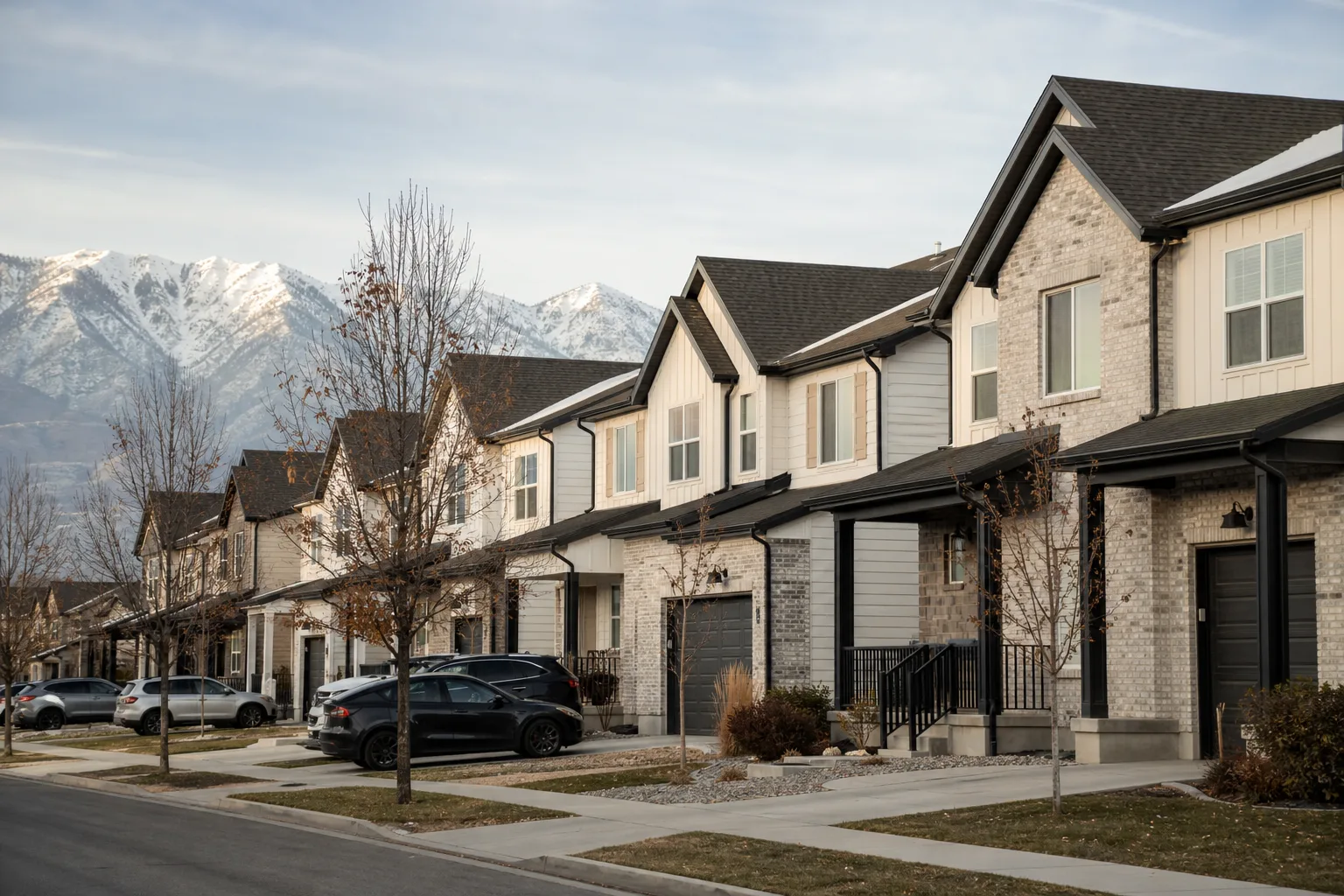
Seller Financing Homes in Utah
How seller financing works in Utah: down payments, balloon payments, the federal rules sellers follow, and how to find owner-financed homes for sale.
Seller financing, also called owner financing or an owner carry, means the seller acts as the lender: you make monthly payments to the seller instead of a bank. In Utah, hundreds of active listings mention it at any given time, from Wasatch Front townhomes to rural acreage. This guide covers the three ways these deals are structured in Utah, the terms you negotiate, what it really costs, the federal rules sellers have to follow, and how to find homes where the seller will carry the loan. To see current listings, browse seller financing homes for sale in Utah.
View all seller financing homes in Utah →
How seller financing works in Utah
The buyer and seller agree on a price, a down payment, an interest rate, a monthly payment and a term. Those terms go into a promissory note, the buyer's promise to pay. Because Utah is a trust-deed state, the note is usually secured by a trust deed recorded with the county, which gives the seller the right to foreclose if the buyer stops paying. A title company or real estate attorney should prepare and record the documents, just as with a bank loan.
Most seller-financed loans are set up with payments figured over 30 years, but the seller only carries the loan for a few years. A balloon payment for the remaining balance comes due at the end, often after three to five years, and the buyer pays it off by refinancing with a bank or selling. Others run the full 15 or 30 years. Everything is negotiated.
Because no bank underwriter is involved, a seller-financed sale can close about as fast as a cash sale, often within a week or two once the contract is signed and the documents are ready.
The three main types of seller financing
"Seller financing" is used loosely for several different arrangements. In Utah, three come up most often, and they carry very different risks.
1. Owner carry on a home with no mortgage
The seller owns the home free and clear and lends the buyer part of the price. Title transfers to the buyer at closing, and the seller holds a note secured by a recorded trust deed. This is the cleanest version: there is no bank loan in the background, and the seller can set whatever terms the two sides agree on, within the federal rules below.
2. Wraparound mortgage
The seller still has a mortgage, and the new seller-financed loan "wraps around" it. The buyer pays the seller, and the seller keeps paying the original lender. The seller's existing loan stays in the seller's name and on the seller's credit, which affects their debt-to-income ratio when they apply for their next mortgage. The big risk is the original lender's due-on-sale clause (more below).
3. Contract for deed (uniform real estate contract)
Instead of deeding the home to the buyer at closing, the seller keeps legal title until the buyer pays the contract off, usually at the balloon. The buyer takes possession and, under Utah court decisions, holds an equitable interest in the property. If the buyer defaults, the seller's remedy is often forfeiture under the contract rather than a trust-deed foreclosure. Utah courts expect the seller to follow the contract's forfeiture terms strictly and give the buyer a reasonable chance to cure a default first. Contracts for deed are common in Utah, but they are not a way around a seller's existing mortgage, as covered below.
The five terms you negotiate
A seller-financed loan is built from scratch, so every term is a lever. Moving one changes the others, and the goal is a deal both sides can live with.
- Purchase price. Buyers often pay a little more for a good interest rate. The financing doesn't depend on an appraisal, but a buyer should still get one so they know how far over market they are paying.
- Down payment. The cash the buyer brings to closing. A bigger down payment lowers the monthly payment and gives the seller more protection.
- Interest rate. Usually the main attraction for buyers. Anything the two sides agree on is possible within the federal rules, which is why a seller with a low-rate mortgage or no mortgage can offer a rate below the bank's.
- Term and balloon. How long the seller carries the loan before the remaining balance is due. Buyers want longer; many sellers want two to five years.
- Monthly payment. The result of the other four. Payment-conscious buyers and investors who need a rental to cash flow often work backward from this number.
For sellers, payments are usually amortized: early payments are mostly interest and only slowly pay down the balance. On a loan that runs five years before the balloon, most of what the seller collects is interest income.
Why buyers look at seller financing
- Flexible qualifying. A seller can accept a buyer a bank won't, such as someone self-employed with hard-to-document income, someone recovering from a credit problem, or a family newly relocated to the U.S. that can afford the home but hasn't built a U.S. credit history yet. Flexible doesn't mean no checks: most sellers still pull credit and verify income, and many have to (see the federal rules below).
- Negotiable terms. Rate, down payment, length and payment schedule are all on the table.
- Lower closing costs. There are no bank origination fees, though you'll still pay for title insurance, recording and usually an attorney or escrow company.
- A possible rate below the market. When bank rates are high, some sellers will carry a loan at a lower rate in exchange for a higher price or a larger down payment. Others charge more than the bank, so compare.
- Speed. With no loan underwriting, closing can take days instead of weeks.
- Properties banks won't lend on. Raw land, cabins and homes that need major work can be hard to finance conventionally, which is why a good share of Utah's seller-financed listings are land.
Browse every Utah seller financing listing →
The trade-offs for buyers
- Down payments are usually larger, not smaller. Most sellers ask for 10% to 20% or more, because the down payment is their protection.
- Balloon payments. A balloon is easy to lose track of years later. If it comes due and you can't refinance, because rates are high, your credit hasn't improved or the home appraises low, you could lose the home.
- The seller's existing mortgage. On a wrap or contract for deed, if the seller stops paying their lender or the lender calls the loan due, your home is at risk even if you paid on time.
- Fewer protections by default. Without a bank's underwriting, it's up to you to get an appraisal, an inspection and title insurance.
- Limited choice. Only a small share of Utah listings offer seller financing, and the best ones go quickly.
Wraps, "subject-to" deals and assumptions are not the same thing
Creative financing comes back every time rates rise, and the labels get mixed up. The differences matter.
- Assumption. The buyer formally takes over the seller's loan, with the lender's approval, after qualifying on credit and income. Most assumable loans are FHA or VA loans. It is the safest way to get a seller's low rate. On a VA loan, a buyer doesn't have to be a veteran to assume it, but unless the buyer is an eligible veteran who substitutes their own entitlement, the seller's VA entitlement stays tied to the loan until it is paid off. See assumable homes in Utah.
- "Subject-to." The seller deeds the home to the buyer, and the buyer starts making the seller's mortgage payments, without the lender's permission. The loan stays in the seller's name.
- Wraparound. A subject-to sale with a new seller-financed note layered on top to cover the rest of the price.
Subject-to and wrap deals carry risks most people don't see coming:
- The due-on-sale clause. Federal law lets lenders enforce due-on-sale clauses, and federal regulations define a sale to include installment contracts, land contracts, contracts for deed, lease-options and leases over three years. Keeping title in the seller's name doesn't avoid it. If the lender calls the loan, the buyer has a short window to refinance or the lender can begin foreclosure.
- Bankruptcy. If the seller files for bankruptcy, the buyer's down payment and the property can be pulled into the case.
- The seller's credit. If the buyer stops paying, the seller has deeded away the home but still owes the mortgage.
- Title insurance. Many title companies will close a traditional seller carry but won't insure a wrap or subject-to deal at all.
None of this makes these deals illegal, but they rely on trust and on the lender not calling the loan. Anyone considering one should have a real estate attorney review it first.
The federal rules sellers must follow
Sellers can't simply lend to anyone on any terms. The federal Truth in Lending rules (Regulation Z, section 1026.36) treat a seller who finances a home as a loan originator unless they meet one of two exclusions:
- One property in 12 months: a person, estate or trust that owns the property and finances just one sale in any 12-month period. The rate must be fixed, or adjustable only after five years with reasonable caps, and the payments can't cause negative amortization (a balance that grows). Balloon payments are allowed.
- Up to three properties in 12 months: the seller must make a good-faith determination that the buyer can afford to repay, the loan must be fully amortizing (no balloon), and the same fixed-or-five-year-adjustable rate rule applies.
Neither exclusion applies to a seller who built the home in the ordinary course of business. Sellers who finance more often, or who don't meet these conditions, may need to work through a licensed loan originator. This is why the "no credit check, no paperwork" promises you see online aren't how a careful seller-financed sale works. A real estate attorney can confirm what applies to a specific deal.
How to find seller-financed homes in Utah
- Search the MLS listings that mention it. The Utah seller financing page collects every active listing where the seller mentions seller or owner financing. Salt Lake City, Eagle Mountain and St. George have had the most lately, and city pages narrow it down: Salt Lake City, St. George, Ogden, Provo and Hurricane.
- Ask about homes that have been listed a while. A seller who owns a home free and clear and has been on the market for 60 days or more may consider carrying a loan even if the listing doesn't say so.
- Look at land and rural property. Many Utah seller-financed listings are lots and acreage.
- Consider an assumable loan instead. Some listings have an FHA or VA loan you can take over at the seller's original, often lower, rate, with full lender protections.
See all seller financing homes in Utah →
Five tips before you sign
1. Plan your exit if there's a balloon
Know exactly when the balloon is due and what credit, income and equity you'll need to refinance by then. Put the date on your calendar, and ask for a longer term or an extension option if you can.
2. Confirm what the seller owes
Ask for a title report. If there's an existing mortgage, find out exactly how it will be handled, and walk away from any plan that depends on the lender never finding out.
3. Get the same protections a bank would require
Order an appraisal, a professional inspection and an owner's title insurance policy, and close through a title company experienced with seller financing that records the trust deed or contract.
4. Have the documents reviewed
Seller-financed sales come with more addenda than a normal purchase. Late fees, prepayment terms, what counts as default, the cure period and who pays taxes and insurance should all be in writing. A real estate attorney's review is cheap compared with the loan.
5. Use a third-party loan servicer
A servicer or escrow company collects payments, pays any underlying mortgage, tracks the balance and sends year-end tax statements, which keeps a clear record for both sides.
For sellers: is carrying a loan right for you?
Offering financing can bring in more buyers and offers, help a land sale or an unusual home, and turn your equity into monthly income with interest. The best candidates own the home outright, or have a lot of equity, and don't need all their cash at closing.
The risks to plan for:
- A buyer who stops paying. That means a trustee's sale foreclosure, or a forfeiture under a contract for deed, with costs and months of missed payments. Screen the buyer, require a meaningful down payment, and keep several months of payments in reserve.
- Damage to the home. If you take the property back, repairs are on you. A larger down payment gives the buyer more to lose and gives you a cushion.
- Your own mortgage. If you still have a loan, the due-on-sale clause and the effect on your credit and future borrowing apply to you, not the buyer.
- Taxes. A seller-financed sale is usually reported as an installment sale: each payment is part interest (ordinary income), part return of your basis and part gain, reported on Form 6252. Depreciation recapture on a rental is taxed in the year of sale even if you haven't collected it yet. See IRS Publication 537 and talk to an accountant before you list.
If you're weighing it, start with a free home valuation to set the price, then talk to a real estate attorney about the note and trust deed.
Bottom line
Seller financing can open a door when a bank loan doesn't fit, but it isn't a shortcut around qualifying. Know which type of deal you're in, expect a meaningful down payment, plan for any balloon, and protect yourself with an appraisal, inspection, title insurance and recorded documents. Browse current seller financing listings in Utah, or call or text 435-414-8597 to talk through a specific home.
View all seller financing homes in Utah →
Posted by Kristopher Larson
Frequently asked questions
Is seller financing legal in Utah?
Yes. A Utah seller can carry a loan on a property they own, usually with a promissory note secured by a trust deed recorded with the county, or with a contract for deed where the seller keeps title until the buyer pays it off. Federal Truth in Lending rules limit how often a seller can finance a sale and on what terms without being treated as a loan originator, so have an attorney or title company prepare the documents.
What is the difference between owner financing, a wraparound and a contract for deed?
In a standard owner carry, the seller owns the home free and clear, deeds it to the buyer and holds a recorded note. In a wraparound, the seller still has a mortgage and the new loan wraps around it, so the seller keeps paying the original lender. In a contract for deed, the seller keeps legal title until the contract is paid, and the buyer holds an equitable interest. Each carries different risks, especially when there is an existing mortgage.
Does a contract for deed get around the seller's due-on-sale clause?
No. Federal regulations define a sale or transfer to include installment sale contracts, land contracts, contracts for deed, lease-option contracts and leases longer than three years, so the seller's lender can still call the loan due. Any deal built on an existing mortgage should be reviewed by a real estate attorney.
Is buying a home "subject-to" the same as assuming the loan?
No. An assumption is approved by the lender: the buyer qualifies and formally takes over the loan, which is common with FHA and VA loans. In a subject-to deal, the buyer takes the deed and makes the seller's payments without the lender's permission, so the lender can call the loan due, and a seller bankruptcy can pull the property into the case. Many title companies won't insure subject-to or wrap deals.
How much down payment and what terms are typical for seller financing?
Most Utah sellers ask for 10% to 20% or more down, since the down payment protects them if the buyer stops paying. Payments are often figured over 30 years with a balloon payment for the remaining balance due in three to five years, when the buyer refinances or sells. Price, rate, down payment and balloon length are all negotiable.
How is seller financing taxed for the seller?
It is usually reported as an installment sale. Each payment is part interest, taxed as ordinary income, part return of the seller's basis, which isn't taxed, and part gain, reported on IRS Form 6252. Depreciation recapture on a rental property is taxed in the year of sale even if little cash was collected that year, so talk to an accountant before agreeing to terms.
Keep reading
More from the blog

Utah County Housing Market 2026: Prices Hold While Sellers and Buyers Both Step Back

Utah Property Taxes Are Due Nov. 30, 2026: How to Pay, What Late Costs and What 2026 Buyers Should Check

Utah's 35,000 Starter Home Goal Is a Quarter Done: What First-Time Buyers Can Use in 2026