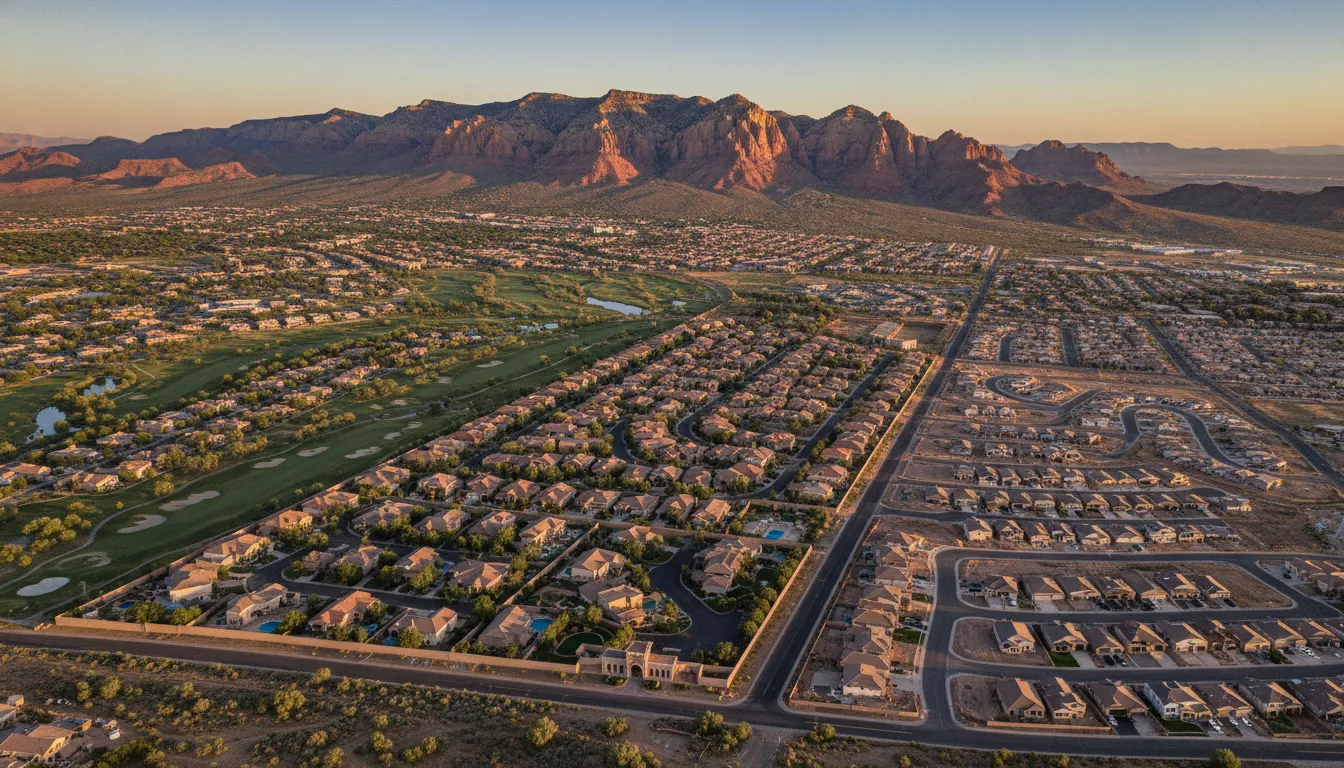

Why People Are Moving to St. George, Utah and What the Growth Means
St. George ranked eighth nationally for population growth in 2024-2025, driven by sunshine, outdoor recreation, and a booming economy. This guide breaks down where growth is happening across Washington County and what it means for prospective home buyers.
St. George has become one of the country's fastest-growing metropolitan areas because it offers a combination that is difficult to find elsewhere in the West: a sunny desert climate, accessible outdoor recreation, expanding housing options, active-adult amenities, and a growing local economy.
Growth is not only a headline or population statistic in southern Utah. It is visible in new neighborhoods, commercial development, road projects, resort communities, and changing daily conditions across Washington County. For households considering a move, the central question is not simply whether St. George is growing. It is whether the region's climate, pace, housing choices, and development patterns fit the lifestyle they want. Anyone actively planning a relocation should also review this guide to moving to St. George and what to check before choosing a community.
St. George Is Growing at a Nationally Notable Pace
Population growth helps explain why attention has increasingly turned to St. George and the surrounding communities. The St. George metropolitan area ranked eighth nationally for percentage population growth from 2024 to 2025, growing by about 2.5% during that period.
Washington County had a population slightly above 180,000 in 2020 and an estimated population of approximately 213,000 by 2025. That represents growth of about 18.5% in a little more than five years. These estimates are part of the broader population data tracked through the U.S. Census Bureau Population Estimates Program.
The effects reach beyond population totals. New homes, roads, parks, retail areas, and employment centers are changing the region's physical layout. Nearly 2,000 single-family building permits had been issued in Washington County during 2025, an indicator of substantial development activity even though a permit does not guarantee a completed home.
Those considering a move can review local housing options and market resources through Best Utah Real Estate.
Why the Southern Utah Lifestyle Draws New Residents
Many relocations to St. George are lifestyle decisions rather than simple moves away from another city. The area provides a desert setting, broad red-rock views, and a pace that can feel distinct from larger Wasatch Front communities or major Western metros.
Sunshine and Mild Winters
Greater Zion promotes more than 300 days of sunshine per year, and St. George winters are notably milder than those in much of Utah. That climate supports hiking, golf, cycling, walking, and other outdoor activities for long stretches of the year.
Summer is the essential tradeoff. Triple-digit temperatures are a normal part of life in St. George, particularly during the hottest months. Households accustomed to mountain climates should not assume that southern Utah is warm year-round in every sense. Winter days can still feel cold, especially after sunset, even though snow and severe winter weather are generally less common than in northern Utah.
A practical relocation plan includes evaluating a home's cooling system, shade, pool preferences, outdoor living areas, and energy costs. The climate can be a major advantage for residents who prefer sunshine and mild winters, but the summer heat needs to fit daily routines.
Outdoor Recreation Is Part of Everyday Life
Outdoor access is among the strongest reasons people choose St. George. Recreation is not limited to an occasional weekend trip. Hiking trails, mountain biking, golf courses, reservoirs, and scenic routes are woven into the surrounding landscape.
Hiking and biking: The Greater Zion region has more than 200 hiking trails, along with extensive mountain biking opportunities around St. George, Red Cliffs, Snow Canyon, and nearby desert terrain.
State parks and red-rock scenery: Snow Canyon State Park sits near St. George and offers hiking, rock formations, lava fields, and scenic desert views.
Water and off-road recreation: Sand Hollow brings boating, paddleboarding, swimming, off-roading, and other warm-weather activities to the area.
National park access: Zion National Park is close enough to be part of the broader regional lifestyle rather than only a once-a-year destination.
Golf: Golf is a major feature of southern Utah, with established courses throughout Washington County and destination courses such as Copper Rock and Black Desert.
For a closer look at the trails, parks, and recreation opportunities that shape the local lifestyle, see outdoor activities in St. George.
Community Amenities Continue to Expand
St. George offers more than scenic surroundings. Downtown restaurants, parks, community events, and cultural venues contribute to the area's appeal. Tuacahn, set among the red cliffs in Ivins, is one of the region's well-known entertainment destinations.
Population growth is also expanding everyday amenities. New commercial spaces, dining options, recreation facilities, and neighborhood services are appearing alongside residential development. This makes the area attractive to retirees, families, remote workers, entrepreneurs, and second-home buyers who want access to both outdoor activities and practical conveniences. Retirees weighing the move specifically should also see this guide to retiring in St. George, including costs, healthcare, and HOAs.
Where Growth Is Happening in Washington County
St. George-area growth is not uniform. Each growth corridor has a different setting, housing pattern, and relationship to recreation, employment, and major roads. Comparing locations by lifestyle priorities is more useful than treating the entire metro area as one market.
South St. George and Desert Color
South of St. George, Desert Color represents large-scale master-planned development. The approximately 3,300-acre project is designed to include housing along with shopping, dining, hospitality, recreation, and commercial space. Its scale reflects a shift from individual subdivisions toward planned communities that combine multiple uses.
Buyers interested in newer homes, planned amenities, and continued development may find this part of the city especially relevant. More detail on the community is available in this overview of Desert Color in St. George, and investors comparing rental communities may also want to see how it stacks up in Pecan Valley Resort versus Desert Color.
West St. George and Divario
On the west side of St. George, Divario offers a different development setting. The location is closer to canyons, trails, and views toward the Pine Valley Mountains. This illustrates why broad descriptions of "St. George growth" can be misleading. A buyer prioritizing trail access and desert views may evaluate west-side communities differently from someone seeking proximity to new commercial centers or a resort-oriented environment.
Ivins and Resort-Oriented Development
West toward Ivins, development has a stronger resort, golf, and higher-end residential component. Projects associated with Black Desert contribute to the evolution of the luxury market in this portion of southern Utah.
Luxury in the St. George area often centers on architecture, red-rock settings, views, golf, and access to recreation. It does not necessarily resemble luxury markets in Salt Lake City, Las Vegas, Scottsdale, or Southern California.
Hurricane Valley and Sand Hollow
East of St. George, the Hurricane and Sand Hollow corridor continues to gain residential and recreation-oriented development. The area provides access to reservoir activities, off-road terrain, golf, and communities that may feel more connected to the Hurricane Valley than to central St. George.
For households weighing the tradeoffs between the two areas, St. George versus Hurricane is a useful starting point for comparing lifestyle, amenities, and location. Buyers looking at properties with an attached suite for multigenerational living or added income may also want to review how casitas and house hacking help St. George buyers afford more home.
Economic Opportunity Is Part of the Growth Story
St. George is often associated with red rocks, golf, and retirement, but business growth is also part of the region's appeal. In 2025, WalletHub ranked St. George as the best small city in the United States to start a business. The recognition reflects an economic environment that has room for entrepreneurs and expanding local companies.
Tech Ridge is one visible example of this change. Built around redevelopment of the former St. George airport site on the bluff above downtown, the area has been associated with companies including Zonos, Vasion, BusyBusy, and Intergalactic. The development also includes the 333-step stair climb often called the Dragon's Tail, which connects to the Rim Trail and reflects the local blend of work, fitness, views, and outdoor activity.
This does not make St. George a replacement for a major technology hub. It does show that the economy includes more than tourism and recreation, an important consideration for working households and small-business owners assessing a relocation.
Infrastructure Is Trying to Keep Pace
Rapid growth requires more than new homes. It also requires roads, utilities, parks, public facilities, and transportation improvements. One of the most prominent projects is the approximately $175 million Utah Department of Transportation expansion of Interstate 15 between Bluff Street and St. George Boulevard.
The project is planned to widen that section from two lanes to three lanes in each direction and add two underpasses. Construction is expected to continue into 2028.
Long-term improvements may support mobility through a growing urban area, but current residents and prospective buyers should expect construction activity and traffic disruption while work is underway. Commute routes, proximity to road projects, and access to daily services should be part of any neighborhood comparison.
What Growth Means for Home Buyers
A growing market creates more choices, but it also makes location research more important. New construction, master-planned communities, established neighborhoods, resort properties, and recreation-oriented communities may offer very different ownership experiences.
A Practical St. George Relocation Checklist
Define the preferred lifestyle. Determine whether daily access to golf, trails, water recreation, downtown amenities, quiet neighborhoods, or new retail development matters most.
Compare locations, not only homes. South St. George, west St. George, Ivins, Hurricane Valley, and Sand Hollow each have different growth patterns and surroundings.
Plan honestly for desert weather. Consider triple-digit summer temperatures, cooling needs, sun exposure, landscaping, and outdoor-living preferences.
Investigate nearby construction. A new community can offer modern features, but it can also mean years of ongoing building activity, traffic changes, and future commercial development.
Review transportation routes. Daily travel patterns can change as major road projects move forward.
Consider the long-term community plan. In master-planned areas, future retail, amenities, hospitality, and additional housing can affect the neighborhood experience over time.
Buyers deciding between a newly built home and an existing property can also benefit from reviewing new construction versus pre-owned homes in St. George.
Potential Drawbacks of Moving to St. George
St. George is not an automatic fit for every household. The same factors that attract new residents can create tradeoffs.
Summer heat: Desert summers can be intense, and outdoor schedules often shift toward early mornings and evenings.
Construction and traffic: Fast development brings roadwork, active building sites, and changing traffic patterns.
Changing community character: Growth can alter previously quiet areas as new homes, businesses, and infrastructure arrive.
Different employment profile: The economy is broadening, but job seekers should still evaluate their industry and income prospects before relocating.
Water and desert-living considerations: Conservation and responsible water use are ongoing realities in southern Utah.
A balanced assessment should include both the benefits and limitations of the region. Additional context is available in the pros and cons of living in St. George.
Is St. George the Right Place to Live?
St. George is especially appealing to people who value sunshine, outdoor recreation, golf, red-rock scenery, and a growing community with expanding amenities. Its appeal is strengthened by access to Zion, Snow Canyon, Sand Hollow, and the broader Greater Zion region.
At the same time, a successful move requires more than being drawn to the scenery. The best location depends on how a household wants to spend its time, tolerate summer heat, manage commuting, and live alongside ongoing development. Growth is creating opportunity throughout Washington County, but each corridor offers a different version of southern Utah living.
Frequently asked questions
Why is St. George, Utah growing so quickly?
How fast is the St. George metro area growing?
Are summers in St. George too hot to live there comfortably?
Which parts of the St. George area are seeing the most development?
What county is St. George, Utah located in?
How far is St. George from Las Vegas and Zion National Park?
St George, Utah housing market
A quick read on what homes are doing in St George right now — pulled live from the MLS.
Keep reading
More from the blog

What's Being Built Around St. George in 2026: Underway, Approved and Still on Paper
Washington County Water and Your Home Purchase: A 2026 Buyer's Guide
New-Home Communities in St. George, Washington and Hurricane: How They Compare