
Washington County Water and Your Home Purchase: What Buyers Should Know in 2026
Impact fees, lawn limits, surcharges and recorded easements: how Washington County's water plan shows up in a home purchase, and what buyers should check in 2026.
Before a new home in most of Washington County can get a building permit, someone has to pay the regional water impact fee, currently listed by the Washington County Water Conservancy District at $17,266 for a standard residential connection. That single number captures the county's water situation: supply exists, but every new connection has to help pay for the next source. For homebuyers, water is no longer a background utility. It affects the price of new construction, the size of a lawn, the monthly bill and even what is recorded on a property's title.
This guide explains where the county's water comes from, what is being built next, where the Lake Powell Pipeline stands, and the specific items a buyer should check before making an offer in 2026.
Where Washington County's Water Comes From Today
Nearly all of the county's supply comes from the Virgin River watershed, a tributary system of the Colorado River, through a mix of surface water and groundwater. The conservancy district reports that local water suppliers deliver about 45,000 acre-feet of drinking water a year and that the watershed is reaching its full development capacity.
The backbone of the system includes:
- Off-stream reservoirs. Quail Creek Reservoir, completed in 1984, and Sand Hollow Reservoir, completed in 2002, store water diverted from the Virgin River. Sand Hollow also recharges an underlying sandstone aquifer that the district pumps from later.
- Upstream storage. Kolob Reservoir releases water into the river system for capture downstream.
- Wells. District and city wells draw from local aquifers, with the largest well cluster near Sand Hollow.
Demand is the pressure point. The district expects the county's population to more than double by 2060, and the general manager has noted that the Virgin River carries less water than it did a century ago in a hotter climate.
What Is Being Built Next
Rather than one large new source, the county is stacking several smaller ones:
- Regional reuse system. The district plans to purify treated wastewater into a new supply. St. George News reported in January 2025 that the multi-phase system carries an estimated cost of about $1 billion and is expected to supply up to 24,000 acre-feet a year by 2042. Construction has started on the first portions of the system.
- Chief Toquer Reservoir. This new storage reservoir, part of the district's Ash Creek project, was under construction in 2026, with the district hoping to begin filling it the following spring if the runoff season cooperates.
- Treatment capacity. The Quail Creek Water Treatment Plant is being rebuilt to raise capacity from 60 million to 90 million gallons per day, mainly to meet peak summer demand.
- Conservation as a source. The 2025 Joint Agency Regional Water Conservation Plan sets a goal of cutting water use 18% between 2022 and 2042, with a 7.7% reduction targeted by 2030. According to the St. George water use element, conservation is expected to supply more than 11,400 of the 42,750 acre-feet the region needs to support growth over the next 20 years.
Where the Lake Powell Pipeline Stands
The Lake Powell Pipeline was proposed as a roughly 140-mile line carrying about 86,249 acre-feet a year from Lake Powell to Washington and Kane counties, ending at Sand Hollow Reservoir. The Bureau of Reclamation released a draft environmental impact statement in 2020, and the other six Colorado River Basin states asked federal officials to hold off on final approval until legal and operational concerns were resolved.
Since then, the project has moved to the back burner. By late 2023, the conservancy district said it would focus on conservation and local supplies for roughly the next 20 years, and Gov. Spencer Cox publicly agreed that the pipeline should wait. The project's own site still describes it as a viable part of Utah's long-term plan, with a cost estimate between $1.3 billion and $2.2 billion in 2022 dollars. For buyers, the takeaway is simple: near-term water planning in the county assumes no pipeline water, which is why the conservation rules and fees below exist.
The Landscaping Rules That Shape New Homes
In 2022, the county's largest cities, St. George, Washington City, Santa Clara, Ivins and Hurricane, adopted uniform water efficiency standards for new development. Together those cities hold roughly 80% of the county's population. Details vary by city, but St. George's code is a good example:
- Lawn on a residential lot may not exceed 8% of the lot size, capped at 1,500 square feet on lots up to 20,000 square feet and 2,000 square feet on larger lots.
- Lawn is not allowed in park strips, in landscape areas narrower than eight feet, or on slopes steeper than 15%.
- Exterior decorative water features are limited to one, holding 50 gallons or less with a recirculating pump.
- Native and water-conserving plants are required, and new projects must connect to secondary irrigation water for outdoor use where it is available.
- New commercial, industrial and institutional projects face near-total limits on decorative grass.
These rules apply to new construction. Existing homes and businesses keep their current landscaping, which is one reason older homes with larger lawns can carry higher summer water bills.
Ultra Water Efficiency Standards
Some newer subdivisions go further under the district's Ultra Water Efficiency Standards. These communities prohibit irrigated lawn outside shared recreation areas, and the rules are enforced through the homeowners association. In exchange, the district's listed impact fee for an ultra-efficient residential connection is $11,413 instead of $17,266. Homes in these subdivisions also face an excess water use surcharge above a monthly threshold, set at 8,000 gallons in the 2025 standards and taken up for revision by the district board in 2026. Buyers looking at new construction in St. George and nearby cities should ask whether a subdivision is built to these standards.
Water Bills and Surcharges for Existing Homes
Price is the main conservation tool for homes that predate the new rules. St. George uses tiered rates that rise with consumption. On top of city rates, the conservancy district applies an excess water use surcharge. According to the city's water element, homes built before 2022 pay $1 per 1,000 gallons above 36,000 gallons in a month, while newer homes pay $10 per 1,000 gallons above lower thresholds that change by season. Two similar houses on the same street can therefore have very different summer bills depending on when they were connected.
Owners who want to shrink a thirsty lawn can tap the district's Water Efficient Landscape Program, which currently pays $3 per square foot of grass replaced with water-efficient landscaping, after an approved application and a pre-conversion site visit.
What Buyers Should Check Before Making an Offer
- Identify the water provider. Each city runs its own retail system, while some areas are served by the district or a private company. Rates, rules and surcharges follow the provider.
- Request 12 months of water bills. Summer bills show what the current landscaping costs to maintain and whether surcharges are already being triggered.
- Find out when the home was connected. Connection date determines which surcharge thresholds apply and whether ultra-efficiency rules are in the CC&Rs.
- Look for a recorded conservation easement. Owners who take the district's lawn-replacement incentive must grant a perpetual conservation easement on the converted area, and it carries over to future owners. A buyer planning to reinstall grass needs to know about it before closing, so it is worth asking the title company to flag it.
- Ask about secondary water. Where a home has secondary irrigation, outdoor watering does not draw on treated drinking water, which can lower costs.
- Budget impact fees on lots. Anyone buying a vacant lot to build should confirm whether water impact fees have been paid. The district collects them before a building permit is issued and does not allow paid fees to transfer to another lot.
- Verify water rights on rural property. For acreage with a private well or irrigation shares, buyers can look up rights and well records through the Utah Division of Water Rights. Utah's seller disclosure form also asks about water supply and water rights, limited to what the seller knows.
That last step matters most for buyers shopping homes with acreage in Hurricane and other areas where horse property, gardens or pastures depend on shares or a well rather than a city connection.
The Bottom Line
Washington County is not running out of water tomorrow, but it has deliberately built its growth plan around conservation, reuse and new local storage instead of a Colorado River pipeline. That plan shows up in every transaction through impact fees, lawn limits, surcharges and recorded easements. Buyers who check those items up front avoid surprises on the first summer water bill. For more background on the region's long-range supply projects, see this look at Southern Utah's water future, and browse current Southern Utah listings at Best Utah Real Estate.
Frequently asked questions
Where does Washington County, Utah get its water?
Almost all of it comes from the Virgin River watershed, through reservoirs such as Quail Creek, Sand Hollow and Kolob plus groundwater wells. The Washington County Water Conservancy District reports that suppliers deliver about 45,000 acre-feet of drinking water a year and that this watershed is nearing its full development capacity.
Is the Lake Powell Pipeline still happening?
It has been put on hold. A draft environmental impact statement was released in 2020, but the conservancy district later shifted its focus to conservation, water reuse and local storage for roughly the next 20 years. The project is still described as part of Utah's long-term plan, with no construction timeline.
Can new homes in St. George have grass?
Yes, but limited. Under St. George's water efficiency standards, lawn on a new residential lot may not exceed 8% of the lot size, capped at 1,500 square feet for lots up to 20,000 square feet and 2,000 square feet on larger lots. Subdivisions built to the district's Ultra Water Efficiency Standards prohibit irrigated lawn outside shared recreation areas.
Do the water conservation rules apply to existing homes?
The 2022 landscaping standards apply to new construction, so existing homes keep their current landscaping. Existing homes are still subject to tiered water rates and the conservancy district's excess water use surcharge, and owners can earn $3 per square foot for replacing grass through the district's landscape program.
How much is the water impact fee in Washington County?
The conservancy district currently lists a regional water impact fee of $17,266 for a standard residential connection and $11,413 for a connection built to its Ultra Water Efficiency Standards. The fee is paid before a building permit is issued, and city utility fees may apply separately.
What should a buyer check about water before buying a home in 2026?
Buyers should identify the water provider, review a year of water bills, confirm when the home was connected, check the title for any recorded conservation easement, ask about secondary irrigation, and verify water rights or well records on rural property through the Utah Division of Water Rights.
St George, Utah housing market
A quick read on what homes are doing in St George right now — pulled live from the MLS.
Keep reading
More from the blog
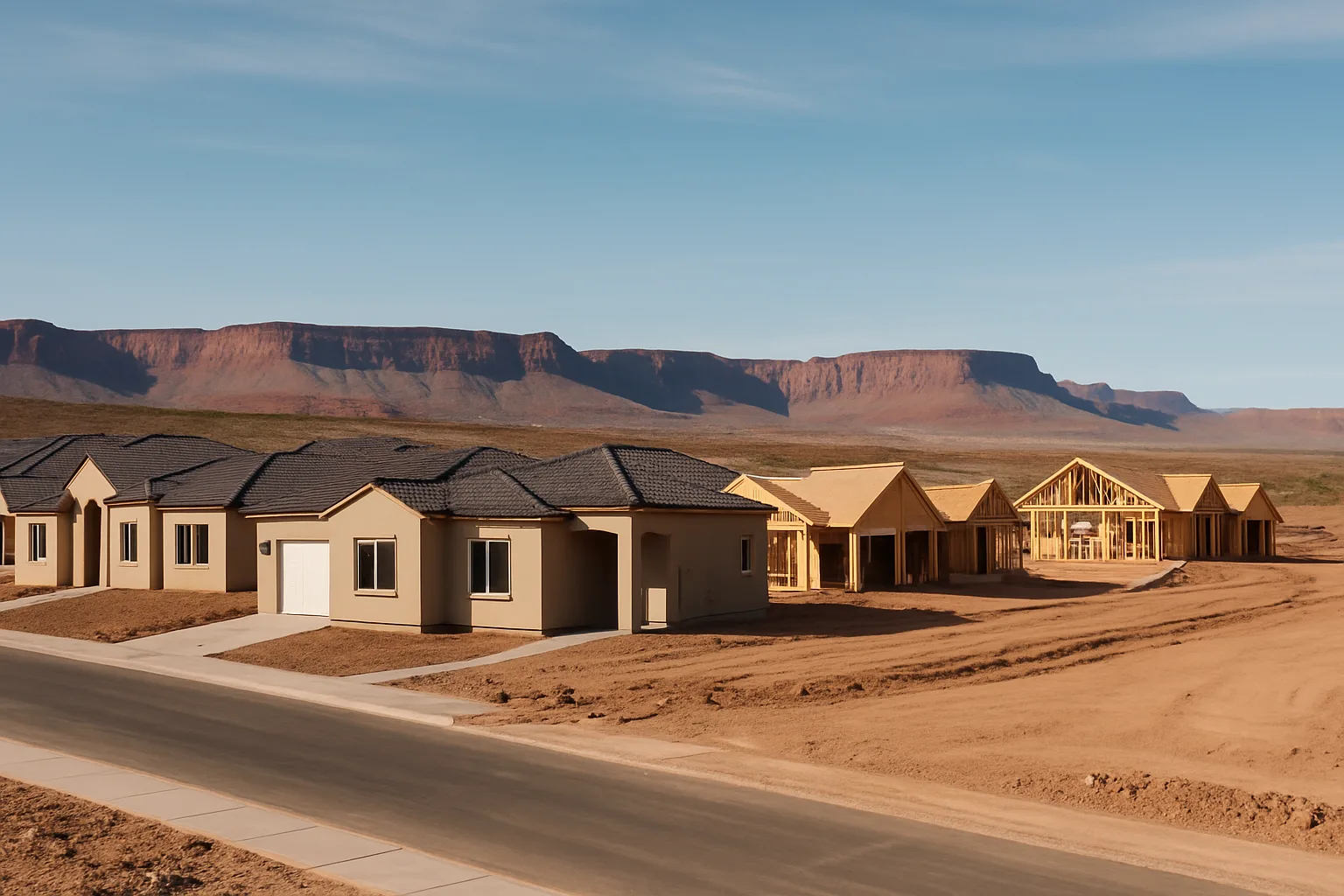
New-Home Communities in St. George, Washington and Hurricane: How They Compare

Why People Are Moving to St. George, Utah in 2026
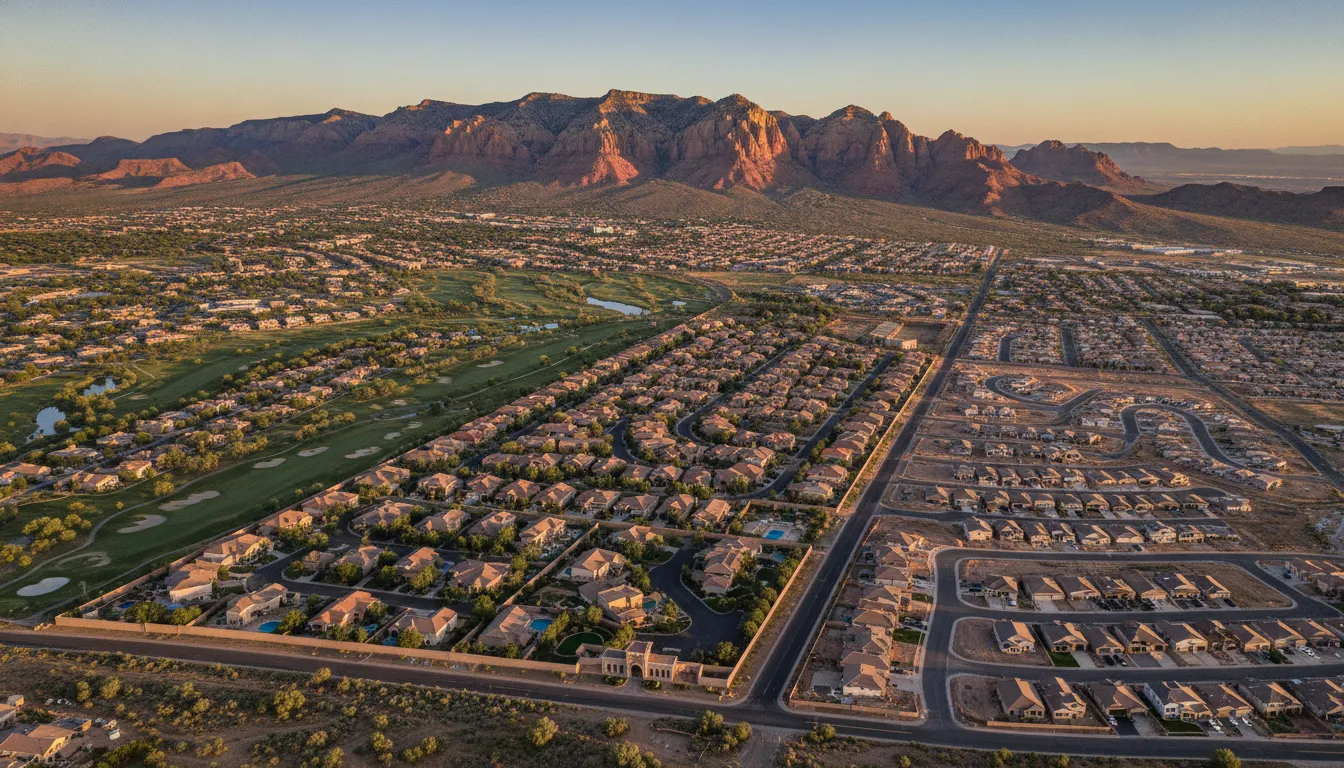
Moving to St. George Utah: Where to Live and What to Check