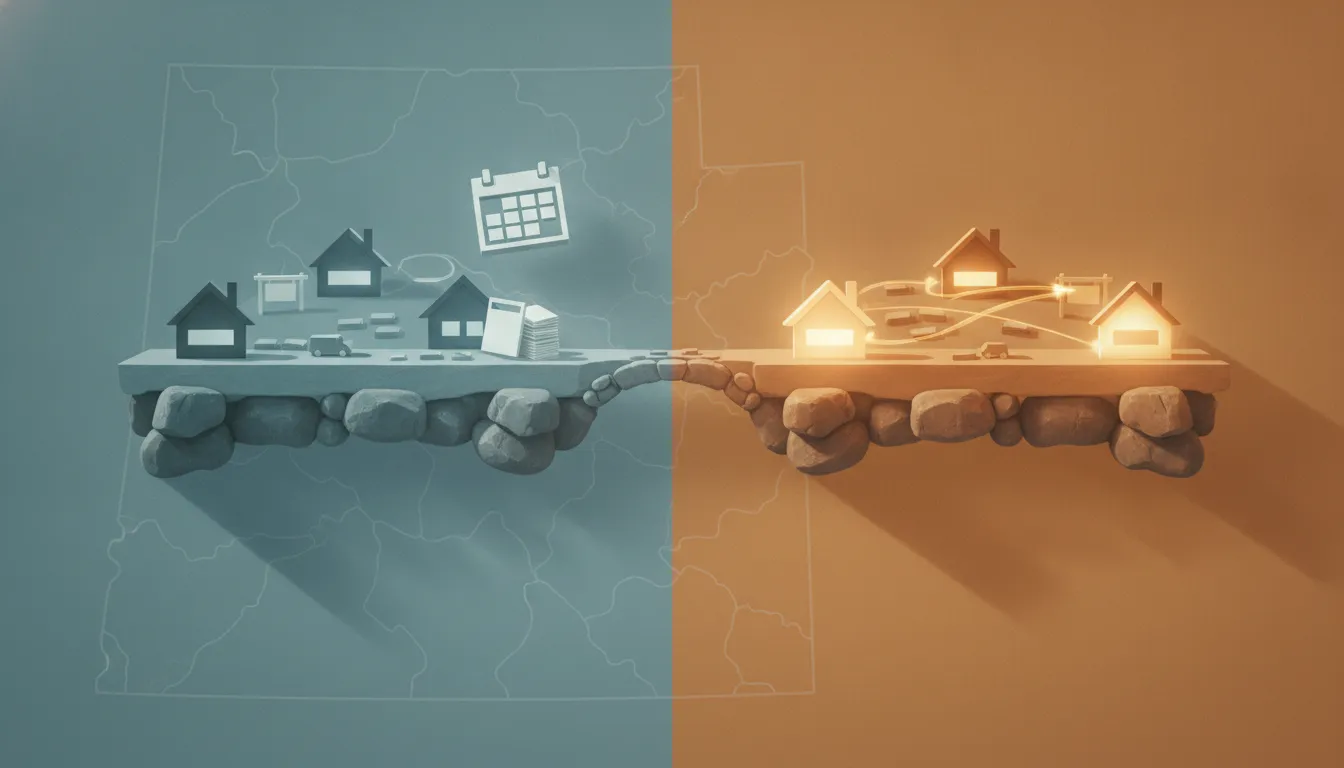
Leaving California for Utah: What to Know Before You Trade the Coast
Californians are moving to Utah for lower housing costs and taxes, but the switch involves more than a cheaper mortgage. Here's how to weigh the money, pick the right city, and handle the move itself.
The math finally caught up with you. Another rent hike, a grocery bill that reads like a car payment, and a two-hour round trip to an office you barely use. So you started looking east, past the state line, at a place where a normal house doesn't cost two million dollars. You're not alone — Utah has been quietly absorbing Californians for years, and most of them say the same thing: they wish they'd done it sooner.
But "cheaper" isn't the whole story, and moving states is a bigger swing than moving neighborhoods. The weather's different. The pace is different. Your paycheck might change too. The physical part — getting your life from a Southern California apartment to a house with a yard and actual seasons — you can hand to a crew like Mario Moving Company. The decision underneath it deserves more than a Zillow scroll at midnight.
Start with the money, because that's why you're really going
Let's be honest about what's driving this. It's the numbers. Utah's cost of living sits well below California's, and housing is the biggest gap — you can often buy a family home in Utah for what a down payment runs back home.
What actually shifts when you cross the line:
Housing — the median home across much of Utah costs a fraction of coastal California prices, and your money buys square footage and a yard
Income tax — Utah's flat state rate is lower than California's top brackets, so more of each paycheck stays yours
Gas and daily costs — usually cheaper, though not by as much as housing
The catch — Utah salaries often run lower than LA's, so check your real numbers, not just the home prices
Do that comparison before you fall for a listing. A smaller mortgage doesn't help if your income drops by more than your housing did. For most people making the move it still nets out ahead — just make sure yours does.
Then figure out where in Utah you actually belong
"Utah" isn't one place. The state runs from red-rock desert to alpine ski towns, and the right spot depends entirely on the life you're after. Two very different examples make the point.
If you're chasing sunshine, golf, and a slower pace — a lot of remote workers and near-retirees are — St. George down south is the obvious draw: warm winters, Zion in your backyard, and pricing that's still meaningfully under California. If you're weighing neighborhoods there, this guide on where to live in St. George is a useful next stop, and it's worth knowing why so many people are moving to St. George in the first place. If you need jobs, an airport, and city amenities, Salt Lake City and the surrounding valley are where the work is, especially with the tech corridor just south of town pulling in transplants from the coast.
A few things that catch California newcomers off guard:
Winter is real up north — you'll want snow tires and a coat that isn't just for looks
The tech scene ("Silicon Slopes") is bigger than outsiders expect, which helps if you're job-hunting
Alcohol laws are stricter, and it takes a minute to adjust
Communities can be tight-knit; showing up and being neighborly goes a long way
Traffic exists, but a bad day here would be a good day on the 405
None of these are dealbreakers. They're just the stuff nobody mentions until you're already living it. Before you commit to a specific area, it's worth running any shortlisted neighborhood through a few practical neighborhood filters so you're comparing more than curb appeal.
Get the move itself right
Once you've settled on a state, a city, and a house, the move is the last big hurdle — and an interstate one has more moving parts than a cross-town shuffle. You're juggling a long haul, a closing date, and two households that have to line up at the right moment.
City-to-highway moves have their own headaches, too. Loading out of a dense LA neighborhood — tight streets, permits, an elevator on a timer — is its own project before the truck even points toward Utah. A team that knows how to get out of a packed area cleanly, like these Hollywood movers, takes that first ugly stretch off your plate, so your energy goes toward the 600-mile part and the unpacking waiting at the other end.
Ask any mover the plain questions first. Licensed and insured for interstate jobs? Binding quote, or a guess that balloons? Who's liable if something breaks on a long drive? Solid answers now save a rough surprise later. Once you're through closing, it also pays to review the details buyers often overlook before closing, since a few of them show up right after the move, not before.
The bottom line
Nobody who makes this move regrets the lower cost of living. What they sometimes regret is rushing the where — picking a town off a highlight reel instead of a real visit, or skipping the budget math and assuming it'd all work out. So do the numbers. Pick the region that fits your actual life, not a postcard. Then let the truck handle the heavy part. Utah rewards the people who plan the jump, and tests the ones who just wing it.
Frequently asked questions
How much cheaper is it to live in Utah compared to California?
Is St. George or Salt Lake City better for a California transplant?
Does Utah have a state income tax and how does it compare to California?
What surprises Californians most after moving to Utah?
How long does an interstate move from California to Utah typically take?
Should I visit Utah before deciding where to buy a home?
Keep reading
More from the blog

Certificates of Insurance: What Utah Real Estate Teams Miss

Utah vs Alberta: Comparing Two Iconic Outdoor Destinations

Housing Market Slowdown Signals: What Buyers Should Watch