Why Two Neighbors With Identical Houses Pay Different Property Taxes
Two identical houses on the same street can end up with wildly different property tax bills because of how mass appraisal, neighborhood codes, and homestead caps actually work. This guide breaks down why the gap happens and the four-step process homeowners can use to check their own valuation.
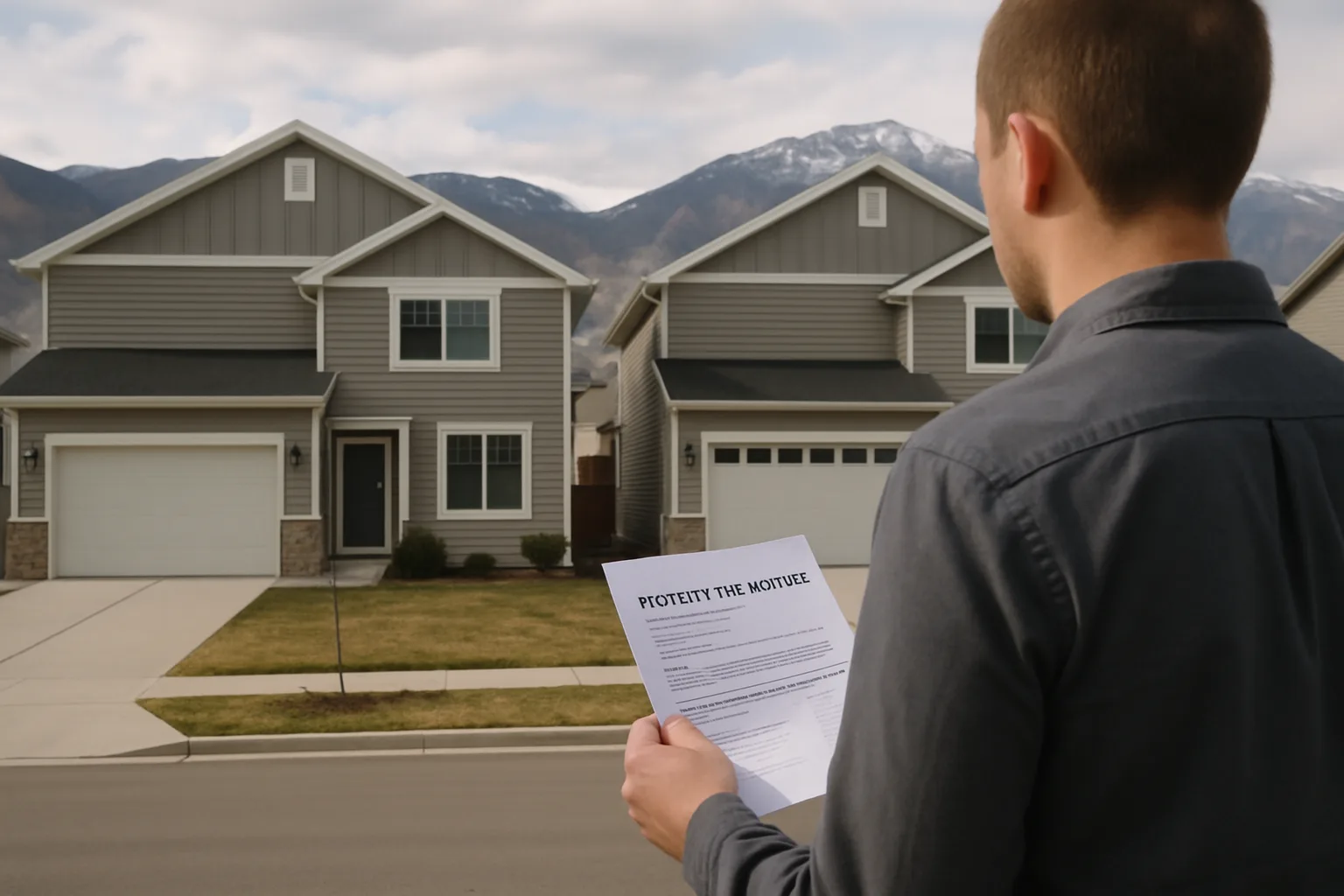
Two houses on my old street in Travis County were the same model. Same square footage, same lot width, both three-bedroom ranches built by the same builder in 1978. One owner paid $6,100 in property tax one year. The other paid $4,300. Same street. Same schools. Same fire hydrant.
That gap isn't a clerical error, and it's not a fluke. Texas values roughly 18 million parcels a year, and the machinery that does it is designed to be fast, uniform, and approximate. Approximate is where your money lives.
The system isn't built to look at your house
Here's what surprises most folks I talk to: nobody from the appraisal district walked through either of those homes. Nobody measured the kitchens, counted closet doors, or noticed that one had a renovated bathroom and the other still had its original 1978 tile. That level of inspection is reserved for new construction and the occasional field check.
What happens instead is called mass appraisal. The county builds a valuation model, feeds it characteristics like age, square footage, lot size, and neighborhood, then applies a set of uniform schedules to thousands of properties at once. The Texas Comptroller publishes the appraisal manuals and ratio studies that govern how this works, and the whole framework is built around statistical equity rather than individual precision. It's a reasonable approach when you're valuing a whole county by a statutory deadline. It's also why your house can be misjudged in ways that a ten-minute walkthrough would have caught.
Errors creep in through data entry. A garage gets coded as attached when yours is detached. Your neighbor's pool shows up on your record. A prior owner's addition never gets removed from the file. I've seen a shed counted twice. None of that requires anyone to be lazy. It requires a database with millions of rows and a limited number of hands to clean it.
Neighborhood codes do more work than you'd think
Appraisal districts divide a county into neighborhoods, and each one carries its own market multipliers. Those boundaries don't always follow the lines a resident would draw. A subdivision can be split at a creek, a school attendance boundary, or a road that separates older construction from newer builds.
If your house sits two streets over from a hotter pocket, you may be riding a multiplier that reflects sales you'd never compare your home to. And if you're in the cooler pocket, you might be quietly overpaying relative to your actual block. Owners rarely know which side of the line they're on, because the district doesn't mail you a map.
I'd rather know my neighborhood code than almost any other number on my appraisal notice. It tells you who the district thinks your competition is.
The homestead cap hides problems, then reveals them
Texas caps how much the appraised value of a homestead can rise each year, which is a genuine benefit. The catch is what happens underneath the cap.
Say your home's market value jumps well past the capped amount for several years running. Your taxable value creeps up by the allowed percentage each year, and you feel protected. Then the market cools. Your neighbors' values drop. Yours keeps climbing on paper because it's still catching up to a market value that was set during the hot years.
That lag is why homeowners who've done nothing wrong sometimes see increases when everyone around them sees decreases. The cap didn't hurt you. It just postponed a reckoning. This same dynamic — assessed values lagging behind a cooling or shifting market — is worth watching if you're tracking broader housing market slowdown signals in your own area.
A homeowner's reality check, in four steps
You don't need a law degree to pressure-test your number. You need an afternoon and a little stubbornness.
Pull your notice and your district's record card. Every appraisal district publishes property records online. Verify square footage, year built, bedroom and bathroom counts, garage type, and any improvements the district has listed. Every field that's wrong is leverage later.
Find three to five comparable sales. Not Zillow estimates. Actual closed sales from the district's own sales file or your county clerk, ideally from January through the valuation date the district uses.
Adjust honestly. If your comp has an extra bathroom and yours doesn't, subtract for it. Districts dismiss protests fast when the evidence is cherry-picked, and reviewers remember the owners who waste their time.
File before the deadline. In most Texas counties that's May 15, or 30 days after your notice arrives, whichever is later. Late is late.
If the numbers still don't line up, that's when a property tax dispute becomes worth pursuing formally, whether you handle it yourself or hand it to someone who does it every week.
Where the two neighbors ended up
The owner who paid $6,100 eventually pulled her record card and found a discrepancy: the district had her down for 240 more square feet than she actually had. A prior addition had been measured generously, and nobody ever revisited it. She filed, brought three comps, and won a reduction that followed her for years.
Her neighbor paid less from day one, partly luck and partly a neighborhood code that ran slightly cooler. He never checked. He also never learned that his own square footage was understated, which sounds like a win until you realize he'd have been on the hook for a correction if the district ever caught it.
The lesson isn't that the system is rigged. It's that a valuation is a guess until someone checks the inputs, and the checking is on you.
Why this matters more in a changing market
Texas added residents faster than almost any other state over the past decade, according to U.S. Census Bureau population estimates, and that growth pushed home prices hard in metro areas. Appraisal models trained on those years are still catching up in some places and overshooting in others. Districts then face pressure from the state to keep local values defensible.
All of which means your notice is a snapshot of an estimate, produced under time pressure, using data someone else entered. Treat it that way. Buyers weighing whether to relocate to a fast-growing state should also look closely at the details buyers often overlook before closing, since valuation quirks like these can follow a property for years.
What I'd do first if I were you
Before you accept the number, open your district's property search and read your own record like a stranger wrote it. Look for the things that don't match the house you live in. Check your exemptions too, because a missed homestead exemption is free money you're leaving on the table every single year.
Then decide. You can file a protest yourself, or you can let a service handle the paperwork and the hearing while you get on with your life. The State of Texas publishes consumer information on how the protest process works, so the rules aren't a secret.
Two identical houses will always be worth different amounts to different buyers. That part is fair. What isn't fair is paying more than your house is actually worth on paper, simply because nobody looked closely enough to notice. Pull your record this week. The number on it belongs to you, and so does the right to question it.
Frequently asked questions
Why do identical houses on the same street get different tax bills?
What is a homestead cap and how does it affect my property taxes?
How do I find comparable sales to challenge my property tax appraisal?
What is the deadline to protest a property tax appraisal in Texas?
What mistakes should I check for on my property tax record card?
Is it worth hiring someone to handle a property tax protest for me?
Keep reading
More from the blog

Your First Month in a New Utah Home: A Fall Settling-In Guide
Cold-Climate Heat Pumps: What Changed and What Still Matters
How to Choose a High-Quality Refurbished Office Chair