How to Choose a Garage Heater: Propane vs. Electric vs. Mini-Split
Garage heaters compared: Mr. Heater Big Maxx propane, KING 240 V electric, Della mini-split and portable propane. Sizing, install, cost and CO safety.
A heated garage turns a cold slab into a usable workshop and keeps batteries and liquids from freezing. The four common ways to heat one work very differently. A portable propane heater warms the room fastest but fills it with fumes. A 240 V electric heater is the simplest to install but can be slow from a cold start. A vented gas unit heater is the classic permanent answer, and a mini-split heat pump is the quietest and cheapest to run but the slowest to warm a frozen space.
This guide compares all four: sizing, installation and the safety rules that matter when anything burns fuel indoors.
As an Amazon Associate, Best Utah Real Estate earns from qualifying purchases.
Quick verdict
- Best permanent heat for a cold climate: the Mr. Heater Big Maxx 50,000 BTU. A vented unit heater that holds an oversized two-car garage at temperature with no fumes inside.
- Easiest install, no gas or venting: the KING Eco2S Plus 7,500 W. A two-stage 240 V heater with a remote temperature sensor in the box that keeps a garage above freezing all winter.
- Quietest and cheapest to run, plus air conditioning: the Della Vario 12,000 BTU Mini-Split. Best for holding a steady temperature, not for a fast warm-up.
- Occasional use, no power at all: a portable ventless propane heater. The cheapest way to get heat fast, but strictly a temporary, supervised option.
Garage heaters side by side
| Heater | Shop | Output | Fuel and power | Install | Best at |
|---|---|---|---|---|---|
| Mr. Heater Big Maxx 50,000 BTU |  Buy on Amazon | 50,000 BTU | Propane or natural gas, plus a 120 V connection for the fan | Ceiling or wall mount (10 ft+ ceiling), gas line, through-wall vent | Permanent, fume-free heat for a two-car garage |
| Mr. Heater Big Maxx 80,000 BTU |  Buy on Amazon | 80,000 BTU | Propane or natural gas, plus 120 V | Same as the 50,000 BTU | Larger or poorly insulated garages and shops |
| KING Eco2S Plus 7,500 W |  Buy on Amazon | 7,500 W, about 26,000 BTU | 240 V electric | Wall or ceiling mount, dedicated 240 V circuit | Keeping a garage above freezing with no gas |
| Della Vario 12,000 BTU Mini-Split |  Buy on Amazon | 12,000 BTU | Electric heat pump | Indoor and outdoor units, line set, wiring | Quiet, low-cost steady heat and summer cooling |
| Portable ventless propane heater | 30,000 to 80,000 BTU | 20 lb propane tank, no electricity | None; connects to the tank | Fast, temporary heat while someone is present |
How the four types actually differ
Portable ventless propane: fastest heat, worst air
A portable propane heater running on a standard 20 lb grill tank is the cheapest heater to buy and, at up to 80,000 BTU, the fastest way to warm a cold garage. It is also the only option here that needs no electricity at all, which makes it useful in a shed, a garage that isn't wired yet or during a power outage. Many fold to half size for storage.
The trade-off is everything else. Nothing is vented outside, so combustion odors stay in the room, and they get much worse when the work involves stain, finishes or solvents. There is no thermostat, only a valve between low and high, so the heater runs until someone turns it off. Small tanks empty quickly at full output. Treat it as supervised, short-term heat only.
240 V electric: simple to install, sized carefully
An electric garage heater has no flame, no fumes and no tank to refill. Installing one takes a breaker and a wire run from the panel, with no holes cut in the wall. That makes electric the default for anyone without natural gas.
Size decides whether it works. A 5,000 W heater, roughly 17,000 BTU, struggles in an insulated oversized two-car garage: it can't bring a frozen space up to working temperature on its own, it is noticeably loud, and plain resistance heat at full power is the most expensive way to run a heater. A 7,500 W heater, about 26,000 BTU, is a different experience in a garage of roughly 530 square feet with 9 ft ceilings. On a wall thermostat it held that space at 45°F or above through a winter with outdoor lows of -30°F, running about 200 hours from October through March. Even sized right, electric heat changes the room temperature gradually. It won't deliver a 15-degree jump in five minutes.
Vented gas unit heaters: the classic permanent answer
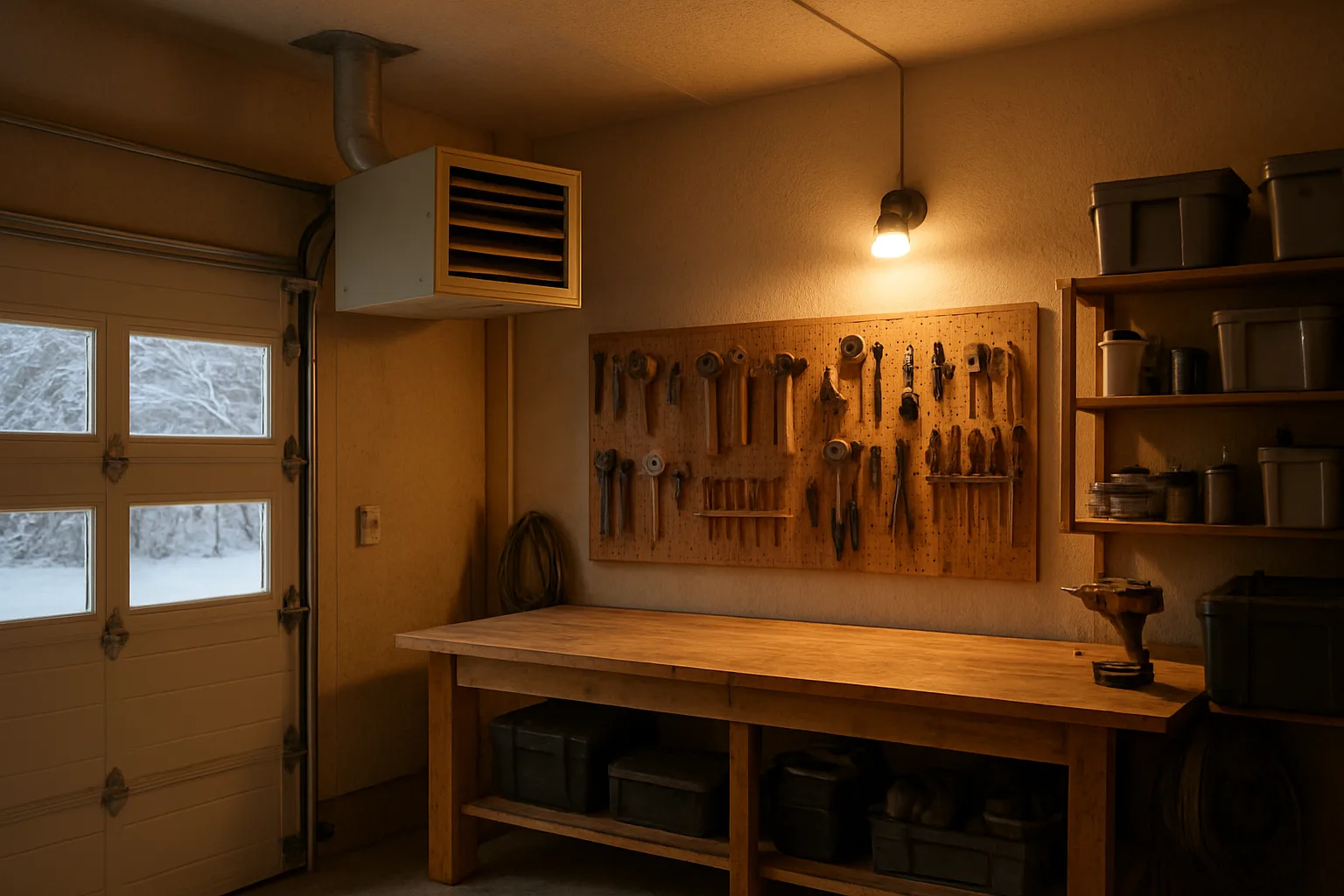
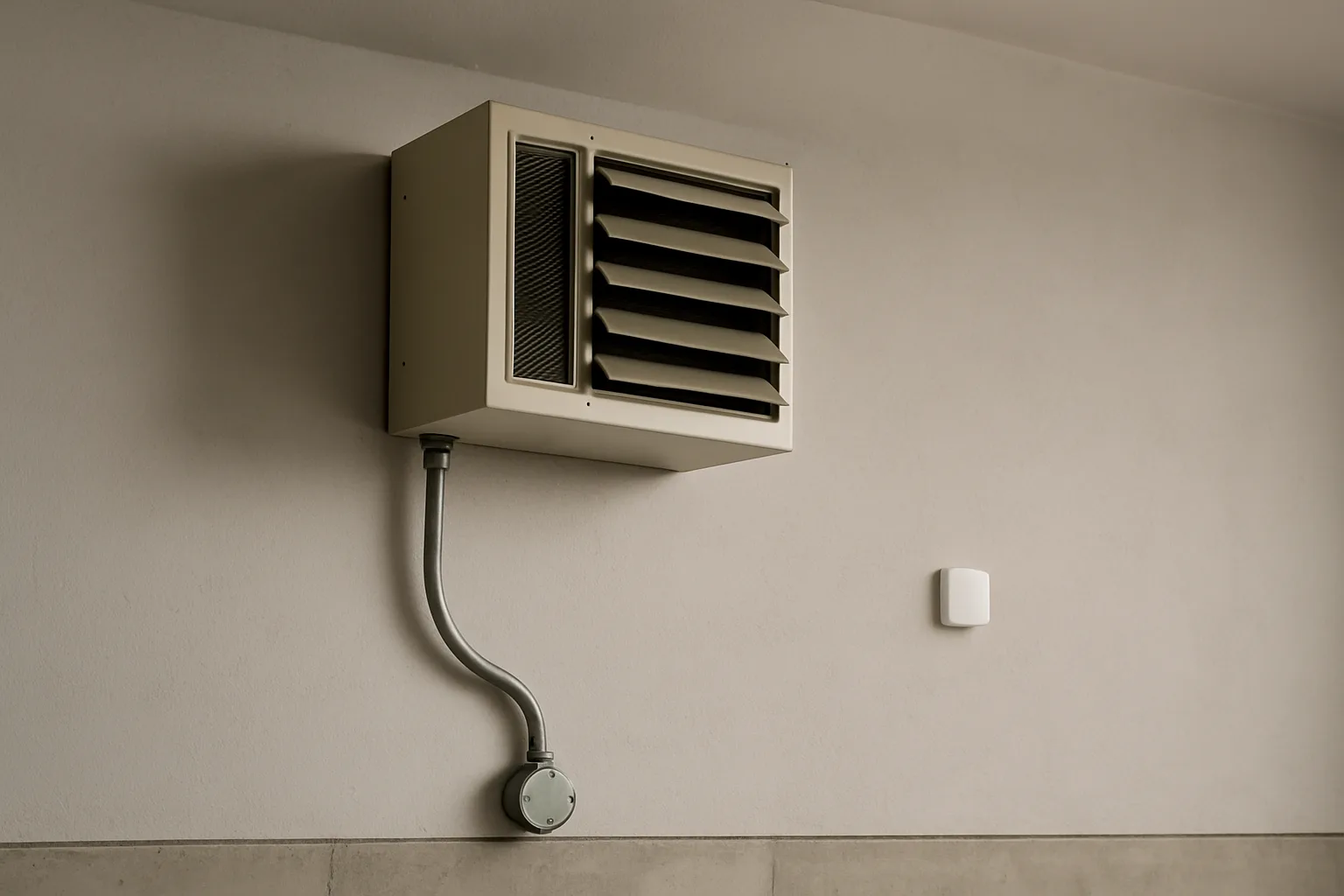
A ceiling-hung gas unit heater is what most people picture as a garage heater, and for good reason. A 50,000 BTU unit easily holds an oversized two-car garage at a set temperature, and because combustion gases leave through a vent, the room stays free of fumes and smells.
Installation is the hard part. Expect a mount, a gas line and the vent through the wall; the venting is often trickier than the gas line. Without natural gas, it needs a large propane tank: bought or rented, refilled, and reachable through snow, though a big tank can last months. They can also short-cycle in very cold weather. They still need electricity for the fan and controls, so they don't work in an outage.
Mini-split heat pumps: quiet and cheap, but slow from cold
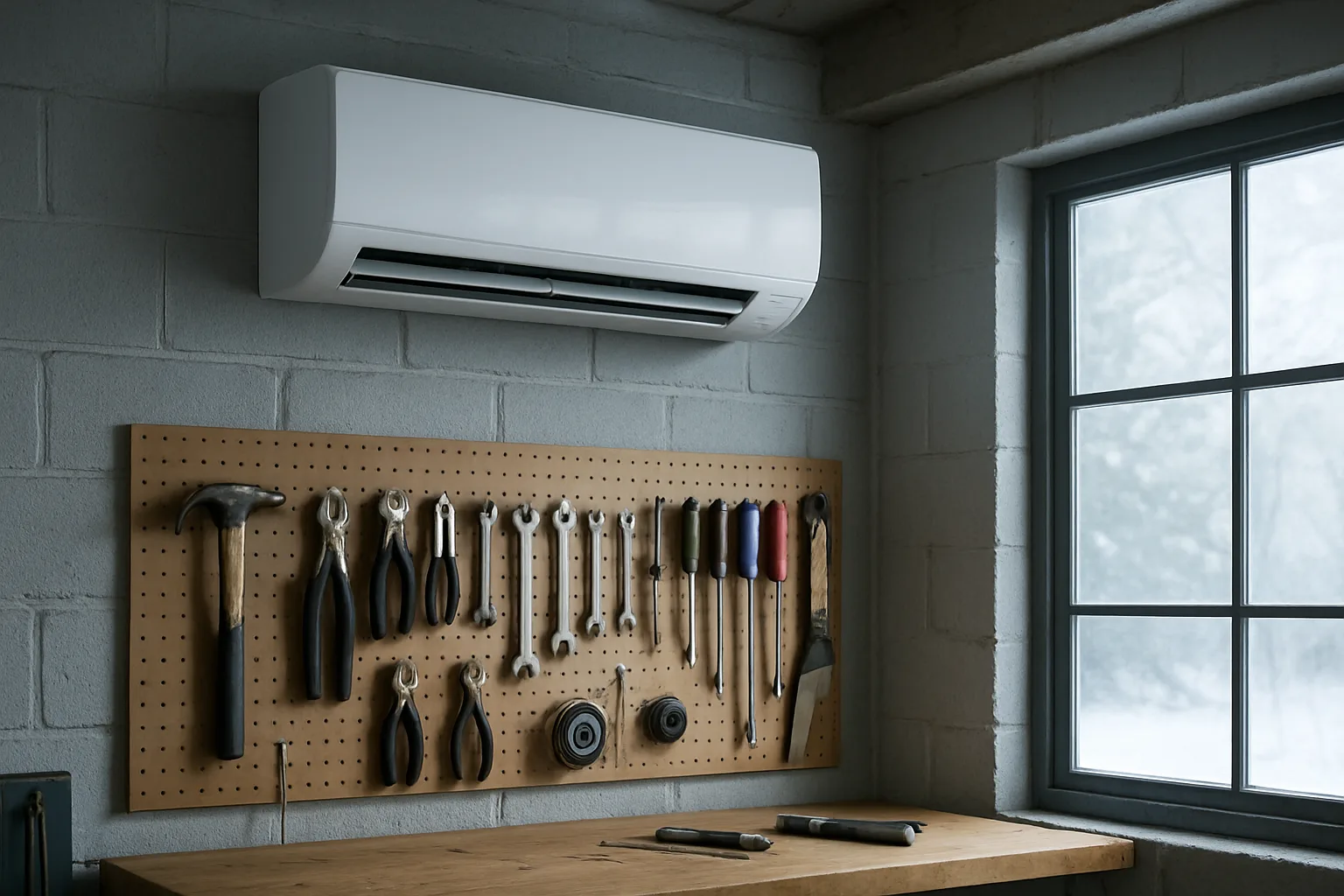
A mini-split moves heat instead of making it, so it uses roughly a third of the electricity of a 5,000 W resistance heater doing the same job. It is also by far the quietest option. The other three types are loud enough to ruin a recording; a mini-split's fan is barely noticeable. It has a remote thermostat and no fumes, and in summer it cools and dehumidifies too.
Its output is much lower than a gas heater's. Sizes typically run from about 9,000 to 36,000 BTU, so a mini-split is built to hold a garage at a steady temperature, not to rescue a frozen garage on a Saturday morning in half an hour. Some units won't set lower than about 60°F. In severe cold, a heat pump's output drops, so very cold regions may need a backup heat source. A professional install costs far more than the unit.
How to choose a garage heater
Size it to the space and the insulation
A 50,000 BTU gas heater, or a 7,500 W (about 26,000 BTU) electric heater, both handled insulated garages in the 500 to 700 square foot range in cold northern winters. For a bigger or draftier space, step up: the Mr. Heater Big Maxx 80,000 BTU is the larger version of the same heater, and electric models come in 10,000 W and 15,000 W sizes. Don't oversize: a heater that is too big short-cycles and wastes energy.
Insulation matters as much as the heater. Spray-foaming an uninsulated metal roof to roughly R-5 cut a 50,000 BTU heater's warm-up time in half.
Decide how you'll use it
- Keep it warm all winter: a mini-split or a properly sized electric heater on a thermostat. Both are set-and-forget.
- Heat it up only on work days: a vented gas heater warms a cold space far faster.
- A few hours now and then: a portable propane heater, used with the precautions below.
Running cost, in plain terms
Plain electric resistance heat is the most expensive to run; a mini-split costs about a third as much. Propane costs depend on local prices and tank rental, and in some areas propane and electric come out about even. Natural gas, where it's available, may cost a little less than either. A good electric heater kept at 45°F, just above freezing, runs far less than one asked to hold 65°F.
Thermostats and controls
A wall thermostat with an adjustable swing (also called a differential) is worth adding to a gas unit heater. Set it to 55°F with a swing of a few degrees and the heater comes on near 52°F and runs up to about 57°F, instead of turning on and off constantly. Two-stage electric heaters such as the KING switch between low and high on their own to reach and hold the set temperature.
Noise and airflow
Every forced-air heater makes fan noise; only a mini-split is truly quiet. Aim the airflow at the work area, such as a car lift or workbench, not an empty corner.
Carbon monoxide and fire safety
Every fuel-burning heater makes carbon monoxide, an invisible, odorless gas. The U.S. Consumer Product Safety Commission's carbon monoxide guidance calls for working CO alarms in the home and never running fuel-burning equipment in enclosed spaces where the exhaust can build up. Early symptoms such as headache, dizziness and nausea are easy to mistake for the flu.
- Ventless and portable propane heaters burn inside the room. They release carbon monoxide and a lot of moisture into the air. Use only a heater rated for indoor use, and keep the ventilation opening the manual calls for every time it runs.
- Never run a portable propane heater unattended, or overnight in a closed attached garage. CO can seep into the house through the connecting door.
- Install a CO alarm in the garage and near bedrooms. A combination smoke and CO alarm covers both risks.
- Keep clearance from combustibles. Gas cans, solvents, rags, cardboard and wood scraps stay well away from any heater, at the distances the manual lists.
- Use licensed pros where code requires it. Gas lines, venting and 240 V circuits often need a permit. Follow the manual's minimum mounting height and vent clearances for gas unit heaters in garages.
- Have vented gas heaters inspected regularly so the vent stays clear and the burner runs clean.
The picks in detail
Mr. Heater Big Maxx 50,000 BTU
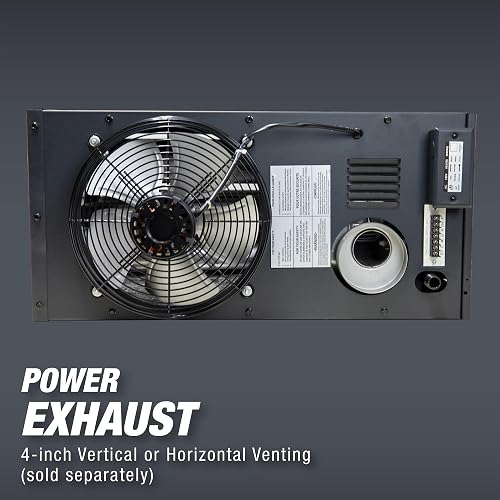
This is the heater to buy for permanent, fume-free heat in a cold climate. It hangs from the ceiling or high on a wall, pulls combustion air in and pushes exhaust out through a double-walled vent, and a fan blows heat across the room. It runs on propane or natural gas and needs a power connection for the fan, so it won't heat during an outage. It holds up to hundreds of hours a winter in a working shop. The fan is fairly quiet but has a slight whine, and a matching thermostat kit is a separate purchase. The listing calls for a ceiling at least 10 ft high and 8 ft of clearance from the bottom of the heater to the floor, so measure before buying. The gas line and venting are the most involved install here, and having a pro run the gas line is a sensible choice for anyone who hasn't done one. In a large or poorly insulated shop, the 80,000 BTU version is the better buy.
Mr. Heater Big Maxx 50,000 BTUCheck today’s price on Amazon

 Buy on Amazon →
KING Eco2S Plus 7,500 W
The best electric pick. The Eco2S Plus is two-stage: it starts on low and steps up to high only when the room isn't warming fast enough. It throws warm air about 25 ft, and its lowest setting, 45°F, is ideal for keeping things from freezing. It costs more than basic electric heaters, but it has held up well over several winters of steady use. It needs a dedicated 240 V circuit.
KING Eco2S Plus 7,500 WCheck today’s price on Amazon

 Buy on Amazon →
Della Vario 12,000 BTU Mini-Split
For a garage that stays heated all winter and gets hot in summer, a ductless mini-split is the most comfortable option, and this 12,000 BTU model sits mid-range in size. It runs on a 208–230 V circuit. It heats, cools and dehumidifies quietly at the lowest running cost of the group, but recovers slowly from a deep chill. Check the lowest setpoint and cold-weather rating before buying for a very cold region. The line set is the part of the install that needs care, and a DIY install keeps the total cost close to a vented propane setup.
Della Vario 12,000 BTU Mini-SplitCheck today’s price on Amazon

 Buy on Amazon →
Who should buy which
- Cold climate, natural gas or a propane tank, working in the garage most days: the Mr. Heater Big Maxx 50,000 BTU, or the 80,000 BTU for a big shop.
- No gas, a simple install and a garage kept just above freezing: the KING Eco2S Plus 7,500 W.
- Year-round workshop, gym or office where noise and running cost matter: the Della Vario 12,000 BTU Mini-Split.
- A shed, an unwired garage or a few hours of work at a time: a portable propane heater, used with ventilation, supervision and a CO alarm.
For outdoor heat on a deck or patio, see the propane vs. electric patio heater guide. For winter prep, the snow blower buying guide and the garage floor tiles vs. epoxy comparison cover the rest.
Posted by Kristopher Larson
Frequently asked questions
What size heater do I need for a two-car garage?
For an insulated two-car garage in a cold climate, a 50,000 BTU gas unit heater or a 7,500 W (about 26,000 BTU) electric heater is a good starting point. The gas heater warms a cold space much faster; the electric heater is better at holding a set temperature. A 5,000 W electric heater is usually too small to warm a frozen two-car garage on its own. Larger or poorly insulated garages call for an 80,000 BTU gas heater or a bigger electric model.
Is it safe to use a propane heater in a garage?
Only with care. Portable ventless propane heaters burn inside the room and release carbon monoxide and moisture. Use one rated for indoor use, keep the ventilation the manual requires, never leave it running unattended or overnight in a closed attached garage, keep combustibles well away and install a carbon monoxide alarm. A vented unit heater sends combustion gases outside, which is why it is the better choice for permanent heat.
What is the cheapest way to heat a garage?
A portable propane heater is the cheapest to buy, but not to run for long periods. For running cost, a mini-split heat pump uses about a third of the electricity of plain electric resistance heat. Natural gas, where available, is also inexpensive to run. Plain resistance electric heat set high in a large garage is the most expensive option per hour.
Can a mini-split heat a garage in winter?
Yes, for holding a steady temperature. A mini-split is quiet and cheap to run and also cools in summer. It has much lower output than a gas heater, so it won't quickly warm a frozen garage, and heat pump output drops in severe cold. In very cold regions, plan on a backup heat source, and check the lowest temperature the thermostat can be set to.
Does an electric garage heater need a 240 V circuit?
Garage-sized electric heaters such as 5,000 W and 7,500 W models run on 240 V and need their own breaker and wire run from the panel. They don't need a gas line, a vent or any holes in the wall. Where code requires it, have a licensed electrician add the circuit.
Do vented propane garage heaters need electricity?
Yes. Vented unit heaters such as the Mr. Heater Big Maxx use a fan and controls that need power, so they stop working in an outage. Only portable ventless propane heaters run with no electricity at all.
Keep reading
More from the blog
Best Air Compressor for a Home Garage: Quiet, CFM and Tank Size Explained
Best LED Garage Lights: Deformable Screw-In vs. Shop Lights, by Measured Brightness
Garage Floor Tiles vs. Epoxy: Swisstrax vs. RaceDeck vs. VEVOR