Snow Blower Buying Guide: Single-Stage vs. Two-Stage vs. Battery, With EGO, Ariens and Toro Picks
Single-stage, two-stage or battery? How to size a snow blower to the driveway, plus EGO, Snow Joe, Ariens and Toro picks and the safety rule that matters.
Most snow blower regret comes from buying the wrong class of machine, not the wrong brand. A light single-stage unit chokes on the heavy ridge a city plow leaves at the end of the driveway, and a 230-pound two-stage machine is overkill for a short walk and a one-car apron. The right pick comes down to three numbers: how much pavement there is, how deep a typical storm gets, and whether the surface is paved or gravel.
As an Amazon Associate, Best Utah Real Estate earns from qualifying purchases.
Quick verdict: which snow blower fits which driveway
- Short paved driveway, light snow, tight budget: a corded electric single-stage such as the Snow Joe SJ627E. It weighs about 35 pounds and needs no fuel or batteries, only an outdoor-rated cord.
- Average two-car driveway, storms under about 8 inches: a battery single-stage like the EGO Power+ SNT2112, which runs on two 56V batteries and throws snow up to 40 feet.
- Long driveway, deep or wet snow, no gas engine wanted: the EGO Power+ SNT2405 two-stage, a self-propelled battery machine with a 20-inch intake.
- Big driveway, heavy plow berms, gravel, lowest cost per inch of snow: a gas two-stage. The PowerSmart 24-inch two-stage is a budget option on Amazon; the Ariens Deluxe 24 and Toro Power Max 824 OE are the better-built dealer-channel choices.
Single-stage, two-stage and three-stage: what the stages mean
The "stage" count describes how snow travels through the machine, and it decides almost everything else about how a snow blower behaves.
Single-stage
A single rubber-edged or steel auger spins at high speed, scoops snow and flings it straight out the chute. Because the auger touches the pavement, it also pulls the machine forward a little and scrapes close to the surface. That same contact is why single-stage machines are meant for paved surfaces only: on gravel, the auger picks up stones and throws them. They are light, compact and easy to store, and they work best in snow below the top of the intake.
Two-stage
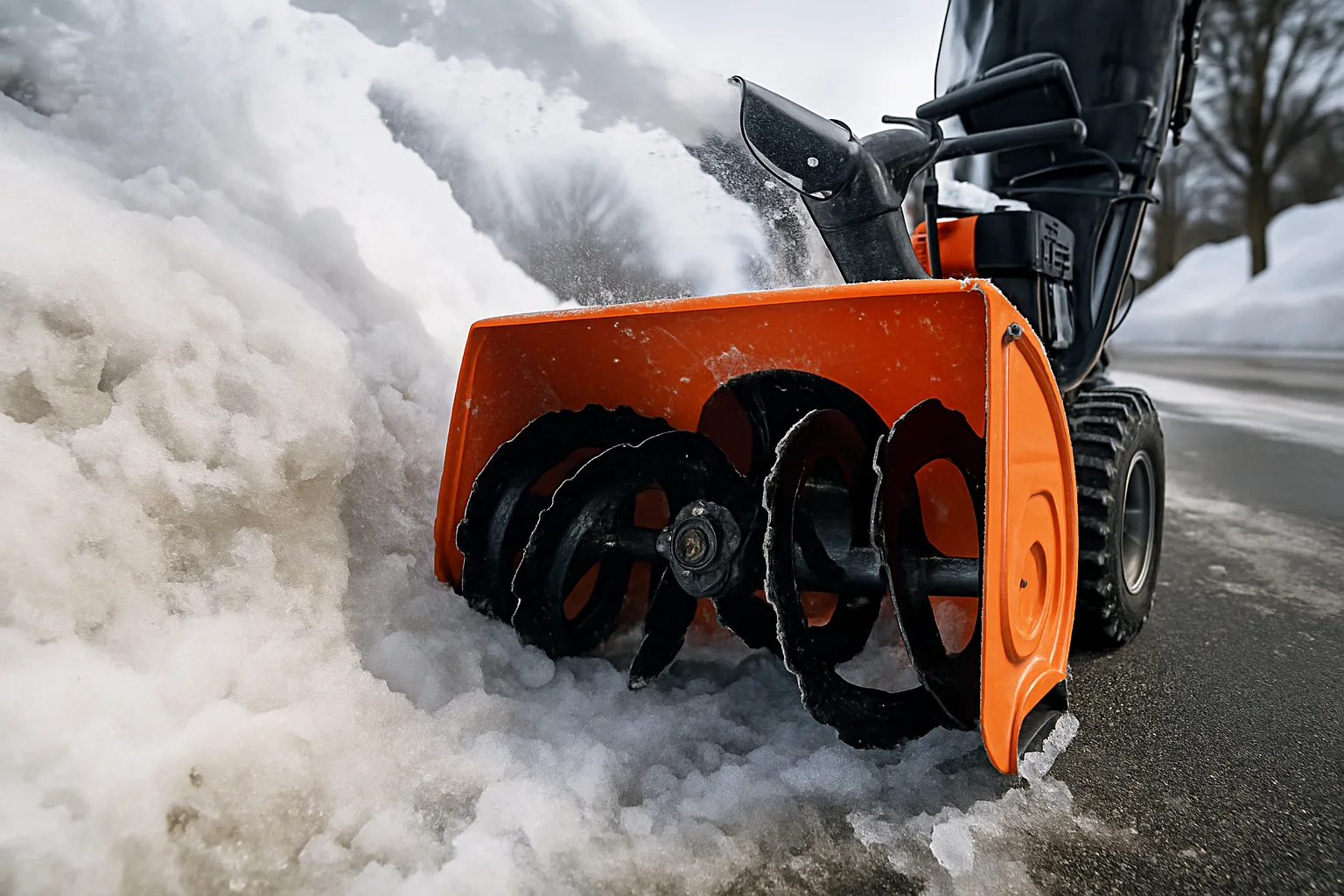
A slower, serrated auger chews the snow and feeds it to a separate fan-like impeller, which throws it out the chute. The auger housing rides on adjustable skid shoes, so it can be set slightly above gravel. Two-stage machines handle deeper drifts, wet snow and the dense, icy berm a plow leaves behind, and most are self-propelled with several forward and reverse speeds. The trade-offs are weight, storage footprint and price.
Three-stage
Some brands, such as Cub Cadet with its 3X line, add a third component, an accelerator in front of the impeller that breaks up snow and feeds it faster. These machines target very deep or wet snow and big properties. For most suburban driveways, a well-built two-stage covers the same storms.
Spec comparison
| Model | Type | Power | Clearing width | Max throw (maker claim) | Drive | Best for |
|---|---|---|---|---|---|---|
| Snow Joe SJ627E | Single-stage | 15-amp corded electric | 22 in. (13 in. intake) | 25 ft | Push | Short paved driveways, walks, decks |
| EGO Power+ SNT2112 | Single-stage | Two 56V batteries | 21 in. | 40 ft | Push | Two-car driveways, light to moderate storms |
| EGO Power+ SNT2405 | Two-stage | Two 56V batteries | 24 in. (20 in. intake) | 50 ft | Self-propelled, variable speed | Long driveways, deep snow, no gas |
| PowerSmart HB7109A | Two-stage | 208cc Briggs & Stratton gas | 24 in. | 50 ft | Self-propelled | Budget gas two-stage |
| Ariens Deluxe 24 | Two-stage | 252cc gas | 24 in. (21 in. intake) | Check dealer spec | Self-propelled, Auto-Turn steering | Heavy berms, frequent storms |
| Toro Power Max 824 OE | Two-stage | 252cc gas | 24 in. (20 in. intake) | Check dealer spec | Self-propelled | Lighter gas two-stage, easy chute control |
Throw distances are manufacturer claims measured under ideal conditions. Wet snow and wind cut them sharply, so treat the numbers as a ranking rather than a promise.
The picks in detail
Snow Joe SJ627E: the low-cost corded option
 Snow Joe SJ627ECheck today’s price on AmazonBuy on Amazon →
The SJ627E is a 15-amp, 22-inch single-stage machine that Snow Joe rates at up to 25 tons of snow per hour with a 13-inch-deep pass. Its biggest advantages are weight (about 35 pounds), zero engine maintenance and a low entry price. The cord is the catch: Snow Joe says not to exceed 100 feet of extension cord and recommends a specific gauge, so the house outlet has to be reasonably close to the far end of the driveway. Managing the cord around parked cars takes practice. It suits townhomes, short driveways, patios and decks, and it is a reasonable second machine for walkways even in a household that owns a gas two-stage.
EGO Power+ SNT2112: the battery single-stage most households want
 EGO Power+ SNT2112Check today’s price on AmazonBuy on Amazon →
The SNT2112 uses EGO's Peak Power design, drawing on two 56V batteries at once, and pairs it with a steel auger, a brushless motor, variable auger speed and two LED headlights. EGO rates the throw at up to 40 feet, and it weighs roughly 50 pounds, so it lifts onto a porch or into a truck bed without a ramp. The kit includes two 5.0Ah batteries and a dual-port charger. As with any single-stage, it is a paved-surface machine and it struggles once snow climbs well past the intake, so homes that regularly see a foot or more, or that face a heavy plow ridge, should look at a two-stage. The batteries also run EGO's mowers, trimmers and leaf blowers, which matters for anyone already on that platform.
EGO Power+ SNT2405: two-stage capability without gas
 EGO Power+ SNT2405Check today’s price on AmazonBuy on Amazon →
The SNT2405 is the most capable battery machine in this group. It clears a 24-inch path with a 20-inch intake height, throws snow up to 50 feet, and drives itself with variable-speed forward and reverse from a handle-mounted dashboard. EGO says the two included 7.5Ah batteries can clear up to an 18-car driveway under 8 inches of snow on one charge. Push-button start, four LED lights and no fuel, oil or spark plugs to manage make it the easiest two-stage to live with. The trade-offs are cost, since the battery kit is priced like a premium gas machine, and the fact that runtime drops in very wet, heavy snow. Owners who clear a long driveway after big storms often add a third battery. Stock on this listing moves fast in late fall, so check current availability.
Gas two-stage: PowerSmart vs. Ariens vs. Toro
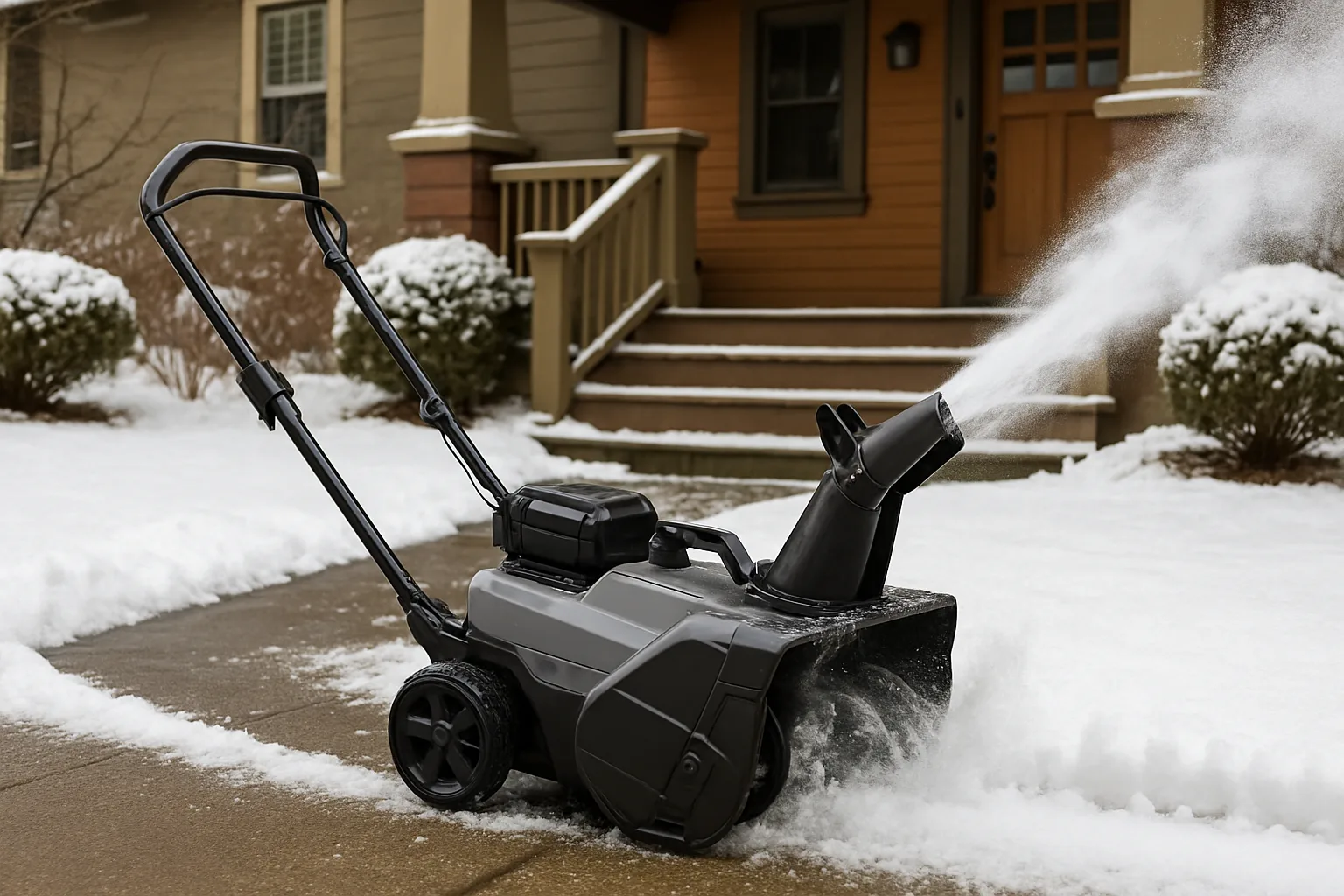
For deep snow and big driveways, gas still offers the most clearing per dollar, and refueling takes seconds instead of a charge cycle.
The PowerSmart HB7109A pairs a 208cc Briggs & Stratton engine with a 24-inch two-stage housing, electric start, 13-inch snow tires, a handle warmer and LED lights. It is the value play: the right machine for someone who needs two-stage capability a handful of times per winter and wants to spend as little as possible. Expect lighter-gauge parts than the dealer brands.
The Ariens Deluxe 24 and Toro Power Max 824 OE are the two 24-inch gas machines most often compared at hardware stores and dealers. Both use a 252cc engine and a 24-inch housing. The Ariens has a slightly taller 21-inch intake, 14-inch augers and impeller, and its Auto-Turn steering makes the machine much easier to swing around at the end of each pass. Ariens also lists separate, longer warranty coverage on the auger gear case. The Toro is noticeably lighter (around 185 pounds versus roughly 231 for the Ariens) and has a fast single-lever chute control. The extra weight of the Ariens helps keep the housing planted in hard-packed snow. Buyers who face a heavy plow ridge every storm tend to favor the heavier Ariens; buyers who value easier storage and a quicker chute often prefer the Toro. Neither is reliably stocked on Amazon, so compare current prices at local dealers and home centers.
How to size a snow blower to the property
- Measure the paved area. A typical two-car driveway with a front walk is well within a battery single-stage's range on a full charge. Long driveways, shared lanes or corner lots with sidewalks on two sides push toward a self-propelled two-stage.
- Look at typical storm depth, not the record storm. If most snowfalls are a few inches, a single-stage handles them, and an occasional big storm can be cleared in two passes or partway through the storm.
- Account for the plow berm. The packed, icy ridge at the end of the driveway is the hardest snow on the property. A two-stage machine's serrated auger handles it; a single-stage often rides over it.
- Check the surface. Gravel and unpaved drives need a two-stage with adjustable skid shoes.
- Consider slope and storage. On a steep driveway, self-propel and good tires matter more than engine size. A two-stage needs a garage bay corner; a single-stage folds and hangs on a wall.
Gas vs. battery: the ownership trade-offs
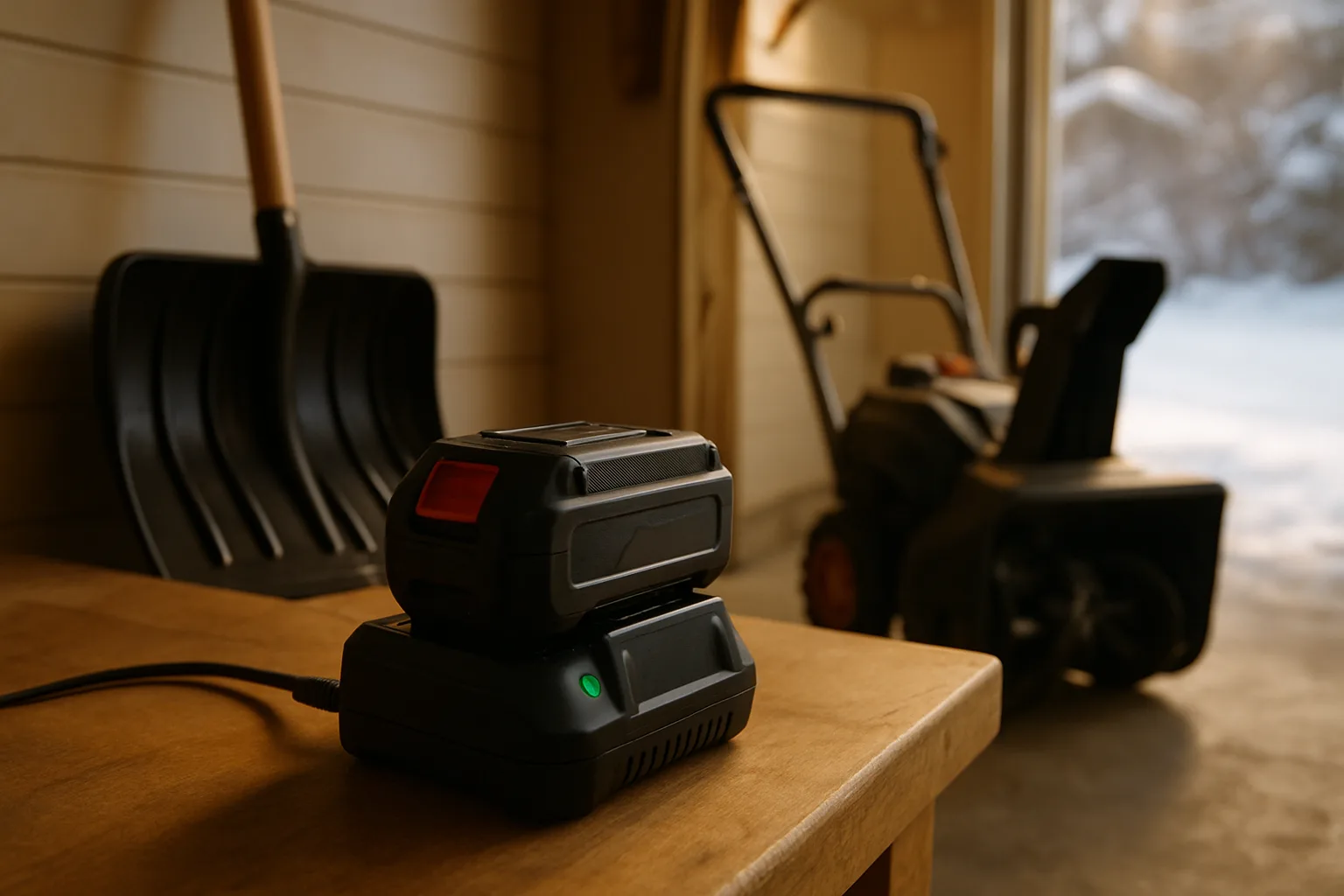
Battery machines start instantly, run quietly enough for an early morning pass, and skip the oil changes, spark plugs and stale fuel that cause most gas snow blower no-starts. Lithium-ion batteries do lose capacity in the cold, so store and charge them indoors at room temperature and bring them out just before clearing. Gas machines keep running as long as there is fuel, handle the wettest snow without runtime anxiety, and generally cost less for the same clearing width. They need a season-end routine: run the carburetor dry or add fuel stabilizer, change the oil, and check the shear pins or bolts and belts before the first storm.
Safety: the clogged-chute rule
Hand injuries are the classic snow blower accident. The U.S. Consumer Product Safety Commission reports thousands of emergency-room visits tied to snow blowers each year, with a large share involving the wrist, hand or fingers. Its advice is simple: stop the engine and use a clean-out tool or a long stick, never a hand, to clear a clogged chute or auger. Augers and impellers can store tension and turn again once the clog is released. Other basics: fuel a gas machine outdoors while the engine is cold, never run it inside a closed garage because of carbon monoxide, and clear the driveway of newspapers, doormats and extension cords before the first pass.
A reliable snow blower is part of the same first-winter checklist as furnace service and gutter cleaning; the first-winter tasks for new homeowners cover the rest. Homes in areas with long storm outages may also want to read up on whether a standby generator is worth it, and anyone rearranging the garage to fit a two-stage machine can borrow ideas from these garage layout and storage ideas.
Bottom line
Match the machine to the snow first and the brand second. A corded or battery single-stage keeps a short paved driveway clear with almost no maintenance. The EGO SNT2405 brings two-stage depth and self-propel to buyers who want to leave gas behind. For deep snow, heavy plow ridges, gravel or very large driveways, a gas two-stage remains the most capable tool for the money, and the extra weight and build quality of a dealer-brand machine pay off over many winters.
Posted by Kristopher Larson
Frequently asked questions
What is the difference between a single-stage and a two-stage snow blower?
A single-stage snow blower uses one fast-spinning auger that scoops snow and throws it out the chute in one motion, and the auger touches the pavement. A two-stage machine uses a slower auger to break up snow and feed it to a separate impeller that throws it. Two-stage models handle deeper, wetter snow, plow ridges and gravel; single-stage models are lighter, cheaper and meant for paved surfaces.
Can a single-stage snow blower be used on a gravel driveway?
It is not recommended. Because a single-stage auger runs in contact with the ground, it picks up gravel and can throw stones at windows, cars and people. Gravel driveways call for a two-stage snow blower with adjustable skid shoes, which hold the auger housing slightly above the surface.
Are battery snow blowers powerful enough for heavy snow?
The better ones are. Dual-battery two-stage machines such as the EGO Power+ SNT2405 offer a 24-inch path, a 20-inch intake and self-propel, and EGO rates it to clear up to an 18-car driveway under 8 inches of snow per charge. Runtime drops in very wet, heavy snow and in deep cold, so owners of long driveways often keep a spare battery charged indoors.
What size snow blower is needed for a two-car driveway?
For a typical paved two-car driveway with storms under about 8 inches, a 21- to 22-inch single-stage machine is usually enough. If the area regularly gets a foot or more, the city plow leaves a heavy ridge at the end of the driveway, or the driveway is long or sloped, a 24-inch self-propelled two-stage is the safer choice.
How do you safely clear a clogged snow blower chute?
Turn the machine off, wait for all moving parts to stop, and use the clean-out tool or a long stick, never a hand. The U.S. Consumer Product Safety Commission notes that a large share of snow blower injuries involve the hand, wrist or fingers, often from reaching into a jammed chute when the auger or impeller can still move once the clog clears.
How should a gas snow blower be stored at the end of winter?
Either run the engine until the carburetor is dry or fill the tank with fuel treated with a stabilizer, then change the oil, check the belts and shear pins or bolts, and touch up bare metal to prevent rust. Store it covered in a dry spot. Stale fuel left in the carburetor over summer is one of the most common reasons a snow blower will not start the next winter.
Keep reading
More from the blog
Whole-House Surge Protectors: Type 1 vs. Type 2, What They Can't Stop, and Square D vs. Siemens vs. Eaton

Propane vs. Electric Patio Heaters: Mushroom vs. Infrared vs. Tabletop, and How Much Heat a Patio Needs
How to Measure Home Electricity Use: Kill A Watt vs. Smart Plugs vs. Emporia Vue vs. Sense